Tag Archives: atlantic

Phenotypic effects of climate change Updated for 2026

Understanding how changes in the climate affect biological communities is essential in predicting the future size and composition of populations. However, accurate predictions pose a difficult challenge for researchers. For the majority of animal species it is not feasible or ethical to conduct experiments into how these populations will respond to a changing climate. To enable us to gain an insight into potential futures of a population under climatic change, we use a computational model. Specifically, we use an integral projection model to investigate how changes in the North Atlantic Oscillation will influence the body weight and population size of a population of Soay sheep. The North Atlantic Oscillation is a large scale weather pattern of temperature differences across the Atlantic Ocean, which alters the local weather patterns in the North Atlantic region. We used published predictions of the future values of the North Atlantic Oscillation for the 21st Century. By doing this we are able to project the response of the study population to climate change based on our current best projections of the future climate.

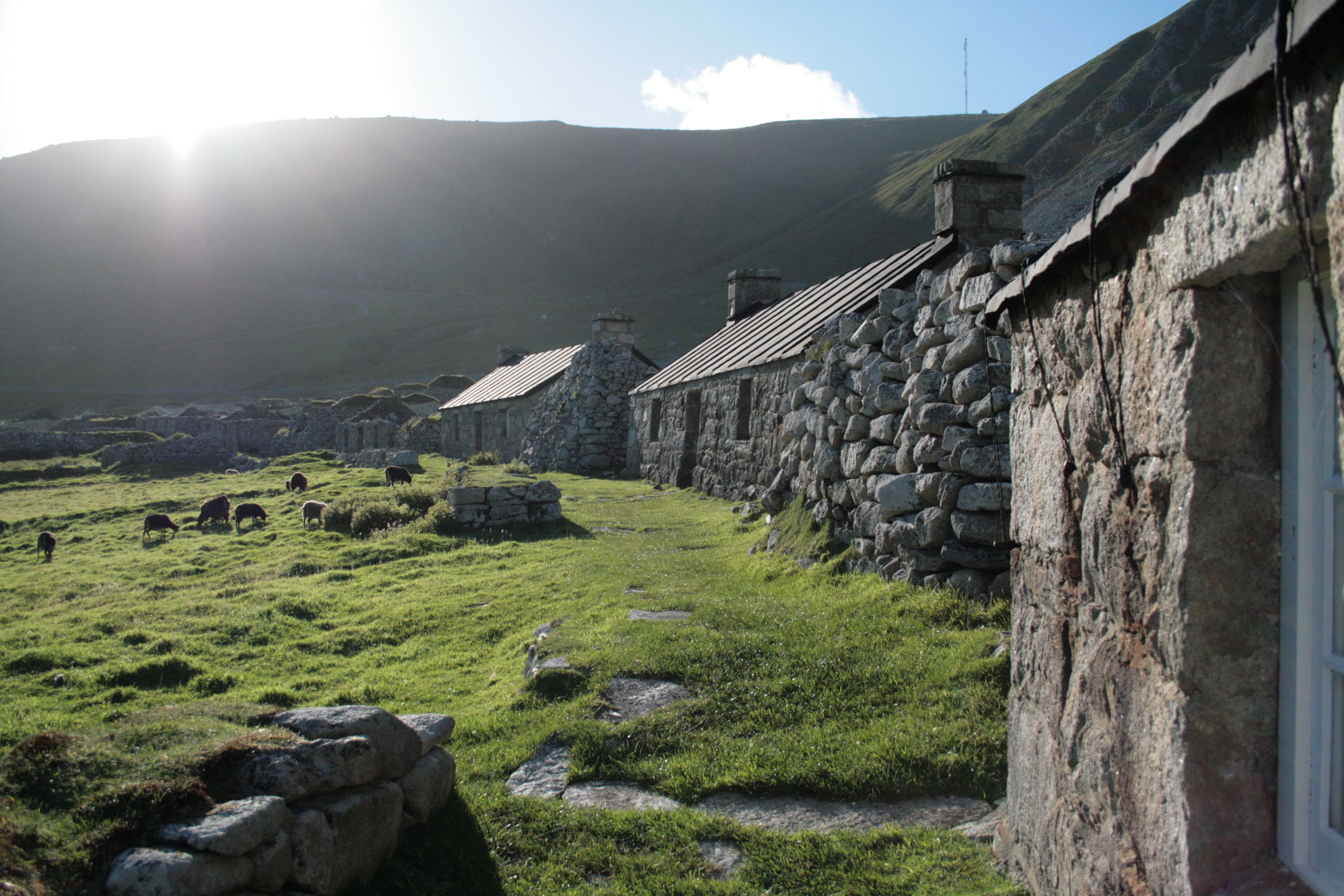
Soay

Our model results, presented in the Early View paper “Analysis of phenotypic change in relation to climatic drivers in a population of Soay sheep”,  suggest that a continued positive trend in the North Atlantic Oscillation (positive pressure difference between Iceland and the Azores), as predicted by the majority of models, will be accompanied by a decrease in the population size of the Soay sheep and an increase in mean body weight. These changes are likely caused by a loss of smaller individuals from the population due to higher mortality in the adverse winters (mild but wet and windy) associated with the positive North Atlantic Oscillation.

Using an integral projection model as we have in this study gives us a glimpse into the potential future of populations where experimentation is difficult, and can improve our understanding of how populations will respond to changing climatic conditions. Using published climate predictions within our model also allows such studies to be placed in the realm of current climate research and (importantly) our projections can be updated as new climate predictions are released.

For the love of cod, let’s save our disappearing seagrass Updated for 2026


Seagrass is one of the most important coastal habitats where young ocean-going fish such as Atlantic cod can grow and develop before setting out on the journey of life.

But these critically important habitats, revealed in new research, are being damaged the world over and its not just threatening biodiversity but our food security.

Some 30,000 km2 of seagrass (Zostera marina) has disappeared over the past two decades, about 18% of the global area. This is incredibly important.

One hectare of seagrass absorbs 1.2 kilogrammes of nutrients each year, equivalent to the treated effluent of 200 people. It can produce 100,000 litres of oxygen per day, can support 80,000 fish and 100m invertebrates – and absorb ten times as much CO2 as a pristine area of Amazon rainforest.

A vital habitat for marine life

Providing shallow-water habitats where young ocean-going fish can grow and develop is one of the key ecosystem services that our coastal seas provide, but unfortunately we largely don’t recognise the value of them in supporting the fishery resources of vast ocean basins.

We continue to allow the loss of this coastal habitat to occur throughout the world – in spite of regulations in many nations to protect key habitats and biodiversity.

The diminished status of fisheries for species such as the Atlantic cod (Gadus morhua) means we need to move beyond purely managing adult fish stocks and consider the interaction of individual high-value species within the whole seascape and the critical habitats within that.

This is critical as our declining fishery stocks do not align with the needs of the region or the planet as a whole. To meet the needs of the predicted human population of 2050, an additional 75m tons of protein from fish and aquatic invertebrates will be required – this is a 50% increase in current supply.

Seagrass as a nursery for juvenile cod

The Atlantic cod is a species of significant economic and historic importance but is now better known for its catastrophic decline. Apart from overfishing, the causes of this decline and its subsequent lack of recovery remain largely unresolved.

The degree to which specific coastal and shallow-water habitats are important for this species still remains unquantified at the scale of the North Atlantic.

There is extensive evidence of the presence of juvenile Atlantic cod in seagrass throughout the North Atlantic. Juvenile cod have been recorded in such high density in seagrass that they average 246 individuals per hectare.

This density of juvenile Atlantic cod is higher in seagrass meadows compared to alternative habitats. This includes an incredible dataset from Norway where researchers have sampled juvenile cod in seagrass annually since 1919 and other recent studies observing juvenile cod in seagrass in North Wales by our team at Swansea University using stereo Baited Remote Underwater Video systems and seine nets.

Juvenile Atlantic cod have greater long-term viability after having spent time in seagrass, which improves their chances of reaching maturity. Our new analysis, published in the open access journal, Global Ecology and Conservation, illustrates how juvenile Atlantic cod grow faster in seagrass than in surrounding alternative habitat types and have higher survival rates from predation.

Although juvenile Atlantic cod do not always need to use seagrass meadows as juvenile habitats, it appears that they may intentionally select seagrass as a nursery habitat. This data comes from studies throughout the Atlantic including Newfoundland in the west and Sweden in the east.

Biodiversity and food security

The study, conducted in collaboration with Richard Lilley at Cardiff University, was an extensive meta-analysis of research on the life history of the Atlantic cod resulting in a review and synthesis of its nursery habitat usage.

It includes data sources from throughout the region, ranging from Newfoundland, to Norway, to Scotland and to Sweden.

Our work provides strong evidence that seagrass meadows are of significant importance to contributing to Atlantic cod stocks, and our review presents extensive quantitative evidence of the role of seagrass as valuable nursery habitat for Atlantic cod. These findings are of major significance given the continued threats to these systems.

Seagrass meadows are globally important resources that are being threatened by a whole series of issues ranging from climate change and major weather events to boating activity, poor water quality and coastal development.

This work clearly illustrates how key habitats in our coastal seas such as seagrass need protecting, not just for biodiversity but for the continued food security provided by our oceans.


Richard K.F. Unsworth is Research Officer (Marine Ecology) at the University of Swansea. He does not work for, consult to, own shares in or receive funding from any company or organisation that would benefit from this article, and has no relevant affiliations.

This article was originally published on The Conversation. Read the original article.

The Conversation


386327

For the love of cod, let’s save our disappearing seagrass Updated for 2026


Seagrass is one of the most important coastal habitats where young ocean-going fish such as Atlantic cod can grow and develop before setting out on the journey of life.

But these critically important habitats, revealed in new research, are being damaged the world over and its not just threatening biodiversity but our food security.

Some 30,000 km2 of seagrass (Zostera marina) has disappeared over the past two decades, about 18% of the global area. This is incredibly important.

One hectare of seagrass absorbs 1.2 kilogrammes of nutrients each year, equivalent to the treated effluent of 200 people. It can produce 100,000 litres of oxygen per day, can support 80,000 fish and 100m invertebrates – and absorb ten times as much CO2 as a pristine area of Amazon rainforest.

A vital habitat for marine life

Providing shallow-water habitats where young ocean-going fish can grow and develop is one of the key ecosystem services that our coastal seas provide, but unfortunately we largely don’t recognise the value of them in supporting the fishery resources of vast ocean basins.

We continue to allow the loss of this coastal habitat to occur throughout the world – in spite of regulations in many nations to protect key habitats and biodiversity.

The diminished status of fisheries for species such as the Atlantic cod (Gadus morhua) means we need to move beyond purely managing adult fish stocks and consider the interaction of individual high-value species within the whole seascape and the critical habitats within that.

This is critical as our declining fishery stocks do not align with the needs of the region or the planet as a whole. To meet the needs of the predicted human population of 2050, an additional 75m tons of protein from fish and aquatic invertebrates will be required – this is a 50% increase in current supply.

Seagrass as a nursery for juvenile cod

The Atlantic cod is a species of significant economic and historic importance but is now better known for its catastrophic decline. Apart from overfishing, the causes of this decline and its subsequent lack of recovery remain largely unresolved.

The degree to which specific coastal and shallow-water habitats are important for this species still remains unquantified at the scale of the North Atlantic.

There is extensive evidence of the presence of juvenile Atlantic cod in seagrass throughout the North Atlantic. Juvenile cod have been recorded in such high density in seagrass that they average 246 individuals per hectare.

This density of juvenile Atlantic cod is higher in seagrass meadows compared to alternative habitats. This includes an incredible dataset from Norway where researchers have sampled juvenile cod in seagrass annually since 1919 and other recent studies observing juvenile cod in seagrass in North Wales by our team at Swansea University using stereo Baited Remote Underwater Video systems and seine nets.

Juvenile Atlantic cod have greater long-term viability after having spent time in seagrass, which improves their chances of reaching maturity. Our new analysis, published in the open access journal, Global Ecology and Conservation, illustrates how juvenile Atlantic cod grow faster in seagrass than in surrounding alternative habitat types and have higher survival rates from predation.

Although juvenile Atlantic cod do not always need to use seagrass meadows as juvenile habitats, it appears that they may intentionally select seagrass as a nursery habitat. This data comes from studies throughout the Atlantic including Newfoundland in the west and Sweden in the east.

Biodiversity and food security

The study, conducted in collaboration with Richard Lilley at Cardiff University, was an extensive meta-analysis of research on the life history of the Atlantic cod resulting in a review and synthesis of its nursery habitat usage.

It includes data sources from throughout the region, ranging from Newfoundland, to Norway, to Scotland and to Sweden.

Our work provides strong evidence that seagrass meadows are of significant importance to contributing to Atlantic cod stocks, and our review presents extensive quantitative evidence of the role of seagrass as valuable nursery habitat for Atlantic cod. These findings are of major significance given the continued threats to these systems.

Seagrass meadows are globally important resources that are being threatened by a whole series of issues ranging from climate change and major weather events to boating activity, poor water quality and coastal development.

This work clearly illustrates how key habitats in our coastal seas such as seagrass need protecting, not just for biodiversity but for the continued food security provided by our oceans.


Richard K.F. Unsworth is Research Officer (Marine Ecology) at the University of Swansea. He does not work for, consult to, own shares in or receive funding from any company or organisation that would benefit from this article, and has no relevant affiliations.

This article was originally published on The Conversation. Read the original article.

The Conversation


386327

For the love of cod, let’s save our disappearing seagrass Updated for 2026


Seagrass is one of the most important coastal habitats where young ocean-going fish such as Atlantic cod can grow and develop before setting out on the journey of life.

But these critically important habitats, revealed in new research, are being damaged the world over and its not just threatening biodiversity but our food security.

Some 30,000 km2 of seagrass (Zostera marina) has disappeared over the past two decades, about 18% of the global area. This is incredibly important.

One hectare of seagrass absorbs 1.2 kilogrammes of nutrients each year, equivalent to the treated effluent of 200 people. It can produce 100,000 litres of oxygen per day, can support 80,000 fish and 100m invertebrates – and absorb ten times as much CO2 as a pristine area of Amazon rainforest.

A vital habitat for marine life

Providing shallow-water habitats where young ocean-going fish can grow and develop is one of the key ecosystem services that our coastal seas provide, but unfortunately we largely don’t recognise the value of them in supporting the fishery resources of vast ocean basins.

We continue to allow the loss of this coastal habitat to occur throughout the world – in spite of regulations in many nations to protect key habitats and biodiversity.

The diminished status of fisheries for species such as the Atlantic cod (Gadus morhua) means we need to move beyond purely managing adult fish stocks and consider the interaction of individual high-value species within the whole seascape and the critical habitats within that.

This is critical as our declining fishery stocks do not align with the needs of the region or the planet as a whole. To meet the needs of the predicted human population of 2050, an additional 75m tons of protein from fish and aquatic invertebrates will be required – this is a 50% increase in current supply.

Seagrass as a nursery for juvenile cod

The Atlantic cod is a species of significant economic and historic importance but is now better known for its catastrophic decline. Apart from overfishing, the causes of this decline and its subsequent lack of recovery remain largely unresolved.

The degree to which specific coastal and shallow-water habitats are important for this species still remains unquantified at the scale of the North Atlantic.

There is extensive evidence of the presence of juvenile Atlantic cod in seagrass throughout the North Atlantic. Juvenile cod have been recorded in such high density in seagrass that they average 246 individuals per hectare.

This density of juvenile Atlantic cod is higher in seagrass meadows compared to alternative habitats. This includes an incredible dataset from Norway where researchers have sampled juvenile cod in seagrass annually since 1919 and other recent studies observing juvenile cod in seagrass in North Wales by our team at Swansea University using stereo Baited Remote Underwater Video systems and seine nets.

Juvenile Atlantic cod have greater long-term viability after having spent time in seagrass, which improves their chances of reaching maturity. Our new analysis, published in the open access journal, Global Ecology and Conservation, illustrates how juvenile Atlantic cod grow faster in seagrass than in surrounding alternative habitat types and have higher survival rates from predation.

Although juvenile Atlantic cod do not always need to use seagrass meadows as juvenile habitats, it appears that they may intentionally select seagrass as a nursery habitat. This data comes from studies throughout the Atlantic including Newfoundland in the west and Sweden in the east.

Biodiversity and food security

The study, conducted in collaboration with Richard Lilley at Cardiff University, was an extensive meta-analysis of research on the life history of the Atlantic cod resulting in a review and synthesis of its nursery habitat usage.

It includes data sources from throughout the region, ranging from Newfoundland, to Norway, to Scotland and to Sweden.

Our work provides strong evidence that seagrass meadows are of significant importance to contributing to Atlantic cod stocks, and our review presents extensive quantitative evidence of the role of seagrass as valuable nursery habitat for Atlantic cod. These findings are of major significance given the continued threats to these systems.

Seagrass meadows are globally important resources that are being threatened by a whole series of issues ranging from climate change and major weather events to boating activity, poor water quality and coastal development.

This work clearly illustrates how key habitats in our coastal seas such as seagrass need protecting, not just for biodiversity but for the continued food security provided by our oceans.


Richard K.F. Unsworth is Research Officer (Marine Ecology) at the University of Swansea. He does not work for, consult to, own shares in or receive funding from any company or organisation that would benefit from this article, and has no relevant affiliations.

This article was originally published on The Conversation. Read the original article.
The Conversation


386327

For the love of cod, let’s save our disappearing seagrass Updated for 2026


Seagrass is one of the most important coastal habitats where young ocean-going fish such as Atlantic cod can grow and develop before setting out on the journey of life.

But these critically important habitats, revealed in new research, are being damaged the world over and its not just threatening biodiversity but our food security.

Some 30,000 km2 of seagrass (Zostera marina) has disappeared over the past two decades, about 18% of the global area. This is incredibly important.

One hectare of seagrass absorbs 1.2 kilogrammes of nutrients each year, equivalent to the treated effluent of 200 people. It can produce 100,000 litres of oxygen per day, can support 80,000 fish and 100m invertebrates – and absorb ten times as much CO2 as a pristine area of Amazon rainforest.

A vital habitat for marine life

Providing shallow-water habitats where young ocean-going fish can grow and develop is one of the key ecosystem services that our coastal seas provide, but unfortunately we largely don’t recognise the value of them in supporting the fishery resources of vast ocean basins.

We continue to allow the loss of this coastal habitat to occur throughout the world – in spite of regulations in many nations to protect key habitats and biodiversity.

The diminished status of fisheries for species such as the Atlantic cod (Gadus morhua) means we need to move beyond purely managing adult fish stocks and consider the interaction of individual high-value species within the whole seascape and the critical habitats within that.

This is critical as our declining fishery stocks do not align with the needs of the region or the planet as a whole. To meet the needs of the predicted human population of 2050, an additional 75m tons of protein from fish and aquatic invertebrates will be required – this is a 50% increase in current supply.

Seagrass as a nursery for juvenile cod

The Atlantic cod is a species of significant economic and historic importance but is now better known for its catastrophic decline. Apart from overfishing, the causes of this decline and its subsequent lack of recovery remain largely unresolved.

The degree to which specific coastal and shallow-water habitats are important for this species still remains unquantified at the scale of the North Atlantic.

There is extensive evidence of the presence of juvenile Atlantic cod in seagrass throughout the North Atlantic. Juvenile cod have been recorded in such high density in seagrass that they average 246 individuals per hectare.

This density of juvenile Atlantic cod is higher in seagrass meadows compared to alternative habitats. This includes an incredible dataset from Norway where researchers have sampled juvenile cod in seagrass annually since 1919 and other recent studies observing juvenile cod in seagrass in North Wales by our team at Swansea University using stereo Baited Remote Underwater Video systems and seine nets.

Juvenile Atlantic cod have greater long-term viability after having spent time in seagrass, which improves their chances of reaching maturity. Our new analysis, published in the open access journal, Global Ecology and Conservation, illustrates how juvenile Atlantic cod grow faster in seagrass than in surrounding alternative habitat types and have higher survival rates from predation.

Although juvenile Atlantic cod do not always need to use seagrass meadows as juvenile habitats, it appears that they may intentionally select seagrass as a nursery habitat. This data comes from studies throughout the Atlantic including Newfoundland in the west and Sweden in the east.

Biodiversity and food security

The study, conducted in collaboration with Richard Lilley at Cardiff University, was an extensive meta-analysis of research on the life history of the Atlantic cod resulting in a review and synthesis of its nursery habitat usage.

It includes data sources from throughout the region, ranging from Newfoundland, to Norway, to Scotland and to Sweden.

Our work provides strong evidence that seagrass meadows are of significant importance to contributing to Atlantic cod stocks, and our review presents extensive quantitative evidence of the role of seagrass as valuable nursery habitat for Atlantic cod. These findings are of major significance given the continued threats to these systems.

Seagrass meadows are globally important resources that are being threatened by a whole series of issues ranging from climate change and major weather events to boating activity, poor water quality and coastal development.

This work clearly illustrates how key habitats in our coastal seas such as seagrass need protecting, not just for biodiversity but for the continued food security provided by our oceans.


Richard K.F. Unsworth is Research Officer (Marine Ecology) at the University of Swansea. He does not work for, consult to, own shares in or receive funding from any company or organisation that would benefit from this article, and has no relevant affiliations.

This article was originally published on The Conversation. Read the original article.

The Conversation


386327

For the love of cod, let’s save our disappearing seagrass Updated for 2026


Seagrass is one of the most important coastal habitats where young ocean-going fish such as Atlantic cod can grow and develop before setting out on the journey of life.

But these critically important habitats, revealed in new research, are being damaged the world over and its not just threatening biodiversity but our food security.

Some 30,000 km2 of seagrass (Zostera marina) has disappeared over the past two decades, about 18% of the global area. This is incredibly important.

One hectare of seagrass absorbs 1.2 kilogrammes of nutrients each year, equivalent to the treated effluent of 200 people. It can produce 100,000 litres of oxygen per day, can support 80,000 fish and 100m invertebrates – and absorb ten times as much CO2 as a pristine area of Amazon rainforest.

A vital habitat for marine life

Providing shallow-water habitats where young ocean-going fish can grow and develop is one of the key ecosystem services that our coastal seas provide, but unfortunately we largely don’t recognise the value of them in supporting the fishery resources of vast ocean basins.

We continue to allow the loss of this coastal habitat to occur throughout the world – in spite of regulations in many nations to protect key habitats and biodiversity.

The diminished status of fisheries for species such as the Atlantic cod (Gadus morhua) means we need to move beyond purely managing adult fish stocks and consider the interaction of individual high-value species within the whole seascape and the critical habitats within that.

This is critical as our declining fishery stocks do not align with the needs of the region or the planet as a whole. To meet the needs of the predicted human population of 2050, an additional 75m tons of protein from fish and aquatic invertebrates will be required – this is a 50% increase in current supply.

Seagrass as a nursery for juvenile cod

The Atlantic cod is a species of significant economic and historic importance but is now better known for its catastrophic decline. Apart from overfishing, the causes of this decline and its subsequent lack of recovery remain largely unresolved.

The degree to which specific coastal and shallow-water habitats are important for this species still remains unquantified at the scale of the North Atlantic.

There is extensive evidence of the presence of juvenile Atlantic cod in seagrass throughout the North Atlantic. Juvenile cod have been recorded in such high density in seagrass that they average 246 individuals per hectare.

This density of juvenile Atlantic cod is higher in seagrass meadows compared to alternative habitats. This includes an incredible dataset from Norway where researchers have sampled juvenile cod in seagrass annually since 1919 and other recent studies observing juvenile cod in seagrass in North Wales by our team at Swansea University using stereo Baited Remote Underwater Video systems and seine nets.

Juvenile Atlantic cod have greater long-term viability after having spent time in seagrass, which improves their chances of reaching maturity. Our new analysis, published in the open access journal, Global Ecology and Conservation, illustrates how juvenile Atlantic cod grow faster in seagrass than in surrounding alternative habitat types and have higher survival rates from predation.

Although juvenile Atlantic cod do not always need to use seagrass meadows as juvenile habitats, it appears that they may intentionally select seagrass as a nursery habitat. This data comes from studies throughout the Atlantic including Newfoundland in the west and Sweden in the east.

Biodiversity and food security

The study, conducted in collaboration with Richard Lilley at Cardiff University, was an extensive meta-analysis of research on the life history of the Atlantic cod resulting in a review and synthesis of its nursery habitat usage.

It includes data sources from throughout the region, ranging from Newfoundland, to Norway, to Scotland and to Sweden.

Our work provides strong evidence that seagrass meadows are of significant importance to contributing to Atlantic cod stocks, and our review presents extensive quantitative evidence of the role of seagrass as valuable nursery habitat for Atlantic cod. These findings are of major significance given the continued threats to these systems.

Seagrass meadows are globally important resources that are being threatened by a whole series of issues ranging from climate change and major weather events to boating activity, poor water quality and coastal development.

This work clearly illustrates how key habitats in our coastal seas such as seagrass need protecting, not just for biodiversity but for the continued food security provided by our oceans.


Richard K.F. Unsworth is Research Officer (Marine Ecology) at the University of Swansea. He does not work for, consult to, own shares in or receive funding from any company or organisation that would benefit from this article, and has no relevant affiliations.

This article was originally published on The Conversation. Read the original article.

The Conversation


386327

For the love of cod, let’s save our disappearing seagrass Updated for 2026


Seagrass is one of the most important coastal habitats where young ocean-going fish such as Atlantic cod can grow and develop before setting out on the journey of life.

But these critically important habitats, revealed in new research, are being damaged the world over and its not just threatening biodiversity but our food security.

Some 30,000 km2 of seagrass (Zostera marina) has disappeared over the past two decades, about 18% of the global area. This is incredibly important.

One hectare of seagrass absorbs 1.2 kilogrammes of nutrients each year, equivalent to the treated effluent of 200 people. It can produce 100,000 litres of oxygen per day, can support 80,000 fish and 100m invertebrates – and absorb ten times as much CO2 as a pristine area of Amazon rainforest.

A vital habitat for marine life

Providing shallow-water habitats where young ocean-going fish can grow and develop is one of the key ecosystem services that our coastal seas provide, but unfortunately we largely don’t recognise the value of them in supporting the fishery resources of vast ocean basins.

We continue to allow the loss of this coastal habitat to occur throughout the world – in spite of regulations in many nations to protect key habitats and biodiversity.

The diminished status of fisheries for species such as the Atlantic cod (Gadus morhua) means we need to move beyond purely managing adult fish stocks and consider the interaction of individual high-value species within the whole seascape and the critical habitats within that.

This is critical as our declining fishery stocks do not align with the needs of the region or the planet as a whole. To meet the needs of the predicted human population of 2050, an additional 75m tons of protein from fish and aquatic invertebrates will be required – this is a 50% increase in current supply.

Seagrass as a nursery for juvenile cod

The Atlantic cod is a species of significant economic and historic importance but is now better known for its catastrophic decline. Apart from overfishing, the causes of this decline and its subsequent lack of recovery remain largely unresolved.

The degree to which specific coastal and shallow-water habitats are important for this species still remains unquantified at the scale of the North Atlantic.

There is extensive evidence of the presence of juvenile Atlantic cod in seagrass throughout the North Atlantic. Juvenile cod have been recorded in such high density in seagrass that they average 246 individuals per hectare.

This density of juvenile Atlantic cod is higher in seagrass meadows compared to alternative habitats. This includes an incredible dataset from Norway where researchers have sampled juvenile cod in seagrass annually since 1919 and other recent studies observing juvenile cod in seagrass in North Wales by our team at Swansea University using stereo Baited Remote Underwater Video systems and seine nets.

Juvenile Atlantic cod have greater long-term viability after having spent time in seagrass, which improves their chances of reaching maturity. Our new analysis, published in the open access journal, Global Ecology and Conservation, illustrates how juvenile Atlantic cod grow faster in seagrass than in surrounding alternative habitat types and have higher survival rates from predation.

Although juvenile Atlantic cod do not always need to use seagrass meadows as juvenile habitats, it appears that they may intentionally select seagrass as a nursery habitat. This data comes from studies throughout the Atlantic including Newfoundland in the west and Sweden in the east.

Biodiversity and food security

The study, conducted in collaboration with Richard Lilley at Cardiff University, was an extensive meta-analysis of research on the life history of the Atlantic cod resulting in a review and synthesis of its nursery habitat usage.

It includes data sources from throughout the region, ranging from Newfoundland, to Norway, to Scotland and to Sweden.

Our work provides strong evidence that seagrass meadows are of significant importance to contributing to Atlantic cod stocks, and our review presents extensive quantitative evidence of the role of seagrass as valuable nursery habitat for Atlantic cod. These findings are of major significance given the continued threats to these systems.

Seagrass meadows are globally important resources that are being threatened by a whole series of issues ranging from climate change and major weather events to boating activity, poor water quality and coastal development.

This work clearly illustrates how key habitats in our coastal seas such as seagrass need protecting, not just for biodiversity but for the continued food security provided by our oceans.


Richard K.F. Unsworth is Research Officer (Marine Ecology) at the University of Swansea. He does not work for, consult to, own shares in or receive funding from any company or organisation that would benefit from this article, and has no relevant affiliations.

This article was originally published on The Conversation. Read the original article.

The Conversation


386327

For the love of cod, let’s save our disappearing seagrass Updated for 2026


Seagrass is one of the most important coastal habitats where young ocean-going fish such as Atlantic cod can grow and develop before setting out on the journey of life.

But these critically important habitats, revealed in new research, are being damaged the world over and its not just threatening biodiversity but our food security.

Some 30,000 km2 of seagrass (Zostera marina) has disappeared over the past two decades, about 18% of the global area. This is incredibly important.

One hectare of seagrass absorbs 1.2 kilogrammes of nutrients each year, equivalent to the treated effluent of 200 people. It can produce 100,000 litres of oxygen per day, can support 80,000 fish and 100m invertebrates – and absorb ten times as much CO2 as a pristine area of Amazon rainforest.

A vital habitat for marine life

Providing shallow-water habitats where young ocean-going fish can grow and develop is one of the key ecosystem services that our coastal seas provide, but unfortunately we largely don’t recognise the value of them in supporting the fishery resources of vast ocean basins.

We continue to allow the loss of this coastal habitat to occur throughout the world – in spite of regulations in many nations to protect key habitats and biodiversity.

The diminished status of fisheries for species such as the Atlantic cod (Gadus morhua) means we need to move beyond purely managing adult fish stocks and consider the interaction of individual high-value species within the whole seascape and the critical habitats within that.

This is critical as our declining fishery stocks do not align with the needs of the region or the planet as a whole. To meet the needs of the predicted human population of 2050, an additional 75m tons of protein from fish and aquatic invertebrates will be required – this is a 50% increase in current supply.

Seagrass as a nursery for juvenile cod

The Atlantic cod is a species of significant economic and historic importance but is now better known for its catastrophic decline. Apart from overfishing, the causes of this decline and its subsequent lack of recovery remain largely unresolved.

The degree to which specific coastal and shallow-water habitats are important for this species still remains unquantified at the scale of the North Atlantic.

There is extensive evidence of the presence of juvenile Atlantic cod in seagrass throughout the North Atlantic. Juvenile cod have been recorded in such high density in seagrass that they average 246 individuals per hectare.

This density of juvenile Atlantic cod is higher in seagrass meadows compared to alternative habitats. This includes an incredible dataset from Norway where researchers have sampled juvenile cod in seagrass annually since 1919 and other recent studies observing juvenile cod in seagrass in North Wales by our team at Swansea University using stereo Baited Remote Underwater Video systems and seine nets.

Juvenile Atlantic cod have greater long-term viability after having spent time in seagrass, which improves their chances of reaching maturity. Our new analysis, published in the open access journal, Global Ecology and Conservation, illustrates how juvenile Atlantic cod grow faster in seagrass than in surrounding alternative habitat types and have higher survival rates from predation.

Although juvenile Atlantic cod do not always need to use seagrass meadows as juvenile habitats, it appears that they may intentionally select seagrass as a nursery habitat. This data comes from studies throughout the Atlantic including Newfoundland in the west and Sweden in the east.

Biodiversity and food security

The study, conducted in collaboration with Richard Lilley at Cardiff University, was an extensive meta-analysis of research on the life history of the Atlantic cod resulting in a review and synthesis of its nursery habitat usage.

It includes data sources from throughout the region, ranging from Newfoundland, to Norway, to Scotland and to Sweden.

Our work provides strong evidence that seagrass meadows are of significant importance to contributing to Atlantic cod stocks, and our review presents extensive quantitative evidence of the role of seagrass as valuable nursery habitat for Atlantic cod. These findings are of major significance given the continued threats to these systems.

Seagrass meadows are globally important resources that are being threatened by a whole series of issues ranging from climate change and major weather events to boating activity, poor water quality and coastal development.

This work clearly illustrates how key habitats in our coastal seas such as seagrass need protecting, not just for biodiversity but for the continued food security provided by our oceans.


Richard K.F. Unsworth is Research Officer (Marine Ecology) at the University of Swansea. He does not work for, consult to, own shares in or receive funding from any company or organisation that would benefit from this article, and has no relevant affiliations.

This article was originally published on The Conversation. Read the original article.

The Conversation


386327

For the love of cod, let’s save our disappearing seagrass Updated for 2026


Seagrass is one of the most important coastal habitats where young ocean-going fish such as Atlantic cod can grow and develop before setting out on the journey of life.

But these critically important habitats, revealed in new research, are being damaged the world over and its not just threatening biodiversity but our food security.

Some 30,000 km2 of seagrass (Zostera marina) has disappeared over the past two decades, about 18% of the global area. This is incredibly important.

One hectare of seagrass absorbs 1.2 kilogrammes of nutrients each year, equivalent to the treated effluent of 200 people. It can produce 100,000 litres of oxygen per day, can support 80,000 fish and 100m invertebrates – and absorb ten times as much CO2 as a pristine area of Amazon rainforest.

A vital habitat for marine life

Providing shallow-water habitats where young ocean-going fish can grow and develop is one of the key ecosystem services that our coastal seas provide, but unfortunately we largely don’t recognise the value of them in supporting the fishery resources of vast ocean basins.

We continue to allow the loss of this coastal habitat to occur throughout the world – in spite of regulations in many nations to protect key habitats and biodiversity.

The diminished status of fisheries for species such as the Atlantic cod (Gadus morhua) means we need to move beyond purely managing adult fish stocks and consider the interaction of individual high-value species within the whole seascape and the critical habitats within that.

This is critical as our declining fishery stocks do not align with the needs of the region or the planet as a whole. To meet the needs of the predicted human population of 2050, an additional 75m tons of protein from fish and aquatic invertebrates will be required – this is a 50% increase in current supply.

Seagrass as a nursery for juvenile cod

The Atlantic cod is a species of significant economic and historic importance but is now better known for its catastrophic decline. Apart from overfishing, the causes of this decline and its subsequent lack of recovery remain largely unresolved.

The degree to which specific coastal and shallow-water habitats are important for this species still remains unquantified at the scale of the North Atlantic.

There is extensive evidence of the presence of juvenile Atlantic cod in seagrass throughout the North Atlantic. Juvenile cod have been recorded in such high density in seagrass that they average 246 individuals per hectare.

This density of juvenile Atlantic cod is higher in seagrass meadows compared to alternative habitats. This includes an incredible dataset from Norway where researchers have sampled juvenile cod in seagrass annually since 1919 and other recent studies observing juvenile cod in seagrass in North Wales by our team at Swansea University using stereo Baited Remote Underwater Video systems and seine nets.

Juvenile Atlantic cod have greater long-term viability after having spent time in seagrass, which improves their chances of reaching maturity. Our new analysis, published in the open access journal, Global Ecology and Conservation, illustrates how juvenile Atlantic cod grow faster in seagrass than in surrounding alternative habitat types and have higher survival rates from predation.

Although juvenile Atlantic cod do not always need to use seagrass meadows as juvenile habitats, it appears that they may intentionally select seagrass as a nursery habitat. This data comes from studies throughout the Atlantic including Newfoundland in the west and Sweden in the east.

Biodiversity and food security

The study, conducted in collaboration with Richard Lilley at Cardiff University, was an extensive meta-analysis of research on the life history of the Atlantic cod resulting in a review and synthesis of its nursery habitat usage.

It includes data sources from throughout the region, ranging from Newfoundland, to Norway, to Scotland and to Sweden.

Our work provides strong evidence that seagrass meadows are of significant importance to contributing to Atlantic cod stocks, and our review presents extensive quantitative evidence of the role of seagrass as valuable nursery habitat for Atlantic cod. These findings are of major significance given the continued threats to these systems.

Seagrass meadows are globally important resources that are being threatened by a whole series of issues ranging from climate change and major weather events to boating activity, poor water quality and coastal development.

This work clearly illustrates how key habitats in our coastal seas such as seagrass need protecting, not just for biodiversity but for the continued food security provided by our oceans.


Richard K.F. Unsworth is Research Officer (Marine Ecology) at the University of Swansea. He does not work for, consult to, own shares in or receive funding from any company or organisation that would benefit from this article, and has no relevant affiliations.

This article was originally published on The Conversation. Read the original article.

The Conversation


386327

For the love of cod, let’s save our disappearing seagrass Updated for 2026


Seagrass is one of the most important coastal habitats where young ocean-going fish such as Atlantic cod can grow and develop before setting out on the journey of life.

But these critically important habitats, revealed in new research, are being damaged the world over and its not just threatening biodiversity but our food security.

Some 30,000 km2 of seagrass (Zostera marina) has disappeared over the past two decades, about 18% of the global area. This is incredibly important.

One hectare of seagrass absorbs 1.2 kilogrammes of nutrients each year, equivalent to the treated effluent of 200 people. It can produce 100,000 litres of oxygen per day, can support 80,000 fish and 100m invertebrates – and absorb ten times as much CO2 as a pristine area of Amazon rainforest.

A vital habitat for marine life

Providing shallow-water habitats where young ocean-going fish can grow and develop is one of the key ecosystem services that our coastal seas provide, but unfortunately we largely don’t recognise the value of them in supporting the fishery resources of vast ocean basins.

We continue to allow the loss of this coastal habitat to occur throughout the world – in spite of regulations in many nations to protect key habitats and biodiversity.

The diminished status of fisheries for species such as the Atlantic cod (Gadus morhua) means we need to move beyond purely managing adult fish stocks and consider the interaction of individual high-value species within the whole seascape and the critical habitats within that.

This is critical as our declining fishery stocks do not align with the needs of the region or the planet as a whole. To meet the needs of the predicted human population of 2050, an additional 75m tons of protein from fish and aquatic invertebrates will be required – this is a 50% increase in current supply.

Seagrass as a nursery for juvenile cod

The Atlantic cod is a species of significant economic and historic importance but is now better known for its catastrophic decline. Apart from overfishing, the causes of this decline and its subsequent lack of recovery remain largely unresolved.

The degree to which specific coastal and shallow-water habitats are important for this species still remains unquantified at the scale of the North Atlantic.

There is extensive evidence of the presence of juvenile Atlantic cod in seagrass throughout the North Atlantic. Juvenile cod have been recorded in such high density in seagrass that they average 246 individuals per hectare.

This density of juvenile Atlantic cod is higher in seagrass meadows compared to alternative habitats. This includes an incredible dataset from Norway where researchers have sampled juvenile cod in seagrass annually since 1919 and other recent studies observing juvenile cod in seagrass in North Wales by our team at Swansea University using stereo Baited Remote Underwater Video systems and seine nets.

Juvenile Atlantic cod have greater long-term viability after having spent time in seagrass, which improves their chances of reaching maturity. Our new analysis, published in the open access journal, Global Ecology and Conservation, illustrates how juvenile Atlantic cod grow faster in seagrass than in surrounding alternative habitat types and have higher survival rates from predation.

Although juvenile Atlantic cod do not always need to use seagrass meadows as juvenile habitats, it appears that they may intentionally select seagrass as a nursery habitat. This data comes from studies throughout the Atlantic including Newfoundland in the west and Sweden in the east.

Biodiversity and food security

The study, conducted in collaboration with Richard Lilley at Cardiff University, was an extensive meta-analysis of research on the life history of the Atlantic cod resulting in a review and synthesis of its nursery habitat usage.

It includes data sources from throughout the region, ranging from Newfoundland, to Norway, to Scotland and to Sweden.

Our work provides strong evidence that seagrass meadows are of significant importance to contributing to Atlantic cod stocks, and our review presents extensive quantitative evidence of the role of seagrass as valuable nursery habitat for Atlantic cod. These findings are of major significance given the continued threats to these systems.

Seagrass meadows are globally important resources that are being threatened by a whole series of issues ranging from climate change and major weather events to boating activity, poor water quality and coastal development.

This work clearly illustrates how key habitats in our coastal seas such as seagrass need protecting, not just for biodiversity but for the continued food security provided by our oceans.


Richard K.F. Unsworth is Research Officer (Marine Ecology) at the University of Swansea. He does not work for, consult to, own shares in or receive funding from any company or organisation that would benefit from this article, and has no relevant affiliations.

This article was originally published on The Conversation. Read the original article.

The Conversation


386327