Tag Archives: development

AI Generated: Nanoplastics Released by ‘Eco-Friendly’ Bioplastics May Slow Fetal Development in Mice

Impact of Nanoplastics from Bioplastics on Fetal Development: A Deep Dive

Introduction

Bioplastics, often marketed as the eco-friendly alternative to traditional plastics, have gained significant traction in recent years. However, emerging research suggests that these materials may release nanoplastics that could pose risks to fetal development, particularly in animal models such as mice. This article delves into the implications of these findings and explores the broader context of bioplastics in environmental sustainability.

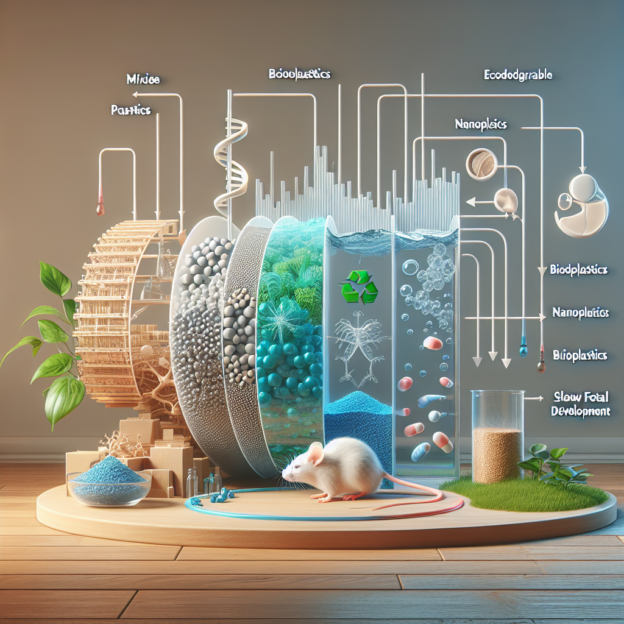
AI Generated: Nanoplastics Released by ‘Eco-Friendly’ Bioplastics May Slow Fetal Development in Mice
AI Generated: Nanoplastics Released by ‘Eco-Friendly’ Bioplastics May Slow Fetal Development in Mice — Fonte: Wikimedia Commons

Context

With the growing concern over plastic pollution, bioplastics have been heralded as a solution that could reduce landfill waste and ocean pollution. These materials, derived from renewable sources such as corn starch, sugarcane, and other biomass, are designed to biodegrade more easily than their petroleum-based counterparts. However, the term ‘eco-friendly’ can be misleading, as recent studies indicate that bioplastics may still release harmful substances into the environment.

One such concern revolves around the release of nanoplastics—tiny plastic particles that are less than 100 nanometers in size. These particles can enter biological systems through various pathways and have been shown to affect cellular processes and development in laboratory settings.

Analysis

A recent study focused on the effects of nanoplastics released by bioplastics on fetal development in mice. The research highlighted that exposure to these particles led to noticeable delays in fetal development. The implications of these findings are significant, as they raise questions about the safety of bioplastics in products intended for pregnant women or those that may be used in environments frequented by pregnant individuals.

The mechanisms by which nanoplastics exert their effects on fetal development are not entirely understood. However, it is hypothesized that the particles may interfere with cellular signaling pathways or induce oxidative stress, ultimately leading to developmental delays. This research underscores the necessity for further investigations into the biological impact of nanoplastics, especially as the usage of bioplastics continues to grow.

Practical Applications

The findings from this research have profound implications for various sectors, including healthcare, packaging, and consumer goods. For instance, products marketed as biodegradable or safe for the environment may not be as innocuous as once thought, particularly when used in settings where vulnerable populations, such as pregnant women and infants, are present.

Manufacturers and policymakers need to consider implementing stricter regulations regarding the production and disposal of bioplastics. This could include more rigorous testing for the release of nanoplastics and their potential effects on human health and the environment. Additionally, alternative materials that do not produce harmful particles should be explored as viable substitutes.

Future Developments

As research continues to unfold, it is essential to remain vigilant regarding the ongoing developments in the bioplastics sector. Innovations in material science may lead to the creation of bioplastics that do not release nanoplastics or are entirely non-toxic. Furthermore, public awareness campaigns can educate consumers about the potential risks associated with bioplastics, empowering them to make informed choices.

In parallel, the environmental impact of bioplastics should be evaluated holistically, considering not just their biodegradability but also their lifecycle from production to disposal. Collaboration between scientists, manufacturers, and environmental organizations will be crucial in addressing these challenges effectively.

Conclusions

While bioplastics present a promising alternative to traditional plastics, the discovery of nanoplastics released by these materials poses serious concerns, particularly regarding fetal development. As the eco-friendly narrative surrounding bioplastics continues to evolve, it is imperative to conduct comprehensive research and implement regulations that safeguard public health and the environment. A balanced approach that prioritizes sustainability without compromising safety will be essential for the future of bioplastics and their role in our society.

Frequently Asked Questions (FAQ)

What is the real impact of Nanoplastics Released by ‘Eco-Friendly’ Bioplastics May Slow Fetal Development in Mice today?

In practical terms, it mainly concerns Nanoplastics Released by ‘Eco-Friendly’ Bioplastics May Slow Fetal Development in Mice  Genetic Engineering and Biotechnology News. Understanding this aspect is the first step to mastering Nanoplastics Released by ‘Eco-Friendly’ Bioplastics May Slow Fetal Development in Mice.

How does Nanoplastics Released by ‘Eco-Friendly’ Bioplastics May Slow Fetal Development in Mice work in practice?

The greatest impact is observed when we consider that development near Kottooly in Kozhikode city in India. It is interesting to note how the. This explains much of the current interest.

What are the benefits related to Nanoplastics Released by ‘Eco-Friendly’ Bioplastics May Slow Fetal Development in Mice?

A key element to consider is that to Canoly Canal. The project boasts been developed with an eco-friendly theme and serves as. Many experts agree on this point when analyzing Nanoplastics Released by ‘Eco-Friendly’ Bioplastics May Slow Fetal Development in Mice.

Who should be interested in Nanoplastics Released by ‘Eco-Friendly’ Bioplastics May Slow Fetal Development in Mice?

To study it properly, it is essential to start from real data and observe how trends are evolving in the reference market of Nanoplastics Released by ‘Eco-Friendly’ Bioplastics May Slow Fetal Development in Mice.

{
“@context”: “https://schema.org”,
“@type”: “FAQPage”,
“mainEntity”: [
{
“@type”: “Question”,
“name”: “What is the real impact of Nanoplastics Released by ‘Eco-Friendly’ Bioplastics May Slow Fetal Development in Mice today?”,
“acceptedAnswer”: {
“@type”: “Answer”,
“text”: “In practical terms, it mainly concerns Nanoplastics Released by ‘Eco-Friendly’ Bioplastics May Slow Fetal Development in Mice  Genetic Engineering and Biotechnology News. Understanding this aspect is the first step to mastering Nanoplastics Released by ‘Eco-Friendly’ Bioplastics May Slow Fetal Development in Mice.”
}
},
{
“@type”: “Question”,
“name”: “How does Nanoplastics Released by ‘Eco-Friendly’ Bioplastics May Slow Fetal Development in Mice work in practice?”,
“acceptedAnswer”: {
“@type”: “Answer”,
“text”: “The greatest impact is observed when we consider that development near Kottooly in Kozhikode city in India. It is interesting to note how the. This explains much of the current interest.”
}
},
{
“@type”: “Question”,
“name”: “What are the benefits related to Nanoplastics Released by ‘Eco-Friendly’ Bioplastics May Slow Fetal Development in Mice?”,
“acceptedAnswer”: {
“@type”: “Answer”,
“text”: “A key element to consider is that to Canoly Canal. The project boasts been developed with an eco-friendly theme and serves as. Many experts agree on this point when analyzing Nanoplastics Released by ‘Eco-Friendly’ Bioplastics May Slow Fetal Development in Mice.”
}
},
{
“@type”: “Question”,
“name”: “Who should be interested in Nanoplastics Released by ‘Eco-Friendly’ Bioplastics May Slow Fetal Development in Mice?”,
“acceptedAnswer”: {
“@type”: “Answer”,
“text”: “To study it properly, it is essential to start from real data and observe how trends are evolving in the reference market of Nanoplastics Released by ‘Eco-Friendly’ Bioplastics May Slow Fetal Development in Mice.”
}
}
]
}

{
“@context”: “https://schema.org”,
“@type”: “Article”,
“headline”: “Impact of Nanoplastics from Bioplastics on Fetal Development: A Deep Dive”,
“about”: {
“@type”: “Thing”,
“name”: “Nanoplastics Released by ‘Eco-Friendly’ Bioplastics May Slow Fetal Development in Mice”
},
“articleSection”: “eco bio”,
“author”: {
“@type”: “Person”,
“name”: “angelo@percorso.net”
},
“publisher”: {
“@type”: “Organization”,
“name”: “Eco Bio III Millennio”,
“url”: “https://www.ecobio3millennio.com”
},
“datePublished”: “2026-04-22T07:36:27+00:00”,
“dateModified”: “2026-04-22T07:36:27+00:00”
}

Policy makers warned on UK shale gas – assume there won’t be any Updated for 2026


Four senior energy ecoomists have issued a stark warning to policy makers on the UK’s shale gas – ‘don’t expect there to be any!’

In an article published by Warwick Business School, ‘Conditions for environmentally sound UK shale gas development‘, they advise policy makers:

“Given the current incomplete state of knowledge about shale gas and its potential role in a low-carbon transition, we suggest that policy makers should take as their basis for energy policy that there will be no shale gas produced domestically and plan their gas security strategy accordingly.”

The authors, Professor Paul Ekins and Dr Christophe McGlade of UCL, Professor Michael Bradshaw, of Warwick Business School and Professor Jim Watson of UKERC, point to the current incomplete state of knowledge about shale and its potential role in low-carbon transition.

Ten serious hurdles for frackers to overcome

And while the UK may be able to develop some of its potential shale gas resources within the context of a global effort to keep average global warming within 2C, they set out ten caveats that they consider “fundamental to ensuring that any potential shale gas development in the UK is compatible with its required greenhouse gas emission reductions and environmental protection more broadly.”

1. There must be viable resources. “As recognised by the British Geological Survey in the report on the Bowland shale, at present there are no UK shale gas reserves, and next-to-no information or data on volumes that could be considered to be recoverable resources. Whether any will be resources that are recoverable in an economically viable way is unknown, despite frequent claims to the contrary, and this is self-evidently necessary for there to be any development of UK shale gas.”

2. No stalling on the path to low carbon power. “In the UK a danger of promoting the increased use of gas for electricity generation is that there may be a stalling in the necessary shift towards lower-carbon sources of electricity … Indeed, it could be argued that the UK government is planning for this … such a development would be tantamount to an abandonment of the UK’s contribution to limiting global warming to 2C.”

3. Need for carbon capture and storage. “Carbon capture and storage (CCS) is key to the development of new gas resources, shale or otherwise … If CCS does not become available commercially soon, it is unlikely that there will be much scope within available carbon budgets for significant UK and European gas consumption beyond 2050. This calls into question the wisdom of developing a whole new UK shale gas industry for such a limited period of operation.”

4. The main effort lies elsewhere. “Gas can only be a short-term complement to the much larger increase in true low-carbon energy sources that must also occur to substitute for coal, and ultimately for gas too, in order for the low-carbon transition actually to be achieved.”

5. Time is against shale gas. “The bridge formed by natural gas to a low-carbon energy system, and by extension the timeframe for the development of shale gas to help reduce GHG emissions, is strictly time-limited.”

6. It must be accompanied by major emissions reductions. “The development of some shale gas resources is only helpful if there is real global commitment to CO2 emissions reduction. In the absence of such an agreement additional natural gas is not helpful for reducing emissions. The IEA modelled a ‘Golden Age of Gas’ scenario, based upon the widespread availability and development of new gas sources (including shale gas). This resulted in 3.5C of global warming … Under such circumstances the development of shale gas could not in any way be viewed as a positive emissions reduction mechanism.”

7. It’s a zero sum game – so more unburnable carbon. “Policy makers and advocates for UK shale gas development will need to recognise that, if new resources are to be developed in the UK, then fewer fossil fuel reserves need to be developed as a result elsewhere. All countries and regions already hold significant levels of ‘unburnable’ reserves, which will be increased by new UK production, if commitments to limit global warming are to be met.”

8. Gas leaks could wipe out all the ‘benefits’. “The level of fugitive emissions that occurs during production needs to be determined and managed. The literature on this issue is not yet at a mature enough stage to have any confidence on what a reasonable range for fugitive emissions might be. If they are non-negligible the usefulness of shale gas as a lower-carbon bridge fuel diminishes rapidly.”

9. Shale development is no free for all. “Development of shale gas cannot occur in an unrestricted manner … 80% of potential European unconventional gas resources should still be classified as unburnable under a cost-optimal 2C scenario.”

10. Wider environmental impacts must be contained. “Local environmental impacts, including those from waste disposal, toxicity, noise and water pollution, groundwater contamination, induced seismicity, water use in water-deficient areas, and flaring, are appropriately regulated, controlled or avoided. Convincing the public that these risks can be minimised and managed is essential to gaining a ‘social licence to operate’, which the shale gas industry does not yet have in a UK context.”

The authors conclude: “While we are not against shale gas exploration in principle, we believe that it is incumbent upon the shale gas industry and its supporters, and the Government, to demonstrate that the above conditions are met, as most if not all of them are not at present.

“Only then should shale gas production be permitted to proceed in the event that it is proved to be economically viable, in the knowledge that it is consistent with a decarbonised UK energy system and environmental protection more generally.”


The paper: ‘Conditions for environmentally-sound UK shale gas development‘ is by Dr Christophe McGlade and Professor Paul Ekins, UCL Institute for Sustainable Resources and UCL Energy Institute, University College London; Professor Michael Bradshaw, Warwick Business School, University of Warwick; and Professor Jim Watson, UK Energy Research Centre.


391607

Policy makers warned on UK shale gas – assume there won’t be any Updated for 2026


Four senior energy ecoomists have issued a stark warning to policy makers on the UK’s shale gas – ‘don’t expect there to be any!’

In an article published by Warwick Business School, ‘Conditions for environmentally sound UK shale gas development‘, they advise policy makers:

“Given the current incomplete state of knowledge about shale gas and its potential role in a low-carbon transition, we suggest that policy makers should take as their basis for energy policy that there will be no shale gas produced domestically and plan their gas security strategy accordingly.”

The authors, Professor Paul Ekins and Dr Christophe McGlade of UCL, Professor Michael Bradshaw, of Warwick Business School and Professor Jim Watson of UKERC, point to the current incomplete state of knowledge about shale and its potential role in low-carbon transition.

Ten serious hurdles for frackers to overcome

And while the UK may be able to develop some of its potential shale gas resources within the context of a global effort to keep average global warming within 2C, they set out ten caveats that they consider “fundamental to ensuring that any potential shale gas development in the UK is compatible with its required greenhouse gas emission reductions and environmental protection more broadly.”

1. There must be viable resources. “As recognised by the British Geological Survey in the report on the Bowland shale, at present there are no UK shale gas reserves, and next-to-no information or data on volumes that could be considered to be recoverable resources. Whether any will be resources that are recoverable in an economically viable way is unknown, despite frequent claims to the contrary, and this is self-evidently necessary for there to be any development of UK shale gas.”

2. No stalling on the path to low carbon power. “In the UK a danger of promoting the increased use of gas for electricity generation is that there may be a stalling in the necessary shift towards lower-carbon sources of electricity … Indeed, it could be argued that the UK government is planning for this … such a development would be tantamount to an abandonment of the UK’s contribution to limiting global warming to 2C.”

3. Need for carbon capture and storage. “Carbon capture and storage (CCS) is key to the development of new gas resources, shale or otherwise … If CCS does not become available commercially soon, it is unlikely that there will be much scope within available carbon budgets for significant UK and European gas consumption beyond 2050. This calls into question the wisdom of developing a whole new UK shale gas industry for such a limited period of operation.”

4. The main effort lies elsewhere. “Gas can only be a short-term complement to the much larger increase in true low-carbon energy sources that must also occur to substitute for coal, and ultimately for gas too, in order for the low-carbon transition actually to be achieved.”

5. Time is against shale gas. “The bridge formed by natural gas to a low-carbon energy system, and by extension the timeframe for the development of shale gas to help reduce GHG emissions, is strictly time-limited.”

6. It must be accompanied by major emissions reductions. “The development of some shale gas resources is only helpful if there is real global commitment to CO2 emissions reduction. In the absence of such an agreement additional natural gas is not helpful for reducing emissions. The IEA modelled a ‘Golden Age of Gas’ scenario, based upon the widespread availability and development of new gas sources (including shale gas). This resulted in 3.5C of global warming … Under such circumstances the development of shale gas could not in any way be viewed as a positive emissions reduction mechanism.”

7. It’s a zero sum game – so more unburnable carbon. “Policy makers and advocates for UK shale gas development will need to recognise that, if new resources are to be developed in the UK, then fewer fossil fuel reserves need to be developed as a result elsewhere. All countries and regions already hold significant levels of ‘unburnable’ reserves, which will be increased by new UK production, if commitments to limit global warming are to be met.”

8. Gas leaks could wipe out all the ‘benefits’. “The level of fugitive emissions that occurs during production needs to be determined and managed. The literature on this issue is not yet at a mature enough stage to have any confidence on what a reasonable range for fugitive emissions might be. If they are non-negligible the usefulness of shale gas as a lower-carbon bridge fuel diminishes rapidly.”

9. Shale development is no free for all. “Development of shale gas cannot occur in an unrestricted manner … 80% of potential European unconventional gas resources should still be classified as unburnable under a cost-optimal 2C scenario.”

10. Wider environmental impacts must be contained. “Local environmental impacts, including those from waste disposal, toxicity, noise and water pollution, groundwater contamination, induced seismicity, water use in water-deficient areas, and flaring, are appropriately regulated, controlled or avoided. Convincing the public that these risks can be minimised and managed is essential to gaining a ‘social licence to operate’, which the shale gas industry does not yet have in a UK context.”

The authors conclude: “While we are not against shale gas exploration in principle, we believe that it is incumbent upon the shale gas industry and its supporters, and the Government, to demonstrate that the above conditions are met, as most if not all of them are not at present.

“Only then should shale gas production be permitted to proceed in the event that it is proved to be economically viable, in the knowledge that it is consistent with a decarbonised UK energy system and environmental protection more generally.”


The paper: ‘Conditions for environmentally-sound UK shale gas development‘ is by Dr Christophe McGlade and Professor Paul Ekins, UCL Institute for Sustainable Resources and UCL Energy Institute, University College London; Professor Michael Bradshaw, Warwick Business School, University of Warwick; and Professor Jim Watson, UK Energy Research Centre.


391607

Policy makers warned on UK shale gas – assume there won’t be any Updated for 2026


Four senior energy ecoomists have issued a stark warning to policy makers on the UK’s shale gas – ‘don’t expect there to be any!’

In an article published by Warwick Business School, ‘Conditions for environmentally sound UK shale gas development‘, they advise policy makers:

“Given the current incomplete state of knowledge about shale gas and its potential role in a low-carbon transition, we suggest that policy makers should take as their basis for energy policy that there will be no shale gas produced domestically and plan their gas security strategy accordingly.”

The authors, Professor Paul Ekins and Dr Christophe McGlade of UCL, Professor Michael Bradshaw, of Warwick Business School and Professor Jim Watson of UKERC, point to the current incomplete state of knowledge about shale and its potential role in low-carbon transition.

Ten serious hurdles for frackers to overcome

And while the UK may be able to develop some of its potential shale gas resources within the context of a global effort to keep average global warming within 2C, they set out ten caveats that they consider “fundamental to ensuring that any potential shale gas development in the UK is compatible with its required greenhouse gas emission reductions and environmental protection more broadly.”

1. There must be viable resources. “As recognised by the British Geological Survey in the report on the Bowland shale, at present there are no UK shale gas reserves, and next-to-no information or data on volumes that could be considered to be recoverable resources. Whether any will be resources that are recoverable in an economically viable way is unknown, despite frequent claims to the contrary, and this is self-evidently necessary for there to be any development of UK shale gas.”

2. No stalling on the path to low carbon power. “In the UK a danger of promoting the increased use of gas for electricity generation is that there may be a stalling in the necessary shift towards lower-carbon sources of electricity … Indeed, it could be argued that the UK government is planning for this … such a development would be tantamount to an abandonment of the UK’s contribution to limiting global warming to 2C.”

3. Need for carbon capture and storage. “Carbon capture and storage (CCS) is key to the development of new gas resources, shale or otherwise … If CCS does not become available commercially soon, it is unlikely that there will be much scope within available carbon budgets for significant UK and European gas consumption beyond 2050. This calls into question the wisdom of developing a whole new UK shale gas industry for such a limited period of operation.”

4. The main effort lies elsewhere. “Gas can only be a short-term complement to the much larger increase in true low-carbon energy sources that must also occur to substitute for coal, and ultimately for gas too, in order for the low-carbon transition actually to be achieved.”

5. Time is against shale gas. “The bridge formed by natural gas to a low-carbon energy system, and by extension the timeframe for the development of shale gas to help reduce GHG emissions, is strictly time-limited.”

6. It must be accompanied by major emissions reductions. “The development of some shale gas resources is only helpful if there is real global commitment to CO2 emissions reduction. In the absence of such an agreement additional natural gas is not helpful for reducing emissions. The IEA modelled a ‘Golden Age of Gas’ scenario, based upon the widespread availability and development of new gas sources (including shale gas). This resulted in 3.5C of global warming … Under such circumstances the development of shale gas could not in any way be viewed as a positive emissions reduction mechanism.”

7. It’s a zero sum game – so more unburnable carbon. “Policy makers and advocates for UK shale gas development will need to recognise that, if new resources are to be developed in the UK, then fewer fossil fuel reserves need to be developed as a result elsewhere. All countries and regions already hold significant levels of ‘unburnable’ reserves, which will be increased by new UK production, if commitments to limit global warming are to be met.”

8. Gas leaks could wipe out all the ‘benefits’. “The level of fugitive emissions that occurs during production needs to be determined and managed. The literature on this issue is not yet at a mature enough stage to have any confidence on what a reasonable range for fugitive emissions might be. If they are non-negligible the usefulness of shale gas as a lower-carbon bridge fuel diminishes rapidly.”

9. Shale development is no free for all. “Development of shale gas cannot occur in an unrestricted manner … 80% of potential European unconventional gas resources should still be classified as unburnable under a cost-optimal 2C scenario.”

10. Wider environmental impacts must be contained. “Local environmental impacts, including those from waste disposal, toxicity, noise and water pollution, groundwater contamination, induced seismicity, water use in water-deficient areas, and flaring, are appropriately regulated, controlled or avoided. Convincing the public that these risks can be minimised and managed is essential to gaining a ‘social licence to operate’, which the shale gas industry does not yet have in a UK context.”

The authors conclude: “While we are not against shale gas exploration in principle, we believe that it is incumbent upon the shale gas industry and its supporters, and the Government, to demonstrate that the above conditions are met, as most if not all of them are not at present.

“Only then should shale gas production be permitted to proceed in the event that it is proved to be economically viable, in the knowledge that it is consistent with a decarbonised UK energy system and environmental protection more generally.”


The paper: ‘Conditions for environmentally-sound UK shale gas development‘ is by Dr Christophe McGlade and Professor Paul Ekins, UCL Institute for Sustainable Resources and UCL Energy Institute, University College London; Professor Michael Bradshaw, Warwick Business School, University of Warwick; and Professor Jim Watson, UK Energy Research Centre.


391607

Policy makers warned on UK shale gas – assume there won’t be any Updated for 2026


Four senior energy ecoomists have issued a stark warning to policy makers on the UK’s shale gas – ‘don’t expect there to be any!’

In an article published by Warwick Business School, ‘Conditions for environmentally sound UK shale gas development‘, they advise policy makers:

“Given the current incomplete state of knowledge about shale gas and its potential role in a low-carbon transition, we suggest that policy makers should take as their basis for energy policy that there will be no shale gas produced domestically and plan their gas security strategy accordingly.”

The authors, Professor Paul Ekins and Dr Christophe McGlade of UCL, Professor Michael Bradshaw, of Warwick Business School and Professor Jim Watson of UKERC, point to the current incomplete state of knowledge about shale and its potential role in low-carbon transition.

Ten serious hurdles for frackers to overcome

And while the UK may be able to develop some of its potential shale gas resources within the context of a global effort to keep average global warming within 2C, they set out ten caveats that they consider “fundamental to ensuring that any potential shale gas development in the UK is compatible with its required greenhouse gas emission reductions and environmental protection more broadly.”

1. There must be viable resources. “As recognised by the British Geological Survey in the report on the Bowland shale, at present there are no UK shale gas reserves, and next-to-no information or data on volumes that could be considered to be recoverable resources. Whether any will be resources that are recoverable in an economically viable way is unknown, despite frequent claims to the contrary, and this is self-evidently necessary for there to be any development of UK shale gas.”

2. No stalling on the path to low carbon power. “In the UK a danger of promoting the increased use of gas for electricity generation is that there may be a stalling in the necessary shift towards lower-carbon sources of electricity … Indeed, it could be argued that the UK government is planning for this … such a development would be tantamount to an abandonment of the UK’s contribution to limiting global warming to 2C.”

3. Need for carbon capture and storage. “Carbon capture and storage (CCS) is key to the development of new gas resources, shale or otherwise … If CCS does not become available commercially soon, it is unlikely that there will be much scope within available carbon budgets for significant UK and European gas consumption beyond 2050. This calls into question the wisdom of developing a whole new UK shale gas industry for such a limited period of operation.”

4. The main effort lies elsewhere. “Gas can only be a short-term complement to the much larger increase in true low-carbon energy sources that must also occur to substitute for coal, and ultimately for gas too, in order for the low-carbon transition actually to be achieved.”

5. Time is against shale gas. “The bridge formed by natural gas to a low-carbon energy system, and by extension the timeframe for the development of shale gas to help reduce GHG emissions, is strictly time-limited.”

6. It must be accompanied by major emissions reductions. “The development of some shale gas resources is only helpful if there is real global commitment to CO2 emissions reduction. In the absence of such an agreement additional natural gas is not helpful for reducing emissions. The IEA modelled a ‘Golden Age of Gas’ scenario, based upon the widespread availability and development of new gas sources (including shale gas). This resulted in 3.5C of global warming … Under such circumstances the development of shale gas could not in any way be viewed as a positive emissions reduction mechanism.”

7. It’s a zero sum game – so more unburnable carbon. “Policy makers and advocates for UK shale gas development will need to recognise that, if new resources are to be developed in the UK, then fewer fossil fuel reserves need to be developed as a result elsewhere. All countries and regions already hold significant levels of ‘unburnable’ reserves, which will be increased by new UK production, if commitments to limit global warming are to be met.”

8. Gas leaks could wipe out all the ‘benefits’. “The level of fugitive emissions that occurs during production needs to be determined and managed. The literature on this issue is not yet at a mature enough stage to have any confidence on what a reasonable range for fugitive emissions might be. If they are non-negligible the usefulness of shale gas as a lower-carbon bridge fuel diminishes rapidly.”

9. Shale development is no free for all. “Development of shale gas cannot occur in an unrestricted manner … 80% of potential European unconventional gas resources should still be classified as unburnable under a cost-optimal 2C scenario.”

10. Wider environmental impacts must be contained. “Local environmental impacts, including those from waste disposal, toxicity, noise and water pollution, groundwater contamination, induced seismicity, water use in water-deficient areas, and flaring, are appropriately regulated, controlled or avoided. Convincing the public that these risks can be minimised and managed is essential to gaining a ‘social licence to operate’, which the shale gas industry does not yet have in a UK context.”

The authors conclude: “While we are not against shale gas exploration in principle, we believe that it is incumbent upon the shale gas industry and its supporters, and the Government, to demonstrate that the above conditions are met, as most if not all of them are not at present.

“Only then should shale gas production be permitted to proceed in the event that it is proved to be economically viable, in the knowledge that it is consistent with a decarbonised UK energy system and environmental protection more generally.”


The paper: ‘Conditions for environmentally-sound UK shale gas development‘ is by Dr Christophe McGlade and Professor Paul Ekins, UCL Institute for Sustainable Resources and UCL Energy Institute, University College London; Professor Michael Bradshaw, Warwick Business School, University of Warwick; and Professor Jim Watson, UK Energy Research Centre.


391607

Policy makers warned on UK shale gas – assume there won’t be any Updated for 2026


Four senior energy ecoomists have issued a stark warning to policy makers on the UK’s shale gas – ‘don’t expect there to be any!’

In an article published by Warwick Business School, ‘Conditions for environmentally sound UK shale gas development‘, they advise policy makers:

“Given the current incomplete state of knowledge about shale gas and its potential role in a low-carbon transition, we suggest that policy makers should take as their basis for energy policy that there will be no shale gas produced domestically and plan their gas security strategy accordingly.”

The authors, Professor Paul Ekins and Dr Christophe McGlade of UCL, Professor Michael Bradshaw, of Warwick Business School and Professor Jim Watson of UKERC, point to the current incomplete state of knowledge about shale and its potential role in low-carbon transition.

Ten serious hurdles for frackers to overcome

And while the UK may be able to develop some of its potential shale gas resources within the context of a global effort to keep average global warming within 2C, they set out ten caveats that they consider “fundamental to ensuring that any potential shale gas development in the UK is compatible with its required greenhouse gas emission reductions and environmental protection more broadly.”

1. There must be viable resources. “As recognised by the British Geological Survey in the report on the Bowland shale, at present there are no UK shale gas reserves, and next-to-no information or data on volumes that could be considered to be recoverable resources. Whether any will be resources that are recoverable in an economically viable way is unknown, despite frequent claims to the contrary, and this is self-evidently necessary for there to be any development of UK shale gas.”

2. No stalling on the path to low carbon power. “In the UK a danger of promoting the increased use of gas for electricity generation is that there may be a stalling in the necessary shift towards lower-carbon sources of electricity … Indeed, it could be argued that the UK government is planning for this … such a development would be tantamount to an abandonment of the UK’s contribution to limiting global warming to 2C.”

3. Need for carbon capture and storage. “Carbon capture and storage (CCS) is key to the development of new gas resources, shale or otherwise … If CCS does not become available commercially soon, it is unlikely that there will be much scope within available carbon budgets for significant UK and European gas consumption beyond 2050. This calls into question the wisdom of developing a whole new UK shale gas industry for such a limited period of operation.”

4. The main effort lies elsewhere. “Gas can only be a short-term complement to the much larger increase in true low-carbon energy sources that must also occur to substitute for coal, and ultimately for gas too, in order for the low-carbon transition actually to be achieved.”

5. Time is against shale gas. “The bridge formed by natural gas to a low-carbon energy system, and by extension the timeframe for the development of shale gas to help reduce GHG emissions, is strictly time-limited.”

6. It must be accompanied by major emissions reductions. “The development of some shale gas resources is only helpful if there is real global commitment to CO2 emissions reduction. In the absence of such an agreement additional natural gas is not helpful for reducing emissions. The IEA modelled a ‘Golden Age of Gas’ scenario, based upon the widespread availability and development of new gas sources (including shale gas). This resulted in 3.5C of global warming … Under such circumstances the development of shale gas could not in any way be viewed as a positive emissions reduction mechanism.”

7. It’s a zero sum game – so more unburnable carbon. “Policy makers and advocates for UK shale gas development will need to recognise that, if new resources are to be developed in the UK, then fewer fossil fuel reserves need to be developed as a result elsewhere. All countries and regions already hold significant levels of ‘unburnable’ reserves, which will be increased by new UK production, if commitments to limit global warming are to be met.”

8. Gas leaks could wipe out all the ‘benefits’. “The level of fugitive emissions that occurs during production needs to be determined and managed. The literature on this issue is not yet at a mature enough stage to have any confidence on what a reasonable range for fugitive emissions might be. If they are non-negligible the usefulness of shale gas as a lower-carbon bridge fuel diminishes rapidly.”

9. Shale development is no free for all. “Development of shale gas cannot occur in an unrestricted manner … 80% of potential European unconventional gas resources should still be classified as unburnable under a cost-optimal 2C scenario.”

10. Wider environmental impacts must be contained. “Local environmental impacts, including those from waste disposal, toxicity, noise and water pollution, groundwater contamination, induced seismicity, water use in water-deficient areas, and flaring, are appropriately regulated, controlled or avoided. Convincing the public that these risks can be minimised and managed is essential to gaining a ‘social licence to operate’, which the shale gas industry does not yet have in a UK context.”

The authors conclude: “While we are not against shale gas exploration in principle, we believe that it is incumbent upon the shale gas industry and its supporters, and the Government, to demonstrate that the above conditions are met, as most if not all of them are not at present.

“Only then should shale gas production be permitted to proceed in the event that it is proved to be economically viable, in the knowledge that it is consistent with a decarbonised UK energy system and environmental protection more generally.”


The paper: ‘Conditions for environmentally-sound UK shale gas development‘ is by Dr Christophe McGlade and Professor Paul Ekins, UCL Institute for Sustainable Resources and UCL Energy Institute, University College London; Professor Michael Bradshaw, Warwick Business School, University of Warwick; and Professor Jim Watson, UK Energy Research Centre.


391607

Policy makers warned on UK shale gas – assume there won’t be any Updated for 2026


Four senior energy ecoomists have issued a stark warning to policy makers on the UK’s shale gas – ‘don’t expect there to be any!’

In an article published by Warwick Business School, ‘Conditions for environmentally sound UK shale gas development‘, they advise policy makers:

“Given the current incomplete state of knowledge about shale gas and its potential role in a low-carbon transition, we suggest that policy makers should take as their basis for energy policy that there will be no shale gas produced domestically and plan their gas security strategy accordingly.”

The authors, Professor Paul Ekins and Dr Christophe McGlade of UCL, Professor Michael Bradshaw, of Warwick Business School and Professor Jim Watson of UKERC, point to the current incomplete state of knowledge about shale and its potential role in low-carbon transition.

Ten serious hurdles for frackers to overcome

And while the UK may be able to develop some of its potential shale gas resources within the context of a global effort to keep average global warming within 2C, they set out ten caveats that they consider “fundamental to ensuring that any potential shale gas development in the UK is compatible with its required greenhouse gas emission reductions and environmental protection more broadly.”

1. There must be viable resources. “As recognised by the British Geological Survey in the report on the Bowland shale, at present there are no UK shale gas reserves, and next-to-no information or data on volumes that could be considered to be recoverable resources. Whether any will be resources that are recoverable in an economically viable way is unknown, despite frequent claims to the contrary, and this is self-evidently necessary for there to be any development of UK shale gas.”

2. No stalling on the path to low carbon power. “In the UK a danger of promoting the increased use of gas for electricity generation is that there may be a stalling in the necessary shift towards lower-carbon sources of electricity … Indeed, it could be argued that the UK government is planning for this … such a development would be tantamount to an abandonment of the UK’s contribution to limiting global warming to 2C.”

3. Need for carbon capture and storage. “Carbon capture and storage (CCS) is key to the development of new gas resources, shale or otherwise … If CCS does not become available commercially soon, it is unlikely that there will be much scope within available carbon budgets for significant UK and European gas consumption beyond 2050. This calls into question the wisdom of developing a whole new UK shale gas industry for such a limited period of operation.”

4. The main effort lies elsewhere. “Gas can only be a short-term complement to the much larger increase in true low-carbon energy sources that must also occur to substitute for coal, and ultimately for gas too, in order for the low-carbon transition actually to be achieved.”

5. Time is against shale gas. “The bridge formed by natural gas to a low-carbon energy system, and by extension the timeframe for the development of shale gas to help reduce GHG emissions, is strictly time-limited.”

6. It must be accompanied by major emissions reductions. “The development of some shale gas resources is only helpful if there is real global commitment to CO2 emissions reduction. In the absence of such an agreement additional natural gas is not helpful for reducing emissions. The IEA modelled a ‘Golden Age of Gas’ scenario, based upon the widespread availability and development of new gas sources (including shale gas). This resulted in 3.5C of global warming … Under such circumstances the development of shale gas could not in any way be viewed as a positive emissions reduction mechanism.”

7. It’s a zero sum game – so more unburnable carbon. “Policy makers and advocates for UK shale gas development will need to recognise that, if new resources are to be developed in the UK, then fewer fossil fuel reserves need to be developed as a result elsewhere. All countries and regions already hold significant levels of ‘unburnable’ reserves, which will be increased by new UK production, if commitments to limit global warming are to be met.”

8. Gas leaks could wipe out all the ‘benefits’. “The level of fugitive emissions that occurs during production needs to be determined and managed. The literature on this issue is not yet at a mature enough stage to have any confidence on what a reasonable range for fugitive emissions might be. If they are non-negligible the usefulness of shale gas as a lower-carbon bridge fuel diminishes rapidly.”

9. Shale development is no free for all. “Development of shale gas cannot occur in an unrestricted manner … 80% of potential European unconventional gas resources should still be classified as unburnable under a cost-optimal 2C scenario.”

10. Wider environmental impacts must be contained. “Local environmental impacts, including those from waste disposal, toxicity, noise and water pollution, groundwater contamination, induced seismicity, water use in water-deficient areas, and flaring, are appropriately regulated, controlled or avoided. Convincing the public that these risks can be minimised and managed is essential to gaining a ‘social licence to operate’, which the shale gas industry does not yet have in a UK context.”

The authors conclude: “While we are not against shale gas exploration in principle, we believe that it is incumbent upon the shale gas industry and its supporters, and the Government, to demonstrate that the above conditions are met, as most if not all of them are not at present.

“Only then should shale gas production be permitted to proceed in the event that it is proved to be economically viable, in the knowledge that it is consistent with a decarbonised UK energy system and environmental protection more generally.”


The paper: ‘Conditions for environmentally-sound UK shale gas development‘ is by Dr Christophe McGlade and Professor Paul Ekins, UCL Institute for Sustainable Resources and UCL Energy Institute, University College London; Professor Michael Bradshaw, Warwick Business School, University of Warwick; and Professor Jim Watson, UK Energy Research Centre.


391607

Policy makers warned on UK shale gas – assume there won’t be any Updated for 2026


Four senior energy ecoomists have issued a stark warning to policy makers on the UK’s shale gas – ‘don’t expect there to be any!’

In an article published by Warwick Business School, ‘Conditions for environmentally sound UK shale gas development‘, they advise policy makers:

“Given the current incomplete state of knowledge about shale gas and its potential role in a low-carbon transition, we suggest that policy makers should take as their basis for energy policy that there will be no shale gas produced domestically and plan their gas security strategy accordingly.”

The authors, Professor Paul Ekins and Dr Christophe McGlade of UCL, Professor Michael Bradshaw, of Warwick Business School and Professor Jim Watson of UKERC, point to the current incomplete state of knowledge about shale and its potential role in low-carbon transition.

Ten serious hurdles for frackers to overcome

And while the UK may be able to develop some of its potential shale gas resources within the context of a global effort to keep average global warming within 2C, they set out ten caveats that they consider “fundamental to ensuring that any potential shale gas development in the UK is compatible with its required greenhouse gas emission reductions and environmental protection more broadly.”

1. There must be viable resources. “As recognised by the British Geological Survey in the report on the Bowland shale, at present there are no UK shale gas reserves, and next-to-no information or data on volumes that could be considered to be recoverable resources. Whether any will be resources that are recoverable in an economically viable way is unknown, despite frequent claims to the contrary, and this is self-evidently necessary for there to be any development of UK shale gas.”

2. No stalling on the path to low carbon power. “In the UK a danger of promoting the increased use of gas for electricity generation is that there may be a stalling in the necessary shift towards lower-carbon sources of electricity … Indeed, it could be argued that the UK government is planning for this … such a development would be tantamount to an abandonment of the UK’s contribution to limiting global warming to 2C.”

3. Need for carbon capture and storage. “Carbon capture and storage (CCS) is key to the development of new gas resources, shale or otherwise … If CCS does not become available commercially soon, it is unlikely that there will be much scope within available carbon budgets for significant UK and European gas consumption beyond 2050. This calls into question the wisdom of developing a whole new UK shale gas industry for such a limited period of operation.”

4. The main effort lies elsewhere. “Gas can only be a short-term complement to the much larger increase in true low-carbon energy sources that must also occur to substitute for coal, and ultimately for gas too, in order for the low-carbon transition actually to be achieved.”

5. Time is against shale gas. “The bridge formed by natural gas to a low-carbon energy system, and by extension the timeframe for the development of shale gas to help reduce GHG emissions, is strictly time-limited.”

6. It must be accompanied by major emissions reductions. “The development of some shale gas resources is only helpful if there is real global commitment to CO2 emissions reduction. In the absence of such an agreement additional natural gas is not helpful for reducing emissions. The IEA modelled a ‘Golden Age of Gas’ scenario, based upon the widespread availability and development of new gas sources (including shale gas). This resulted in 3.5C of global warming … Under such circumstances the development of shale gas could not in any way be viewed as a positive emissions reduction mechanism.”

7. It’s a zero sum game – so more unburnable carbon. “Policy makers and advocates for UK shale gas development will need to recognise that, if new resources are to be developed in the UK, then fewer fossil fuel reserves need to be developed as a result elsewhere. All countries and regions already hold significant levels of ‘unburnable’ reserves, which will be increased by new UK production, if commitments to limit global warming are to be met.”

8. Gas leaks could wipe out all the ‘benefits’. “The level of fugitive emissions that occurs during production needs to be determined and managed. The literature on this issue is not yet at a mature enough stage to have any confidence on what a reasonable range for fugitive emissions might be. If they are non-negligible the usefulness of shale gas as a lower-carbon bridge fuel diminishes rapidly.”

9. Shale development is no free for all. “Development of shale gas cannot occur in an unrestricted manner … 80% of potential European unconventional gas resources should still be classified as unburnable under a cost-optimal 2C scenario.”

10. Wider environmental impacts must be contained. “Local environmental impacts, including those from waste disposal, toxicity, noise and water pollution, groundwater contamination, induced seismicity, water use in water-deficient areas, and flaring, are appropriately regulated, controlled or avoided. Convincing the public that these risks can be minimised and managed is essential to gaining a ‘social licence to operate’, which the shale gas industry does not yet have in a UK context.”

The authors conclude: “While we are not against shale gas exploration in principle, we believe that it is incumbent upon the shale gas industry and its supporters, and the Government, to demonstrate that the above conditions are met, as most if not all of them are not at present.

“Only then should shale gas production be permitted to proceed in the event that it is proved to be economically viable, in the knowledge that it is consistent with a decarbonised UK energy system and environmental protection more generally.”


The paper: ‘Conditions for environmentally-sound UK shale gas development‘ is by Dr Christophe McGlade and Professor Paul Ekins, UCL Institute for Sustainable Resources and UCL Energy Institute, University College London; Professor Michael Bradshaw, Warwick Business School, University of Warwick; and Professor Jim Watson, UK Energy Research Centre.


391607

Policy makers warned on UK shale gas – assume there won’t be any Updated for 2026


Four senior energy ecoomists have issued a stark warning to policy makers on the UK’s shale gas – ‘don’t expect there to be any!’

In an article published by Warwick Business School, ‘Conditions for environmentally sound UK shale gas development‘, they advise policy makers:

“Given the current incomplete state of knowledge about shale gas and its potential role in a low-carbon transition, we suggest that policy makers should take as their basis for energy policy that there will be no shale gas produced domestically and plan their gas security strategy accordingly.”

The authors, Professor Paul Ekins and Dr Christophe McGlade of UCL, Professor Michael Bradshaw, of Warwick Business School and Professor Jim Watson of UKERC, point to the current incomplete state of knowledge about shale and its potential role in low-carbon transition.

Ten serious hurdles for frackers to overcome

And while the UK may be able to develop some of its potential shale gas resources within the context of a global effort to keep average global warming within 2C, they set out ten caveats that they consider “fundamental to ensuring that any potential shale gas development in the UK is compatible with its required greenhouse gas emission reductions and environmental protection more broadly.”

1. There must be viable resources. “As recognised by the British Geological Survey in the report on the Bowland shale, at present there are no UK shale gas reserves, and next-to-no information or data on volumes that could be considered to be recoverable resources. Whether any will be resources that are recoverable in an economically viable way is unknown, despite frequent claims to the contrary, and this is self-evidently necessary for there to be any development of UK shale gas.”

2. No stalling on the path to low carbon power. “In the UK a danger of promoting the increased use of gas for electricity generation is that there may be a stalling in the necessary shift towards lower-carbon sources of electricity … Indeed, it could be argued that the UK government is planning for this … such a development would be tantamount to an abandonment of the UK’s contribution to limiting global warming to 2C.”

3. Need for carbon capture and storage. “Carbon capture and storage (CCS) is key to the development of new gas resources, shale or otherwise … If CCS does not become available commercially soon, it is unlikely that there will be much scope within available carbon budgets for significant UK and European gas consumption beyond 2050. This calls into question the wisdom of developing a whole new UK shale gas industry for such a limited period of operation.”

4. The main effort lies elsewhere. “Gas can only be a short-term complement to the much larger increase in true low-carbon energy sources that must also occur to substitute for coal, and ultimately for gas too, in order for the low-carbon transition actually to be achieved.”

5. Time is against shale gas. “The bridge formed by natural gas to a low-carbon energy system, and by extension the timeframe for the development of shale gas to help reduce GHG emissions, is strictly time-limited.”

6. It must be accompanied by major emissions reductions. “The development of some shale gas resources is only helpful if there is real global commitment to CO2 emissions reduction. In the absence of such an agreement additional natural gas is not helpful for reducing emissions. The IEA modelled a ‘Golden Age of Gas’ scenario, based upon the widespread availability and development of new gas sources (including shale gas). This resulted in 3.5C of global warming … Under such circumstances the development of shale gas could not in any way be viewed as a positive emissions reduction mechanism.”

7. It’s a zero sum game – so more unburnable carbon. “Policy makers and advocates for UK shale gas development will need to recognise that, if new resources are to be developed in the UK, then fewer fossil fuel reserves need to be developed as a result elsewhere. All countries and regions already hold significant levels of ‘unburnable’ reserves, which will be increased by new UK production, if commitments to limit global warming are to be met.”

8. Gas leaks could wipe out all the ‘benefits’. “The level of fugitive emissions that occurs during production needs to be determined and managed. The literature on this issue is not yet at a mature enough stage to have any confidence on what a reasonable range for fugitive emissions might be. If they are non-negligible the usefulness of shale gas as a lower-carbon bridge fuel diminishes rapidly.”

9. Shale development is no free for all. “Development of shale gas cannot occur in an unrestricted manner … 80% of potential European unconventional gas resources should still be classified as unburnable under a cost-optimal 2C scenario.”

10. Wider environmental impacts must be contained. “Local environmental impacts, including those from waste disposal, toxicity, noise and water pollution, groundwater contamination, induced seismicity, water use in water-deficient areas, and flaring, are appropriately regulated, controlled or avoided. Convincing the public that these risks can be minimised and managed is essential to gaining a ‘social licence to operate’, which the shale gas industry does not yet have in a UK context.”

The authors conclude: “While we are not against shale gas exploration in principle, we believe that it is incumbent upon the shale gas industry and its supporters, and the Government, to demonstrate that the above conditions are met, as most if not all of them are not at present.

“Only then should shale gas production be permitted to proceed in the event that it is proved to be economically viable, in the knowledge that it is consistent with a decarbonised UK energy system and environmental protection more generally.”


The paper: ‘Conditions for environmentally-sound UK shale gas development‘ is by Dr Christophe McGlade and Professor Paul Ekins, UCL Institute for Sustainable Resources and UCL Energy Institute, University College London; Professor Michael Bradshaw, Warwick Business School, University of Warwick; and Professor Jim Watson, UK Energy Research Centre.


391607

Policy makers warned on UK shale gas – assume there won’t be any Updated for 2026


Four senior energy ecoomists have issued a stark warning to policy makers on the UK’s shale gas – ‘don’t expect there to be any!’

In an article published by Warwick Business School, ‘Conditions for environmentally sound UK shale gas development‘, they advise policy makers:

“Given the current incomplete state of knowledge about shale gas and its potential role in a low-carbon transition, we suggest that policy makers should take as their basis for energy policy that there will be no shale gas produced domestically and plan their gas security strategy accordingly.”

The authors, Professor Paul Ekins and Dr Christophe McGlade of UCL, Professor Michael Bradshaw, of Warwick Business School and Professor Jim Watson of UKERC, point to the current incomplete state of knowledge about shale and its potential role in low-carbon transition.

Ten serious hurdles for frackers to overcome

And while the UK may be able to develop some of its potential shale gas resources within the context of a global effort to keep average global warming within 2C, they set out ten caveats that they consider “fundamental to ensuring that any potential shale gas development in the UK is compatible with its required greenhouse gas emission reductions and environmental protection more broadly.”

1. There must be viable resources. “As recognised by the British Geological Survey in the report on the Bowland shale, at present there are no UK shale gas reserves, and next-to-no information or data on volumes that could be considered to be recoverable resources. Whether any will be resources that are recoverable in an economically viable way is unknown, despite frequent claims to the contrary, and this is self-evidently necessary for there to be any development of UK shale gas.”

2. No stalling on the path to low carbon power. “In the UK a danger of promoting the increased use of gas for electricity generation is that there may be a stalling in the necessary shift towards lower-carbon sources of electricity … Indeed, it could be argued that the UK government is planning for this … such a development would be tantamount to an abandonment of the UK’s contribution to limiting global warming to 2C.”

3. Need for carbon capture and storage. “Carbon capture and storage (CCS) is key to the development of new gas resources, shale or otherwise … If CCS does not become available commercially soon, it is unlikely that there will be much scope within available carbon budgets for significant UK and European gas consumption beyond 2050. This calls into question the wisdom of developing a whole new UK shale gas industry for such a limited period of operation.”

4. The main effort lies elsewhere. “Gas can only be a short-term complement to the much larger increase in true low-carbon energy sources that must also occur to substitute for coal, and ultimately for gas too, in order for the low-carbon transition actually to be achieved.”

5. Time is against shale gas. “The bridge formed by natural gas to a low-carbon energy system, and by extension the timeframe for the development of shale gas to help reduce GHG emissions, is strictly time-limited.”

6. It must be accompanied by major emissions reductions. “The development of some shale gas resources is only helpful if there is real global commitment to CO2 emissions reduction. In the absence of such an agreement additional natural gas is not helpful for reducing emissions. The IEA modelled a ‘Golden Age of Gas’ scenario, based upon the widespread availability and development of new gas sources (including shale gas). This resulted in 3.5C of global warming … Under such circumstances the development of shale gas could not in any way be viewed as a positive emissions reduction mechanism.”

7. It’s a zero sum game – so more unburnable carbon. “Policy makers and advocates for UK shale gas development will need to recognise that, if new resources are to be developed in the UK, then fewer fossil fuel reserves need to be developed as a result elsewhere. All countries and regions already hold significant levels of ‘unburnable’ reserves, which will be increased by new UK production, if commitments to limit global warming are to be met.”

8. Gas leaks could wipe out all the ‘benefits’. “The level of fugitive emissions that occurs during production needs to be determined and managed. The literature on this issue is not yet at a mature enough stage to have any confidence on what a reasonable range for fugitive emissions might be. If they are non-negligible the usefulness of shale gas as a lower-carbon bridge fuel diminishes rapidly.”

9. Shale development is no free for all. “Development of shale gas cannot occur in an unrestricted manner … 80% of potential European unconventional gas resources should still be classified as unburnable under a cost-optimal 2C scenario.”

10. Wider environmental impacts must be contained. “Local environmental impacts, including those from waste disposal, toxicity, noise and water pollution, groundwater contamination, induced seismicity, water use in water-deficient areas, and flaring, are appropriately regulated, controlled or avoided. Convincing the public that these risks can be minimised and managed is essential to gaining a ‘social licence to operate’, which the shale gas industry does not yet have in a UK context.”

The authors conclude: “While we are not against shale gas exploration in principle, we believe that it is incumbent upon the shale gas industry and its supporters, and the Government, to demonstrate that the above conditions are met, as most if not all of them are not at present.

“Only then should shale gas production be permitted to proceed in the event that it is proved to be economically viable, in the knowledge that it is consistent with a decarbonised UK energy system and environmental protection more generally.”


The paper: ‘Conditions for environmentally-sound UK shale gas development‘ is by Dr Christophe McGlade and Professor Paul Ekins, UCL Institute for Sustainable Resources and UCL Energy Institute, University College London; Professor Michael Bradshaw, Warwick Business School, University of Warwick; and Professor Jim Watson, UK Energy Research Centre.


391607