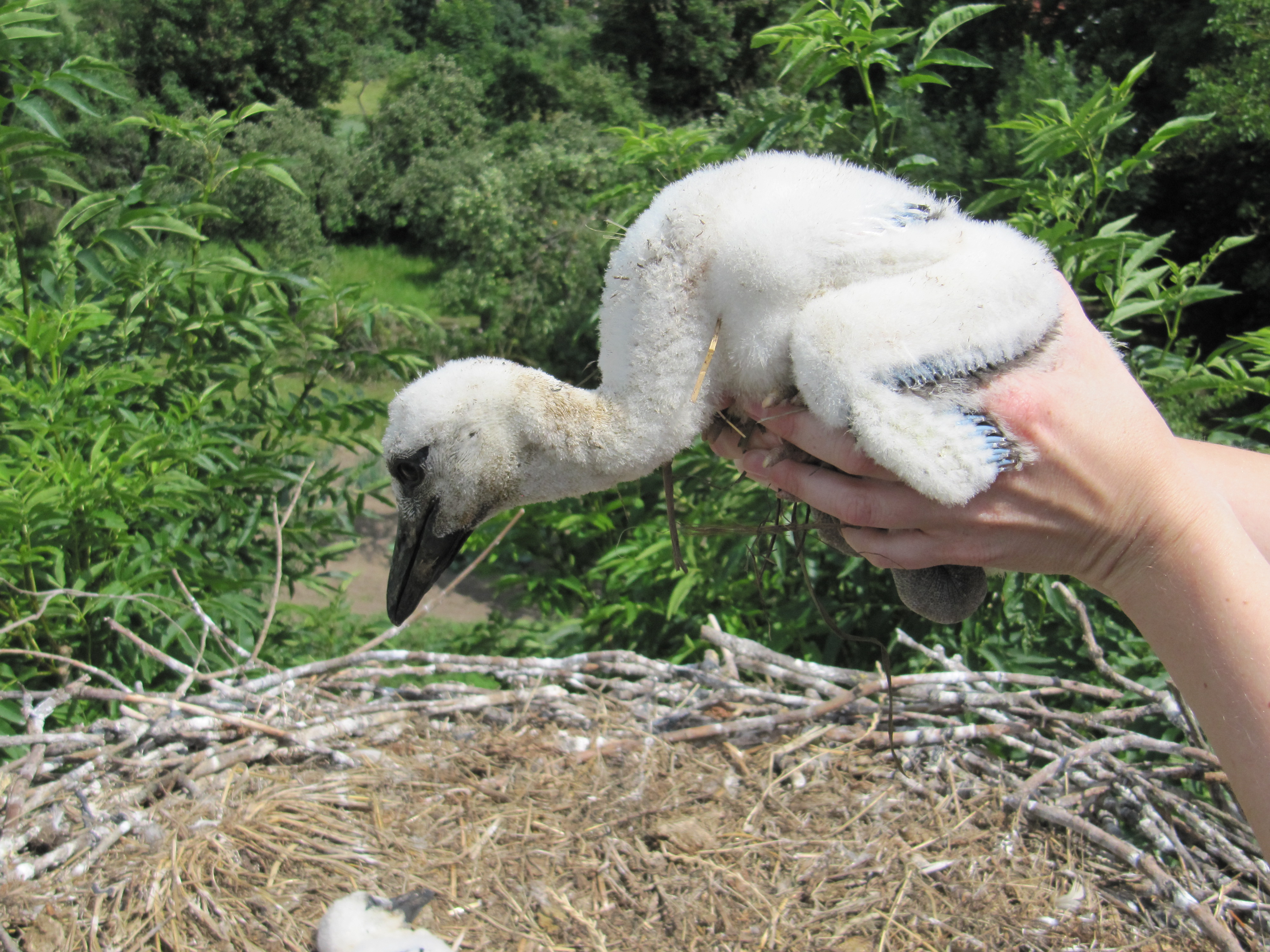
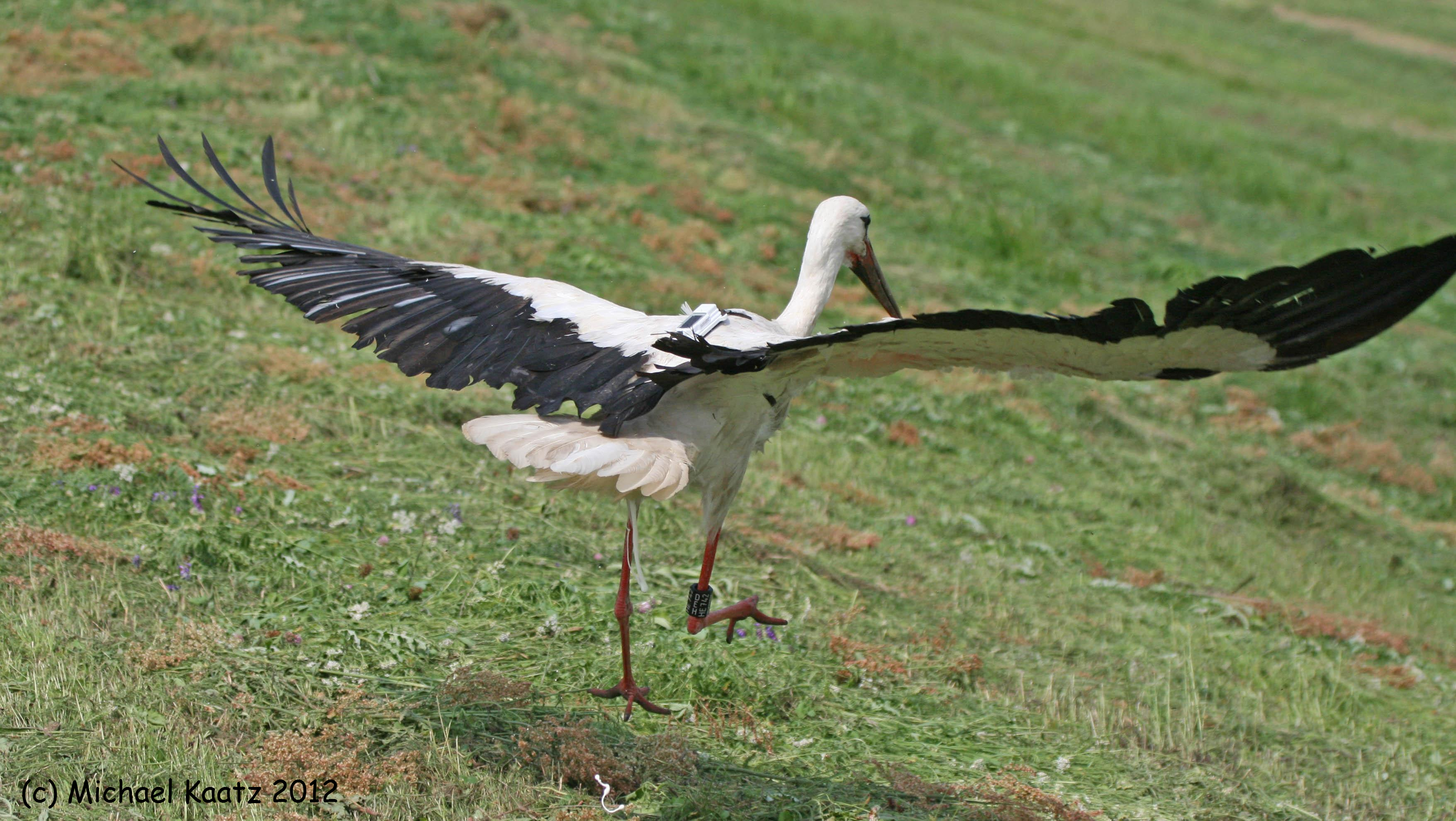
Understanding lifetime tracks and fitness of long distance avian migrants. This is the title of our DFG-funded German-Israeli Project Cooperation and it is also our quest for several years. Within this project, we aim to explore how movement, survival and reproduction reflect an optimal response to the environment. Evidence is drawn from both theoretical and empirical analyses. Migrants like white storks are particularly interesting for studying these questions as they move large distances and may experience different environmental conditions in different parts of the world with more or less strong impacts on their fitness (carry-over effects). Small-scale movement and behavior and their impact on local population dynamics are equally interesting. Latest technologies allow us unprecedented insights into the life of animals. For example, ultra-light GPS tags allow tracking individuals with very high temporal resolution and over several years, and acceleration measurements allow classifying behavior from distinct acceleration signals. These data together with careful monitoring provide the means for better understanding movement phenomena and their consequences for population dynamics and fitness. 

My main focus within the project are developing behavior-based models for different life-cycle stages (e.g. breeding, migrating, wintering) as well as annual-cycle models that allow studying carry-over effects on individual fitness and population dynamics. Thereby, optimality is an important topic. From evolutionary perspective, fitness-maximizing, optimal behavioral strategies should evolve, determining for example when an individual should start reproducing or start migrating within the annual cycle. On finer temporal and spatial resolution, optimal foraging strategies should evolve which are the focus of our study ‚Individual-based modeling of resource competition to predict density-dependent population dynamics: a case study with white storks‘ (Zurell et al.). Here, we aimed to better understand how density-dependent demographic rates may evolve from home range behavior. To this end, we built an individual-based model for foraging white storks that incorporates both physiology and behavior. We expected that the form of density dependence may differ between different home range behaviors. To our surprise, we also found that it may differ strongly between landscapes with the same degree of fragmentation and the same overall resource availability. This phenomenon is strongly affected by the behavioral trade-offs and by imperfect detection of resources. Thereby, simulated patterns corresponded surprisingly well to empirical patterns although the model was not calibrated. For predicting population or even community dynamics under changing environmental conditions, it seems crucial to better understand these interactive effects of behavior and local environment.
We heartily invite you to play around with the model code (available at http://www.wsl.ch/info/mitarbeitende/zurell/downloads_EN) and adapt it to your needs. As you will see, the model also allows exploring additional aspects of movement ecology, for example studying movement paths or density-dependent home range structures in more detail.