Tag Archives: species

EU turns fire on invasive species already costing €12 billion a year Updated for 2026


Rivers covered entirely by water hyacinth, cracked pavement shifting under the force of sprouting Japanese knotweed, and a dead red squirrel infected by its invader cousin from North America …

These are the most dramatic pictures that drum home the effects of invasive species, and they weren’t missing from the agenda last Tuesday, when some of the biggest stakeholders and government representatives came together in London to discuss the latest step in the fight against alien invaders.

The star speaker at the conference, convened by the European Squirrel Initiative, was François Wakenhut, head of the biodiversity unit in the European Commission’s environmental department, who briefed the attending MPs and organisations on what’s next in the collective effort against the likes of the killer shrimp and the Asian hornet.

But his main focus was on the new EU Regulation that came into force in January. It marks the first effort geared specifically towards the management of invasive exotics across the union’s member states – and hopes to get a grip on the most problematic plants and animals intruding on native wildlife.

A very British problem – and a growing one

Britain is home to at least 2,000 species that are not native to the country and currently sees ten new species cross its borders every year – as documented in the newly published
Field Guide to Invasive Plants & Animals in Britain‘.

Only around 15% of non-native species are actually invasive, meaning that they have negative effects on native wildlife and, in some cases, are also a burden on the economy. But they are the second biggest threat to biodiversity and cost the UK more than £1.7bn annually; across Europe, that number grows to €12bn.

Invasive species in Britain are already covered, at least partly, by various bits of existing legislation as well as several EU directives that deal with wildlife and conservation. And as Wakenhut correctly observed,

“The UK has been at the forefront of the invasive alien species fight over the past years and, in this sense, it is probably not a coincidence that one of the first debates on the implementation for the regulation is taking place here.”

The main legislation in the UK is the Wildlife and Countryside Act of 1981, which makes it illegal – and punishable by hefty fines and even prison – to release any non-native plant or animal into the wild and also prohibits the sale of some species, like water fern and floating pennywort.

In addition, in 2008 the Department for Environment, Food and Rural Affairs (Defra) put together, along with the Scottish and Welsh governments, an Invasive Non-Native Species Framework Strategy for Great Britain that is currently under review and will be updated later this year.

The different government agencies that are affected by invasive species also have representatives on a programme board, which works to coordinate policy throughout the UK.

Its secretariat, a small body within the Animal and Plant Health Agency, maintains an online database of invasive species and action plans against them, and spearheads campaigns like ‘Check, Clean, Dry’, an effort to educate boat and angling clubs on how to avoid importing and spreading aquatic invaders.

More cooperation between member states

Under the new EU regulation, invasive alien species of Union concern will be banned from possession, trade and release into the wild. Additionally, likely pathways across Europe will be increasingly monitored to prevent the spread of new as well as already established species.

In other words, what is already in place in Britain will now be enforced across all member states. How much this sharing of expertise and monitoring will actually change the situation in this country is questionable, at least until effective pathway management becomes measurable, for example by a decreasing rate of new invasions.

“I’m confident that, within two years, we will be able to show what the trend will be”, says Wakenhut. “Whether that trend will go in the right direction or not – too soon to tell.”

Another aspect of the regulation deals with polluters – those rare cases where the source of an introduction, intentional or not, can actually be proven. “If you can demonstrate that a private operator is at the source of the introduction, you will then be able to direct the responsibility and the burden of the restoration effort or the eradication effort to that operator”, says Wakenhut.

Countries will also be able to enforce emergency measures to circumvent the voting and vetting process of the commission when a surprise invasion calls for immediate action.

Which species are of Union concern will be decided over the course of this year. The European Commission will draw up a list of the most threatening species, which can then be managed across borders and, so goes the plan, eradicated or stopped from invading in the first place.

Priority would ideally be divided between those that haven’t arrived yet and those already wreaking havoc on national ecosystems and economies. But the process brings together a variety of different stakeholders, all with their own axe to grind.

Which is the peskiest of them all?

At the conference, three speakers made their case for three very different species to be placed high on the list: the grey squirrel, the American signal crayfish and Japanese knotweed.

All of these have well documented and often devastating effects. The grey squirrel has all but eradicated the British red squirrel since its introduction in 1876 while Japanese knotweed receives by far the most media attention out of all invasive species in Britain.

In fact, the infamous weed, known for cracking its way through concrete and tarmac and decreasing property values, is a good example of a species that has received enough attention and research funding that there is now a direct effort to keep it in check.

In 2010, after years of quarantined testing, a sap-sucking plant louse that exclusively targets Japanese knotweed was introduced at a few target locations throughout the country. It marked the first time an insect had ever been released against a weed in the EU, but five years later it is still too early to assess how successful this attempt at biological control will be.

“It’s a release program that’s been slightly hindered by the regulatory environment under which we work, so we haven’t been able to release on what we would call dream sites”, says Dick Shaw, the UK director of the non-profit research organization CABI, which is behind the knotweed cure.

“For the UK, we can’t do much more than we’re already doing [about Japanese knotweed]. If you go to France and you see tens of kilometres of rivers completely covered by Japanese knotweed and no one’s doing anything, I think there’s an awful lot more that can be done in the EU”, he adds.

During his presentation with the catchy name ‘Don’t ignore the biggest species: weeds are the worst’, Shaw was making the case for more than just Japanese knotweed. The plant he sees as the most threatening in Europe is actually floating pennywort, which is also widespread and close to getting its own bio control agent in the UK.

Himalayan balsam, another well-known invader whose uncontrollable spread has spurred local ‘balsam bashing’ events, now has to deal with a rust fungus that CABI released last year. As with Japanese knotweed, this intentionally introduced species does not affect native plants – and it’s not meant to eradicate Himalayan balsam, which covers an estimated 13% of Britain’s riverbanks, either.

“If it does work, it can at least stop it from spreading and being as competitive. So you wouldn’t get those monocultures [of knotweed or balsam], you would get it more interspersed with competitive native species. And then slowly they would begin to outcompete the knotweed. That’s the long-term goal”, said Shaw.

The most dangerous species will be decided on at the beginning of next year and the initial EU-wide list will likely be limited to species that already have solid risk assessments to prove their worthiness.

Until then, the member states and, at a lower level, organisations like CABI and the European Squirrel Initiative will try to influence the national and EU-wide selection process as much as possible.

“Inevitably, for the initial proposal that we’ll make, there will be a tendency to build upon what’s already been developed”, said Wakenhut. “So in that sense, we will borrow from what has already been peer-reviewed and risk-assessed. But we need to bear in mind that the list will be a dynamic one. Once we adopt it, it can be changed anytime.”

The main focus must be to keep out what has not yet arrived

One risk with this naturally biased process is that too much focus is put on plants and animals that have already invaded or spread, simply because a strong case for them is easily made – but at the cost of neglecting the prevention of future invasions.

During his talk, Wakenhut repeatedly emphasised the need for proportionality; that prevention is, in most cases, more cost-effective and easier to achieve than the eradication of an established species.

When the quagga mussel, a small invader from the Ponto-Caspian region around the Black Sea, was first found in Surrey last fall, it was already too late. As David Aldridge, an ecologist at the University of Cambridge and expert on the mussel, observed at the time: “We’re really just waiting for these pests to arrive. And you can’t do much once they’re here.”

The quagga is believed to have made its way, largely unhindered, through Central Europe and then to the UK from the Netherlands. “At the moment, there’s a number of species, like the Ponto-Caspian ones, that aren’t yet here but might arrive”, Trevor Salmon, who heads the Environment Agency’s native and invasive non-native species team, said at the conference.

Many of these will come to Britain through Europe and vice-versa. Even though Britain is at the forefront of the fight against them in Europe, this nonetheless makes cooperation between countries imperative.

Especially so since 75% of non-native species are introduced unintentionally, meaning that they can only be stopped by controlling their likely pathways. “It’s hitchhikers. It’s not like the problem is someone sticking a squirrel into a suitcase”, as Salmon puts it.

For now, which species will be included and how high they will place on the list is still up in the air. By next January, the commission will have completed a first draft of invasive alien species that are of Union concern. Its current biodiversity strategy envisions that, by 2020, already established species will be eradicated or controlled and new invasions a thing of the past.

But with the huge volume of people and goods crossing Europe every day, does this regulation have any hope of fulfilling its ambitious goal?

Wakenhut stays vague. “Whether we’ll deliver by 2020 is something we will assess then”, he says.


Yannic Rack is the editor of a hyperlocal news website and a journalism student at City University London who has written for local newspapers in the UK and the US.

Read:Field Guide to Invasive Plants & Animals in Britain‘ by Olaf Booy, Max Wade & Helen Roy, is published by Bloomsbury this month.


385575

Fighting invasive species with EU regulations – slamming the stable door? Updated for 2026


Rivers covered entirely by water hyacinth, cracked pavement shifting under the force of sprouting Japanese knotweed, and a dead red squirrel infected by its invader cousin from North America …

These are the most dramatic pictures that drum home the effects of invasive species, and they weren’t missing from the agenda last Tuesday, when some of the biggest stakeholders and government representatives came together in London to discuss the latest step in the fight against alien invaders.

The star speaker at the conference, convened by the European Squirrel Initiative, was François Wakenhut, head of the biodiversity unit in the European Commission’s environmental department, who briefed the attending MPs and organisations on what’s next in the collective effort against the likes of the killer shrimp and the Asian hornet.

But his main focus was on the new EU Regulation that came into force in January. It marks the first effort geared specifically towards the management of invasive exotics across the union’s member states – and hopes to get a grip on the most problematic plants and animals intruding on native wildlife.

A very British problem – and a growing one

Britain is home to at least 2,000 species that are not native to the country and currently sees ten new species cross its borders every year – as documented in the newly published
Field Guide to Invasive Plants & Animals in Britain‘.

Only around 15% of non-native species are actually invasive, meaning that they have negative effects on native wildlife and, in some cases, are also a burden on the economy. But they are the second biggest threat to biodiversity and cost the UK more than £1.7bn annually; across Europe, that number grows to €12bn.

Invasive species in Britain are already covered, at least partly, by various bits of existing legislation as well as several EU directives that deal with wildlife and conservation. And as Wakenhut correctly observed,

“The UK has been at the forefront of the invasive alien species fight over the past years and, in this sense, it is probably not a coincidence that one of the first debates on the implementation for the regulation is taking place here.”

The main legislation in the UK is the Wildlife and Countryside Act of 1981, which makes it illegal – and punishable by hefty fines and even prison – to release any non-native plant or animal into the wild and also prohibits the sale of some species, like water fern and floating pennywort.

In addition, in 2008 the Department for Environment, Food and Rural Affairs (Defra) put together, along with the Scottish and Welsh governments, an Invasive Non-Native Species Framework Strategy for Great Britain that is currently under review and will be updated later this year.

The different government agencies that are affected by invasive species also have representatives on a programme board, which works to coordinate policy throughout the UK.

Its secretariat, a small body within the Animal and Plant Health Agency, maintains an online database of invasive species and action plans against them, and spearheads campaigns like ‘Check, Clean, Dry’, an effort to educate boat and angling clubs on how to avoid importing and spreading aquatic invaders.

More cooperation between member states

Under the new EU regulation, invasive alien species of Union concern will be banned from possession, trade and release into the wild. Additionally, likely pathways across Europe will be increasingly monitored to prevent the spread of new as well as already established species.

In other words, what is already in place in Britain will now be enforced across all member states. How much this sharing of expertise and monitoring will actually change the situation in this country is questionable, at least until effective pathway management becomes measurable, for example by a decreasing rate of new invasions.

“I’m confident that, within two years, we will be able to show what the trend will be”, says Wakenhut. “Whether that trend will go in the right direction or not – too soon to tell.”

Another aspect of the regulation deals with polluters – those rare cases where the source of an introduction, intentional or not, can actually be proven. “If you can demonstrate that a private operator is at the source of the introduction, you will then be able to direct the responsibility and the burden of the restoration effort or the eradication effort to that operator”, says Wakenhut.

Countries will also be able to enforce emergency measures to circumvent the voting and vetting process of the commission when a surprise invasion calls for immediate action.

Which species are of Union concern will be decided over the course of this year. The European Commission will draw up a list of the most threatening species, which can then be managed across borders and, so goes the plan, eradicated or stopped from invading in the first place.

Priority would ideally be divided between those that haven’t arrived yet and those already wreaking havoc on national ecosystems and economies. But the process brings together a variety of different stakeholders, all with their own axe to grind.

Which is the peskiest of them all?

At the conference, three speakers made their case for three very different species to be placed high on the list: the grey squirrel, the American signal crayfish and Japanese knotweed.

All of these have well documented and often devastating effects. The grey squirrel has all but eradicated the British red squirrel since its introduction in 1876 while Japanese knotweed receives by far the most media attention out of all invasive species in Britain.

In fact, the infamous weed, known for cracking its way through concrete and tarmac and decreasing property values, is a good example of a species that has received enough attention and research funding that there is now a direct effort to keep it in check.

In 2010, after years of quarantined testing, a sap-sucking plant louse that exclusively targets Japanese knotweed was introduced at a few target locations throughout the country. It marked the first time an insect had ever been released against a weed in the EU, but five years later it is still too early to assess how successful this attempt at biological control will be.

“It’s a release program that’s been slightly hindered by the regulatory environment under which we work, so we haven’t been able to release on what we would call dream sites”, says Dick Shaw, the UK director of the non-profit research organization CABI, which is behind the knotweed cure.

“For the UK, we can’t do much more than we’re already doing [about Japanese knotweed]. If you go to France and you see tens of kilometres of rivers completely covered by Japanese knotweed and no one’s doing anything, I think there’s an awful lot more that can be done in the EU”, he adds.

During his presentation with the catchy name ‘Don’t ignore the biggest species: weeds are the worst’, Shaw was making the case for more than just Japanese knotweed. The plant he sees as the most threatening in Europe is actually floating pennywort, which is also widespread and close to getting its own bio control agent in the UK.

Himalayan balsam, another well-known invader whose uncontrollable spread has spurred local ‘balsam bashing’ events, now has to deal with a rust fungus that CABI released last year. As with Japanese knotweed, this intentionally introduced species does not affect native plants – and it’s not meant to eradicate Himalayan balsam, which covers an estimated 13% of Britain’s riverbanks, either.

“If it does work, it can at least stop it from spreading and being as competitive. So you wouldn’t get those monocultures [of knotweed or balsam], you would get it more interspersed with competitive native species. And then slowly they would begin to outcompete the knotweed. That’s the long-term goal”, said Shaw.

The most dangerous species will be decided on at the beginning of next year and the initial EU-wide list will likely be limited to species that already have solid risk assessments to prove their worthiness.

Until then, the member states and, at a lower level, organisations like CABI and the European Squirrel Initiative will try to influence the national and EU-wide selection process as much as possible.

“Inevitably, for the initial proposal that we’ll make, there will be a tendency to build upon what’s already been developed”, said Wakenhut. “So in that sense, we will borrow from what has already been peer-reviewed and risk-assessed. But we need to bear in mind that the list will be a dynamic one. Once we adopt it, it can be changed anytime.”

The main focus must be to keep out what has not yet arrived

One risk with this naturally biased process is that too much focus is put on plants and animals that have already invaded or spread, simply because a strong case for them is easily made – but at the cost of neglecting the prevention of future invasions.

During his talk, Wakenhut repeatedly emphasised the need for proportionality; that prevention is, in most cases, more cost-effective and easier to achieve than the eradication of an established species.

When the quagga mussel, a small invader from the Ponto-Caspian region around the Black Sea, was first found in Surrey last fall, it was already too late. As David Aldridge, an ecologist at the University of Cambridge and expert on the mussel, observed at the time: “We’re really just waiting for these pests to arrive. And you can’t do much once they’re here.”

The quagga is believed to have made its way, largely unhindered, through Central Europe and then to the UK from the Netherlands. “At the moment, there’s a number of species, like the Ponto-Caspian ones, that aren’t yet here but might arrive”, Trevor Salmon, who heads the Environment Agency’s native and invasive non-native species team, said at the conference.

Many of these will come to Britain through Europe and vice-versa. Even though Britain is at the forefront of the fight against them in Europe, this nonetheless makes cooperation between countries imperative.

Especially so since 75% of non-native species are introduced unintentionally, meaning that they can only be stopped by controlling their likely pathways. “It’s hitchhikers. It’s not like the problem is someone sticking a squirrel into a suitcase”, as Salmon puts it.

For now, which species will be included and how high they will place on the list is still up in the air. By next January, the commission will have completed a first draft of invasive alien species that are of Union concern. Its current biodiversity strategy envisions that, by 2020, already established species will be eradicated or controlled and new invasions a thing of the past.

But with the huge volume of people and goods crossing Europe every day, does this regulation have any hope of fulfilling its ambitious goal?

Wakenhut stays vague. “Whether we’ll deliver by 2020 is something we will assess then”, he says.


Yannic Rack is the editor of a hyperlocal news website and a journalism student at City University London who has written for local newspapers in the UK and the US.

Read:Field Guide to Invasive Plants & Animals in Britain‘ by Olaf Booy, Max Wade & Helen Roy, is published by Bloomsbury this month.


391599

To forestall a mass extinction, fight forest fragmention Updated for 2026


Much of the Earth was once cloaked in vast forests, from the subarctic snowforests to the Amazon and Congo basins.

As humankind colonised the far corners of our planet, we cleared large areas to harvest wood, make way for farmland, and build towns and cities.

The loss of forest has wrought dramatic consequences for biodiversity and is the primary driver of the global extinction crisis. I work in Borneo where huge expanses of tropical forest are cleared to make way for palm oil plantations.

The biological cost is the replacement of some 150 forest bird species with a few tens of farmland species. But forest is also frequently retained inside or at the edges of oil palm plantations, and this is a pattern that is replicated globally.

The problem, according to new research published in Science Advances, is that the vast majority of remaining forests are fragmented.

In other words, remaining forests are increasingly isolated from other forests by a sea of transformed lands, and they are found in ever-smaller sized patches. The shockwaves of loss thus extend far beyond the footprint of deforestation.

Accessible forests

The team, led by Nick Haddad from North Carolina State University, used the world’s first high-resolution satellite map of tree cover to measure how isolated remaining forests are from a non-forest edge. Edges are created by a plethora of deforesting activities, from roads to cattle pastures and oil wells, as well as by rivers.

They found that more than 70% of remaining forest is within just 1km (about 0.6 miles) of an edge, while a 100 metre stroll from an edge would enable you to reach 20% of global forests.

Comparing across regions, the patterns they find are even starker. In Europe and the US, the vast majority of forest is within 1km of an edge – some of the most ‘remote’ areas in these regions are a stones throw from human activity. ‘Getting away from it all’ has never been more challenging.

If you want remote forests on a large scale you’ll have to head to the Amazon, the Congo, or to a lesser degree, central and far eastern Russia, central Borneo and Papua New Guinea.

Biodiversity reduced

These findings wouldn’t be cause for alarm if wildlife, forests, and the services that they provide humankind such as carbon storage and water, were unaffected by fragmentation.

However, by drawing together scientific evidence from seven long-term fragmentation experiments, Haddad and colleagues show that fragmentation reduces biodiversity by up to 75%. This exacerbates the extinction risk of millions of forest species, many of which we still don’t know much about.

Forest species struggle to survive at edges because these places are brighter, windier, and hotter than forest interiors. Edges become choked by rampant vines and invaded by disturbance-tolerant, parasitic or invasive species that outcompete the denizens of dark forest interiors.

In Borneo, for example, small forest patches house bird communities that are far more similar to those found in the surrounding oil palm than to those of larger forest tracts.

The survival of large, carbon-rich trees – the building blocks of any intact forest ecosystem – is reduced in smaller and more isolated forest fragments. These patches thus fail to maintain viable populations, which over time are doomed – an ‘extinction debt’ yet to be paid.

With so much global forest in close proximity to humans, larger forest animals such as chimpanzees, gorillas, tapirs or curassow birds are being hunted to extinction in individual areas. This shifts animal communities within the forest fragments to one dominated by small-bodied species.

Further, hunters are willing to penetrate forests for several kilometres from edges in search of game, effectively making the truly wild global forest estate yet smaller.

Difficult management decisions

The insidious effects of fragmentation mean that the top conservation priority must be preventing further incursions into dwindling wildernesses. By preventing the first cut we can help to prevent global fragmentation and the further loss of biodiversity.

Of course, we should not ignore fragmented regions. Some of these, including the Brazilian Atlantic forest, Tropical Andes and Himalayas, share a toxic mix of hyperdiversity, endemic species with tiny ranges, and severe fragmentation.

The critically-endangered Munchique wood-wren, for instance, exists only in a handful of peaks in the Colombian Andes, but these are now isolated from each other by cattle pastures and roads. Here we must seek to restore forest cover and improve connectivity between larger fragments if we are to prevent extinctions.

However, the rapid expansion of human populations, greed, and meat consumption mean that more forest is likely to be lost, even if farm yield and efficiency can be improved to help bridge gaps between current and future demand.

The difficult question is where should this expansion happen? Given the severe degradation of small and isolated fragments, perhaps conversion could target some of these patches, coupled with wilderness protection and expansion.

Next time I visit my local National Park – the highly fragmented Peak District – I will spare a thought for the species that are being harmed by their habitats being broken up into ever smaller chunks.

There are no easy answers to the problems of fragmentation, but our forests urgently need a global management plan.


The paper:Habitat fragmentation and its lasting impact on Earth’s ecosystems‘ by Nick M. Haddad et al is published in Science Advances (full paper / open access).

David Edwards is Lecturer of Conservation Science at the University of Sheffield.

This article was originally published on The Conversation. Read the original article.

The Conversation


391551

Invaders in plant-pollinator communities Updated for 2026

The introduction of a new species to an ecological community can initiate a chain of events that results in a significant change to the community’s composition. For instance, the introduction of a pollinator species can facilitate the colonization of new plants that rely on the new pollinator for reproduction. Conversely, a pollinator species may drive down the population levels of certain species—e.g., if it aggressively robs a plant of its nectar without pollinating it.

How do communities respond to these invasions, and what lessons can be learned about the underlying properties of ecological communities in response to such invasions? In “Plant-pollinator community network response to species invasions depends on both invader and community characteristics,” the authors investigate the relationships between invasive species and community characteristics in shaping a plant-pollinator community’s response to an invasion.

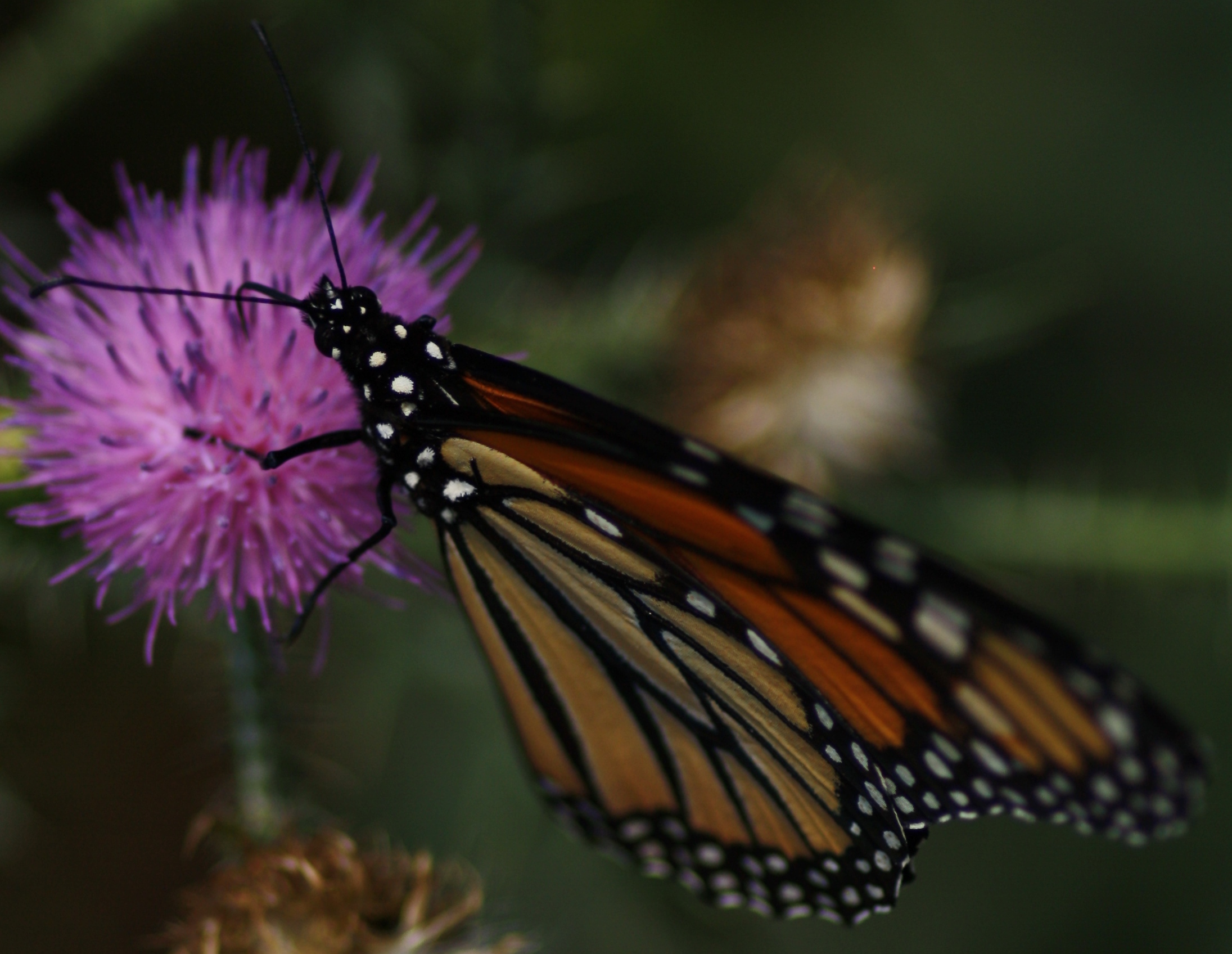
Monarch butterfly (Danaus plexippus) on invasive plumeless thistle (Carduus acanthoides). Photo credit: Laura Russo

Monarch butterfly (Danaus plexippus) on invasive plumeless thistle (Carduus acanthoides). Photo credit: Laura Russo

The study makes use of a computational model that was originally used to investigate the process by which stable plant-pollinator communities form. The use of such models is attractive for two main reasons. First, a model that recapitulates real-world behavior offers insight into the mechanisms that operate in nature; second, computational models allow rapid and widespread exploration that would be time-consuming, costly, and in some cases impractical to perform in nature. As such, computational models are well-positioned to speed up the process of scientific discovery by providing novel and informative predictions and insights into the properties of the systems being modeled.

The model itself is used to generate simulated plant-pollinator communities with properties drawn from the empirical literature. Interactions may be true mutualisms (beneficial to both species) or detrimental to one species and beneficial to another (e.g., insects that visit flowers for nectar without pollinating the plant and plants that trick pollinators without providing them with nectar rewards). Colonization or maintenance of a species in the community is possible if its beneficial interactions outweigh its detrimental interactions; otherwise, the species goes extinct.

The model predicts that invasive species with properties that are very different from the native species in the region (e.g., supergeneralists that benefit the species with which they interact) are more likely to drive significant changes in the number of species colonizing the community. When an invasive species increases the species richness of the invaded community, there is a corresponding increase in the community’s nestedness and a decrease in the community’s connectance. Nestedness is a measure that accounts for the tendency of the community to be composed of (1) generalist species that interact with many species and (2) specialist species that interact with a subset of generalists. Connectance is the number of observed interactions relative to the number of possible interactions. This predicted divergence in nestedness and connectance is in agreement

with recent empirical work, and stands in contrast to the correlation of these two measures when considering the process by which communities stabilize.

This finding is relevant to the active discussion among researchers concerning the relationship between nestedness and connectance. By investigating the differing behavior of these properties in the context of species invasion, this paper supports the argument that nestedness and connectance are complementary properties that provide a more accurate picture of a community together than either measure provides alone. These findings are most strongly supported in the context of invaders that increase the number of species colonizing the community. As these invaders tend to participate in many species-species interactions, this paper also highlights the important role of generalist species in shaping the structure and dynamics of ecological communities.

Amphibian responses to diversity of native and non-native litter Updated for 2026


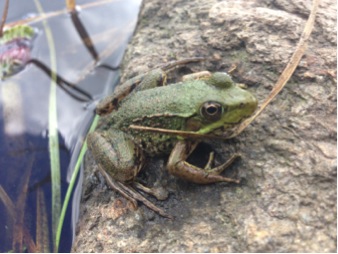
Fig. 1. Recently metamorphosed green frog (Lithobates clamitans) at the edge of a pond (photo by Laura Martin)

Fig. 1. Recently metamorphosed green frog (Lithobates clamitans) at the edge of a pond (photo by Laura Martin)


Fig. 2 American toad (Anaxyrus (Bufo) americanus) adult (photo by Carrie Brown-Lima) American

Fig. 2 American toad (Anaxyrus (Bufo) americanus) adult (photo by Carrie Brown-Lima) American


Amphibians develop in watery places that are full of plants. And yet we know little about how these plants affect larval amphibians. As disease, climate change, and land-use change continue to threaten amphibian populations worldwide, it is more important than ever to understand what makes for good amphibian habitat.


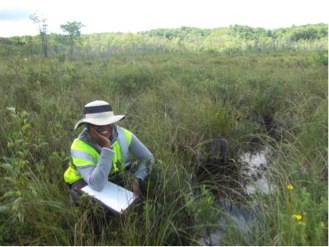
Fig. 3 Shauna-kay Rainford at Bear Swamp, NY, one of the litter collection locations(photo by Laura Martin)

Fig. 3 Shauna-kay Rainford at Bear Swamp, NY, one of the litter collection locations(photo by Laura Martin)


In the study “Effects of plant litter diversity, species, origin and traits on larval toad performance,” Cornell undergraduate Shauna-kay Rainford (now a graduate student at Penn State University), graduate student Laura Martin, and Professor Bernd Blossey investigated how plant litter communities influence the growth and survival of Anaxyrus americanus (American toad) larvae. They reared tadpoles in singles species and litter mixtures using 15 native and 9 nonnative plant species common to central New York, USA, recording survival, time to metamorphosis, and growth rate.


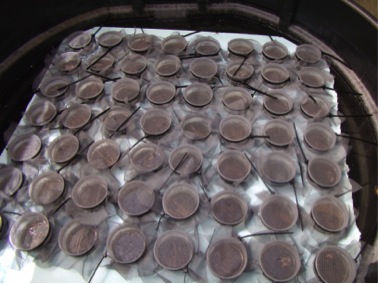
Fig. 4 Microcosms in which individual larval amphibians were reared in leaf litter treatments. (photo by Shauna-kay Rainford)

Fig. 4 Microcosms in which individual larval amphibians were reared in leaf litter treatments. (photo by Shauna-kay Rainford)


Survival in single species treatments ranged from 0% (in Rhamnus cathartica litter) to 96% (Pinus strobus). Tadpoles also failed to metamorphose in Acer rubrum, Cornus racemosa, Rosa multiflora, and Tsuga canadensis. Percent metamorphosis was highest in nonnative Lonicera spp. (76.7%), native Phragmites australis americanus (73.3%), nonnative P. australis (60.0%), and nonnative Alnus glutinosa (60.0%). Interestingly, whether the plant was native or nonnative did not affect amphibian performance.

In multi-species treatments, number of plant species had no effect on larval survival or metamorphosis. However, larvae reared in mixtures of 3 species were larger than those reared in single species treatments of the same species. But increasing litter diversity to 6 or 12 species did not further improve larval survival or performance. This result is consistent with analyses that reveal that most ecological processes saturate at relatively low levels of diversity.

Currently, understanding of the relationships of biodiversity and ecosystem function is drawn largely from studies of plant communities in temperate grassland ecosystems. But the vast majority of plant material is not consumed green; it enters detrital food webs like the one studied in this experiment. This study is an important first step towards understanding the mechanisms that underlie plant-amphibian interactions. It further highlights the importance of plant traits, but not origin, when considering amphibian habitat restoration and conservation.

Travelling around to catch more parasites? Updated for 2026

Do migratory birds catch more parasites? This is explored in the Oikos Early View paper “Flying with diverse passengers: greater richness of parasitic nematodes in migratory birds” by Janet Koprivnikar and tommy L.F. Leung. Below is their short summary of the study:

Many different animals undergo annual migrations and some of them cover enormous distances with their journey. This undertaking can be extremely strenuous and physiologically demanding. Aside from the demands of the journey itself, most animals don’t travel alone – they carry with them an entire community of different parasites throughout their body. Migratory birds undergo annual migratory flights across the globe and birds are well known to be a haven for
pathogens. Most birds are infected with dozens of different species of parasite, many of them worms of all shapes and sizes. While most studies looking at bird parasites in relation to their ecology or migratory habits have focused on blood-dwelling types such as avian malaria, few have studied their worms despite the relative abundance of these parasites in their hosts. Of those different types of worms, the most harmful are the nematodes (roundworms). Some nematodes can cause serious diseases in birds so we decided to compare the diversity of parasitic roundworms in migratory birds versus that of non-migratory species.

In particular, we focused our attention on three orders of birds; water birds (Anseriformes), perching birds (Passeriformes), and birds of prey (Accipitriformes). We found that for any of those given orders, the migratory species tended to have a wider range of roundworms than non-migratory species. Furthermore, we also found that bird species which have proportionally larger spleens also happen to have a greater variety of roundworms infecting them.

So why do migratory species have more diverse nematode communities than their non-migratory relatives? We don’t know that at this point. It is possible that migratory birds pick up many different species of parasites during their journey whereas non-migratory species which stick to a single location their entire life are exposed to a more limited range of parasites. Or perhaps because migration is such a stressful exercise, migratory birds can become stressed during such journeys and become more vulnerable to a wider variety of parasites. Or it might be both!
Due to the diseases that parasitic roundworms can cause in birds, it is important to also keep them in mind when considering the effects that global perturbations such as climate change can have on the ecology of migratory species. As migratory birds change their arrival and departure timing, and are also forced to alter their migratory routes and stopover sites, they might become more stressed and susceptible to parasitism. Furthermore, altered migratory routes and stopover sites can also mean that migratory birds might be introducing their rich suite of worms to new areas and potential hosts.

How plant genetic diversity affects herbivory Updated for 2026

Human activities drastically reduce biodiversity at various taxonomic levels. While much of the current effort in research and biological conservation focuses on species diversity, the importance of intraspecific genetic diversity is sometimes overlooked. At the same time, genetic diversity within and among populations is the fundamental unit of biodiversity because it provides raw material for the adaptation, evolution and survival of species and individuals.

Plantation forests are usually composed of selected stock bred for desirable silvicultural properties (e.g., rapid growth rate and high timber quality) and as a result often have a narrower genetic basis than the wild populations of the same species. Even when natural regeneration is used, a limited number of seed trees may result in less diversity in the regenerated stand compared to the original one. Commercial applications of vegetative propagation of forest trees (clonal forestry) may lead to the further reduction in genetic diversity up to only a few or even a single genotype per plantation. For instance, micropropagation is commonly used to clonally multiply superior birch genotypes in Finland, both for commercial production and for breeding purposes, but it has been proven successful for only a limited number of birch genotypes. Limited number of commercially available birch clones may thus narrow the genetic diversity of planted birch stands.

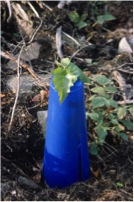
Figure 1. Micropropagated birch planted inside plastic vole protector in 2000.

Figure 1. Micropropagated birch planted inside plastic vole protector in 2000.

Limited genetic variation in plant stands can make them more vulnerable to pest invasion and outbreaks; if all the plants in a stand are genetically identical and susceptible to the same pest species, pest populations will spread rapidly from one plant to another. In agriculture, mixed planting of susceptible and resistant genotypes has been successfully used as a control tactic for plant pathogens in annual crops. However, the potential of using genotypes mixtures in plantation forestry for reducing pest damage has been little explored so far, although there are indications that mixtures may sometimes be of great value for controlling pests and diseases of trees as well, at least in short rotation energy forestry.

In this study, “Additive and non-additive effects of birch genotypic diversity on arthropod herbivory in a long-term field experiment”, now published Early View in Oikos,  we have experimentally tested whether genetic diversity of silver birch affects leaf damage by various arthropod pests. Silver birch (Betula pendula Roth) has broad distribution in the Northern Hemisphere and is one of the most important deciduous tree species in Finland, both ecologically and economically. In 2000, we established an experiment in Satakunta, SW Finland, by planting 8 different clones of silver birch which were obtained by micropropagation of vegetative buds of mature trees of southern Finnish origin. The eight clones selected for the experiment are known to differ in their growth and leaf characteristics as well as in resistance to herbivores and pathogens. The clones were planted in monoclonal plots and in different combinations of 2, 4 and 8 clones per plot. Damage by different types of arthropods was monitored on these experiments several times over nine years.

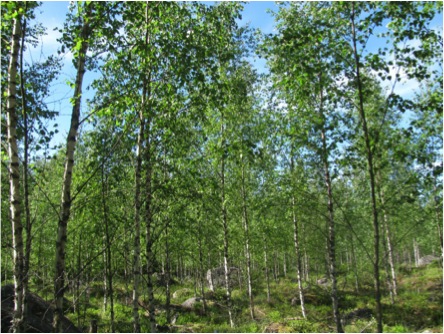
Figure 2. View of experimental area in 2014

Figure 2. View of experimental area in 2014


Results show that genotypic variation and diversity strongly influenced birch herbivory, but that patterns varied among arthropod guilds and over time (within and across years). In particular, leaf-chewing damage and leaf galls were significantly less abundant in genotypically diverse stands than in stands with only a single genotype. However, leaf-rolling damage was actually higher in diverse stands, illustrating how arthropod guilds may differ in their responses to genotypic diversity.


More detailed analyses at the genotype level revealed further interesting patterns. Genotypes varied considerably in their susceptibilities to most herbivore guilds examined, demonstrating that genetic variation existed among the 8 genotypes selected. Interestingly, the susceptibilities were not constant over time or among the guilds. This indicates that resistance to these guilds of herbivores is largely uncoupled genetically and that there is not a single genotype that is resistant to all types of herbivory. Furthermore, we observed shifts in the resistance rankings of genotypes between seasons and across years. Thus, while one genotype may be the most resistant to early-season leaf herbivory one year, it may not be the most resistant to leaf herbivory in the late season or the following year.

To try to understand the mechanisms underpinning the diversity effects observed, we used null modelling to test whether herbivory in diverse plots differed from expected levels generated from data in monoclonal plots. We found that diversity effects depended significantly on genotype, revealing that non-additive mechanisms operate in this system. In particular, more resistant genotypes often experienced greater than expected levels of herbivory (associational susceptibility) while more susceptible genotypes often had less than expected herbivory (associational resistance). These patterns indicate that associational resistance and susceptibility can occur simultaneously in genotypically diverse plots, presumably due to the reorganization of arthropods among genotypes. While these diversity effects do not scale up to influence plot-level rates of herbivory, they may strongly influence the fitness of plant genotypes within diverse plant stands, potentially playing a strong role in the evolutionary ecology of forest trees.

This study illustrates the value of long-term experiments for testing how genetic diversity influences the arthropod communities of woody plants. Diversity effects were complex and varied among the arthropod guilds, among the genotypes, and across time. Only by sampling multiple times over many years and including data for different kinds of herbivores did we detect these patterns. Future work looking at how plant phenotypes relate to these patterns and observing the behaviour of various arthropods can provide further insight into the mechanisms driving genotypic diversity effects.

Same looks, different behavior Updated for 2026

At first sight, these nematodes all look the same. Nevertheless, they each belong to a different species. Such cryptic species- species that morphologically look the same but show genetic divergence- are more different than we first might think. Previous research already showed that they have different environmental preferences and competitive abilities. In our paper, “Active dispersal is differentially affected by inter- and intraspecific competition in closely related nematode species”, we show that differences in active dispersal behavior occur: in addition to differences in time until first dispersal, the triggers for dispersal also differ between the species. One of the species is most triggered by interspecific competition, two others by competition with conspecifics, and the fourth one is a time-dependent disperser, with fast dispersal regardless of inter- or intraspecific interactions.

These differences in dispersal behavior may be important to explain the coexistence of these species. According to Darwin’s classical competition theory, we can expect that very similar species will not co-occur because competition will be too high. Differences in dispersal behavior may lead to postponed or avoided competition, rendering temporal coexistence possible in a patchy habitat.

The authors through Nele de Meester

Marine biodiversity and ecosystem functioning: what’s known and what’s next? Updated for 2026

In our new paper “Marine biodiversity and ecosystem functioning: what’s known and what’s next?” just published online early in Oikos, we synthesise our current understanding of the functional consequences of changes in species richness in the marine realm. For those familiar with the field of biodiversity and ecosystem functioning, the first question might well be: do we really need yet another meta-analysis on this topic? I mean, really. There have been several meta-analyses published in recent years. Do we really need this work?

Well, our answer to the question is yes. Here’s why.

This paper started while we were synthesising data for general biodiversity-ecosystem functioning relationships at NCEAS  in Santa Barbara, USA. We realised that much data from the marine side was missing, as many of those studies did not fit the inclusion criteria set up for our original database. Previous meta-analyses1, 2 focused solely on how richness influences resource capture and/or the production of biomass. Marine studies, however, all over the map in terms of what functions they measured: resource use, biomass production, nutrient fluxes, trophic cascades, and so on.

gamfeldt photo 4

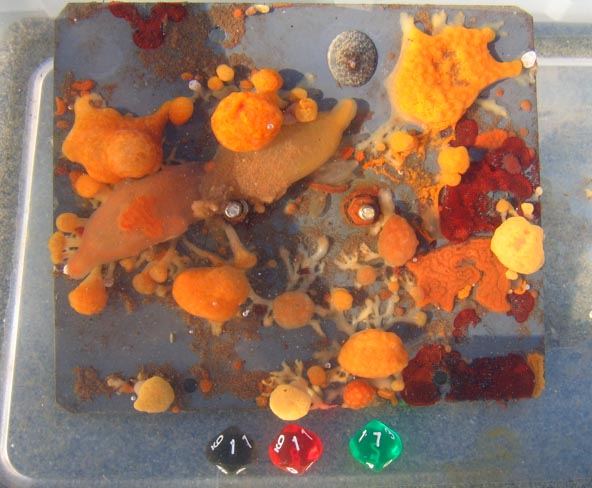
Panel with a sessile invertebrate community. Photo credit: Jarrett Byrnes.


So what’s the full picture of how biodiversity-ecosystem influences functions in the ocean – from primary production to biogeochemical cycles?

We got our hands on 110 marine experiments that manipulated the number of species and analysed some ecosystem response. In general, our analyses generally confirm previous findings that the average mix of species uses resources more efficiently and produces more biomass than the average monoculture. We honestly weren’t sure how this was going to fall out, and find great comfort in the generality of the result.

gamfeldt photo 2

Soft sediment microcosms, Sweden. Photo credit: Karl Norling.


In contrast, we find a different shape to relationship between biodiversity and ecosystem functions than has been seen previously. The relationship between species richness and production is best described as linear. The relationship between species richness and consumption appear to follow a power function. We find this by using new and more powerful techniques to describing the shape of relationships across multiple studies that we hope future researchers will use as well. (And, yes, we give you all of our code so that you can follow along at home!)

OLYMPUS DIGITAL CAMERA

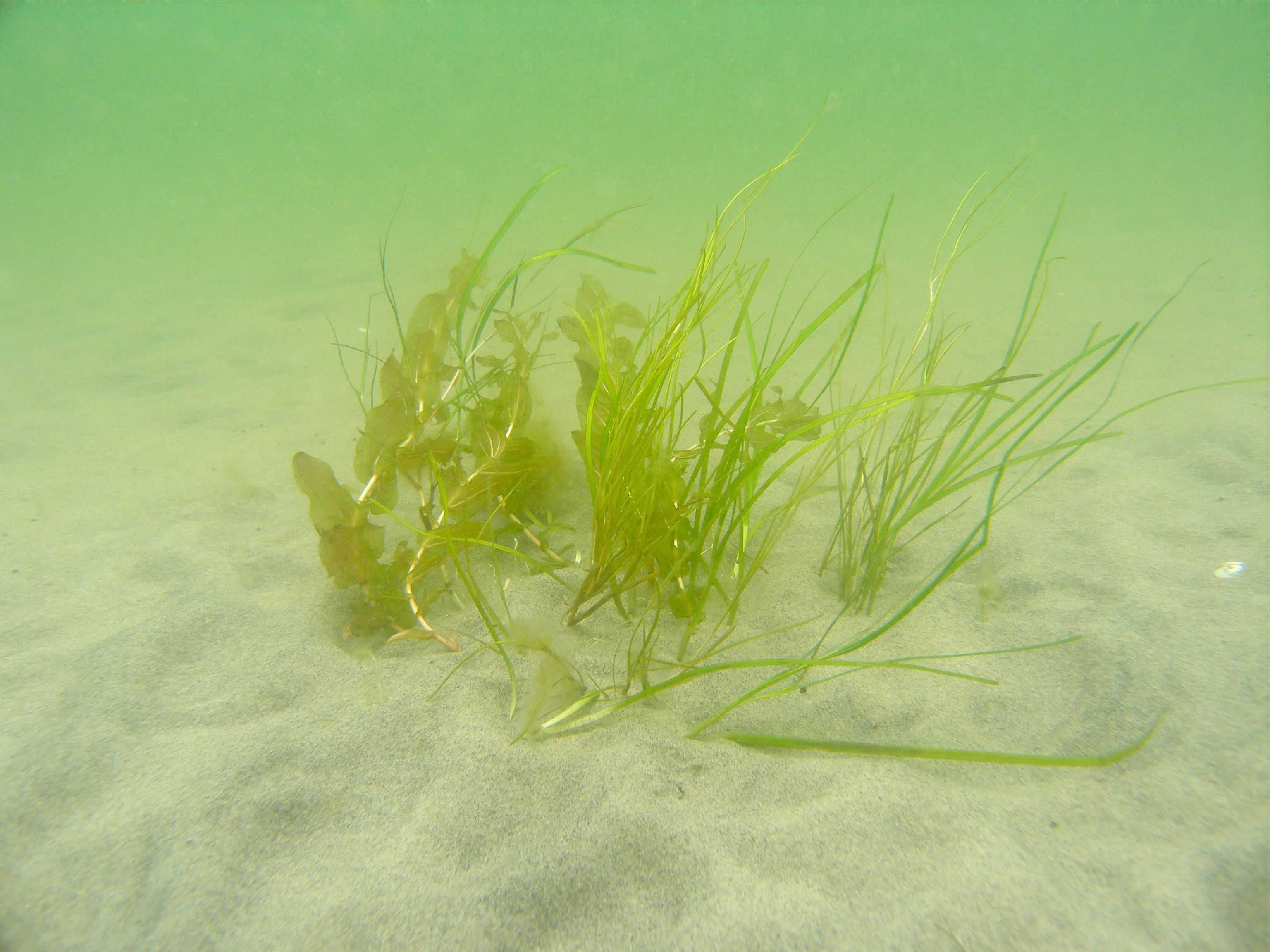
A seagrass field experiment in Finland. Photo shows a polyculture with three species. Photo credit: Camilla Gustafsson.


We also identify several gaps in our understanding of marine biodiversity and ecosystem functioning that are ripe for future investigation. First, the number of studies focusing on biogeochemical fluxes is still tiny. We need more. Second, we need more studies in pelagic and salt-marsh environments. Third, we still have only a handful of studies focused on predators. Fourth, the effects of increases in species richness (e.g. due to invasives or range shifts) are poorly understood. And last, we really only looked at relatively simple experiments, using on average only 3 species! We sorely need experiments targeting how spatial scale and heterogeneity, realistic local extinction scenarios from natural (read: large!) species pools, and functional and phylogenetic composition alter the relationship between biodiversity and ecosystem function.

To sum: there’s much work to be done, and we look forward with high hopes to the next generation of experiments exploring the consequences of changes in marine biodiversity.

gamfeldt photo 1

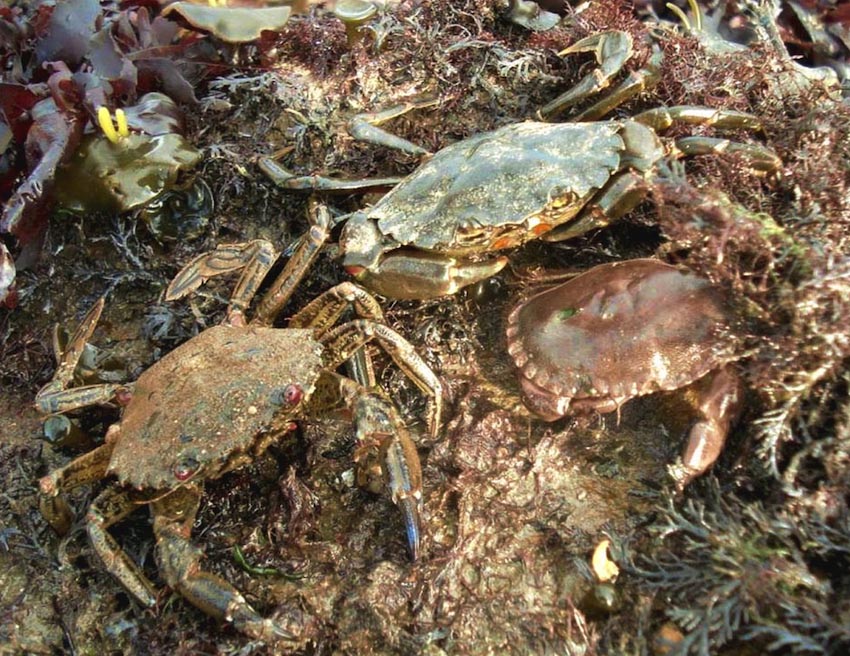
Three species of crab, used in the experiment in Griffin et al. 20083. Photo credit: Pippa Moore.


Now, if you had to explain this study to your mom or dad: the world has an incredible number and variety of different species, but we are losing them due to things like fishing, habitat destruction, and other threats from humanity. We need to understand what the consequences of these extinctions are for healthy and productive ecosystems, which is why researchers conduct experiments where they remove species and see what happens. We summarized data from 110 such experiments and found that losing species, on average, decreases productivity and growth, as well as a myriad of other processes related to how marine organisms capture and utilize resources, like nutrients. These processes ultimately put food on the dinner table and give us clean water. What is most interesting is we expected these declines to be non-linear based on previous studies: you can lose some species up to a point, then it starts to go downhill. The results from our analysis suggest that, for some processes, every species matters! Thus it is imperative that we protect and conserve biodiversity in our world’s oceans.

Lars Gamfeldt and co-workers

References:

  1. Cardinale, B. J. et al. 2006. Effects of biodiversity on the functioning of trophic groups and ecosystems. – Nature 443: 989-992.
  2. Cardinale, B. J. et al. 2011. The functional role of producer diversity in ecosystems. – American Journal of Botany 98: 572-592.
  3. Griffin, J., de la Haye, K., Hawkins, S., Thompson, R. and Jenkins, S. 2008. Predator diversity effects and ecosystem functioning: density modifies the effect of resource partitioning. – Ecology 89: 298-305.


The exotic pet trade is a global evil that must be stopped Updated for 2026


For three decades I have worked as a scientist traversing swamps, deserts and forests tracking wildlife hunters as they scour to catch diverse animals for their sacks and boxes. From this moment on, the meter of destruction is already running.

Next, the hunters’ swag is readied for a new and commonly shortened life in captivity as part of the growing international market for unusual pets.

Unfortunately, despite shuffling tons of trade permits – many of which can be obtained illegally – few, if any, civil servants, CITES (the Convention on International Trade in Endangered Species of Wild Fauna and Flora) managers or other so-called ‘competent authorities’ ever physically enter the hard end of the wildlife trade to witness, let alone control, the destruction.

CITES aims to ” … ensure that international trade in endangered species of plants and animals is sustainable.” Not only are CITES’ aims and achievements somewhat fanciful, but in my experience CITES is often a mere tool for wildlife traders.

Investigate the sources of trade and you will find no controllers, no scientific observers, just exploiters. Anyway, 25% of trade is thought illegal – hardly well under control. Safe ‘sustainable’ trade is mostly a myth.

Lengthy scientific articles now regularly chronicle the harm inherent to trading wild animals as pets. Just one review this year published in the prestigious journal Conservation Biology concluded:

“International trade in exotic pets is an important and increasing driver of biodiversity loss and often compromises the standards required for good animal welfare; one-fifth of recent wildlife trade reports were driven by demand for pets or animals for use in entertainment; unsustainable harvest of wild animals for the pet trade has already led to population decline and collapse for many species; animal welfare is compromised to some extent at all stages of the exotic pet trade; legality of trade does not guarantee its sustainability; many of the species traded as pets are threatened.”

Trade thrives, controls fail.

Poor welfare worsens conservation and ecological threats

Little, if anything, that happens in the exotic pet industry is irrelevant to ecology. For instance, poor (more accurately disastrous) animal welfare affects species conservation and thence ecology because high mortality rates prompt raised compensatory collection and repeat purchases – expensive vivariums need occupants!

According to WWF and an article in The Ecologist, mortality for wild-caught marine fish is approximately 80% pre-sale. Mortality rates on pet fish ‘farms’ are unclear, but the end result is shocking anyway.

The UK alone imports around 40 million pet fish annually (marine and freshwater) and almost all die prematurely within a year. Reptile trading is another example where destructive collection, breeding and storage lead to an industry-standard presale mortality of 70% within just six.

Die-off between pet retailer and the home is 81% in a year. The aquarium and reptile industry manifests nearly the same lethality as a slaughterhouse.

Survivors are often troublesome to their keepers and released into the local habitat where they may become invasive. At least 51 types of released reptile and amphibian live wild around London alone. Controlling European invasives costs over €12.5 billion annually and the bill is rising fast.

Every imported or released exotic animal is arguably a Trojan horse harbouring a potential suite of novel pathogens that could impact on human health or agricultural livestock.

At least 70 pet-linked human diseases exist as well as a growing raft of threats to industry such as avian influenza to poultry and the degenerative illness ‘heartwater’ – which could rapidly wipe out cattle farming.

Indigenous wildlife is not immune to introduced disease, as demonstrated by the chytridiomycosis pandemic linked to released pets, which is rampaging through wild amphibian populations.

The irony!

Make no mistake, the international pet trade involves stealing other ecosystems’ wildlife, stuffing it into containers, and shipping it around the world to face a likely stress-laden and foreshortened unnatural life in a small cage in someone’s lounge.

One cannot help but wonder how the British or any other nation’s public would react to viewing one of their favourite indigenous species – be it barn owl, bank vole, or red squirrel – ripped from our own countryside, bundled into bags, crammed into carriers and sent worldwide where they will unlikely arrive ship-shape.

Fortunately, witnessing such destruction in Britain is improbable, because our own wildlife is very well protected. In the UK, and elsewhere, one must commonly obtain a local authority licence to fish at a river, and caught fish are typically promptly returned to their natural habitat.

The Wildlife and Countryside Act 1981 determines that no British birds can be legally caught and sold or kept as pets, and both UK and European law leaves very little room for any wild animal to be treated as a pet commodity.

Not only does the UK government protect its indigenous wildlife, but it is also opposed even to the concept of capturing and selling it as ‘would-be exotic pets’ to other countries – it states: “We are not aware that unprotected native wild animals are routinely being captured from the wild and sold abroad as pets and would discourage any such activity.”

One cannot, however, ignore the tragic irony that whilst the UK takes such good care of its own house and even opposes the mere principle of siphoning off its wildlife, it continues to be one of the major consumers of other nations’ biodiversity and consequently erodes ecosystems worldwide.

Conclusions

Trading in exotic pets is an unethical and archaic concept surviving extinction not by merit but by fortuitous commercial biases inherent to the policies of government departments.

Governments do not entertain guidance on trade policy from drug dealers or people traffickers, yet they accommodate the vested and harmful interests of pet dealers and wildlife traffickers.

In particular, it is the obfuscation, obstruction and incompetence of trade-mollycoddling civil servants that stifles both the solid evidential arguments of the scientific community as well as the sincere efforts of the seemingly increasing number of ‘eco-aware’ parliamentarians.

The exotic pet industry is a pernicious force incompatible with good ecological, animal welfare and public health practices. It hides in plain sight rooted behind the sanitized façade of pet stores and the front doors of private homes, quietly facilitated by trade-permissive legislation.

Long overdue is the need to haul this industry’s modern-day dark-age habits to face the cleansing light of scientific scrutiny, neo-political good will, and common sense morals.

Evidential and ethical arguments overwhelmingly justify a complete ban on trading exotic animals as pets. Already available, however, are so-named ‘positive lists’ – which turn the historical ‘free trade’ concept around and stipulate ‘no trade until proven safe’.

This approach offers a pro-active and not reactive opportunity to favour wildlife over the deepening pockets of pet peddlers. But so long as the exotic pet trade continues, its maleficence will persist to the detriment of animals, humans and the world in which we live.


Clifford Warwick PGDipMedSci CBiol CSci EurProBiol FOCAE FSB is a Consultant Biologist & Medical Scientist.

For more information please contact the Animal Protection Agency.

Sources with links

[1] http://onlinelibrary.wiley.com/doi/10.1111/cosbi.12240/abstract

Bush, ER., Baker, S.E. and Macdonald, D.W. (2013) Global Trade in Exotic Pets 2006-2012. Conservation Biology, Volume 28, No. 3, 663-676 (Nijman & Shepherd 2009; Lyons & Natusch 2011).

[2] http://news.mongabay.com/2013/1022-millar-aquarium-trade-deaths.html

98% of marine fish headed for the aquarium trade die within a year in the Philippines.

[3] http://www.theecologist.org/News/news_analysis/2523460/the_dark_side_of_hawaiis_aquarium_trade.html

The dark side of Hawaii’s aquarium trade.

[4] http://www.tandfonline.com/doi/abs/10.1080/10888705.2014.918511#.VFu43CjCGQI

Ashley, S., Brown, S., Ledford, J., Martin, J., Nash, A E., Terry, A., Tristan, T. & Warwick, C. (2014) Morbidity and mortality of invertebrates, amphibians, reptiles and mammals at a major exotic companion animal wholesaler. Journal of Applied Animal Welfare Science, 17:1-14. DOI:10.1080/10888705.2014.918511.

[5] http://www.cieh.org/jehr/default.aspx?id=41594

Warwick, C., Arena, P.C., Steedman, C. and Jessop, M. (2012) A review of captive exotic animal-linked zoonoses. Journal of Environmental Health Research, 12:9-24

[6] https://www.savethefrogs.com/threats/frog-legs/images/Schloegel-2009-US-Markets.pdf

Magnitude of the US trade in amphibians and presence of Batrachochytrium dendrobatidis and ranavirus infection in imported North American bullfrogs (Rana catesbeiana) Schloegel, L.M., Picco, A.M., Marm Kilpatrick, A., Davies, A.J., Hyatt, A.D, Daszak, P. Biological Conservation 142 (2009) 1420-1426.

Sources without links

Langton, T. E. S., Atkins, W., & Herbert, C. (2011). On the distribution, ecology and management of non-native reptiles and amphibians in the London area. Part 1. Distribution and predator/prey impacts. The London Naturalist, 90, 83-156.

Shine, C., Kettunen, M., Genovesi, P., Essl, F., Gollasch, S., Rabitsch, W., ten Brink, P. (2010). Assessment to support continued development of the EU strategy to combat invasive alien species. Final Report for the European Commission. Brussels, Belgium: Institute for European Environmental Policy.

Toland, E, Warwick, C., & Arena, P.C. (2012) The exotic pet trade: pet hate. The Biologist 59(3);14-18.


386587