Tag Archives: interest

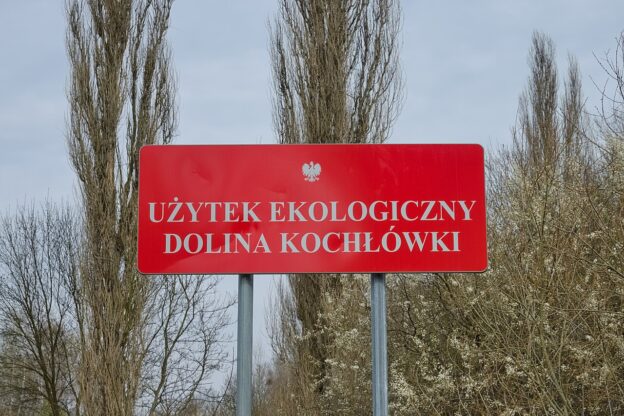
Dolina Kochłówki tabliczka 2026.jpg

Complete guide to Ecologic April 2026: trends and analysis 2026

What People Are Searching For (Key Takeaways)

  • Current focus: Interest around Ecologic April 2026 centers on: Ecologic April 2026 represents a key element for those operating in Ecologic. Current trends show….
  • Sector relevance: It has become a central topic for those following Ecologic.
  • Practical impact: Understanding these dynamics allows anticipating market needs.

Updated: 19/04/2026 | Sector: Ecologic

Dolina Kochłówki tabliczka 2026.jpg
Dolina Kochłówki tabliczka 2026.jpg — Fonte: Wikimedia Commons

Analyzing recent searches and discussions in the Ecologic sector, a strong interest in Ecologic April 2026 emerges. People are looking for clear answers and applicable solutions.

Here is the current picture: Ecologic April 2026 represents a key element for those operating in Ecologic. Current trends show growing interest in practical solutions and measurable strategies. Many people are looking for information on how to implement Ecologic April 2026 effectively and what tools to use.. This shows how the topic is not just theoretical, but has very practical implications for anyone wanting to stay updated.

Why people are searching for Ecologic April 2026 in 2026

The surge of interest in Ecologic April 2026 is no accident. In the context of Ecologic, users are increasingly oriented towards solving specific problems or understanding new dynamics. Online discussions and search data confirm that the main need is clarity.

Instead of relying on fragmented information, those interested in this topic look for authoritative sources and direct applications. The evolution of the sector requires an approach based on real data, just like those pushing this topic to the top of the trends.

What to avoid when approaching this topic

A common mistake when approaching Ecologic April 2026 is stopping at the surface. Searches show that users often get confused due to conflicting information. It is crucial to always verify sources and contextualize data.

Furthermore, ignoring community discussions (like on Reddit or industry forums) means losing the real pulse of the situation. True questions and authentic doubts emerge precisely from these channels.

Future perspectives for Ecologic April 2026

Looking at current data, the trajectory of Ecologic April 2026 in 2026 indicates consolidation. This is not a passing interest, but a structural evolution. Online communities will continue to shape how this topic is perceived and used.

Frequently Asked Questions from the Community

Why is Ecologic April 2026 so discussed right now?

Because it intercepts a real need in the Ecologic sector, confirmed by search volumes and discussions on major online platforms.

Where can I find reliable information on Ecologic April 2026?

In addition to institutional sites, industry communities and discussion platforms (like Reddit) offer highly valuable practical insights based on real user experience.

How will interest in Ecologic April 2026 evolve?

Trends indicate that interest will continue to grow, shifting from theory to the search for increasingly practical and applicable solutions.

Conclusions

Monitoring Ecologic April 2026 means staying tuned to real market needs. We will continue to analyze search data to provide relevant and useful updates.

Eco Bio III Millennio April 2026: answering the most frequently asked questions

What People Are Searching For (Key Takeaways)

  • Current focus: Interest around Eco Bio III Millennio April 2026 centers on: Eco Bio III Millennio April 2026 represents a key element for those operating in Eco….
  • Sector relevance: It has become a central topic for those following Eco Bio III Millennio.
  • Practical impact: Understanding these dynamics allows anticipating market needs.

Updated: 19/04/2026 | Sector: Eco Bio III Millennio

Analyzing recent searches and discussions in the Eco Bio III Millennio sector, a strong interest in Eco Bio III Millennio April 2026 emerges. People are looking for clear answers and applicable solutions.

Here is the current picture: Eco Bio III Millennio April 2026 represents a key element for those operating in Eco Bio III Millennio. Current trends show growing interest in practical solutions and measurable strategies. Many people are looking for information on how to implement Eco Bio III Millennio April 2026 effectively and what tools to use.. This shows how the topic is not just theoretical, but has very practical implications for anyone wanting to stay updated.

Why people are searching for Eco Bio III Millennio April 2026 in 2026

The surge of interest in Eco Bio III Millennio April 2026 is no accident. In the context of Eco Bio III Millennio, users are increasingly oriented towards solving specific problems or understanding new dynamics. Online discussions and search data confirm that the main need is clarity.

Instead of relying on fragmented information, those interested in this topic look for authoritative sources and direct applications. The evolution of the sector requires an approach based on real data, just like those pushing this topic to the top of the trends.

What to avoid when approaching this topic

A common mistake when approaching Eco Bio III Millennio April 2026 is stopping at the surface. Searches show that users often get confused due to conflicting information. It is crucial to always verify sources and contextualize data.

Furthermore, ignoring community discussions (like on Reddit or industry forums) means losing the real pulse of the situation. True questions and authentic doubts emerge precisely from these channels.

Future perspectives for Eco Bio III Millennio April 2026

Looking at current data, the trajectory of Eco Bio III Millennio April 2026 in 2026 indicates consolidation. This is not a passing interest, but a structural evolution. Online communities will continue to shape how this topic is perceived and used.

Frequently Asked Questions from the Community

Why is Eco Bio III Millennio April 2026 so discussed right now?

Because it intercepts a real need in the Eco Bio III Millennio sector, confirmed by search volumes and discussions on major online platforms.

Where can I find reliable information on Eco Bio III Millennio April 2026?

In addition to institutional sites, industry communities and discussion platforms (like Reddit) offer highly valuable practical insights based on real user experience.

How will interest in Eco Bio III Millennio April 2026 evolve?

Trends indicate that interest will continue to grow, shifting from theory to the search for increasingly practical and applicable solutions.

Conclusions

Monitoring Eco Bio III Millennio April 2026 means staying tuned to real market needs. We will continue to analyze search data to provide relevant and useful updates.

Don’t ‘abhor’ us – abhor GMO scientists laden with conflicts of interest! Updated for 2026


Speaking at a public meeting organised for farmers in Ghana’s Brong Ahafo Region entitled “GMOs the truth and misconceptions”, Professor Walter Sandow Alhassan advised farmers to avoid being misled by anti-GMO groups, telling them:

“We should get away from this misinformation and try to see how we can revolutionize our agriculture and move with modern trends.”

He is also quoted as calling for groups opposing GMOs and corporate seed-grabbing like Food Sovereignty Ghana (FSG) to be “abhorred”, because, according to him, “those groups do not have any scientific proof or knowledge to offer when it comes to Genetically Modified Organism (GMO) technology.”

We at FSG are shocked by Alhassan’s reported pronouncements urging farmers to reject our warnings and stand by our position that accepting GMOs will result in seed colonisation and seed slavery. In truth, what Ghanaian farmers need to abhor and reject is scientists laden with conflicts of interest.

Because ultimately, genetic engineering is about private corporate control of the food system. Monsanto and Syngenta are particularly greedy to get their hands on Ghana’s agriculture and control the seed market here – and Professor Alhassan is a key servant of the global GMO establishment helping to make this resource grab possible.

The meeting itself also deserves examination. It was organised by the Ghana Chapter of the Open Forum on Agricultural Biotechnology in Africa (OFAB) in collaboration with the GMO-pushing, Gates Foundation-supported African Agricultural Technology Foundation (AATF) which itself created OFAB in 2006.

OFAB’s purpose is to “positively change public perceptions toward modern biotechnology. This will lead to increased adoption of GM products in Africa and the rest of the world.” So it iis hardly an impartial voice of science!

Another co-sponsor of the meeting was CSIR, the South African-based Council for Scientific and Industrial Research, which works in biotech, GMOs and synthetic biology – and which notoriously ‘biopirated’ the Hoodia plant – appropriating and patenting the traditional knowledge of the San people of southern Africa.

Who pays the piper …

Alhassan, now a consultant, is himself a former Director General of CSIR, and much of his career has been funded by the biotech industry – some by Monsanto, particularly his education and early history, and more lately by Syngenta and the Syngenta Foundation.

Naturally he supports GMOs. He has spent his entire life in their service. He is Syngenta’s man in Ghana. And he exemplifies the close links forged by Big Ag with key figures in the academic world. As Kamil Ahsan writes in his article ‘The New Scientism‘:

“Today, large numbers of scientists are in the employ of Big Pharma, Big Ag, and all kinds of corporations with anti-environmental and anti-social justice agendas.”

And while academics are still largely publicly funded, “many receive grants or training fellowships from biotech, pharmaceutical, or agricultural companies; serve on advisory panels and committees; oversee and participate in industry-funded events and colloquiums; and rely on industry links as funnels for outgoing graduate students or postdoctoral candidates. GMOs are a good example of how academics function as cheerleaders for Big Ag.”

Big Ag is not afraid to lie about the GMOs they are pushing. For example Monsanto has just been forced to withdraw advertisements in South Africa because of unsubstantiated information and false claims that GMO crops “enable us to produce more food sustainably whilst using fewer resources; provide a healthier environment by saving on pesticides; decrease greenhouse gas emissions and increase crop yields substantially.”

Yet we hear Professor Alhassan and his network repeating these same untruths over and over again and calling them ‘science’. When he warns that anti GMO groups do not have any scientific proof or knowledge to offer when it comes to GMO technology, he is surely trying to suppress scientific inquiry, knowledge and debate.

More information on the dangers of GMO pesticide plants comes out every day, this despite the fact that the biotechnology industry has done its best to suppress any studies or information that does not support industry claims.

GMO cowpeas a threat to all of Africa

Right now Professor Alhassan and his corporate and academic cronies are trying to get Bt cowpeas into the Ghanaian market. Bt cowpeas are laden with pesticides as are all Bt GMO plants. When Ghanaians eat Bt cowpeas they will be eating pesticides.

In the US Bt plants are registered as pesticides by the USDA. When you eat any part of a Bt plant, you are eating a toxic pesticide – one aimed at insects, but which also impacts on humans. Although Bt does occur in nature, that is quite different than having a plant which contains Bt toxin in every cell of the plant.

With Bt in nature, and when used as a dust or spray in agroecological farming, the active toxin can only be found in the gut of the insect. The plant itself contains no Bt. If there is any residual spray or dust on the surface of the plant it can be washed off.

However, with the Bt in GMO cowpeas and all other Bt GMO plants, as GM Watch points out, “active toxin is in every plant cell and tissue, all the time and cannot be washed off … active toxins are not easily degraded by gut enzymes and, since they are lectins, they all are very likely to bind to the wall of the mammalian / human gut.”

And that means they are likely to be processed into your body creating who knows what short term or long term health risks and dangers.

Those insects that are controlled and killed by the Bt in Bt GMO plants evolve a tolerance for the Bt toxin and come back stronger over time, as recently observed in Brazil where BT corn is actually less resistant to the Fall Armyworm than conventional varieties.

Other opportunistic insects will take advantage of the lack of competition and move in to take the place of the former pests creating new super pests. That is happening in the US where GMOs have been around for 20 years.

And it’s leading to more and stronger pesticides being used every year, endangering the health of humans and livestock, degrading and polluting the soil, water, and air across US farmlands.

It is particularly worrisome to have Bt cowpeas growing in Ghana, a species indigenous to West Africa, as the GMO crops will contaminate neighboring crops with their pollen. If grown in quantity, GMO cowpeas could contaminate the entire region of West Africa. Because of this kind of contamination, Mexico has banned growing Bt corn – a ruling fiercely fought by Monsanto.

Cowpeas are one of the most important food crops in Africa’s drylands: they survive high temperatures with little water, even on very sandy soils, fix nitrogen, and are shade tolerant, allowing them to be used in agroforestry systems.

We must unite to fight this evil law!

If the Ghana Plant Breeders Bill is passed, it would allow the corporate GMO owners to claim all offspring of that contamination as their own property according to their intellectual property rights.

They could force a farmer whose crop is contaminated – against the farmer’s will, and providing no benefit to the farmer – to pay for the contaminated crop, to pay damages to the corporation! They could also force farmers to destroy their crops.

This is happening across the United States and in Canada where GMO corporations are winning huge financial judgements against farmers. It is happening in other countries that have passed UPOV laws such as Ghana’s Plant Breeders Bill. This is what Professor Alhassan intends to bring to Ghana’s farmers, claiming it is ‘progress’ and calling it ‘science’. It is just old fashioned corporate greed.

Contamination of the West African cowpea means the destruction of Ghana’s heritage, destruction of the seed DNA Ghana’s farmers, going back generations and centuries, have laboured to develop and preserve.

This is biopiracy, made legal by the Plant Breeders Bill. Professor Walter Alhassan may believe that this destruction is simply ‘science’, but it is in truth a tool by which foreign corporations aim to profit and re-colonize Ghana, West Africa, and the entire continent of Africa.

Would you trust Professor Walter Alhassan to make decisions about what you eat? Do you trust Professor Alhassan and his recommended scientific cronies to tell you what to plant, or what seeds you are required to use? Whose best interests does Professor Alhassan really represent?


Edwin Kweku Andoh Baffour is Acting Director of Communications with Food Sovereignty Ghana. The original article has been expanded and edited by The Ecologist.

Twitter: twitter.com/FoodSovereignGH
Facebook: facebook.com/FoodSovereigntyGhana


390291

Don’t ‘abhor’ us – abhor GMO scientists laden with conflicts of interest! Updated for 2026


Speaking at a public meeting organised for farmers in Ghana’s Brong Ahafo Region entitled “GMOs the truth and misconceptions”, Professor Walter Sandow Alhassan advised farmers to avoid being misled by anti-GMO groups, telling them:

“We should get away from this misinformation and try to see how we can revolutionize our agriculture and move with modern trends.”

He is also quoted as calling for groups opposing GMOs and corporate seed-grabbing like Food Sovereignty Ghana (FSG) to be “abhorred”, because, according to him, “those groups do not have any scientific proof or knowledge to offer when it comes to Genetically Modified Organism (GMO) technology.”

We at FSG are shocked by Alhassan’s reported pronouncements urging farmers to reject our warnings and stand by our position that accepting GMOs will result in seed colonisation and seed slavery. In truth, what Ghanaian farmers need to abhor and reject is scientists laden with conflicts of interest.

Because ultimately, genetic engineering is about private corporate control of the food system. Monsanto and Syngenta are particularly greedy to get their hands on Ghana’s agriculture and control the seed market here – and Professor Alhassan is a key servant of the global GMO establishment helping to make this resource grab possible.

The meeting itself also deserves examination. It was organised by the Ghana Chapter of the Open Forum on Agricultural Biotechnology in Africa (OFAB) in collaboration with the GMO-pushing, Gates Foundation-supported African Agricultural Technology Foundation (AATF) which itself created OFAB in 2006.

OFAB’s purpose is to “positively change public perceptions toward modern biotechnology. This will lead to increased adoption of GM products in Africa and the rest of the world.” So it iis hardly an impartial voice of science!

Another co-sponsor of the meeting was CSIR, the South African-based Council for Scientific and Industrial Research, which works in biotech, GMOs and synthetic biology – and which notoriously ‘biopirated’ the Hoodia plant – appropriating and patenting the traditional knowledge of the San people of southern Africa.

Who pays the piper …

Alhassan, now a consultant, is himself a former Director General of CSIR, and much of his career has been funded by the biotech industry – some by Monsanto, particularly his education and early history, and more lately by Syngenta and the Syngenta Foundation.

Naturally he supports GMOs. He has spent his entire life in their service. He is Syngenta’s man in Ghana. And he exemplifies the close links forged by Big Ag with key figures in the academic world. As Kamil Ahsan writes in his article ‘The New Scientism‘:

“Today, large numbers of scientists are in the employ of Big Pharma, Big Ag, and all kinds of corporations with anti-environmental and anti-social justice agendas.”

And while academics are still largely publicly funded, “many receive grants or training fellowships from biotech, pharmaceutical, or agricultural companies; serve on advisory panels and committees; oversee and participate in industry-funded events and colloquiums; and rely on industry links as funnels for outgoing graduate students or postdoctoral candidates. GMOs are a good example of how academics function as cheerleaders for Big Ag.”

Big Ag is not afraid to lie about the GMOs they are pushing. For example Monsanto has just been forced to withdraw advertisements in South Africa because of unsubstantiated information and false claims that GMO crops “enable us to produce more food sustainably whilst using fewer resources; provide a healthier environment by saving on pesticides; decrease greenhouse gas emissions and increase crop yields substantially.”

Yet we hear Professor Alhassan and his network repeating these same untruths over and over again and calling them ‘science’. When he warns that anti GMO groups do not have any scientific proof or knowledge to offer when it comes to GMO technology, he is surely trying to suppress scientific inquiry, knowledge and debate.

More information on the dangers of GMO pesticide plants comes out every day, this despite the fact that the biotechnology industry has done its best to suppress any studies or information that does not support industry claims.

GMO cowpeas a threat to all of Africa

Right now Professor Alhassan and his corporate and academic cronies are trying to get Bt cowpeas into the Ghanaian market. Bt cowpeas are laden with pesticides as are all Bt GMO plants. When Ghanaians eat Bt cowpeas they will be eating pesticides.

In the US Bt plants are registered as pesticides by the USDA. When you eat any part of a Bt plant, you are eating a toxic pesticide – one aimed at insects, but which also impacts on humans. Although Bt does occur in nature, that is quite different than having a plant which contains Bt toxin in every cell of the plant.

With Bt in nature, and when used as a dust or spray in agroecological farming, the active toxin can only be found in the gut of the insect. The plant itself contains no Bt. If there is any residual spray or dust on the surface of the plant it can be washed off.

However, with the Bt in GMO cowpeas and all other Bt GMO plants, as GM Watch points out, “active toxin is in every plant cell and tissue, all the time and cannot be washed off … active toxins are not easily degraded by gut enzymes and, since they are lectins, they all are very likely to bind to the wall of the mammalian / human gut.”

And that means they are likely to be processed into your body creating who knows what short term or long term health risks and dangers.

Those insects that are controlled and killed by the Bt in Bt GMO plants evolve a tolerance for the Bt toxin and come back stronger over time, as recently observed in Brazil where BT corn is actually less resistant to the Fall Armyworm than conventional varieties.

Other opportunistic insects will take advantage of the lack of competition and move in to take the place of the former pests creating new super pests. That is happening in the US where GMOs have been around for 20 years.

And it’s leading to more and stronger pesticides being used every year, endangering the health of humans and livestock, degrading and polluting the soil, water, and air across US farmlands.

It is particularly worrisome to have Bt cowpeas growing in Ghana, a species indigenous to West Africa, as the GMO crops will contaminate neighboring crops with their pollen. If grown in quantity, GMO cowpeas could contaminate the entire region of West Africa. Because of this kind of contamination, Mexico has banned growing Bt corn – a ruling fiercely fought by Monsanto.

Cowpeas are one of the most important food crops in Africa’s drylands: they survive high temperatures with little water, even on very sandy soils, fix nitrogen, and are shade tolerant, allowing them to be used in agroforestry systems.

We must unite to fight this evil law!

If the Ghana Plant Breeders Bill is passed, it would allow the corporate GMO owners to claim all offspring of that contamination as their own property according to their intellectual property rights.

They could force a farmer whose crop is contaminated – against the farmer’s will, and providing no benefit to the farmer – to pay for the contaminated crop, to pay damages to the corporation! They could also force farmers to destroy their crops.

This is happening across the United States and in Canada where GMO corporations are winning huge financial judgements against farmers. It is happening in other countries that have passed UPOV laws such as Ghana’s Plant Breeders Bill. This is what Professor Alhassan intends to bring to Ghana’s farmers, claiming it is ‘progress’ and calling it ‘science’. It is just old fashioned corporate greed.

Contamination of the West African cowpea means the destruction of Ghana’s heritage, destruction of the seed DNA Ghana’s farmers, going back generations and centuries, have laboured to develop and preserve.

This is biopiracy, made legal by the Plant Breeders Bill. Professor Walter Alhassan may believe that this destruction is simply ‘science’, but it is in truth a tool by which foreign corporations aim to profit and re-colonize Ghana, West Africa, and the entire continent of Africa.

Would you trust Professor Walter Alhassan to make decisions about what you eat? Do you trust Professor Alhassan and his recommended scientific cronies to tell you what to plant, or what seeds you are required to use? Whose best interests does Professor Alhassan really represent?


Edwin Kweku Andoh Baffour is Acting Director of Communications with Food Sovereignty Ghana. The original article has been expanded and edited by The Ecologist.

Twitter: twitter.com/FoodSovereignGH
Facebook: facebook.com/FoodSovereigntyGhana


390291

Don’t ‘abhor’ us – abhor GMO scientists laden with conflicts of interest! Updated for 2026


Speaking at a public meeting organised for farmers in Ghana’s Brong Ahafo Region entitled “GMOs the truth and misconceptions”, Professor Walter Sandow Alhassan advised farmers to avoid being misled by anti-GMO groups, telling them:

“We should get away from this misinformation and try to see how we can revolutionize our agriculture and move with modern trends.”

He is also quoted as calling for groups opposing GMOs and corporate seed-grabbing like Food Sovereignty Ghana (FSG) to be “abhorred”, because, according to him, “those groups do not have any scientific proof or knowledge to offer when it comes to Genetically Modified Organism (GMO) technology.”

We at FSG are shocked by Alhassan’s reported pronouncements urging farmers to reject our warnings and stand by our position that accepting GMOs will result in seed colonisation and seed slavery. In truth, what Ghanaian farmers need to abhor and reject is scientists laden with conflicts of interest.

Because ultimately, genetic engineering is about private corporate control of the food system. Monsanto and Syngenta are particularly greedy to get their hands on Ghana’s agriculture and control the seed market here – and Professor Alhassan is a key servant of the global GMO establishment helping to make this resource grab possible.

The meeting itself also deserves examination. It was organised by the Ghana Chapter of the Open Forum on Agricultural Biotechnology in Africa (OFAB) in collaboration with the GMO-pushing, Gates Foundation-supported African Agricultural Technology Foundation (AATF) which itself created OFAB in 2006.

OFAB’s purpose is to “positively change public perceptions toward modern biotechnology. This will lead to increased adoption of GM products in Africa and the rest of the world.” So it iis hardly an impartial voice of science!

Another co-sponsor of the meeting was CSIR, the South African-based Council for Scientific and Industrial Research, which works in biotech, GMOs and synthetic biology – and which notoriously ‘biopirated’ the Hoodia plant – appropriating and patenting the traditional knowledge of the San people of southern Africa.

Who pays the piper …

Alhassan, now a consultant, is himself a former Director General of CSIR, and much of his career has been funded by the biotech industry – some by Monsanto, particularly his education and early history, and more lately by Syngenta and the Syngenta Foundation.

Naturally he supports GMOs. He has spent his entire life in their service. He is Syngenta’s man in Ghana. And he exemplifies the close links forged by Big Ag with key figures in the academic world. As Kamil Ahsan writes in his article ‘The New Scientism‘:

“Today, large numbers of scientists are in the employ of Big Pharma, Big Ag, and all kinds of corporations with anti-environmental and anti-social justice agendas.”

And while academics are still largely publicly funded, “many receive grants or training fellowships from biotech, pharmaceutical, or agricultural companies; serve on advisory panels and committees; oversee and participate in industry-funded events and colloquiums; and rely on industry links as funnels for outgoing graduate students or postdoctoral candidates. GMOs are a good example of how academics function as cheerleaders for Big Ag.”

Big Ag is not afraid to lie about the GMOs they are pushing. For example Monsanto has just been forced to withdraw advertisements in South Africa because of unsubstantiated information and false claims that GMO crops “enable us to produce more food sustainably whilst using fewer resources; provide a healthier environment by saving on pesticides; decrease greenhouse gas emissions and increase crop yields substantially.”

Yet we hear Professor Alhassan and his network repeating these same untruths over and over again and calling them ‘science’. When he warns that anti GMO groups do not have any scientific proof or knowledge to offer when it comes to GMO technology, he is surely trying to suppress scientific inquiry, knowledge and debate.

More information on the dangers of GMO pesticide plants comes out every day, this despite the fact that the biotechnology industry has done its best to suppress any studies or information that does not support industry claims.

GMO cowpeas a threat to all of Africa

Right now Professor Alhassan and his corporate and academic cronies are trying to get Bt cowpeas into the Ghanaian market. Bt cowpeas are laden with pesticides as are all Bt GMO plants. When Ghanaians eat Bt cowpeas they will be eating pesticides.

In the US Bt plants are registered as pesticides by the USDA. When you eat any part of a Bt plant, you are eating a toxic pesticide – one aimed at insects, but which also impacts on humans. Although Bt does occur in nature, that is quite different than having a plant which contains Bt toxin in every cell of the plant.

With Bt in nature, and when used as a dust or spray in agroecological farming, the active toxin can only be found in the gut of the insect. The plant itself contains no Bt. If there is any residual spray or dust on the surface of the plant it can be washed off.

However, with the Bt in GMO cowpeas and all other Bt GMO plants, as GM Watch points out, “active toxin is in every plant cell and tissue, all the time and cannot be washed off … active toxins are not easily degraded by gut enzymes and, since they are lectins, they all are very likely to bind to the wall of the mammalian / human gut.”

And that means they are likely to be processed into your body creating who knows what short term or long term health risks and dangers.

Those insects that are controlled and killed by the Bt in Bt GMO plants evolve a tolerance for the Bt toxin and come back stronger over time, as recently observed in Brazil where BT corn is actually less resistant to the Fall Armyworm than conventional varieties.

Other opportunistic insects will take advantage of the lack of competition and move in to take the place of the former pests creating new super pests. That is happening in the US where GMOs have been around for 20 years.

And it’s leading to more and stronger pesticides being used every year, endangering the health of humans and livestock, degrading and polluting the soil, water, and air across US farmlands.

It is particularly worrisome to have Bt cowpeas growing in Ghana, a species indigenous to West Africa, as the GMO crops will contaminate neighboring crops with their pollen. If grown in quantity, GMO cowpeas could contaminate the entire region of West Africa. Because of this kind of contamination, Mexico has banned growing Bt corn – a ruling fiercely fought by Monsanto.

Cowpeas are one of the most important food crops in Africa’s drylands: they survive high temperatures with little water, even on very sandy soils, fix nitrogen, and are shade tolerant, allowing them to be used in agroforestry systems.

We must unite to fight this evil law!

If the Ghana Plant Breeders Bill is passed, it would allow the corporate GMO owners to claim all offspring of that contamination as their own property according to their intellectual property rights.

They could force a farmer whose crop is contaminated – against the farmer’s will, and providing no benefit to the farmer – to pay for the contaminated crop, to pay damages to the corporation! They could also force farmers to destroy their crops.

This is happening across the United States and in Canada where GMO corporations are winning huge financial judgements against farmers. It is happening in other countries that have passed UPOV laws such as Ghana’s Plant Breeders Bill. This is what Professor Alhassan intends to bring to Ghana’s farmers, claiming it is ‘progress’ and calling it ‘science’. It is just old fashioned corporate greed.

Contamination of the West African cowpea means the destruction of Ghana’s heritage, destruction of the seed DNA Ghana’s farmers, going back generations and centuries, have laboured to develop and preserve.

This is biopiracy, made legal by the Plant Breeders Bill. Professor Walter Alhassan may believe that this destruction is simply ‘science’, but it is in truth a tool by which foreign corporations aim to profit and re-colonize Ghana, West Africa, and the entire continent of Africa.

Would you trust Professor Walter Alhassan to make decisions about what you eat? Do you trust Professor Alhassan and his recommended scientific cronies to tell you what to plant, or what seeds you are required to use? Whose best interests does Professor Alhassan really represent?


Edwin Kweku Andoh Baffour is Acting Director of Communications with Food Sovereignty Ghana. The original article has been expanded and edited by The Ecologist.

Twitter: twitter.com/FoodSovereignGH
Facebook: facebook.com/FoodSovereigntyGhana


390291

Don’t ‘abhor’ us – abhor GMO scientists laden with conflicts of interest! Updated for 2026


Speaking at a public meeting organised for farmers in Ghana’s Brong Ahafo Region entitled “GMOs the truth and misconceptions”, Professor Walter Sandow Alhassan advised farmers to avoid being misled by anti-GMO groups, telling them:

“We should get away from this misinformation and try to see how we can revolutionize our agriculture and move with modern trends.”

He is also quoted as calling for groups opposing GMOs and corporate seed-grabbing like Food Sovereignty Ghana (FSG) to be “abhorred”, because, according to him, “those groups do not have any scientific proof or knowledge to offer when it comes to Genetically Modified Organism (GMO) technology.”

We at FSG are shocked by Alhassan’s reported pronouncements urging farmers to reject our warnings and stand by our position that accepting GMOs will result in seed colonisation and seed slavery. In truth, what Ghanaian farmers need to abhor and reject is scientists laden with conflicts of interest.

Because ultimately, genetic engineering is about private corporate control of the food system. Monsanto and Syngenta are particularly greedy to get their hands on Ghana’s agriculture and control the seed market here – and Professor Alhassan is a key servant of the global GMO establishment helping to make this resource grab possible.

The meeting itself also deserves examination. It was organised by the Ghana Chapter of the Open Forum on Agricultural Biotechnology in Africa (OFAB) in collaboration with the GMO-pushing, Gates Foundation-supported African Agricultural Technology Foundation (AATF) which itself created OFAB in 2006.

OFAB’s purpose is to “positively change public perceptions toward modern biotechnology. This will lead to increased adoption of GM products in Africa and the rest of the world.” So it iis hardly an impartial voice of science!

Another co-sponsor of the meeting was CSIR, the South African-based Council for Scientific and Industrial Research, which works in biotech, GMOs and synthetic biology – and which notoriously ‘biopirated’ the Hoodia plant – appropriating and patenting the traditional knowledge of the San people of southern Africa.

Who pays the piper …

Alhassan, now a consultant, is himself a former Director General of CSIR, and much of his career has been funded by the biotech industry – some by Monsanto, particularly his education and early history, and more lately by Syngenta and the Syngenta Foundation.

Naturally he supports GMOs. He has spent his entire life in their service. He is Syngenta’s man in Ghana. And he exemplifies the close links forged by Big Ag with key figures in the academic world. As Kamil Ahsan writes in his article ‘The New Scientism‘:

“Today, large numbers of scientists are in the employ of Big Pharma, Big Ag, and all kinds of corporations with anti-environmental and anti-social justice agendas.”

And while academics are still largely publicly funded, “many receive grants or training fellowships from biotech, pharmaceutical, or agricultural companies; serve on advisory panels and committees; oversee and participate in industry-funded events and colloquiums; and rely on industry links as funnels for outgoing graduate students or postdoctoral candidates. GMOs are a good example of how academics function as cheerleaders for Big Ag.”

Big Ag is not afraid to lie about the GMOs they are pushing. For example Monsanto has just been forced to withdraw advertisements in South Africa because of unsubstantiated information and false claims that GMO crops “enable us to produce more food sustainably whilst using fewer resources; provide a healthier environment by saving on pesticides; decrease greenhouse gas emissions and increase crop yields substantially.”

Yet we hear Professor Alhassan and his network repeating these same untruths over and over again and calling them ‘science’. When he warns that anti GMO groups do not have any scientific proof or knowledge to offer when it comes to GMO technology, he is surely trying to suppress scientific inquiry, knowledge and debate.

More information on the dangers of GMO pesticide plants comes out every day, this despite the fact that the biotechnology industry has done its best to suppress any studies or information that does not support industry claims.

GMO cowpeas a threat to all of Africa

Right now Professor Alhassan and his corporate and academic cronies are trying to get Bt cowpeas into the Ghanaian market. Bt cowpeas are laden with pesticides as are all Bt GMO plants. When Ghanaians eat Bt cowpeas they will be eating pesticides.

In the US Bt plants are registered as pesticides by the USDA. When you eat any part of a Bt plant, you are eating a toxic pesticide – one aimed at insects, but which also impacts on humans. Although Bt does occur in nature, that is quite different than having a plant which contains Bt toxin in every cell of the plant.

With Bt in nature, and when used as a dust or spray in agroecological farming, the active toxin can only be found in the gut of the insect. The plant itself contains no Bt. If there is any residual spray or dust on the surface of the plant it can be washed off.

However, with the Bt in GMO cowpeas and all other Bt GMO plants, as GM Watch points out, “active toxin is in every plant cell and tissue, all the time and cannot be washed off … active toxins are not easily degraded by gut enzymes and, since they are lectins, they all are very likely to bind to the wall of the mammalian / human gut.”

And that means they are likely to be processed into your body creating who knows what short term or long term health risks and dangers.

Those insects that are controlled and killed by the Bt in Bt GMO plants evolve a tolerance for the Bt toxin and come back stronger over time, as recently observed in Brazil where BT corn is actually less resistant to the Fall Armyworm than conventional varieties.

Other opportunistic insects will take advantage of the lack of competition and move in to take the place of the former pests creating new super pests. That is happening in the US where GMOs have been around for 20 years.

And it’s leading to more and stronger pesticides being used every year, endangering the health of humans and livestock, degrading and polluting the soil, water, and air across US farmlands.

It is particularly worrisome to have Bt cowpeas growing in Ghana, a species indigenous to West Africa, as the GMO crops will contaminate neighboring crops with their pollen. If grown in quantity, GMO cowpeas could contaminate the entire region of West Africa. Because of this kind of contamination, Mexico has banned growing Bt corn – a ruling fiercely fought by Monsanto.

Cowpeas are one of the most important food crops in Africa’s drylands: they survive high temperatures with little water, even on very sandy soils, fix nitrogen, and are shade tolerant, allowing them to be used in agroforestry systems.

We must unite to fight this evil law!

If the Ghana Plant Breeders Bill is passed, it would allow the corporate GMO owners to claim all offspring of that contamination as their own property according to their intellectual property rights.

They could force a farmer whose crop is contaminated – against the farmer’s will, and providing no benefit to the farmer – to pay for the contaminated crop, to pay damages to the corporation! They could also force farmers to destroy their crops.

This is happening across the United States and in Canada where GMO corporations are winning huge financial judgements against farmers. It is happening in other countries that have passed UPOV laws such as Ghana’s Plant Breeders Bill. This is what Professor Alhassan intends to bring to Ghana’s farmers, claiming it is ‘progress’ and calling it ‘science’. It is just old fashioned corporate greed.

Contamination of the West African cowpea means the destruction of Ghana’s heritage, destruction of the seed DNA Ghana’s farmers, going back generations and centuries, have laboured to develop and preserve.

This is biopiracy, made legal by the Plant Breeders Bill. Professor Walter Alhassan may believe that this destruction is simply ‘science’, but it is in truth a tool by which foreign corporations aim to profit and re-colonize Ghana, West Africa, and the entire continent of Africa.

Would you trust Professor Walter Alhassan to make decisions about what you eat? Do you trust Professor Alhassan and his recommended scientific cronies to tell you what to plant, or what seeds you are required to use? Whose best interests does Professor Alhassan really represent?


Edwin Kweku Andoh Baffour is Acting Director of Communications with Food Sovereignty Ghana. The original article has been expanded and edited by The Ecologist.

Twitter: twitter.com/FoodSovereignGH
Facebook: facebook.com/FoodSovereigntyGhana


390291

Don’t ‘abhor’ us – abhor GMO scientists laden with conflicts of interest! Updated for 2026


Speaking at a public meeting organised for farmers in Ghana’s Brong Ahafo Region entitled “GMOs the truth and misconceptions”, Professor Walter Sandow Alhassan advised farmers to avoid being misled by anti-GMO groups, telling them:

“We should get away from this misinformation and try to see how we can revolutionize our agriculture and move with modern trends.”

He is also quoted as calling for groups opposing GMOs and corporate seed-grabbing like Food Sovereignty Ghana (FSG) to be “abhorred”, because, according to him, “those groups do not have any scientific proof or knowledge to offer when it comes to Genetically Modified Organism (GMO) technology.”

We at FSG are shocked by Alhassan’s reported pronouncements urging farmers to reject our warnings and stand by our position that accepting GMOs will result in seed colonisation and seed slavery. In truth, what Ghanaian farmers need to abhor and reject is scientists laden with conflicts of interest.

Because ultimately, genetic engineering is about private corporate control of the food system. Monsanto and Syngenta are particularly greedy to get their hands on Ghana’s agriculture and control the seed market here – and Professor Alhassan is a key servant of the global GMO establishment helping to make this resource grab possible.

The meeting itself also deserves examination. It was organised by the Ghana Chapter of the Open Forum on Agricultural Biotechnology in Africa (OFAB) in collaboration with the GMO-pushing, Gates Foundation-supported African Agricultural Technology Foundation (AATF) which itself created OFAB in 2006.

OFAB’s purpose is to “positively change public perceptions toward modern biotechnology. This will lead to increased adoption of GM products in Africa and the rest of the world.” So it iis hardly an impartial voice of science!

Another co-sponsor of the meeting was CSIR, the South African-based Council for Scientific and Industrial Research, which works in biotech, GMOs and synthetic biology – and which notoriously ‘biopirated’ the Hoodia plant – appropriating and patenting the traditional knowledge of the San people of southern Africa.

Who pays the piper …

Alhassan, now a consultant, is himself a former Director General of CSIR, and much of his career has been funded by the biotech industry – some by Monsanto, particularly his education and early history, and more lately by Syngenta and the Syngenta Foundation.

Naturally he supports GMOs. He has spent his entire life in their service. He is Syngenta’s man in Ghana. And he exemplifies the close links forged by Big Ag with key figures in the academic world. As Kamil Ahsan writes in his article ‘The New Scientism‘:

“Today, large numbers of scientists are in the employ of Big Pharma, Big Ag, and all kinds of corporations with anti-environmental and anti-social justice agendas.”

And while academics are still largely publicly funded, “many receive grants or training fellowships from biotech, pharmaceutical, or agricultural companies; serve on advisory panels and committees; oversee and participate in industry-funded events and colloquiums; and rely on industry links as funnels for outgoing graduate students or postdoctoral candidates. GMOs are a good example of how academics function as cheerleaders for Big Ag.”

Big Ag is not afraid to lie about the GMOs they are pushing. For example Monsanto has just been forced to withdraw advertisements in South Africa because of unsubstantiated information and false claims that GMO crops “enable us to produce more food sustainably whilst using fewer resources; provide a healthier environment by saving on pesticides; decrease greenhouse gas emissions and increase crop yields substantially.”

Yet we hear Professor Alhassan and his network repeating these same untruths over and over again and calling them ‘science’. When he warns that anti GMO groups do not have any scientific proof or knowledge to offer when it comes to GMO technology, he is surely trying to suppress scientific inquiry, knowledge and debate.

More information on the dangers of GMO pesticide plants comes out every day, this despite the fact that the biotechnology industry has done its best to suppress any studies or information that does not support industry claims.

GMO cowpeas a threat to all of Africa

Right now Professor Alhassan and his corporate and academic cronies are trying to get Bt cowpeas into the Ghanaian market. Bt cowpeas are laden with pesticides as are all Bt GMO plants. When Ghanaians eat Bt cowpeas they will be eating pesticides.

In the US Bt plants are registered as pesticides by the USDA. When you eat any part of a Bt plant, you are eating a toxic pesticide – one aimed at insects, but which also impacts on humans. Although Bt does occur in nature, that is quite different than having a plant which contains Bt toxin in every cell of the plant.

With Bt in nature, and when used as a dust or spray in agroecological farming, the active toxin can only be found in the gut of the insect. The plant itself contains no Bt. If there is any residual spray or dust on the surface of the plant it can be washed off.

However, with the Bt in GMO cowpeas and all other Bt GMO plants, as GM Watch points out, “active toxin is in every plant cell and tissue, all the time and cannot be washed off … active toxins are not easily degraded by gut enzymes and, since they are lectins, they all are very likely to bind to the wall of the mammalian / human gut.”

And that means they are likely to be processed into your body creating who knows what short term or long term health risks and dangers.

Those insects that are controlled and killed by the Bt in Bt GMO plants evolve a tolerance for the Bt toxin and come back stronger over time, as recently observed in Brazil where BT corn is actually less resistant to the Fall Armyworm than conventional varieties.

Other opportunistic insects will take advantage of the lack of competition and move in to take the place of the former pests creating new super pests. That is happening in the US where GMOs have been around for 20 years.

And it’s leading to more and stronger pesticides being used every year, endangering the health of humans and livestock, degrading and polluting the soil, water, and air across US farmlands.

It is particularly worrisome to have Bt cowpeas growing in Ghana, a species indigenous to West Africa, as the GMO crops will contaminate neighboring crops with their pollen. If grown in quantity, GMO cowpeas could contaminate the entire region of West Africa. Because of this kind of contamination, Mexico has banned growing Bt corn – a ruling fiercely fought by Monsanto.

Cowpeas are one of the most important food crops in Africa’s drylands: they survive high temperatures with little water, even on very sandy soils, fix nitrogen, and are shade tolerant, allowing them to be used in agroforestry systems.

We must unite to fight this evil law!

If the Ghana Plant Breeders Bill is passed, it would allow the corporate GMO owners to claim all offspring of that contamination as their own property according to their intellectual property rights.

They could force a farmer whose crop is contaminated – against the farmer’s will, and providing no benefit to the farmer – to pay for the contaminated crop, to pay damages to the corporation! They could also force farmers to destroy their crops.

This is happening across the United States and in Canada where GMO corporations are winning huge financial judgements against farmers. It is happening in other countries that have passed UPOV laws such as Ghana’s Plant Breeders Bill. This is what Professor Alhassan intends to bring to Ghana’s farmers, claiming it is ‘progress’ and calling it ‘science’. It is just old fashioned corporate greed.

Contamination of the West African cowpea means the destruction of Ghana’s heritage, destruction of the seed DNA Ghana’s farmers, going back generations and centuries, have laboured to develop and preserve.

This is biopiracy, made legal by the Plant Breeders Bill. Professor Walter Alhassan may believe that this destruction is simply ‘science’, but it is in truth a tool by which foreign corporations aim to profit and re-colonize Ghana, West Africa, and the entire continent of Africa.

Would you trust Professor Walter Alhassan to make decisions about what you eat? Do you trust Professor Alhassan and his recommended scientific cronies to tell you what to plant, or what seeds you are required to use? Whose best interests does Professor Alhassan really represent?


Edwin Kweku Andoh Baffour is Acting Director of Communications with Food Sovereignty Ghana. The original article has been expanded and edited by The Ecologist.

Twitter: twitter.com/FoodSovereignGH
Facebook: facebook.com/FoodSovereigntyGhana


390291

Don’t ‘abhor’ us – abhor GMO scientists laden with conflicts of interest! Updated for 2026


Speaking at a public meeting organised for farmers in Ghana’s Brong Ahafo Region entitled “GMOs the truth and misconceptions”, Professor Walter Sandow Alhassan advised farmers to avoid being misled by anti-GMO groups, telling them:

“We should get away from this misinformation and try to see how we can revolutionize our agriculture and move with modern trends.”

He is also quoted as calling for groups opposing GMOs and corporate seed-grabbing like Food Sovereignty Ghana (FSG) to be “abhorred”, because, according to him, “those groups do not have any scientific proof or knowledge to offer when it comes to Genetically Modified Organism (GMO) technology.”

We at FSG are shocked by Alhassan’s reported pronouncements urging farmers to reject our warnings and stand by our position that accepting GMOs will result in seed colonisation and seed slavery. In truth, what Ghanaian farmers need to abhor and reject is scientists laden with conflicts of interest.

Because ultimately, genetic engineering is about private corporate control of the food system. Monsanto and Syngenta are particularly greedy to get their hands on Ghana’s agriculture and control the seed market here – and Professor Alhassan is a key servant of the global GMO establishment helping to make this resource grab possible.

The meeting itself also deserves examination. It was organised by the Ghana Chapter of the Open Forum on Agricultural Biotechnology in Africa (OFAB) in collaboration with the GMO-pushing, Gates Foundation-supported African Agricultural Technology Foundation (AATF) which itself created OFAB in 2006.

OFAB’s purpose is to “positively change public perceptions toward modern biotechnology. This will lead to increased adoption of GM products in Africa and the rest of the world.” So it iis hardly an impartial voice of science!

Another co-sponsor of the meeting was CSIR, the South African-based Council for Scientific and Industrial Research, which works in biotech, GMOs and synthetic biology – and which notoriously ‘biopirated’ the Hoodia plant – appropriating and patenting the traditional knowledge of the San people of southern Africa.

Who pays the piper …

Alhassan, now a consultant, is himself a former Director General of CSIR, and much of his career has been funded by the biotech industry – some by Monsanto, particularly his education and early history, and more lately by Syngenta and the Syngenta Foundation.

Naturally he supports GMOs. He has spent his entire life in their service. He is Syngenta’s man in Ghana. And he exemplifies the close links forged by Big Ag with key figures in the academic world. As Kamil Ahsan writes in his article ‘The New Scientism‘:

“Today, large numbers of scientists are in the employ of Big Pharma, Big Ag, and all kinds of corporations with anti-environmental and anti-social justice agendas.”

And while academics are still largely publicly funded, “many receive grants or training fellowships from biotech, pharmaceutical, or agricultural companies; serve on advisory panels and committees; oversee and participate in industry-funded events and colloquiums; and rely on industry links as funnels for outgoing graduate students or postdoctoral candidates. GMOs are a good example of how academics function as cheerleaders for Big Ag.”

Big Ag is not afraid to lie about the GMOs they are pushing. For example Monsanto has just been forced to withdraw advertisements in South Africa because of unsubstantiated information and false claims that GMO crops “enable us to produce more food sustainably whilst using fewer resources; provide a healthier environment by saving on pesticides; decrease greenhouse gas emissions and increase crop yields substantially.”

Yet we hear Professor Alhassan and his network repeating these same untruths over and over again and calling them ‘science’. When he warns that anti GMO groups do not have any scientific proof or knowledge to offer when it comes to GMO technology, he is surely trying to suppress scientific inquiry, knowledge and debate.

More information on the dangers of GMO pesticide plants comes out every day, this despite the fact that the biotechnology industry has done its best to suppress any studies or information that does not support industry claims.

GMO cowpeas a threat to all of Africa

Right now Professor Alhassan and his corporate and academic cronies are trying to get Bt cowpeas into the Ghanaian market. Bt cowpeas are laden with pesticides as are all Bt GMO plants. When Ghanaians eat Bt cowpeas they will be eating pesticides.

In the US Bt plants are registered as pesticides by the USDA. When you eat any part of a Bt plant, you are eating a toxic pesticide – one aimed at insects, but which also impacts on humans. Although Bt does occur in nature, that is quite different than having a plant which contains Bt toxin in every cell of the plant.

With Bt in nature, and when used as a dust or spray in agroecological farming, the active toxin can only be found in the gut of the insect. The plant itself contains no Bt. If there is any residual spray or dust on the surface of the plant it can be washed off.

However, with the Bt in GMO cowpeas and all other Bt GMO plants, as GM Watch points out, “active toxin is in every plant cell and tissue, all the time and cannot be washed off … active toxins are not easily degraded by gut enzymes and, since they are lectins, they all are very likely to bind to the wall of the mammalian / human gut.”

And that means they are likely to be processed into your body creating who knows what short term or long term health risks and dangers.

Those insects that are controlled and killed by the Bt in Bt GMO plants evolve a tolerance for the Bt toxin and come back stronger over time, as recently observed in Brazil where BT corn is actually less resistant to the Fall Armyworm than conventional varieties.

Other opportunistic insects will take advantage of the lack of competition and move in to take the place of the former pests creating new super pests. That is happening in the US where GMOs have been around for 20 years.

And it’s leading to more and stronger pesticides being used every year, endangering the health of humans and livestock, degrading and polluting the soil, water, and air across US farmlands.

It is particularly worrisome to have Bt cowpeas growing in Ghana, a species indigenous to West Africa, as the GMO crops will contaminate neighboring crops with their pollen. If grown in quantity, GMO cowpeas could contaminate the entire region of West Africa. Because of this kind of contamination, Mexico has banned growing Bt corn – a ruling fiercely fought by Monsanto.

Cowpeas are one of the most important food crops in Africa’s drylands: they survive high temperatures with little water, even on very sandy soils, fix nitrogen, and are shade tolerant, allowing them to be used in agroforestry systems.

We must unite to fight this evil law!

If the Ghana Plant Breeders Bill is passed, it would allow the corporate GMO owners to claim all offspring of that contamination as their own property according to their intellectual property rights.

They could force a farmer whose crop is contaminated – against the farmer’s will, and providing no benefit to the farmer – to pay for the contaminated crop, to pay damages to the corporation! They could also force farmers to destroy their crops.

This is happening across the United States and in Canada where GMO corporations are winning huge financial judgements against farmers. It is happening in other countries that have passed UPOV laws such as Ghana’s Plant Breeders Bill. This is what Professor Alhassan intends to bring to Ghana’s farmers, claiming it is ‘progress’ and calling it ‘science’. It is just old fashioned corporate greed.

Contamination of the West African cowpea means the destruction of Ghana’s heritage, destruction of the seed DNA Ghana’s farmers, going back generations and centuries, have laboured to develop and preserve.

This is biopiracy, made legal by the Plant Breeders Bill. Professor Walter Alhassan may believe that this destruction is simply ‘science’, but it is in truth a tool by which foreign corporations aim to profit and re-colonize Ghana, West Africa, and the entire continent of Africa.

Would you trust Professor Walter Alhassan to make decisions about what you eat? Do you trust Professor Alhassan and his recommended scientific cronies to tell you what to plant, or what seeds you are required to use? Whose best interests does Professor Alhassan really represent?


Edwin Kweku Andoh Baffour is Acting Director of Communications with Food Sovereignty Ghana. The original article has been expanded and edited by The Ecologist.

Twitter: twitter.com/FoodSovereignGH
Facebook: facebook.com/FoodSovereigntyGhana


390291