Tag Archives: marine

No more cetacean extinctions! It’s our last chance to save the vaquita Updated for 2026


The ‘vaquita’ is a beastie with some remarkable claims to fame. It’s one of the two smallest cetaceans in the world, just managing to nudge about 1.5 metres (5ft) long on a good day.

Its name means ‘little cow’, though it is also called the ‘desert porpoise’ or ‘Gulf of California porpoise’ as it lives near arid Baja California. They are the only porpoises found in warm waters.

It was only described by science in 1958, and has a tiny geographic range at the north end of the Gulf of California, also known as the Sea of Cortez. At about 4,000 km2 (about the size of Cornwall) it’s among the smallest ranges of any marine mammal.

It’s possibly one of the cutest sea mammals around (with dark eye patches giving it a passable panda look), although very few people have ever gotten a good look at a live vaquita…

    Oh yes. And it’s likely to become extinct in just a few years.

    Fishery bycatch – what a way to go …

    There are fewer than a hundred vaquitas left on the planet, and we humans are reducing that number by a staggering 17% each year!

    The truth is – we should be able to save the vaquita. We know where it lives, and we know that we humans are its biggest threat. Vaquitas are caught and killed as bycatch in a fishery targeting fish called totoaba.

    The swim bladders of the totoaba are prized as a delicacy for soup in China so there’s lucrative financial incentive for illicit fishing. It just so happens that totoaba are about the same size as a vaquita, which is really bad news for the porpoises when indiscriminate gillnets are used that catch them, too!

    By stopping fishing entirely, or moving fully to fishing methods that can’t catch porpoises ‘by accident’, and protecting the vaquita’s habitat, this could and should be one of the easiest marine animals to conserve.

    Many of the recognisable marine critters at greatest risk of extinction, such as hammerhead sharks, whale sharks, sea turtles & manta rays have vast ranges, and are much trickier to protect fully from human impacts.

    That doesn’t mean we shouldn’t try, of course, but it does surely make it all the more ridiculous if we can’t get our act together to save the vaquita.

    They have a ‘marine protected area’ – but it’s too small

    In fact, in 2005 a ‘marine protected area’ was designated specifically to protect this tiny porpoise, covering the central part of its range (see map, right). But it’s surrounded by heavily-fished areas, and ongoing fishing – both legal and illegal – is killing more and more porpoises.

    A much larger protected area has now been proposed (see map) in which fishing would still take place, but the gill nets in which the vaquitas are so often fatally entangled would be banned.

    As Nampan, the North Americas Marine Protected Areas Network reports: “Experts worldwide are in agreement that the surest way to prevent the extinction of the vaquita is to eliminate the use of entangling nets in the areas where vaquitas occur.

    “The immediate removal of such nets must be accompanied by one or more financial mechanisms to compensate the fishermen who can no longer pursue their livelihoods in the same way. This means that economic alternatives and vaquita-safe fishing methods must be developed and made available in the fishing communities of the northern Gulf.

    “It is crucial for the CEC to support Mexico’s pursuit of these objectives. Without immediate, decisive action, the vaquita could become the second cetacean species to have been rendered extinct as a direct consequence of human activity in the present century.”

    We owe it to the vaquitas to try to save them.

    Is that enough cetacean extinction now?

    This generation has already seen the extinction of the Baiji, a Chinese river dolphin. Other species are declining fast thanks to humanity, with ship strikes, pollution, habitat destruction, and irresponsible fishing taking an increasingly heavy toll.

    The vaquita is top of the list, but the future is also bleak for the Maui’s dolphin, the North Atlantic right whale, the Ganges river dolphin, the Western Pacific gray whale, the Irrawaddy dolphin and many more.

    Then there are the ice whales – narwhals, beluga & bowheads – whose habitat is being destroyed and plundered as it melts away.

    We should be able to save the vaquita. But do we collectively care enough to do it? The President of Mexico, Enrique Peña Nieto, is considering introducing a new law that could protect the vaquita’s home.

    Our encouragement will surely help him to reach the right decision.


    Action: Sign the petition to send a message to Enrique Peña Nieto and make sure he knows we want to save the vaquita.

    Find out more about vaquitas and how to save them: vaquita.tv.

    Willie Mackenzie is part of the Greenpeace UK biodiversity team. He works mostly on oceans and fishy issues. Twitter: @williemackenzie

    This article was originally published on the Greenpeace blog.


    387445

No more cetacean extinctions! It’s our last chance to save the vaquita Updated for 2026


The ‘vaquita’ is a beastie with some remarkable claims to fame. It’s one of the two smallest cetaceans in the world, just managing to nudge about 1.5 metres (5ft) long on a good day.

Its name means ‘little cow’, though it is also called the ‘desert porpoise’ or ‘Gulf of California porpoise’ as it lives near arid Baja California. They are the only porpoises found in warm waters.

It was only described by science in 1958, and has a tiny geographic range at the north end of the Gulf of California, also known as the Sea of Cortez. At about 4,000 km2 (about the size of Cornwall) it’s among the smallest ranges of any marine mammal.

It’s possibly one of the cutest sea mammals around (with dark eye patches giving it a passable panda look), although very few people have ever gotten a good look at a live vaquita…

    Oh yes. And it’s likely to become extinct in just a few years.

    Fishery bycatch – what a way to go …

    There are fewer than a hundred vaquitas left on the planet, and we humans are reducing that number by a staggering 17% each year!

    The truth is – we should be able to save the vaquita. We know where it lives, and we know that we humans are its biggest threat. Vaquitas are caught and killed as bycatch in a fishery targeting fish called totoaba.

    The swim bladders of the totoaba are prized as a delicacy for soup in China so there’s lucrative financial incentive for illicit fishing. It just so happens that totoaba are about the same size as a vaquita, which is really bad news for the porpoises when indiscriminate gillnets are used that catch them, too!

    By stopping fishing entirely, or moving fully to fishing methods that can’t catch porpoises ‘by accident’, and protecting the vaquita’s habitat, this could and should be one of the easiest marine animals to conserve.

    Many of the recognisable marine critters at greatest risk of extinction, such as hammerhead sharks, whale sharks, sea turtles & manta rays have vast ranges, and are much trickier to protect fully from human impacts.

    That doesn’t mean we shouldn’t try, of course, but it does surely make it all the more ridiculous if we can’t get our act together to save the vaquita.

    They have a ‘marine protected area’ – but it’s too small

    In fact, in 2005 a ‘marine protected area’ was designated specifically to protect this tiny porpoise, covering the central part of its range (see map, right). But it’s surrounded by heavily-fished areas, and ongoing fishing – both legal and illegal – is killing more and more porpoises.

    A much larger protected area has now been proposed (see map) in which fishing would still take place, but the gill nets in which the vaquitas are so often fatally entangled would be banned.

    As Nampan, the North Americas Marine Protected Areas Network reports: “Experts worldwide are in agreement that the surest way to prevent the extinction of the vaquita is to eliminate the use of entangling nets in the areas where vaquitas occur.

    “The immediate removal of such nets must be accompanied by one or more financial mechanisms to compensate the fishermen who can no longer pursue their livelihoods in the same way. This means that economic alternatives and vaquita-safe fishing methods must be developed and made available in the fishing communities of the northern Gulf.

    “It is crucial for the CEC to support Mexico’s pursuit of these objectives. Without immediate, decisive action, the vaquita could become the second cetacean species to have been rendered extinct as a direct consequence of human activity in the present century.”

    We owe it to the vaquitas to try to save them.

    Is that enough cetacean extinction now?

    This generation has already seen the extinction of the Baiji, a Chinese river dolphin. Other species are declining fast thanks to humanity, with ship strikes, pollution, habitat destruction, and irresponsible fishing taking an increasingly heavy toll.

    The vaquita is top of the list, but the future is also bleak for the Maui’s dolphin, the North Atlantic right whale, the Ganges river dolphin, the Western Pacific gray whale, the Irrawaddy dolphin and many more.

    Then there are the ice whales – narwhals, beluga & bowheads – whose habitat is being destroyed and plundered as it melts away.

    We should be able to save the vaquita. But do we collectively care enough to do it? The President of Mexico, Enrique Peña Nieto, is considering introducing a new law that could protect the vaquita’s home.

    Our encouragement will surely help him to reach the right decision.


    Action: Sign the petition to send a message to Enrique Peña Nieto and make sure he knows we want to save the vaquita.

    Find out more about vaquitas and how to save them: vaquita.tv.

    Willie Mackenzie is part of the Greenpeace UK biodiversity team. He works mostly on oceans and fishy issues. Twitter: @williemackenzie

    This article was originally published on the Greenpeace blog.


    387445

No more cetacean extinctions! It’s our last chance to save the vaquita Updated for 2026


The ‘vaquita’ is a beastie with some remarkable claims to fame. It’s one of the two smallest cetaceans in the world, just managing to nudge about 1.5 metres (5ft) long on a good day.

Its name means ‘little cow’, though it is also called the ‘desert porpoise’ or ‘Gulf of California porpoise’ as it lives near arid Baja California. They are the only porpoises found in warm waters.

It was only described by science in 1958, and has a tiny geographic range at the north end of the Gulf of California, also known as the Sea of Cortez. At about 4,000 km2 (about the size of Cornwall) it’s among the smallest ranges of any marine mammal.

It’s possibly one of the cutest sea mammals around (with dark eye patches giving it a passable panda look), although very few people have ever gotten a good look at a live vaquita…

    Oh yes. And it’s likely to become extinct in just a few years.

    Fishery bycatch – what a way to go …

    There are fewer than a hundred vaquitas left on the planet, and we humans are reducing that number by a staggering 17% each year!

    The truth is – we should be able to save the vaquita. We know where it lives, and we know that we humans are its biggest threat. Vaquitas are caught and killed as bycatch in a fishery targeting fish called totoaba.

    The swim bladders of the totoaba are prized as a delicacy for soup in China so there’s lucrative financial incentive for illicit fishing. It just so happens that totoaba are about the same size as a vaquita, which is really bad news for the porpoises when indiscriminate gillnets are used that catch them, too!

    By stopping fishing entirely, or moving fully to fishing methods that can’t catch porpoises ‘by accident’, and protecting the vaquita’s habitat, this could and should be one of the easiest marine animals to conserve.

    Many of the recognisable marine critters at greatest risk of extinction, such as hammerhead sharks, whale sharks, sea turtles & manta rays have vast ranges, and are much trickier to protect fully from human impacts.

    That doesn’t mean we shouldn’t try, of course, but it does surely make it all the more ridiculous if we can’t get our act together to save the vaquita.

    They have a ‘marine protected area’ – but it’s too small

    In fact, in 2005 a ‘marine protected area’ was designated specifically to protect this tiny porpoise, covering the central part of its range (see map, right). But it’s surrounded by heavily-fished areas, and ongoing fishing – both legal and illegal – is killing more and more porpoises.

    A much larger protected area has now been proposed (see map) in which fishing would still take place, but the gill nets in which the vaquitas are so often fatally entangled would be banned.

    As Nampan, the North Americas Marine Protected Areas Network reports: “Experts worldwide are in agreement that the surest way to prevent the extinction of the vaquita is to eliminate the use of entangling nets in the areas where vaquitas occur.

    “The immediate removal of such nets must be accompanied by one or more financial mechanisms to compensate the fishermen who can no longer pursue their livelihoods in the same way. This means that economic alternatives and vaquita-safe fishing methods must be developed and made available in the fishing communities of the northern Gulf.

    “It is crucial for the CEC to support Mexico’s pursuit of these objectives. Without immediate, decisive action, the vaquita could become the second cetacean species to have been rendered extinct as a direct consequence of human activity in the present century.”

    We owe it to the vaquitas to try to save them.

    Is that enough cetacean extinction now?

    This generation has already seen the extinction of the Baiji, a Chinese river dolphin. Other species are declining fast thanks to humanity, with ship strikes, pollution, habitat destruction, and irresponsible fishing taking an increasingly heavy toll.

    The vaquita is top of the list, but the future is also bleak for the Maui’s dolphin, the North Atlantic right whale, the Ganges river dolphin, the Western Pacific gray whale, the Irrawaddy dolphin and many more.

    Then there are the ice whales – narwhals, beluga & bowheads – whose habitat is being destroyed and plundered as it melts away.

    We should be able to save the vaquita. But do we collectively care enough to do it? The President of Mexico, Enrique Peña Nieto, is considering introducing a new law that could protect the vaquita’s home.

    Our encouragement will surely help him to reach the right decision.


    Action: Sign the petition to send a message to Enrique Peña Nieto and make sure he knows we want to save the vaquita.

    Find out more about vaquitas and how to save them: vaquita.tv.

    Willie Mackenzie is part of the Greenpeace UK biodiversity team. He works mostly on oceans and fishy issues. Twitter: @williemackenzie

    This article was originally published on the Greenpeace blog.


    387445

No more cetacean extinctions! It’s our last chance to save the vaquita Updated for 2026


The ‘vaquita’ is a beastie with some remarkable claims to fame. It’s one of the two smallest cetaceans in the world, just managing to nudge about 1.5 metres (5ft) long on a good day.

Its name means ‘little cow’, though it is also called the ‘desert porpoise’ or ‘Gulf of California porpoise’ as it lives near arid Baja California. They are the only porpoises found in warm waters.

It was only described by science in 1958, and has a tiny geographic range at the north end of the Gulf of California, also known as the Sea of Cortez. At about 4,000 km2 (about the size of Cornwall) it’s among the smallest ranges of any marine mammal.

It’s possibly one of the cutest sea mammals around (with dark eye patches giving it a passable panda look), although very few people have ever gotten a good look at a live vaquita…

    Oh yes. And it’s likely to become extinct in just a few years.

    Fishery bycatch – what a way to go …

    There are fewer than a hundred vaquitas left on the planet, and we humans are reducing that number by a staggering 17% each year!

    The truth is – we should be able to save the vaquita. We know where it lives, and we know that we humans are its biggest threat. Vaquitas are caught and killed as bycatch in a fishery targeting fish called totoaba.

    The swim bladders of the totoaba are prized as a delicacy for soup in China so there’s lucrative financial incentive for illicit fishing. It just so happens that totoaba are about the same size as a vaquita, which is really bad news for the porpoises when indiscriminate gillnets are used that catch them, too!

    By stopping fishing entirely, or moving fully to fishing methods that can’t catch porpoises ‘by accident’, and protecting the vaquita’s habitat, this could and should be one of the easiest marine animals to conserve.

    Many of the recognisable marine critters at greatest risk of extinction, such as hammerhead sharks, whale sharks, sea turtles & manta rays have vast ranges, and are much trickier to protect fully from human impacts.

    That doesn’t mean we shouldn’t try, of course, but it does surely make it all the more ridiculous if we can’t get our act together to save the vaquita.

    They have a ‘marine protected area’ – but it’s too small

    In fact, in 2005 a ‘marine protected area’ was designated specifically to protect this tiny porpoise, covering the central part of its range (see map, right). But it’s surrounded by heavily-fished areas, and ongoing fishing – both legal and illegal – is killing more and more porpoises.

    A much larger protected area has now been proposed (see map) in which fishing would still take place, but the gill nets in which the vaquitas are so often fatally entangled would be banned.

    As Nampan, the North Americas Marine Protected Areas Network reports: “Experts worldwide are in agreement that the surest way to prevent the extinction of the vaquita is to eliminate the use of entangling nets in the areas where vaquitas occur.

    “The immediate removal of such nets must be accompanied by one or more financial mechanisms to compensate the fishermen who can no longer pursue their livelihoods in the same way. This means that economic alternatives and vaquita-safe fishing methods must be developed and made available in the fishing communities of the northern Gulf.

    “It is crucial for the CEC to support Mexico’s pursuit of these objectives. Without immediate, decisive action, the vaquita could become the second cetacean species to have been rendered extinct as a direct consequence of human activity in the present century.”

    We owe it to the vaquitas to try to save them.

    Is that enough cetacean extinction now?

    This generation has already seen the extinction of the Baiji, a Chinese river dolphin. Other species are declining fast thanks to humanity, with ship strikes, pollution, habitat destruction, and irresponsible fishing taking an increasingly heavy toll.

    The vaquita is top of the list, but the future is also bleak for the Maui’s dolphin, the North Atlantic right whale, the Ganges river dolphin, the Western Pacific gray whale, the Irrawaddy dolphin and many more.

    Then there are the ice whales – narwhals, beluga & bowheads – whose habitat is being destroyed and plundered as it melts away.

    We should be able to save the vaquita. But do we collectively care enough to do it? The President of Mexico, Enrique Peña Nieto, is considering introducing a new law that could protect the vaquita’s home.

    Our encouragement will surely help him to reach the right decision.


    Action: Sign the petition to send a message to Enrique Peña Nieto and make sure he knows we want to save the vaquita.

    Find out more about vaquitas and how to save them: vaquita.tv.

    Willie Mackenzie is part of the Greenpeace UK biodiversity team. He works mostly on oceans and fishy issues. Twitter: @williemackenzie

    This article was originally published on the Greenpeace blog.


    387445

No more cetacean extinctions! It’s our last chance to save the vaquita Updated for 2026


The ‘vaquita’ is a beastie with some remarkable claims to fame. It’s one of the two smallest cetaceans in the world, just managing to nudge about 1.5 metres (5ft) long on a good day.

Its name means ‘little cow’, though it is also called the ‘desert porpoise’ or ‘Gulf of California porpoise’ as it lives near arid Baja California. They are the only porpoises found in warm waters.

It was only described by science in 1958, and has a tiny geographic range at the north end of the Gulf of California, also known as the Sea of Cortez. At about 4,000 km2 (about the size of Cornwall) it’s among the smallest ranges of any marine mammal.

It’s possibly one of the cutest sea mammals around (with dark eye patches giving it a passable panda look), although very few people have ever gotten a good look at a live vaquita…

    Oh yes. And it’s likely to become extinct in just a few years.

    Fishery bycatch – what a way to go …

    There are fewer than a hundred vaquitas left on the planet, and we humans are reducing that number by a staggering 17% each year!

    The truth is – we should be able to save the vaquita. We know where it lives, and we know that we humans are its biggest threat. Vaquitas are caught and killed as bycatch in a fishery targeting fish called totoaba.

    The swim bladders of the totoaba are prized as a delicacy for soup in China so there’s lucrative financial incentive for illicit fishing. It just so happens that totoaba are about the same size as a vaquita, which is really bad news for the porpoises when indiscriminate gillnets are used that catch them, too!

    By stopping fishing entirely, or moving fully to fishing methods that can’t catch porpoises ‘by accident’, and protecting the vaquita’s habitat, this could and should be one of the easiest marine animals to conserve.

    Many of the recognisable marine critters at greatest risk of extinction, such as hammerhead sharks, whale sharks, sea turtles & manta rays have vast ranges, and are much trickier to protect fully from human impacts.

    That doesn’t mean we shouldn’t try, of course, but it does surely make it all the more ridiculous if we can’t get our act together to save the vaquita.

    They have a ‘marine protected area’ – but it’s too small

    In fact, in 2005 a ‘marine protected area’ was designated specifically to protect this tiny porpoise, covering the central part of its range (see map, right). But it’s surrounded by heavily-fished areas, and ongoing fishing – both legal and illegal – is killing more and more porpoises.

    A much larger protected area has now been proposed (see map) in which fishing would still take place, but the gill nets in which the vaquitas are so often fatally entangled would be banned.

    As Nampan, the North Americas Marine Protected Areas Network reports: “Experts worldwide are in agreement that the surest way to prevent the extinction of the vaquita is to eliminate the use of entangling nets in the areas where vaquitas occur.

    “The immediate removal of such nets must be accompanied by one or more financial mechanisms to compensate the fishermen who can no longer pursue their livelihoods in the same way. This means that economic alternatives and vaquita-safe fishing methods must be developed and made available in the fishing communities of the northern Gulf.

    “It is crucial for the CEC to support Mexico’s pursuit of these objectives. Without immediate, decisive action, the vaquita could become the second cetacean species to have been rendered extinct as a direct consequence of human activity in the present century.”

    We owe it to the vaquitas to try to save them.

    Is that enough cetacean extinction now?

    This generation has already seen the extinction of the Baiji, a Chinese river dolphin. Other species are declining fast thanks to humanity, with ship strikes, pollution, habitat destruction, and irresponsible fishing taking an increasingly heavy toll.

    The vaquita is top of the list, but the future is also bleak for the Maui’s dolphin, the North Atlantic right whale, the Ganges river dolphin, the Western Pacific gray whale, the Irrawaddy dolphin and many more.

    Then there are the ice whales – narwhals, beluga & bowheads – whose habitat is being destroyed and plundered as it melts away.

    We should be able to save the vaquita. But do we collectively care enough to do it? The President of Mexico, Enrique Peña Nieto, is considering introducing a new law that could protect the vaquita’s home.

    Our encouragement will surely help him to reach the right decision.


    Action: Sign the petition to send a message to Enrique Peña Nieto and make sure he knows we want to save the vaquita.

    Find out more about vaquitas and how to save them: vaquita.tv.

    Willie Mackenzie is part of the Greenpeace UK biodiversity team. He works mostly on oceans and fishy issues. Twitter: @williemackenzie

    This article was originally published on the Greenpeace blog.


    387445

Marine Protected Areas in South Africa – ocean grabbing by another name Updated for 2026


“This marine area is protected for your benefit”, reads a signpost on the beach of a once thriving small-scale fishing community in Langebaan, Western Cape in South Africa.

It is now known as Langebaan Lagoon Marine Protected Area (MPA). Whose benefit, one might ask? Where there used to be a bustling market filled with the pungent smells of fresh daily catches reeled in by local fisherfolk, the beaches are now lined with unoccupied holiday homes and exclusive restaurants.

The closest you can get to buying a fish is a cellophane-wrapped one in the aisles of the chain supermarket in town.

As part of the World Forum of Fisher Peoples’ General Assembly in September 2014, fisherfolk from around the world visited the Langebaan Lagoon MPA.

Enraged and yet with some sad familiarity, they listened to the disheartening tale of one former fisherman who explained how the MPA and the following ban on fishing had dispossessed his community.

It had not only destroyed his livelihood, but the very cultural DNA of his community that had fished for generations on this coast.

Prior informed consent? In your dreams …

The MPA in Langebaan is just one of the many controversial MPAs in South Africa that have been enforced by the government in cooperation with international environmental NGOs without any prior consultation with local communities.

Or rather as the chair of the South African fisher peoples’ movement calls it, “consultation at gun point” – referring to the several fishers that have been shot, one fatally, by MPA guards mandated to keep local people out of the marine sanctuaries.

Marine parks, along coastal sanctuaries and reserves that establish ‘no-take’ zones – commonly referred to as Marine Protected Areas (MPAs) have become the dominant approach, not just in South Africa but worldwide, for dealing with overfishing, pollution and habitat destruction.

One of the main advocates of MPAs is the IUCN (International Union for Conservation of Nature), who held their World Parks Congress in Sydney in mid-November 2014. They advocate the target of conserving 30% of the world’s coastal and marine areas by 2020, going further than the 10% set by the UN Convention on Biological Diversity.

Naseegh Jaffer, the Secretary General of the World Forum of Fisher People was one of the few delegates at the IUCN congress who represents small-scale fishers. Jaffer warned:

“The term ‘conservation’ carries a negative connotation for millions of local fisher folks across the world, as it means that we have to give up on most of our livelihoods and income from fishing while we draw no benefit from conservation efforts.”

The Congress officially pronounced “a decade of conservation success”. But as Jaffer asks: “a success for whom?”

Depriving small-scale fishers of their livelihoods

While the idea of protecting marine resources at a time of chronic environmental destruction may seem commendable, documented experiences from South Africa, Tanzania, India, Thailand, the Philippines, India, Mexico and elsewhere, have shown that MPAs end up excluding small-scale fishers and depriving them of their livelihoods.

In fact MPAs, along with the spread of market-based policies that favour industrial-scale fisheries, is one of the major contributors to a wave of ocean grabbing that may even surpass the scale of the more oft-reported global land grab.

Moreover, even judged by narrow conservation objectives, there are questions about the success of MPAs. In the preface to their recent anthology on MPAs, marine biologists Johnson and Sandell argue that there is a

” … lack of science underpinning the development of MPAs, a lack of clear objectives or indicators monitoring performance”, and a “lack of ongoing study or biological monitoring in the areas after they have been established on paper.”

This should not be a cause for surprise, because biodiversity conservation is rarely an end in itself. Rather, Marine Parks are usually established as part of wider schemes and strategies by powerful state and corporate actors keen to obscure more damaging activities with a little bluewash gloss.

Political cover for intensive resource exploitation

Langebaan is an all-too typical example of a fishing community dispossessed of its coastline, which is subsequently developed for foreign-owned tourism.

In some cases, MPAs provide governments the political cover for extracting more natural resources elsewhere.

Kiribati Islands’ Phoenix Islands Protected Area in Central Pacific waters, showcased at the IUCN Congress, for example, was created after the government secured US$5 million from a foundation and, more importantly, a large concession for deep-sea mining in the Pacific Ocean’s Clarion-Clipperton seabed zone.

The MPAs of Kiribati and Langebaan sadly show the increasingly muddied waters of conservation today – one in which governments, big business and a few large environmental NGOs, including WWF and Conservation International, point the finger at the beautiful signs portraying a new marine reserve – hoping we won’t notice either the fisherfolk that previously lived there or the destruction of our oceans by industrial fisheries and deep-sea mining elsewhere.

That is why today, on World Fisheries Day, fisher peoples and their allies are taking to the streets and beaches to fight for their human rights and against ocean grabbing, calling on our support for a truly sustainable environment, one which supports people and marine life.

Among them are the women of Kwa-Zulu Natal who released this powerful statement today – declaring not their opposition to MPAs as such, but their rights to be consulted, to regulate their own resources, to benefit from tourism, and not to be treated as criminals by those who stole their lands and waters.

South African fisher women’s statement on ocean grabbing

“We, the women of Kwa-Zulu Natal need access to mussels to feed our families and make some money. We need business skills and access to markets. If there is a Marine Protected Area on our coastline, we want to benefit.

“We women want to regulate our own resources. We the women of Kwa-Zulu Natal face a double oppression: oppression from ocean grabbing and oppression from patriarchy.We need this to change. We need platforms to be heard.

“We the women of Eastern Cape want control over our resources. Our traditional healers need access and control over resources. We want co-management with authorities. Profits from tourism should be made by us.

“We the women of the Western Cape and Northern say NO to Marine Protected Areas without consultation processes. Ocean grabbing breaks down our families. Our men have to travel far to the coast keeping them apart from their children and their wives. We women reject mining on our coastal lands.

“We do not want weapon testing in our waters. Ocean grabbing projects us as criminals in our own ocean and along our own coastline. We need to be informed about the policies that govern our seas. We need to be equipped to deal with ocean grabbing.

“WE THE WOMEN OF SOUTH AFRICA SAY NO TO OCEAN GRABBING. PROTECT OUR LIVELIHOODS. RESTORE OUR DIGNITY.”


Mads Christian Barbesgaard is chairman of political affairs at Africa Contact in Denmark (www.afrika.dk) a solidarity organisation that supports social movements in their struggle for social, economic and political rights.

Carsten Pedersen is a policy officer at Masifundise, based in South Africa, which works closely with small-scale fishers in South Africa and worldwide. He also works with the World Forum of Fisher Peoples, which has its international secretarial base at Masifundise.

Timothé Feodoroff is a researcher in  Transnational Institute’s Agrarian Justice programme and a graduate in Agricultural and Rural Development Studies from the Institute of Social Studies (The Hague).

The book:The Global Ocean Grab: A Primer‘ is published by the Transnational Institute – free PDF.

Also on The Ecologist


387109

Now is our chance to deliver on the 30% ocean protection target Updated for 2026


Top scientists, senior government managers, industry representatives, conservationists and even some nations’ presidents are currently in Sydney, Australia for the World Parks Congress.

This major international meeting happens only once a decade, and provides a critical opportunity to share the latest scientific knowledge and management of protected areas, both land-based and marine.

It is also a time for assessing progress and reviewing targets that drive the world’s conservation reserves.

The latter can be a bit tricky. The hosts of the congress include the New South Wales and Australian governments – both of which could until recently have claimed to be making great, if not world-leading, progress towards securing the necessary balance between what we take and what we conserve in our oceans.

But despite the best available science, both governments have recently chosen to reduce this progress to at best a standstill, in the case of the federal government’s decision to scrap previous plans for new reserves, and at worst a full about-face, with NSW allowing recreational fishing into existing ‘no-take’ marine parks.

The world is backsliding on marine park promises

Were this just an Australian phenomenon, it would be bad enough. But global progress towards achieving the marine target has been excruciatingly slow.

Currently, less than 3% of the world’s ocean is protected in marine parks, with only 1% afforded full protection in no-take sanctuaries. Is it any wonder that marine parks have yet to stem global declines in marine biodiversity?

The World Parks Congress provides a critical opportunity to reaffirm the global commitment to protecting at least 30% of the world’s oceans in highly protected marine parks.

A key outcome at the previous World Parks Congress, in Durban in 2003, was a pledge to place 20-30% of the world’s oceans in no-take marine sanctuaries. This target was set on the basis of a very clear recognition that healthy oceans are essential to human well being, and that healthy oceans need marine parks.

This is underpinned by decades of science that supports the design and establishment of marine parks and demonstrates their ecological benefits.

Not just ecology benefits, but economy

But since the Durban congress, further research, much of which is Australian-led, has shown that marine parks also deliver economic benefits. Here’s how:

  • Marine parks support commercial and recreational fishing. Researchers led by Hugo Harrison from James Cook University have shown that, across an area of some 1,000 sq km, the highly protected green zones of the Great Barrier Reef Marine Park exported 83% of young coral trout to fished reefs.
  • Marine parks reduce the cost of climate change by improving ecosystem resilience. Amanda Bates and colleagues have found that Tasmanian temperate reefs in marine parks are less likely to be invaded by tropical species than areas open to fishing, an important factor given the ability of tropical invaders to disrupt reef health.
  • Marine parks support ecosystem recovery in the face of environmental catastrophes. A study led by Andrew Olds found that coral reefs devastated by freshwater runoff in the 2011 Brisbane floods recovered more rapidly and more fully if they were inside the Great Barrier Reef’s no-take green zones, compared with those elsewhere in the Great Barrier Reef Marine Park.

Australia’s Centre for Policy Development has also published studies on the value of the ‘ecosystem services’ that Australia’s oceans provide us for free – such as nurseries for fish and opportunities for recreation.

In its report, former World Bank economist Caroline Hoisington calculated that the national network of marine protected areas proposed in 2012 could provide services worth A$1.2 billion a year, making a total of A$2 billion when added to Australia’s existing marine parks.

Building on success

We know what it takes to make a successful marine park. We need significant areas of full protection in no-take sanctuaries, because partial protection (that is, allowing some users into the area) does not work for conservation.

We need to invest adequately in enforcing them. And the marine parks need to be large, so that species are buffered from other ocean uses, and to ensure that wide-ranging species are protected.

Now is the time to build on the rising tide of marine park establishment. The United Kingdom protected the Chagos Islands in 2010, the United States recently announced protection for its Pacific Remote Islands, and Palau has announced its intention to close its waters to foreign fishing, and to allow limited domestic fishing only in certain small areas.

Returning to the opening irony of hosting the World Parks Congress in Sydney, Australia was a global leader by putting in place the world’s first national network of marine parks – right through the ocean territory that Australia manages – our Exclusive Economic Zone – the world’s third largest.

This global leadership is now at risk with the Australian Government having suspended the network pending a review, initiated despite more than 10 years of consultation and strong scientific support.

It’s time to be bold, both in Australia and globally. We need to undertake a step change in our approach to marine protection, reinforcing the target of effective protection for 30% of the world’s oceans as determined at the Durban congress more than a decade ago.

The science is clear. The benefits are well documented. Healthy oceans mean healthy economies, and healthy oceans mean marine parks.The Conversation


Jessica Meeuwig is Professor & Director, Centre for Marine Futures at University of Western Australia. She does not work for, consult to, own shares in or receive funding from any company or organisation that would benefit from this article, and has no relevant affiliations.

This article was originally published on The Conversation. Read the original article.


386841

Marine biodiversity and ecosystem functioning: what’s known and what’s next? Updated for 2026

In our new paper “Marine biodiversity and ecosystem functioning: what’s known and what’s next?” just published online early in Oikos, we synthesise our current understanding of the functional consequences of changes in species richness in the marine realm. For those familiar with the field of biodiversity and ecosystem functioning, the first question might well be: do we really need yet another meta-analysis on this topic? I mean, really. There have been several meta-analyses published in recent years. Do we really need this work?

Well, our answer to the question is yes. Here’s why.

This paper started while we were synthesising data for general biodiversity-ecosystem functioning relationships at NCEAS  in Santa Barbara, USA. We realised that much data from the marine side was missing, as many of those studies did not fit the inclusion criteria set up for our original database. Previous meta-analyses1, 2 focused solely on how richness influences resource capture and/or the production of biomass. Marine studies, however, all over the map in terms of what functions they measured: resource use, biomass production, nutrient fluxes, trophic cascades, and so on.

gamfeldt photo 4

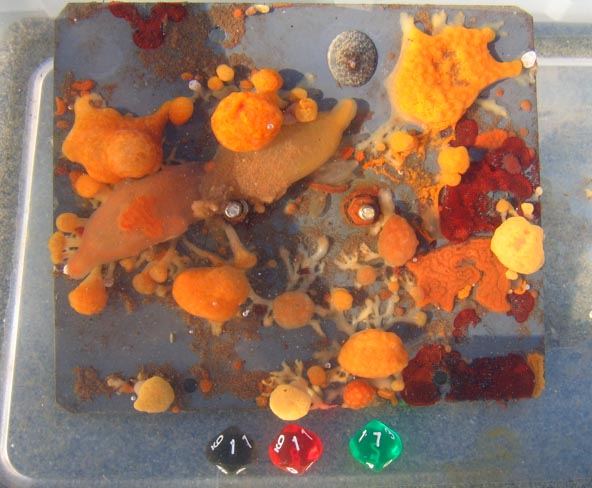
Panel with a sessile invertebrate community. Photo credit: Jarrett Byrnes.


So what’s the full picture of how biodiversity-ecosystem influences functions in the ocean – from primary production to biogeochemical cycles?

We got our hands on 110 marine experiments that manipulated the number of species and analysed some ecosystem response. In general, our analyses generally confirm previous findings that the average mix of species uses resources more efficiently and produces more biomass than the average monoculture. We honestly weren’t sure how this was going to fall out, and find great comfort in the generality of the result.

gamfeldt photo 2

Soft sediment microcosms, Sweden. Photo credit: Karl Norling.


In contrast, we find a different shape to relationship between biodiversity and ecosystem functions than has been seen previously. The relationship between species richness and production is best described as linear. The relationship between species richness and consumption appear to follow a power function. We find this by using new and more powerful techniques to describing the shape of relationships across multiple studies that we hope future researchers will use as well. (And, yes, we give you all of our code so that you can follow along at home!)

OLYMPUS DIGITAL CAMERA

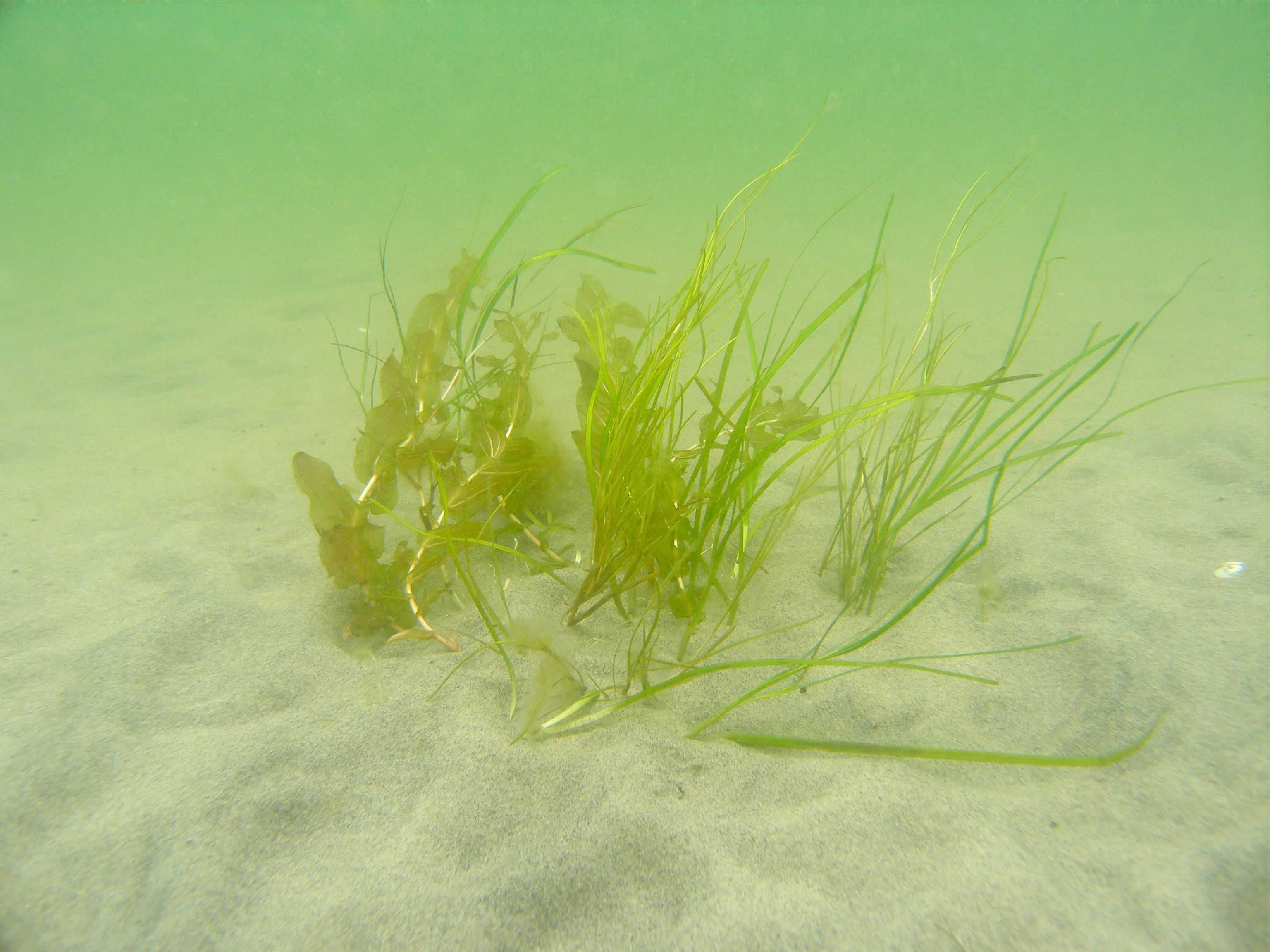
A seagrass field experiment in Finland. Photo shows a polyculture with three species. Photo credit: Camilla Gustafsson.


We also identify several gaps in our understanding of marine biodiversity and ecosystem functioning that are ripe for future investigation. First, the number of studies focusing on biogeochemical fluxes is still tiny. We need more. Second, we need more studies in pelagic and salt-marsh environments. Third, we still have only a handful of studies focused on predators. Fourth, the effects of increases in species richness (e.g. due to invasives or range shifts) are poorly understood. And last, we really only looked at relatively simple experiments, using on average only 3 species! We sorely need experiments targeting how spatial scale and heterogeneity, realistic local extinction scenarios from natural (read: large!) species pools, and functional and phylogenetic composition alter the relationship between biodiversity and ecosystem function.

To sum: there’s much work to be done, and we look forward with high hopes to the next generation of experiments exploring the consequences of changes in marine biodiversity.

gamfeldt photo 1

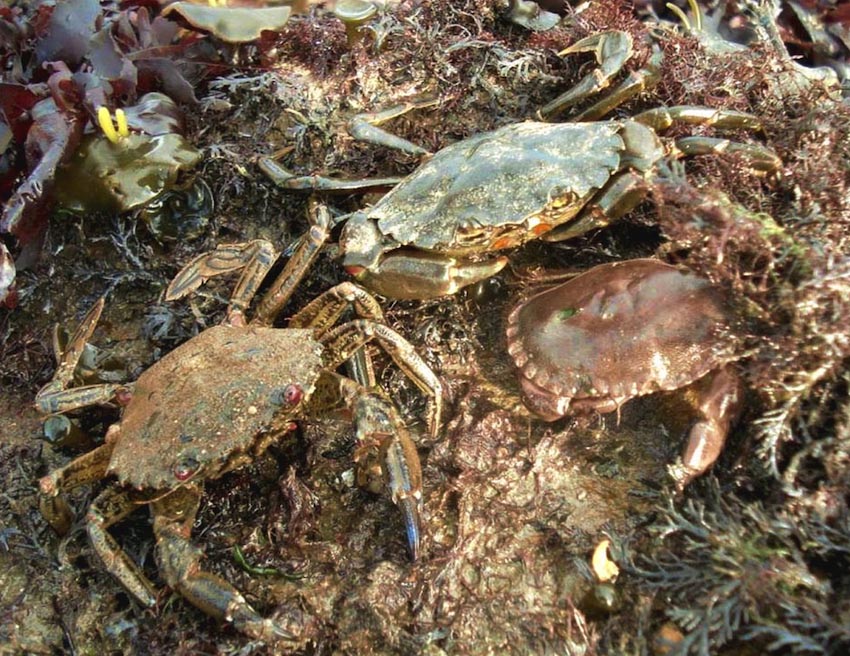
Three species of crab, used in the experiment in Griffin et al. 20083. Photo credit: Pippa Moore.


Now, if you had to explain this study to your mom or dad: the world has an incredible number and variety of different species, but we are losing them due to things like fishing, habitat destruction, and other threats from humanity. We need to understand what the consequences of these extinctions are for healthy and productive ecosystems, which is why researchers conduct experiments where they remove species and see what happens. We summarized data from 110 such experiments and found that losing species, on average, decreases productivity and growth, as well as a myriad of other processes related to how marine organisms capture and utilize resources, like nutrients. These processes ultimately put food on the dinner table and give us clean water. What is most interesting is we expected these declines to be non-linear based on previous studies: you can lose some species up to a point, then it starts to go downhill. The results from our analysis suggest that, for some processes, every species matters! Thus it is imperative that we protect and conserve biodiversity in our world’s oceans.

Lars Gamfeldt and co-workers

References:

  1. Cardinale, B. J. et al. 2006. Effects of biodiversity on the functioning of trophic groups and ecosystems. – Nature 443: 989-992.
  2. Cardinale, B. J. et al. 2011. The functional role of producer diversity in ecosystems. – American Journal of Botany 98: 572-592.
  3. Griffin, J., de la Haye, K., Hawkins, S., Thompson, R. and Jenkins, S. 2008. Predator diversity effects and ecosystem functioning: density modifies the effect of resource partitioning. – Ecology 89: 298-305.


A Marine Charter to protect and revitalise the UK’s ocean riches Updated for 2026


Five years ago to the day, the landmark Marine & Coastal Access Act 2009 was passed in the Westminster Parliament, enshrining in law a commitment to establish a network of Marine Protected Areas (MPAs) in English and Welsh inshore waters, and all offshore UK waters.

Successive Marine Acts passed in Holyrood and Stormont in 2010 and 2013 respectively required new MPAs in Scottish and Northern Irish inshore waters.

Each of these pieces of legislation committed to a broader goal – the creation of a network of MPAs throughout UK waters. The significance of this commitment was twofold.

Firstly, the commitment to a network of MPAs, rather than just cherry-picking areas in isolation, signalled the recognition of the need to take a more holistic view of the health of our oceans. This shift marked the UK’s ambition to become a global leader in restoring our increasingly denuded marine environment.

Secondly, the 2009 Marine Act was passed with overwhelming cross-party support. Members from across the benches acknowledged that the need to better protect and recover our iconic seas was not up for debate.

 How far have we got in five years?

We have undoubtedly made some headway. Following almost four years of consultation, in November 2013 the first 27 Marine Conservation Zones (MCZs – the formal name of English MPAs) were designated in inshore English waters and UK waters adjacent to England and Wales, with a commitment to two further tranches in 2015 and 2016.

In July 2014, the Scottish Government announced the designation of 30 Nature Conservation MPAs throughout waters adjacent to Scotland, with a further four to be consulted on in 2015. The Welsh Government has also committed to a review of existing MPAs within Welsh Inshore Waters.

But despite this, we remain a long way from the ambition of a full UK network. While welcome, the first 27 MCZs in the English MCZ project area were still 100 shy of the 127 originally proposed for that component of the UK network.

Crucially, it’s not enough just to declare MPAs. They also need to be properly managed and protected. Without this, the wafer thin veneer of progress is in reality leaving our seas with little more than paper parks. (See ‘Taking the ‘conservation’ out of Marine Conservation Zones‘.)

Not one of the 27 MCZs even has an agreed management plan in place. Throughout our seas, 35 marine species are still considered threatened by the International Union for Conservation of Nature (IUCN).

While the respective processes throughout the UK administrations are at different stages, the overall picture is one of a job half done – if that.

The Marine Charter for a comprehensive network of MPAs

So with the 2015 UK General Election looming, campaigners have sought to demonstrate that the strength of cross-party resolve that delivered the original 2009 Marine Act remains as strong as ever.

So far 21 UK NGOs – including the Marine Conservation Society, Wildlife Trusts, National Trust, RSPB and WWF – have united under the umbrella of Wildlife and Countryside Link to champion the Marine Charter – a call

“for the swift designation of a representative and well managed Ecologically Coherent Network of Marine Protected Areas in UK seas by 2016” that “meets international principles on coherence, and represents the full range of features in the UK seas as required by the relevant Marine Acts.

“The full network must include ambitious proposals within the commitment to two future tranches of Marine Conservation Zones in English Seas in 2015/16, alongside wider marine protected areas, and must be well managed to maintain sites that are in good condition and recover those that are damaged.

“Such a network is essential not only to stem the alarming decline in marine habitats and species, but also to ensure that the enormous social and economic benefits derived from marine goods and services can be realised for generations to come.”

Our aim – to secure commitments for the 2015 elections

The goal of the campaign is to secure commitments within the 2015 General Election Manifestos to complete a well-managed network of MPAs throughout UK seas by 2016.

As hoped, the Charter’s message has resonated across the parties. So far 127 MPs and 20 Peers from Labour, Liberal Democrats, SNP, Conservatives, DUP, SDLP, Greens and Plaid Cymru have all signed up in support.

In the last 18 months both the House of Commons Science & Technology and Environmental Audit Select Committees have urged the swift designation of the full list of 127 English MCZs toward the UK network.

Parallel advocacy is pushing for the completion of the respective parts of the network in Scotland, Wales and Northern Ireland. This strength of political, public and scientific support adds considerable weight to the enormous and diverse constituency who support a full network of MPAs in all UK waters.

The demand is also backed by more than 300,000 public signatures, 86 scientists from the UK’s marine biological community, and the Sea Users Development Group (SUDG), which represents a variety of maritime industries.

Certainty on exactly when these sites will be designated, says the SUDG, is vital for investor clarity and confidence

We need firm promises with no get-out clauses!

Secondly, and perhaps more significantly, the Charter represents unabashed and broad-based support for an issue that many may consider to have fallen down the political pecking order – conservation.

Here is clear recognition that this network is about far more than obscure bits of seaweed – it’s about better managing the very building blocks of the ecosystems that we have for too long taken for granted.

Yet, we are all, sadly, aware of how fickle political commitments can be. Hence it is crucial that rhetoric translates into firm commitments, underpinned by the political will to drive and coordinate the widely shared ambition to conserve and revitalise our marine heritage.

We all – politicians included – rightly take great pride in and evoke our island nation status.

It is not difficult to hark back to the majesty of our seas. A hundred years ago vast native oyster fields the size of Wales carpeted the Irish Sea; thriving coastal communities such as Lowestoft, Great Yarmouth and Grimsby harboured great fleets of vessels in their pursuit of the vast herring schools throughout the North Sea; and stunning apex predators such a Bluefin Tuna, Common Skate and Angel Sharks were abundant.

Sadly, we still have much to do to restore these former glories – and we must be candid that our ability to take great pride in our seas now comes with the responsibility of good stewardship.

Politicians from across Westminster have signalled their continued support to finish the job, but at a time when trust in our politicians and institutions have never been under greater scrutiny, the real test is whether this supports translates into the leadership that is so necessary.


Tom Hickey is Policy and Parliamentary Officer at the Marine Conservation Society.


386723