Tag Archives: network

A Marine Charter to protect and revitalise the UK’s ocean riches Updated for 2026


Five years ago to the day, the landmark Marine & Coastal Access Act 2009 was passed in the Westminster Parliament, enshrining in law a commitment to establish a network of Marine Protected Areas (MPAs) in English and Welsh inshore waters, and all offshore UK waters.

Successive Marine Acts passed in Holyrood and Stormont in 2010 and 2013 respectively required new MPAs in Scottish and Northern Irish inshore waters.

Each of these pieces of legislation committed to a broader goal – the creation of a network of MPAs throughout UK waters. The significance of this commitment was twofold.

Firstly, the commitment to a network of MPAs, rather than just cherry-picking areas in isolation, signalled the recognition of the need to take a more holistic view of the health of our oceans. This shift marked the UK’s ambition to become a global leader in restoring our increasingly denuded marine environment.

Secondly, the 2009 Marine Act was passed with overwhelming cross-party support. Members from across the benches acknowledged that the need to better protect and recover our iconic seas was not up for debate.

 How far have we got in five years?

We have undoubtedly made some headway. Following almost four years of consultation, in November 2013 the first 27 Marine Conservation Zones (MCZs – the formal name of English MPAs) were designated in inshore English waters and UK waters adjacent to England and Wales, with a commitment to two further tranches in 2015 and 2016.

In July 2014, the Scottish Government announced the designation of 30 Nature Conservation MPAs throughout waters adjacent to Scotland, with a further four to be consulted on in 2015. The Welsh Government has also committed to a review of existing MPAs within Welsh Inshore Waters.

But despite this, we remain a long way from the ambition of a full UK network. While welcome, the first 27 MCZs in the English MCZ project area were still 100 shy of the 127 originally proposed for that component of the UK network.

Crucially, it’s not enough just to declare MPAs. They also need to be properly managed and protected. Without this, the wafer thin veneer of progress is in reality leaving our seas with little more than paper parks. (See ‘Taking the ‘conservation’ out of Marine Conservation Zones‘.)

Not one of the 27 MCZs even has an agreed management plan in place. Throughout our seas, 35 marine species are still considered threatened by the International Union for Conservation of Nature (IUCN).

While the respective processes throughout the UK administrations are at different stages, the overall picture is one of a job half done – if that.

The Marine Charter for a comprehensive network of MPAs

So with the 2015 UK General Election looming, campaigners have sought to demonstrate that the strength of cross-party resolve that delivered the original 2009 Marine Act remains as strong as ever.

So far 21 UK NGOs – including the Marine Conservation Society, Wildlife Trusts, National Trust, RSPB and WWF – have united under the umbrella of Wildlife and Countryside Link to champion the Marine Charter – a call

“for the swift designation of a representative and well managed Ecologically Coherent Network of Marine Protected Areas in UK seas by 2016” that “meets international principles on coherence, and represents the full range of features in the UK seas as required by the relevant Marine Acts.

“The full network must include ambitious proposals within the commitment to two future tranches of Marine Conservation Zones in English Seas in 2015/16, alongside wider marine protected areas, and must be well managed to maintain sites that are in good condition and recover those that are damaged.

“Such a network is essential not only to stem the alarming decline in marine habitats and species, but also to ensure that the enormous social and economic benefits derived from marine goods and services can be realised for generations to come.”

Our aim – to secure commitments for the 2015 elections

The goal of the campaign is to secure commitments within the 2015 General Election Manifestos to complete a well-managed network of MPAs throughout UK seas by 2016.

As hoped, the Charter’s message has resonated across the parties. So far 127 MPs and 20 Peers from Labour, Liberal Democrats, SNP, Conservatives, DUP, SDLP, Greens and Plaid Cymru have all signed up in support.

In the last 18 months both the House of Commons Science & Technology and Environmental Audit Select Committees have urged the swift designation of the full list of 127 English MCZs toward the UK network.

Parallel advocacy is pushing for the completion of the respective parts of the network in Scotland, Wales and Northern Ireland. This strength of political, public and scientific support adds considerable weight to the enormous and diverse constituency who support a full network of MPAs in all UK waters.

The demand is also backed by more than 300,000 public signatures, 86 scientists from the UK’s marine biological community, and the Sea Users Development Group (SUDG), which represents a variety of maritime industries.

Certainty on exactly when these sites will be designated, says the SUDG, is vital for investor clarity and confidence

We need firm promises with no get-out clauses!

Secondly, and perhaps more significantly, the Charter represents unabashed and broad-based support for an issue that many may consider to have fallen down the political pecking order – conservation.

Here is clear recognition that this network is about far more than obscure bits of seaweed – it’s about better managing the very building blocks of the ecosystems that we have for too long taken for granted.

Yet, we are all, sadly, aware of how fickle political commitments can be. Hence it is crucial that rhetoric translates into firm commitments, underpinned by the political will to drive and coordinate the widely shared ambition to conserve and revitalise our marine heritage.

We all – politicians included – rightly take great pride in and evoke our island nation status.

It is not difficult to hark back to the majesty of our seas. A hundred years ago vast native oyster fields the size of Wales carpeted the Irish Sea; thriving coastal communities such as Lowestoft, Great Yarmouth and Grimsby harboured great fleets of vessels in their pursuit of the vast herring schools throughout the North Sea; and stunning apex predators such a Bluefin Tuna, Common Skate and Angel Sharks were abundant.

Sadly, we still have much to do to restore these former glories – and we must be candid that our ability to take great pride in our seas now comes with the responsibility of good stewardship.

Politicians from across Westminster have signalled their continued support to finish the job, but at a time when trust in our politicians and institutions have never been under greater scrutiny, the real test is whether this supports translates into the leadership that is so necessary.


Tom Hickey is Policy and Parliamentary Officer at the Marine Conservation Society.


386723

Everything is connected – in nature too Updated for 2026

You might, sometimes, have heard the phrase ‘everything is connected’. Maybe you are thinking about computers and mobile phones, but in fact this statement is particularly true in nature. For instance, we know that species are not isolated entities, instead they are part of communities in which multiple different species are interacting with each other. Some of these interspecific interactions are cooperative and positive for all interacting partners, and are called mutualistic interactions. Virtually all species on Earth are involved in one or more mutualistic interactions. Specifically, the interactions between plants and their pollinators may be some of the most studied ones, as nearly 85% of plants rely on animals for pollination service. In the last 20 years the study of pollination interactions using network analysis has been a hot topic in ecology. Networks have proven to be a useful tool to unravel patterns in plant-pollinator interactions at the whole community level. Usually, almost all plant-pollinator networks are constructed at the species-level (species-based networks), i.e. nodes in the network are plant and animal species and links represent the interactions occurring between them (e.g. flower visits). However, species are composed of populations of individuals and those individuals are the true actors establishing interactions in nature. Even more interesting is the fact that conspecific individuals are phenotypically and behaviourally diverse with respect to, e.g. size, sex, age, and social status, which also might imply that their foraging decisions become different. Most ecological networks studied to date have not considered this intraspecific variation in interactions, despite the importance of individual variation within natural populations addressed in the theory of evolution by natural selection. For that reason, moving from species-based networks to individual-based networks, to disentangle a process, which can be defined as network downscaling, is probably one of the major challenges right now in ecological network research.


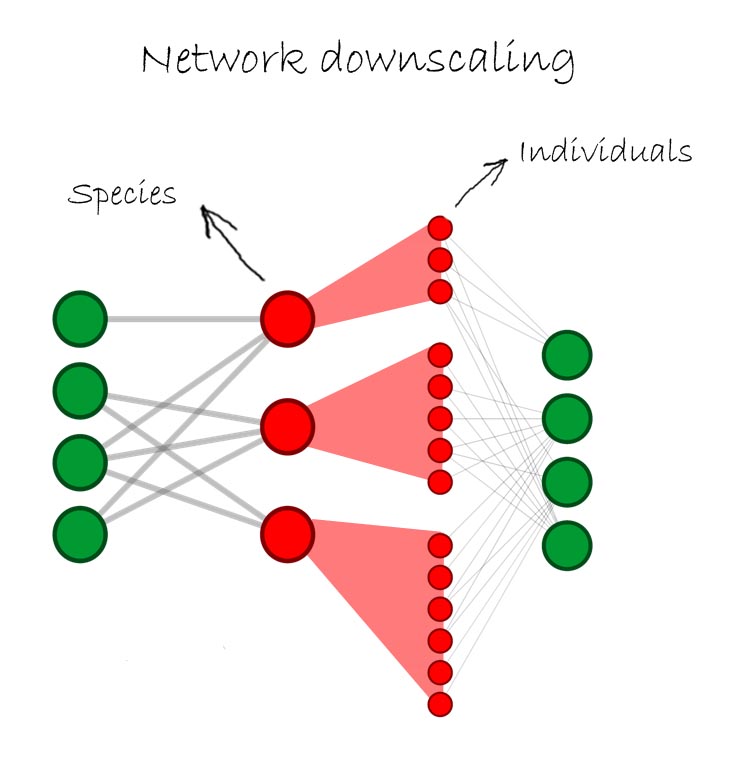
Network downscaling. In traditional species-based networks each node represents a species (red nodes are pollinators and green ones are plants), but if we decompose a species into its constituting individuals we can obtain an individual-based network. In the figure, downscaling is only represented for the pollinator subset.

Network downscaling. In traditional species-based networks each node represents a species (red nodes are pollinators and green ones are plants), but if we decompose a species into its constituting individuals we can obtain an individual-based network. In the figure, downscaling is only represented for the pollinator subset.


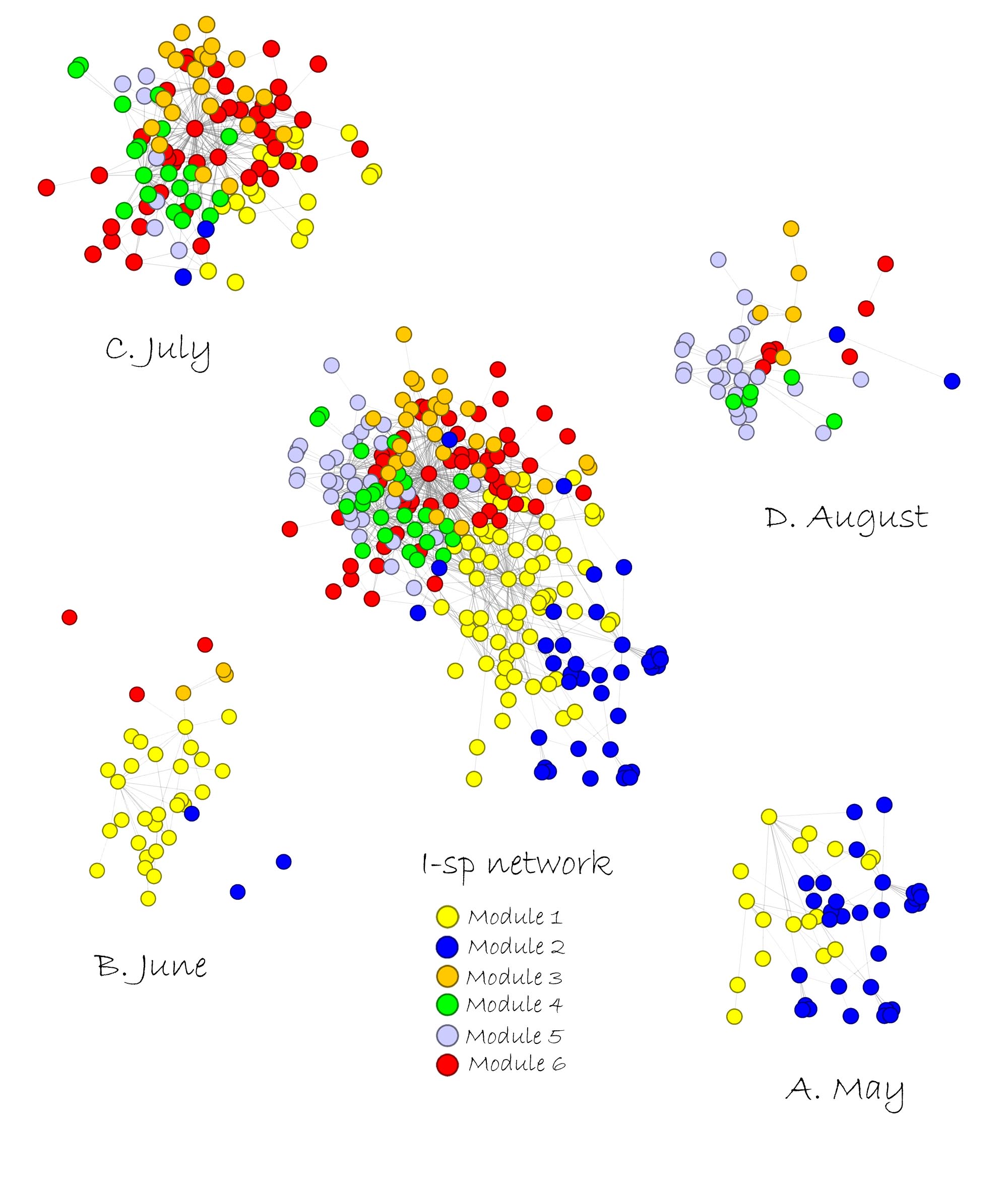
In an attempt to fill this gap of knowledge, we got the idea of downscaling an entire pollination network to the individual level for the pollinator subset and explore network patterns at both interacting scales: species and individuals. This was possible with the study of pollen loads of insect individuals. Insect flower visitors in two mountain shrub communities from Mallorca (Balearic Islands) were captured, and later in the laboratory, pollen carried by each one was identified and quantified under the microscope. It was a highly time consuming and difficult task, but it paid well off as it provided a record of the flowering species visited by each individual pollinator over time. Data revealed that generalized species in the plant-pollinator network are composed of specialized and idiosyncratic individuals. The high heterogeneity in individual foraging behaviour and the high individual specialization of pollinators are obviously hidden in traditional species-based networks, and thus determine differences in several topological properties between species-based and individual-based networks. Particularly, the modular structure – a broadly described pattern in pollination networks which consists of densely connected groups or cliques of nodes with sparse connections to other groups– is not consistent across networks at the two scales. We found that modularity increases when downscaling networks to the individual level, and we confirmed this result using different modularity detection algorithms. In contrast to the view of modules as a set of taxonomically related species or species with convergent morphological traits in species-based networks, modules in individual-based networks are groups of functionally different pollinators distantly related but with overlapping pollen niches. Thus, interestingly, conspecific individuals are distributed in different modules. Modules showed to have a strong phenological component, and attributes related to the phenophase of plants and individuals even determined the topological roles of nodes in the network. Only when downscaling to the individual level it was possible to detect a dynamical interaction switching within-species and a module turnover throughout the flowering season, thus modules of individuals assembled and disassembled over time.

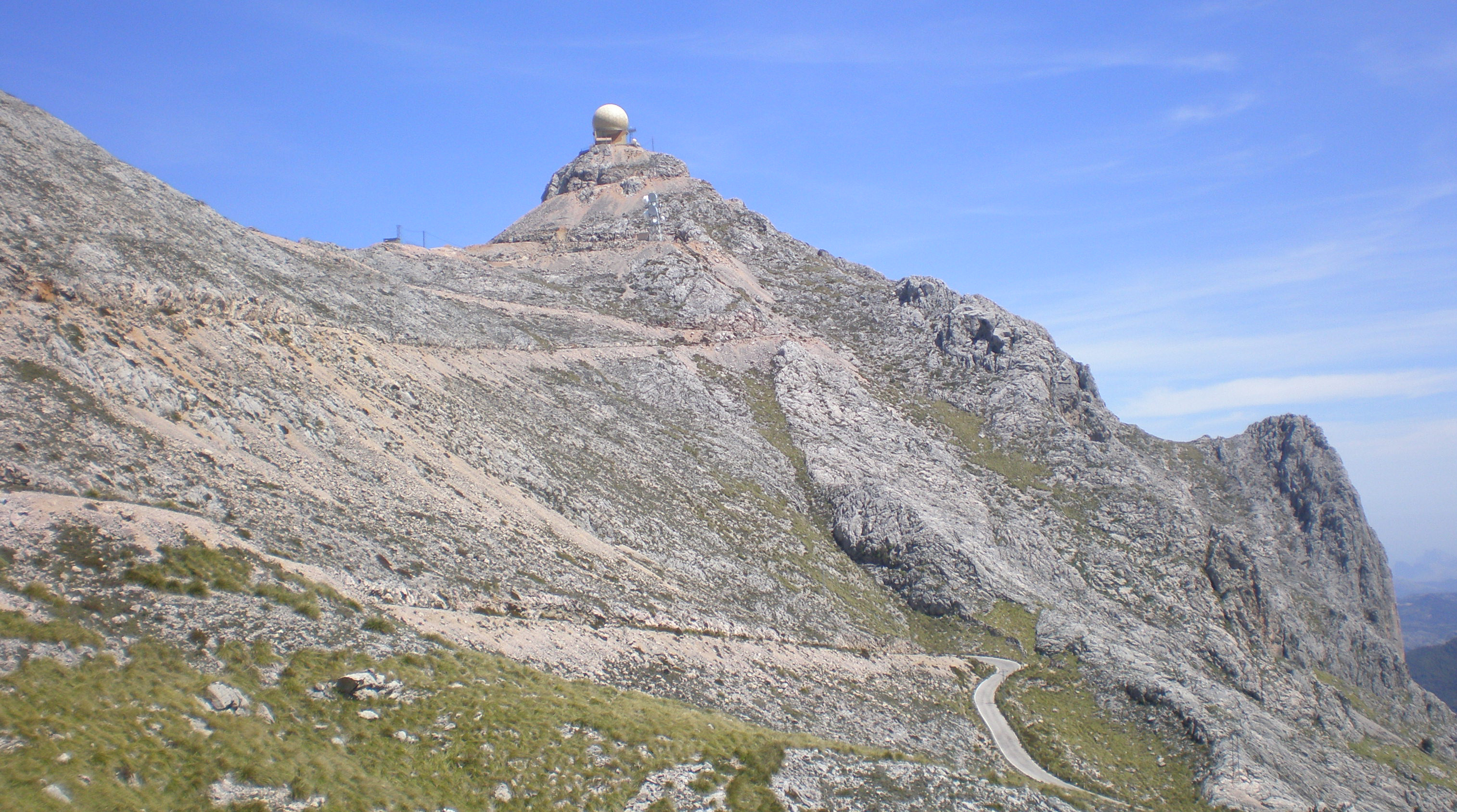
Study site. The study was conducted on two locations in Puig Major (1445 m), the highest mountain in Mallorca (Balearic Islands).

Study site. The study was conducted on two locations in Puig Major (1445 m), the highest mountain in Mallorca (Balearic Islands).

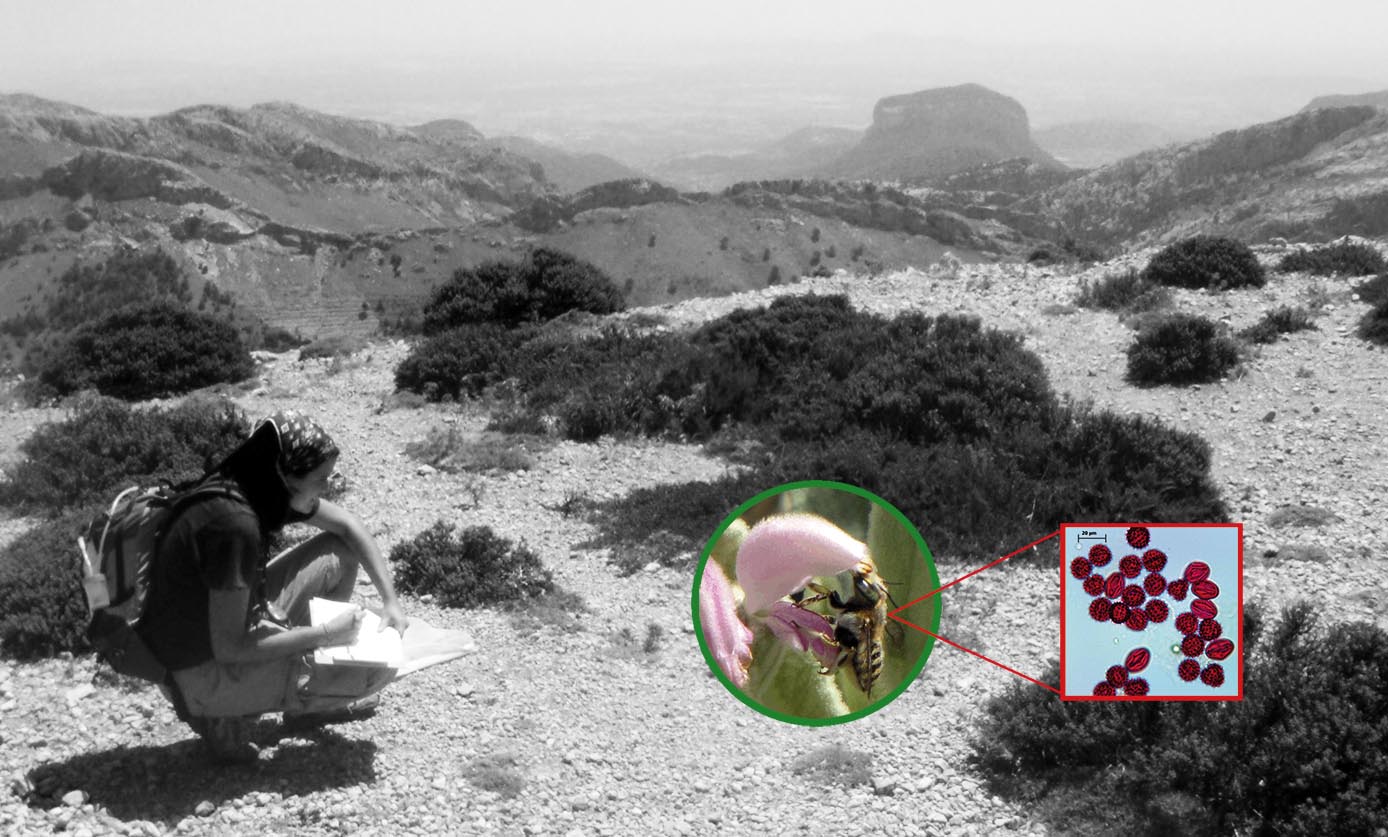
Methods. Pollinator observations were conducted in the field. Insects visiting flowers were captured and, later, their pollen loads were analyzed in the lab.

Methods. Pollinator observations were conducted in the field. Insects visiting flowers were captured and, later, their pollen loads were analyzed in the lab.


In conclusion, findings reported in our study, “Increasing modularity when downscaling networks from species to individuals”  (Tur et al.) highlight that network patterns differed across the individuals and the species scales, because much within-species variation exists. This implies that it is not always possible to deduce structure at one hierarchical level from information about structure at an adjacent level. Combining the study of networks at both scales offers the possibility of uncovering important properties and processes, which might influence network stability, dynamics and the outcomes of interactions.

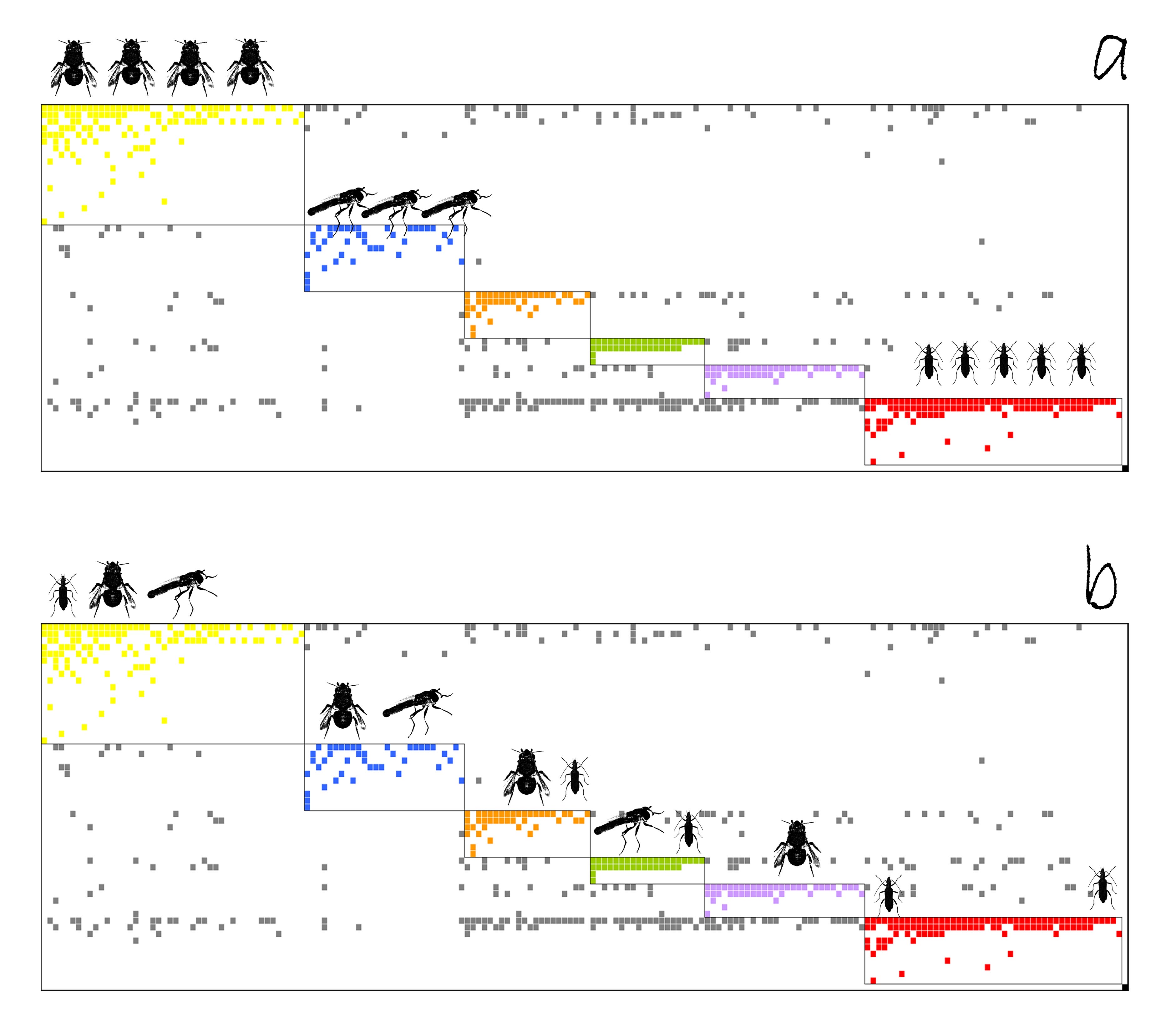
Distribution of conspecifics into modules. One of the objectives in our study was to investigate whether individual-based networks were modular and if this was true, to analize how conspecific individuals were distributed among modules. There are two possibilities: (a) all conspecific individuals belong to the same module, or alternatively, (b) conspecific individuals belong to different modules. In most species we found ‘b’.

Distribution of conspecifics into modules. One of the objectives in our study was to investigate whether individual-based networks were modular and if this was true, to analize how conspecific individuals were distributed among modules. There are two possibilities: (a) all conspecific individuals belong to the same module, or alternatively, (b) conspecific individuals belong to different modules. In most species we found ‘b’.


Module turnover. When downscaling from species to individuals, a module turnover associated to seasonality was identified, so that at a given moment of the season there is predominance of a particular module of individuals. The complete individual-species network and the different slices of each month are shown in the figure.

Module turnover. When downscaling from species to individuals, a module turnover associated to seasonality was identified, so that at a given moment of the season there is predominance of a particular module of individuals. The complete individual-species network and the different slices of each month are shown in the figure.

By Christina Tur


What exactly can network models predict? Updated for 2026

Ecological networks quantify the diversity of direct and indirect interactions taking place in nature. However, due to their complexity, ecologists rely heavily on the use of metrics to summarize aspects of network structure thought to be of biological importance. Many of these structural features are non-random and strongly conserved across diverse habitats and species assemblages, begging the question: what factors determine network structure? The most successful hypotheses to explain these patterns are the neutrality and biological constraints hypotheses, which posit that species interactions can be explained by trait mismatches, and relative abundances respectively. In the Early View paper “Species traits and relative abundances predict metrics of plant-pollinator network structure, but not pairwise interactions” in Oikos, we Colin Olito and Jeremy W. Fox, evaluate the relative ability of trait-based and neutral models of species interactions to explain the structure of a temporally resolved alpine plant-pollinator visitation network.


An unidentified muscid visiting Erigeron peregrinus. Although their charm often goes unappreciated, flies are by far the most diverse and abundant pollinators in the alpine. Interestingly, many of their behaviours that facilitate pollination differ markedly from more intensively studied foraging pollinators, such as bumblebees. Understanding their crucial role in alpine and high-latitude plant-pollinator communities will require a greater understanding of both their reproductive and foraging biology. Photo credit: Martin Fees.

An unidentified muscid visiting Erigeron peregrinus. Although their charm often goes unappreciated, flies are by far the most diverse and abundant pollinators in the alpine. Interestingly, many of their behaviours that facilitate pollination differ markedly from more intensively studied foraging pollinators, such as bumblebees. Understanding their crucial role in alpine and high-latitude plant-pollinator communities will require a greater understanding of both their reproductive and foraging biology. Photo credit: Martin Fees.

As our title suggests, species traits and relative abundances successfully predicted every metric of network structure tested, but failed to predict observed interactions. That is, a variety of models can predict network metrics well, but for the wrong reasons. We explore the implications of this contrast, and highlight potential problems with the use and interpretation of network metrics. We also found that species phenologies (the timing of flowering or pollinator activity) always out-performed neutral models at predicting pairwise interactions, and discuss limitations of neutral models of network structure, particularly when species interactions are under-sampled. We suggest that future progress in explaining the structure and dynamics of ecological networks will require new approaches that emphasize accurate prediction of species interactions rather than network metrics, and better reflect the biology underlying species interactions.

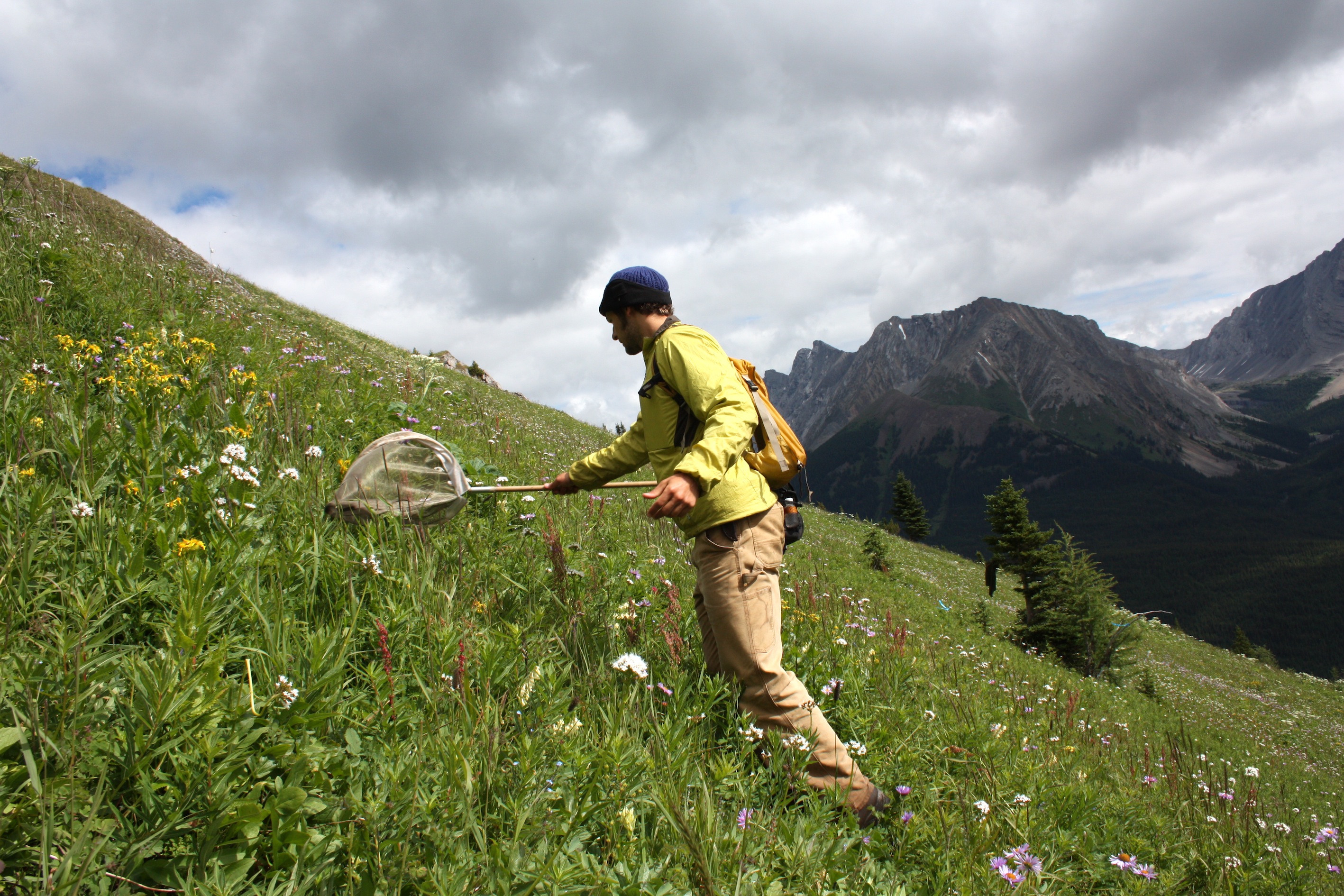
Sampling plant-pollinator interactions in a low-alpine meadow in Kananaskis Country, Alberta, Canada. Photo credit: Martin Fees.

Sampling plant-pollinator interactions in a low-alpine meadow in Kananaskis Country, Alberta, Canada. Photo credit: Martin Fees.