Tag Archives: stay

Devon’s beavers will stay wild and free Updated for 2026


Beavers living in the River Otter in Devon will be allowed to remain in the wild following a historic decision by Natural England to allow their ‘re-introduction’.

Natural England’s Board today confirmed that a licence will be issued to Devon Wildlife Trust (DWT), permitting “the managed release into the wild of beavers currently resident in the River Otter catchment in Devon, on a 5 year trial basis.”

The move is being applauded by local people who want the beavers to remain in the River Otter, landowner Clinton Devon Estates, DWT and Friends of the Earth, which had started legal proceedings over earlier Government plans trap the beavers and hold them in zoo or other secure facility.

According to a statement released by NE, DWT’s licence application was “thoroughly assessed against the internationally recognised guidelines published by the International Union for the Conservation of Nature.”

“Under the terms of the licence, by September at the latest, Devon Wildlife Trust must develop a management strategy to deal quickly with any undesirable impacts which the beavers may have on the River Otter during the trial period, as well as a monitoring programme to study their impacts.”

Another conditions stipulate that the beavers must be confirmed as being of are of Eurasian origin, and free of the rare but unpleasant tapeworm Echinococcus multilocularis, which can transfer to other wildlife and to people.

England’s first otters in hundreds of years!

“We are delighted by Natural England’s decision to grant us a licence to give these beavers a long term future on the River Otter”, said Harry Barton, Chief Executive of Devon Wildlife Trust.

“The beavers of the River Otter are the first breeding population in the English countryside for hundreds of years. We believe they can play a positive role in the landscapes of the 21st century through their ability to restore our rivers to their former glories.

“We know from our own research and research done in Europe that beavers are excellent aquatic-engineers improving the flood and drought resilience of our countryside and increasing the water quality of our rivers.  They are incredibly industrious animals and their hard work has benefits for people and wildlife.”

For the last six months DWT has been working with Defra, Natural England, local farmers and the wider community to secure a solution that would see the disease risk addressed and the beavers remain.

“This project will measure the impact that these beavers have on the local environment, on the local economy and on local people”, said Peter Burgess, DWT’s Conservation Manager, who led the licence application.

“The evidence from elsewhere shows that beavers should have an overwhelmingly positive effect, but this is the first time the animals will be living in a well-populated, agriculturally productive English landscape for hundreds of years.”

But he added: “We need to ensure that any negative impacts of beavers are avoided. This will mean working alongside the Environment Agency, local authorities and landowners to manage any problems that may arise over the coming years.”

Clinton Devon Estates, the biggest landowner on the lower River Otter, also welcomes the awarding of the licence. Dr Sam Bridgewater, the estate’s Nature Conservation Manager, says that the focus of the debate needs to be 20 to 30 years from now:

“We need to look at what’s happened on the continent where there were fewer than 2000 beavers at the start of the 20th Century but there are now over 600,000. If their numbers increase, then it is inevitable that they will eventually start to engineer their local environment.

“This will bring all kinds of benefits such as a potential slowing down of flood waters and an increase in the diversity of wildlife habitats, but will also likely cause some grief. I think a key issue for the authorities to address is that mechanisms are put in place to allow any conflicts to be avoided quickly in the future.”

Over 10,000 messages of support for the beavers

There has been overwhelming national and local support for the beavers to remain in the wild. Over 10,000 people sent messages to the Minister for the Natural Environment, and at a recent event in the village of Ottery St. Mary more than 100 people turned up, the vast majority in support of the beavers.

“This is great news for Devon’s beavers”, said Friends of the Earth campaigner Alasdair Cameron – who had earlier led the group’s application for a judicial review of an earlier decision to trap the beavers citing violations of the Habitats Directive.

“Beavers add to Britain’s rich natural heritage and can bring huge benefits to the local environment, such as boosting wildlife and reducing flooding risks. Hopefully we’ll now see renewed efforts to reintroduce beavers to other suitable locations right across the country.”

Natural England’s Chairman Andrew Sells confirmed that future decisions on the release of beavers will “in large part” be informed by the results of this trial, adding: “Reintroduction of a species is a complicated and emotive subject and we have considered this application very carefully.

“Responses to our written consultation and public meetings have been generally positive and we are now satisfied with Devon Wildlife Trust’s plans for managing and monitoring the project, which will allow important evidence to be gathered during the trial on any impacts which the beavers may have.”

But he warned: “The unauthorised release of beavers remains illegal and Natural England does not expect to grant any other licences for beaver release during this trial period.”

Trapping and testing of the animals for the Echinococcus multilocularis tapeworm will be carried out by the Animal and Plant Health Agency under a separate licence that was granted towards the end of 2014.


Support: Devon Wildlife Trust now faces the task of funding the River Otter Beaver Project. An initial call for donations led to £45,000 being raised in just two months. However the cost of the five year monitoring project is estimated to run well above this figure. DWT is now asking supporters of the beavers to donate via its website or by phone on 01392 279244.

Oliver Tickell edits The Ecologist.


389632

Devon’s beavers will stay wild and free Updated for 2026


Beavers living in the River Otter in Devon will be allowed to remain in the wild following a historic decision by Natural England to allow their ‘re-introduction’.

Natural England’s Board today confirmed that a licence will be issued to Devon Wildlife Trust (DWT), permitting “the managed release into the wild of beavers currently resident in the River Otter catchment in Devon, on a 5 year trial basis.”

The move is being applauded by local people who want the beavers to remain in the River Otter, landowner Clinton Devon Estates, DWT and Friends of the Earth, which had started legal proceedings over earlier Government plans trap the beavers and hold them in zoo or other secure facility.

According to a statement released by NE, DWT’s licence application was “thoroughly assessed against the internationally recognised guidelines published by the International Union for the Conservation of Nature.”

“Under the terms of the licence, by September at the latest, Devon Wildlife Trust must develop a management strategy to deal quickly with any undesirable impacts which the beavers may have on the River Otter during the trial period, as well as a monitoring programme to study their impacts.”

Another conditions stipulate that the beavers must be confirmed as being of are of Eurasian origin, and free of the rare but unpleasant tapeworm Echinococcus multilocularis, which can transfer to other wildlife and to people.

England’s first otters in hundreds of years!

“We are delighted by Natural England’s decision to grant us a licence to give these beavers a long term future on the River Otter”, said Harry Barton, Chief Executive of Devon Wildlife Trust.

“The beavers of the River Otter are the first breeding population in the English countryside for hundreds of years. We believe they can play a positive role in the landscapes of the 21st century through their ability to restore our rivers to their former glories.

“We know from our own research and research done in Europe that beavers are excellent aquatic-engineers improving the flood and drought resilience of our countryside and increasing the water quality of our rivers.  They are incredibly industrious animals and their hard work has benefits for people and wildlife.”

For the last six months DWT has been working with Defra, Natural England, local farmers and the wider community to secure a solution that would see the disease risk addressed and the beavers remain.

“This project will measure the impact that these beavers have on the local environment, on the local economy and on local people”, said Peter Burgess, DWT’s Conservation Manager, who led the licence application.

“The evidence from elsewhere shows that beavers should have an overwhelmingly positive effect, but this is the first time the animals will be living in a well-populated, agriculturally productive English landscape for hundreds of years.”

But he added: “We need to ensure that any negative impacts of beavers are avoided. This will mean working alongside the Environment Agency, local authorities and landowners to manage any problems that may arise over the coming years.”

Clinton Devon Estates, the biggest landowner on the lower River Otter, also welcomes the awarding of the licence. Dr Sam Bridgewater, the estate’s Nature Conservation Manager, says that the focus of the debate needs to be 20 to 30 years from now:

“We need to look at what’s happened on the continent where there were fewer than 2000 beavers at the start of the 20th Century but there are now over 600,000. If their numbers increase, then it is inevitable that they will eventually start to engineer their local environment.

“This will bring all kinds of benefits such as a potential slowing down of flood waters and an increase in the diversity of wildlife habitats, but will also likely cause some grief. I think a key issue for the authorities to address is that mechanisms are put in place to allow any conflicts to be avoided quickly in the future.”

Over 10,000 messages of support for the beavers

There has been overwhelming national and local support for the beavers to remain in the wild. Over 10,000 people sent messages to the Minister for the Natural Environment, and at a recent event in the village of Ottery St. Mary more than 100 people turned up, the vast majority in support of the beavers.

“This is great news for Devon’s beavers”, said Friends of the Earth campaigner Alasdair Cameron – who had earlier led the group’s application for a judicial review of an earlier decision to trap the beavers citing violations of the Habitats Directive.

“Beavers add to Britain’s rich natural heritage and can bring huge benefits to the local environment, such as boosting wildlife and reducing flooding risks. Hopefully we’ll now see renewed efforts to reintroduce beavers to other suitable locations right across the country.”

Natural England’s Chairman Andrew Sells confirmed that future decisions on the release of beavers will “in large part” be informed by the results of this trial, adding: “Reintroduction of a species is a complicated and emotive subject and we have considered this application very carefully.

“Responses to our written consultation and public meetings have been generally positive and we are now satisfied with Devon Wildlife Trust’s plans for managing and monitoring the project, which will allow important evidence to be gathered during the trial on any impacts which the beavers may have.”

But he warned: “The unauthorised release of beavers remains illegal and Natural England does not expect to grant any other licences for beaver release during this trial period.”

Trapping and testing of the animals for the Echinococcus multilocularis tapeworm will be carried out by the Animal and Plant Health Agency under a separate licence that was granted towards the end of 2014.


Support: Devon Wildlife Trust now faces the task of funding the River Otter Beaver Project. An initial call for donations led to £45,000 being raised in just two months. However the cost of the five year monitoring project is estimated to run well above this figure. DWT is now asking supporters of the beavers to donate via its website or by phone on 01392 279244.

Oliver Tickell edits The Ecologist.


389632

Devon’s beavers will stay wild and free Updated for 2026


Beavers living in the River Otter in Devon will be allowed to remain in the wild following a historic decision by Natural England to allow their ‘re-introduction’.

Natural England’s Board today confirmed that a licence will be issued to Devon Wildlife Trust (DWT), permitting “the managed release into the wild of beavers currently resident in the River Otter catchment in Devon, on a 5 year trial basis.”

The move is being applauded by local people who want the beavers to remain in the River Otter, landowner Clinton Devon Estates, DWT and Friends of the Earth, which had started legal proceedings over earlier Government plans trap the beavers and hold them in zoo or other secure facility.

According to a statement released by NE, DWT’s licence application was “thoroughly assessed against the internationally recognised guidelines published by the International Union for the Conservation of Nature.”

“Under the terms of the licence, by September at the latest, Devon Wildlife Trust must develop a management strategy to deal quickly with any undesirable impacts which the beavers may have on the River Otter during the trial period, as well as a monitoring programme to study their impacts.”

Another conditions stipulate that the beavers must be confirmed as being of are of Eurasian origin, and free of the rare but unpleasant tapeworm Echinococcus multilocularis, which can transfer to other wildlife and to people.

England’s first otters in hundreds of years!

“We are delighted by Natural England’s decision to grant us a licence to give these beavers a long term future on the River Otter”, said Harry Barton, Chief Executive of Devon Wildlife Trust.

“The beavers of the River Otter are the first breeding population in the English countryside for hundreds of years. We believe they can play a positive role in the landscapes of the 21st century through their ability to restore our rivers to their former glories.

“We know from our own research and research done in Europe that beavers are excellent aquatic-engineers improving the flood and drought resilience of our countryside and increasing the water quality of our rivers.  They are incredibly industrious animals and their hard work has benefits for people and wildlife.”

For the last six months DWT has been working with Defra, Natural England, local farmers and the wider community to secure a solution that would see the disease risk addressed and the beavers remain.

“This project will measure the impact that these beavers have on the local environment, on the local economy and on local people”, said Peter Burgess, DWT’s Conservation Manager, who led the licence application.

“The evidence from elsewhere shows that beavers should have an overwhelmingly positive effect, but this is the first time the animals will be living in a well-populated, agriculturally productive English landscape for hundreds of years.”

But he added: “We need to ensure that any negative impacts of beavers are avoided. This will mean working alongside the Environment Agency, local authorities and landowners to manage any problems that may arise over the coming years.”

Clinton Devon Estates, the biggest landowner on the lower River Otter, also welcomes the awarding of the licence. Dr Sam Bridgewater, the estate’s Nature Conservation Manager, says that the focus of the debate needs to be 20 to 30 years from now:

“We need to look at what’s happened on the continent where there were fewer than 2000 beavers at the start of the 20th Century but there are now over 600,000. If their numbers increase, then it is inevitable that they will eventually start to engineer their local environment.

“This will bring all kinds of benefits such as a potential slowing down of flood waters and an increase in the diversity of wildlife habitats, but will also likely cause some grief. I think a key issue for the authorities to address is that mechanisms are put in place to allow any conflicts to be avoided quickly in the future.”

Over 10,000 messages of support for the beavers

There has been overwhelming national and local support for the beavers to remain in the wild. Over 10,000 people sent messages to the Minister for the Natural Environment, and at a recent event in the village of Ottery St. Mary more than 100 people turned up, the vast majority in support of the beavers.

“This is great news for Devon’s beavers”, said Friends of the Earth campaigner Alasdair Cameron – who had earlier led the group’s application for a judicial review of an earlier decision to trap the beavers citing violations of the Habitats Directive.

“Beavers add to Britain’s rich natural heritage and can bring huge benefits to the local environment, such as boosting wildlife and reducing flooding risks. Hopefully we’ll now see renewed efforts to reintroduce beavers to other suitable locations right across the country.”

Natural England’s Chairman Andrew Sells confirmed that future decisions on the release of beavers will “in large part” be informed by the results of this trial, adding: “Reintroduction of a species is a complicated and emotive subject and we have considered this application very carefully.

“Responses to our written consultation and public meetings have been generally positive and we are now satisfied with Devon Wildlife Trust’s plans for managing and monitoring the project, which will allow important evidence to be gathered during the trial on any impacts which the beavers may have.”

But he warned: “The unauthorised release of beavers remains illegal and Natural England does not expect to grant any other licences for beaver release during this trial period.”

Trapping and testing of the animals for the Echinococcus multilocularis tapeworm will be carried out by the Animal and Plant Health Agency under a separate licence that was granted towards the end of 2014.


Support: Devon Wildlife Trust now faces the task of funding the River Otter Beaver Project. An initial call for donations led to £45,000 being raised in just two months. However the cost of the five year monitoring project is estimated to run well above this figure. DWT is now asking supporters of the beavers to donate via its website or by phone on 01392 279244.

Oliver Tickell edits The Ecologist.


389632

Devon’s beavers will stay wild and free Updated for 2026


Beavers living in the River Otter in Devon will be allowed to remain in the wild following a historic decision by Natural England to allow their ‘re-introduction’.

Natural England’s Board today confirmed that a licence will be issued to Devon Wildlife Trust (DWT), permitting “the managed release into the wild of beavers currently resident in the River Otter catchment in Devon, on a 5 year trial basis.”

The move is being applauded by local people who want the beavers to remain in the River Otter, landowner Clinton Devon Estates, DWT and Friends of the Earth, which had started legal proceedings over earlier Government plans trap the beavers and hold them in zoo or other secure facility.

According to a statement released by NE, DWT’s licence application was “thoroughly assessed against the internationally recognised guidelines published by the International Union for the Conservation of Nature.”

“Under the terms of the licence, by September at the latest, Devon Wildlife Trust must develop a management strategy to deal quickly with any undesirable impacts which the beavers may have on the River Otter during the trial period, as well as a monitoring programme to study their impacts.”

Another conditions stipulate that the beavers must be confirmed as being of are of Eurasian origin, and free of the rare but unpleasant tapeworm Echinococcus multilocularis, which can transfer to other wildlife and to people.

England’s first otters in hundreds of years!

“We are delighted by Natural England’s decision to grant us a licence to give these beavers a long term future on the River Otter”, said Harry Barton, Chief Executive of Devon Wildlife Trust.

“The beavers of the River Otter are the first breeding population in the English countryside for hundreds of years. We believe they can play a positive role in the landscapes of the 21st century through their ability to restore our rivers to their former glories.

“We know from our own research and research done in Europe that beavers are excellent aquatic-engineers improving the flood and drought resilience of our countryside and increasing the water quality of our rivers.  They are incredibly industrious animals and their hard work has benefits for people and wildlife.”

For the last six months DWT has been working with Defra, Natural England, local farmers and the wider community to secure a solution that would see the disease risk addressed and the beavers remain.

“This project will measure the impact that these beavers have on the local environment, on the local economy and on local people”, said Peter Burgess, DWT’s Conservation Manager, who led the licence application.

“The evidence from elsewhere shows that beavers should have an overwhelmingly positive effect, but this is the first time the animals will be living in a well-populated, agriculturally productive English landscape for hundreds of years.”

But he added: “We need to ensure that any negative impacts of beavers are avoided. This will mean working alongside the Environment Agency, local authorities and landowners to manage any problems that may arise over the coming years.”

Clinton Devon Estates, the biggest landowner on the lower River Otter, also welcomes the awarding of the licence. Dr Sam Bridgewater, the estate’s Nature Conservation Manager, says that the focus of the debate needs to be 20 to 30 years from now:

“We need to look at what’s happened on the continent where there were fewer than 2000 beavers at the start of the 20th Century but there are now over 600,000. If their numbers increase, then it is inevitable that they will eventually start to engineer their local environment.

“This will bring all kinds of benefits such as a potential slowing down of flood waters and an increase in the diversity of wildlife habitats, but will also likely cause some grief. I think a key issue for the authorities to address is that mechanisms are put in place to allow any conflicts to be avoided quickly in the future.”

Over 10,000 messages of support for the beavers

There has been overwhelming national and local support for the beavers to remain in the wild. Over 10,000 people sent messages to the Minister for the Natural Environment, and at a recent event in the village of Ottery St. Mary more than 100 people turned up, the vast majority in support of the beavers.

“This is great news for Devon’s beavers”, said Friends of the Earth campaigner Alasdair Cameron – who had earlier led the group’s application for a judicial review of an earlier decision to trap the beavers citing violations of the Habitats Directive.

“Beavers add to Britain’s rich natural heritage and can bring huge benefits to the local environment, such as boosting wildlife and reducing flooding risks. Hopefully we’ll now see renewed efforts to reintroduce beavers to other suitable locations right across the country.”

Natural England’s Chairman Andrew Sells confirmed that future decisions on the release of beavers will “in large part” be informed by the results of this trial, adding: “Reintroduction of a species is a complicated and emotive subject and we have considered this application very carefully.

“Responses to our written consultation and public meetings have been generally positive and we are now satisfied with Devon Wildlife Trust’s plans for managing and monitoring the project, which will allow important evidence to be gathered during the trial on any impacts which the beavers may have.”

But he warned: “The unauthorised release of beavers remains illegal and Natural England does not expect to grant any other licences for beaver release during this trial period.”

Trapping and testing of the animals for the Echinococcus multilocularis tapeworm will be carried out by the Animal and Plant Health Agency under a separate licence that was granted towards the end of 2014.


Support: Devon Wildlife Trust now faces the task of funding the River Otter Beaver Project. An initial call for donations led to £45,000 being raised in just two months. However the cost of the five year monitoring project is estimated to run well above this figure. DWT is now asking supporters of the beavers to donate via its website or by phone on 01392 279244.

Oliver Tickell edits The Ecologist.


389632

Devon’s beavers will stay wild and free Updated for 2026


Beavers living in the River Otter in Devon will be allowed to remain in the wild following a historic decision by Natural England to allow their ‘re-introduction’.

Natural England’s Board today confirmed that a licence will be issued to Devon Wildlife Trust (DWT), permitting “the managed release into the wild of beavers currently resident in the River Otter catchment in Devon, on a 5 year trial basis.”

The move is being applauded by local people who want the beavers to remain in the River Otter, landowner Clinton Devon Estates, DWT and Friends of the Earth, which had started legal proceedings over earlier Government plans trap the beavers and hold them in zoo or other secure facility.

According to a statement released by NE, DWT’s licence application was “thoroughly assessed against the internationally recognised guidelines published by the International Union for the Conservation of Nature.”

“Under the terms of the licence, by September at the latest, Devon Wildlife Trust must develop a management strategy to deal quickly with any undesirable impacts which the beavers may have on the River Otter during the trial period, as well as a monitoring programme to study their impacts.”

Another conditions stipulate that the beavers must be confirmed as being of are of Eurasian origin, and free of the rare but unpleasant tapeworm Echinococcus multilocularis, which can transfer to other wildlife and to people.

England’s first otters in hundreds of years!

“We are delighted by Natural England’s decision to grant us a licence to give these beavers a long term future on the River Otter”, said Harry Barton, Chief Executive of Devon Wildlife Trust.

“The beavers of the River Otter are the first breeding population in the English countryside for hundreds of years. We believe they can play a positive role in the landscapes of the 21st century through their ability to restore our rivers to their former glories.

“We know from our own research and research done in Europe that beavers are excellent aquatic-engineers improving the flood and drought resilience of our countryside and increasing the water quality of our rivers.  They are incredibly industrious animals and their hard work has benefits for people and wildlife.”

For the last six months DWT has been working with Defra, Natural England, local farmers and the wider community to secure a solution that would see the disease risk addressed and the beavers remain.

“This project will measure the impact that these beavers have on the local environment, on the local economy and on local people”, said Peter Burgess, DWT’s Conservation Manager, who led the licence application.

“The evidence from elsewhere shows that beavers should have an overwhelmingly positive effect, but this is the first time the animals will be living in a well-populated, agriculturally productive English landscape for hundreds of years.”

But he added: “We need to ensure that any negative impacts of beavers are avoided. This will mean working alongside the Environment Agency, local authorities and landowners to manage any problems that may arise over the coming years.”

Clinton Devon Estates, the biggest landowner on the lower River Otter, also welcomes the awarding of the licence. Dr Sam Bridgewater, the estate’s Nature Conservation Manager, says that the focus of the debate needs to be 20 to 30 years from now:

“We need to look at what’s happened on the continent where there were fewer than 2000 beavers at the start of the 20th Century but there are now over 600,000. If their numbers increase, then it is inevitable that they will eventually start to engineer their local environment.

“This will bring all kinds of benefits such as a potential slowing down of flood waters and an increase in the diversity of wildlife habitats, but will also likely cause some grief. I think a key issue for the authorities to address is that mechanisms are put in place to allow any conflicts to be avoided quickly in the future.”

Over 10,000 messages of support for the beavers

There has been overwhelming national and local support for the beavers to remain in the wild. Over 10,000 people sent messages to the Minister for the Natural Environment, and at a recent event in the village of Ottery St. Mary more than 100 people turned up, the vast majority in support of the beavers.

“This is great news for Devon’s beavers”, said Friends of the Earth campaigner Alasdair Cameron – who had earlier led the group’s application for a judicial review of an earlier decision to trap the beavers citing violations of the Habitats Directive.

“Beavers add to Britain’s rich natural heritage and can bring huge benefits to the local environment, such as boosting wildlife and reducing flooding risks. Hopefully we’ll now see renewed efforts to reintroduce beavers to other suitable locations right across the country.”

Natural England’s Chairman Andrew Sells confirmed that future decisions on the release of beavers will “in large part” be informed by the results of this trial, adding: “Reintroduction of a species is a complicated and emotive subject and we have considered this application very carefully.

“Responses to our written consultation and public meetings have been generally positive and we are now satisfied with Devon Wildlife Trust’s plans for managing and monitoring the project, which will allow important evidence to be gathered during the trial on any impacts which the beavers may have.”

But he warned: “The unauthorised release of beavers remains illegal and Natural England does not expect to grant any other licences for beaver release during this trial period.”

Trapping and testing of the animals for the Echinococcus multilocularis tapeworm will be carried out by the Animal and Plant Health Agency under a separate licence that was granted towards the end of 2014.


Support: Devon Wildlife Trust now faces the task of funding the River Otter Beaver Project. An initial call for donations led to £45,000 being raised in just two months. However the cost of the five year monitoring project is estimated to run well above this figure. DWT is now asking supporters of the beavers to donate via its website or by phone on 01392 279244.

Oliver Tickell edits The Ecologist.


389632

Devon’s beavers will stay wild and free Updated for 2026


Beavers living in the River Otter in Devon will be allowed to remain in the wild following a historic decision by Natural England to allow their ‘re-introduction’.

Natural England’s Board today confirmed that a licence will be issued to Devon Wildlife Trust (DWT), permitting “the managed release into the wild of beavers currently resident in the River Otter catchment in Devon, on a 5 year trial basis.”

The move is being applauded by local people who want the beavers to remain in the River Otter, landowner Clinton Devon Estates, DWT and Friends of the Earth, which had started legal proceedings over earlier Government plans trap the beavers and hold them in zoo or other secure facility.

According to a statement released by NE, DWT’s licence application was “thoroughly assessed against the internationally recognised guidelines published by the International Union for the Conservation of Nature.”

“Under the terms of the licence, by September at the latest, Devon Wildlife Trust must develop a management strategy to deal quickly with any undesirable impacts which the beavers may have on the River Otter during the trial period, as well as a monitoring programme to study their impacts.”

Another conditions stipulate that the beavers must be confirmed as being of are of Eurasian origin, and free of the rare but unpleasant tapeworm Echinococcus multilocularis, which can transfer to other wildlife and to people.

England’s first otters in hundreds of years!

“We are delighted by Natural England’s decision to grant us a licence to give these beavers a long term future on the River Otter”, said Harry Barton, Chief Executive of Devon Wildlife Trust.

“The beavers of the River Otter are the first breeding population in the English countryside for hundreds of years. We believe they can play a positive role in the landscapes of the 21st century through their ability to restore our rivers to their former glories.

“We know from our own research and research done in Europe that beavers are excellent aquatic-engineers improving the flood and drought resilience of our countryside and increasing the water quality of our rivers.  They are incredibly industrious animals and their hard work has benefits for people and wildlife.”

For the last six months DWT has been working with Defra, Natural England, local farmers and the wider community to secure a solution that would see the disease risk addressed and the beavers remain.

“This project will measure the impact that these beavers have on the local environment, on the local economy and on local people”, said Peter Burgess, DWT’s Conservation Manager, who led the licence application.

“The evidence from elsewhere shows that beavers should have an overwhelmingly positive effect, but this is the first time the animals will be living in a well-populated, agriculturally productive English landscape for hundreds of years.”

But he added: “We need to ensure that any negative impacts of beavers are avoided. This will mean working alongside the Environment Agency, local authorities and landowners to manage any problems that may arise over the coming years.”

Clinton Devon Estates, the biggest landowner on the lower River Otter, also welcomes the awarding of the licence. Dr Sam Bridgewater, the estate’s Nature Conservation Manager, says that the focus of the debate needs to be 20 to 30 years from now:

“We need to look at what’s happened on the continent where there were fewer than 2000 beavers at the start of the 20th Century but there are now over 600,000. If their numbers increase, then it is inevitable that they will eventually start to engineer their local environment.

“This will bring all kinds of benefits such as a potential slowing down of flood waters and an increase in the diversity of wildlife habitats, but will also likely cause some grief. I think a key issue for the authorities to address is that mechanisms are put in place to allow any conflicts to be avoided quickly in the future.”

Over 10,000 messages of support for the beavers

There has been overwhelming national and local support for the beavers to remain in the wild. Over 10,000 people sent messages to the Minister for the Natural Environment, and at a recent event in the village of Ottery St. Mary more than 100 people turned up, the vast majority in support of the beavers.

“This is great news for Devon’s beavers”, said Friends of the Earth campaigner Alasdair Cameron – who had earlier led the group’s application for a judicial review of an earlier decision to trap the beavers citing violations of the Habitats Directive.

“Beavers add to Britain’s rich natural heritage and can bring huge benefits to the local environment, such as boosting wildlife and reducing flooding risks. Hopefully we’ll now see renewed efforts to reintroduce beavers to other suitable locations right across the country.”

Natural England’s Chairman Andrew Sells confirmed that future decisions on the release of beavers will “in large part” be informed by the results of this trial, adding: “Reintroduction of a species is a complicated and emotive subject and we have considered this application very carefully.

“Responses to our written consultation and public meetings have been generally positive and we are now satisfied with Devon Wildlife Trust’s plans for managing and monitoring the project, which will allow important evidence to be gathered during the trial on any impacts which the beavers may have.”

But he warned: “The unauthorised release of beavers remains illegal and Natural England does not expect to grant any other licences for beaver release during this trial period.”

Trapping and testing of the animals for the Echinococcus multilocularis tapeworm will be carried out by the Animal and Plant Health Agency under a separate licence that was granted towards the end of 2014.


Support: Devon Wildlife Trust now faces the task of funding the River Otter Beaver Project. An initial call for donations led to £45,000 being raised in just two months. However the cost of the five year monitoring project is estimated to run well above this figure. DWT is now asking supporters of the beavers to donate via its website or by phone on 01392 279244.

Oliver Tickell edits The Ecologist.


389632

Stay or go for next clutch? Updated for 2026

Moving to a new site for next brood? Good or bad? And why? These questions are answered in the Early View paper “Mechanisms and reproductive consequences of breeding dispersal in a specialist predator under temporally varying food conditions” by Julien Terraube and co-workers.

In this study, we explored the factors linked to variations in breeding dispersal behaviour and their consequences in terms of reproductive parameters in a raptor species. Which factors influence individual dispersal decisions? Are Eurasian kestrels Falco tinnunculus able to increase their own reproductive success after moving from one site to the other between two consecutive breeding seasons? Is this relationship mediated by environmental factors like food abundance or individual traits like gender or age? All these fascinating questions are hard to answer particularly in avian predators because of methodological limitations associated to size of the study area and even more in species like Eurasian kestrels breeding in boreal ecosystems, which have high breeding dispersal propensity and in which movements are driven by cyclic fluctuations in abundance of main foods (voles) (see Vasko et al. 2011).

In spring 1977, a long-term study of a local kestrel population breeding in western Finland (the Kauhava region) was initiated along with the monitoring of Tengmalm’s owl populations (see Korpimäki and Hakkarainen 2012). Hard work in the field has generated a fantastic long-term, large-scale dataset combining data from breeding success and individual traits of breeding kestrel parents captured at their nest sites over the last 25 years (1983-2013).


A +1-year old male kestrel on hand after trapping. Photo: Erkki Korpimäki.

A +1-year old male kestrel on hand after trapping. Photo: Erkki Korpimäki.

Given the increasing demand for long-term population studies in order to understand current impact of environmental changes, the authors would like to stress the importance of long-term studies on demographic parameters in long-lived vertebrate populations. In this study, the assessment of breeding dispersal distances was made possible through systematic capture of most kestrel parents breeding in the main study areas, ringing and recovery of previous rings. We would like to focus here on the capture procedure that allowed collecting breeding dispersal data and share the experience acquired during the hours spent in “Wild-West” of Finland when checking traps.


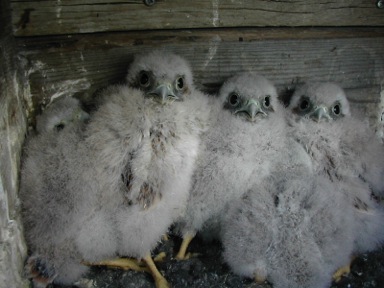
Three-week old nestlings in the nest-box. Photo: Erkki Korpimäki

Three-week old nestlings in the nest-box. Photo: Erkki Korpimäki

Capture occurs during the brood-rearing period when chicks are two-to-three weeks old, in order to avoid unnecessary disturbance of young nestlings during the most vulnerable phase. Virtually all the breeding population monitored breeds in nest-boxes that were set up on barns from early 1980s onwards. The total number of nest-boxes has varied from 350 to 450 throughout the study period in agricultural fields of the study area. We have used swing-door traps attached to the front of the nest box for trapping parents. The “trapping routine” starts by erecting the traps early in the morning from 5-6 am on a group of 5 to 10 breeding sites selected according to nestling age. Then trap-checking rounds are performed every two-to-three hours to check if any individual is trapped. The aim is to capture both female and male from each breeding site within 12 hours. Adults are ringed, measured and weighed near the breeding site and released as soon as possible. A capture day ends by giving newly-hatched rooster chickens to the kestrel nestlings to compensate for the decrease in prey delivery rates experienced during the trapping of their parents.

We have been lucky in the sense that voluntary birdwatchers and ringers have set up many large nest-box networks for kestrels in surrounding areas in western Finland. In addition, many voluntary ringers, particularly Erkki Rautiainen and Jussi Ryssy, have also made huge efforts to trap and ring kestrel parents and to ring fledglings at these nest-boxes.

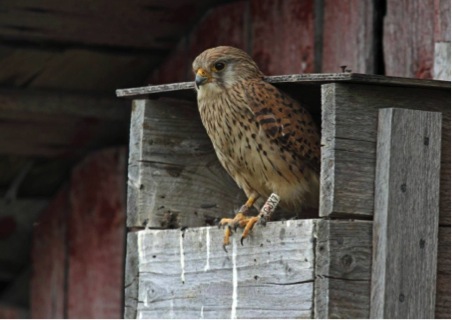
A female kestrel with metal and colour rings in the front of the nest-box. Photo: Benjam Pöntinen.

A female kestrel with metal and colour rings in the front of the nest-box. Photo: Benjam Pöntinen.

A total of 2089 males and 2544 females were trapped at nests during 1985 to 2011 in our study areas. Trapping success remained relatively constant over the period: of all the nesting attempts on average 70% of the male and 80% of the female parents were successfully captured yearly. This large-scale trapping and ringing program allowed us to collect 631 dispersal events from 1985 to 2011 that were analysed in this study.

Overall, we found that females dispersed further than males and older individuals dispersed further than yearlings. A noteworthy aspect of this study involved the evidence of body-condition dependent dispersal strategies in kestrels as the individual body condition index was positively correlated to breeding dispersal distances, particularly in females. Strikingly, our results also evidenced complex patterns of non-linear relationship between previous breeding success and dispersal distances. Finally, longer dispersal distances were associated with reproductive costs in males under increasing vole abundance, whereas those females dispersing further increased their breeding success under all conditions of food abundance.

These results call for further research as clearly there is more to learn about the link between potential pre- and post-breeding prospecting movements, optimal dispersal decisions and population dynamics in avian predators inhabiting fast changing boreal ecosystems.


References


Korpimäki, E. & Hakkarainen, H. 2012. The boreal owl: Ecology, Behaviour and Conservation of a Forest-Dwelling Predator. – Cambridge University Press, Cambridge. 372 pages.


Vasko, V., Laaksonen, T., Valkama, J. & Korpimäki, E. 2011. Breeding dispersal of Eurasian kestrels (Falco tinnunculus) under temporally fluctuating food abundance. – Journal of Avian Biology 42: 552-563. (doi: 10.1111/j.1600-048X.2011.05351.x)