Tag Archives: what

Pork at Christmas? Make sure it’s from a happy pig! Updated for 2026


If books and newspapers are facing crisis, may we suggest a different type of reading: short, daily, tasty, and politically active? 

Fifty years ago, where to buy meat was not a question at all as most of it came from markets or small shops. Today choices have multiplied, and so has the packaging. Studies show that children select cereals because of the cartoons on the boxes, not because of the taste. 

It’s not so different for adults. Have you ever found yourself in front of a supermarket meat section, unsure of what to choose? There are many labels describing the method of production, but what do they mean?

“Um, let’s see. That chicken is so cheap that it’s quite scary. That beef label is green, so is it organic? That pork says it is British, does that mean it has been ethically raised? How can I support local farmers?”

Supporting humane, sustainable farming 

In the UK three quarters of the pork we eat is produced in animal factories that stuff animals with antibiotics, disregard basic animal welfare laws, sicken the local population with stench and contaminate local watercourses.

In a world where the bond between regulators and the corporations they are supposed to regulate is so close, waiting for a strong political intervention to ban animal factories may be a little time-wasting.

But consumers’ power is often underestimated. In 1998, when Shell decided to dispose of the Brent Spar Platform at sea, Greenpeace called for a general boycott and Shell lost 30% of their daily profits in Germany. And guess what? Shell decided to dismantle the platform on land as requested.

The 2013 ‘horse meat’ scandal caused frozen burger sales to tumble 41% compared to the previous year, according to the BBC.

What to look for: Organic, Free Range, Outdoor Bred, Freedom Food

Many products have disappeared from the market or have been significantly reduced purely out of consumers’ disdain. Eggs from caged hens have become less common, for example.

So what about the on-going scandal of pigs in animal factories? People are often inactive because they underestimate the effect of their choices, but if we all act together we could bring an end to this industrial, inhumane system. If there’s no welfare label on the pork, don’t buy it, it’s that easy.

Today, choosing what you buy is a stronger statement that voting in an election. The UK supermarket labelling system is not perfect but it does allow us to choose meat that has been raised in systems that are sustainable because the pigs are healthy and do not require routine antibiotics.

Look for pork labelled Freedom Food, Outdoor Bred, Free Range or best of all Organic, and stand up for pig welfare, and the centuries-old, magnificent British landscapes and rural heritage.

There are other labels too – but these may not mean all you expect them to. So look here for a full rundown of all the labels you might find in UK supermarkets, and the production methods they describe. (Summary below)

Choose pork raised on real farms 

And just to remind yourself of why it’s so important, please watch and share Tracy Worcester’s campaign and 3-minute video ‘Take the Pig Pledge to buy meat from Farms Not Factories(embed below).

It asks people to join a worldwide movement to boycott pork from animal factories – and instead to buy high welfare from supermarkets, butchers, farmers’ markets or online, and in restaurants to ask for pork that has been raised on a high welfare farm.


Choosing high welfare pork on supermarket shelves says “no, thanks” (as politely as you may wish) to those animal factories that abuse animals by overcrowding them often on bare concrete slats, over-use antibiotics causing more and more diseases to become resistant, and bankrupt high welfare farmers that have been feeding us for generations. 

When you go out for dinner, ask the waiter where the meat comes from. You’re paying for the meal and you have a right to know.

And the Farms Not Factories high welfare pork directory shows you where to find high welfare pork from farms, shops & restaurants that you can trust.

What really happens when you pick the right label?

Buying pork from high welfare production methods ensures that the animals have not been mistreated. It also means that you are paying a fair price and that your money supports humane, sustainable farming, thus helping to preserve real farming skills and vibrant rural communities. 

Yes, it really is that easy. It’s time for a new generation of label readers to lead the way – and make real farming a best seller.


Giulia Barcaro is creative director at Farms not Factories.

Check out: Worldwide high welfare pork directory.


Labels summary from Pig Pledge

Organic

sa_organic_black_tstarpic5
5-stars

  • Sows and piglets have access to the outdoors all their lives
  • No genetically modified feed
  • Antibiotics rarely used

Organic pigs are kept in conditions that, as far as possible, allow them to express their natural behaviour. This includes being kept in family groups with free access to fields when conditions allow. In practice this means that most organic pigs will be outdoors all year round, though indoor housing is permitted in severe weather conditions, provided that there is plenty of straw bedding for the pigs, and continued access to an outdoor run. As well as the Soil Association Organic Standard, there are ten other approved UK organic certification bodies.Further information

Free range

Label-freerangestarpic4
4-stars

  • Sows and piglets have access to outdoor space all their lives
  • Antibiotics rarely used

These pigs are born outside, in fields and they remain outside until they are sent for slaughter. They are provided with food, water and shelter and are free to roam within defined boundaries. Free range pigs have very generous minimum space allowances, which are worked out according to the soil conditions and rotation practices of the farm. Breeding sows are also kept outside, in fields for their productive life.Further information

Outdoor bred

Label-outdoorstarpic3
3-stars

  • Sows have access to the outdoors all their lives
  • Piglets brought indoors for fattening after 4 weeks, usually with straw or other bedding
  • Less use of antibiotics

These pigs are born outside, in fields where they are kept until weaning (normally around 4 weeks) and moved indoors. Breeding sows are kept outside in fields for their productive lives. The pigs are provided with food, water and shelter with generous minimum space allowances. ‘Outdoor reared’ is a similar system, but the piglets usually have access to the outdoors for up to 10 weeks before being moved indoors.Further information

Freedom Food

label-freedomfoodwhitestarpic2
2-stars

  • Indoor pigs must have bedding
  • No farrowing crates
  • Limited tail docking
  • Routine antibiotics on some farms

Freedom Food is the RSPCA’s labelling and assurance scheme dedicated to improving welfare standards for farm animals. About 30% of pigs reared in the UK are reared under this label. Freedom Food assesses farms to the RSPCA’s strict welfare standards and if they meet every standard they can use the Freedom Food label on their product. The scheme covers both indoor and outdoor rearing systems and ensures that greater space and bedding material are provided.

For more information visit: www.freedomfood.co.uk

Further information

Red Tractor

redtractor1star-redtractor
1-star

  • Lowest legal UK standards
  • Farrowing crates allowed
  • Pigs often indoors on bare concrete with no straw
  • Tail docking widespread
  • Routine antibiotics on some farms.

The Red Tractor Assured Food Standards scheme only assures UK consumers that meat products comply with UK minimum legal requirements. 80% of British pork farms unite under this label, so although the scheme will include farms using a wide range of production methods, the label is in no way a guarantee of good animal welfare and allows intensive production. In 2012, advertisements falsely claiming that British pork sold with the Red Tractor label were “high welfare” had to be banned after several complaints. The Red Tractor logo used in conjunction with a Union Jack only guarantees that the pork is British.

For more information visit: www.redtractor.org.uk

Further information

No welfare label

label-nolabel0star-nowelfarelabel
0-stars

  • Mostly imported, often raised below UK welfare standards
  • Farrowing crates allowed
  • EU sow stall limits often ignored
  • Most pigs confined indoors on bare concrete with no straw
  • Illegal tail docking widespread
  • Widespread routine over-use of antibiotics


388385

Pork at Christmas? Make sure it’s from a happy pig! Updated for 2026


If books and newspapers are facing crisis, may we suggest a different type of reading: short, daily, tasty, and politically active? 

Fifty years ago, where to buy meat was not a question at all as most of it came from markets or small shops. Today choices have multiplied, and so has the packaging. Studies show that children select cereals because of the cartoons on the boxes, not because of the taste. 

It’s not so different for adults. Have you ever found yourself in front of a supermarket meat section, unsure of what to choose? There are many labels describing the method of production, but what do they mean?

“Um, let’s see. That chicken is so cheap that it’s quite scary. That beef label is green, so is it organic? That pork says it is British, does that mean it has been ethically raised? How can I support local farmers?”

Supporting humane, sustainable farming 

In the UK three quarters of the pork we eat is produced in animal factories that stuff animals with antibiotics, disregard basic animal welfare laws, sicken the local population with stench and contaminate local watercourses.

In a world where the bond between regulators and the corporations they are supposed to regulate is so close, waiting for a strong political intervention to ban animal factories may be a little time-wasting.

But consumers’ power is often underestimated. In 1998, when Shell decided to dispose of the Brent Spar Platform at sea, Greenpeace called for a general boycott and Shell lost 30% of their daily profits in Germany. And guess what? Shell decided to dismantle the platform on land as requested.

The 2013 ‘horse meat’ scandal caused frozen burger sales to tumble 41% compared to the previous year, according to the BBC.

What to look for: Organic, Free Range, Outdoor Bred, Freedom Food

Many products have disappeared from the market or have been significantly reduced purely out of consumers’ disdain. Eggs from caged hens have become less common, for example.

So what about the on-going scandal of pigs in animal factories? People are often inactive because they underestimate the effect of their choices, but if we all act together we could bring an end to this industrial, inhumane system. If there’s no welfare label on the pork, don’t buy it, it’s that easy.

Today, choosing what you buy is a stronger statement that voting in an election. The UK supermarket labelling system is not perfect but it does allow us to choose meat that has been raised in systems that are sustainable because the pigs are healthy and do not require routine antibiotics.

Look for pork labelled Freedom Food, Outdoor Bred, Free Range or best of all Organic, and stand up for pig welfare, and the centuries-old, magnificent British landscapes and rural heritage.

There are other labels too – but these may not mean all you expect them to. So look here for a full rundown of all the labels you might find in UK supermarkets, and the production methods they describe. (Summary below)

Choose pork raised on real farms 

And just to remind yourself of why it’s so important, please watch and share Tracy Worcester’s campaign and 3-minute video ‘Take the Pig Pledge to buy meat from Farms Not Factories(embed below).

It asks people to join a worldwide movement to boycott pork from animal factories – and instead to buy high welfare from supermarkets, butchers, farmers’ markets or online, and in restaurants to ask for pork that has been raised on a high welfare farm.


Choosing high welfare pork on supermarket shelves says “no, thanks” (as politely as you may wish) to those animal factories that abuse animals by overcrowding them often on bare concrete slats, over-use antibiotics causing more and more diseases to become resistant, and bankrupt high welfare farmers that have been feeding us for generations. 

When you go out for dinner, ask the waiter where the meat comes from. You’re paying for the meal and you have a right to know.

And the Farms Not Factories high welfare pork directory shows you where to find high welfare pork from farms, shops & restaurants that you can trust.

What really happens when you pick the right label?

Buying pork from high welfare production methods ensures that the animals have not been mistreated. It also means that you are paying a fair price and that your money supports humane, sustainable farming, thus helping to preserve real farming skills and vibrant rural communities. 

Yes, it really is that easy. It’s time for a new generation of label readers to lead the way – and make real farming a best seller.


Giulia Barcaro is creative director at Farms not Factories.

Check out: Worldwide high welfare pork directory.


Labels summary from Pig Pledge

Organic

sa_organic_black_tstarpic5
5-stars

  • Sows and piglets have access to the outdoors all their lives
  • No genetically modified feed
  • Antibiotics rarely used

Organic pigs are kept in conditions that, as far as possible, allow them to express their natural behaviour. This includes being kept in family groups with free access to fields when conditions allow. In practice this means that most organic pigs will be outdoors all year round, though indoor housing is permitted in severe weather conditions, provided that there is plenty of straw bedding for the pigs, and continued access to an outdoor run. As well as the Soil Association Organic Standard, there are ten other approved UK organic certification bodies.Further information

Free range

Label-freerangestarpic4
4-stars

  • Sows and piglets have access to outdoor space all their lives
  • Antibiotics rarely used

These pigs are born outside, in fields and they remain outside until they are sent for slaughter. They are provided with food, water and shelter and are free to roam within defined boundaries. Free range pigs have very generous minimum space allowances, which are worked out according to the soil conditions and rotation practices of the farm. Breeding sows are also kept outside, in fields for their productive life.Further information

Outdoor bred

Label-outdoorstarpic3
3-stars

  • Sows have access to the outdoors all their lives
  • Piglets brought indoors for fattening after 4 weeks, usually with straw or other bedding
  • Less use of antibiotics

These pigs are born outside, in fields where they are kept until weaning (normally around 4 weeks) and moved indoors. Breeding sows are kept outside in fields for their productive lives. The pigs are provided with food, water and shelter with generous minimum space allowances. ‘Outdoor reared’ is a similar system, but the piglets usually have access to the outdoors for up to 10 weeks before being moved indoors.Further information

Freedom Food

label-freedomfoodwhitestarpic2
2-stars

  • Indoor pigs must have bedding
  • No farrowing crates
  • Limited tail docking
  • Routine antibiotics on some farms

Freedom Food is the RSPCA’s labelling and assurance scheme dedicated to improving welfare standards for farm animals. About 30% of pigs reared in the UK are reared under this label. Freedom Food assesses farms to the RSPCA’s strict welfare standards and if they meet every standard they can use the Freedom Food label on their product. The scheme covers both indoor and outdoor rearing systems and ensures that greater space and bedding material are provided.

For more information visit: www.freedomfood.co.uk

Further information

Red Tractor

redtractor1star-redtractor
1-star

  • Lowest legal UK standards
  • Farrowing crates allowed
  • Pigs often indoors on bare concrete with no straw
  • Tail docking widespread
  • Routine antibiotics on some farms.

The Red Tractor Assured Food Standards scheme only assures UK consumers that meat products comply with UK minimum legal requirements. 80% of British pork farms unite under this label, so although the scheme will include farms using a wide range of production methods, the label is in no way a guarantee of good animal welfare and allows intensive production. In 2012, advertisements falsely claiming that British pork sold with the Red Tractor label were “high welfare” had to be banned after several complaints. The Red Tractor logo used in conjunction with a Union Jack only guarantees that the pork is British.

For more information visit: www.redtractor.org.uk

Further information

No welfare label

label-nolabel0star-nowelfarelabel
0-stars

  • Mostly imported, often raised below UK welfare standards
  • Farrowing crates allowed
  • EU sow stall limits often ignored
  • Most pigs confined indoors on bare concrete with no straw
  • Illegal tail docking widespread
  • Widespread routine over-use of antibiotics


388385

Pork at Christmas? Make sure it’s from a happy pig! Updated for 2026


If books and newspapers are facing crisis, may we suggest a different type of reading: short, daily, tasty, and politically active? 

Fifty years ago, where to buy meat was not a question at all as most of it came from markets or small shops. Today choices have multiplied, and so has the packaging. Studies show that children select cereals because of the cartoons on the boxes, not because of the taste. 

It’s not so different for adults. Have you ever found yourself in front of a supermarket meat section, unsure of what to choose? There are many labels describing the method of production, but what do they mean?

“Um, let’s see. That chicken is so cheap that it’s quite scary. That beef label is green, so is it organic? That pork says it is British, does that mean it has been ethically raised? How can I support local farmers?”

Supporting humane, sustainable farming 

In the UK three quarters of the pork we eat is produced in animal factories that stuff animals with antibiotics, disregard basic animal welfare laws, sicken the local population with stench and contaminate local watercourses.

In a world where the bond between regulators and the corporations they are supposed to regulate is so close, waiting for a strong political intervention to ban animal factories may be a little time-wasting.

But consumers’ power is often underestimated. In 1998, when Shell decided to dispose of the Brent Spar Platform at sea, Greenpeace called for a general boycott and Shell lost 30% of their daily profits in Germany. And guess what? Shell decided to dismantle the platform on land as requested.

The 2013 ‘horse meat’ scandal caused frozen burger sales to tumble 41% compared to the previous year, according to the BBC.

What to look for: Organic, Free Range, Outdoor Bred, Freedom Food

Many products have disappeared from the market or have been significantly reduced purely out of consumers’ disdain. Eggs from caged hens have become less common, for example.

So what about the on-going scandal of pigs in animal factories? People are often inactive because they underestimate the effect of their choices, but if we all act together we could bring an end to this industrial, inhumane system. If there’s no welfare label on the pork, don’t buy it, it’s that easy.

Today, choosing what you buy is a stronger statement that voting in an election. The UK supermarket labelling system is not perfect but it does allow us to choose meat that has been raised in systems that are sustainable because the pigs are healthy and do not require routine antibiotics.

Look for pork labelled Freedom Food, Outdoor Bred, Free Range or best of all Organic, and stand up for pig welfare, and the centuries-old, magnificent British landscapes and rural heritage.

There are other labels too – but these may not mean all you expect them to. So look here for a full rundown of all the labels you might find in UK supermarkets, and the production methods they describe. (Summary below)

Choose pork raised on real farms 

And just to remind yourself of why it’s so important, please watch and share Tracy Worcester’s campaign and 3-minute video ‘Take the Pig Pledge to buy meat from Farms Not Factories(embed below).

It asks people to join a worldwide movement to boycott pork from animal factories – and instead to buy high welfare from supermarkets, butchers, farmers’ markets or online, and in restaurants to ask for pork that has been raised on a high welfare farm.


Choosing high welfare pork on supermarket shelves says “no, thanks” (as politely as you may wish) to those animal factories that abuse animals by overcrowding them often on bare concrete slats, over-use antibiotics causing more and more diseases to become resistant, and bankrupt high welfare farmers that have been feeding us for generations. 

When you go out for dinner, ask the waiter where the meat comes from. You’re paying for the meal and you have a right to know.

And the Farms Not Factories high welfare pork directory shows you where to find high welfare pork from farms, shops & restaurants that you can trust.

What really happens when you pick the right label?

Buying pork from high welfare production methods ensures that the animals have not been mistreated. It also means that you are paying a fair price and that your money supports humane, sustainable farming, thus helping to preserve real farming skills and vibrant rural communities. 

Yes, it really is that easy. It’s time for a new generation of label readers to lead the way – and make real farming a best seller.


Giulia Barcaro is creative director at Farms not Factories.

Check out: Worldwide high welfare pork directory.


Labels summary from Pig Pledge

Organic

sa_organic_black_tstarpic5
5-stars

  • Sows and piglets have access to the outdoors all their lives
  • No genetically modified feed
  • Antibiotics rarely used

Organic pigs are kept in conditions that, as far as possible, allow them to express their natural behaviour. This includes being kept in family groups with free access to fields when conditions allow. In practice this means that most organic pigs will be outdoors all year round, though indoor housing is permitted in severe weather conditions, provided that there is plenty of straw bedding for the pigs, and continued access to an outdoor run. As well as the Soil Association Organic Standard, there are ten other approved UK organic certification bodies.Further information

Free range

Label-freerangestarpic4
4-stars

  • Sows and piglets have access to outdoor space all their lives
  • Antibiotics rarely used

These pigs are born outside, in fields and they remain outside until they are sent for slaughter. They are provided with food, water and shelter and are free to roam within defined boundaries. Free range pigs have very generous minimum space allowances, which are worked out according to the soil conditions and rotation practices of the farm. Breeding sows are also kept outside, in fields for their productive life.Further information

Outdoor bred

Label-outdoorstarpic3
3-stars

  • Sows have access to the outdoors all their lives
  • Piglets brought indoors for fattening after 4 weeks, usually with straw or other bedding
  • Less use of antibiotics

These pigs are born outside, in fields where they are kept until weaning (normally around 4 weeks) and moved indoors. Breeding sows are kept outside in fields for their productive lives. The pigs are provided with food, water and shelter with generous minimum space allowances. ‘Outdoor reared’ is a similar system, but the piglets usually have access to the outdoors for up to 10 weeks before being moved indoors.Further information

Freedom Food

label-freedomfoodwhitestarpic2
2-stars

  • Indoor pigs must have bedding
  • No farrowing crates
  • Limited tail docking
  • Routine antibiotics on some farms

Freedom Food is the RSPCA’s labelling and assurance scheme dedicated to improving welfare standards for farm animals. About 30% of pigs reared in the UK are reared under this label. Freedom Food assesses farms to the RSPCA’s strict welfare standards and if they meet every standard they can use the Freedom Food label on their product. The scheme covers both indoor and outdoor rearing systems and ensures that greater space and bedding material are provided.

For more information visit: www.freedomfood.co.uk

Further information

Red Tractor

redtractor1star-redtractor
1-star

  • Lowest legal UK standards
  • Farrowing crates allowed
  • Pigs often indoors on bare concrete with no straw
  • Tail docking widespread
  • Routine antibiotics on some farms.

The Red Tractor Assured Food Standards scheme only assures UK consumers that meat products comply with UK minimum legal requirements. 80% of British pork farms unite under this label, so although the scheme will include farms using a wide range of production methods, the label is in no way a guarantee of good animal welfare and allows intensive production. In 2012, advertisements falsely claiming that British pork sold with the Red Tractor label were “high welfare” had to be banned after several complaints. The Red Tractor logo used in conjunction with a Union Jack only guarantees that the pork is British.

For more information visit: www.redtractor.org.uk

Further information

No welfare label

label-nolabel0star-nowelfarelabel
0-stars

  • Mostly imported, often raised below UK welfare standards
  • Farrowing crates allowed
  • EU sow stall limits often ignored
  • Most pigs confined indoors on bare concrete with no straw
  • Illegal tail docking widespread
  • Widespread routine over-use of antibiotics


388385

New Editor: Andrew MacDougall Updated for 2026

2013-07-06 14.23Welcome to Oikos’ Editorial Board, Dr Andrew MacDougall, University of Guelph. Visit his webpage here. And read more about him below:

1. What’s you main research focus at the moment?
How the co-varying influences of global environmental change transform fundamental processes relating to diversity and function in terrestrial systems


2. Can you describe your research career? Where, what, when?
I have been at the University of Guelph since 2006; prior to my PhD, I worked for several years as a government research biologist in eastern Canada.

3. How come that you became a scientist in ecology?
a love of the outdoors, and a curiosity about the workings of the natural world

4. What do you do when you’re not working?
[laughter] being dad, road biking, yoga

Marine biodiversity and ecosystem functioning: what’s known and what’s next? Updated for 2026

In our new paper “Marine biodiversity and ecosystem functioning: what’s known and what’s next?” just published online early in Oikos, we synthesise our current understanding of the functional consequences of changes in species richness in the marine realm. For those familiar with the field of biodiversity and ecosystem functioning, the first question might well be: do we really need yet another meta-analysis on this topic? I mean, really. There have been several meta-analyses published in recent years. Do we really need this work?

Well, our answer to the question is yes. Here’s why.

This paper started while we were synthesising data for general biodiversity-ecosystem functioning relationships at NCEAS  in Santa Barbara, USA. We realised that much data from the marine side was missing, as many of those studies did not fit the inclusion criteria set up for our original database. Previous meta-analyses1, 2 focused solely on how richness influences resource capture and/or the production of biomass. Marine studies, however, all over the map in terms of what functions they measured: resource use, biomass production, nutrient fluxes, trophic cascades, and so on.

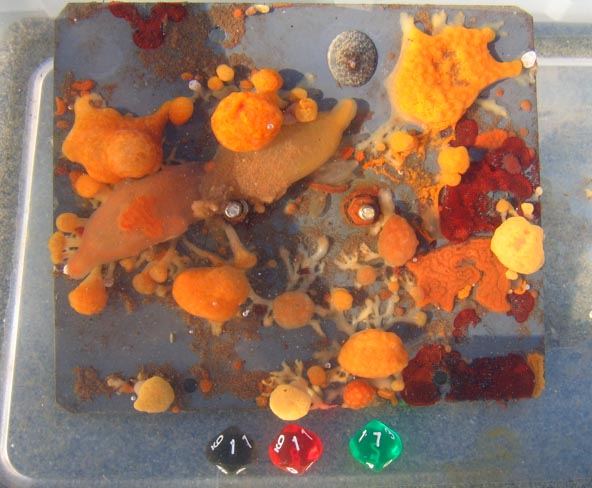
gamfeldt photo 4

Panel with a sessile invertebrate community. Photo credit: Jarrett Byrnes.


So what’s the full picture of how biodiversity-ecosystem influences functions in the ocean – from primary production to biogeochemical cycles?

We got our hands on 110 marine experiments that manipulated the number of species and analysed some ecosystem response. In general, our analyses generally confirm previous findings that the average mix of species uses resources more efficiently and produces more biomass than the average monoculture. We honestly weren’t sure how this was going to fall out, and find great comfort in the generality of the result.

gamfeldt photo 2

Soft sediment microcosms, Sweden. Photo credit: Karl Norling.


In contrast, we find a different shape to relationship between biodiversity and ecosystem functions than has been seen previously. The relationship between species richness and production is best described as linear. The relationship between species richness and consumption appear to follow a power function. We find this by using new and more powerful techniques to describing the shape of relationships across multiple studies that we hope future researchers will use as well. (And, yes, we give you all of our code so that you can follow along at home!)

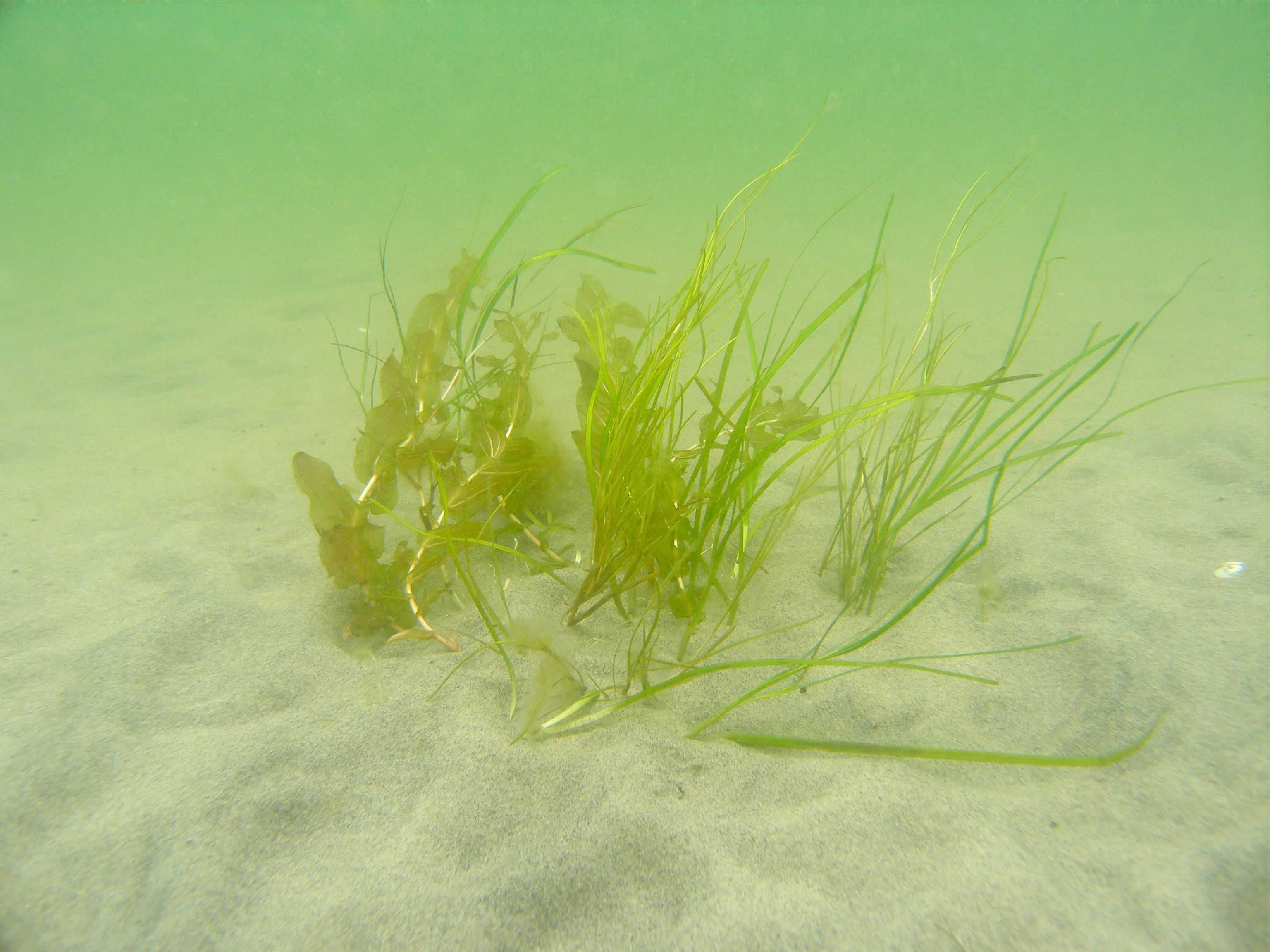
OLYMPUS DIGITAL CAMERA

A seagrass field experiment in Finland. Photo shows a polyculture with three species. Photo credit: Camilla Gustafsson.


We also identify several gaps in our understanding of marine biodiversity and ecosystem functioning that are ripe for future investigation. First, the number of studies focusing on biogeochemical fluxes is still tiny. We need more. Second, we need more studies in pelagic and salt-marsh environments. Third, we still have only a handful of studies focused on predators. Fourth, the effects of increases in species richness (e.g. due to invasives or range shifts) are poorly understood. And last, we really only looked at relatively simple experiments, using on average only 3 species! We sorely need experiments targeting how spatial scale and heterogeneity, realistic local extinction scenarios from natural (read: large!) species pools, and functional and phylogenetic composition alter the relationship between biodiversity and ecosystem function.

To sum: there’s much work to be done, and we look forward with high hopes to the next generation of experiments exploring the consequences of changes in marine biodiversity.

gamfeldt photo 1

Three species of crab, used in the experiment in Griffin et al. 20083. Photo credit: Pippa Moore.


Now, if you had to explain this study to your mom or dad: the world has an incredible number and variety of different species, but we are losing them due to things like fishing, habitat destruction, and other threats from humanity. We need to understand what the consequences of these extinctions are for healthy and productive ecosystems, which is why researchers conduct experiments where they remove species and see what happens. We summarized data from 110 such experiments and found that losing species, on average, decreases productivity and growth, as well as a myriad of other processes related to how marine organisms capture and utilize resources, like nutrients. These processes ultimately put food on the dinner table and give us clean water. What is most interesting is we expected these declines to be non-linear based on previous studies: you can lose some species up to a point, then it starts to go downhill. The results from our analysis suggest that, for some processes, every species matters! Thus it is imperative that we protect and conserve biodiversity in our world’s oceans.

Lars Gamfeldt and co-workers

References:

  1. Cardinale, B. J. et al. 2006. Effects of biodiversity on the functioning of trophic groups and ecosystems. – Nature 443: 989-992.
  2. Cardinale, B. J. et al. 2011. The functional role of producer diversity in ecosystems. – American Journal of Botany 98: 572-592.
  3. Griffin, J., de la Haye, K., Hawkins, S., Thompson, R. and Jenkins, S. 2008. Predator diversity effects and ecosystem functioning: density modifies the effect of resource partitioning. – Ecology 89: 298-305.


Loan sharking and microfinance: What’s the difference? Updated for 2026


The introduction of hard-nosed private sector investment and the age-old pressures of social norms mean microfinance institutions are at risk of losing their social conscience – and both clients and staff are paying the price. But microfinance could still be saved from moral bankruptcy.

With the close of the 17th annual microcredit summit in Mexico last month, a CEO working group has introduced microfinance certifications to protect the client; a move that couldn’t come at a more critical time for the microfinance sector. Research is increasing revealing that the reality for clients is far from ideal.

Let’s take a look at South Asia. Does microfinance work here? Well, if you are asking whether it covers its costs and/or is profitable, then the answer is increasingly moving towards “yes”.

But if the question is whether microfinance achieves its declared social mission, then a growing body of evidence from fieldwork with clients living in poverty – in contrast to PR churned out by microfinance head offices, and parroted in the Western press – suggests the answer is “probably not”.

Abuse, threats, harassment

This conclusion is supported by our recent quantitative analyses and qualitative studies detailing the human realities behind the glowing repayment statistics.

Reports gathered from women in villages across Bangladesh and India show that loan officers from microfinance institutions (MFIs) commonly exert pressure to repay through harassment, violent threats, coercion by neighbours, public humiliation, verbal abuse and insults as well as seizure of assets.

Some villagers even reported individuals migrating to escape their debts.

Others aren’t lucky enough to have this escape route – many of the beneficiaries of microfinance are by definition poor women who are reliant on husbands and their community. Defaulting is simply not an option.

One woman we interviewed in 2013 reported being forced to take out a loan by her abusive husband so he could spend it on drinking and betting. She showed the loan officer the bruises on her arms and legs and begged him to refuse her husband another loan. Instead, the loan officer suggested her husband physically reprimand her.

If she leaves her husband she fears exclusion by her community, arrest and even starvation. If she stays, she faces more abuse and ever more pressure to pay back ‘her’ debt.

Loan officers ashamed of the methods they compelled to use

It’s not just the recipients of microfinance who suffer from the relentless privileging of repayment over all other measures of success.

The systems, structures and cultures of today’s MFIs – limited staff training, zero-delay and zero-default policies as well as demanding branch managers focused purely on financial performance – build chains of pressure, not only on clients but also on staff.

Many of the loan officers interviewed reported being ashamed of, or even depressed by, the ways in which they treat clients, explaining their behaviour in terms of fearing their branch managers.

One female loan officer reported staying in the house of a late-paying client all night when she was pregnant in a bid to force the woman to hand over the money, afraid as she was of returning to the office empty-handed. During the night her waters broke and the client had to help her to hospital.

Why is the moral compass failing?

There is little doubt that the founders of these organisations were genuinely seeking to help poor and low-income people improve their economic and social prospects.

Over time, however, organisational goals (growing bigger, having higher rates of repayment and higher levels of profitability, winning international awards) and closer links with mainstream finance have displaced the original mission.

In addition, the expansion of the microfinance industry since 2000 has been heavily dependent on the involvement of commercial banks, opening the industry to the corrupting influence of mainstream finance.

Access to finance is crucial for the microfinance market to develop, while for mainstream banks a new, relatively untapped market experiencing 15 years of uninterrupted expansion is appealing.

A recent CGAP study found that wholesale investors in microfinance funded $25 billion in 2011 and that overall microfinance funding continues to grow in absolute terms, despite consecutive crises and scandals.

And it’s a growth area, with some of the biggest potential markets showing small microfinance penetration rates in 2009 – 3% in India and just 2% in Brazil and Nigeria. In theory, the microfinance industry could expand until it reaches an estimated one billion un-banked poor households. If there was ever a time to fight the battle to save microfinance’s soul, it’s now.

Missing the mainstream pitfalls

One extreme response, as demonstrated when the Indian suicides came to light, would be to try to close formal microfinance down. But this would be unwise for two reasons.

Firstly, research shows that well-designed microfinance (that meets client needs and pursues sustainability) can be useful for poor and low-income people. Secondly, moneylenders might recolonise the gap, rendering already vulnerable people more so.

A second option is more effective regulation of microfinance. This is desirable, but in most countries it is, at present, difficult to achieve. Central banks, when asked to improve regulation of MFIs, usually focus on administratively intensive reporting by MFIs (which raises their costs) or arbitrary interest rate caps, which may reduce MFI capacity to meet client needs.

Where central banks could be of greater use, then, is by pushing MFIs to be transparent. They could ensure they use simple loan terms written in local languages, read out at group meetings; they could highlight the message of ‘buyer beware’.

The third option is to challenge the founders and directors of leading MFIs. We can include here among others:

  • Shafiqul Haque Chowdhury, founder and president of ASA;
  • Sir Fazle Abed of BRAC and his son Shameran Abed;
  • Zakir Hossain, founder executive director of BURO Bangladesh;
  • Professor Abu Nasser Muhammad Abduz Zaher, the chairman of Islami Bank Bangladesh.

They should be encouraged not to treat social performance as public relations and to reform the monitoring systems their organisations apply to branches and to staff.

Making social performance the key measure of success

Systems for monitoring social performance have improved greatly over the last decade – but MFIs need leaders to genuinely demonstrate that social performance is as important as financial performance.

They should be visiting branches and clients unannounced, holding open meetings with clients and ex-clients and discussing the problems that credit officers face without their managers being present.

And so the leaders of microfinance in South Asia have a choice. Will they follow the lead of mainstream finance and drift into a world where profit alone is a measure of success?

Or will they make a serious effort to chart a different path, where social performance is a genuine pursuit and not merely a public relations exercise?


David Hulme is Professor of Development Studies, Executive Director of the Brooks World Poverty Institute, at the University of Manchester.

Mathilde Maitrot is Research Associate at the University of Bath.

The authors do not work for, consult to, own shares in or receive funding from any company or organisation that would benefit from this article. They also have no relevant affiliations.

This article was originally published on The Conversation. Read the original article.

The Conversation


384959

Loan sharking and microfinance: What’s the difference? Updated for 2026


The introduction of hard-nosed private sector investment and the age-old pressures of social norms mean microfinance institutions are at risk of losing their social conscience – and both clients and staff are paying the price. But microfinance could still be saved from moral bankruptcy.

With the close of the 17th annual microcredit summit in Mexico last month, a CEO working group has introduced microfinance certifications to protect the client; a move that couldn’t come at a more critical time for the microfinance sector. Research is increasing revealing that the reality for clients is far from ideal.

Let’s take a look at South Asia. Does microfinance work here? Well, if you are asking whether it covers its costs and/or is profitable, then the answer is increasingly moving towards “yes”.

But if the question is whether microfinance achieves its declared social mission, then a growing body of evidence from fieldwork with clients living in poverty – in contrast to PR churned out by microfinance head offices, and parroted in the Western press – suggests the answer is “probably not”.

Abuse, threats, harassment

This conclusion is supported by our recent quantitative analyses and qualitative studies detailing the human realities behind the glowing repayment statistics.

Reports gathered from women in villages across Bangladesh and India show that loan officers from microfinance institutions (MFIs) commonly exert pressure to repay through harassment, violent threats, coercion by neighbours, public humiliation, verbal abuse and insults as well as seizure of assets.

Some villagers even reported individuals migrating to escape their debts.

Others aren’t lucky enough to have this escape route – many of the beneficiaries of microfinance are by definition poor women who are reliant on husbands and their community. Defaulting is simply not an option.

One woman we interviewed in 2013 reported being forced to take out a loan by her abusive husband so he could spend it on drinking and betting. She showed the loan officer the bruises on her arms and legs and begged him to refuse her husband another loan. Instead, the loan officer suggested her husband physically reprimand her.

If she leaves her husband she fears exclusion by her community, arrest and even starvation. If she stays, she faces more abuse and ever more pressure to pay back ‘her’ debt.

Loan officers ashamed of the methods they compelled to use

It’s not just the recipients of microfinance who suffer from the relentless privileging of repayment over all other measures of success.

The systems, structures and cultures of today’s MFIs – limited staff training, zero-delay and zero-default policies as well as demanding branch managers focused purely on financial performance – build chains of pressure, not only on clients but also on staff.

Many of the loan officers interviewed reported being ashamed of, or even depressed by, the ways in which they treat clients, explaining their behaviour in terms of fearing their branch managers.

One female loan officer reported staying in the house of a late-paying client all night when she was pregnant in a bid to force the woman to hand over the money, afraid as she was of returning to the office empty-handed. During the night her waters broke and the client had to help her to hospital.

Why is the moral compass failing?

There is little doubt that the founders of these organisations were genuinely seeking to help poor and low-income people improve their economic and social prospects.

Over time, however, organisational goals (growing bigger, having higher rates of repayment and higher levels of profitability, winning international awards) and closer links with mainstream finance have displaced the original mission.

In addition, the expansion of the microfinance industry since 2000 has been heavily dependent on the involvement of commercial banks, opening the industry to the corrupting influence of mainstream finance.

Access to finance is crucial for the microfinance market to develop, while for mainstream banks a new, relatively untapped market experiencing 15 years of uninterrupted expansion is appealing.

A recent CGAP study found that wholesale investors in microfinance funded $25 billion in 2011 and that overall microfinance funding continues to grow in absolute terms, despite consecutive crises and scandals.

And it’s a growth area, with some of the biggest potential markets showing small microfinance penetration rates in 2009 – 3% in India and just 2% in Brazil and Nigeria. In theory, the microfinance industry could expand until it reaches an estimated one billion un-banked poor households. If there was ever a time to fight the battle to save microfinance’s soul, it’s now.

Missing the mainstream pitfalls

One extreme response, as demonstrated when the Indian suicides came to light, would be to try to close formal microfinance down. But this would be unwise for two reasons.

Firstly, research shows that well-designed microfinance (that meets client needs and pursues sustainability) can be useful for poor and low-income people. Secondly, moneylenders might recolonise the gap, rendering already vulnerable people more so.

A second option is more effective regulation of microfinance. This is desirable, but in most countries it is, at present, difficult to achieve. Central banks, when asked to improve regulation of MFIs, usually focus on administratively intensive reporting by MFIs (which raises their costs) or arbitrary interest rate caps, which may reduce MFI capacity to meet client needs.

Where central banks could be of greater use, then, is by pushing MFIs to be transparent. They could ensure they use simple loan terms written in local languages, read out at group meetings; they could highlight the message of ‘buyer beware’.

The third option is to challenge the founders and directors of leading MFIs. We can include here among others:

  • Shafiqul Haque Chowdhury, founder and president of ASA;
  • Sir Fazle Abed of BRAC and his son Shameran Abed;
  • Zakir Hossain, founder executive director of BURO Bangladesh;
  • Professor Abu Nasser Muhammad Abduz Zaher, the chairman of Islami Bank Bangladesh.

They should be encouraged not to treat social performance as public relations and to reform the monitoring systems their organisations apply to branches and to staff.

Making social performance the key measure of success

Systems for monitoring social performance have improved greatly over the last decade – but MFIs need leaders to genuinely demonstrate that social performance is as important as financial performance.

They should be visiting branches and clients unannounced, holding open meetings with clients and ex-clients and discussing the problems that credit officers face without their managers being present.

And so the leaders of microfinance in South Asia have a choice. Will they follow the lead of mainstream finance and drift into a world where profit alone is a measure of success?

Or will they make a serious effort to chart a different path, where social performance is a genuine pursuit and not merely a public relations exercise?


David Hulme is Professor of Development Studies, Executive Director of the Brooks World Poverty Institute, at the University of Manchester.

Mathilde Maitrot is Research Associate at the University of Bath.

The authors do not work for, consult to, own shares in or receive funding from any company or organisation that would benefit from this article. They also have no relevant affiliations.

This article was originally published on The Conversation. Read the original article.

The Conversation


384959

Loan sharking and microfinance: What’s the difference? Updated for 2026


The introduction of hard-nosed private sector investment and the age-old pressures of social norms mean microfinance institutions are at risk of losing their social conscience – and both clients and staff are paying the price. But microfinance could still be saved from moral bankruptcy.

With the close of the 17th annual microcredit summit in Mexico last month, a CEO working group has introduced microfinance certifications to protect the client; a move that couldn’t come at a more critical time for the microfinance sector. Research is increasing revealing that the reality for clients is far from ideal.

Let’s take a look at South Asia. Does microfinance work here? Well, if you are asking whether it covers its costs and/or is profitable, then the answer is increasingly moving towards “yes”.

But if the question is whether microfinance achieves its declared social mission, then a growing body of evidence from fieldwork with clients living in poverty – in contrast to PR churned out by microfinance head offices, and parroted in the Western press – suggests the answer is “probably not”.

Abuse, threats, harassment

This conclusion is supported by our recent quantitative analyses and qualitative studies detailing the human realities behind the glowing repayment statistics.

Reports gathered from women in villages across Bangladesh and India show that loan officers from microfinance institutions (MFIs) commonly exert pressure to repay through harassment, violent threats, coercion by neighbours, public humiliation, verbal abuse and insults as well as seizure of assets.

Some villagers even reported individuals migrating to escape their debts.

Others aren’t lucky enough to have this escape route – many of the beneficiaries of microfinance are by definition poor women who are reliant on husbands and their community. Defaulting is simply not an option.

One woman we interviewed in 2013 reported being forced to take out a loan by her abusive husband so he could spend it on drinking and betting. She showed the loan officer the bruises on her arms and legs and begged him to refuse her husband another loan. Instead, the loan officer suggested her husband physically reprimand her.

If she leaves her husband she fears exclusion by her community, arrest and even starvation. If she stays, she faces more abuse and ever more pressure to pay back ‘her’ debt.

Loan officers ashamed of the methods they compelled to use

It’s not just the recipients of microfinance who suffer from the relentless privileging of repayment over all other measures of success.

The systems, structures and cultures of today’s MFIs – limited staff training, zero-delay and zero-default policies as well as demanding branch managers focused purely on financial performance – build chains of pressure, not only on clients but also on staff.

Many of the loan officers interviewed reported being ashamed of, or even depressed by, the ways in which they treat clients, explaining their behaviour in terms of fearing their branch managers.

One female loan officer reported staying in the house of a late-paying client all night when she was pregnant in a bid to force the woman to hand over the money, afraid as she was of returning to the office empty-handed. During the night her waters broke and the client had to help her to hospital.

Why is the moral compass failing?

There is little doubt that the founders of these organisations were genuinely seeking to help poor and low-income people improve their economic and social prospects.

Over time, however, organisational goals (growing bigger, having higher rates of repayment and higher levels of profitability, winning international awards) and closer links with mainstream finance have displaced the original mission.

In addition, the expansion of the microfinance industry since 2000 has been heavily dependent on the involvement of commercial banks, opening the industry to the corrupting influence of mainstream finance.

Access to finance is crucial for the microfinance market to develop, while for mainstream banks a new, relatively untapped market experiencing 15 years of uninterrupted expansion is appealing.

A recent CGAP study found that wholesale investors in microfinance funded $25 billion in 2011 and that overall microfinance funding continues to grow in absolute terms, despite consecutive crises and scandals.

And it’s a growth area, with some of the biggest potential markets showing small microfinance penetration rates in 2009 – 3% in India and just 2% in Brazil and Nigeria. In theory, the microfinance industry could expand until it reaches an estimated one billion un-banked poor households. If there was ever a time to fight the battle to save microfinance’s soul, it’s now.

Missing the mainstream pitfalls

One extreme response, as demonstrated when the Indian suicides came to light, would be to try to close formal microfinance down. But this would be unwise for two reasons.

Firstly, research shows that well-designed microfinance (that meets client needs and pursues sustainability) can be useful for poor and low-income people. Secondly, moneylenders might recolonise the gap, rendering already vulnerable people more so.

A second option is more effective regulation of microfinance. This is desirable, but in most countries it is, at present, difficult to achieve. Central banks, when asked to improve regulation of MFIs, usually focus on administratively intensive reporting by MFIs (which raises their costs) or arbitrary interest rate caps, which may reduce MFI capacity to meet client needs.

Where central banks could be of greater use, then, is by pushing MFIs to be transparent. They could ensure they use simple loan terms written in local languages, read out at group meetings; they could highlight the message of ‘buyer beware’.

The third option is to challenge the founders and directors of leading MFIs. We can include here among others:

  • Shafiqul Haque Chowdhury, founder and president of ASA;
  • Sir Fazle Abed of BRAC and his son Shameran Abed;
  • Zakir Hossain, founder executive director of BURO Bangladesh;
  • Professor Abu Nasser Muhammad Abduz Zaher, the chairman of Islami Bank Bangladesh.

They should be encouraged not to treat social performance as public relations and to reform the monitoring systems their organisations apply to branches and to staff.

Making social performance the key measure of success

Systems for monitoring social performance have improved greatly over the last decade – but MFIs need leaders to genuinely demonstrate that social performance is as important as financial performance.

They should be visiting branches and clients unannounced, holding open meetings with clients and ex-clients and discussing the problems that credit officers face without their managers being present.

And so the leaders of microfinance in South Asia have a choice. Will they follow the lead of mainstream finance and drift into a world where profit alone is a measure of success?

Or will they make a serious effort to chart a different path, where social performance is a genuine pursuit and not merely a public relations exercise?


David Hulme is Professor of Development Studies, Executive Director of the Brooks World Poverty Institute, at the University of Manchester.

Mathilde Maitrot is Research Associate at the University of Bath.

The authors do not work for, consult to, own shares in or receive funding from any company or organisation that would benefit from this article. They also have no relevant affiliations.

This article was originally published on The Conversation. Read the original article.

The Conversation


384959

Loan sharking and microfinance: What’s the difference? Updated for 2026


The introduction of hard-nosed private sector investment and the age-old pressures of social norms mean microfinance institutions are at risk of losing their social conscience – and both clients and staff are paying the price. But microfinance could still be saved from moral bankruptcy.

With the close of the 17th annual microcredit summit in Mexico last month, a CEO working group has introduced microfinance certifications to protect the client; a move that couldn’t come at a more critical time for the microfinance sector. Research is increasing revealing that the reality for clients is far from ideal.

Let’s take a look at South Asia. Does microfinance work here? Well, if you are asking whether it covers its costs and/or is profitable, then the answer is increasingly moving towards “yes”.

But if the question is whether microfinance achieves its declared social mission, then a growing body of evidence from fieldwork with clients living in poverty – in contrast to PR churned out by microfinance head offices, and parroted in the Western press – suggests the answer is “probably not”.

Abuse, threats, harassment

This conclusion is supported by our recent quantitative analyses and qualitative studies detailing the human realities behind the glowing repayment statistics.

Reports gathered from women in villages across Bangladesh and India show that loan officers from microfinance institutions (MFIs) commonly exert pressure to repay through harassment, violent threats, coercion by neighbours, public humiliation, verbal abuse and insults as well as seizure of assets.

Some villagers even reported individuals migrating to escape their debts.

Others aren’t lucky enough to have this escape route – many of the beneficiaries of microfinance are by definition poor women who are reliant on husbands and their community. Defaulting is simply not an option.

One woman we interviewed in 2013 reported being forced to take out a loan by her abusive husband so he could spend it on drinking and betting. She showed the loan officer the bruises on her arms and legs and begged him to refuse her husband another loan. Instead, the loan officer suggested her husband physically reprimand her.

If she leaves her husband she fears exclusion by her community, arrest and even starvation. If she stays, she faces more abuse and ever more pressure to pay back ‘her’ debt.

Loan officers ashamed of the methods they compelled to use

It’s not just the recipients of microfinance who suffer from the relentless privileging of repayment over all other measures of success.

The systems, structures and cultures of today’s MFIs – limited staff training, zero-delay and zero-default policies as well as demanding branch managers focused purely on financial performance – build chains of pressure, not only on clients but also on staff.

Many of the loan officers interviewed reported being ashamed of, or even depressed by, the ways in which they treat clients, explaining their behaviour in terms of fearing their branch managers.

One female loan officer reported staying in the house of a late-paying client all night when she was pregnant in a bid to force the woman to hand over the money, afraid as she was of returning to the office empty-handed. During the night her waters broke and the client had to help her to hospital.

Why is the moral compass failing?

There is little doubt that the founders of these organisations were genuinely seeking to help poor and low-income people improve their economic and social prospects.

Over time, however, organisational goals (growing bigger, having higher rates of repayment and higher levels of profitability, winning international awards) and closer links with mainstream finance have displaced the original mission.

In addition, the expansion of the microfinance industry since 2000 has been heavily dependent on the involvement of commercial banks, opening the industry to the corrupting influence of mainstream finance.

Access to finance is crucial for the microfinance market to develop, while for mainstream banks a new, relatively untapped market experiencing 15 years of uninterrupted expansion is appealing.

A recent CGAP study found that wholesale investors in microfinance funded $25 billion in 2011 and that overall microfinance funding continues to grow in absolute terms, despite consecutive crises and scandals.

And it’s a growth area, with some of the biggest potential markets showing small microfinance penetration rates in 2009 – 3% in India and just 2% in Brazil and Nigeria. In theory, the microfinance industry could expand until it reaches an estimated one billion un-banked poor households. If there was ever a time to fight the battle to save microfinance’s soul, it’s now.

Missing the mainstream pitfalls

One extreme response, as demonstrated when the Indian suicides came to light, would be to try to close formal microfinance down. But this would be unwise for two reasons.

Firstly, research shows that well-designed microfinance (that meets client needs and pursues sustainability) can be useful for poor and low-income people. Secondly, moneylenders might recolonise the gap, rendering already vulnerable people more so.

A second option is more effective regulation of microfinance. This is desirable, but in most countries it is, at present, difficult to achieve. Central banks, when asked to improve regulation of MFIs, usually focus on administratively intensive reporting by MFIs (which raises their costs) or arbitrary interest rate caps, which may reduce MFI capacity to meet client needs.

Where central banks could be of greater use, then, is by pushing MFIs to be transparent. They could ensure they use simple loan terms written in local languages, read out at group meetings; they could highlight the message of ‘buyer beware’.

The third option is to challenge the founders and directors of leading MFIs. We can include here among others:

  • Shafiqul Haque Chowdhury, founder and president of ASA;
  • Sir Fazle Abed of BRAC and his son Shameran Abed;
  • Zakir Hossain, founder executive director of BURO Bangladesh;
  • Professor Abu Nasser Muhammad Abduz Zaher, the chairman of Islami Bank Bangladesh.

They should be encouraged not to treat social performance as public relations and to reform the monitoring systems their organisations apply to branches and to staff.

Making social performance the key measure of success

Systems for monitoring social performance have improved greatly over the last decade – but MFIs need leaders to genuinely demonstrate that social performance is as important as financial performance.

They should be visiting branches and clients unannounced, holding open meetings with clients and ex-clients and discussing the problems that credit officers face without their managers being present.

And so the leaders of microfinance in South Asia have a choice. Will they follow the lead of mainstream finance and drift into a world where profit alone is a measure of success?

Or will they make a serious effort to chart a different path, where social performance is a genuine pursuit and not merely a public relations exercise?


David Hulme is Professor of Development Studies, Executive Director of the Brooks World Poverty Institute, at the University of Manchester.

Mathilde Maitrot is Research Associate at the University of Bath.

The authors do not work for, consult to, own shares in or receive funding from any company or organisation that would benefit from this article. They also have no relevant affiliations.

This article was originally published on The Conversation. Read the original article.

The Conversation


384959

Loan sharking and microfinance: What’s the difference? Updated for 2026


The introduction of hard-nosed private sector investment and the age-old pressures of social norms mean microfinance institutions are at risk of losing their social conscience – and both clients and staff are paying the price. But microfinance could still be saved from moral bankruptcy.

With the close of the 17th annual microcredit summit in Mexico last month, a CEO working group has introduced microfinance certifications to protect the client; a move that couldn’t come at a more critical time for the microfinance sector. Research is increasing revealing that the reality for clients is far from ideal.

Let’s take a look at South Asia. Does microfinance work here? Well, if you are asking whether it covers its costs and/or is profitable, then the answer is increasingly moving towards “yes”.

But if the question is whether microfinance achieves its declared social mission, then a growing body of evidence from fieldwork with clients living in poverty – in contrast to PR churned out by microfinance head offices, and parroted in the Western press – suggests the answer is “probably not”.

Abuse, threats, harassment

This conclusion is supported by our recent quantitative analyses and qualitative studies detailing the human realities behind the glowing repayment statistics.

Reports gathered from women in villages across Bangladesh and India show that loan officers from microfinance institutions (MFIs) commonly exert pressure to repay through harassment, violent threats, coercion by neighbours, public humiliation, verbal abuse and insults as well as seizure of assets.

Some villagers even reported individuals migrating to escape their debts.

Others aren’t lucky enough to have this escape route – many of the beneficiaries of microfinance are by definition poor women who are reliant on husbands and their community. Defaulting is simply not an option.

One woman we interviewed in 2013 reported being forced to take out a loan by her abusive husband so he could spend it on drinking and betting. She showed the loan officer the bruises on her arms and legs and begged him to refuse her husband another loan. Instead, the loan officer suggested her husband physically reprimand her.

If she leaves her husband she fears exclusion by her community, arrest and even starvation. If she stays, she faces more abuse and ever more pressure to pay back ‘her’ debt.

Loan officers ashamed of the methods they compelled to use

It’s not just the recipients of microfinance who suffer from the relentless privileging of repayment over all other measures of success.

The systems, structures and cultures of today’s MFIs – limited staff training, zero-delay and zero-default policies as well as demanding branch managers focused purely on financial performance – build chains of pressure, not only on clients but also on staff.

Many of the loan officers interviewed reported being ashamed of, or even depressed by, the ways in which they treat clients, explaining their behaviour in terms of fearing their branch managers.

One female loan officer reported staying in the house of a late-paying client all night when she was pregnant in a bid to force the woman to hand over the money, afraid as she was of returning to the office empty-handed. During the night her waters broke and the client had to help her to hospital.

Why is the moral compass failing?

There is little doubt that the founders of these organisations were genuinely seeking to help poor and low-income people improve their economic and social prospects.

Over time, however, organisational goals (growing bigger, having higher rates of repayment and higher levels of profitability, winning international awards) and closer links with mainstream finance have displaced the original mission.

In addition, the expansion of the microfinance industry since 2000 has been heavily dependent on the involvement of commercial banks, opening the industry to the corrupting influence of mainstream finance.

Access to finance is crucial for the microfinance market to develop, while for mainstream banks a new, relatively untapped market experiencing 15 years of uninterrupted expansion is appealing.

A recent CGAP study found that wholesale investors in microfinance funded $25 billion in 2011 and that overall microfinance funding continues to grow in absolute terms, despite consecutive crises and scandals.

And it’s a growth area, with some of the biggest potential markets showing small microfinance penetration rates in 2009 – 3% in India and just 2% in Brazil and Nigeria. In theory, the microfinance industry could expand until it reaches an estimated one billion un-banked poor households. If there was ever a time to fight the battle to save microfinance’s soul, it’s now.

Missing the mainstream pitfalls

One extreme response, as demonstrated when the Indian suicides came to light, would be to try to close formal microfinance down. But this would be unwise for two reasons.

Firstly, research shows that well-designed microfinance (that meets client needs and pursues sustainability) can be useful for poor and low-income people. Secondly, moneylenders might recolonise the gap, rendering already vulnerable people more so.

A second option is more effective regulation of microfinance. This is desirable, but in most countries it is, at present, difficult to achieve. Central banks, when asked to improve regulation of MFIs, usually focus on administratively intensive reporting by MFIs (which raises their costs) or arbitrary interest rate caps, which may reduce MFI capacity to meet client needs.

Where central banks could be of greater use, then, is by pushing MFIs to be transparent. They could ensure they use simple loan terms written in local languages, read out at group meetings; they could highlight the message of ‘buyer beware’.

The third option is to challenge the founders and directors of leading MFIs. We can include here among others:

  • Shafiqul Haque Chowdhury, founder and president of ASA;
  • Sir Fazle Abed of BRAC and his son Shameran Abed;
  • Zakir Hossain, founder executive director of BURO Bangladesh;
  • Professor Abu Nasser Muhammad Abduz Zaher, the chairman of Islami Bank Bangladesh.

They should be encouraged not to treat social performance as public relations and to reform the monitoring systems their organisations apply to branches and to staff.

Making social performance the key measure of success

Systems for monitoring social performance have improved greatly over the last decade – but MFIs need leaders to genuinely demonstrate that social performance is as important as financial performance.

They should be visiting branches and clients unannounced, holding open meetings with clients and ex-clients and discussing the problems that credit officers face without their managers being present.

And so the leaders of microfinance in South Asia have a choice. Will they follow the lead of mainstream finance and drift into a world where profit alone is a measure of success?

Or will they make a serious effort to chart a different path, where social performance is a genuine pursuit and not merely a public relations exercise?


David Hulme is Professor of Development Studies, Executive Director of the Brooks World Poverty Institute, at the University of Manchester.

Mathilde Maitrot is Research Associate at the University of Bath.

The authors do not work for, consult to, own shares in or receive funding from any company or organisation that would benefit from this article. They also have no relevant affiliations.

This article was originally published on The Conversation. Read the original article.

The Conversation


384959