Tag Archives: what

What exactly can network models predict? Updated for 2026

Ecological networks quantify the diversity of direct and indirect interactions taking place in nature. However, due to their complexity, ecologists rely heavily on the use of metrics to summarize aspects of network structure thought to be of biological importance. Many of these structural features are non-random and strongly conserved across diverse habitats and species assemblages, begging the question: what factors determine network structure? The most successful hypotheses to explain these patterns are the neutrality and biological constraints hypotheses, which posit that species interactions can be explained by trait mismatches, and relative abundances respectively. In the Early View paper “Species traits and relative abundances predict metrics of plant-pollinator network structure, but not pairwise interactions” in Oikos, we Colin Olito and Jeremy W. Fox, evaluate the relative ability of trait-based and neutral models of species interactions to explain the structure of a temporally resolved alpine plant-pollinator visitation network.


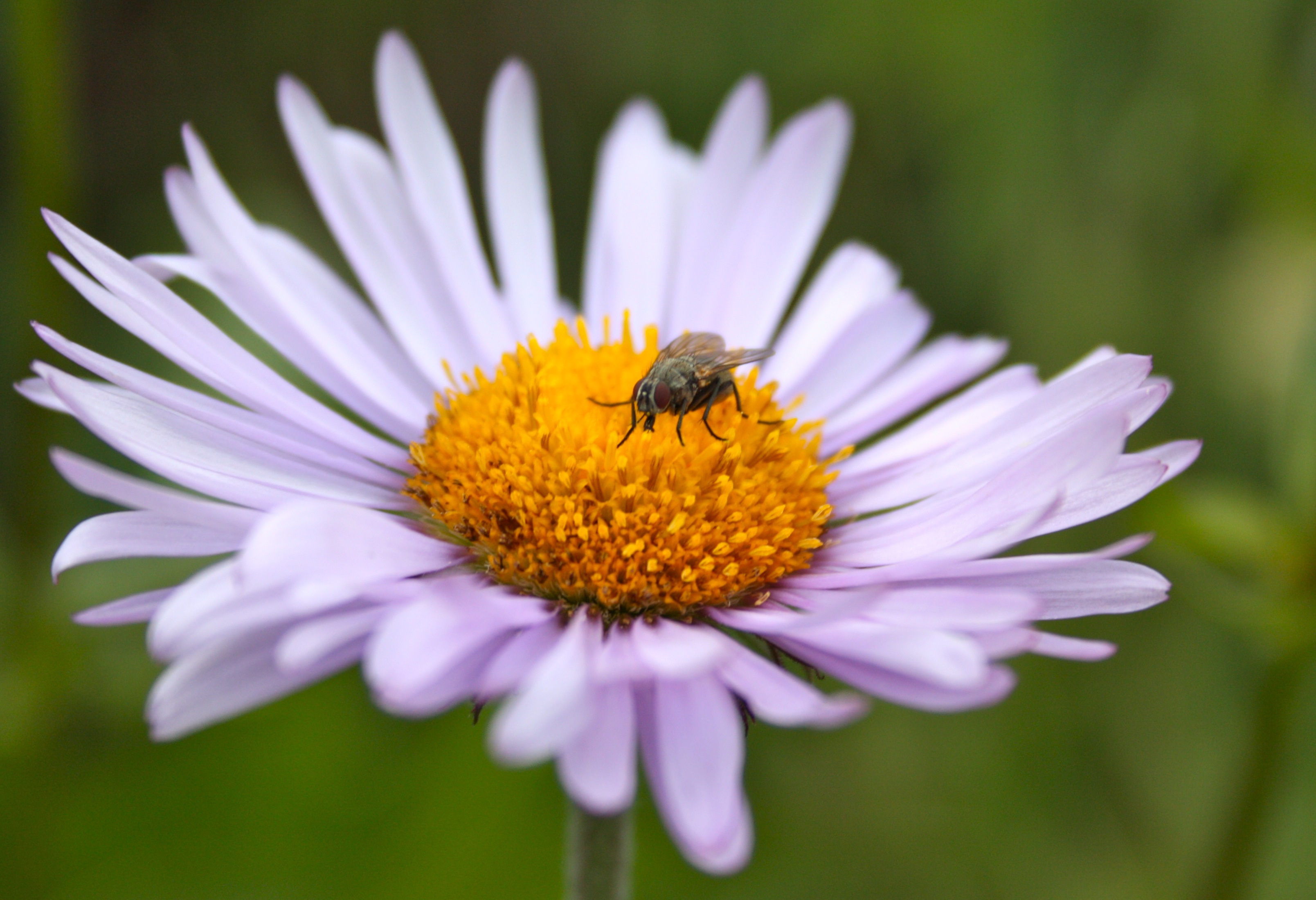
An unidentified muscid visiting Erigeron peregrinus. Although their charm often goes unappreciated, flies are by far the most diverse and abundant pollinators in the alpine. Interestingly, many of their behaviours that facilitate pollination differ markedly from more intensively studied foraging pollinators, such as bumblebees. Understanding their crucial role in alpine and high-latitude plant-pollinator communities will require a greater understanding of both their reproductive and foraging biology. Photo credit: Martin Fees.

An unidentified muscid visiting Erigeron peregrinus. Although their charm often goes unappreciated, flies are by far the most diverse and abundant pollinators in the alpine. Interestingly, many of their behaviours that facilitate pollination differ markedly from more intensively studied foraging pollinators, such as bumblebees. Understanding their crucial role in alpine and high-latitude plant-pollinator communities will require a greater understanding of both their reproductive and foraging biology. Photo credit: Martin Fees.

As our title suggests, species traits and relative abundances successfully predicted every metric of network structure tested, but failed to predict observed interactions. That is, a variety of models can predict network metrics well, but for the wrong reasons. We explore the implications of this contrast, and highlight potential problems with the use and interpretation of network metrics. We also found that species phenologies (the timing of flowering or pollinator activity) always out-performed neutral models at predicting pairwise interactions, and discuss limitations of neutral models of network structure, particularly when species interactions are under-sampled. We suggest that future progress in explaining the structure and dynamics of ecological networks will require new approaches that emphasize accurate prediction of species interactions rather than network metrics, and better reflect the biology underlying species interactions.

Sampling plant-pollinator interactions in a low-alpine meadow in Kananaskis Country, Alberta, Canada. Photo credit: Martin Fees.

Sampling plant-pollinator interactions in a low-alpine meadow in Kananaskis Country, Alberta, Canada. Photo credit: Martin Fees.

Five ways to stop the world’s wildlife vanishing Updated for 2026


Full marks to colleagues at the World Wildlife Fund and the Zoological Society of London for the Living Planet Report 2014 and its headline message which one hopes ought to shock the world out of its complacency: a 52% decline of wildlife populations in the past 40 years.

Over the summer I re-read Fairfield Osborne’s 1948 classic Our Plundered Planet – the first mass-readership environmental book that detailed the scale of the damage humanity wrought on nature.

Faced with the figures in this report it is easy to slip into despondency and to blame others. But this would be a mistake. At the time, Osborne’s report must have been equally alarming, but the eclectic conservation movement of which he was part responded with confidence, hope and vision.

Their achievements were huge: the creation of a reserve network that forestalled the extinction of African creatures such as the elephant and rhino; the creation of a nature conservation agency, the International Union for Conservation of Nature) (IUCN) within the UN; and a raft of international wildlife agreements.

But what can we do now?

Today, conservation-minded people will probably be wondering what can be done to reverse wildlife declines.

For me the question is: how can today’s conservationists leave a wildlife legacy for the 21st century? I think there are five ways we can change conservation to better fit the circumstances we face.

1. Decentralise and diversify

The effort to ensure that nature conservation became a policy area of the UN necessitated developing a strong international conservation regime.

This has served us well, but the world has changed: centralised authority has given way to messy, networked governance organised across many levels.

If the Balinese want to restore Bali Starling populations in coconut plantations I say applaud their vision and learn from their innovation.

What matters is that wildlife populations flourish, not that some institutionalised notion of a ‘wild species’ gains global consensus. It is time to nurture diversity in conservation practice.

2. View wildlife as an asset

Since the 1990s conservation has become overly technocratic, with nature framed as a natural resource and stock of capital available for human economic development. Given human self-interest this just leads to arguments over who gets what share.

I suggest a better way to frame environmental policy is in terms of natural assets – places, attributes and processes that while representing forms of value to invest in, are also at risk of being eroded and must be protected.

We’ve done this before – think of great national parks where wildlife conservation, natural beautification and outdoor recreation combine for the benefit of wildlife, while also emphasising regional or national identity, health and cultural and economic worth.

3. Embrace re-wilding

Re-wilding is gaining traction. I see re-wilding as an opening, an opportunity for creative thinking and action that will affect the future.

A key theme is restoration of trophic levels – in which the missing large animals at the top of the food chain are reintroduced, allowing natural ecosystem processes to reassert themselves.

We might ask whether today’s reported declines in wildlife are a symptom of the ecosystem becoming more simple and, if so, whether re-wilding will lead to more abundant wildlife. Ecological intuition suggests the latter but in truth we don’t know.

In my view we need large-scale, publicly-financed re-wilding experiments to explore and develop new ways of rebuilding wildlife populations as an asset for society.

4. Harness new technologies

It’s clear that wildlife conservation is moving from being a data-poor to a data-rich science. The methods that underpin the Living Planet Report are state-of-the art, but even so we have yet to capture the analytical potential of ‘big data’.

Recent rapid developments in sensor technologies look set to bring about a step change in environmental research and monitoring.

In ten year’s time, I predict that the challenge for indexing the planet will shift from searching out and compiling data sets to working out how to deal with an environmental ‘data deluge’.

Despite this, wildlife conservation lacks a coherent vision and strategy. There are plenty of interesting technological innovations, but they are fragmented and individualistic in nature. We need leadership and investment to better harness them.

5. Re-engage the powerful

Like it or not, the wildlife conservation movement was at its most influential – as a policy and cultural imperative – when it was filled with active members drawn from the political, aristocratic, business, scientific, artistic and bureaucratic elites.

This was between 1890 and 1970. Over the past 40 years conservation organisations have become more professional, building close working relations with bureaucrats, but approaching other elites simply as sources of patronage, funds and publicity.

Conservation organisations must open-up, loosen their corporate structures and let leaders from other walks of life actively contribute their opinion, insight and influence to the cause.

But above all, keep caring

These are five starting points for discussion rather than prescriptions. Perhaps the greatest asset we have is the deep-rooted sense of concern for wildlife found across cultures, professions and classes.

It’s time to open up the discussion, to put forward new ideas for debate, and to ask others to suggest new and novel ways to save wildlife.


The report: Living Planet Report 2014.

Paul Jepson is Course Director, MSc Biodiversity, Conservation and Management at the University of Oxford. He does not work for, consult to, own shares in or receive funding from any company or organisation that would benefit from this article, and has no relevant affiliations.

This article was originally published on The Conversation. Read the original article.

Also on The Ecologist


The Conversation


384756

What causes dialects in bat? Updated for 2026

Bat acoustic signals might seem rather simple. yet, there are individual differences. The background to these variations are studied in the Early View paper “Geographical variation in echolocation vocalizations of the Himalayan leaf-nosed bat: contribution of morphological variation and cultural drift” by Aiquing Lin and co-workers. below is their summary of the study:

Animals’ acoustic signals often vary geographically—but how and why? We studied the geographical variation in echolocation vocalizations of a widespread bat species Hipposideros armiger sampled from 17 localities in South China. We asked whether there was detectable population divergence in the vocalizations and whether the acoustic divergence was related to the variation in morphological (forearm length), climatic (mean annual temperature, mean annual relative humidity, and mean annual precipitable water), geographical (latitude, longitude, elevation, and geographical distance), or genetic (genetic distance and population genetic structure) factors. We found remarkable geographical variation in the peak frequency of echolocation pulses of H. armiger, which clustered into three groups: Eastern and Western China, Hainan, and Southern Yunnan. The acoustic divergence was significantly related to morphological differences and geographical distance, but not significantly related to climatic (after controlling for morphological distance) or genetic variation. We also found a correlation between population differences in morphology and climatic variation (mean annual temperature). Our results suggest the action of both indirect ecological selection and cultural drift promote divergence in echolocation vocalizations of individuals within geographically distributed populations.

Bat1

Figure 1 Himalayan leaf-nosed bat (Hipposideros armiger)


Figure 2 Oscillogram (above) and Spectrogram (below) of an echolocation pulse of Hipposideros armiger. fpeak = peak frequency.

Figure 2 Oscillogram (above) and Spectrogram (below) of an echolocation pulse of Hipposideros armiger. fpeak = peak frequency.

In defence of ‘In Defence of Life’ Updated for 2026


I had some incredible feedback from readers about my article ‘In Defence of Life’.

What I wrote really hit the spot. Almost all are feeling what I had put into words.

But it didn’t please one reader who posted an extended critique on The Ecologist‘s Facebook page: “Lesley Docksey’s simplistic attack on shooting and angling does both pastimes and The Ecologist a great disservice.”

For the sake of brevity the article had to be “simplistic”, but the cases highlighted were from a long list of news items in the national and local media collected over months. Targeting of wildlife by culling is an ongoing nationwide activity. But calling the shooting of birds and animals a ‘pastime’ makes it clear that this is done for enjoyment, not necessity.

I have no problem with hunting for food – humans are omnivores. I personally eat little meat, and for preference that is locally-sourced and organic. I have no problem with shooting an animal that is terminally ill or too injured to save.

I also have no problem with occasional and necessary culling. For instance, rabbits pose a real problem for some farmers, and in many places there are no natural predators to exercise control over rabbit populations – mostly, one has to add, because the gamekeepers have killed the foxes, buzzards, stoats …

Shooting and fishing

” … the fact that there are rich and stupid people who take the law into their own hands, and governments which would rather appease the rich than follow the science, does not excuse Lesley for maligning everyone else who shoots and fishes. I shoot and fish, as do many of my friends. Some of us belong to the RSPB and RSPCA … “

Here is the RSPCA policy on shooting:

“The RSPCA believes that ‘sport’ does not justify the causing of suffering to birds and other animals, and therefore the RSPCA is opposed to shooting for sport.”

My critic continued:

“Nor are any of my friends rich. Many are estate workers on minimum wage whose £50 shotgun licence buys them a crop of rabbits for the pot or some fun at a clay pigeon club, and who have a £150 shotgun and cannot afford the £60,000 guns Lesley describes nor the £196 licence fee she proposes.”

Rural wages being what they are, estate workers also turn out as beaters for pheasant shoots, to help boost their income. And shooting clay pigeons may be fun, but not for those who have to listen to the incessant bang-bang-bang.

Nor did I suggest that such people could afford top-of-the-range shotguns, or ‘propose’ a £196 licence fee. Had my critic taken more care when reading the article, he might have taken on board that £196 is what it now costs the police, and therefore the taxpayer, to issue each gun licence.

Why should the general public subsidise the pastime of shooting?

‘Anglers need beavers like we need a hole in the head’

“How can she say ‘Anglers like killing too’ and then imply all anglers want to shoot otters? I don’t, and nor do most anglers I know; there are a few fishery owners who want to protect their livelihood, which includes protecting big carp, as Lesley says. But there are many, many more who accept that otters are a natural part of the river ecology and fish alongside them.”

But when the discovery of wild-living beavers on Devon’s River Otter hit the media, it was followed with a knee-jerk and, dare I say it, simplistic reaction by the Anglers Trust. “Anglers need beavers like we need a hole in the head”, it stated, presumably speaking on behalf of its members.

A bit more digging reveals that in March 2012 the Angling Trust wrote to Fisheries and Natural Environment Minister Richard Benyon “urging him to authorise the trapping and lethal control of beavers to halt their spread into England from Scotland.”

But surely the natural ecology of a river surely should not include lead weights, lures, hooks, nylon fishing lines and other detritus left behind by anglers that can so damage wildlife? [Editor’s note: only lead weights lighter than .06 grams or heavier than 28.35 grams are now permitted in the UK.]

I have never understood the sport of fishing, where an angler catches a fish by hooking it in the mouth, and following a fight with the fish, lands it, pulls the hook out of the fish (with what regard for the wound it has made?), then blithely tosses it back into the water to be caught again another day.

That is cruelty. And it’s not just me that thinks so. Here is what the RSPCA has to say about angling:

“The RSPCA believes that current practices in angling involve the infliction of pain and suffering on fish. The Medway Report has proved to the satisfaction of the RSPCA that fish are capable of experiencing pain and suffering.”

My critic should study it. The damage done to fish by the ‘sport’ of angling as detailed by the report in my opinion makes angling a blood sport.

How do you put a spin on this?

“Human beings are NOT easily divisible, as Lesley says, into those who see wildlife as ‘something to be controlled or something to be killed for sport’ and those who see wildlife as ‘something to be protected and left alone.’ This may come as a surprise to Lesley, but it is possible to be both … “

I don’t see how it is possible to be both. It certainly isn’t possible to shoot and fish as a pastime while claiming to be members of the RSPCA, at least not without indulging in a great deal of self-deception.

Unless, of course, you’re a PR man whose company specialises in “the transport and tourism industries, country sports and associated technologies”.

I do not know if my critic’s Facebook comments were made in a private or professional capacity, or in some blurry in-between zone. But a PR man is what he turned out to be.


Lesley Docksey is a freelance writer who writes for The Ecologist on the badger cull and other environmental subjects.

See her other articles for The Ecologist.


384305

What are the processes responsible for the effects of habitat loss? Updated for 2026

When habitat is lost so are species. One way of investigating the processes underlying this pattern is to pay attention to the identity (not only the number) of species. What happens to between-site differences in species composition when habitat loss transforms formerly continuous habitat into habitat fragments?

Who consults widely applied theoretical frameworks (e.g. theory of island biogeography) to answer this question will come to the conclusion that between-site differences in species composition – i.e. beta-diversity – should increase following habitat loss due to a strong influence of chance on the extinction process. Species are assumed to be ecologically equivalent (all have the same chance of getting extinct) and ecological drift (stochastic changes is species abundance) to increase in importance when populations are small. Further, chance makes it unlikely that populations surviving in different habitat remnants belong to the same species, and homogenization is hindered by isolation.

Beta1

Who, on the other hand, consults empirical work will find that for various groups of plants and animals it is common to observe that, of the diverse set of species in continuous habitats, it is frequently the same small set of species that persists after habitat loss. Apparently, only certain resistant species are able to survive in fragments, thereby making the species composition in fragments deterministically more (and not less) similar, indicating – in contrast to theoretical models – low influence of chance on species extinction.

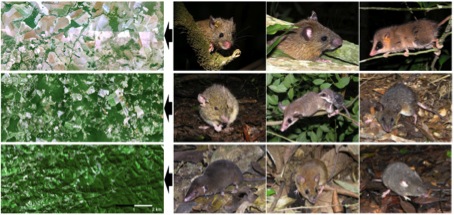
In our study “Ecological filtering or random extinction? Beta-diversity patterns and the importance of niche-based and neutral processes following habitat loss we investigated how the importance of different processes changes with habitat loss relying on a large database of small mammals in the Brazilian Atlantic Forest. We used a null model approach to quantify beta-diversity and make inferences about the relative importance of niche-based (deterministic) and neutral (stochastic) processes on community assembly at landscapes with varying degree of habitat loss.

Beta2

Our results did not support a positive relationship between beta-diversity and habitat loss, as predicted by commonly-used theoretical frameworks. Rather, when considering exclusively species composition (disregarding their abundance), beta-diversity was independent from habitat loss, with small mammal communities being more similar than expected by chance in deforested as well as continuously-forested landscapes. However, when species abundance was taken into consideration, we observed a drastic decrease in beta-diversity with habitat loss (i.e. biotic homogenization), thereby indicating an increase (rather than a decrease) in the importance of deterministic processes at landscapes with high degrees of habitat loss. Finally, we observed a drastic change in species composition in a highly deforested landscape, with communities being not just a rarefied sample but rather disproportionately dissimilar to the communities in continuously-forested landscapes.

Beta3

These results indicate that habitat loss can be seen as a strong ecological filter and species extinction is clearly more influenced by deterministic than by stochastic processes. Against this background, the incorporation of relevant species traits into theoretical models seems to be a useful step forward for the practical relevance of these models. Moreover, pro-active measures seem to be essential to prevent tropical landscapes to go beyond critical levels of habitat loss.

The authors through Thomas Püttker

From rich to poor – what happens in the soil? Updated for 2026

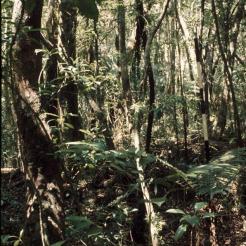
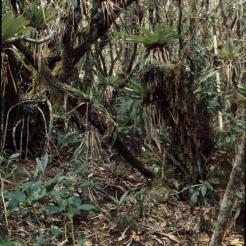
What happens with plants, microbes and animals during soli transition from mull to mor? Find out in the Early View paper “Coordination of aboveground and belowground responses to local-scale soil fertility differences between two contrasting Jamaican rain forest types” by David Wardle and colleagues. below is their summary of the study:

There is much interest in understanding how long term decline in soil fertility, in the absence of major disturbance, drives ecological processes, or ‘ecosystem retrogression’. However, there are few well–characterized systems for exploring this phenomenon in the tropics. We studied two types of montane rain forest in the Blue Mountains of Jamaica that occur in patches adjacent to each other and represent distinct stages in ecosystem development, i.e., an early stage with shallow organic matter (‘mull’ stage) and a late stage with deep organic matter (‘mor’ stage). We measured responses of soil fertility and plant, soil microbial and nematode communities to the transition from mull to mor, and assessed whether these responses were coupled. For soil abiotic properties, we found this transition led to declining soil nitrogen and phosphorus, and reduced availability of phosphorus relative to nitrogen; this led to a shorter and less diverse forest. The resulting litter from the plant community entering the soil subsystem contained less nitrogen and phosphorus, resulting in poorer quality litter entering the soil. We also found impairment of soil microbes (but not nematodes) and an increasing role of fungi relative to bacteria during the transition. These results show that retrogression phenomena involving increasing nutrient (notably phosphorus) limitation can be important drivers in tropical systems, and are likely to involve aboveground–belowground feedbacks whereby plants produce litter that is less nutritious, impairing soil microbial processes and thus reducing the release of nutrients from the soil needed for plant growth. This type of feedback between plants and the soil may serve as major though often overlooked drivers of long term environmental change.

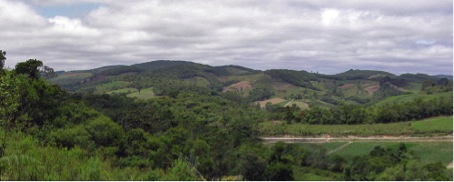
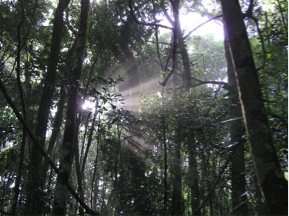
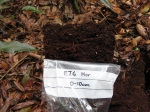
Pictures: Characteristic ‘mull’ forest (top left) and uppermost soil layer with significant mixing of organic material and mineral soil (bottom left); and characteristic ‘mor’ forest (top right) with uppermost soil layer consisting of a thick layer of organic matter (bottom right). Over time the ‘mull’ soil transitions to ‘mor soil’, characterized by less available nutrients and reduced availability of nitrogen relative to phosphorus; this in turn has important consequences for the vegetation and quality of litter that is returned to the soil.


div { margin-top: 1em; } #google_ads_div_wpcom_below_post_adsafe_ad_container { display: block !important; }
]]>

Drought hits São Paulo – what drought? Updated for 2026


Outside the semi-arid area of the north-east, Brazilians have never had to worry about conserving water. Year in, year out, the summer has always brought rain.

But that has changed dramatically. São Paulo, the biggest metropolis in South America, with a population of almost 20 million, is now in the grip of its worst drought in more than a century – a water crisis of such proportions that reports on the daily level of the main reservoir arefollowed as closely as the football results.

The lack of rain is also affecting the dams that produce most of Brazil’s energy, highlighting the urgent need to diversify power sources.

And yet the state governor, wary of the effects on his prospects in forthcoming elections, has refused to introduce measures to ration, or even conserve, water.

Mighty rivers are running dry

Brazil is blessed not only with the mighty Amazon and all its huge tributaries, but also with dozens of other lengthy, broad rivers – once the highways for trade and slaving expeditions, but now providing waterways for cargo, power for dams, and water for reservoirs. It has at least 12% of the world’s fresh water supply.

But five of the principal rivers – the Tiete, Grande, Piracicaba, Mogi-Guaçu and Paraiba do Sul – that cross or border São Paulo, Brazil’s wealthiest state, have less than 30% of the water they should have at this time of year, according to data from the regional Hydrographic Basin Committee and from the National Electric System Operator (ONS).

Other major water sources – such as the Paraná, South America’s second biggest river, and the Paranapanema – are also suffering from the long dry period. The ruins of towns flooded for dam reservoirs have reappeared, fishermen’s boats are beached because the fish have disappeared, and navigation is at a standstill.

The transport of grain and other cargos to the port of Santos, via the river network, had to be suspended after the water level fell by up to eight metres. The equivalent of 10,000 lorryloads of cargo have been transferred by road so far.

Many industries have suspended their activities because of lack of water, and the drought has resulted in the loss of part of the coffee, sugar cane and wheat crops in one of Brazil’s most important agricultural states.

The hydrological period lasting from October 2013 to March 2014 was the driest for 123 years, according to the Agronomic Institute of Campinas, the oldest institute of its kind in Latin America.

Lowest water volumes since the 1930s

The federal government’s energy research company, EPE, found that in the first three months of 2014 the volume of rain was the third lowest since the 1930s.

It was the third consecutive year of reduction for the reservoirs of the hydroelectric dams that make up the South-east / Centre-West System, where many of Brazil’s biggest cities are located. From 88% in 2011, the volume of water in them had fallen to 38% by April 2014 – the month in which the dry season begins in this region.

By mid-August, the reservoirs of the Cantareira system, which supplies the water for almost 8.5 million of São Paulo’s inhabitants, had fallen to just 13.5% of capacity.

Yet the state government of São Paulo has so far refused even to admit that there is a crisis. The problem is the October elections, when Governor Geraldo Alkmim is running for re-election. Like most politicians, he does not want to be associated with a crisis. The word ‘rationing’ is taboo.

Instead, unofficial rationing – what might be called rationing by stealth – is in operation. At night, the São Paulo Water Company, Sabesp, is reducing the pressure in the water system by 75%, leaving residents in higher areas of the city with dry taps.

People before power? Electricity generation under threat

Over 80% of the country’s energy comes from hydroelectric power, and dozens more giant dams are under construction or planned, mostly in the Amazon basin. The government has been strangely reluctant to invest in, or even encourage, other sources of abundant renewable energy, such as wind, solar and biomass.

The over-reliance on hydropower has already led to a distortion. The back-up system of thermo-electric plants, run on gas and diesel, and designed for emergencies, has had to increase production from 8% in 2012 to cover 25% of energy demand this year – thus contributing to higher carbon emissions.

Politics have also interfered with the special crisis committee set up to monitor the drought situation, with representatives from local and federal agencies unable to agree on what to do.

The Sao Paulo energy company, CESP, unilaterally decided this month to reduce the volume of water released from the shared Jaguari reservoir to the neighbouring state of Rio de Janeiro for electricity generation, in order to keep more for its own water needs.

Dangerous precedent

For Marcio Zimmerman, executive secretary of the Ministry of Mines and Energy, CESP’s action creates a dangerous precedent. “There will be chaos if everyone decides to rebel against the ONS”, he said.

The realisation that climate change is already leading to major changes in weather patterns has sounded alarm bells among the business community about the need to diversify energy sources and conserve water.

Early this month, at a seminar organised by the Brazilian Business Council for Sustainable Development, the chief executives of more than 20 top companies drew up a list of 22 crisis-related proposals to be put to the presidential candidates in October’s election.

Newspaper editorials are now urging the politicians to take their heads out of the sand and involve the population in a serious discussion on the crisis and its effects on the water supply, energy generation, and food production .

The Rio newspaper O Globo declared: “They belittle the potential for efficiency available in a society accustomed to waste. When they act, it might be too late.”


Jan Rocha is a journalist living in São Paulo. She writes for Climate News Network, where this article originates.


383359

The cetacean brain and hominid perceptions of cetacean intelligence Updated for 2026


“What a piece of work is man! How noble in reason!
How infinite in faculty! In form and moving how express and admirable!
In action how like an angel! In apprehension how like a god!
The beauty of the world! The paragon of animals!”

– William Shakespeare, Hamlet

The human species may not be the paragon of animals as Hamlet so eloquently described to us. There is another group of species on this Earth perhaps more deserving of such lofty praise.

It is ironic that science, in its pursuit of knowledge, may soon lead us to understand that we are not what we believe or desire ourselves to be, that we are not the most knowledgeable life-form on the planet. Biological science is provoking us to shatter our image of human superiority. Confronted with new realities, we may be forced to change our perceptions.

For the first time in our history, a small group of scientists stands on the threshold of communicating with a non-human intelligence. Probing the oceans instead of deep space, they are searching for an alternative terrestrial intelligence. (ATI)

Astronomers devoted to SETI (Search for Extraterrestrial Intelligence) keep our collective inquisitive ears tuned for signs of sentience from space. At the same time, cetologists observe, document, and decipher evidence that points to a profound intelligence dwelling in the oceans.

An ancient intelligence in the ocean

It is an intelligence that predates our own evolution as intelligent primates by millions of years. Furthermore, it is an intelligence that may prove to be far superior to us in terms of complex associative, linguistic, and survival abilities.

Dr. John Ford’s patient monitoring of the speech of orcas off British Columbia has revealed distinctive dialects between orca populations, so distinctive that it is possible to link a captive animal of unknown origin with its long-lost family in the wild.

In the cold waters off Patagonia, Dr. Roger Payne thrilled the world with his recordings of the songs of the humpback whale. Behind the aesthetic value of whale music, Payne’s research has revealed fascinating insights into the complex and highly sophisticated language of whales.

In the realm of zoological study, no other family of species has had such a profound impact upon human researchers. A few brilliant researchers have even been accused of losing their scientific objectivity simply because their study of cetaceans revealed knowledge about themselves.

“You see”, wrote Dr. John Lilly, “what I found after twelve years of work with dolphins is that the limits are not in them, the limits are in us. So I had to go away and find out, who am I? What’s this all about?”

Dr. Paul Spong, who came to the study of cetology as a psychologist, found himself transformed into a devout advocate of dolphin freedom.

“I came to the realization”, says Spong, “that at the same time I was manipulating their (orca) behavior, they were manipulating my behavior. At the same time I was studying them and performing experiments on them, they were studying me and performing experiments on me.”

Both men have taken to heart an advice: eloquently expressed by novelist Edward Abbey that, “it’s not enough to understand the natural world, the point is to defend and preserve it.”

Intelligent? But dolphins just eat fish …

Other scientists have told me that they understand this effect that cetaceans have on people and resist the tendency to become ‘involved’ with their subjects only from fear of ridicule from other scientists.

Knowing something is so does not mean that others will accept it or even be open-minded enough to ponder it. Some things are just not on the table for serious scientific debate, and the idea that humans are subordinate in intelligence to another species is one of them.

Ingrained anthropocentric attitudes dismiss the very idea that a dolphin or whale could be as intelligent as a human being, or more. In this respect, science is dogmatic and intransigent, differing little in attitude from the Papal pronouncement that the Earth could not possibly revolve around the sun.

Human imagination can instantly recognize intelligence in a blob of purple protoplasm or an insectoid extraterrestrial if it steps from a space ship dressed in a metallic suit and armed with a fantastic proton-plasmodic, negative-charged, ionic-cell destabilizer-blaster. Dolphins, on the other hand, just eat fish.

We willingly accept the idea of intelligence in a life-form only if the intelligence displayed is on the same evolutionary wavelength as our own. Technology automatically indicates intelligence. An absence of technology translates into an absence of intelligence.

Dolphins and whales do not display intelligence in a fashion recognizable to this conditioned perception of what intelligence is, and thus for the most part, we are blind to a broader definition of what intelligence can be.

Evolution molds our projection of intelligence. Humans evolved as tool-makers, obsessed with danger and group aggression. This makes it very difficult for us to comprehend intelligent non-manipulative beings whose evolutionary history featured ample food supplies and an absence of fear from external dangers.

Thinking like a whale, or a Neanderthal

I have observed whales and dolphins in the wild for fifty years, seeing varied and complex behavior that has displayed a definite pattern of sophisticated social interactions. They have exhibited discriminatory behavior in their dealings with us, treating us not like seals fit for prey but as curious objects to be observed and to be treated with caution.

They can see beyond to the manifest technological power that we have harnessed, and they can adjust their behavior accordingly. It is a fact that there has never been a documented attack by a wild orca on a human being. Perhaps they like us. More likely they know what we are.

The interpretation of behavior remains subject to the bias of the observer; one observer can classify behavior as intelligent, and a second observer will dismiss the same behavior as instinctive. There is also the tendency to be anthropomorphic – to attribute human feelings and motives to the behavior of non-humans.

Until we can actually talk with a non-human, it is difficult, if not impossible, to do anything but speculate on what is being thought or perceived. We cannot even understand with any certainty what a human being from a different culture, speaking a different language, may be thinking or perceiving.

Even among people of our own culture, language, class, or academic standing, it is a formidable task to peer inside the workings of the brain. In this respect all brains other than our own are alien, and I might venture to add that the inner workings of our individual brains are still a mystery to each of us that possess one.

It is a great tragedy for our development as a species that we have been alone among hominids for the last 30,000 years. Imagine Homo neanderthalensis existing today as a separate intelligent species of hominid primate. Our perception of the nature of intelligence would be profoundly different.

Homo neanderthalensis is an example of a species that possessed both technology and media communication. This tool-maker created haunting images of its experiences and environment. Some Neanderthal tools, artifacts, and cave art from the Chatelperonian period have survived and remind us that we are not the only species capable of material artistic expression.

Neanderthal ivory and bone carvings were used for adornment in addition to more practical purposes. Symbols carved on antlers relating to the movement of animals in relationship to the seasons indicate that Neanderthals may have invented ‘writing’, and carried a hunting almanac around with them.

I have often heard lectures and read articles on the art of early humans. Yet seldom have I heard it said that it was not Homo sapiens alone but Homo neanderthalensis who also left us that legacy. Another species created something that we believe we alone created.

The layers of the mammalian brain

We perceive reality based on how we preconceive it. In other words, we see what we want to see. Let’s take a close look at the anatomy of the brain. This is an organ that the human organism shares with most species above the invertebrate order. More specifically, we should look at the mammalian brain that is an organ composed of three distinct structures.

The foundation of the mammalian brain is the paleocortex, sometimes called the ‘reptilian’ or ‘ancient’ brain. The paleocortex segment reflects the primordial fish-amphibian-reptile structure. This basal combination of nerves is called the rhinic lobe (from the Greek rhinos, for nose) because it was once believed to be the area that dealt with the sense of smell.

The poorly developed rhinic lobe is overlaid by the slightly more advanced limbic lobe (from the Latin limbus, for border). On top of this lobe is overlaid the third and much larger segment called the supralimbic lobe.

Draped over these three lobes is a cellular covering called the neocortex, meaning ‘new brain’. This is the instantly recognizable, fissured, convoluted layer that envelops the other two more primitive segments. The neocortex is a bewilderingly complex community of intertwined axonal and dendritic nerve cells, synapses, and fibers.

The mammalian brain is a complex layering or lamination of evolutionary processes that reflects hundreds of millions of years of progressive development. The billions of electrochemical interactions within this complex organ define consciousness, awareness, emotion, vision, recognition, sound, touch, smell, personality, intuition, instinct, and intelligence.

The first factor in determining the mammalian stages of development is the number of brain laminations. The layering of the neocortex differs greatly between humans and other land animals. The expansion of the neocortex is always forward. This means that neocortex development can be used as a fairly accurate indicator of the evolutionary process of intelligence.

We cannot assume, however, that the determining factor in comparative intelligence is neocortex mass. The other factors considered in the equation are differentiation, neural connectivity and complexity, sectional specialization, and internal structure. All these factors contribute toward interspecial measurements of intelligence.

Comparing intelligence among species

Interspecies comparisons focus on the extent of lamination, the total cortical area, and the number and depth of neocortex convolutions. In addition, primary sensory processing relative to problem solving is a significant indicator; this can be described as associative ability.

The association or connecting of ideas is a measurable skill: a rat’s associative skill is measured at nine to one. This means that 90% of the brain is devoted to primary sensory projection, leaving only 10% for associative skills. A cat is one to one, meaning that half the brain is available for associative ability. A chimpanzee is one to three, and a human being is one to nine.

We humans need only utilize 10% of our brains to operate our sensory organs. Thus the associative abilities of a cat are measurably greater than a rat but less than a chimp, and humans are the highest of all.

Not exactly. The cetacean brain averages one to 25 and can range upward to one to 40. The reason for this is that the much larger supralimbic lobe is primarily association cortex. Unlike humans, in cetaceans sensory and motor function control is spread outside the supralimbic, leaving more brain area for associative purposes.

Comparisons of synaptic geometry, dendritic field density, and neural connectivity underscore the humbling revelation that the cetacean brain is superior to the human brain. In addition, the centralization and differentiation of the individual cerebral areas are levels higher than the human brain.

Many of us may remember our lessons from Biology 101. We were shown illustrations of the brain of a rat, a cat, a chimp, and a human. We listened as the instructor pointed out the ratio of brain to body size and the increased convolutions on the neocortex of the human over the chimp, the cat, the rat. The simplistic conclusion was an understanding that humans were smarter.

Of course, it was a human demonstration of intelligence, and the conclusion was arrived at by discrimination based on the selection of the examples. When the brain model of an orca is inserted into the picture, the conclusion based on the same factors places the human brain in second position.

But the cetacean brain is very different

Unfortunately for the pride of humankind, this simple comparison is elementary compared to a truly astounding fact: whereas the human brain shares three segments with all other mammals, the cetacean brain is uniquely different in its physiology.

Humans have the rhinic, limbic, and supralimbic, with the neocortex covering the surface of the supralimbic. However, with cetaceans we see a radical evolutionary jump with the inclusion of a fourth segment.

This is a fourth cortical lobe, giving a four-fold lamination that is morphologically the most significant differentiation between cetaceans and all other cranially evolved mammals, including humans. No other species has ever had four separate cortical lobes.

This well-developed extra lobar formation sandwiched between the limbic and supralimbic lobes is called the paralimbic. Considering neurohistological criteria, the paralimbic lobe is a continuation of the sensory and motor areas found in the supralimbic lobe in humans.

According to Dr. Sterling Bunnell, the paralimbic lobe specializes in specific sensory and motor functions. In humans, the projection areas for different senses are widely separated from one another, and the motor area is adjacent to the touch area. For us to make an integrated perception from sight, sound, and touch, impulses must travel by long fiber tracts with a great loss of time and information.

The cetacean’s paralimbic system makes possible the very rapid formation of integrated perceptions with a richness of information unimaginable to us.

Technology, or evolution?

Despite Biology 101, brain-to-body ratio is not an indication of intelligence. If this were so, the hummingbird would be the world’s most intelligent animal. Brain size in itself, however, is important, and the largest brains ever developed on this planet belong to whales.

More important is the quality of the brain tissue. With four lobes, greater, more pronounced neocortex convolutions, and superior size, the brain of the sperm whale at 9,000 cc or the brain of the orca at 6,000 cc are the paragons of brain evolution on the Earth. By contrast, the human brain is 1,300 cc. And by point of interest, the brain of a Neanderthal was an average 1,500 cc.

Apart from our collective ego as a species, the idea of an Earthling species more intelligent than ourselves is difficult to swallow. We measure intelligence in strictly human terms, based on those abilities that we as a species excel at.

Thus we view hand-to-eye coordination as a highly intelligent ability. We build things; we make tools and weapons, manufacture vehicles, and construct buildings. We use our brains to focus our eyes to guide our hands to force our environment to conform to our desires or our will.

Whales cannot or do not do any of the things we expect intelligent creatures to do. They do not build cars or spaceships, nor can they manage investment portfolios.

Cetaceans do have built-in abilities like sonar that put our electronic sonar devices to shame. Sperm whales have even developed a sonic ray-gun, so to speak, allowing them to stun prey from a head filled with spermaceti oil to amplify and project a sonic blast.

However, we expect an intelligent species to arrive in a spaceship armed with laser rayguns, bearing gifts of futuristic technologies. This is a fantasy that we can understand, that we yearn for. For us, technology is intelligence. Intelligence is not a naked creature swimming freely, eating fish, and singing in the sea.

The whale is an organic submarine. A whale may not arrive in a spaceship, but it is itself a living submersible ship. All of its technology is internal and organic. We do not accept this. The human understanding of intelligence is material. The more superior the technology, the more superior the intelligence.

Intelligence is adapative, not abstractive

Yet intelligence is relative; it evolves to fulfill the evolutionary needs of a species. All successful species are intelligent in accordance with their ecological position. In this respect, the intelligence of a crocodile or a whale, an elephant or a human is non-comparable.

A complex intelligence exists within every sentient creature relevant to its needs. We as humans cannot begin to compare our elaborate intelligence to the complex intelligence of other creatures whose brains or nerves are designed for completely different functions in radically different environments.

Most modern humans believe that we are vastly more intelligent compared to our ancestors of 75,000 years ago or even 10,000 years ago. Our technology is proof, is it not? The fact is that the brain of a person living today is identical in size and composition to that of our kind from tens of thousands of years ago. If you were to set Einstein’s brain beside the brain of a cave-dweller of the Paleolithic era, you would not be able to find a single difference in size or complexity.

Our technology is cumulative, the end product of millennia of trial and error. It is also exponential, and we now live in the time of the most rapid exponential growth. Individually, the average cave-dweller of the past could match the average citizen today in associative intelligence and would be as capable of learning.

Our intelligence is also cultural, and the vast amount of information that we have at our disposal lies outside of ourselves as individuals. Apart from the community, we are severely limited in understanding or manipulating technologies.

Left to our own resources on an undeveloped island, most of us would have absolutely no idea how to survive. We do not even have the knowledge to construct rudimentary stone tools or weapons. In this respect stone age humans would be our intellectual superiors.

Physiological measures

If we look at the comparative intelligences of species strictly on a morphological basis, judging all aspects on cortical structural development alone, we can assign an average associative score relative to human intelligence. Let’s assign the average human brain a score equal to 100. This is the number we consider average on human Intelligence Quotient (IQ) tests.

Based on associative skills as defined by the physiological structure of the comparative brains, we will find that a dog scores about 15, and a chimpanzee around 35. These are scores that are comfortably within our understanding of intelligence.

Based upon comparisons of cortical structure alone, a sperm whale would score 2,000.

The truth of the matter is that we know absolutely nothing about what goes on in the brain of a whale or a dolphin. In our ignorance, we resort to the arrogance of denial and dismissal. We deny the physiological evidence and in general we have denied that other animals can think or even feel.

We forget that all mammals have climbed the evolutionary ladder with us, and some, like the whale, started climbing that ladder tens of millions of years before we evolved from that apelike ancestor that we shared with the Neanderthal, the chimp, and the mountain gorilla.

The whale has evolved in a different manner, its natural physical abilities giving it little cause to desire material baggage. The spear was not needed to get food – the whale is one of the most efficient hunters in natural history. The whale’s ability to travel, to communicate, to care for its young, and its complex social systems are all separate from external material acquisition.

Whales have biologically evolved what we utilize technology to achieve. Technology is something that the whales have never needed. They contain all the assets needed for survival and development within their massive bodies and formidable brains.

Humans are big-brained manipulators. Cetaceans and elephants are big-brained non-manipulators. The hominid brain grew in size from 450 cc to 1,300 cc over a period of only 5 million years. Cetaceans had already reached 690 cc in brain size some 30 million years ago and had developed to their present capacity well before our own evolutionary jump in brain development.

Another major difference between the cetacean and human brain is the shape. The cranium of the whale evolved over millions of years to conform to the need for streamlined movement through the water.

This need has shaped the brain, making it higher, but shortening the length front-to-back slightly. And this shape has resulted in a relatively thinner layering of the cortex that is more than compensated by the much greater surface area of the neocortex due to the tremendous in-folding of the convolutions.

According to Pilleri and Gihr, dolphins, toothed whales, and primates have the most highly differentiated brains of all mammals, and Krays and Pilleri showed through electroencephalographical studies that the Amazon River dolphins have the highest degree of encephalization, much higher than primates.

Construction of the cortex was found to be equal or superior to primates. Cetaceans are the most specialized mammalian order on the planet, and we see intelligence in dozens of species. By contrast, Homo sapiens are the sole surviving hominid.

Making, or thinking?

Humans may be the paramount tool-makers of the Earth, but the whale may be our paramount thinker. We can only imagine how a dolphin perceives the stars, but they may well do so better than we. Indeed, if the power of such an awesome brain could be utilized, travel to the stars might have already been achieved. The mind can travel to realms that rockets can never reach.

Or perhaps they have already discovered that the ultimate destination of a voyager is to arrive back where it belongs – in its own place within the universe. The desire to travel to the stars could very well be an aberration, a need within a species that has been ecologically deprived.

Intelligent species here or else where in the universe may have determined that space travel is not the ultimate expression of intelligence. It may only be the ultimate expression of technology: technology and wisdom may be widely diverse expressions of different forms of intelligence.

Intelligence can also be measured by the ability to live within the bounds of the laws of ecology – to live in harmony with one’s own ecology and to recognize the limitations placed on each species by the needs of an ecosystem.

Is the species that dwells peacefully within its habitat with respect for the rights of other species the one that is inferior? Or is it the species that wages a holy war against its habitat, destroying all species that irritate it?

What can be said of a species that reproduces beyond the ability of its habitat to support it? What do we make of a species that destroys the diversity that sustains the ecosystem that nourishes it? How is a species to be judged that fouls its water and poisons its own food?

On the other hand, how is a species that has lived harmoniously within the boundaries of its ecology to be judged?

A moral responsibility is upon us

It is an observable fact that whales and dolphins hold a special place in the hearts of human beings. We have had an affinity with them for years, recognizing in them something that it has been difficult to put a finger upon.

What we do know is that they are different from other animals, apart from them in a manner that suggests a unique quality that we can intuitively recognize. That quality is intelligence.

Recognizing this quality has profound moral responsibilities. How can humans continue to slaughter creatures of an equal or superior intelligence? The path toward the reality of interspecies communications between cetaceans and humans may lead us to the recognition that we have been committing murder.

Utilizing the computer technology of our species in company with the linguistic and associative skills of cetaceans, we may be able to talk with these beings some day soon. The key is in understanding the different evolutionary developments within two completely different brains with uniquely developed sensory modalities.

Imagine being able to see into another person’s body, being able to see the flow of blood, the workings of the organs, and the flow of air into the lungs. Cetaceans can do this through echo-location. A dolphin can see a tumor inside the body of another dolphin. If an animal is drowning, this becomes instantly recognizable from being able to ‘see’ the water filling the lungs.

Even more amazing is that emotional states can be instantly detected. These are species incapable of deception, whose emotional states are open books to each other. Such biologically enforced honesty would have radically different social consequences from our own.

Sight in humans is a space-oriented distance sense which gives us complex simultaneous information in the form of analog pictures with poor time discrimination.

By contrast, our auditory sense has poor space perception but good time discrimination. This results in human languages being comprised of fairly simple sounds arranged in elaborate temporal sequences. The cetacean auditory system is primarily spatial, more like human eyesight, with great diversity of simultaneous information and poor time discrimination

A language more like music

For this reason, dolphin language consists of very complex sounds perceived as a unit. What humans may need hundreds of sounds strung together to communicate, the dolphin may do in one sound.

To understand us, they would have to slow down their perception of sounds to an incredibly boring degree. It is for this reason that dolphins respond readily to music. Human music is more in tune with dolphin speech.

Utilizing their skill at echo-location with elaborate detailed mental images of what they ‘see’ through auditory channels, dolphins may be able to recreate and transmit images to each other.

In other words, whereas our language is analog, cetacean language is digital. With the invention of the computer, we are now communicating with each other digitally, and this may be the key to unlocking the doors of perception into cetacean communication.

The possibilities are fantastic. Instead of communicating across the vast expanse of space, we may be able to bridge the chasm between species. But we will not be able to say that “we come in peace.” The tragic reality is that we will be speaking with species that we have slaughtered, enslaved, and abused. We can only hope that they will be forgiving of our ignorance.

If so, the future holds a place for the exchange of knowledge, the secrets of the seas, alternative philosophies, and unique and different perspectives. I can envision the words of the whales translated into books.

Instead of just listening to the music of whale song, we will be able to understand what the songs convey. This may open up new horizons in literature, poetry, music, and oceanography.

In return, Moby Dick by Herman Melville might serve to show the whales that our species has come a long way toward peace between humankind and whalekind. The whales will learn the mysteries of the land and will be able to negotiate the release of members of their families that have been held captive for human amusement.

A universal right to dwell in peace

Perhaps we can convince them that our species is not uniform in its evolution toward morality and understanding. If so, we may be able to convince them that our whalers are aberrations, throwbacks to our more barbaric origins and a collective embarrassment to our species.

Most importantly, we will learn the lesson that we cannot presume to judge intelligence based upon our own preconceptions, prejudice, and cultural biases.

In so doing, we will be able to understand that we share this Earth with millions of other species, all intelligent in their own manner, and all equally deserving of the right to dwell in peace on this planet that we all call our home – this water planet with the strange name of Earth.

“They say the sea is cold, but the sea contains the hottest blood of all, and the wildest, the most urgent.”
D.H. Lawrence, Whales Weep Not.


Captain Paul Watson is founder of Sea Shepherd.

This essay was originally published on his Facebook page.

Bibliography and Sources:

  • Bunnell, Sterling. 1974. The Evolution of Cetacean Intelligence.
  • Deacon, Terrence W. 1997. The Symbolic Species: The Coevolution of Language and the Brain.
  • Jacobs, Myron.1974. The Whale Brain: Input and Behaviour.
  • Lawrence, D.H. Whales Weep Not. Licino, Aldo.
  • ‘Just Animals? Mammalian Studies Point to an Anatomical Basis to Intelligence.’ Mensa Berichten: Mensa International Journal Extra. June 1996.
  • Lilly, John. 1961. Man and Dolphin.
  • Morgane, Peter. 1974. The Whale Brain: The Anatomical Basis of Intelligence.
  • Pilleri, G. Behaviour Patterns of Some Delphinidae Observed in the Western Mediterranean.
  • Sagan, Dr. Carl. 1971.The Cosmic Connections, The Dragons of Eden.
  • Watson, Lyall, 1996. Dark Nature: The Nature of Evil.
  • Some information based on conversations over the last two decades with Dr. Michael Bigg (orcas), Dr. John Ford (orca dialects), Dr. Roger Payne (whale communication), and Dr. Paul Spong (orcas).

Illustration: Comparison of a human and dolphin brain showing the 4th lobe and more complex convolutions upon the neo-cortex of the dolphin as opposed to the human brain.

Photo: Whale shark and diver. Robin Hughes via Flickr.


383061