Tag Archives: complex

A voyage into soil darkness Updated for 2026

While most people know the aboveground part of forest ecosystems, very few have caught a glimpse of the belowground environment that comprises a highly diverse fauna. The number of species co-occurring on less than a square meter habitat ground (or a cubic meter of habitat volume) exceeds that of the aboveground compartment by far. In consequence, forest soil communities have been called “poor man’s rainforest”. Nevertheless, we still do not know much about the animals living in these “next-door” habitats and the structure of their communities.
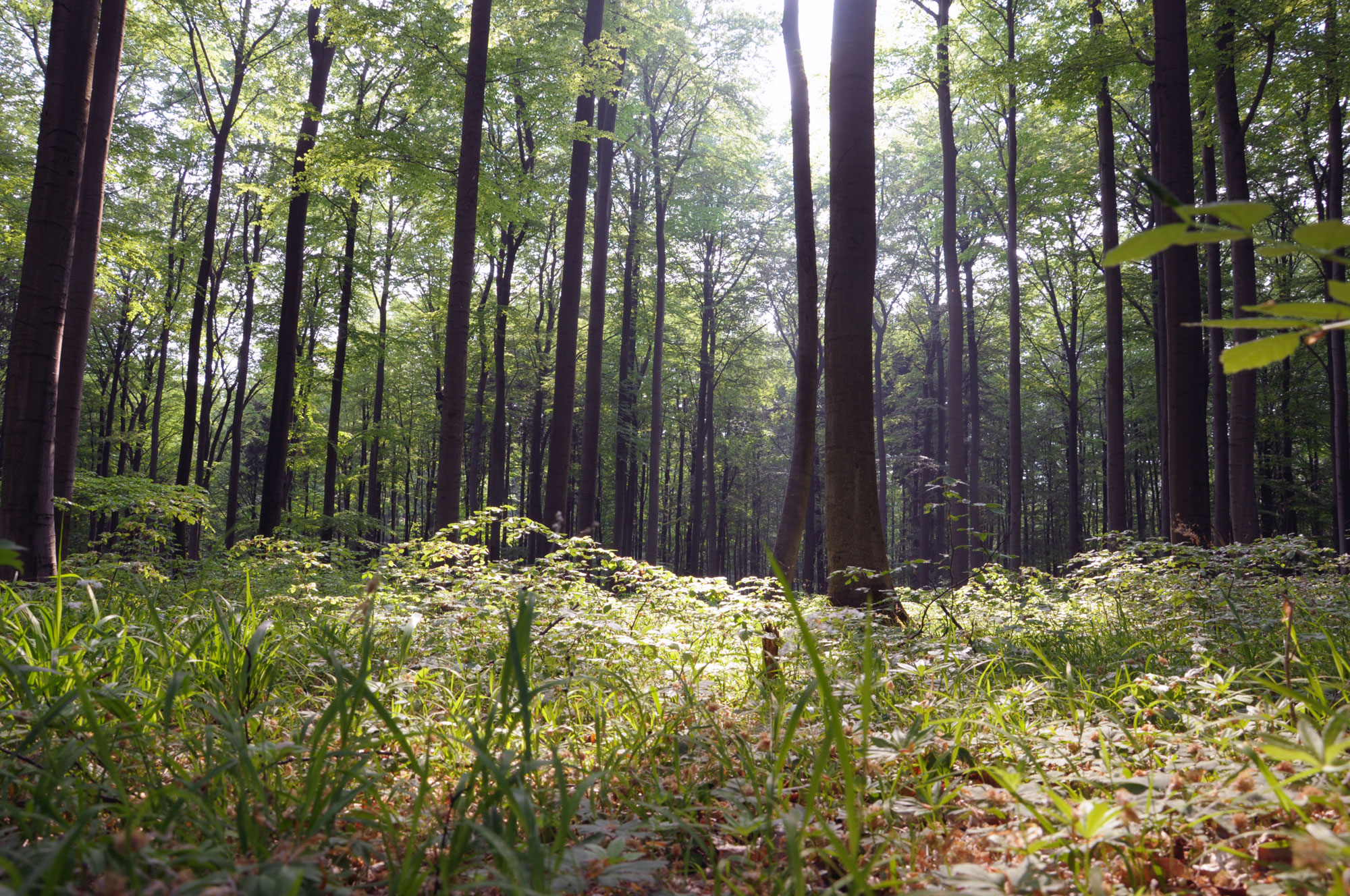
beechforest

Impression of a central European beech forest. Much more is known about the aboveground animals and their interactions than about the belowground communities that carry out the critically important ecosystem functions of litter decomposition and nutrient recycling.


Why is our knowledge about forest soil communities so limited? Progress in our understanding of soil communities and processes has been hampered by the chronic lack of data for complex soil food webs of high resolution. This is caused by aggregation of populations in coarse functional groups, whose species often span multiple trophic levels from primary to secondary or tertiary predators. In addition, soil is an opaque medium leading to a limited visibility of interactions. Further, detritivores typically ingest a multitude of intermingled resources hampering identification of what the animals actually digest and live on. In the recent years, new molecular methods have emerged providing the possibility to unravel belowground interactions and the complex structure of forest soil food webs.
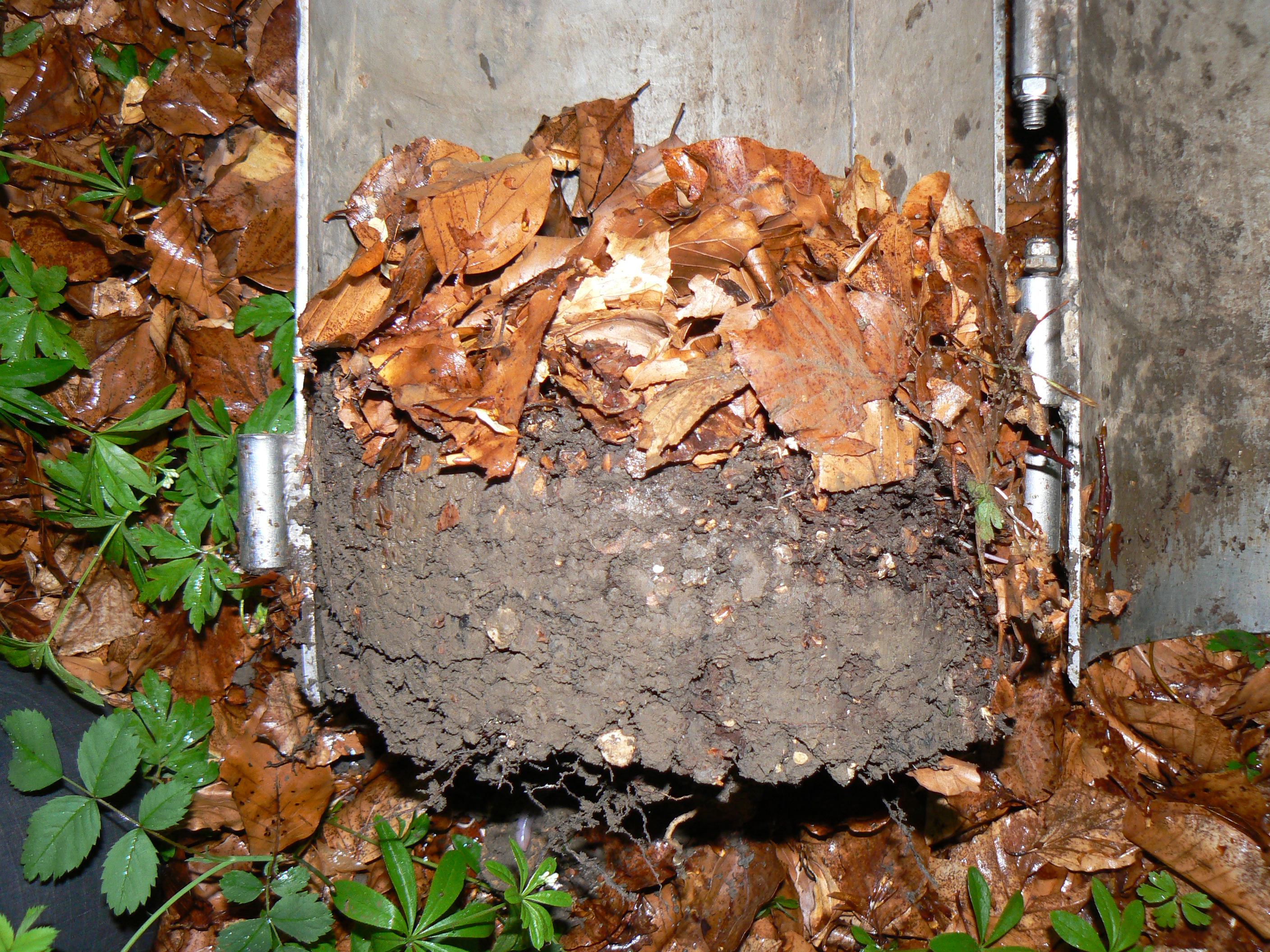
 

A soil core provides an impression of the complex structure of the belowground habitat. This environment comprises a highly diverse and complex animal community spanning several trophic levels.

A soil core provides an impression of the complex structure of the belowground habitat. This environment comprises a highly diverse and complex animal community spanning several trophic levels.

The special issue “Into darkness” comprises several studies of central European beech forest soil communities. The studies included in this special feature fill employ state-of-the-art methods to unravel general feeding guilds by stable isotopes (Klarner et al.) as well as specific directed feeding interactions by molecular gut content and fatty-acid analyses (Ferlian and Scheu, Günther et al., Heidemann et al.). This allowed the construction of the first highly-resolved complex soil food webs (Digel et al.) and analyses how they respond to external drivers such as the nutrient stoichiometry of the basal litter (Ott et al.) and climate change (Lang et al.). Together, they provide a unique impression of a voyage into darkness.

Ulrich Brose, Editor of the Oikos Issue “Into Darkness”


Finding the food in complex environments Updated for 2026

Many animals locate resources and orient in rather complex environments like vegetation, coral reefs or leaf litter. How does the presence of a stimulus affect animal movement in such complex environments? And what is the relative contribution of a stimulus vs. the complexity of the environment on animal movements? Find out in the Early View paper “Relative roles of resource stimulus and vegetation architecture on the paths of flies foraging for fruit” by Oriol Verdeny-Vilalta and co-workers.

Below is the author’s summary of the study:

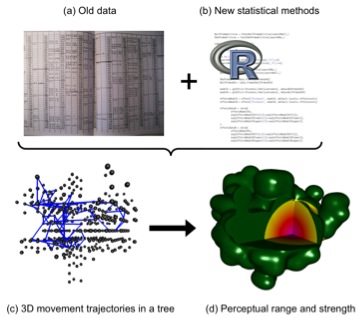
To answer the questions above, we developed a novel method using random walks on graphs to accurately estimate both the perceptual range and the attraction strength from 3D movement trajectories of individuals. The perceptual range gives us an idea of the maximal distance at which a stimulus source biases the movement. The attraction strength measures how the attraction of the stimulus varies at different distances within the perceptual range. Additionally, the methodology enabled us to calculate the relative roles of the architecture of vegetation and of the strength of attraction of a stimulus on the movement of individuals. We applied the methodology to estimate perceptual range and strength of apple maggot flies (Rhagoletis pomonella) foraging for artificial fruit in apple trees of varying complexity.


Movements

Figure: Main steps (a-d) followed to study animal orientation in complex vegetation structures.


In our study we have shown that, conditional on visiting the stimulus location, the presence of the fruit affects animal movement much more than the plant architecture. Moreover, we found that plant complexity makes a minor contribution to defining the perceptual range, but a large contribution to the attraction strength. Thus, we highlight the importance of estimating not only the perceptual range but also the attraction strength of animals, which has been traditionally neglected. Our findings have implications for studying foraging ecology and landscape connectivity. For example, several dispersal models developed to study landscape connectivity incorporate the perceptual range of individuals, but the distinction between perceptual range and attraction strength is still lacking. We expect that landscape connectivity will be higher in animals showing higher attraction strengths for equal perceptual ranges. Given that animals use their sensory systems to make informed decisions and that they move and interact in heterogeneous environments, our approach might be of relevance to the myriad of animals walking and searching in complex environmental structures.