Tag Archives: communities

Invaders in plant-pollinator communities Updated for 2026

The introduction of a new species to an ecological community can initiate a chain of events that results in a significant change to the community’s composition. For instance, the introduction of a pollinator species can facilitate the colonization of new plants that rely on the new pollinator for reproduction. Conversely, a pollinator species may drive down the population levels of certain species—e.g., if it aggressively robs a plant of its nectar without pollinating it.

How do communities respond to these invasions, and what lessons can be learned about the underlying properties of ecological communities in response to such invasions? In “Plant-pollinator community network response to species invasions depends on both invader and community characteristics,” the authors investigate the relationships between invasive species and community characteristics in shaping a plant-pollinator community’s response to an invasion.

Monarch butterfly (Danaus plexippus) on invasive plumeless thistle (Carduus acanthoides). Photo credit: Laura Russo

Monarch butterfly (Danaus plexippus) on invasive plumeless thistle (Carduus acanthoides). Photo credit: Laura Russo

The study makes use of a computational model that was originally used to investigate the process by which stable plant-pollinator communities form. The use of such models is attractive for two main reasons. First, a model that recapitulates real-world behavior offers insight into the mechanisms that operate in nature; second, computational models allow rapid and widespread exploration that would be time-consuming, costly, and in some cases impractical to perform in nature. As such, computational models are well-positioned to speed up the process of scientific discovery by providing novel and informative predictions and insights into the properties of the systems being modeled.

The model itself is used to generate simulated plant-pollinator communities with properties drawn from the empirical literature. Interactions may be true mutualisms (beneficial to both species) or detrimental to one species and beneficial to another (e.g., insects that visit flowers for nectar without pollinating the plant and plants that trick pollinators without providing them with nectar rewards). Colonization or maintenance of a species in the community is possible if its beneficial interactions outweigh its detrimental interactions; otherwise, the species goes extinct.

The model predicts that invasive species with properties that are very different from the native species in the region (e.g., supergeneralists that benefit the species with which they interact) are more likely to drive significant changes in the number of species colonizing the community. When an invasive species increases the species richness of the invaded community, there is a corresponding increase in the community’s nestedness and a decrease in the community’s connectance. Nestedness is a measure that accounts for the tendency of the community to be composed of (1) generalist species that interact with many species and (2) specialist species that interact with a subset of generalists. Connectance is the number of observed interactions relative to the number of possible interactions. This predicted divergence in nestedness and connectance is in agreement

with recent empirical work, and stands in contrast to the correlation of these two measures when considering the process by which communities stabilize.

This finding is relevant to the active discussion among researchers concerning the relationship between nestedness and connectance. By investigating the differing behavior of these properties in the context of species invasion, this paper supports the argument that nestedness and connectance are complementary properties that provide a more accurate picture of a community together than either measure provides alone. These findings are most strongly supported in the context of invaders that increase the number of species colonizing the community. As these invaders tend to participate in many species-species interactions, this paper also highlights the important role of generalist species in shaping the structure and dynamics of ecological communities.

Thai communities poisoned by illegal lead mine waste Updated for 2026


The Thai government has failed to clean up toxic lead in a stream in western Thailand, threatening hundreds of families with serious and irreversible health problems, says a new report from Human Rights Watch.

A Supreme Administrative Court’s order from nearly two years ago to clean up Klity Creek, the first of its kind in Thailand, was been ignored by the government while villagers remain exposed to lead in water, soil, vegetables, and fish.

The report, ‘Toxic Water, Tainted Justice‘ by Human Rights Watch, describes 16 years of failure by Thailand’s Pollution Control Department and public health authorities to prevent further exposure to lead among the village’s ethnic Karen residents, and highlights serious health and environmental damage caused by a now-defunct lead processing factory.

Despite the village’s idyllic setting, many residents of Lower Klity Creek suffer the symptoms of chronic lead poisoning, such as abdominal pain, headaches, fatigue, and mood changes. Some children have been born with severe intellectual and developmental disabilities.

Authorities are ‘still studying’ the court order

“The Thai authorities apparently believe they can ignore a clear court order to clean up the toxic site”, said Richard Pearshouse, senior researcher at Human Rights Watch and author of the report.

“This is one of the most heavily polluted industrial sites in all of Thailand, hundreds of people suffer harm, and it needs immediate government action.”

On January 10, 2013, Thailand’s highest administrative court ordered the government to clean up toxic lead in the creek until test results from the water, soil, vegetables, and aquatic animals in and around the creek fall below permissible levels.

Although clean-up activities should have begun by May 1, 2014, Thailand’s Pollution Control Department says it is “still studying” how to clean up the creek.

Lower Klity Creek villagers may be exposed to lead in their daily lives – by drinking water or eating fish and other aquatic animals, by eating food grown in lead-contaminated plots or cooked in lead-contaminated water, by contact with polluted soil around their houses, or breathing air contaminated by lead dust.

The Pollution Control Department’s environmental tests found unacceptably high levels of lead in soil along the creek bank, as well as in the water and creek sediment, and contaminating fish, shrimp, crabs, and vegetables at various locations along the creek.

More lead mines on the way?

Despite this catastrophe, in 2011, the Ministry of Natural Resources and Environment commissioned an environmental assessment of lead mines in Kanchanaburi province, raising the possibility of Thailand reopening and further developing lead mining and the lead industry.  

“The Thai government seems to be ignoring the lessons from the pollution of Klity Creek and the poisoning of villagers”, Pearshouse said. “Thailand should clean up Klity Creek and provide medical care to affected villagers before even thinking of expanding lead mining.”

The response by provincial and district public health authorities to the situation has been wholly inadequate, Human Rights Watch said. Many village residents who were tested did not receive the results of their blood tests. Others were told the lead levels in their blood were “safe” despite international guidance that there is no safe level of lead exposure.

Children who had elevated lead levels did not receive follow-up medical care. Many villagers told Human Rights Watch that public health authorities simply stopped performing local blood tests for lead by 2008.

Lead is highly toxic and can interrupt the body’s neurological, biological, and cognitive functions. The ingestion of high levels of lead can cause brain, liver, kidney, nerve, and stomach damage as well as anemia, comas, convulsions, and even death.

Children and pregnant women are particularly susceptible, and high levels of lead exposure can cause permanent intellectual and developmental disabilities, including reading and learning disabilities, behavioral problems, attention problems, as well as hearing loss and disruption in the development of visual and motor functioning.

As Thailand pursues mineral wealth, legal obligations ignored

As a result of increasing industrialization and mineral extraction, Thailand faces rising concerns about health impacts from pollution in numerous sites around the country.

These include Na Nong Bong in Loei province (cyanide, mercury, and arsenic), Mao Tao in Tak province (cadmium), Pitchit province (manganese and arsenic), and near the Map Tha Phut industrial area in Rayong province (industrial chemicals).  

Thailand has ratified core international human rights conventions and a range of environmental treaties. These place obligations on governments to protect the environment, safe drinking water, and the health of its citizens, with a special emphasis on children and other vulnerable groups, including women, people with disabilities, and indigenous people.

Thailand’s National Health Act also provides that everyone has the right to a healthy environment. In international law, the rights to the highest attainable standard of health and to water also entail the right to an effective remedy for violations of these rights.

“The Thai government needs to stop ignoring the court order and set out a clear, defined plan with a specific timeline to comply”, Pearshouse said.

“A thorough clean-up of Klity Creek could help Thailand create a model for cleaning up the many places where extreme industrial pollution damages human health.”


The report: Toxic Water, Tainted Justice – Thailand’s Delays in Cleaning Up Klity Creek‘ is by Human Rights Watch.

More information: Thailand’s Delays in Cleaning Up Klity Creek.


389296

How do different herbivores affect plant communities? Updated for 2026

Walk through a grassland at the peak of summer and you will quickly become aware of how many grasshoppers inhabit the area. But what effect do these grasshoppers and other insect herbivores have on the plant community you are walking through? How does the effect of invertebrate herbivores compare to that of less visible, but also ever present small mammal herbivores? And do these effects depend on the availability of resources? In our study, “Invertebrate, not small vertebrate, herbivory interacts with nutrient availability to impact tallgrass prairie community composition and forb biomass”, now on Early View in Oikos, we aimed to address these questions through an experimental study within a tallgrass prairie ecosystem in eastern Kansas. We factorially manipulated the presence of both invertebrate and small vertebrate herbivores and the availability of soil nutrients and observed changes in plant community composition and productivity over five years.

We found that removing invertebrate herbivores had a profound effect on plant community composition after a few years of treatment. Forb species increased in abundance in the absence of invertebrate herbivores, while grass species decreased. This effect was particularly strong under conditions of elevated nutrient availability. Surprisingly, small vertebrate herbivore removals had no detectable effect on grassland plant community composition or aboveground biomass.

Kim

A caterpillar chows down on a whorled milkweed (Asclepias verticillata), a plant species that greatly increases in abundance when invertebrate herbivores are removed from tallgrass prairie


Perhaps most interestingly, dispersion in community composition among plots where both invertebrate herbivores were removed and nutrient availability was elevated increased compared to the control plots. That is, different forb species came to dominate the replicate treatment plots, likely dependent on initial community composition. Overall, our research points to the important, and often overlooked, role that invertebrate herbivores play in structuring grassland communities. Future research aimed at continued investigation of the effects of invertebrate herbivory on plant communities would be worthwhile.


Pesticide effect on biodiversity and ecosystem functioning Updated for 2026

Pesticid2Global biodiversity is constantly declining, and up-to-date research has shown that biodiversity loss affects the functioning of ecosystems and the services they provide to humans. Biodiversity-ecosystem functioning relations have yet mainly been analyzed in communities where species were randomly removed. In nature however, species are not lost at random, but according to their sensitivity to environmental stress.

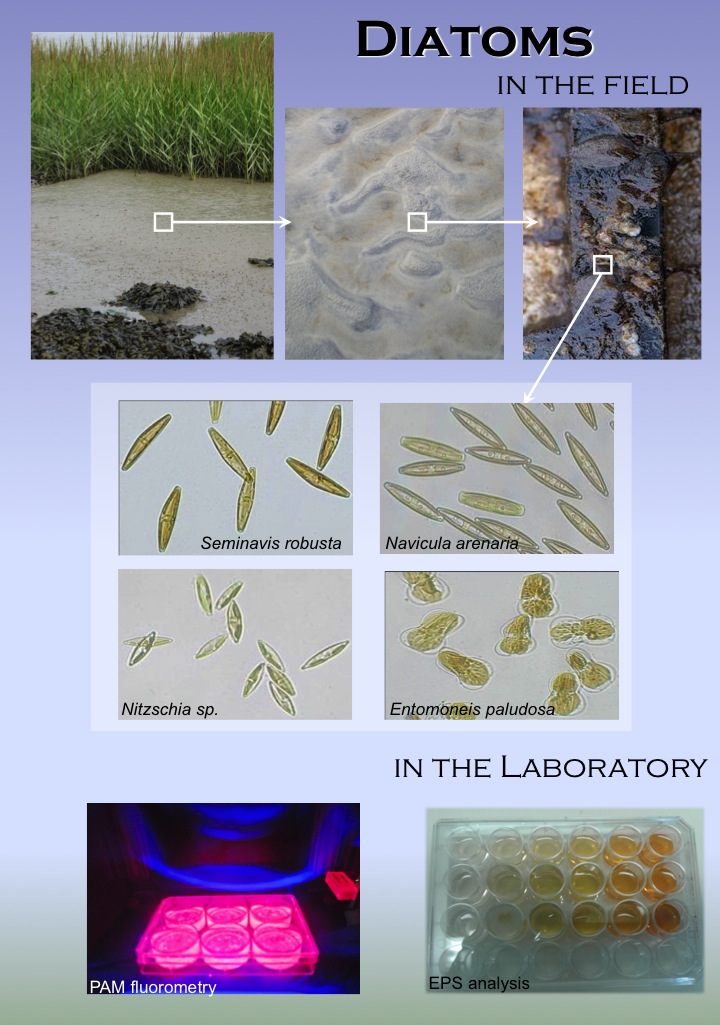
In our study “Stressor-induced biodiversity gradients: revisiting biodiversity–ecosystem functioning relationships”, now published Early View in Oikos, we investigated whether biodiversity loss and biodiversity-ecosystem functioning relations in randomly composed diatom communities can be compared to those found in communities exposed to atrazine, one of the most-used pesticides worldwide.

Bild1

Atrazine exposure resulted in smaller biodiversity loss, but steeper decrease in ecosystem functioning than in randomly assembled diatom communities. This was related to selective atrazine effects on the best performing species, which contributed most to ecosystem functioning but was also most sensitive to atrazine.

Pesticid1

Our results imply that biodiversity loss and diversity-functioning relationships found along gradients of environmental stress do not compare to those inferred from the common approach of random community assembly. Species-specific sensitivity and performance need to be considered for a more accurate prediction of biodiversity and ecosystem functioning under stress.

The authors through Christophe Mensens

Putting community energy at the heart of our renewables revolution Updated for 2026


Big energy companies can behave like a law unto themselves, levying inflation-busting price hikes with impunity and apparent indifference to political criticism and energy consumers’ wallets.

There is, however, a realistic solution. One that will provide more sustainable, and potentially cheaper energy for everybody while making Britain less reliant on imported energy – and it’s within our power – ordinary consumers – to make it happen.

Community energy refers to renewable energy sources that are owned, operated or funded by energy consumers and communities, should not be underestimated.

It could even mean communities selling electricity to energy companies at a discounted wholesale rate in order to buy it back at a lower retail price than is usually offered via standard tariffs. So lowering carbon and lowering costs.

Such agreements could connect supply and demand in a healthy and transparent way, since communities can see how much they are charging for their power and also how much they are paying. The profits and savings made by all parties are clear for everybody to see, not hidden in some complex tariff structure.

Taking a stake in local renewable power projects

There are already 5,000 community-owned energy plants in the UK, and it looks like a good many more may be on the way, at least projects in which local communities have a stake.

Under the ‘Shared Ownership Taskforce’ strategy launched this week by energy secretary Ed Davey, local people can become part-owners of large (costing more than £2.5 million) renewable energy projects connected to public electricity networks. Depending on the size of the project, they may take from 5% to 25% of the project, with the minimum stake set as low as £5 to encourage participation.

This initiative is currently voluntary but has support across the industry, and applies to any projects entering the planning system from this week. It’s also important because it recognises the huge potential of the community ownership model, and could help push it further along the track.

Savvy solar and wind developers will also recognise the marketing opportunity beyond the administrative burden of setting up such community ownership schemes.

And it may be that local people now opposing wind turbines or field-scale solar farms may feel differently if they stand to benefit from the projects – as is already the rule in Demark, Germany and other countries where renewables have taken off in a big way.

But we should all be able to benefit

But while the changes are to be welcomed, it’s not enough. Only those lucky enough to live close to the natural resources can currently benefit. Also millions of homes are unsuitable for solar panels, and people in the middle of cities cannot easily set up wind projects.

For community energy to be truly democratic, everyone should be able to own a stake in solar and wind farms, no matter where they live. Remember, we all pay for the ‘feed in tariffs’ and other schemes used to subsidise renewable energy, so shouldn’t we all be able to benefit from them?

Community energy should be inclusive, involving the whole population if possible. That way, we will all have a vested interest in the creation of more renewable energy. And MPs in all areas will begin to see it as a relevant issue for their constituents, whether by wanting to help create a project or facilitating investment or access to cheaper tariffs for those unable to set up their own schemes.

This may start with local groups getting projects off the ground, but by providing the means by which anyone can lend or invest even a small sum in community energy projects, crowdfunding sites such as Trillion Fund can give everybody the opportunity to benefit from community energy, either through lower bills or by making a decent financial return.

People don’t even have to believe in global warming – they just need to be motivated to earn a decent return on their savings, and (we hope) like the idea of being involved in renewable electricity generation, rather than just being an energy consumer.

Breaking the grip of Big Power

And, when it reaches scale, local generation can introduce some much needed competition into the energy market, essential if we are to escape the grasp of the Big Six and pay a fair price for our power.

Take the example of Triodos Renewables, who are now crowdfunding their new share offer, with minimum investments of just over £50 – on the same terms as those investing £50,000 for their personal pension plan.

They are raising £5m to continue to grow the UK’s green energy supply to have a meaningful impact, almost 40,000 homes worth of home-grown sustainable energy sources that we be part of our energy mix for twenty years to come.

They are now the UK’s most widely owned renewable energy company with over 5,200 shareholders. Both the volume of energy and the level of engagement (for every one shareholder, there are probably 10 other people who considered it) are meaningful and this is the scale of initiatives.

So let’s be ambitious. Let’s define community energy in broad terms so that we get the financial and political backing we need to have a real impact on our energy market.

Here’s our check-list of the five key tenets of community energy:

  • Fair – profits for the many not the few
  • Inclusive – relevant and beneficial to all in the community, not just investors
  • Engaging – connecting people, educating, rewarding
  • Connects supply and demand – influencing consumption, changing bills
  • Scalable – to have a real impact we have to do this again and again and again.

Cooperatives are great – but not ideal investment vehicles

We don’t think it is a great idea to limit the definition of community energy to cooperatives and community benefit schemes. Those are wonderful things, and more power to them, but they are designed to be by, and for their own communities, and are very definitely not investment vehicles.

Recent moves by the Financial Conduct Authority to clarify what the purpose of an initiative must be, for it to be deemed a cooperative or community benefit scheme have led to some schemes being denied mutual status.

While more schemes being held up in this way might stymie development, more consumer protection – the kind that will reassure cautious investors putting some of their life savings into a community scheme, must be welcomed by the industry, if community-owned energy is to reach the scale required to beat the Big Six.

But equally, that protection must not be so heavy-handed that ordinary individuals can no longer gain access, which is why conversation with the regulator on this issue is so important.

If you have a view that is relevant to the FCA as it considers how to move forward on co-operative definitions, join the consultation before the November 28 deadline.

Making the renewable energy revolution happen!

The switch to zero carbon energy is, in my view the challenge for our generation: we are the ones in a position to make a difference. We have the data that our parents didn’t have, and the time that will run out before our children can take the reins.

We need this to be relevant to as many people as possible. Whether their motivation is environmental or financial. Whether they want to be hands-on or leave it to the professionals. And whether they live near a windy hill or rent a flat in a city centre.

So let’s define our community as the whole country. A network of communities cooperating to reach meaningful scale, and forcing an energy revolution in the UK which will ease the cost of powering our homes for everybody, and give us all a more sustainable future.


Julia Groves is Chief Executive of Trillion Fund. An experienced founder and director of early-stage digital and renewable energy businesses, she joined Trillion Fund from Engensa, a leading UK domestic solar installer. Prior to Engensa, Julia spent five years building a wind turbine business Quiet Revolution, which designed and built turbines for the Olympic Park.


Key documents


386488

A voyage into soil darkness Updated for 2026

While most people know the aboveground part of forest ecosystems, very few have caught a glimpse of the belowground environment that comprises a highly diverse fauna. The number of species co-occurring on less than a square meter habitat ground (or a cubic meter of habitat volume) exceeds that of the aboveground compartment by far. In consequence, forest soil communities have been called “poor man’s rainforest”. Nevertheless, we still do not know much about the animals living in these “next-door” habitats and the structure of their communities.

beechforest

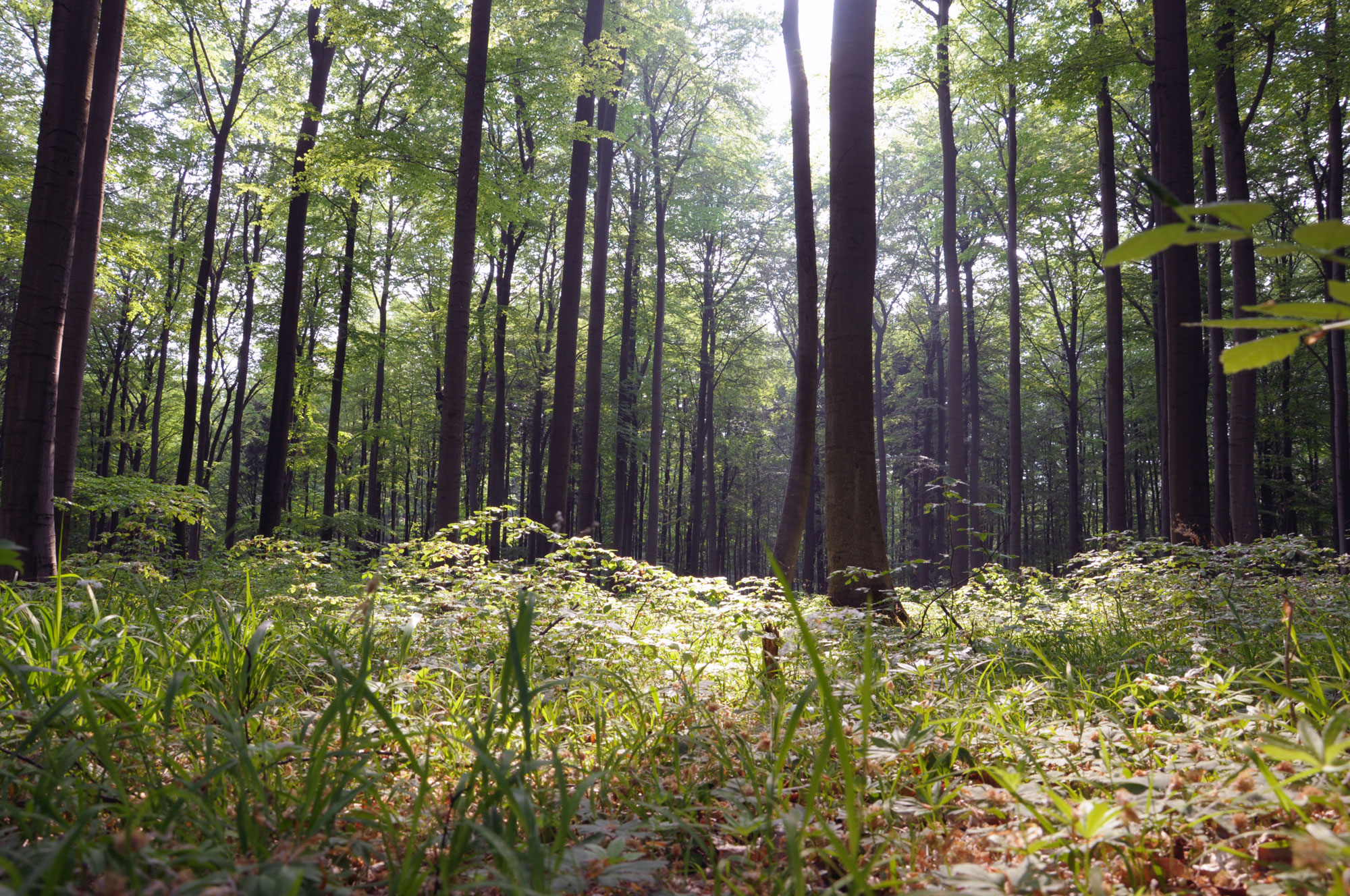
Impression of a central European beech forest. Much more is known about the aboveground animals and their interactions than about the belowground communities that carry out the critically important ecosystem functions of litter decomposition and nutrient recycling.


Why is our knowledge about forest soil communities so limited? Progress in our understanding of soil communities and processes has been hampered by the chronic lack of data for complex soil food webs of high resolution. This is caused by aggregation of populations in coarse functional groups, whose species often span multiple trophic levels from primary to secondary or tertiary predators. In addition, soil is an opaque medium leading to a limited visibility of interactions. Further, detritivores typically ingest a multitude of intermingled resources hampering identification of what the animals actually digest and live on. In the recent years, new molecular methods have emerged providing the possibility to unravel belowground interactions and the complex structure of forest soil food webs.


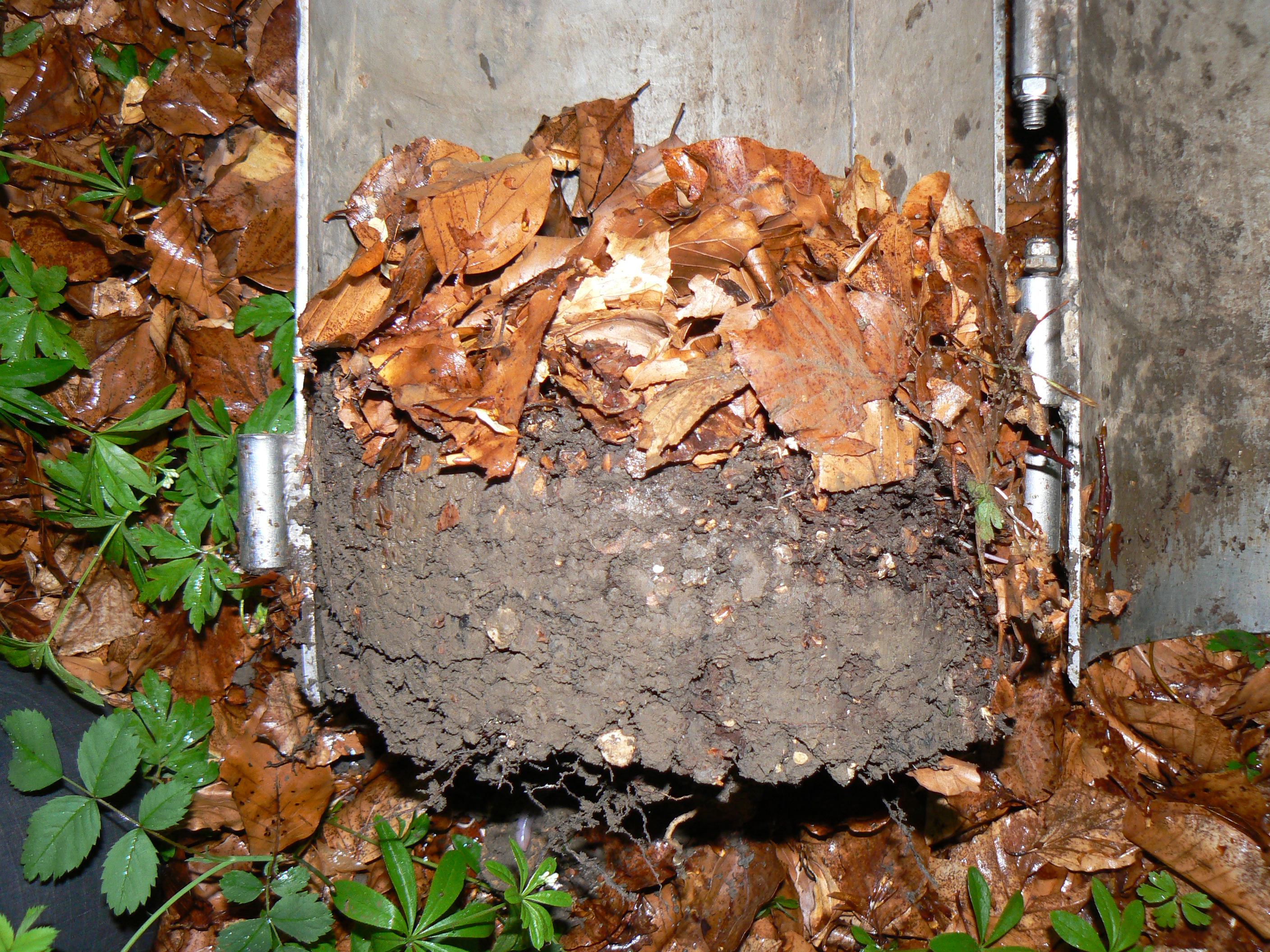
A soil core provides an impression of the complex structure of the belowground habitat. This environment comprises a highly diverse and complex animal community spanning several trophic levels.

A soil core provides an impression of the complex structure of the belowground habitat. This environment comprises a highly diverse and complex animal community spanning several trophic levels.

The special issue “Into darkness” comprises several studies of central European beech forest soil communities. The studies included in this special feature fill employ state-of-the-art methods to unravel general feeding guilds by stable isotopes (Klarner et al.) as well as specific directed feeding interactions by molecular gut content and fatty-acid analyses (Ferlian and Scheu, Günther et al., Heidemann et al.). This allowed the construction of the first highly-resolved complex soil food webs (Digel et al.) and analyses how they respond to external drivers such as the nutrient stoichiometry of the basal litter (Ott et al.) and climate change (Lang et al.). Together, they provide a unique impression of a voyage into darkness.

Ulrich Brose, Editor of the Oikos Issue “Into Darkness”