Tag Archives: into

Asia powers into the forefront of solar revolution Updated for 2026


Solar power is on course to overtake nuclear as a primary source of electricity production as the price of photovoltaic (PV) panels continues to fall.

Mass production in China and Taiwan has helped to increase the extraordinary growth of the solar power across the world and has led to an 80% reduction in the cost of panels since 2008.

Europe, and particularly Germany and Italy, led the way in solar installation, but Asia and the US are now catching up fast.

Africa, which has the most potential to benefit from solar power, has been slow to adopt the technology, but is now embracing its possibilities – especiallin South Africa. While investment in small domestic installation continues, there has been a big increase in utilities creating large solar farms.

These are the main trends outlined in a detailed PV Status Report for 2014, released by the European Union. The report, which assesses the state of the world market and its growth in individual countries, is also scathing on the continuing subsidies for fossil fuels, which massively exceed those for renewables.

Between 2007 and 2013, IEA figures show, over $3,400 billion were spent on direct fossil fuel subsidies worldwide – excluding global producer subsidies. “With 2007 to 2013 PV system prices, this subsidy would have been sufficient to install about 880GW of PV systems worldwide, able to produce about 1,000TWh of electricity or 4.4% of global electricity demand.”

And at the lower prices of 2013, with residential systems costing around $1.85/Wp, that same sum could have paid for 1,840GW of PV electricity systems – enough to supply almost 10% of the world’s power.

Battery storage: encouraging progress

Developments in renewables continue to be encouraging, particularly electricity storage from solar. Using ion-lithium batteries, new technologies are being deployed to store surplus electricity generated during daylight hours, for use during evening peak periods.

On a domestic level, this makes economic sense because the cost of generating electricity at home with solar panels is now cheaper than buying it from the grid in many countries. Being able to store your own power for use at night will save money, as well as reducing peaks in national demand.

On a larger scale, the report gives examples of wind and solar generation power stations combined with battery storage, which are being tried successfully in China.

And as solar PV’s proportion of total electricity supply increases, as in Germany and Italy “new technical and regulatory solutions have to be implemented to avoid running into the problem of curtailing large parts of this electricity.

“Besides conventional pumped storage options, electrical batteries are becoming increas-ingly interesting, especially for small-scale storage solutions in the low-voltage distribution grid.”

Solar taking the lions share of investment worldwide

Solar is now the renewable of choice, overtaking wind. In 2013, solar energy attracted 53.3 % of all new renewable energy investments, a staggering $111.4 billion (€82.5 billion).

While the report gives detailed figures for individual countries only for 2013, it says that the growth of the industry continued in 2014, although it varied depending on the policies of individual governments. Asian markets were especially dynamic:

“In contrast to Europe and the Americas, where new investments in renewable energy fell by 42% and 8% respectively, new investments continued to rise in Asia / Oceania. The leading country in new renewable energy investment was China at $54.2 billion, followed by the USA at $36.7billion and Japan at $28.6billion.”

The European Union (EU) as a whole saw investments of €25.2billion, led by the UK with €9.2billion – the only European market with increased investments – well ahead of Germany at €7.5billion.

Japan recorded the largest change in 2013, with an 80% increase compared to 2012 – partly spurred by the nuclear accident at Fukushima in March 2011, which made the safe and reliable option of solar more attractive.

Over five years South Africa saw the strongest growth at 96% followed by Japan (57%) and Australia (32%) – whereas the EU saw a decline of 6%.

Investments in 2013 were used for installing 87 gigawatts (GW) of new clean energy generation capacity, bringing the total to 735 GW, and thus capable of producing more than 1,700 terawatt hours (TWh) of electricity – or 70% of the electricity generated by nuclear power plants worldwide.

Africa’s vast solar resources

The report says: “Despite Africa’s vast solar resources and the fact that in large areas the same photovoltaic panel can produce on average twice as much electricity in Africa than in Central Europe, there has been only limited use of solar photovoltaic electricity generation up until now.”

But according to the latest study, solar PV electricity is now the cheapest electricity option for more than one-third of the African population.

Until recently, the main application of PV systems in Africa was in small solar home systems. Since 2012, however, major policy changes have occurred, and a large number of utility-scale PV projects are now in the planning stage.

Overall, the (documented) capacity of installed PV systems in Africa had risen to more than 600 MW by the end of 2013 – a tenfold increase compared with 2008. In 2014, the installed capacity is expected to more than double.

Currently, the two biggest markets are South Africa and Algeria, but all African countries are either potential or emerging markets.

Future directions

With increasing shares of PV electricity in the grid, notes the report, “the economics of integration is of growing importance” and urgent attention needs to be focused on issues such as:

  • “Development of new business models for the collection, sale and distribution of PV electricity, such as development of bidding pools at electricity exchanges, virtual power plants with other renewable power producers, and storage capacities;”
  • “Adaptation of the regulatory and legal procedures to ensure fair and guaranteed access to the elec-tricity grid and market.”

“The cost of electricity generated by a PV module has dropped to below EUR 0.04/kWh”, the report adds. This means that now the main cost component of solar power relates to getting the electricity from the module to where it is needed.

“Therefore, new innovative and cost-effective electricity system solutions overall for the integration of PV electricity are needed to establish photovoltaic electricity as an integral part of sustainable energy solutions.”

But the investment is definitely a good one, not least as far as consumers are concerned: “in contrast to conventional energy sources, renewable energies are still the only ones to offer the prospect of a reduction rather than an increase in prices in the future.”


Paul Brown writes for Climate News Network.

Oliver Tickell edits The Ecologist.


389836

A voyage into soil darkness Updated for 2026

While most people know the aboveground part of forest ecosystems, very few have caught a glimpse of the belowground environment that comprises a highly diverse fauna. The number of species co-occurring on less than a square meter habitat ground (or a cubic meter of habitat volume) exceeds that of the aboveground compartment by far. In consequence, forest soil communities have been called “poor man’s rainforest”. Nevertheless, we still do not know much about the animals living in these “next-door” habitats and the structure of their communities.

beechforest

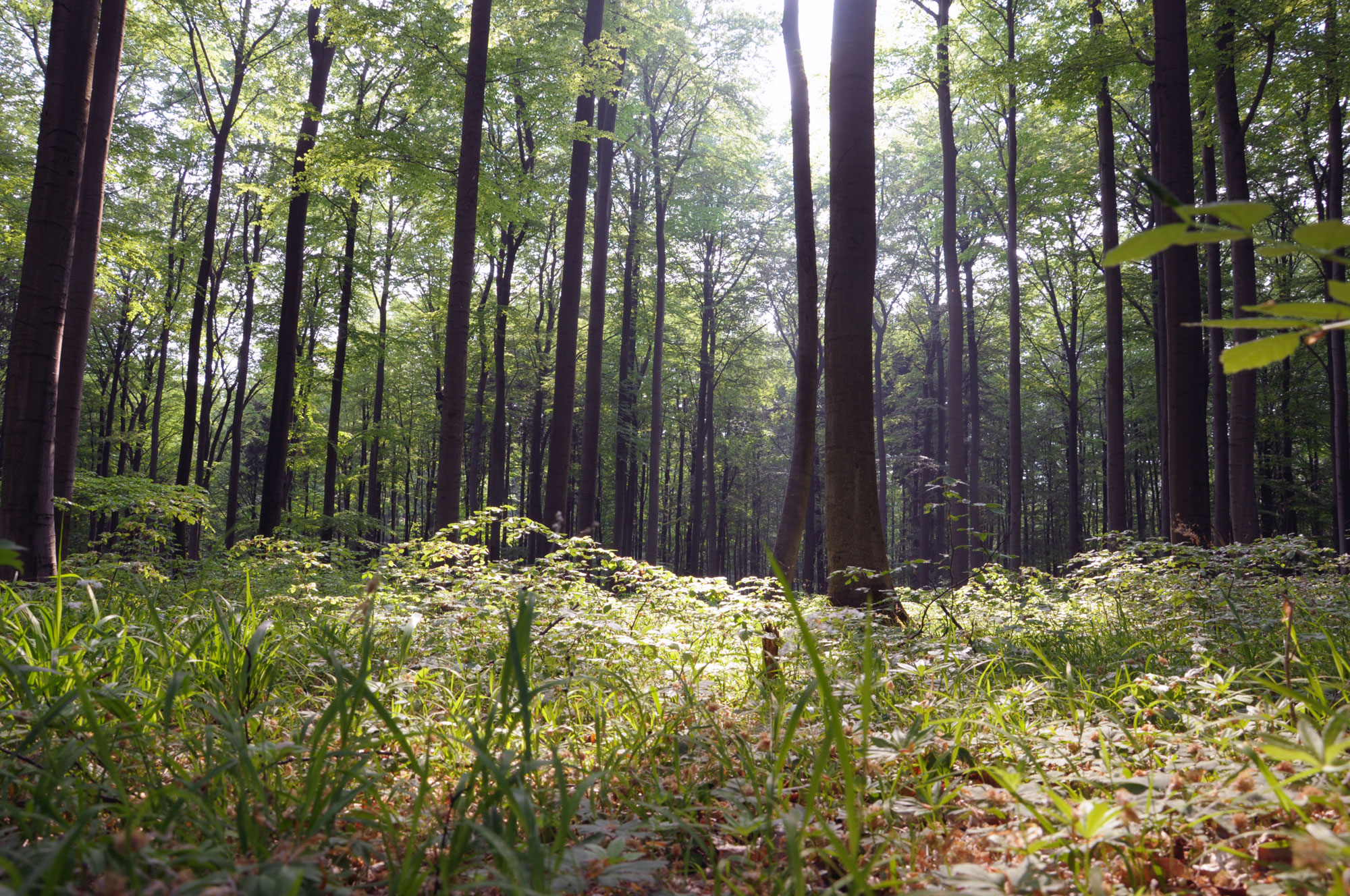
Impression of a central European beech forest. Much more is known about the aboveground animals and their interactions than about the belowground communities that carry out the critically important ecosystem functions of litter decomposition and nutrient recycling.


Why is our knowledge about forest soil communities so limited? Progress in our understanding of soil communities and processes has been hampered by the chronic lack of data for complex soil food webs of high resolution. This is caused by aggregation of populations in coarse functional groups, whose species often span multiple trophic levels from primary to secondary or tertiary predators. In addition, soil is an opaque medium leading to a limited visibility of interactions. Further, detritivores typically ingest a multitude of intermingled resources hampering identification of what the animals actually digest and live on. In the recent years, new molecular methods have emerged providing the possibility to unravel belowground interactions and the complex structure of forest soil food webs.


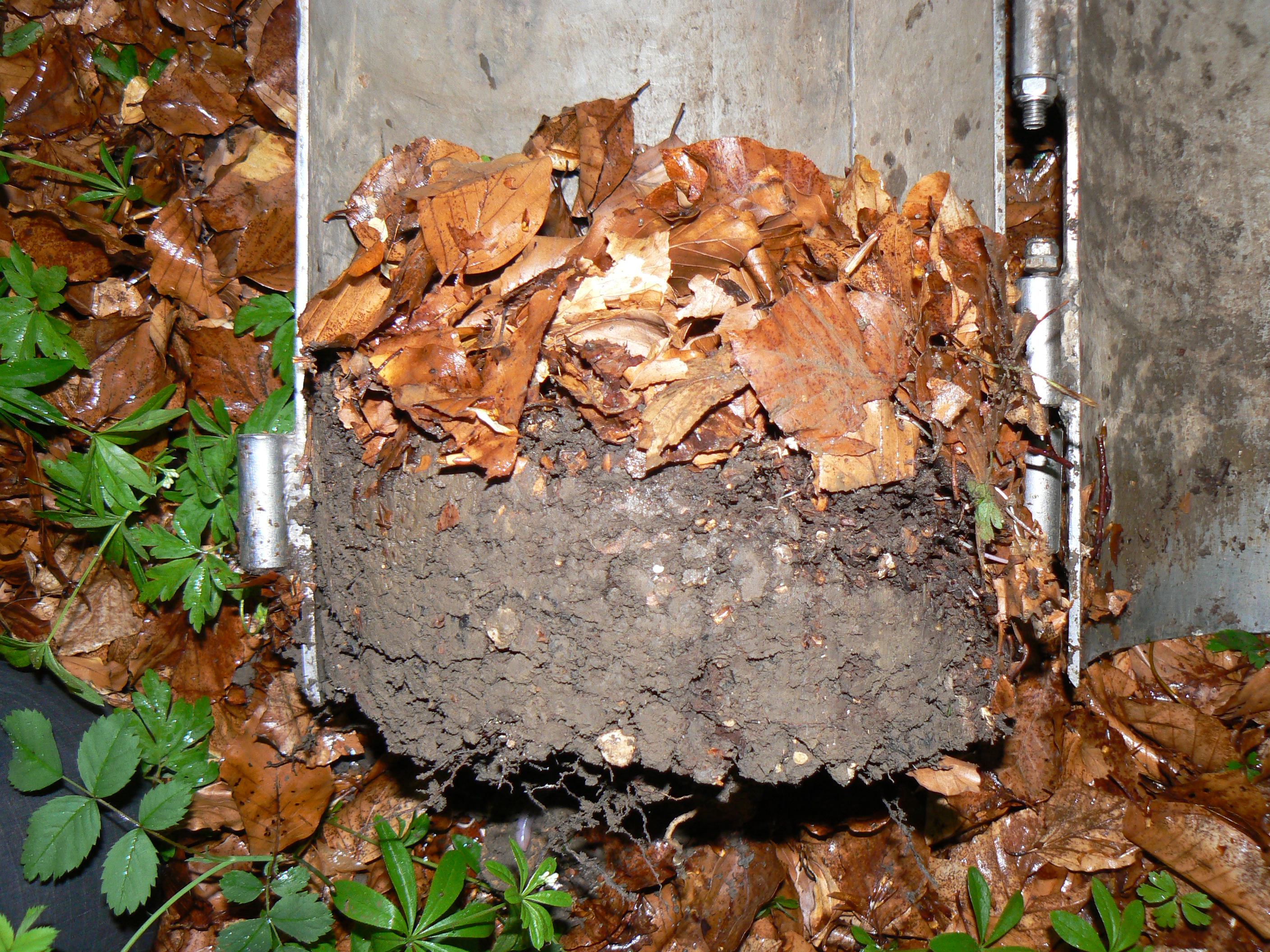
A soil core provides an impression of the complex structure of the belowground habitat. This environment comprises a highly diverse and complex animal community spanning several trophic levels.

A soil core provides an impression of the complex structure of the belowground habitat. This environment comprises a highly diverse and complex animal community spanning several trophic levels.

The special issue “Into darkness” comprises several studies of central European beech forest soil communities. The studies included in this special feature fill employ state-of-the-art methods to unravel general feeding guilds by stable isotopes (Klarner et al.) as well as specific directed feeding interactions by molecular gut content and fatty-acid analyses (Ferlian and Scheu, Günther et al., Heidemann et al.). This allowed the construction of the first highly-resolved complex soil food webs (Digel et al.) and analyses how they respond to external drivers such as the nutrient stoichiometry of the basal litter (Ott et al.) and climate change (Lang et al.). Together, they provide a unique impression of a voyage into darkness.

Ulrich Brose, Editor of the Oikos Issue “Into Darkness”


Ice sheets will be melting, and raising seas, for centuries to come Updated for 2026


Ice sheets respond slowly to changes in climate, because they are so massive that they themselves dominate the climate conditions over and around them.

But once they start flowing faster towards the shore and melting into the ocean the process takes centuries to reverse. Ice sheets are nature’s freight trains: tough to start moving, even harder to stop.

We know this process has been going back and forth throughout history – it’s why we’ve had ice ages and warm periods. But until now we haven’t known exactly how quickly ice sheets retreated and reformed.

New research published in the journal Nature Communications gives us an answer, and it isn’t great news.

It turns out sea levels often rose at scary rates in response to natural climate changes, long before mankind began pumping carbon into the atmosphere.

In the short-term sea level is affected by ocean warming and so-called ‘thermal expansion‘, or melting glaciers based on land. These changes can occur quickly – within a decade – but their impact on sea level is relatively small, in the tens of centimetres.

Collapsing ice sheets can cause big sea level rises

The drivers of longer-term sea level rise, over decades or centuries, are the continental ice sheets of Greenland and Antarctica.

On the fringes of these ice sheets are ‘ice shelves’ stretching far out into the ocean. Ice shelves can be hundreds of meters thick and, because 90% of ice in water floats below the surface, they remain ‘grounded’ on the sea floor as long as the sea is less deep than 90% of the ice shelf thickness.

Where the sea floor is deeper or the ice shelf gets thinner, there will be an area of floating land ice; here, warming ocean water can get underneath and melt the ice. Once sufficiently destabilised, an ice shelf can break up catastrophically.

Such an ice shelf collapse takes the brakes off the ice stream that feeds into the ice shelf, and land ice starts to flow much quicker towards the ocean.

Ice flow is a relatively slow process, and it takes some forcing to get a major ice sheet to systematically respond (like trying to set a fully loaded freight train into motion). Once moving, however, it will be equally hard to arrest that movement (like trying to stop a moving, fully loaded freight train).

Still, we cannot ignore it, because the sheer volume of land ice on Earth is enormous – equivalent to more than 65m of global sea level rise; Greenland alone accounts for 6 to 7m, West Antarctica for some 5-6m, and East Antarctica for the remainder. These melting ice sheets will dominate major sea level changes for centuries to come.

Diving into deep-sea data

We can learn something about what to expect by examining sea level changes during the past five ice-age cycles (past half million years), especially through comparing them with the total amount of ice on the planet at the time.

During a peak ice age, Earth held almost three times as much land ice as it holds today. For instance, during the most recent ice age the ice sheet over North America was 10-20% larger than the one we see today over all of Antarctica.

During warm periods in between ice ages the sea was often close to its present level but occasionally reached up to 8 or 9m above today’s shoreline – the equivalent of melting 1.3 Greenlands today.

To get a sense of how quickly the sea went up and down, we need highly detailed and well-dated records. Over the past decade I’ve led a team of scientists at the University of Southampton and the Australian National University who have developed such records using data from the Red Sea.

The Red Sea has a very shallow and narrow connection with the open Indian Ocean. It also evaporates quickly – the equivalent of 2m of water each year – so new water must constantly flow in to top up sea levels and to avoid it getting too salty.

But such inflow is restricted by the tiny gap between Djibouti and Yemen, and in the past that connection was even smaller. As a result, the Red Sea was much saltier during previous ice ages, when sea level stood more than 100m below the present.

Using microfossils from drill cores from the sea floor we can measure salinity through time and translate this to sea level changes in the Red Sea connection with the Indian Ocean. We were able to assess timings more accurately by comparing these sea level records to climate records from caves, which can be precisely dated by looking at radioactive decay in uranium.

Sea level rise by the metre

So now we had a detailed sea level record, with a well-defined timescale. Finally, we could work out rates of past sea level changes, and compare changing sea levels with well-dated reconstructions of temperature and CO2 changes (from ice cores).

This allowed us to assess the speed of some 120 sea level rises in the past. Previously, this was possible only for one recent event. Now, for the first time, we had the information to look at how sea levels responded to natural climate change.

It appears the sea level could rise as quickly as 5.5m per century. However this only happened at the abrupt endings of ice ages, starting with about three times the modern ice volume. When starting with double the modern ice volume or less, sea levels did not rise faster than 2m per century. When global ice volume was similar to the present, the sea typically rose less than 1 to 1.5m per century.

So it seems the fastest losses of ice occur when there is more ice. Not much of a surprise, perhaps, but now at least we have some real numbers to say how fast, and how much ice.

And the speed the sea can rise during periods with modern ice volumes is still worrying – a 1m rise this century would hugely affect millions of people. Given that Earth has achieved these rates even when warming was much slower than today, such a rise is very possible.

How long will it take?

In the 120 different events we looked at, ice sheets went from initial change to maximum retreat within 400 years 68% of the time, and within 1,100 years for 95%. In other words: once triggered, ice sheet reduction (and therefore sea level rise) kept accelerating relentlessly for many centuries.

Research we carried out previously found that modern sea level rise seems to be conforming to what we would expect from (high end) natural responses to warming.

That is: after 150 years of increasing (man made) warming, the ice sheets would only recently be reaching the point where they start making a noticeable contribution to sea level rise.

But that time has come and, once ice sheets start to melt, the freight train is in motion. It will then keep moving for many centuries to come, no matter how hard we stamp on the brakes.


Eelco Rohling is Professor of Ocean and Climate Change at the University of Southampton. He receives funding from the UK Natural Environment Research Council, and from the Australian Research Council.

This article was originally published on The Conversation. Read the original article.

The Conversation


384612

Gaza’s revenge: Israelis swim in Palestinian shit Updated for 2026


Palestinians in Gaza are starting to wake up from the shell-shock of Israel’s 51-day Ramadan Massacre, which left over 2,131 Palestinians killed (of which more than 500 were children), over 10,000 injured (more than half of whom are estimated to be permanently handicapped), and scores of homes and businesses demolished.

Reality is bleaker than ever before. Nothing of the underlying reasons why Gaza exploded into a bloodbath has changed; Israeli and Egyptian closures of Gaza’s borders remain in place.

However, one product is making its way freely across the border into Israel. Actually, this product flows undetected by the almighty Israeli military and rolls right up on to the shores of Tel Aviv.

More terrorist shit

The product is Palestinian shit, or more accurately, to maintain the media bias of the times, Palestinian terrorist shit.

We Palestinians have no love affair with the Israelis relaxing on the shores of Tel Aviv. Many of these Israelis have no problem being high-tech professionals in the morning, throwing on their military uniform and participating in turning Gaza into a living hell on earth in the afternoon, then going for a relaxing swim with the family on the shores of Tel Aviv in the evening.

However, we would advise Israelis, and all tourists to Israel for that matter, to please stop swimming in our shit. This practice is not only unhealthy for you and your children, but it is killing us, literally and figuratively.

In a new policy brief titled ‘Drying Palestine: Israel’s Systemic Water War‘ issued by Al-Shabaka, the Palestinian Policy Network, Muna Dajani writes from Jerusalem of the damage that consecutive Israeli military aggressions have caused to Gaza’s water systems:

“Ninety-five percent of the water that Palestinians in Gaza have been consuming for decades has been proven unfit for human consumption. Electricity shortages that have lasted for almost a decade have limited water treatment capacity and thus the availability of water to households, as well as increased the discharge of untreated wastewater into the sea.

Even before the summer assault on Gaza, 90 million liters of untreated or partially treated wastewater were being dumped and continue to be dumped into the [Mediterranean] sea each day due to insufficient treatment facilities.”

Water war on the West Bank

While the Israeli government continues to maintain a total closure on the Gaza Strip, there is no chance the electricity needed to run the water and wastewater networks will be operational anytime soon.

In her policy brief, Ms. Dajani also depicts the water war being waged in the West Bank. She notes:

“According to the Palestine-based coalition, Emergency Water, Sanitation and Hygiene for Palestine (EWASH), between 2009 and 2011, 173 different pieces of water, sanitation or hygiene infrastructure were demolished, including the confiscation of water tankers, which are used as an emergency measure when access to water is prohibited.

“Beyond the Israeli military’s systematic targeting of infrastructure in Area C [62% of the West Bank], residents of the illegal Jewish-only settlements have also been carrying out acts of vandalism and destruction that specifically target Palestinian water sources and frequently taking over natural springs for their own recreational use.

“Settlers can be seen as acting within a clear Israeli policy that sees such targeting of water resources as an acceptable method of warfare.”

Forcing farmers and herders from their land

The damage being done has long-term effects, as Ms. Dajani goes on to write:

“Many [Palestinian] communities depend on basic water sources such as wells, springs and cisterns to meet domestic needs; oftentimes this infrastructure was built decades, if not millennia, earlier and is badly in need of repair.

“Hundreds of such communities in the West Bank suffer from deliberate damage and destruction of their water sources. Rainwater cisterns, wells, irrigation systems, and water networks built in the pre-Roman period have been targets of Israeli military forces.

“The effects of destroying the water infrastructure are not limited to disease, absence of basic life necessities, loss of income, or development opportunities.

“Over the long term, Israel’s targeting of water infrastructure also deeply influences the relationship that Palestinians have with their land. By depriving farmers of water, they drive them off their land. Denying herders access to age-old cisterns cuts off traditional livelihoods and depletes resource-rich villages of jobs, families and traditions.”

Donors must also defend Palestinians’ legal rights

Given the Palestinian economy today is a donor-driven economy, Ms. Dajani is correct in her below statement to point to donors in an attempt to stop this Israeli aggression on our water system.

Until donor funds reverse their political tendency from acquiescence to the Israeli occupation and assume the indigenous populations’ legal rights as part of their intervention mandate, nothing will change.

“Donor intervention in the water field must go from providing temporary solutions to putting active political pressure on Israel so that its military forces cease their strategic destruction of water infrastructure.

“Money could then be invested in long-term development of infrastructure that would politically empower Palestinian communities at the grassroots, ensure access to clean water, and allow for the economic development of both the industrial and agricultural sectors.

“If Palestinians and the donor community could be assured that infrastructure was immune from Israeli attacks, the tides would turn on a policy that has left Palestinians high and dry.”

This seawater may seriously damage your health

The mass majority of Jewish Israelis prefer to just ignore anything Palestinian; to them we are invisible.

Ever since the founding of the state of Israel, the policy has been clear: Uproot the Palestinian population using all means possible, legal and illegal, destroy Palestinian villages in an attempt to erase the crime, and rebrand anything left, like city and street names, in a policy the Israel government has long ago identified as ‘Judaization of the country.

Sadly, this conflict will not end soon. In the meantime, Israelis, please inform your kids not to swallow the seawater.


Sam Bahour is a Palestinian-American business consultant in Ramallah and serves as a policy adviser to Al-Shabaka, the Palestinian Policy Network. He blogs at ePalestine.com.

The report:Drying Palestine: Israel’s Systemic Water War‘ is published by Al-Shabaka, the Palestinian Policy Network.

This article was originally published on 972mag.com.


383965

Changing perspectives Updated for 2026

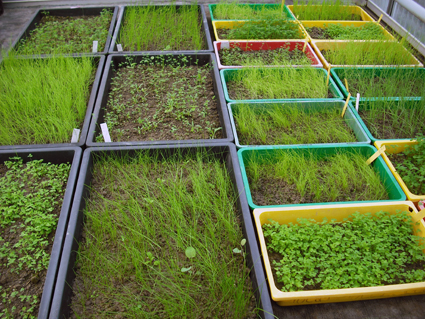
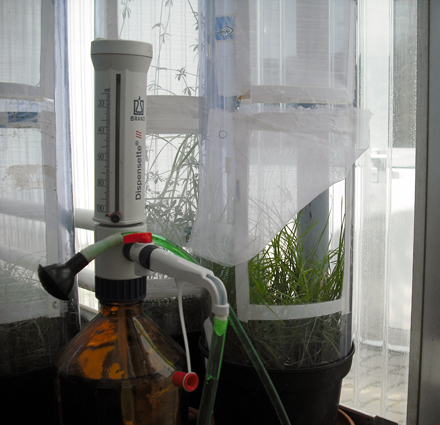
The most exciting aspect of this study “Increase of fast nutrient cycling in grassland microcosms through insect herbivory depends on plant functional composition and species diversity” (Nietschke et al)- for me – was to take our experiences and results from the field site – the Jena Experiment that was designed for elucidating mechanisms of diversity effects – and to incorporate them into a microcosm experiment under well controlled conditions.

Here, we aimed at tracking the way of nutrients from the intact plant, over an insect herbivore and its feeding characteristics, into the soil, and over to another trophic level – And to judge the role of plant diversity and functional composition along that way.

  • Some aspects of the course showed very clearly (e.g. the release of nutrients with feeding and the relevance of the plant functional groups),
  • some were surprising (e.g. both throughfall pH and P increased with herbivory intensity and faeces accumulation – diversity having a similar effects, although independently of herbivore intensity),
  • and yet others were challenging (e.g. clear soil microbial responses only occurred at high levels of herbivory).

Finally, stepping back a little and taking our field site results into account, formed a broader picture and gave some new perspectives.

Besides the change of perspective the study brought about and the various methods we applied, it was very inspiring and rewarding to work together in a team of people that have realized quite different niches within Biodiversity Ecosystem Functioning-space.

Norma1 Norma2 Norma3 Norma4 Norma5