Tag Archives: soil

No-dig farming to sustain nutrition in soils, crops, and us Updated for 2026


Ever heard of the Good Gardeners’ Association? It’s a small charity formed in 1966 to promote no-dig, plenty of compost method of growing food – and for over 10 years (2000 – 2011) I used to run it.

Instead of practising conventional ploughing or digging, turning soil upside down on its head each year, it’s all about leaving the soil well alone.

Yes – it’s possible to grow the same things you already do, by leaving the soil undisturbed. Amazing!

One of the perceived benefits of growing food using the no-dig method is that it will be more nutritious. In 2003 I began to investigate how different methods of soil cultivation affect the transfer of essential nutrients, known to effect human health, from soil to crop.

I found partners who shared a similar interest to help. Together we set up GREEN (Gardens for Research Education and Nutrition) as a collaboration between three national charities based in Stroud, Gloucestershire.

Eight years of soil and nutrition data on 23 nutrients

At the heart of this project is a theory that we should respect the integrity of the soil and the complex microbial communities they embody: soil is ‘alive’ and has evolved over billions of years of our planet’s existence to maintain and enrich the nutrient cycles of the ecosystems it supports.

As such, the theory goes, minimal soil disturbance is key to the increase and balance of essential nutrients from soil to crop. To investigate this idea we grew the same food in an organically certified garden, but under three different methods of cultivation.

Each method represents different levels of soil disturbance: no-dig, single-dig and the most extreme ‘double-dig’. To understand the effect of soil disturbance we measured the microbial life in the soil each year and tracked 23 naturally occurring minerals known to effect health, in the soil and in the crop. Samples were sent to professional laboratories and Universities for testing.

We went on to gather eight years of soil and crop data. And the tragedy is, that data is about all that’s left. I no longer work for the charity; the garden project came to an end in 2014; and the charity itself is in the process of closing itself down due to a lack of resources to pursue its work.

But that data – which I still have today – could just be incredibly valuable at this time when the food we eat is increasingly sparse in mineral and other nutrients essential for our health.

So I decided that instead of letting this work die in a filing cabinet I will use crowdfunding to raise money. I can then afford to pay myself to: analyse and write up what was found; get it out into the public domain for feedback comments; talk about the wider context of what this work could mean; and – depending on the findings – go on to promote the nutritional benefits of ‘no dig’ cultivation!

Soil – a rich and complex symbiosis that nourishes us

Life in the soil is a story of symbiosis – a brilliant example of cooperation in nature. Microbes such as bacteria and fungi are the experts at sourcing nutrients from the soil, rocks air and water – for example, nitrogen, copper, zinc, magnesium, calcium and selenium – and passing these on to plants in a form they can use. In return plants produce and supply food for the microbes (carbohydrate). Everything involved benefits.

“A loss of trace elements have been linked to obesity, insulin resistance, heart disease and mental illness” according to nutritionist David Thomas. In 2003 he wrote a report, using government data from 1940 to 1991, which suggests we have lost over 40% of key minerals from the food we eat.

More reports along this line are beginning to gather. Dr Julia Wright recently wrote an article for The Ecologist suggesting it could be as much as an 80% loss of vitamin and mineral content.

Ironically, she goes on to say, we can now produce enough protein and carbohydrate to feed 14 billion people but despite this global malnutrition continues to increase. In other words the foods we eat are no longer providing proper nourishment.

I am delighted that this year 2015 has been designated by the UN as the International Year of Soils. Twelve years ago, when I started the project, I had no idea this would happen. It seems an opportunity to good to miss that I am now at a point where I could contribute with this work.

How I got here

I came to run the Good Gardeners’ Association after completing a degree in ‘Environmental Quality and Resource Management’ at the University of the West of England. I was asked to take on this charity and decided to accept as my way of engaging with the world as an Environmental Manager. Parts of my degree included a module on ecology and another on environmental politics and philosophy – both of which I loved.

I’m intrigued by a fundamental question that environmental philosophers talk about. The way we think / understand how the world works, which deeply influences what we do and how we live, can be classed in two ways: either we believe we are a part of nature; or we believe we stand outside of nature.

The practical outcome of these two philosophies is as follows. If we believe we are a part of nature, then we must logically believe that to harm nature is to harm ourselves. On the other hand if we stand outside of nature, then it’s okay to control it, dominate it, destroy it, and subdue it to our will.

In the short term controlling nature has given us the ‘green revolution’, increased security by having more food, extended life and a whole host of other great things that are frankly pretty damn good. But we are beginning to pay dearly.

Climate change, degradation of soils, pollution of rivers and sea, the loss of wildlife habitats can be seen as the consequence of our collective actions. Related to this there appears to be a rise in chronic degenerative disease. Physical and mental health is deteriorating which is reducing the quality of our newly extended life span.

The majority view at present – at least in the powerful industrialised countries – is that we stand outside of nature. But my belief is that we need radically shift our consciousness and  recognise our own symbiosis with the wider natural world. As the leading organic farmer John Seymour once said:

“For all our technology, we humans are as much creatures of the soil as earthworms – and we can no more live without it than they can. Our survival depends entirely on the top few inches of the earth we walk on – and we forget that at the peril of our own extinction!”

My hope is that by pursuing my analysis into the eight years of data from the GREEN experiment, I may be able to bring that understanding to more people, and show how we can build a richer and healthier relationship with the earth that feeds and sustains us all.


Support: If you would like to support and learn with me please visit my crowdfunding page where you can make a donation! Thank you.

Closing date: tomorrow Wednesday 4th March, 11.00am.

Matt Adams is developing a small craft cider making business. A former Chief Executive of the Good Gardeners’ Association, he has a B.Sc. in Environmental Quality and Resource Management as well as practical skills and a background in mechanical engineering, and a long held interest in Deep Ecology.

Editor’s note: The trustees of the GGA, in support of Matt’s efforts, have voted to grant him any residual sum that remains in the charity’s account following the charity’s winding up.


390875

The Soil Association’s ‘Catering Mark’ is helping to deliver good food for all Updated for 2026


Remember the ‘Turkey Twizzlers‘ debacle? Back in 2005 celebrity chef Jamie Oliver made them a symbol of everything that was wrong with our food – and the catering sector in particular.

It was revealed that this processed meat food, widespread in school meals, contained one third turkey meat supplemented with another 34 ingredients from pork fat to hydrogenated vegetable oil, and enough Enumbers to shake a stick at.

So when the Soil Association developed its Food for Life ‘Catering Mark’, it was to drive improvements in a food sector widely perceived as having lost its way.

Its aim was, and remains, to raise standards of nutrition, food quality, provenance and environmental sustainability for food served in workplaces, hospitals, schools, care homes and restaurants across the UK.

Its standards – criticised in an article on The Ecologist last week by our former trustee Lynda Brown as lacking in ambition and transparency – are designed to be tough but achievable: removing the worst foods from a health, sustainability and animal welfare perspective; promoting the best; and improving the rest.

We do not pretend that Catering Mark delivers everything we desire. But it is bringing about important improvements in the quality of the food that sustains huge numbers of us across the UK: it now covers over one million meals served each weekday, over 190 million meals a year.

It is also countering the anonymous supply chains and lack of scrutiny in the food service sector, providing the support, incentive and recognition needed to motivate caterers to improve the food they serve.

High standards of freshness, provenance and quality

The Catering Mark encompasses a wide range of standards, designed to encourage progression towards better sourcing and preparation practices. Uniquely, it provides an independent verification that high standards of freshness, provenance and quality have been met, through a robust certification process and annual audit.

And the Catering Mark reaches many places that organic standards have never reached before, while also insisting on free and easy availability of tap water, avoiding endangered fish, addressing aspects of nutrition like the balance of foods in the diet, and rewarding Fair Trade, local sourcing and lower meat consumption at Silver and Gold.

In starting the Food for Life Catering Mark, the Soil Association may be seen by a few as departing from our focus on organic farming and food. Of course, our goal is to see all catered food, and indeed all food sold by supermarkets, meeting organic standards.

But right now organic food is 1.3% of total UK supermarket sales, so the fact that 45% of Catering Mark food meets the Silver or Gold standard, and is at least 5% organic at Silver, and 15% at Gold, and is growing far faster than retail sales, is a real achievement.

And it’s working! Catering Mark is driving a significant growth in demand for organic food – providing a growing market for organic producers, and putting more organic ingredients into our meals.

Figures released today show significant growth in organic supply into catering in 2014 – up 13.6%, reflecting the growth of the Catering Mark in schools, workplaces and hospitals. The organic catering market exceeded £1 million a week for the first time and is now worth £55.8 million a year.

Our goal is 100% organic everywhere1

The Soil Association campaigns for the UK to move to a position where all publicly funded food, in schools and hospitals, is 100% organic, and we regularly point out to British politicians that Sweden has a target of 25% organic in publicly funded meals, and Denmark’s legal target is 60%. We believe similar targets must, and eventually will, happen here.

But the UK is unique in Europe in having had a series of governments giving less support to organic farming than any other in the EU, and where, compared to many European countries, people buy less organic when they shop for themselves.

One reason for this is the success that the powerful forces opposing organic – big food businesses, the pesticides and GM industries – have had in branding organic food as elitist, only fit for posh and rich (and deluded) foodies. This condemns the overwhelming majority of people to diets based on unhealthy, environmentally destructive, often cruelly produced food.

The Soil Association was founded in 1946 (long before organic standards had been invented) to support systems of food production that catered for everyone. The founders were concerned about the health and well-being of the poorest in society and were determined to change that for the better.

So, 70 years later, we could sit back and simply decry the quality of the food that over 98% of our fellow citizens eat, and complain that if they had any sense they would be like us, see the light and only buy and eat organic food. I believe that would be to betray the principles of the Soil Association, and to betray the interests of our fellow citizens.

It is the contrary belief, that everyone has the right to good food, that drove us to start our Food for Life work in schools 12 years ago – all children deserve healthy meals, to learn about how food is produced, to learn to grow food, learn to cook, and to have enjoyable school meals served in friendly surroundings.

Not just organic – more fresh fruit, vegetables in school meals

Independent research found that 28% more children at Food for Life schools ate 5 portions of fruit and veg (after two years), astonishingly 45% of their parents ate more vegetables, and that the positive effects on diet were greatest in the most disadvantaged areas.

Now 70% of schools in London that are in the Catering Mark, and 25% in England, have started out towards healthier, better quality food.

That right to good quality food applies just as much to hospital patients, NHS staff, the elderly in care homes, kids in nurseries and people eating lunch at work – this is what the Food for Life Catering Mark aims to achieve.

It is easy to forget just how bad much of catered food had become in the public and private sectors, and how firmly it was gripped by a spiral of decline, where cheapest always won.

The Catering Mark can claim some credit for the fact that this has started to change, and support from the Departments of Education, Health and Environment, based on evidence of success, and after many years of hard work, simply increases the opportunity we now have to achieve change.

So of course I think organic standards for farming and food (and health and beauty and textiles) are right (but also not perfect). I also think that if we are going to play a positive part in changing the UK’s food culture, especially for the least well off, trying to start from a position where everyone has to sign up to 100% organic, or be ignored or condemned, is doomed to fail.

A significant driver of change for the better

Twelve years ago, in school food, hospital food and elsewhere, we were set on a course where no food would be cooked where it was eaten, much of the meat served was ‘reconstituted’, shaped and fried, sandwiches could be made one side of England and eaten the other side of the country.

No one, including those serving the food knew where any of it came from nor how it had been produced, and the idea that organic food had any part to play in the cheap (and nasty) food served in most schools, hospitals, care homes, nurseries and many work places, was treated as a bad joke.

The Catering Mark has started to change that, and the fact is, thanks to it, there are now 280,000 school meals served daily at Silver with at least 5% organic food, and 150,000 school meals served daily at Gold with at least 15% organic.

We are not at 100% organic, nor Denmark’s 60%, nor Sweden’s 25%, but at least after decades of declining food standards, we are starting to move in the right direction.


Peter Melchett is Policy Director of the Soil Association.

Also on The Ecologist:The Soil Association’s ‘Catering Mark’ – a compromise too far?‘ by Lynda Brown, former Soil Association trustee.


390615

The Soil Association’s ‘Catering Mark’ is helping to deliver good food for all Updated for 2026


Remember the ‘Turkey Twizzlers‘ debacle? Back in 2005 celebrity chef Jamie Oliver made them a symbol of everything that was wrong with our food – and the catering sector in particular.

It was revealed that this processed meat food, widespread in school meals, contained one third turkey meat supplemented with another 34 ingredients from pork fat to hydrogenated vegetable oil, and enough Enumbers to shake a stick at.

So when the Soil Association developed its Food for Life ‘Catering Mark’, it was to drive improvements in a food sector widely perceived as having lost its way.

Its aim was, and remains, to raise standards of nutrition, food quality, provenance and environmental sustainability for food served in workplaces, hospitals, schools, care homes and restaurants across the UK.

Its standards – criticised in an article on The Ecologist last week by our former trustee Lynda Brown as lacking in ambition and transparency – are designed to be tough but achievable: removing the worst foods from a health, sustainability and animal welfare perspective; promoting the best; and improving the rest.

We do not pretend that Catering Mark delivers everything we desire. But it is bringing about important improvements in the quality of the food that sustains huge numbers of us across the UK: it now covers over one million meals served each weekday, over 190 million meals a year.

It is also countering the anonymous supply chains and lack of scrutiny in the food service sector, providing the support, incentive and recognition needed to motivate caterers to improve the food they serve.

High standards of freshness, provenance and quality

The Catering Mark encompasses a wide range of standards, designed to encourage progression towards better sourcing and preparation practices. Uniquely, it provides an independent verification that high standards of freshness, provenance and quality have been met, through a robust certification process and annual audit.

And the Catering Mark reaches many places that organic standards have never reached before, while also insisting on free and easy availability of tap water, avoiding endangered fish, addressing aspects of nutrition like the balance of foods in the diet, and rewarding Fair Trade, local sourcing and lower meat consumption at Silver and Gold.

In starting the Food for Life Catering Mark, the Soil Association may be seen by a few as departing from our focus on organic farming and food. Of course, our goal is to see all catered food, and indeed all food sold by supermarkets, meeting organic standards.

But right now organic food is 1.3% of total UK supermarket sales, so the fact that 45% of Catering Mark food meets the Silver or Gold standard, and is at least 5% organic at Silver, and 15% at Gold, and is growing far faster than retail sales, is a real achievement.

And it’s working! Catering Mark is driving a significant growth in demand for organic food – providing a growing market for organic producers, and putting more organic ingredients into our meals.

Figures released today show significant growth in organic supply into catering in 2014 – up 13.6%, reflecting the growth of the Catering Mark in schools, workplaces and hospitals. The organic catering market exceeded £1 million a week for the first time and is now worth £55.8 million a year.

Our goal is 100% organic everywhere1

The Soil Association campaigns for the UK to move to a position where all publicly funded food, in schools and hospitals, is 100% organic, and we regularly point out to British politicians that Sweden has a target of 25% organic in publicly funded meals, and Denmark’s legal target is 60%. We believe similar targets must, and eventually will, happen here.

But the UK is unique in Europe in having had a series of governments giving less support to organic farming than any other in the EU, and where, compared to many European countries, people buy less organic when they shop for themselves.

One reason for this is the success that the powerful forces opposing organic – big food businesses, the pesticides and GM industries – have had in branding organic food as elitist, only fit for posh and rich (and deluded) foodies. This condemns the overwhelming majority of people to diets based on unhealthy, environmentally destructive, often cruelly produced food.

The Soil Association was founded in 1946 (long before organic standards had been invented) to support systems of food production that catered for everyone. The founders were concerned about the health and well-being of the poorest in society and were determined to change that for the better.

So, 70 years later, we could sit back and simply decry the quality of the food that over 98% of our fellow citizens eat, and complain that if they had any sense they would be like us, see the light and only buy and eat organic food. I believe that would be to betray the principles of the Soil Association, and to betray the interests of our fellow citizens.

It is the contrary belief, that everyone has the right to good food, that drove us to start our Food for Life work in schools 12 years ago – all children deserve healthy meals, to learn about how food is produced, to learn to grow food, learn to cook, and to have enjoyable school meals served in friendly surroundings.

Not just organic – more fresh fruit, vegetables in school meals

Independent research found that 28% more children at Food for Life schools ate 5 portions of fruit and veg (after two years), astonishingly 45% of their parents ate more vegetables, and that the positive effects on diet were greatest in the most disadvantaged areas.

Now 70% of schools in London that are in the Catering Mark, and 25% in England, have started out towards healthier, better quality food.

That right to good quality food applies just as much to hospital patients, NHS staff, the elderly in care homes, kids in nurseries and people eating lunch at work – this is what the Food for Life Catering Mark aims to achieve.

It is easy to forget just how bad much of catered food had become in the public and private sectors, and how firmly it was gripped by a spiral of decline, where cheapest always won.

The Catering Mark can claim some credit for the fact that this has started to change, and support from the Departments of Education, Health and Environment, based on evidence of success, and after many years of hard work, simply increases the opportunity we now have to achieve change.

So of course I think organic standards for farming and food (and health and beauty and textiles) are right (but also not perfect). I also think that if we are going to play a positive part in changing the UK’s food culture, especially for the least well off, trying to start from a position where everyone has to sign up to 100% organic, or be ignored or condemned, is doomed to fail.

A significant driver of change for the better

Twelve years ago, in school food, hospital food and elsewhere, we were set on a course where no food would be cooked where it was eaten, much of the meat served was ‘reconstituted’, shaped and fried, sandwiches could be made one side of England and eaten the other side of the country.

No one, including those serving the food knew where any of it came from nor how it had been produced, and the idea that organic food had any part to play in the cheap (and nasty) food served in most schools, hospitals, care homes, nurseries and many work places, was treated as a bad joke.

The Catering Mark has started to change that, and the fact is, thanks to it, there are now 280,000 school meals served daily at Silver with at least 5% organic food, and 150,000 school meals served daily at Gold with at least 15% organic.

We are not at 100% organic, nor Denmark’s 60%, nor Sweden’s 25%, but at least after decades of declining food standards, we are starting to move in the right direction.


Peter Melchett is Policy Director of the Soil Association.

Also on The Ecologist:The Soil Association’s ‘Catering Mark’ – a compromise too far?‘ by Lynda Brown, former Soil Association trustee.


390615

Soil, elevation and plant growth Updated for 2026

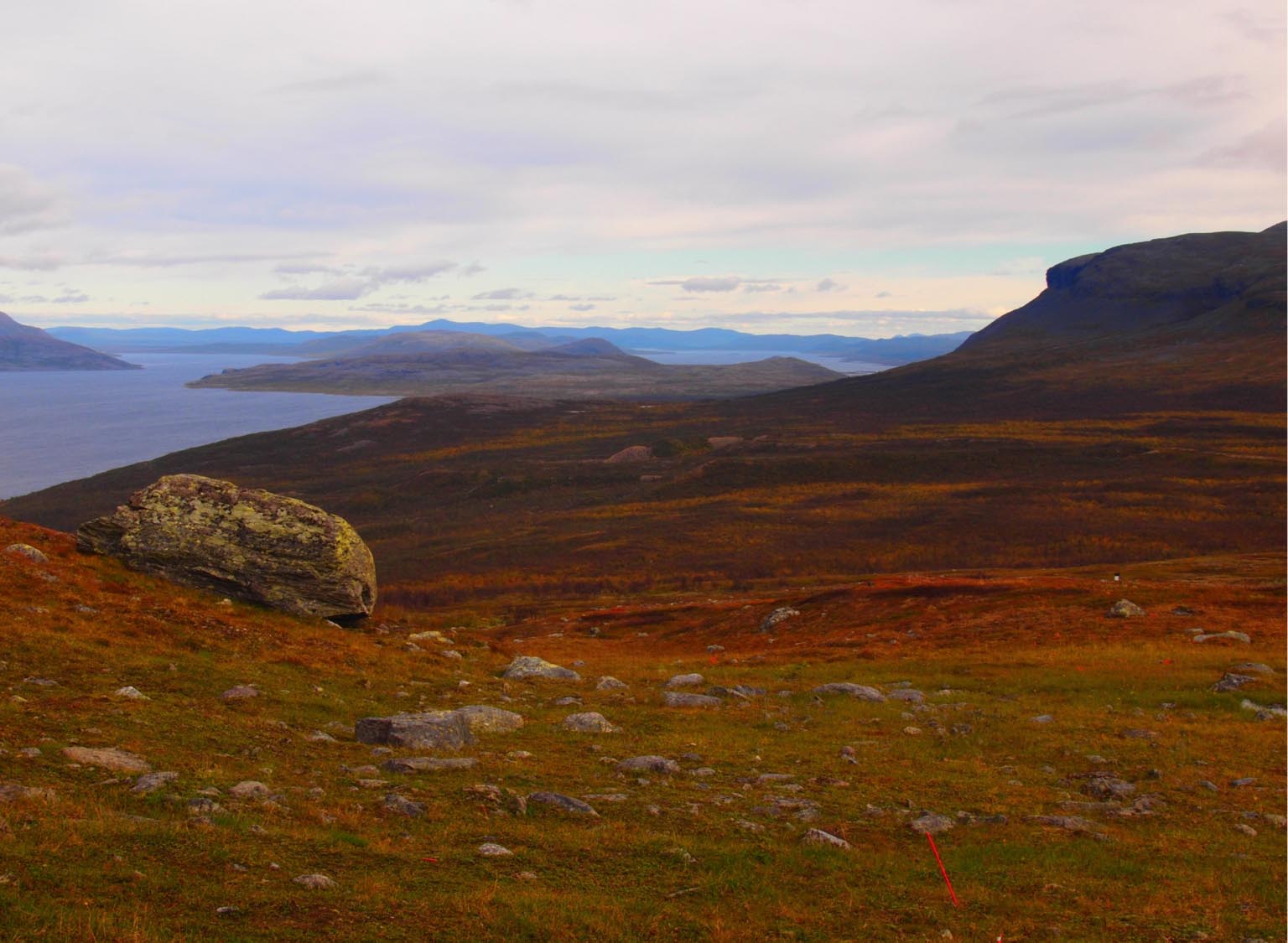
Elevational gradients have become important tools for assessing the effects of temperature changes on vegetation properties, because these gradients enable temperature effects to be considered over larger spatial and temporal scales than is possible through conventional experiments. During the summer of 2012, we collected soils along an elevational gradient on Mount Suorooaivi near Abisko, Sweden for two growth chamber experiments to determine the effects of temperature, soil origin (proxy for soil legacy) and vegetation type on the growth responses of two grass species. The results are published in the Oikos paper “Plant growth response to direct and indirect temperature effects varies by vegetation type and elevation in a subarctic tundra”. 

Abisko 1

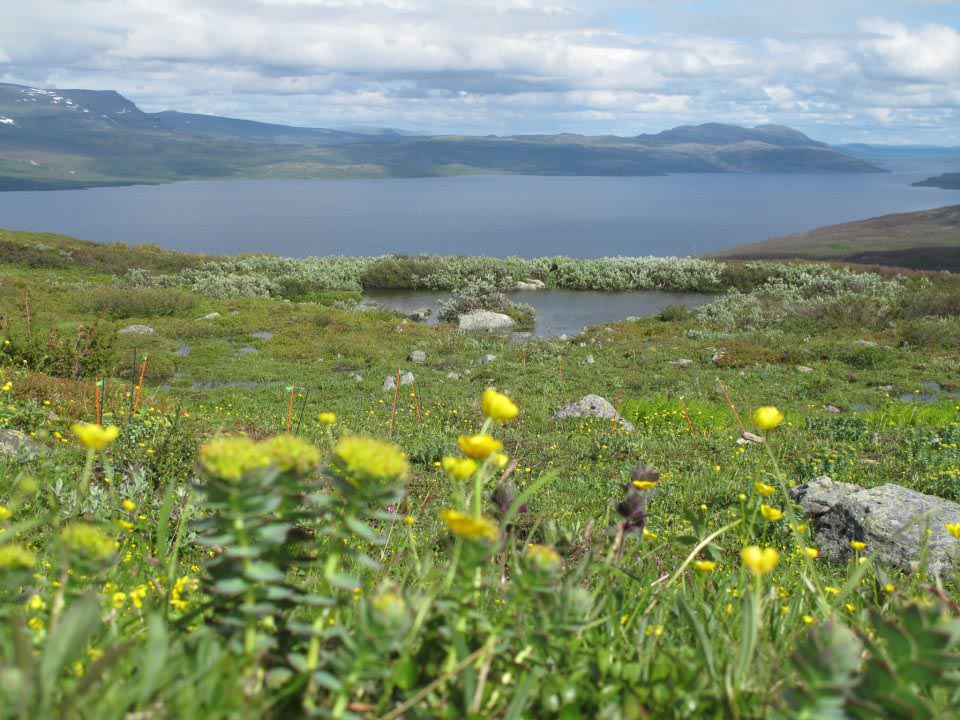
Soils were collected at each of three elevations from each of two vegetation types, specifically heath, dominated by dwarf shrubs, and meadow, dominated by graminoids and herbs. Plants responded to both the direct effect of temperature and its indirect effect via soil legacies, and that direct and indirect effects were largely decoupled. Vegetation type was a major driver of plant response; responses to soils from increasing elevation were stronger and seedlings showed a more linear decline in biomass when grown in meadow as opposed to heath soils.

Abisko 2

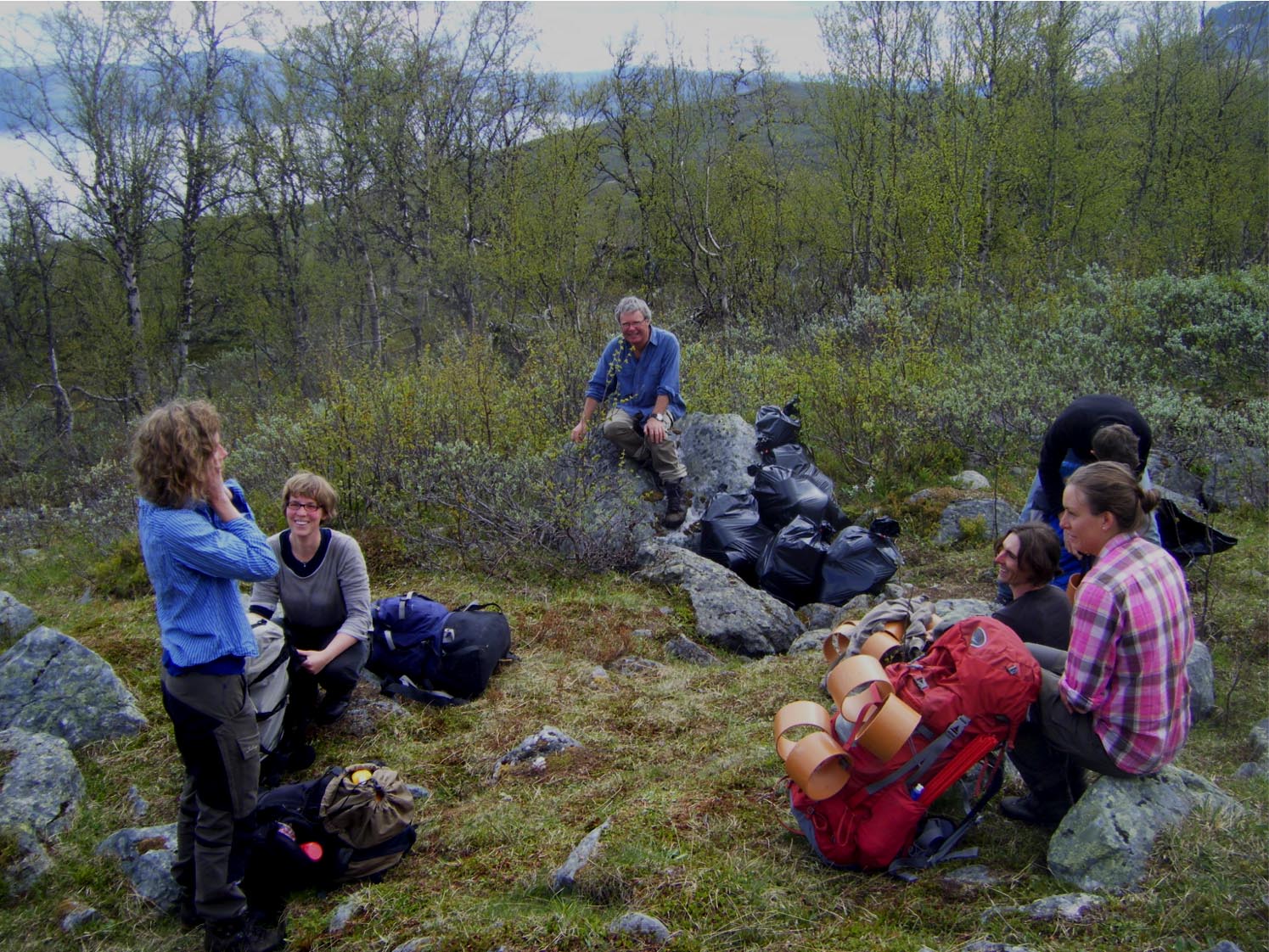
The effect of soil biota on plant growth was independent of elevation, with a positive influence across all elevations regardless of soil origin for meadow soils but not for heath soils. Collectively, the responses of plant growth to soil legacy effects of temperature across the elevational gradient were driven primarily by soil abiotic, and not biotic, factors. These findings demonstrate vegetation type is a strong determinant of how temperature variation across elevational gradients impacts on plant growth, and highlight the need for investigating both direct and indirect effects of temperature on plant responses to future climate change.

Abisko 3


Jonathan de Long and co-workers

Editor’s Choice December

DriesThe last issue from 2014 is online.

We selected the meta-analysis by Kulmatisk et al on the impact of soil foodwebs on plant growth  and the forum on the relative importance of neutral stochasticity in community ecology by Vellend et al. as editor’s choice. These two papers create synthesis in community ecology. The first by pointing the first widespread support for the presence of trophic cascades in soils, the second one by providing conceptual clarity on the main prevailing stochastic processes in community dynamics.


Kulmatisk and colleagues conducted a meta-analysis based on 1526 experiments that measured plant growth responses to additions or removals of soil organisms to test how different soil trophic levels affect plant growth. They demonstrate the top down control by predators and parasites on belowground herbivory and estimate the impact of belowground biota on plant growth overall positive and strong. Omnivory in the soil food web generally increases plant productivity by (i) pest reduction and (ii) increasing nutrient cycling.


Vellend and colleagues continue to set the scene of community ecology. They address several profound philosophical, theoretical and empirical challenges on the relative importance of stochasticity in community dynamics. They clearly clarify differences between ‘stochastic’ or ‘neutral’ processes by synthesizing their importance in different community processes. They subsequently provide a guide how different observational and experimental approaches will forward the field by allowing a thorough understanding of the role of neutral stochasticity in community ecology.


Enjoy!

Dries Bonte, Editor in Chief

The Soil Association’s mission is organic – and it always will be! Updated for 2026


Since the 1940s the Soil Association has campaigned for food and farming systems that support the health of our people and environment.

This work is just as relevant now as it was back then. We want to see a future where good food, organic food, is accessible to everyone and where we farm in a way that supports biodiversity, improves animal welfare and addresses climate change.

Though there is always more to do, we are making progress towards achieving this vision.

Last month, four of the Soil Association’s 17 Trustees resigned following the rejection by their fellow Trustees of a motion challenging our three-year old strategy, ‘The Road to 2020‘. Our strategy focusses as strongly as ever on organic food and farming, and also reaches out to broader audiences.

We are sorry these trustees felt unable to support our initiatives to work with non-organic as well as organic farmers, and with many other people in schools, hospitals and society more widely. We think the challenges facing our food systems today are so urgent that we need to work with all who are interested in finding solutions that are in line with our founding principles.

Transforming Britain’s food culture

Food, and how we produce it, is an entry point into people’s lives and health. It helps develop an understanding of our connection with the natural world, as well as being critically important in its own right.

We understand the pressures facing consumers today. Far from eschewing the term organic, we are working to change perceptions, by ensuring that many more people routinely eat better food, including organic, in schools and hospitals for instance.

We work with schools across the UK transforming food culture with great school meals, children growing and cooking food, and even holding their own farmers markets in partnership with local farmers and growers.

Our Catering Mark is transforming an industry previously driven by cost, not quality, and everyday hundreds of thousands of people in nurseries, schools, workplaces, hospitals and care homes people now eat fresh, healthy and locally sourced meals. At silver and gold Catering Mark award these meals now all include organic.

This work couldn’t be more important. Earlier this year, the Department of Health identified hospital food as a clinical priority for the first time and the Hospital Food Standards Panel recognised the Catering Mark as a scheme that improves food in hospitals for patients, staff and visitors.

We are working with an increasing number of hospitals to improve food served, including Nottingham University Hospital Trust whose meals have a minimum 15% spend on organic ingredients.

Our commitment to organic food and farming is as strong as ever

Organic farming has many of the answers that can help with some of the big challenges of the future such as climate change and the crisis now facing our soils. Organic farmers and growers are the true pioneers and heart of the organic movement and we remain absolutely committed to supporting them and continuing to grow the organic market.

We also know if we are to see real change in the world we need to work positively with all farmers – organic or not – sharing the research and knowledge of organic farming techniques, and learning from them too.

With World Soils Day on Friday (5th December) and the UN International Year of Soil in 2015, it’s a good moment to reflect that the health of our soil is critical to all farmers, not just organic ones.

So it was inspiring to see more non-organic farmers than ever before at our annual Soil Symposium last week, sharing ideas how to improve our soil and produce the very best food we can.

Through our Duchy Originals Future Farming programme we are supporting innovation in organic and low input agriculture, and helping farmers develop practices to improve productivity while caring for the environment and animal welfare.

Most farmers don’t have this ‘us and them’ attitude We are all trying to make a living the best we can, working together to find solutions to the issues facing agriculture in the UK. We would like to think we can find solutions which bring the farming community and wider society together – that doesn’t mean we won’t sometimes disagree, but we want to work constructively wherever possible with as many people as possible.

Farming must be fair, humane, healthy and ecologically based

We need to move beyond just telling others they are wrong; we need to share ideas and solutions to some of the big challenges facing our food system today. We want the Soil Association to become much more relevant to a lot more people – the public, farmers, businesses, schools and the public.

I want us to become better known for what we are for, rather than for what we are against. Our goal is to ensure that all farming and food is grounded in the organic principles – fair, humane, healthy and ecologically based – even if not all of it will be ‘certified’ organic.

I hope that this has made it clear that we remain completely committed to organic farming and to growing the market for organic food as the current ‘gold standard’ for good food.

The Soil Association was founded to research and disseminate the links between the way we manage our soils, and the impacts on human and environmental health.

Nothing could be more important, and our remaining trustees are fully committed to our approach, as laid out clearly in ‘The Road to 2020.


Helen Browning is Chief Executive of the Soil Association.


387660

The Soil Association’s mission is organic – and it always will be! Updated for 2026


Since the 1940s the Soil Association has campaigned for food and farming systems that support the health of our people and environment.

This work is just as relevant now as it was back then. We want to see a future where good food, organic food, is accessible to everyone and where we farm in a way that supports biodiversity, improves animal welfare and addresses climate change.

Though there is always more to do, we are making progress towards achieving this vision.

Last month, four of the Soil Association’s 17 Trustees resigned following the rejection by their fellow Trustees of a motion challenging our three-year old strategy, ‘The Road to 2020‘. Our strategy focusses as strongly as ever on organic food and farming, and also reaches out to broader audiences.

We are sorry these trustees felt unable to support our initiatives to work with non-organic as well as organic farmers, and with many other people in schools, hospitals and society more widely. We think the challenges facing our food systems today are so urgent that we need to work with all who are interested in finding solutions that are in line with our founding principles.

Transforming Britain’s food culture

Food, and how we produce it, is an entry point into people’s lives and health. It helps develop an understanding of our connection with the natural world, as well as being critically important in its own right.

We understand the pressures facing consumers today. Far from eschewing the term organic, we are working to change perceptions, by ensuring that many more people routinely eat better food, including organic, in schools and hospitals for instance.

We work with schools across the UK transforming food culture with great school meals, children growing and cooking food, and even holding their own farmers markets in partnership with local farmers and growers.

Our Catering Mark is transforming an industry previously driven by cost, not quality, and everyday hundreds of thousands of people in nurseries, schools, workplaces, hospitals and care homes people now eat fresh, healthy and locally sourced meals. At silver and gold Catering Mark award these meals now all include organic.

This work couldn’t be more important. Earlier this year, the Department of Health identified hospital food as a clinical priority for the first time and the Hospital Food Standards Panel recognised the Catering Mark as a scheme that improves food in hospitals for patients, staff and visitors.

We are working with an increasing number of hospitals to improve food served, including Nottingham University Hospital Trust whose meals have a minimum 15% spend on organic ingredients.

Our commitment to organic food and farming is as strong as ever

Organic farming has many of the answers that can help with some of the big challenges of the future such as climate change and the crisis now facing our soils. Organic farmers and growers are the true pioneers and heart of the organic movement and we remain absolutely committed to supporting them and continuing to grow the organic market.

We also know if we are to see real change in the world we need to work positively with all farmers – organic or not – sharing the research and knowledge of organic farming techniques, and learning from them too.

With World Soils Day on Friday (5th December) and the UN International Year of Soil in 2015, it’s a good moment to reflect that the health of our soil is critical to all farmers, not just organic ones.

So it was inspiring to see more non-organic farmers than ever before at our annual Soil Symposium last week, sharing ideas how to improve our soil and produce the very best food we can.

Through our Duchy Originals Future Farming programme we are supporting innovation in organic and low input agriculture, and helping farmers develop practices to improve productivity while caring for the environment and animal welfare.

Most farmers don’t have this ‘us and them’ attitude We are all trying to make a living the best we can, working together to find solutions to the issues facing agriculture in the UK. We would like to think we can find solutions which bring the farming community and wider society together – that doesn’t mean we won’t sometimes disagree, but we want to work constructively wherever possible with as many people as possible.

Farming must be fair, humane, healthy and ecologically based

We need to move beyond just telling others they are wrong; we need to share ideas and solutions to some of the big challenges facing our food system today. We want the Soil Association to become much more relevant to a lot more people – the public, farmers, businesses, schools and the public.

I want us to become better known for what we are for, rather than for what we are against. Our goal is to ensure that all farming and food is grounded in the organic principles – fair, humane, healthy and ecologically based – even if not all of it will be ‘certified’ organic.

I hope that this has made it clear that we remain completely committed to organic farming and to growing the market for organic food as the current ‘gold standard’ for good food.

The Soil Association was founded to research and disseminate the links between the way we manage our soils, and the impacts on human and environmental health.

Nothing could be more important, and our remaining trustees are fully committed to our approach, as laid out clearly in ‘The Road to 2020.


Helen Browning is Chief Executive of the Soil Association.


387660

The Soil Association’s mission is organic – and it always will be! Updated for 2026


Since the 1940s the Soil Association has campaigned for food and farming systems that support the health of our people and environment.

This work is just as relevant now as it was back then. We want to see a future where good food, organic food, is accessible to everyone and where we farm in a way that supports biodiversity, improves animal welfare and addresses climate change.

Though there is always more to do, we are making progress towards achieving this vision.

Last month, four of the Soil Association’s 17 Trustees resigned following the rejection by their fellow Trustees of a motion challenging our three-year old strategy, ‘The Road to 2020‘. Our strategy focusses as strongly as ever on organic food and farming, and also reaches out to broader audiences.

We are sorry these trustees felt unable to support our initiatives to work with non-organic as well as organic farmers, and with many other people in schools, hospitals and society more widely. We think the challenges facing our food systems today are so urgent that we need to work with all who are interested in finding solutions that are in line with our founding principles.

Transforming Britain’s food culture

Food, and how we produce it, is an entry point into people’s lives and health. It helps develop an understanding of our connection with the natural world, as well as being critically important in its own right.

We understand the pressures facing consumers today. Far from eschewing the term organic, we are working to change perceptions, by ensuring that many more people routinely eat better food, including organic, in schools and hospitals for instance.

We work with schools across the UK transforming food culture with great school meals, children growing and cooking food, and even holding their own farmers markets in partnership with local farmers and growers.

Our Catering Mark is transforming an industry previously driven by cost, not quality, and everyday hundreds of thousands of people in nurseries, schools, workplaces, hospitals and care homes people now eat fresh, healthy and locally sourced meals. At silver and gold Catering Mark award these meals now all include organic.

This work couldn’t be more important. Earlier this year, the Department of Health identified hospital food as a clinical priority for the first time and the Hospital Food Standards Panel recognised the Catering Mark as a scheme that improves food in hospitals for patients, staff and visitors.

We are working with an increasing number of hospitals to improve food served, including Nottingham University Hospital Trust whose meals have a minimum 15% spend on organic ingredients.

Our commitment to organic food and farming is as strong as ever

Organic farming has many of the answers that can help with some of the big challenges of the future such as climate change and the crisis now facing our soils. Organic farmers and growers are the true pioneers and heart of the organic movement and we remain absolutely committed to supporting them and continuing to grow the organic market.

We also know if we are to see real change in the world we need to work positively with all farmers – organic or not – sharing the research and knowledge of organic farming techniques, and learning from them too.

With World Soils Day on Friday (5th December) and the UN International Year of Soil in 2015, it’s a good moment to reflect that the health of our soil is critical to all farmers, not just organic ones.

So it was inspiring to see more non-organic farmers than ever before at our annual Soil Symposium last week, sharing ideas how to improve our soil and produce the very best food we can.

Through our Duchy Originals Future Farming programme we are supporting innovation in organic and low input agriculture, and helping farmers develop practices to improve productivity while caring for the environment and animal welfare.

Most farmers don’t have this ‘us and them’ attitude We are all trying to make a living the best we can, working together to find solutions to the issues facing agriculture in the UK. We would like to think we can find solutions which bring the farming community and wider society together – that doesn’t mean we won’t sometimes disagree, but we want to work constructively wherever possible with as many people as possible.

Farming must be fair, humane, healthy and ecologically based

We need to move beyond just telling others they are wrong; we need to share ideas and solutions to some of the big challenges facing our food system today. We want the Soil Association to become much more relevant to a lot more people – the public, farmers, businesses, schools and the public.

I want us to become better known for what we are for, rather than for what we are against. Our goal is to ensure that all farming and food is grounded in the organic principles – fair, humane, healthy and ecologically based – even if not all of it will be ‘certified’ organic.

I hope that this has made it clear that we remain completely committed to organic farming and to growing the market for organic food as the current ‘gold standard’ for good food.

The Soil Association was founded to research and disseminate the links between the way we manage our soils, and the impacts on human and environmental health.

Nothing could be more important, and our remaining trustees are fully committed to our approach, as laid out clearly in ‘The Road to 2020.


Helen Browning is Chief Executive of the Soil Association.


387660

The Soil Association’s mission is organic – and it always will be! Updated for 2026


Since the 1940s the Soil Association has campaigned for food and farming systems that support the health of our people and environment.

This work is just as relevant now as it was back then. We want to see a future where good food, organic food, is accessible to everyone and where we farm in a way that supports biodiversity, improves animal welfare and addresses climate change.

Though there is always more to do, we are making progress towards achieving this vision.

Last month, four of the Soil Association’s 17 Trustees resigned following the rejection by their fellow Trustees of a motion challenging our three-year old strategy, ‘The Road to 2020‘. Our strategy focusses as strongly as ever on organic food and farming, and also reaches out to broader audiences.

We are sorry these trustees felt unable to support our initiatives to work with non-organic as well as organic farmers, and with many other people in schools, hospitals and society more widely. We think the challenges facing our food systems today are so urgent that we need to work with all who are interested in finding solutions that are in line with our founding principles.

Transforming Britain’s food culture

Food, and how we produce it, is an entry point into people’s lives and health. It helps develop an understanding of our connection with the natural world, as well as being critically important in its own right.

We understand the pressures facing consumers today. Far from eschewing the term organic, we are working to change perceptions, by ensuring that many more people routinely eat better food, including organic, in schools and hospitals for instance.

We work with schools across the UK transforming food culture with great school meals, children growing and cooking food, and even holding their own farmers markets in partnership with local farmers and growers.

Our Catering Mark is transforming an industry previously driven by cost, not quality, and everyday hundreds of thousands of people in nurseries, schools, workplaces, hospitals and care homes people now eat fresh, healthy and locally sourced meals. At silver and gold Catering Mark award these meals now all include organic.

This work couldn’t be more important. Earlier this year, the Department of Health identified hospital food as a clinical priority for the first time and the Hospital Food Standards Panel recognised the Catering Mark as a scheme that improves food in hospitals for patients, staff and visitors.

We are working with an increasing number of hospitals to improve food served, including Nottingham University Hospital Trust whose meals have a minimum 15% spend on organic ingredients.

Our commitment to organic food and farming is as strong as ever

Organic farming has many of the answers that can help with some of the big challenges of the future such as climate change and the crisis now facing our soils. Organic farmers and growers are the true pioneers and heart of the organic movement and we remain absolutely committed to supporting them and continuing to grow the organic market.

We also know if we are to see real change in the world we need to work positively with all farmers – organic or not – sharing the research and knowledge of organic farming techniques, and learning from them too.

With World Soils Day on Friday (5th December) and the UN International Year of Soil in 2015, it’s a good moment to reflect that the health of our soil is critical to all farmers, not just organic ones.

So it was inspiring to see more non-organic farmers than ever before at our annual Soil Symposium last week, sharing ideas how to improve our soil and produce the very best food we can.

Through our Duchy Originals Future Farming programme we are supporting innovation in organic and low input agriculture, and helping farmers develop practices to improve productivity while caring for the environment and animal welfare.

Most farmers don’t have this ‘us and them’ attitude We are all trying to make a living the best we can, working together to find solutions to the issues facing agriculture in the UK. We would like to think we can find solutions which bring the farming community and wider society together – that doesn’t mean we won’t sometimes disagree, but we want to work constructively wherever possible with as many people as possible.

Farming must be fair, humane, healthy and ecologically based

We need to move beyond just telling others they are wrong; we need to share ideas and solutions to some of the big challenges facing our food system today. We want the Soil Association to become much more relevant to a lot more people – the public, farmers, businesses, schools and the public.

I want us to become better known for what we are for, rather than for what we are against. Our goal is to ensure that all farming and food is grounded in the organic principles – fair, humane, healthy and ecologically based – even if not all of it will be ‘certified’ organic.

I hope that this has made it clear that we remain completely committed to organic farming and to growing the market for organic food as the current ‘gold standard’ for good food.

The Soil Association was founded to research and disseminate the links between the way we manage our soils, and the impacts on human and environmental health.

Nothing could be more important, and our remaining trustees are fully committed to our approach, as laid out clearly in ‘The Road to 2020.


Helen Browning is Chief Executive of the Soil Association.


387660

The Soil Association’s mission is organic – and it always will be! Updated for 2026


Since the 1940s the Soil Association has campaigned for food and farming systems that support the health of our people and environment.

This work is just as relevant now as it was back then. We want to see a future where good food, organic food, is accessible to everyone and where we farm in a way that supports biodiversity, improves animal welfare and addresses climate change.

Though there is always more to do, we are making progress towards achieving this vision.

Last month, four of the Soil Association’s 17 Trustees resigned following the rejection by their fellow Trustees of a motion challenging our three-year old strategy, ‘The Road to 2020‘. Our strategy focusses as strongly as ever on organic food and farming, and also reaches out to broader audiences.

We are sorry these trustees felt unable to support our initiatives to work with non-organic as well as organic farmers, and with many other people in schools, hospitals and society more widely. We think the challenges facing our food systems today are so urgent that we need to work with all who are interested in finding solutions that are in line with our founding principles.

Transforming Britain’s food culture

Food, and how we produce it, is an entry point into people’s lives and health. It helps develop an understanding of our connection with the natural world, as well as being critically important in its own right.

We understand the pressures facing consumers today. Far from eschewing the term organic, we are working to change perceptions, by ensuring that many more people routinely eat better food, including organic, in schools and hospitals for instance.

We work with schools across the UK transforming food culture with great school meals, children growing and cooking food, and even holding their own farmers markets in partnership with local farmers and growers.

Our Catering Mark is transforming an industry previously driven by cost, not quality, and everyday hundreds of thousands of people in nurseries, schools, workplaces, hospitals and care homes people now eat fresh, healthy and locally sourced meals. At silver and gold Catering Mark award these meals now all include organic.

This work couldn’t be more important. Earlier this year, the Department of Health identified hospital food as a clinical priority for the first time and the Hospital Food Standards Panel recognised the Catering Mark as a scheme that improves food in hospitals for patients, staff and visitors.

We are working with an increasing number of hospitals to improve food served, including Nottingham University Hospital Trust whose meals have a minimum 15% spend on organic ingredients.

Our commitment to organic food and farming is as strong as ever

Organic farming has many of the answers that can help with some of the big challenges of the future such as climate change and the crisis now facing our soils. Organic farmers and growers are the true pioneers and heart of the organic movement and we remain absolutely committed to supporting them and continuing to grow the organic market.

We also know if we are to see real change in the world we need to work positively with all farmers – organic or not – sharing the research and knowledge of organic farming techniques, and learning from them too.

With World Soils Day on Friday (5th December) and the UN International Year of Soil in 2015, it’s a good moment to reflect that the health of our soil is critical to all farmers, not just organic ones.

So it was inspiring to see more non-organic farmers than ever before at our annual Soil Symposium last week, sharing ideas how to improve our soil and produce the very best food we can.

Through our Duchy Originals Future Farming programme we are supporting innovation in organic and low input agriculture, and helping farmers develop practices to improve productivity while caring for the environment and animal welfare.

Most farmers don’t have this ‘us and them’ attitude We are all trying to make a living the best we can, working together to find solutions to the issues facing agriculture in the UK. We would like to think we can find solutions which bring the farming community and wider society together – that doesn’t mean we won’t sometimes disagree, but we want to work constructively wherever possible with as many people as possible.

Farming must be fair, humane, healthy and ecologically based

We need to move beyond just telling others they are wrong; we need to share ideas and solutions to some of the big challenges facing our food system today. We want the Soil Association to become much more relevant to a lot more people – the public, farmers, businesses, schools and the public.

I want us to become better known for what we are for, rather than for what we are against. Our goal is to ensure that all farming and food is grounded in the organic principles – fair, humane, healthy and ecologically based – even if not all of it will be ‘certified’ organic.

I hope that this has made it clear that we remain completely committed to organic farming and to growing the market for organic food as the current ‘gold standard’ for good food.

The Soil Association was founded to research and disseminate the links between the way we manage our soils, and the impacts on human and environmental health.

Nothing could be more important, and our remaining trustees are fully committed to our approach, as laid out clearly in ‘The Road to 2020.


Helen Browning is Chief Executive of the Soil Association.


387660