Tag Archives: forest

Kenya: a forest people illegally evicted, beaten, imprisoned – paid for by the World Bank Updated for 2026


When Jim Yong Kim, president of the World Bank, visited Kenya earlier this month, he reportedly urged the Kenyan President Uhuru Kenyatta to sort out Kenya’s historical land injustices once and for all, specifically mentioning the plight of the “Sengwer of Cherangani Hills.”

But despite the World Bank having ‘a word’ with its ‘client’, the plight of the Sengwer of Embobut forest has worsened dramatically. An indigenous community is being evicted from their ancestral land in the name of conservation.

I am currently filming a documentary about the Sengwer. As I write this I am sitting in a small town on the edge of Embobut forest. On Sunday 23rd November, I was heading up into Embobut from a settlement called Tangul which sits on the edge of the contested forest area.

Following my camera assistant and translator Elias Kibiwot, we had planned to film a young Sengwer woman called Ellen visiting her friend who, after her home was repeatedly burnt by the government’s Kenyan Forest Service (KFS), is living in a tree trunk.

Kenya Forest Service brutality and extortion

As we walk through Tangul we notice that a crowd of Sengwer has assembled outside a few huts and tiny kiosks. Directly above them, on a hill overlooking Tangul, is the ominous KFS encampment – a constant reminder for the community that they are being watched.

A distraught teenage girl stopped us, and said: “Eight people where arrested in the forest yesterday, two school children and six elderly including my mother.”

Elias spoke to them in Sengwer, and then informed me that four were released including the children after paying the KFS bribes of 500 Ksh each for the children and 2,000 Ksh for each elderly person.

I have been back in Embobut for 12 days so far and approximately 20 people have been arrested, fewer than half of whom have gone to court, while the rest paid bribes to the KFS to be released. It’s hard to see how these policies conserve the forest.

The teenage girl continued to tell her harrowing story: “The KFS came yesterday morning, and kicked open the door. My mother woke up suddenly. She was told to lay down on the floor. My father wrestled with a guard until a magazine fell from his gun then he ran away.

“Some of the KFS guards were shouting ‘Shoot, Shoot!’ Then the other ones blocked the door and they beat on my mother. They rained punches and kicks on her.”

The woman who was beaten is called Margeret Suter. We learned that she and three others were being held at Kapsowar Police Station on the South Eastern Side of the forest. Elias and I jumped on motorbikes for a buttock clenching journey and I tried in vain to protect my seriously sunburnt nose.

We stopped at least five times for the driver of my motorbike to pump up the slow puncture on his completely bald front tire. People passing paused to take photos of the Pink ‘Mzungu’ standing on the side of the road. “This is African life”, Elias told me, laughing.

Beaten by KFS, then arrested by police

We arrived at Kapsowar and I followed Elias into the police station, filming with my small and discreet Go Pro camera, as the three Sengwer men and one woman were brought out from a large metal door.

As Margeret was led out of the cell, I realized I had filmed her on my previous visit to the forest. The left side of her face was visibly swollen. It was clear to me that she has been punched in the face, a face that I have looked at on my computer since August.

She looked scared and on the verge of tears. Elias asked the police officer, “Why are you confining a beaten woman without her seeing a doctor or letting her make a statement?”

The policeman, who smelled of alcohol, said, “They didn’t complain when they were arrested.”

Elias directly addressed Margeret Suter, asking, “Didn’t you tell them the KFS beat you?”

“I told them but they didn’t listen”, she said.

At this point, I chimed in and explained that she could have concussion and should therefore see a doctor before spending another night in a police cell. My concerns fell on deaf ears as we were asked to leave the police station.

Criminals – for being on their own land

The next morning we took another buttock bashing ride in a ‘Matatu’ to the town of Iten, home of Kenyan champion marathon runners and the Elgeiyo Marakwet County Court. We watched the four Sengwer being led from the back of a police van and into the courtroom. It was another six hours until the case was actually heard.

The Sengwer were called one by one into the dock and asked how they plead. The prosecutor explained that they are “charged with illegally being in Embobut Forest which is state property.” The judge asked each one of them how they plead. The Sengwer lawyer tried to speak, but was silenced by the judge, who told him to let the defendants speak for themselves.

Three of the Sengwer pleaded guilty, including Margeret, who begged for mercy to be released so she could return to take care of her children.

A fourth man, Kereoi Lobela, defiantly pleaded not guilty: “I’m a Sengwer and I was in my ancestral land.” Kereoi was released on cash bail of 3,000 Ksh and must return to court to hear his case on 8th December. The other three were sentenced to community service. As I write this Margeret is probably scrubbing the floors of an Iten courtroom.

Outside the courtroom, I asked James Gachoka, lawyer for the Sengwer, why three of them pleaded guilty. “They are ignorant of the law and don’t speak Kiswaili [the national language] so they were using an interpreter, and they are scared”, he said.

“There is a high court order which was issued in 2013 forbidding the KFS from burning homes and evicting Sengwers from the forest. They have been ignoring this order. So you have one arm of the Government saying they are protected and another arm oppressing them. We have a contempt of court case against the KFS being heard in Eldoret on the 4th of December.”

KFS divide and rule

But the KFS is doing more than just burning homes and arresting people. They are also dividing the community. They have been recruiting and paying ‘forest scouts’, local Sengwers who have been named ‘sell-outs’ by the local community.

They are using these forest scouts to find displaced Sengwers living in tree trunks and hideaways that the KFS have trouble locating.

A few days ago I tracked down a forest scout named Patrick and asked him if he is conflicted about what he is doing. “I used to be a teacher in the forest school, teaching baby class, middle class and top class”, he told me.

“But the KFS burnt the school and now I am scouting for them on a three month contract because I have five children that I want to send to school.”

I asked how the rest of the community acts towards him. He said, “The thing that people need most is company. Right now its a lonely life.”

World Bank complicity?

In March 2007, the World Bank funded a programme called the Natural Resource Management Programme (NRMP) overseen by the KFS – designed to enhance “institutional capacity to manage water and forest resources, reduce the incidence and severity of water shocks such as drought, floods and water shortage in river catchments and improve the livelihoods of communities participating in the co-management of water and forest resources.”

But on 10th June 2011, the project was restructured and the development objective was redefined to “improve the management of water and forest resources in selected districts.”

Approved by the World Bank, this amendment completely removed the modest protection afforded to the Sengwers under the project. The programme led to forcible evictions of the Sengwer as over 1,000 homes were torched and they were forced to flee their homes, driven out by the KFS.

In 2013 a request for an investigation was made by representatives of the Sengwer to the World Bank’s Inspection Panel – the body responsible for overseeing grievances filed against the Bank.

In October they issued a report stating that although the World Bank had not followed some of its safeguards, it was not responsible for the evictions of the Sengwer – despite the Bank funding the KFS to the tune of around US$64 million between 2007 and 2013, a period in which evictions took place every year except 2012.

REDD is the new Green

The situation the Sengwer find themselves in is also linked to a UN initiative called REDD (Reducing Emissions from Deforestation and Forest Degradation), which “is an effort to create a financial value for the carbon stored in forests, offering incentives for developing countries to reduce emissions from forested lands and invest in low-carbon paths to sustainable development.”

However Friends of the Earth is concerned that REDD could “foster an ‘armed protection’ mentality that could lead to the displacement of millions of forest-dependent people.” This seems well-founded in the case of the Sengwer.

The No REDD in Africa Network has similar concerns: “A false solution to climate change, REDD+ is emerging as a new form of colonialism and economic subjugation, and is a driver of land grabs so massive that they may constitute a continent grab. We must defend the continent from carbon colonialism.”

My attempts to get an interview or a response from the KFS have so far failed, and it’s not looking too likely that they will agree to talk to me. I will hopefully get a chance to interview a representative of the World Bank, and I will ask them how they feel about the current actions of their former client.

I can’t help but wonder if the boots that kicked Margeret Suter in the back on Saturday morning were bought with World Bank money that only finished flowing at the end of last year.

It seems like a shame that the World Bank funding was not used to educate, involve and engage the Sengwer in a community-led conservation initiative instead of being used to evict them and buy new weapons.

Defiance

Tomorrow morning, I will meet Margeret Suter in Tangul and follow her back up into the forest as she returns to her home on the glades at the top of the Cherangani Hills.

Looking through footage that I shot in August, I come across a clip of Margeret talking to gathered crowd of Sengwers. She said:

“I’m very happy to see the Sengwer from the different areas gathered from so far so that we can join together today. We don’t have anywhere to go. We will never leave Embobut. We will keep practicing our culture, the way we always have.”


Dean Puckett @Deanpuckettfilm is a British documentary filmmaker known for The Crisis of Civilization (2010) and Grasp the Nettle (2013). He is currently in Kenya working on a film about the evictions of the Sengwer indigenous people from their homes in the Cherangani Hills.

Support the making of the film via Kickstarter. Dean writes: “We have already reached our minimum target! I asked for the bare minimum I needed to get back to Kenya and film for one more month. Any additional money will be used to edit the film, sound mix, create music and all of the other things that a documentary needs. So please continue to contribute if you can and share if you feel like it.”

This article was originally published on REDD Monitor. Read more about the evictions of the Sengwer, in previous posts on REDD-Monitor here, and more about Puckett’s work in the Embobut Forest here.

Other articles about the Sengwer on The Ecologist.


387795

India: tiger reserve tribes face illegal eviction Updated for 2026


Tribespeople living inside a tiger reserve in India face imminent eviction from their ancestral land.

Three of an original six indigenous villages are holding on in the Similipal Tiger Reserve in Odisha state, following a round of evictions in December 2013 in which 32 families of the Khadia tribe were expelled to the Asan Kudar resettlement village outside the forest.

They have not been provided with sufficient land, animals or essential services. They had to live through the heat of April and the deluge of the monsoon under plastic sheets, and have received only a fraction of the Rs 10 lakh they were promised.

Sheltering under plastic shelters on a tiny patch of land, the Khadia tribe members are now entirely dependent on government handouts for their survival (see photo).

Now Kol and Munda tribe members in Jamunagarh village are in the firing line. They have told Survival International that they were “threatened” and “cheated” into signing an eviction document drawn up by India’s forest department.

Telenga Hassa said: “We would rather die than leave the village. The forest department is pressurising us to go – they are giving a lot of threats to us, saying things like, ‘If you try to stay we will lodge many police cases against you, we will say that you are Maoists and we’ll arrest you.'”

“All of us have had the same threats. We are threatened, so please tell us, how can our rights be protected? How can we be safe from these false cases?”

Another added: “They threaten us to relocate or to face dire consequences.”

Official promises betrayed

On 19th September 2014, Jamunagarh residents met with Odisha Forest Department officials. They were told that the meeting was to confirm their Community Forest Rights, which they had applied for under the Forest Rights Act 2006.

But after receiving documents confirming their rights they were asked to sign a further document that would grant them each five acres of cultivable land. But as they cannot read or write in Oriya, they did not know what the document contained.

One man told Survival: “Unknowingly I gave my signature, I didn’t know what was in the paper, other people near me signed so I signed it too. I cannot read or write but can only sign my name.”

Another said: “We signed the document with the belief that it’s about the Palli Sabha (village meeting). Later we knew that it was the resolution in agreement for relocation.”

Another witness explained: “Really, most people signed out of fear, but people have been threatened and harassed and they agreed to go to escape from this trauma. They don’t know what life will be like there. They agreed to sign because they were frightened.”

Only after signing the document were they told that the document committed them to leave their village – and that they would not even receive the five acres of land they had been promised, as there was no land available.

A Munda man told Survival: “We were cheated and are now very afraid of the consequences.”

Tribal people face eviction across India

The evictions are planned in the name of tiger conservation – even though there is no evidence that the indigenous tribes harm the wildlife, and they desperately want to stay on their land.

A Munda elder from Jamunagarh has said: “We should be rehabilitated in the same village where we are now. We will protect the wildlife and get benefit of all government programs. We should stay there and protect – we promise.

“Don’t displace us! Rehabilitate us in the same place we are now … We have been there [to Asan Kudar]. Seeing their condition made my heart cry. Please don’t displace us. Please rehabilitate us in the same village where we are now.”

According to Survival, “Tribal peoples are better at looking after their environments than anyone else.” Also India’s Forest Rights Act recognizes their right to live in and from the forests, and to manage and protect them.

But across India, tribal peoples are being illegally evicted from their ancestral homelands in the name of conservation, particularly for tiger reserves.

In addition to threats and harassment, they’re promised land, housing and money as compensation, but often receive little or nothing. Without access to the forest’s produce, and no adequate housing, they are forced to live in miserable conditions.

Survival’s Director Stephen Corry said: “Many of the forests where tigers survive in India have been cared for by tribal people, who are better at looking after their environment than anyone else.

“But now the government is using threats and tricks to force the tribespeople out in the name of conservation, and leaving them in squalor.

“What’s worse, the tribes’ forests are opened up to thousands of tourists each year, and poaching and illegal logging are rampant. It’s time the conservation industry spoke out against this injustice.”

Official complaint ignored

In May 2014, Survival submitted a complaint to the Odisha Human Rights Commission. They did not respond, so Survival sent another urgent and updated complaint on 9th October.

In the document Survival argues: “The Families have not been advised of their legal rights to remain in the core of the STR if they wish to do so, or of the legal procedures which have to be followed before they can be moved, or of what will await them if and when they are moved.

“The Families cannot therefore have given their free, prior or informed consent to their relocation. As things stand, their removal from the core will constitute an illegal eviction.

“As members of Scheduled Tribes whose traditional land is central to their way of life, culture and identity, this will have a profound effect on the Families.

“It was in recognition of their unique attachment to the land that Parliament decided to protect them against relocation unless and until it can be shown both that this is genuinely necessary and that they have truly consented to be moved.”

“The unlawful removal of the Families will infringe their rights to internal self-determination under Article 1(1) of the Civil and Political Rights Covenant; not to be deprived of their own means of subsistence under Article 1(2); not to be subjected to arbitrary or unlawful interference with their homes under Article 17(1); to freedom of religion under Article 18(1); and to enjoy their own culture in community with other members of their group under Article 27.”


Source: Survival International.


385409

A voyage into soil darkness Updated for 2026

While most people know the aboveground part of forest ecosystems, very few have caught a glimpse of the belowground environment that comprises a highly diverse fauna. The number of species co-occurring on less than a square meter habitat ground (or a cubic meter of habitat volume) exceeds that of the aboveground compartment by far. In consequence, forest soil communities have been called “poor man’s rainforest”. Nevertheless, we still do not know much about the animals living in these “next-door” habitats and the structure of their communities.

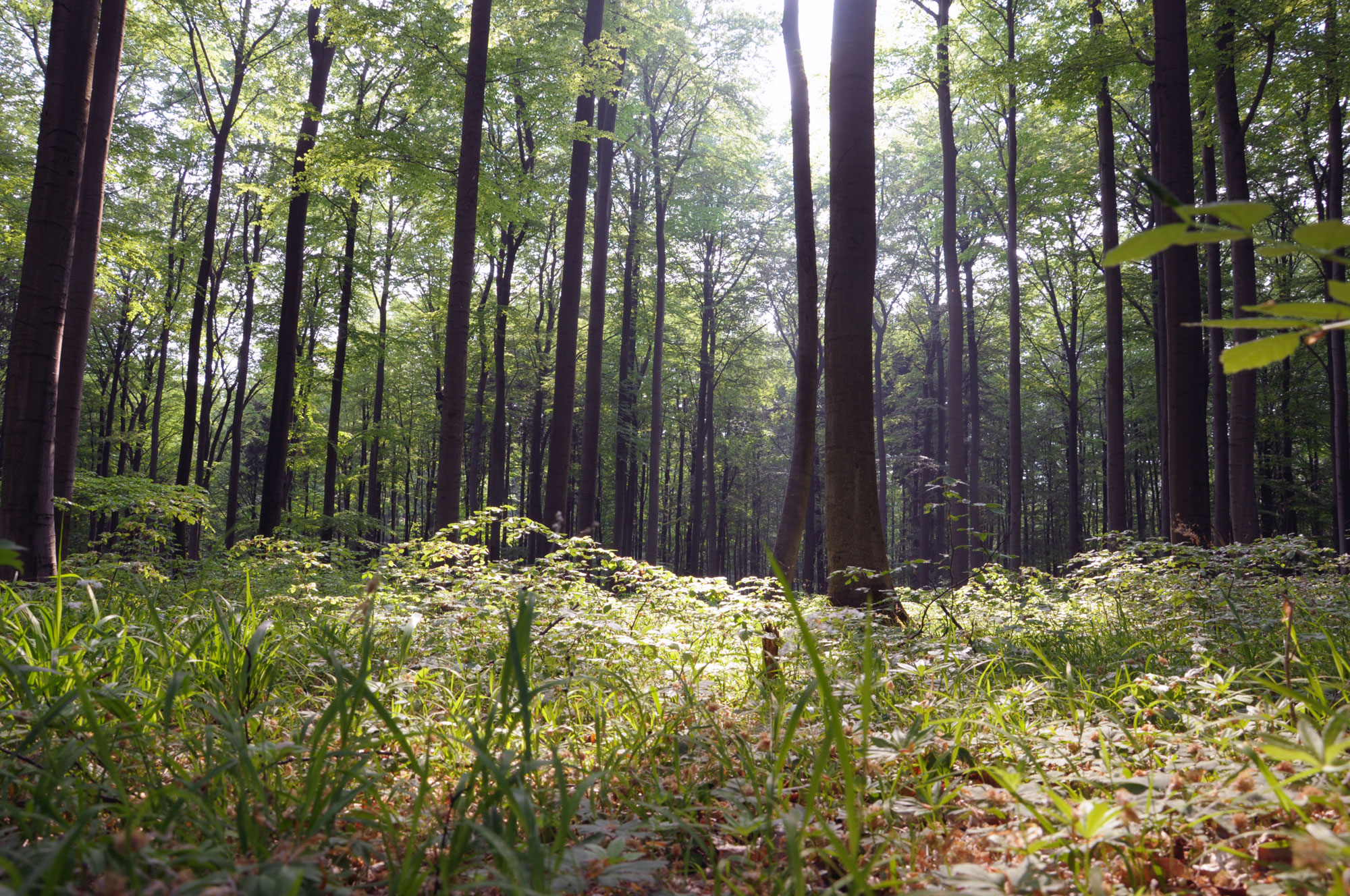
beechforest

Impression of a central European beech forest. Much more is known about the aboveground animals and their interactions than about the belowground communities that carry out the critically important ecosystem functions of litter decomposition and nutrient recycling.


Why is our knowledge about forest soil communities so limited? Progress in our understanding of soil communities and processes has been hampered by the chronic lack of data for complex soil food webs of high resolution. This is caused by aggregation of populations in coarse functional groups, whose species often span multiple trophic levels from primary to secondary or tertiary predators. In addition, soil is an opaque medium leading to a limited visibility of interactions. Further, detritivores typically ingest a multitude of intermingled resources hampering identification of what the animals actually digest and live on. In the recent years, new molecular methods have emerged providing the possibility to unravel belowground interactions and the complex structure of forest soil food webs.


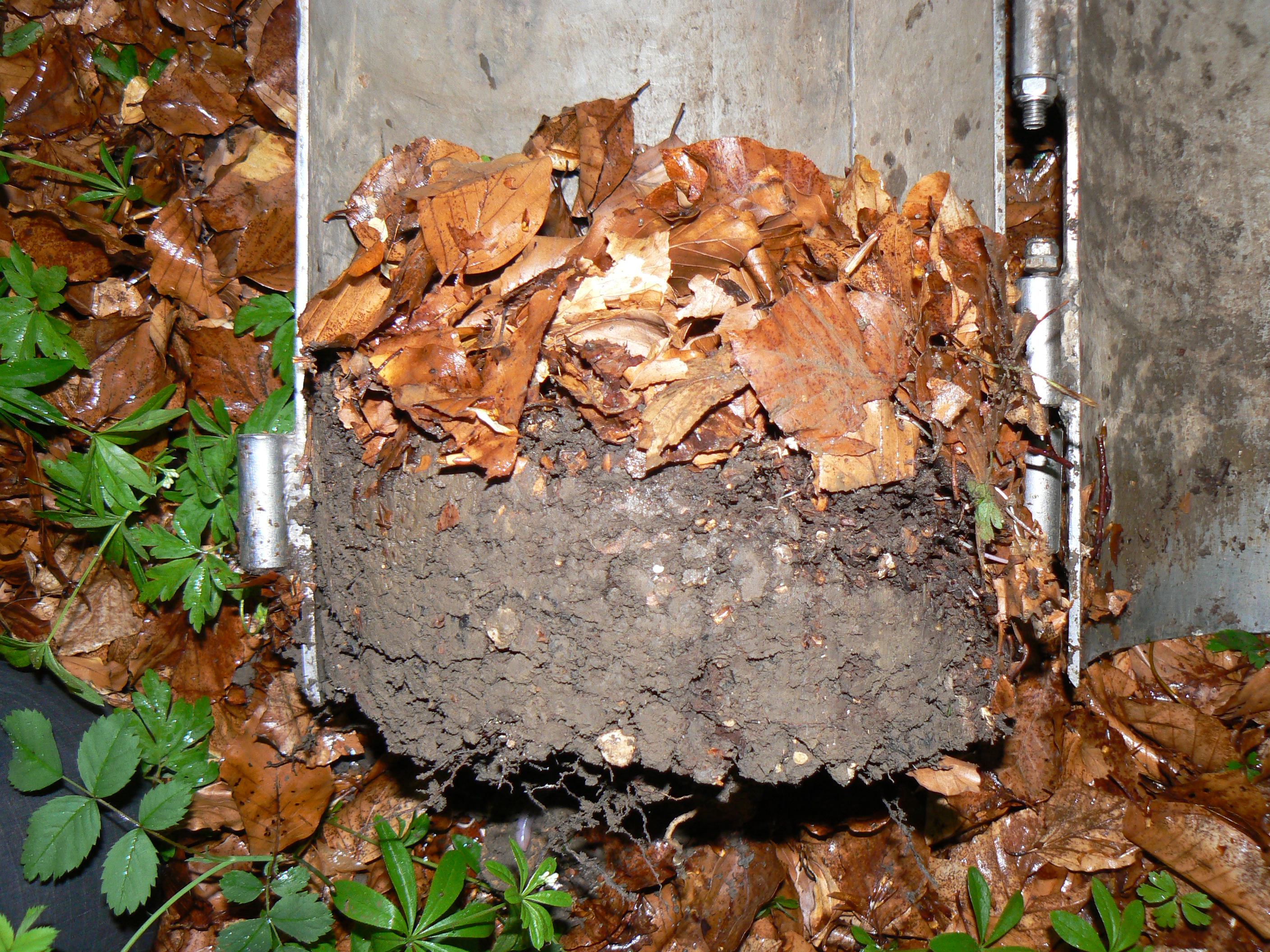
A soil core provides an impression of the complex structure of the belowground habitat. This environment comprises a highly diverse and complex animal community spanning several trophic levels.

A soil core provides an impression of the complex structure of the belowground habitat. This environment comprises a highly diverse and complex animal community spanning several trophic levels.

The special issue “Into darkness” comprises several studies of central European beech forest soil communities. The studies included in this special feature fill employ state-of-the-art methods to unravel general feeding guilds by stable isotopes (Klarner et al.) as well as specific directed feeding interactions by molecular gut content and fatty-acid analyses (Ferlian and Scheu, Günther et al., Heidemann et al.). This allowed the construction of the first highly-resolved complex soil food webs (Digel et al.) and analyses how they respond to external drivers such as the nutrient stoichiometry of the basal litter (Ott et al.) and climate change (Lang et al.). Together, they provide a unique impression of a voyage into darkness.

Ulrich Brose, Editor of the Oikos Issue “Into Darkness”


World Bank ‘failing to protect Kenya forest dwellers’ Updated for 2026


A leaked copy of a World Bank investigation seen by The Guardian has accused the bank of failing to protect the rights of one of Kenya’s last groups of forest people, who are being evicted from their ancestral lands in the name of climate change and conservation.

Thousands of homes belonging to hunter-gatherer Sengwer people living in the Embobut forest in the Cherangani hills were burned down earlier this year by Kenya forest service guards who had been ordered to clear the forest as part of a carbon offset project that aimed to reduce emissions from deforestation.

The result has been that more than 1,000 people living near the town of Eldoret have been classed as squatters and forced to flee what they say has been government harassment, intimidation and arrest.

UN condemnation – but no change in policy

The evictions were condemned in February by the UN special rapporteur on the rights of indigenous peoples and the UN committee on the elimination of racial discrimination.

They also drew in the president of the World Bank, Jim Yong Kim, who expressed alarm at what was described by 360 national and international civil society organisations and individuals as “cultural genocide”.

An Avaaz petition collected 950,000 names calling for the bank to urgently halt the “illegal” evictions.

Following a request by the Sengwer to assess the impact of the bank’s funding of the project, the bank’s inspection panel decided in May that it had violated safeguards in several areas. At the same time, the bank’s management decided to ignore most of the independent panel’s recommendations.

“Unfortunately, the World Bank’s own leaked management response to the report denies many of the findings, evidently sees little importance in the fact that violation of safeguard policies has occurred, and presents an inadequate action plan to be considered by the bank’s board. It simply proposes more training for forest service staff, and a meeting to examine what can be learnt”, said a spokesman for the UK-based Forest Peoples Programme.

“President Kim said the bank would not be bystanders, but only by taking seriously the many breaches of its own safeguards and approving the action plan requested by the Sengwer people themselves to overcome the human rights violations that these breaches have contributed to will the bank be able to demonstrate that the president has been true to his word”, said Peter Kitelo, a representative of Kenya’s Forest Indigenous Peoples Network.

World Bank directors to decide the Sengwer’s fate today

A final decision on the project is due today when the World Bank board meets in Washington under the chairmanship of Kim to decide on the bank’s response to the inspection panel report.

If the board decides to endorse the action plan, the evictions are certain to be completed. More than half the people evicted are thought to have returned to their lands.

“The eviction of such ancestral communities leaves the indigenous forests open to exploitation and destruction; whereas securing such communities rights to their lands and responsibility to continue traditional conservation practices, protects their forests”, said the Forest Peoples Programme.


John Vidal is Environment Editor for The Guardian.

This article was originally published by The Guardian and is reproduced with thanks via The Guardian Environment Network.


384721

World Bank ‘failing to protect Kenya forest dwellers’ Updated for 2026


A leaked copy of a World Bank investigation seen by The Guardian has accused the bank of failing to protect the rights of one of Kenya’s last groups of forest people, who are being evicted from their ancestral lands in the name of climate change and conservation.

Thousands of homes belonging to hunter-gatherer Sengwer people living in the Embobut forest in the Cherangani hills were burned down earlier this year by Kenya forest service guards who had been ordered to clear the forest as part of a carbon offset project that aimed to reduce emissions from deforestation.

The result has been that more than 1,000 people living near the town of Eldoret have been classed as squatters and forced to flee what they say has been government harassment, intimidation and arrest.

UN condemnation – but no change in policy

The evictions were condemned in February by the UN special rapporteur on the rights of indigenous peoples and the UN committee on the elimination of racial discrimination.

They also drew in the president of the World Bank, Jim Yong Kim, who expressed alarm at what was described by 360 national and international civil society organisations and individuals as “cultural genocide”.

An Avaaz petition collected 950,000 names calling for the bank to urgently halt the “illegal” evictions.

Following a request by the Sengwer to assess the impact of the bank’s funding of the project, the bank’s inspection panel decided in May that it had violated safeguards in several areas. At the same time, the bank’s management decided to ignore most of the independent panel’s recommendations.

“Unfortunately, the World Bank’s own leaked management response to the report denies many of the findings, evidently sees little importance in the fact that violation of safeguard policies has occurred, and presents an inadequate action plan to be considered by the bank’s board. It simply proposes more training for forest service staff, and a meeting to examine what can be learnt”, said a spokesman for the UK-based Forest Peoples Programme.

“President Kim said the bank would not be bystanders, but only by taking seriously the many breaches of its own safeguards and approving the action plan requested by the Sengwer people themselves to overcome the human rights violations that these breaches have contributed to will the bank be able to demonstrate that the president has been true to his word”, said Peter Kitelo, a representative of Kenya’s Forest Indigenous Peoples Network.

World Bank directors to decide the Sengwer’s fate today

A final decision on the project is due today when the World Bank board meets in Washington under the chairmanship of Kim to decide on the bank’s response to the inspection panel report.

If the board decides to endorse the action plan, the evictions are certain to be completed. More than half the people evicted are thought to have returned to their lands.

“The eviction of such ancestral communities leaves the indigenous forests open to exploitation and destruction; whereas securing such communities rights to their lands and responsibility to continue traditional conservation practices, protects their forests”, said the Forest Peoples Programme.


John Vidal is Environment Editor for The Guardian.

This article was originally published by The Guardian and is reproduced with thanks via The Guardian Environment Network.


384721

World Bank ‘failing to protect Kenya forest dwellers’ Updated for 2026


A leaked copy of a World Bank investigation seen by The Guardian has accused the bank of failing to protect the rights of one of Kenya’s last groups of forest people, who are being evicted from their ancestral lands in the name of climate change and conservation.

Thousands of homes belonging to hunter-gatherer Sengwer people living in the Embobut forest in the Cherangani hills were burned down earlier this year by Kenya forest service guards who had been ordered to clear the forest as part of a carbon offset project that aimed to reduce emissions from deforestation.

The result has been that more than 1,000 people living near the town of Eldoret have been classed as squatters and forced to flee what they say has been government harassment, intimidation and arrest.

UN condemnation – but no change in policy

The evictions were condemned in February by the UN special rapporteur on the rights of indigenous peoples and the UN committee on the elimination of racial discrimination.

They also drew in the president of the World Bank, Jim Yong Kim, who expressed alarm at what was described by 360 national and international civil society organisations and individuals as “cultural genocide”.

An Avaaz petition collected 950,000 names calling for the bank to urgently halt the “illegal” evictions.

Following a request by the Sengwer to assess the impact of the bank’s funding of the project, the bank’s inspection panel decided in May that it had violated safeguards in several areas. At the same time, the bank’s management decided to ignore most of the independent panel’s recommendations.

“Unfortunately, the World Bank’s own leaked management response to the report denies many of the findings, evidently sees little importance in the fact that violation of safeguard policies has occurred, and presents an inadequate action plan to be considered by the bank’s board. It simply proposes more training for forest service staff, and a meeting to examine what can be learnt”, said a spokesman for the UK-based Forest Peoples Programme.

“President Kim said the bank would not be bystanders, but only by taking seriously the many breaches of its own safeguards and approving the action plan requested by the Sengwer people themselves to overcome the human rights violations that these breaches have contributed to will the bank be able to demonstrate that the president has been true to his word”, said Peter Kitelo, a representative of Kenya’s Forest Indigenous Peoples Network.

World Bank directors to decide the Sengwer’s fate today

A final decision on the project is due today when the World Bank board meets in Washington under the chairmanship of Kim to decide on the bank’s response to the inspection panel report.

If the board decides to endorse the action plan, the evictions are certain to be completed. More than half the people evicted are thought to have returned to their lands.

“The eviction of such ancestral communities leaves the indigenous forests open to exploitation and destruction; whereas securing such communities rights to their lands and responsibility to continue traditional conservation practices, protects their forests”, said the Forest Peoples Programme.


John Vidal is Environment Editor for The Guardian.

This article was originally published by The Guardian and is reproduced with thanks via The Guardian Environment Network.


384721

World Bank ‘failing to protect Kenya forest dwellers’ Updated for 2026


A leaked copy of a World Bank investigation seen by The Guardian has accused the bank of failing to protect the rights of one of Kenya’s last groups of forest people, who are being evicted from their ancestral lands in the name of climate change and conservation.

Thousands of homes belonging to hunter-gatherer Sengwer people living in the Embobut forest in the Cherangani hills were burned down earlier this year by Kenya forest service guards who had been ordered to clear the forest as part of a carbon offset project that aimed to reduce emissions from deforestation.

The result has been that more than 1,000 people living near the town of Eldoret have been classed as squatters and forced to flee what they say has been government harassment, intimidation and arrest.

UN condemnation – but no change in policy

The evictions were condemned in February by the UN special rapporteur on the rights of indigenous peoples and the UN committee on the elimination of racial discrimination.

They also drew in the president of the World Bank, Jim Yong Kim, who expressed alarm at what was described by 360 national and international civil society organisations and individuals as “cultural genocide”.

An Avaaz petition collected 950,000 names calling for the bank to urgently halt the “illegal” evictions.

Following a request by the Sengwer to assess the impact of the bank’s funding of the project, the bank’s inspection panel decided in May that it had violated safeguards in several areas. At the same time, the bank’s management decided to ignore most of the independent panel’s recommendations.

“Unfortunately, the World Bank’s own leaked management response to the report denies many of the findings, evidently sees little importance in the fact that violation of safeguard policies has occurred, and presents an inadequate action plan to be considered by the bank’s board. It simply proposes more training for forest service staff, and a meeting to examine what can be learnt”, said a spokesman for the UK-based Forest Peoples Programme.

“President Kim said the bank would not be bystanders, but only by taking seriously the many breaches of its own safeguards and approving the action plan requested by the Sengwer people themselves to overcome the human rights violations that these breaches have contributed to will the bank be able to demonstrate that the president has been true to his word”, said Peter Kitelo, a representative of Kenya’s Forest Indigenous Peoples Network.

World Bank directors to decide the Sengwer’s fate today

A final decision on the project is due today when the World Bank board meets in Washington under the chairmanship of Kim to decide on the bank’s response to the inspection panel report.

If the board decides to endorse the action plan, the evictions are certain to be completed. More than half the people evicted are thought to have returned to their lands.

“The eviction of such ancestral communities leaves the indigenous forests open to exploitation and destruction; whereas securing such communities rights to their lands and responsibility to continue traditional conservation practices, protects their forests”, said the Forest Peoples Programme.


John Vidal is Environment Editor for The Guardian.

This article was originally published by The Guardian and is reproduced with thanks via The Guardian Environment Network.


384721

World Bank ‘failing to protect Kenya forest dwellers’ Updated for 2026


A leaked copy of a World Bank investigation seen by The Guardian has accused the bank of failing to protect the rights of one of Kenya’s last groups of forest people, who are being evicted from their ancestral lands in the name of climate change and conservation.

Thousands of homes belonging to hunter-gatherer Sengwer people living in the Embobut forest in the Cherangani hills were burned down earlier this year by Kenya forest service guards who had been ordered to clear the forest as part of a carbon offset project that aimed to reduce emissions from deforestation.

The result has been that more than 1,000 people living near the town of Eldoret have been classed as squatters and forced to flee what they say has been government harassment, intimidation and arrest.

UN condemnation – but no change in policy

The evictions were condemned in February by the UN special rapporteur on the rights of indigenous peoples and the UN committee on the elimination of racial discrimination.

They also drew in the president of the World Bank, Jim Yong Kim, who expressed alarm at what was described by 360 national and international civil society organisations and individuals as “cultural genocide”.

An Avaaz petition collected 950,000 names calling for the bank to urgently halt the “illegal” evictions.

Following a request by the Sengwer to assess the impact of the bank’s funding of the project, the bank’s inspection panel decided in May that it had violated safeguards in several areas. At the same time, the bank’s management decided to ignore most of the independent panel’s recommendations.

“Unfortunately, the World Bank’s own leaked management response to the report denies many of the findings, evidently sees little importance in the fact that violation of safeguard policies has occurred, and presents an inadequate action plan to be considered by the bank’s board. It simply proposes more training for forest service staff, and a meeting to examine what can be learnt”, said a spokesman for the UK-based Forest Peoples Programme.

“President Kim said the bank would not be bystanders, but only by taking seriously the many breaches of its own safeguards and approving the action plan requested by the Sengwer people themselves to overcome the human rights violations that these breaches have contributed to will the bank be able to demonstrate that the president has been true to his word”, said Peter Kitelo, a representative of Kenya’s Forest Indigenous Peoples Network.

World Bank directors to decide the Sengwer’s fate today

A final decision on the project is due today when the World Bank board meets in Washington under the chairmanship of Kim to decide on the bank’s response to the inspection panel report.

If the board decides to endorse the action plan, the evictions are certain to be completed. More than half the people evicted are thought to have returned to their lands.

“The eviction of such ancestral communities leaves the indigenous forests open to exploitation and destruction; whereas securing such communities rights to their lands and responsibility to continue traditional conservation practices, protects their forests”, said the Forest Peoples Programme.


John Vidal is Environment Editor for The Guardian.

This article was originally published by The Guardian and is reproduced with thanks via The Guardian Environment Network.


384721

UN: deforestation to halve by 2020, end by 2030 Updated for 2026


Dozens of Governments, businesses, civil society and indigenous peoples participating in the United Nations Climate Summit in New York have pledged to halve deforestation by 2020 and to end within the following decade.

The New York Declaration on Forests, a non-legally binding political agreement, calls for the restoration of more than 350 million hectares of forests and croplands, an area greater than the size of India.

“Forests are not only a critical part of the climate solution – they hold multiple benefits for all members of society”, said Secretary-General Ban Ki-moon. “The New York Declaration aims to reduce more climate pollution each year than the United States emits annually”

Deforestation is a significant contributor to climate change. Trees, which store carbon, release it when they are burned during slash-and-burn land clearing of forests, for example.

If it works as expected, the initiative would avoid between 4.5 and 8.8 billion tons of carbon dioxide each year by 2030. That is equivalent to removing the carbon emissions produced by the one billion cars that are currently on the world’s roads.

The pledge in full

Signatories include nations, regions, Indigenous Peoples, corporations and NGOs.

Major forest nations include Chile, Colombia, Costa Rica, Democratic Republic of the Congo, Ethiopia, Guyana, Indonesia, Kenya, Liberia, Mexico, Norway, Peru, Philippines, the USA and Vietnam. Although Brazil did not sign, however its states of Acre and Amazonas did.

Collectively they pledged to:

  • At least halve the rate of loss of natural forests globally by 2020 and strive to end natural forest loss by 2030.
  • Support and help meet the private-sector goal of eliminating deforestation from the production of agricultural commodities such as palm oil, soy, paper and beef products by no later than 2020, recognizing that many companies have even more ambitious targets.
  • Significantly reduce deforestation derived from other economic sectors by 2020.
  • Support alternatives to deforestation driven by basic needs (such as subsistence farming and reliance on fuel wood for energy) in ways that alleviate poverty and promote sustainable and equitable development.
  • Restore 150 million hectares of degraded landscapes and forestlands by 2020 and significantly increase the rate of global restoration thereafter, which would restore at least an additional 200 million hectares by 2030.
  • Include ambitious, quantitative forest conservation and restoration targets for 2030 in the post-2015 global development framework, as part of new international sustainable development goals.
  • Agree in 2015 to reduce emissions from deforestation and forest degradation as part of a post-2020 global climate agreement, in accordance with internationally agreed rules and consistent with the goal of not exceeding 2°C warming.
  • Provide support for the development and implementation of strategies to reduce forest emissions.
  • Reward countries and jurisdictions that, by taking action, reduce forest emissions – particularly through public policies to scale-up payments for verified emission reductions and private-sector sourcing of commodities.
  • Strengthen forest governance, transparency and the rule of law, while also empowering communities and recognizing the rights of indigenous peoples, especially those pertaining to their lands and resources.


Backed by major palm oil and food companies

Also supporting the Declaration are 20 global food companies, most recently Dunkin Donuts and Krispy Kreme, which announced their pledges to deforestation-free sourcing policies of palm oil.

The world’s largest palm oil companies – Wilmar, Golden Agri-Resources and Cargill – also committed to work together to implement and join the Indonesian Business Council in asking incoming Indonesian President Joko Widodo to support their efforts through legislation and policies.

Taken together, the share of palm oil under zero deforestation commitments has grown from 0 to about 60% in the last year, with the potential to reduce up to 450 million tons of carbon dioxide emissions annually by 2020.

That is the equivalent of 2 billion tonnes in the period through 2020.

Other advances

Among other announcements, 26 governors from Peru and Liberia presented new forest policies and pledged to cut deforestation by 80%.

An important side-deal was also struck between Norway and Liberia, which is to become the first nation in Africa to completely stop cutting down its trees in return for development aid. Norway will pay the Ebola-stricken West African country $150m (£91.4m) to stop deforestation by 2020, designating 30% of its forests as ‘protected areas’.

Meanwhile the Democratic Republic of the Congo (DRC), Ethiopia, Guatemala, Uganda and several other countries are set to make national pledges to restore more than 30 million hectares of degraded lands.

The Consumer Goods Forum, a coalition of 400 companies, also called on Governments to pass a legally binding climate deal in Paris in 2015 that includes REDD+, including large-scale payments to countries that reduce deforestation.


Principal source: The UN.


384483

From rich to poor – what happens in the soil? Updated for 2026

What happens with plants, microbes and animals during soli transition from mull to mor? Find out in the Early View paper “Coordination of aboveground and belowground responses to local-scale soil fertility differences between two contrasting Jamaican rain forest types” by David Wardle and colleagues. below is their summary of the study:

There is much interest in understanding how long term decline in soil fertility, in the absence of major disturbance, drives ecological processes, or ‘ecosystem retrogression’. However, there are few well–characterized systems for exploring this phenomenon in the tropics. We studied two types of montane rain forest in the Blue Mountains of Jamaica that occur in patches adjacent to each other and represent distinct stages in ecosystem development, i.e., an early stage with shallow organic matter (‘mull’ stage) and a late stage with deep organic matter (‘mor’ stage). We measured responses of soil fertility and plant, soil microbial and nematode communities to the transition from mull to mor, and assessed whether these responses were coupled. For soil abiotic properties, we found this transition led to declining soil nitrogen and phosphorus, and reduced availability of phosphorus relative to nitrogen; this led to a shorter and less diverse forest. The resulting litter from the plant community entering the soil subsystem contained less nitrogen and phosphorus, resulting in poorer quality litter entering the soil. We also found impairment of soil microbes (but not nematodes) and an increasing role of fungi relative to bacteria during the transition. These results show that retrogression phenomena involving increasing nutrient (notably phosphorus) limitation can be important drivers in tropical systems, and are likely to involve aboveground–belowground feedbacks whereby plants produce litter that is less nutritious, impairing soil microbial processes and thus reducing the release of nutrients from the soil needed for plant growth. This type of feedback between plants and the soil may serve as major though often overlooked drivers of long term environmental change.

Pictures: Characteristic ‘mull’ forest (top left) and uppermost soil layer with significant mixing of organic material and mineral soil (bottom left); and characteristic ‘mor’ forest (top right) with uppermost soil layer consisting of a thick layer of organic matter (bottom right). Over time the ‘mull’ soil transitions to ‘mor soil’, characterized by less available nutrients and reduced availability of nitrogen relative to phosphorus; this in turn has important consequences for the vegetation and quality of litter that is returned to the soil.


div { margin-top: 1em; } #google_ads_div_wpcom_below_post_adsafe_ad_container { display: block !important; }
]]>