Tag Archives: from

From rich to poor – what happens in the soil? Updated for 2026

What happens with plants, microbes and animals during soli transition from mull to mor? Find out in the Early View paper “Coordination of aboveground and belowground responses to local-scale soil fertility differences between two contrasting Jamaican rain forest types” by David Wardle and colleagues. below is their summary of the study:

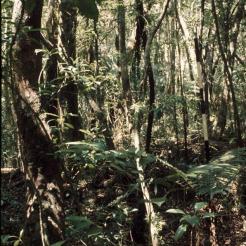
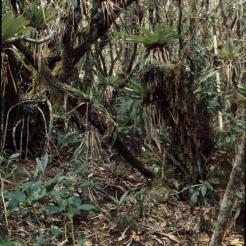
There is much interest in understanding how long term decline in soil fertility, in the absence of major disturbance, drives ecological processes, or ‘ecosystem retrogression’. However, there are few well–characterized systems for exploring this phenomenon in the tropics. We studied two types of montane rain forest in the Blue Mountains of Jamaica that occur in patches adjacent to each other and represent distinct stages in ecosystem development, i.e., an early stage with shallow organic matter (‘mull’ stage) and a late stage with deep organic matter (‘mor’ stage). We measured responses of soil fertility and plant, soil microbial and nematode communities to the transition from mull to mor, and assessed whether these responses were coupled. For soil abiotic properties, we found this transition led to declining soil nitrogen and phosphorus, and reduced availability of phosphorus relative to nitrogen; this led to a shorter and less diverse forest. The resulting litter from the plant community entering the soil subsystem contained less nitrogen and phosphorus, resulting in poorer quality litter entering the soil. We also found impairment of soil microbes (but not nematodes) and an increasing role of fungi relative to bacteria during the transition. These results show that retrogression phenomena involving increasing nutrient (notably phosphorus) limitation can be important drivers in tropical systems, and are likely to involve aboveground–belowground feedbacks whereby plants produce litter that is less nutritious, impairing soil microbial processes and thus reducing the release of nutrients from the soil needed for plant growth. This type of feedback between plants and the soil may serve as major though often overlooked drivers of long term environmental change.

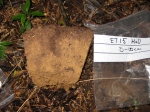
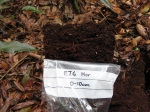
Pictures: Characteristic ‘mull’ forest (top left) and uppermost soil layer with significant mixing of organic material and mineral soil (bottom left); and characteristic ‘mor’ forest (top right) with uppermost soil layer consisting of a thick layer of organic matter (bottom right). Over time the ‘mull’ soil transitions to ‘mor soil’, characterized by less available nutrients and reduced availability of nitrogen relative to phosphorus; this in turn has important consequences for the vegetation and quality of litter that is returned to the soil.


div { margin-top: 1em; } #google_ads_div_wpcom_below_post_adsafe_ad_container { display: block !important; }
]]>

Drought hits São Paulo – what drought? Updated for 2026


Outside the semi-arid area of the north-east, Brazilians have never had to worry about conserving water. Year in, year out, the summer has always brought rain.

But that has changed dramatically. São Paulo, the biggest metropolis in South America, with a population of almost 20 million, is now in the grip of its worst drought in more than a century – a water crisis of such proportions that reports on the daily level of the main reservoir arefollowed as closely as the football results.

The lack of rain is also affecting the dams that produce most of Brazil’s energy, highlighting the urgent need to diversify power sources.

And yet the state governor, wary of the effects on his prospects in forthcoming elections, has refused to introduce measures to ration, or even conserve, water.

Mighty rivers are running dry

Brazil is blessed not only with the mighty Amazon and all its huge tributaries, but also with dozens of other lengthy, broad rivers – once the highways for trade and slaving expeditions, but now providing waterways for cargo, power for dams, and water for reservoirs. It has at least 12% of the world’s fresh water supply.

But five of the principal rivers – the Tiete, Grande, Piracicaba, Mogi-Guaçu and Paraiba do Sul – that cross or border São Paulo, Brazil’s wealthiest state, have less than 30% of the water they should have at this time of year, according to data from the regional Hydrographic Basin Committee and from the National Electric System Operator (ONS).

Other major water sources – such as the Paraná, South America’s second biggest river, and the Paranapanema – are also suffering from the long dry period. The ruins of towns flooded for dam reservoirs have reappeared, fishermen’s boats are beached because the fish have disappeared, and navigation is at a standstill.

The transport of grain and other cargos to the port of Santos, via the river network, had to be suspended after the water level fell by up to eight metres. The equivalent of 10,000 lorryloads of cargo have been transferred by road so far.

Many industries have suspended their activities because of lack of water, and the drought has resulted in the loss of part of the coffee, sugar cane and wheat crops in one of Brazil’s most important agricultural states.

The hydrological period lasting from October 2013 to March 2014 was the driest for 123 years, according to the Agronomic Institute of Campinas, the oldest institute of its kind in Latin America.

Lowest water volumes since the 1930s

The federal government’s energy research company, EPE, found that in the first three months of 2014 the volume of rain was the third lowest since the 1930s.

It was the third consecutive year of reduction for the reservoirs of the hydroelectric dams that make up the South-east / Centre-West System, where many of Brazil’s biggest cities are located. From 88% in 2011, the volume of water in them had fallen to 38% by April 2014 – the month in which the dry season begins in this region.

By mid-August, the reservoirs of the Cantareira system, which supplies the water for almost 8.5 million of São Paulo’s inhabitants, had fallen to just 13.5% of capacity.

Yet the state government of São Paulo has so far refused even to admit that there is a crisis. The problem is the October elections, when Governor Geraldo Alkmim is running for re-election. Like most politicians, he does not want to be associated with a crisis. The word ‘rationing’ is taboo.

Instead, unofficial rationing – what might be called rationing by stealth – is in operation. At night, the São Paulo Water Company, Sabesp, is reducing the pressure in the water system by 75%, leaving residents in higher areas of the city with dry taps.

People before power? Electricity generation under threat

Over 80% of the country’s energy comes from hydroelectric power, and dozens more giant dams are under construction or planned, mostly in the Amazon basin. The government has been strangely reluctant to invest in, or even encourage, other sources of abundant renewable energy, such as wind, solar and biomass.

The over-reliance on hydropower has already led to a distortion. The back-up system of thermo-electric plants, run on gas and diesel, and designed for emergencies, has had to increase production from 8% in 2012 to cover 25% of energy demand this year – thus contributing to higher carbon emissions.

Politics have also interfered with the special crisis committee set up to monitor the drought situation, with representatives from local and federal agencies unable to agree on what to do.

The Sao Paulo energy company, CESP, unilaterally decided this month to reduce the volume of water released from the shared Jaguari reservoir to the neighbouring state of Rio de Janeiro for electricity generation, in order to keep more for its own water needs.

Dangerous precedent

For Marcio Zimmerman, executive secretary of the Ministry of Mines and Energy, CESP’s action creates a dangerous precedent. “There will be chaos if everyone decides to rebel against the ONS”, he said.

The realisation that climate change is already leading to major changes in weather patterns has sounded alarm bells among the business community about the need to diversify energy sources and conserve water.

Early this month, at a seminar organised by the Brazilian Business Council for Sustainable Development, the chief executives of more than 20 top companies drew up a list of 22 crisis-related proposals to be put to the presidential candidates in October’s election.

Newspaper editorials are now urging the politicians to take their heads out of the sand and involve the population in a serious discussion on the crisis and its effects on the water supply, energy generation, and food production .

The Rio newspaper O Globo declared: “They belittle the potential for efficiency available in a society accustomed to waste. When they act, it might be too late.”


Jan Rocha is a journalist living in São Paulo. She writes for Climate News Network, where this article originates.


383359

Geoengineering – the ‘declaration’ that never was may cause real harm Updated for 2026


The Climate Engineering Conference 2014 (CEC-14) was recently held to discuss technologies for deliberately counteracting climate change.

These include Solar Radiation Management (SRM), for example, adding sulphates to the stratosphere like a volcano, to reflect sunlight; and Carbon Dioxide Removal (CDR) techniques – such as planting new forests to draw down CO2 from the atmosphere.

These technologies would allow us to exercise a degree of direct control over the climate. Unsurprisingly, the potential exercise of this God-like power is highly controversial.

Advocates say we need to be deploying these technologies urgently to save Earth from catastrophe. For opponents, they are a ‘get out of jail free’ card that would allow a business as usual approach to the profligate burning of fossil fuels, and carry huge risks of their own.

This background of controversy was no surprise to conference participants, who are well-aware that wider opinion of geoengineering is split along logical and ideological fault lines.

Delegates’ big surprise – a ready-made declaration

However knowledge of the necessary methods cannot be erased, so Pandora’s box is already open. Tough choices have to be made about what will be permitted – from basic scientific research to full deployment.

Studying this new-found power is now an important academic endeavour, and both public and academic interest is growing rapidly. CEC-14 was the first public scientific conference in the growing field of climate engineering, and similar events will likely follow.

As an academic discipline, geoengineering is here to stay. As a potential policy option, it is being carefully and publically scrutinised by experts. But sadly, that’s not the story the media reported.

What attracted journalists’ attention – and astonished delegates – was having a controversial document thrust into their hands after one of the first plenary sessions.

Demanding yet more restrictions on experimentation

This text, which became known as the ‘Berlin Declaration’, was not a draft from the conference organisers. Instead, it was a ready-made edict, promoted by attendees from the Oxford Martin School – an offshoot of Oxford University, which concerns itself with the study of socially challenging technologies and trends.

This so-called ‘declaration’ demanded yet another review process on experiments. This would further restrict a field that is already so tightly regulated that almost no faculty researchers have managed to do any outdoor experimentation at all.

In the opinion of many delegates, its effect would be to impose a de facto ‘test ban’ on most geoengineering experiments.

The assembled academics were understandably rattled by these events. A fully-formed ‘declaration’ had appeared. It seemingly awaited only a nod-through before becoming a concrete piece of governance, forever associated with the conference.

Moreover the ‘declaration’ came against a background of much pre-existing restriction on experimentation. Obviously, scientists can’t release a new superbug in a stadium, just to see what happens.

What’s less obvious is that there is a complex system of approvals for many types of experiment. This ensures that both obvious and concealed risks are carefully considered, whenever potentially-dangerous research is proposed.

We need responsible research – not a ban

In practice, this means that even completely harmless experiments in a scary-sounding field such as geoengineering are often nightmarishly difficult to get clearance for.

As Cambridge University’s SPICE project (Stratospheric Particle Injection for Climate Engineering) showed, even squirting a bathtub of ordinary water out of a hosepipe can be pretty controversial if you say the ‘g-word’ anywhere near it.

Other examples of similar controversies exist, with Ocean Iron Fertilisation (OIF) trials being a notable example. In fact, perhaps the most controversial ‘experiment’ – which involved fertilising the ocean with iron – came from outside the mainstream scientific process.

Regardless of whether one is hopeful about geoengineering or not, it’s reasonable to suggest that careful research might be a good idea. Without testing, we lack important practical knowledge, and without that knowledge, we have less ability to appraise the technology, or use it safely.

A test ban would be a very big deal indeed, especially if the banning text ruled out tiny, harmless experiments, as well as big, risky ones. Deliberately closing the door on scientific research would be essentially unprecedented, and this caused significant concern among delegates.

It’s possible that some believed that a new tier of regulation would have the opposite effect, instead facilitating responsible experimentation with a clear and dependable public process. However, this was certainly not a view which was shared widely enough to result in general support for the draft.

Sloppy journalism distorting the truth

A small uproar ensured. When scientists are in uproar, it is often barely detectable to the outside world, as they are polite people. This fretting turned into a ‘Town Hall Meeting’ – an opportunity to criticise the proposals in a thorough, public way.

This would leave the proposers in no doubt about the strength of feeling. The real story should have been this effective demonstration of good governance. But that was also not the story the media reported. As a result of some sloppy journalism, the news hit the internet in a form that was utterly mangled.

The draft declaration was wrongly attributed to the Royal Society – a body which has produced what is probably the World’s seminal report on Geoengineering. What the Royal Society thinks matters. The most influential scientific organisation in the World on the issue of geoengineering was now calling for a de facto test ban. Except it wasn’t.

This newly-invented story also needed a soundbite, and the ‘Berlin Declaration’ was born – despite the fact that the text hadn’t been declared, didn’t originate from a Berlin group, and didn’t contain the word ‘Berlin’.

The name of this sombre-sounding edict was reported and re-reported, as the story took on a life of its own. All this happened without anybody declaring anything, and with the Royal Society having had nothing to do with it at all.

Exciting-but-false stories are hard to replace with dull-but true ones. The true story of the landmark conference and its sensible scrutiny process was relegated to article corrections.

Even the shining beacon of Science‘ magazine had to eat its words. But the original stories, not the corrections, are what will have had the most impact.

Meanwhile, they missed the real story

The Town Hall meeting duly arrived. Senior scientists voiced concerns about many things: how anyone would know what was or wasn’t a ‘geoengineering experiment’; why we needed to have a new tier of regulation on something that is almost regulated out of existence anyway; and why delegates from the Oxford Martin School had turned up at an international conference and promoted a pre-drafted text outside of the formal conference process.

As a result of this public, transparent and logical scrutiny, the proposal died – and nobody declared anything. This story of self-regulation is not as interesting as a formidable-sounding declaration. So that was not the story the media reported.

Without being declared, a ‘declaration’ is therefore no such thing. The grandly-misnamed ‘Berlin Declaration’ left the conference in the way it came – as just a piece of paper.

Despite this, the scientists left the conference just as tied down by the onerous approvals process as they always were. And still, global warming continues – for which we have no effective strategy in place. That is the story. But it is not what the media reported.

So is this all over? Possibly not – because bad reporting can grow legs and walk around. Even without a declaration, people may read and remember the stories, and not the corrections. They may decide that further regulation is A Good Thing. They may then join pressure groups because of it, ask politicians for it, and vote because of it – all in spite of the facts.

As a result, we may lack crucial information on geoengineering. It may end up being deployed in ignorance by future leaders – and may cause chaos as a result.

Let’s hope that’s not the story.


Andrew Lockley is an independent consultant and researcher interested in geoengineering. His current research focuses on the areas of ballistics for SRM particle delivery, methane geoengineering, and the use of computer games to research public opinions.



383294

Geoengineering – the ‘declaration’ that never was may cause real harm Updated for 2026


The Climate Engineering Conference 2014 (CEC-14) was recently held to discuss technologies for deliberately counteracting climate change.

These include Solar Radiation Management (SRM), for example, adding sulphates to the stratosphere like a volcano, to reflect sunlight; and Carbon Dioxide Removal (CDR) techniques – such as planting new forests to draw down CO2 from the atmosphere.

These technologies would allow us to exercise a degree of direct control over the climate. Unsurprisingly, the potential exercise of this God-like power is highly controversial.

Advocates say we need to be deploying these technologies urgently to save Earth from catastrophe. For opponents, they are a ‘get out of jail free’ card that would allow a business as usual approach to the profligate burning of fossil fuels, and carry huge risks of their own.

This background of controversy was no surprise to conference participants, who are well-aware that wider opinion of geoengineering is split along logical and ideological fault lines.

Delegates’ big surprise – a ready-made declaration

However knowledge of the necessary methods cannot be erased, so Pandora’s box is already open. Tough choices have to be made about what will be permitted – from basic scientific research to full deployment.

Studying this new-found power is now an important academic endeavour, and both public and academic interest is growing rapidly. CEC-14 was the first public scientific conference in the growing field of climate engineering, and similar events will likely follow.

As an academic discipline, geoengineering is here to stay. As a potential policy option, it is being carefully and publically scrutinised by experts. But sadly, that’s not the story the media reported.

What attracted journalists’ attention – and astonished delegates – was having a controversial document thrust into their hands after one of the first plenary sessions.

Demanding yet more restrictions on experimentation

This text, which became known as the ‘Berlin Declaration’, was not a draft from the conference organisers. Instead, it was a ready-made edict, promoted by attendees from the Oxford Martin School – an offshoot of Oxford University, which concerns itself with the study of socially challenging technologies and trends.

This so-called ‘declaration’ demanded yet another review process on experiments. This would further restrict a field that is already so tightly regulated that almost no faculty researchers have managed to do any outdoor experimentation at all.

In the opinion of many delegates, its effect would be to impose a de facto ‘test ban’ on most geoengineering experiments.

The assembled academics were understandably rattled by these events. A fully-formed ‘declaration’ had appeared. It seemingly awaited only a nod-through before becoming a concrete piece of governance, forever associated with the conference.

Moreover the ‘declaration’ came against a background of much pre-existing restriction on experimentation. Obviously, scientists can’t release a new superbug in a stadium, just to see what happens.

What’s less obvious is that there is a complex system of approvals for many types of experiment. This ensures that both obvious and concealed risks are carefully considered, whenever potentially-dangerous research is proposed.

We need responsible research – not a ban

In practice, this means that even completely harmless experiments in a scary-sounding field such as geoengineering are often nightmarishly difficult to get clearance for.

As Cambridge University’s SPICE project (Stratospheric Particle Injection for Climate Engineering) showed, even squirting a bathtub of ordinary water out of a hosepipe can be pretty controversial if you say the ‘g-word’ anywhere near it.

Other examples of similar controversies exist, with Ocean Iron Fertilisation (OIF) trials being a notable example. In fact, perhaps the most controversial ‘experiment’ – which involved fertilising the ocean with iron – came from outside the mainstream scientific process.

Regardless of whether one is hopeful about geoengineering or not, it’s reasonable to suggest that careful research might be a good idea. Without testing, we lack important practical knowledge, and without that knowledge, we have less ability to appraise the technology, or use it safely.

A test ban would be a very big deal indeed, especially if the banning text ruled out tiny, harmless experiments, as well as big, risky ones. Deliberately closing the door on scientific research would be essentially unprecedented, and this caused significant concern among delegates.

It’s possible that some believed that a new tier of regulation would have the opposite effect, instead facilitating responsible experimentation with a clear and dependable public process. However, this was certainly not a view which was shared widely enough to result in general support for the draft.

Sloppy journalism distorting the truth

A small uproar ensured. When scientists are in uproar, it is often barely detectable to the outside world, as they are polite people. This fretting turned into a ‘Town Hall Meeting’ – an opportunity to criticise the proposals in a thorough, public way.

This would leave the proposers in no doubt about the strength of feeling. The real story should have been this effective demonstration of good governance. But that was also not the story the media reported. As a result of some sloppy journalism, the news hit the internet in a form that was utterly mangled.

The draft declaration was wrongly attributed to the Royal Society – a body which has produced what is probably the World’s seminal report on Geoengineering. What the Royal Society thinks matters. The most influential scientific organisation in the World on the issue of geoengineering was now calling for a de facto test ban. Except it wasn’t.

This newly-invented story also needed a soundbite, and the ‘Berlin Declaration’ was born – despite the fact that the text hadn’t been declared, didn’t originate from a Berlin group, and didn’t contain the word ‘Berlin’.

The name of this sombre-sounding edict was reported and re-reported, as the story took on a life of its own. All this happened without anybody declaring anything, and with the Royal Society having had nothing to do with it at all.

Exciting-but-false stories are hard to replace with dull-but true ones. The true story of the landmark conference and its sensible scrutiny process was relegated to article corrections.

Even the shining beacon of Science‘ magazine had to eat its words. But the original stories, not the corrections, are what will have had the most impact.

Meanwhile, they missed the real story

The Town Hall meeting duly arrived. Senior scientists voiced concerns about many things: how anyone would know what was or wasn’t a ‘geoengineering experiment’; why we needed to have a new tier of regulation on something that is almost regulated out of existence anyway; and why delegates from the Oxford Martin School had turned up at an international conference and promoted a pre-drafted text outside of the formal conference process.

As a result of this public, transparent and logical scrutiny, the proposal died – and nobody declared anything. This story of self-regulation is not as interesting as a formidable-sounding declaration. So that was not the story the media reported.

Without being declared, a ‘declaration’ is therefore no such thing. The grandly-misnamed ‘Berlin Declaration’ left the conference in the way it came – as just a piece of paper.

Despite this, the scientists left the conference just as tied down by the onerous approvals process as they always were. And still, global warming continues – for which we have no effective strategy in place. That is the story. But it is not what the media reported.

So is this all over? Possibly not – because bad reporting can grow legs and walk around. Even without a declaration, people may read and remember the stories, and not the corrections. They may decide that further regulation is A Good Thing. They may then join pressure groups because of it, ask politicians for it, and vote because of it – all in spite of the facts.

As a result, we may lack crucial information on geoengineering. It may end up being deployed in ignorance by future leaders – and may cause chaos as a result.

Let’s hope that’s not the story.


Andrew Lockley is an independent consultant and researcher interested in geoengineering. His current research focuses on the areas of ballistics for SRM particle delivery, methane geoengineering, and the use of computer games to research public opinions.


383294

Geoengineering – the ‘declaration’ that never was may cause real harm Updated for 2026


The Climate Engineering Conference 2014 (CEC-14) was recently held to discuss technologies for deliberately counteracting climate change.

These include Solar Radiation Management (SRM), for example, adding sulphates to the stratosphere like a volcano, to reflect sunlight; and Carbon Dioxide Removal (CDR) techniques – such as planting new forests to draw down CO2 from the atmosphere.

These technologies would allow us to exercise a degree of direct control over the climate. Unsurprisingly, the potential exercise of this God-like power is highly controversial.

Advocates say we need to be deploying these technologies urgently to save Earth from catastrophe. For opponents, they are a ‘get out of jail free’ card that would allow a business as usual approach to the profligate burning of fossil fuels, and carry huge risks of their own.

This background of controversy was no surprise to conference participants, who are well-aware that wider opinion of geoengineering is split along logical and ideological fault lines.

Delegates’ big surprise – a ready-made declaration

However knowledge of the necessary methods cannot be erased, so Pandora’s box is already open. Tough choices have to be made about what will be permitted – from basic scientific research to full deployment.

Studying this new-found power is now an important academic endeavour, and both public and academic interest is growing rapidly. CEC-14 was the first public scientific conference in the growing field of climate engineering, and similar events will likely follow.

As an academic discipline, geoengineering is here to stay. As a potential policy option, it is being carefully and publically scrutinised by experts. But sadly, that’s not the story the media reported.

What attracted journalists’ attention – and astonished delegates – was having a controversial document thrust into their hands after one of the first plenary sessions.

Demanding yet more restrictions on experimentation

This text, which became known as the ‘Berlin Declaration’, was not a draft from the conference organisers. Instead, it was a ready-made edict, promoted by attendees from the Oxford Martin School – an offshoot of Oxford University, which concerns itself with the study of socially challenging technologies and trends.

This so-called ‘declaration’ demanded yet another review process on experiments. This would further restrict a field that is already so tightly regulated that almost no faculty researchers have managed to do any outdoor experimentation at all.

In the opinion of many delegates, its effect would be to impose a de facto ‘test ban’ on most geoengineering experiments.

The assembled academics were understandably rattled by these events. A fully-formed ‘declaration’ had appeared. It seemingly awaited only a nod-through before becoming a concrete piece of governance, forever associated with the conference.

Moreover the ‘declaration’ came against a background of much pre-existing restriction on experimentation. Obviously, scientists can’t release a new superbug in a stadium, just to see what happens.

What’s less obvious is that there is a complex system of approvals for many types of experiment. This ensures that both obvious and concealed risks are carefully considered, whenever potentially-dangerous research is proposed.

We need responsible research – not a ban

In practice, this means that even completely harmless experiments in a scary-sounding field such as geoengineering are often nightmarishly difficult to get clearance for.

As Cambridge University’s SPICE project (Stratospheric Particle Injection for Climate Engineering) showed, even squirting a bathtub of ordinary water out of a hosepipe can be pretty controversial if you say the ‘g-word’ anywhere near it.

Other examples of similar controversies exist, with Ocean Iron Fertilisation (OIF) trials being a notable example. In fact, perhaps the most controversial ‘experiment’ – which involved fertilising the ocean with iron – came from outside the mainstream scientific process.

Regardless of whether one is hopeful about geoengineering or not, it’s reasonable to suggest that careful research might be a good idea. Without testing, we lack important practical knowledge, and without that knowledge, we have less ability to appraise the technology, or use it safely.

A test ban would be a very big deal indeed, especially if the banning text ruled out tiny, harmless experiments, as well as big, risky ones. Deliberately closing the door on scientific research would be essentially unprecedented, and this caused significant concern among delegates.

It’s possible that some believed that a new tier of regulation would have the opposite effect, instead facilitating responsible experimentation with a clear and dependable public process. However, this was certainly not a view which was shared widely enough to result in general support for the draft.

Sloppy journalism distorting the truth

A small uproar ensured. When scientists are in uproar, it is often barely detectable to the outside world, as they are polite people. This fretting turned into a ‘Town Hall Meeting’ – an opportunity to criticise the proposals in a thorough, public way.

This would leave the proposers in no doubt about the strength of feeling. The real story should have been this effective demonstration of good governance. But that was also not the story the media reported. As a result of some sloppy journalism, the news hit the internet in a form that was utterly mangled.

The draft declaration was wrongly attributed to the Royal Society – a body which has produced what is probably the World’s seminal report on Geoengineering. What the Royal Society thinks matters. The most influential scientific organisation in the World on the issue of geoengineering was now calling for a de facto test ban. Except it wasn’t.

This newly-invented story also needed a soundbite, and the ‘Berlin Declaration’ was born – despite the fact that the text hadn’t been declared, didn’t originate from a Berlin group, and didn’t contain the word ‘Berlin’.

The name of this sombre-sounding edict was reported and re-reported, as the story took on a life of its own. All this happened without anybody declaring anything, and with the Royal Society having had nothing to do with it at all.

Exciting-but-false stories are hard to replace with dull-but true ones. The true story of the landmark conference and its sensible scrutiny process was relegated to article corrections.

Even the shining beacon of Science‘ magazine had to eat its words. But the original stories, not the corrections, are what will have had the most impact.

Meanwhile, they missed the real story

The Town Hall meeting duly arrived. Senior scientists voiced concerns about many things: how anyone would know what was or wasn’t a ‘geoengineering experiment’; why we needed to have a new tier of regulation on something that is almost regulated out of existence anyway; and why delegates from the Oxford Martin School had turned up at an international conference and promoted a pre-drafted text outside of the formal conference process.

As a result of this public, transparent and logical scrutiny, the proposal died – and nobody declared anything. This story of self-regulation is not as interesting as a formidable-sounding declaration. So that was not the story the media reported.

Without being declared, a ‘declaration’ is therefore no such thing. The grandly-misnamed ‘Berlin Declaration’ left the conference in the way it came – as just a piece of paper.

Despite this, the scientists left the conference just as tied down by the onerous approvals process as they always were. And still, global warming continues – for which we have no effective strategy in place. That is the story. But it is not what the media reported.

So is this all over? Possibly not – because bad reporting can grow legs and walk around. Even without a declaration, people may read and remember the stories, and not the corrections. They may decide that further regulation is A Good Thing. They may then join pressure groups because of it, ask politicians for it, and vote because of it – all in spite of the facts.

As a result, we may lack crucial information on geoengineering. It may end up being deployed in ignorance by future leaders – and may cause chaos as a result.

Let’s hope that’s not the story.


Andrew Lockley is an independent consultant and researcher interested in geoengineering. His current research focuses on the areas of ballistics for SRM particle delivery, methane geoengineering, and the use of computer games to research public opinions.


383294

Geoengineering – the ‘declaration’ that never was may cause real harm Updated for 2026


The Climate Engineering Conference 2014 (CEC-14) was recently held to discuss technologies for deliberately counteracting climate change.

These include Solar Radiation Management (SRM), for example, adding sulphates to the stratosphere like a volcano, to reflect sunlight; and Carbon Dioxide Removal (CDR) techniques – such as planting new forests to draw down CO2 from the atmosphere.

These technologies would allow us to exercise a degree of direct control over the climate. Unsurprisingly, the potential exercise of this God-like power is highly controversial.

Advocates say we need to be deploying these technologies urgently to save Earth from catastrophe. For opponents, they are a ‘get out of jail free’ card that would allow a business as usual approach to the profligate burning of fossil fuels, and carry huge risks of their own.

This background of controversy was no surprise to conference participants, who are well-aware that wider opinion of geoengineering is split along logical and ideological fault lines.

Delegates’ big surprise – a ready-made declaration

However knowledge of the necessary methods cannot be erased, so Pandora’s box is already open. Tough choices have to be made about what will be permitted – from basic scientific research to full deployment.

Studying this new-found power is now an important academic endeavour, and both public and academic interest is growing rapidly. CEC-14 was the first public scientific conference in the growing field of climate engineering, and similar events will likely follow.

As an academic discipline, geoengineering is here to stay. As a potential policy option, it is being carefully and publically scrutinised by experts. But sadly, that’s not the story the media reported.

What attracted journalists’ attention – and astonished delegates – was having a controversial document thrust into their hands after one of the first plenary sessions.

Demanding yet more restrictions on experimentation

This text, which became known as the ‘Berlin Declaration’, was not a draft from the conference organisers. Instead, it was a ready-made edict, promoted by attendees from the Oxford Martin School – an offshoot of Oxford University, which concerns itself with the study of socially challenging technologies and trends.

This so-called ‘declaration’ demanded yet another review process on experiments. This would further restrict a field that is already so tightly regulated that almost no faculty researchers have managed to do any outdoor experimentation at all.

In the opinion of many delegates, its effect would be to impose a de facto ‘test ban’ on most geoengineering experiments.

The assembled academics were understandably rattled by these events. A fully-formed ‘declaration’ had appeared. It seemingly awaited only a nod-through before becoming a concrete piece of governance, forever associated with the conference.

Moreover the ‘declaration’ came against a background of much pre-existing restriction on experimentation. Obviously, scientists can’t release a new superbug in a stadium, just to see what happens.

What’s less obvious is that there is a complex system of approvals for many types of experiment. This ensures that both obvious and concealed risks are carefully considered, whenever potentially-dangerous research is proposed.

We need responsible research – not a ban

In practice, this means that even completely harmless experiments in a scary-sounding field such as geoengineering are often nightmarishly difficult to get clearance for.

As Cambridge University’s SPICE project (Stratospheric Particle Injection for Climate Engineering) showed, even squirting a bathtub of ordinary water out of a hosepipe can be pretty controversial if you say the ‘g-word’ anywhere near it.

Other examples of similar controversies exist, with Ocean Iron Fertilisation (OIF) trials being a notable example. In fact, perhaps the most controversial ‘experiment’ – which involved fertilising the ocean with iron – came from outside the mainstream scientific process.

Regardless of whether one is hopeful about geoengineering or not, it’s reasonable to suggest that careful research might be a good idea. Without testing, we lack important practical knowledge, and without that knowledge, we have less ability to appraise the technology, or use it safely.

A test ban would be a very big deal indeed, especially if the banning text ruled out tiny, harmless experiments, as well as big, risky ones. Deliberately closing the door on scientific research would be essentially unprecedented, and this caused significant concern among delegates.

It’s possible that some believed that a new tier of regulation would have the opposite effect, instead facilitating responsible experimentation with a clear and dependable public process. However, this was certainly not a view which was shared widely enough to result in general support for the draft.

Sloppy journalism distorting the truth

A small uproar ensured. When scientists are in uproar, it is often barely detectable to the outside world, as they are polite people. This fretting turned into a ‘Town Hall Meeting’ – an opportunity to criticise the proposals in a thorough, public way.

This would leave the proposers in no doubt about the strength of feeling. The real story should have been this effective demonstration of good governance. But that was also not the story the media reported. As a result of some sloppy journalism, the news hit the internet in a form that was utterly mangled.

The draft declaration was wrongly attributed to the Royal Society – a body which has produced what is probably the World’s seminal report on Geoengineering. What the Royal Society thinks matters. The most influential scientific organisation in the World on the issue of geoengineering was now calling for a de facto test ban. Except it wasn’t.

This newly-invented story also needed a soundbite, and the ‘Berlin Declaration’ was born – despite the fact that the text hadn’t been declared, didn’t originate from a Berlin group, and didn’t contain the word ‘Berlin’.

The name of this sombre-sounding edict was reported and re-reported, as the story took on a life of its own. All this happened without anybody declaring anything, and with the Royal Society having had nothing to do with it at all.

Exciting-but-false stories are hard to replace with dull-but true ones. The true story of the landmark conference and its sensible scrutiny process was relegated to article corrections.

Even the shining beacon of Science‘ magazine had to eat its words. But the original stories, not the corrections, are what will have had the most impact.

Meanwhile, they missed the real story

The Town Hall meeting duly arrived. Senior scientists voiced concerns about many things: how anyone would know what was or wasn’t a ‘geoengineering experiment’; why we needed to have a new tier of regulation on something that is almost regulated out of existence anyway; and why delegates from the Oxford Martin School had turned up at an international conference and promoted a pre-drafted text outside of the formal conference process.

As a result of this public, transparent and logical scrutiny, the proposal died – and nobody declared anything. This story of self-regulation is not as interesting as a formidable-sounding declaration. So that was not the story the media reported.

Without being declared, a ‘declaration’ is therefore no such thing. The grandly-misnamed ‘Berlin Declaration’ left the conference in the way it came – as just a piece of paper.

Despite this, the scientists left the conference just as tied down by the onerous approvals process as they always were. And still, global warming continues – for which we have no effective strategy in place. That is the story. But it is not what the media reported.

So is this all over? Possibly not – because bad reporting can grow legs and walk around. Even without a declaration, people may read and remember the stories, and not the corrections. They may decide that further regulation is A Good Thing. They may then join pressure groups because of it, ask politicians for it, and vote because of it – all in spite of the facts.

As a result, we may lack crucial information on geoengineering. It may end up being deployed in ignorance by future leaders – and may cause chaos as a result.

Let’s hope that’s not the story.


Andrew Lockley is an independent consultant and researcher interested in geoengineering. His current research focuses on the areas of ballistics for SRM particle delivery, methane geoengineering, and the use of computer games to research public opinions.


383294

Geoengineering – the ‘declaration’ that never was may cause real harm Updated for 2026


The Climate Engineering Conference 2014 (CEC-14) was recently held to discuss technologies for deliberately counteracting climate change.

These include Solar Radiation Management (SRM), for example, adding sulphates to the stratosphere like a volcano, to reflect sunlight; and Carbon Dioxide Removal (CDR) techniques – such as planting new forests to draw down CO2 from the atmosphere.

These technologies would allow us to exercise a degree of direct control over the climate. Unsurprisingly, the potential exercise of this God-like power is highly controversial.

Advocates say we need to be deploying these technologies urgently to save Earth from catastrophe. For opponents, they are a ‘get out of jail free’ card that would allow a business as usual approach to the profligate burning of fossil fuels, and carry huge risks of their own.

This background of controversy was no surprise to conference participants, who are well-aware that wider opinion of geoengineering is split along logical and ideological fault lines.

Delegates’ big surprise – a ready-made declaration

However knowledge of the necessary methods cannot be erased, so Pandora’s box is already open. Tough choices have to be made about what will be permitted – from basic scientific research to full deployment.

Studying this new-found power is now an important academic endeavour, and both public and academic interest is growing rapidly. CEC-14 was the first public scientific conference in the growing field of climate engineering, and similar events will likely follow.

As an academic discipline, geoengineering is here to stay. As a potential policy option, it is being carefully and publically scrutinised by experts. But sadly, that’s not the story the media reported.

What attracted journalists’ attention – and astonished delegates – was having a controversial document thrust into their hands after one of the first plenary sessions.

Demanding yet more restrictions on experimentation

This text, which became known as the ‘Berlin Declaration’, was not a draft from the conference organisers. Instead, it was a ready-made edict, promoted by attendees from the Oxford Martin School – an offshoot of Oxford University, which concerns itself with the study of socially challenging technologies and trends.

This so-called ‘declaration’ demanded yet another review process on experiments. This would further restrict a field that is already so tightly regulated that almost no faculty researchers have managed to do any outdoor experimentation at all.

In the opinion of many delegates, its effect would be to impose a de facto ‘test ban’ on most geoengineering experiments.

The assembled academics were understandably rattled by these events. A fully-formed ‘declaration’ had appeared. It seemingly awaited only a nod-through before becoming a concrete piece of governance, forever associated with the conference.

Moreover the ‘declaration’ came against a background of much pre-existing restriction on experimentation. Obviously, scientists can’t release a new superbug in a stadium, just to see what happens.

What’s less obvious is that there is a complex system of approvals for many types of experiment. This ensures that both obvious and concealed risks are carefully considered, whenever potentially-dangerous research is proposed.

We need responsible research – not a ban

In practice, this means that even completely harmless experiments in a scary-sounding field such as geoengineering are often nightmarishly difficult to get clearance for.

As Cambridge University’s SPICE project (Stratospheric Particle Injection for Climate Engineering) showed, even squirting a bathtub of ordinary water out of a hosepipe can be pretty controversial if you say the ‘g-word’ anywhere near it.

Other examples of similar controversies exist, with Ocean Iron Fertilisation (OIF) trials being a notable example. In fact, perhaps the most controversial ‘experiment’ – which involved fertilising the ocean with iron – came from outside the mainstream scientific process.

Regardless of whether one is hopeful about geoengineering or not, it’s reasonable to suggest that careful research might be a good idea. Without testing, we lack important practical knowledge, and without that knowledge, we have less ability to appraise the technology, or use it safely.

A test ban would be a very big deal indeed, especially if the banning text ruled out tiny, harmless experiments, as well as big, risky ones. Deliberately closing the door on scientific research would be essentially unprecedented, and this caused significant concern among delegates.

It’s possible that some believed that a new tier of regulation would have the opposite effect, instead facilitating responsible experimentation with a clear and dependable public process. However, this was certainly not a view which was shared widely enough to result in general support for the draft.

Sloppy journalism distorting the truth

A small uproar ensured. When scientists are in uproar, it is often barely detectable to the outside world, as they are polite people. This fretting turned into a ‘Town Hall Meeting’ – an opportunity to criticise the proposals in a thorough, public way.

This would leave the proposers in no doubt about the strength of feeling. The real story should have been this effective demonstration of good governance. But that was also not the story the media reported. As a result of some sloppy journalism, the news hit the internet in a form that was utterly mangled.

The draft declaration was wrongly attributed to the Royal Society – a body which has produced what is probably the World’s seminal report on Geoengineering. What the Royal Society thinks matters. The most influential scientific organisation in the World on the issue of geoengineering was now calling for a de facto test ban. Except it wasn’t.

This newly-invented story also needed a soundbite, and the ‘Berlin Declaration’ was born – despite the fact that the text hadn’t been declared, didn’t originate from a Berlin group, and didn’t contain the word ‘Berlin’.

The name of this sombre-sounding edict was reported and re-reported, as the story took on a life of its own. All this happened without anybody declaring anything, and with the Royal Society having had nothing to do with it at all.

Exciting-but-false stories are hard to replace with dull-but true ones. The true story of the landmark conference and its sensible scrutiny process was relegated to article corrections.

Even the shining beacon of Science‘ magazine had to eat its words. But the original stories, not the corrections, are what will have had the most impact.

Meanwhile, they missed the real story

The Town Hall meeting duly arrived. Senior scientists voiced concerns about many things: how anyone would know what was or wasn’t a ‘geoengineering experiment’; why we needed to have a new tier of regulation on something that is almost regulated out of existence anyway; and why delegates from the Oxford Martin School had turned up at an international conference and promoted a pre-drafted text outside of the formal conference process.

As a result of this public, transparent and logical scrutiny, the proposal died – and nobody declared anything. This story of self-regulation is not as interesting as a formidable-sounding declaration. So that was not the story the media reported.

Without being declared, a ‘declaration’ is therefore no such thing. The grandly-misnamed ‘Berlin Declaration’ left the conference in the way it came – as just a piece of paper.

Despite this, the scientists left the conference just as tied down by the onerous approvals process as they always were. And still, global warming continues – for which we have no effective strategy in place. That is the story. But it is not what the media reported.

So is this all over? Possibly not – because bad reporting can grow legs and walk around. Even without a declaration, people may read and remember the stories, and not the corrections. They may decide that further regulation is A Good Thing. They may then join pressure groups because of it, ask politicians for it, and vote because of it – all in spite of the facts.

As a result, we may lack crucial information on geoengineering. It may end up being deployed in ignorance by future leaders – and may cause chaos as a result.

Let’s hope that’s not the story.


Andrew Lockley is an independent consultant and researcher interested in geoengineering. His current research focuses on the areas of ballistics for SRM particle delivery, methane geoengineering, and the use of computer games to research public opinions.


383294

Frugivory and seed dispersal Updated for 2026

What is it that determines if a bird should deposit a seed from a fruit in a specific place or not? I the Early View paper “Seed dispersal in heterogeneous landscapes: linking field observations with spatially explicit models”, Jessica E Lavabre ad colleagues combines modelling with empirical studies to find out! Below is the author’s summary of the study.

Frugivorous birds play a critical role in the population dynamics of many fleshy-fruited plants by defining the template for the establishment of new individuals. Because successful germination and subsequent seedling survival is highly dependent upon the micro-habitat where a seed arrives, it is crucial to understand which factors drive seed deposition. In our study, we aimed to take an important step forward in understanding the complex mechanisms that generate the spatial patterns of seed dispersal. Few studies have previously modelled seed dispersal in a real landscape, mostly because real vegetation structure is often highly heterogeneous. Here, we have taken advantage of a simple study system to parametrize mechanistic seed-dispersal models with empirical field data, and we built three models that test three seed-dispersal predictors: distance from the source tree, microhabitat type, and a combination of both distance from the source and microhabitat type.

To our greatest surprise, the third model, combining distance and microhabitat type, did not perform significantly better than the other two, simpler models. Additionally, our results suggested that what we had initially considered as one population could instead be two functionally distinct patches, with distinct seed dispersal dynamics. Altogether, these results reinforce the hypothesis that functionally distinct groups of frugivore species generate scale specific seed rain patterns.

LaVera LaVera2