Ecological networks quantify the diversity of direct and indirect interactions taking place in nature. However, due to their complexity, ecologists rely heavily on the use of metrics to summarize aspects of network structure thought to be of biological importance. Many of these structural features are non-random and strongly conserved across diverse habitats and species assemblages, begging the question: what factors determine network structure? The most successful hypotheses to explain these patterns are the neutrality and biological constraints hypotheses, which posit that species interactions can be explained by trait mismatches, and relative abundances respectively. In the Early View paper “Species traits and relative abundances predict metrics of plant-pollinator network structure, but not pairwise interactions” in Oikos, we Colin Olito and Jeremy W. Fox, evaluate the relative ability of trait-based and neutral models of species interactions to explain the structure of a temporally resolved alpine plant-pollinator visitation network.

An unidentified muscid visiting Erigeron peregrinus. Although their charm often goes unappreciated, flies are by far the most diverse and abundant pollinators in the alpine. Interestingly, many of their behaviours that facilitate pollination differ markedly from more intensively studied foraging pollinators, such as bumblebees. Understanding their crucial role in alpine and high-latitude plant-pollinator communities will require a greater understanding of both their reproductive and foraging biology. Photo credit: Martin Fees.
As our title suggests, species traits and relative abundances successfully predicted every metric of network structure tested, but failed to predict observed interactions. That is, a variety of models can predict network metrics well, but for the wrong reasons. We explore the implications of this contrast, and highlight potential problems with the use and interpretation of network metrics. We also found that species phenologies (the timing of flowering or pollinator activity) always out-performed neutral models at predicting pairwise interactions, and discuss limitations of neutral models of network structure, particularly when species interactions are under-sampled. We suggest that future progress in explaining the structure and dynamics of ecological networks will require new approaches that emphasize accurate prediction of species interactions rather than network metrics, and better reflect the biology underlying species interactions.

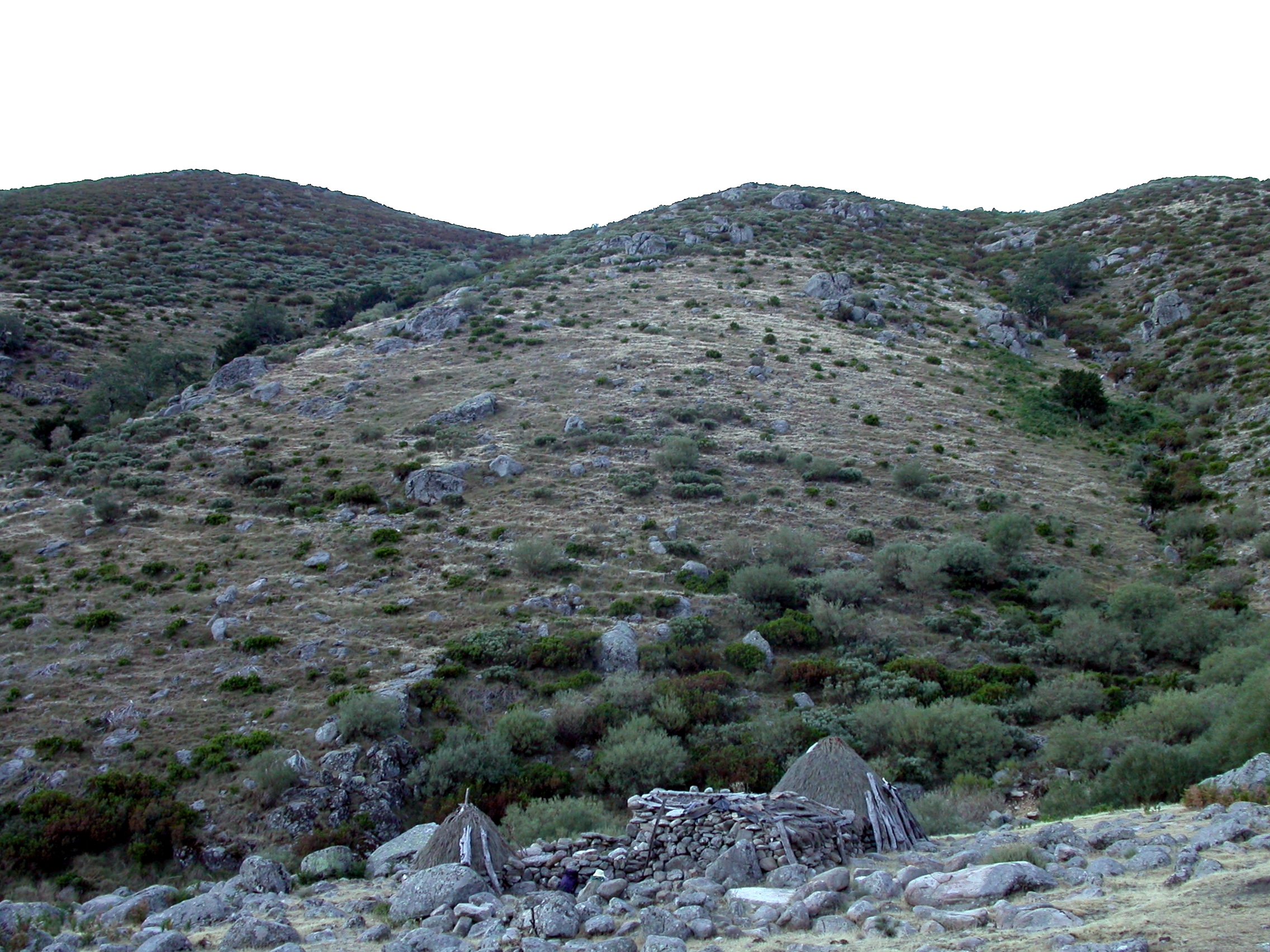
Sampling plant-pollinator interactions in a low-alpine meadow in Kananaskis Country, Alberta, Canada. Photo credit: Martin Fees.