Tag Archives: safety

There is no scientific consensus on GMO safety Updated for 2026


For decades, the safety of GMOs has been a hotly controversial topic that has been much debated around the world. Published results are contradictory, in part due to the range of different research methods employed, an inadequacy of available procedures, and differences in the analysis and interpretation of data.

Such a lack of consensus on safety is also evidenced by the agreement of policymakers from over 160 countries – in the UN’s Cartagena Biosafety Protocol and the Guidelines of the Codex Alimentarius – to authorize careful case-by-case assessment of each GMO by national authorities to determine whether the particular construct satisfies the national criteria for ‘safe’.

Rigorous assessment of GMO safety has been hampered by the lack of funding independent of proprietary interests. Research for the public good has been further constrained by property rights issues, and by denial of access to research material for researchers unwilling to sign contractual agreements with the developers, which confer unacceptable control over publication to the proprietary interests.

This joint statement developed and signed by over 300 independent researchers, reproduced and published below, does not assert that GMOs are unsafe or safe. Rather, the statement concludes that the scarcity and contradictory nature of the scientific evidence published to date prevents conclusive claims of safety, or of lack of safety, of GMOs.

Claims of consensus on the safety of GMOs are not supported by an objective analysis of the refereed literature.

Background

Over recent years, a number of scientific research articles have been published that report disturbing results from genetically modified organism (GMO) feeding experiments with different mammals (e.g. rats [1], pigs [2]).

In addition to the usual fierce responses, these have elicited a concerted effort by genetically modified (GM) seed developers and some scientists, commentators, and journalists to construct claims that there is a ‘scientific consensus’ on GMO safety [3-5] and that the debate on this topic is ‘over’ [6].

These claims led a broader independent community of scientists and researchers to come together as they felt compelled to develop a document that offered a balanced account of the current state of dissent in this field, based on published evidence in the scientific literature, for both the interested public and the wider science community.

The statement that was developed was then opened up for endorsement from scientists around the world with relevant expertise and capacities to conclude on the current state of consensus/dissent and debate regarding the published evidence on the safety of GMOs.

This statement clearly demonstrates that the claimed consensus on GMO safety does not exist outside of the above depicted internal circle of stakeholders. The health, environment, and agriculture authorities of most nations recognize publicly that no blanket statement about the safety of all GMOs is possible and that they must be assessed on a ‘case-by-case’ basis.

Moreover, the claim that it does exist – which continues to be pushed in the above listed circles – is misleading and misrepresents or outright ignores the currently available scientific evidence and the broad diversity of scientific opinions among scientists on this issue.

The claim further encourages a climate of complacency that could lead to a lack of regulatory and scientific rigour and appropriate caution, potentially endangering the health of humans, animals, and the environment.

Science and society do not proceed on the basis of a constructed consensus, as current knowledge is always open to well-founded challenge and disagreement. We endorse the need for further independent scientific inquiry and informed public discussion on GM product safety.

Some of our objections to the claim of a scientific consensus are listed in the following discussion. The original version endorsed by 300 scientists worldwide can be found at the website of the European Network of Scientists for Social and Environmental Responsibility [7].

There is no consensus on GM food safety

Regarding the safety of GM crops and foods for human and animal health, a comprehensive review of animal feeding studies of GM crops found “An equilibrium in the number [of] research groups suggesting, on the basis of their studies, that a number of varieties of GM products (mainly maize and soybeans) are as safe and nutritious as the respective conventional non-GM plant, and those raising still serious concerns.”

The review also found that most studies concluding that GM foods were as safe and nutritious as those obtained by conventional breeding were “performed by biotechnology companies or associates, which are also responsible [for] commercializing these GM plants.” [8]

A separate review of animal feeding studies that is often cited as showing that GM foods are safe included studies that found significant differences in the GM-fed animals. While the review authors dismissed these findings as not biologically significant [9], the interpretation of these differences is the subject of continuing scientific debate [8,10-12] and no consensus exists on the topic.

Rigorous studies investigating the safety of GM crops and foods would normally involve, inter alia, animal feeding studies in which one group of animals is fed GM food and another group is fed an equivalent non-GM diet.

Independent studies of this type are rare, but when such studies have been performed, some have revealed toxic effects or signs of toxicity in the GM-fed animals [2,8,11-13]. The concerns raised by these studies have not been followed up by targeted research that could confirm or refute the initial findings.

The lack of scientific consensus on the safety of GM foods and crops is underlined by the recent research calls of the European Union and the French government to investigate the long-term health impacts of GM food consumption in the light of uncertainties raised by animal feeding studies [14,15].

These official calls imply recognition of the inadequacy of the relevant existing scientific research protocols. They call into question the claim that existing research can be deemed conclusive and the scientific debate on biosafety closed.

There are no epidemiological studies investigating potential effects of GM food consumption on human health

It is often claimed that ‘trillions of GM meals’ have been eaten in the US with no ill effects. However, no epidemiological studies in human populations have been carried out to establish whether there are any health effects associated with GM food consumption.

As GM foods and other products are not monitored or labelled after release in North America, a major producer and consumer of GM crops, it is scientifically impossible to trace, let alone study, patterns of consumption and their impacts.

Therefore, claims that GM foods are safe for human health based on the experience of North American populations have no scientific basis.

Claims that scientific and governmental bodies endorse GMO safety are exaggerated or inaccurate

Claims that there is a consensus among scientific and governmental bodies that GM foods are safe, or that they are no more risky than non-GM foods [16,17], are false. For instance, an expert panel of the Royal Society of Canada issued a report that was highly critical of the regulatory system for GM foods and crops in that country.

The report declared that it is “scientifically unjustifiable” to presume that GM foods are safe without rigorous scientific testing and that the “default prediction” for every GM food should be that the introduction of a new gene will cause “unanticipated changes” in the expression of other genes, the pattern of proteins produced, and/or metabolic activities. Possible outcomes of these changes identified in the report included the presence of new or unexpected allergens [18].

A report by the British Medical Association concluded that with regard to the long-term effects of GM foods on human health and the environment, “many unanswered questions remain” and that “safety concerns cannot, as yet, be dismissed completely on the basis of information currently available.” The report called for more research, especially on potential impacts on human health and the environment [19].

Moreover, the positions taken by other organizations have frequently been highly qualified, acknowledging data gaps and potential risks, as well as potential benefits, of GM technology.

For example, a statement by the American Medical Association’s Council on Science and Public Health acknowledged “a small potential for adverse events … due mainly to horizontal gene transfer, allergenicity, and toxicity” and recommended that the current voluntary notification procedure practised in the US prior to market release of GM crops be made mandatory [20].

It should be noted that even a “small potential for adverse events” may turn out to be significant, given the widespread exposure of human and animal populations to GM crops.

A statement by the board of directors of the American Association for the Advancement of Science (AAAS) affirming the safety of GM crops and opposing labelling [21] cannot be assumed to represent the view of AAAS members as a whole and was challenged in an open letter by a group of 21 scientists, including many long-standing members of the AAAS [22].

This episode underlined the lack of consensus among scientists about GMO safety.

EU research project does not provide reliable evidence of GM food safety

An EU research project [23] has been cited internationally as providing evidence for GM crop and food safety. However, the report based on this project, ‘A Decade of EU-Funded GMO Research’, presents no data that could provide such evidence from long-term feeding studies in animals.

Indeed, the project was not designed to test the safety of any single GM food but to focus on “the development of safety assessment approaches” [24]. Only five published animal feeding studies are referenced in the SAFOTEST section of the report, which is dedicated to GM food safety [25].

None of these studies tested a commercialized GM food; none tested the GM food for long-term effects beyond the subchronic period of 90 days; all found differences in the GM-fed animals, which in some cases were statistically significant; and none concluded on the safety of the GM food tested, let alone on the safety of GM foods in general.

Therefore, the EU research project provides no evidence for sweeping claims about the safety of any single GM food or of GM crops in general.

List of several hundred studies does not show GM food safety

A frequently cited claim published on an Internet website that several hundred studies “document the general safety and nutritional wholesomeness of GM foods and feeds” [26] is misleading. Examination of the studies listed reveals that many do not provide evidence of GM food safety and, in fact, some provide evidence of a lack of safety. For example:

  • Many of the studies are not toxicological animal feeding studies of the type that can provide useful information about health effects of GM food consumption. The list includes animal production studies that examine parameters of interest to the food and agriculture industry, such as milk yield and weight gain [27,28]; studies on environmental effects of GM crops; and analytical studies of the composition or genetic makeup of the crop.
  • Among the animal feeding studies and reviews of such studies in the list, a substantial number found toxic effects and signs of toxicity in GM-fed animals compared with controls [29-34]. Concerns raised by these studies have not been satisfactorily addressed and the claim that the body of research shows a consensus over the safety of GM crops and foods is false and irresponsible.
  • Many of the studies were conducted over short periods compared with the animal’s total lifespan and cannot detect long-term health effects [35,36].

We conclude that these studies, taken as a whole, are misrepresented on the Internet website as they do not “document the general safety and nutritional wholesomeness of GM foods and feeds.”

Rather, some of the studies give serious cause for concern and should be followed up by more detailed investigations over an extended period of time.

There is no consensus on the environmental risks of GM crops

Environmental risks posed by GM crops include the effects of insecticidal Bt (a bacterial toxin from Bacillus thuringiensis engineered into crops) crops on non-target organisms and the effects of the herbicides used in tandem with herbicide-tolerant GM crops.

As with GM food safety, no scientific consensus exists regarding the environmental risks of GM crops. A review of environmental risk assessment approaches for GM crops identified shortcomings in the procedures used and found “no consensus” globally on the methodologies that should be applied, let alone on standardized testing procedures [37].

Some reviews of the published data on Bt crops have found that they can have adverse effects on non-target and beneficial organisms [38-41] – effects that are widely neglected in regulatory assessments and by some scientific commentators. Resistance to Bt toxins has emerged in target pests [42], and problems with secondary (non-target) pests have been noted, for example, in Bt cotton in China [43,44].

Herbicide-tolerant GM crops have proved equally controversial. Some reviews and individual studies have associated them with increased herbicide use [45,46], the rapid spread of herbicide-resistant weeds [47], and adverse health effects in human and animal populations exposed to Roundup, the herbicide used on the majority of GM crops [48-50].

As with GM food safety, disagreement among scientists on the environmental risks of GM crops may be correlated with funding sources. A peer-reviewed survey of the views of 62 life scientists on the environmental risks of GM crops found that funding and disciplinary training had a significant effect on attitudes.

Scientists with industry funding and/or those trained in molecular biology were very likely to have a positive attitude to GM crops and to hold that they do not represent any unique risks, while publicly-funded scientists working independently of GM crop developer companies and/or those trained in ecology were more likely to hold a “moderately negative” attitude to GM crop safety and to emphasize the uncertainty and ignorance involved.

The review authors concluded “The strong effects of training and funding might justify certain institutional changes concerning how we organize science and how we make public decisions when new technologies are to be evaluated.” [51]

International agreements show widespread recognition of risks posed by GM foods and crops

The Cartagena Protocol on Biosafety was negotiated over many years and implemented in 2003. The Cartagena Protocol is an international agreement ratified by 166 governments worldwide that seeks to protect biological diversity from the risks posed by GM technology.

It embodies the Precautionary Principle in that it allows signatory states to take precautionary measures to protect themselves against threats of damage from GM crops and foods, even in case of a lack of scientific certainty [52].

Another international body, the UN’s Codex Alimentarius, worked with scientific experts for seven years to develop international guidelines for the assessment of GM foods and crops because of concerns about the risks they pose. These guidelines were adopted by the Codex Alimentarius Commission, of which over 160 nations are members, including major GM crop producers such as the United States [53].

The Cartagena Protocol and Codex share a precautionary approach to GM crops and foods, in that they agree that genetic engineering differs from conventional breeding and that safety assessments should be required before GM organisms are used in food or released into the environment.

These agreements would never have been negotiated, and the implementation processes elaborating how such safety assessments should be conducted would not currently be happening, without widespread international recognition of the risks posed by GM crops and foods and the unresolved state of existing scientific understanding.

Concerns about risks are well founded, as has been demonstrated by studies on some GM crops and foods that have shown adverse effects on animal health and non-target organisms, indicated above. Many of these studies have, in fact, fed into the negotiation and/or implementation processes of the Cartagena Protocol and the Codex.

We support the application of the Precautionary Principle with regard to the release and transboundary movement of GM crops and foods.

Conclusions

In the scope of this document, we can only highlight a few examples to illustrate that the totality of scientific research outcomes in the field of GM crop safety is nuanced; complex; often contradictory or inconclusive; confounded by researchers’ choices, assumptions, and funding sources; and, in general, has raised more questions than it has currently answered.

Whether to continue and expand the introduction of GM crops and foods into the human food and animal feed supply, and whether the identified risks are acceptable or not, are decisions that involve socioeconomic considerations beyond the scope of a narrow scientific debate and the currently unresolved biosafety research agendas.

These decisions must therefore involve the broader society. They should, however, be supported by strong scientific evidence on the long-term safety of GM crops and foods for human and animal health and the environment, obtained in a manner that is honest, ethical, rigorous, independent, transparent, and sufficiently diversified to compensate for bias.

Decisions on the future of our food and agriculture should not be based on misleading and misrepresentative claims by an internal circle of likeminded stakeholders that a ‘scientific consensus’ exists on GMO safety.

In a time when there is major pressure on the science community from corporate and political interests, it is of utmost importance that scientists working for the public interest take a stand against attempts to reduce and compromise the rigour of examination of new applications in favor of rapid commercialization of new and emerging technologies that are expected to generate profit and economic growth.


Authors: Angelika Hilbeck, Rosa Binimelis, Nicolas Defarge, Ricarda Steinbrecher, András Székács, Fern Wickson, Michael Antoniou, Philip L Bereano, Ethel Ann Clark, Michael Hansen, Eva Novotny, Jack Heinemann, Hartmut Meyer, Vandana Shiva, Brian Wynne.

The authors declare that they have no competing interests. All authors contributed equally to the writing of the document. All authors read and approved the final manuscript. Please refer to the original article for further information about the authors, contact details, etc.

This article was originally published by Environmental Sciences Europe – © 2015 Hilbeck et al.; licensee Springer. This is an open access article distributed under the terms of the Creative Commons Attribution License, which permits unrestricted use, distribution, and reproduction in any medium, provided the original work is properly credited.

Signatories: The document continues to be open for signature on the website of the initiating scientific organization ENSSER (European Network of Scientists for Social and Environmental Responsibility).

This document is open for endorsement by scientists from around the world in their personal (rather than institutional) capacities reflecting their personal views and based on their personal expertise. There is no suggestion that the views expressed in this statement represent the views or position of any institution or organization with which the individuals are affiliated.

Qualifying criteria for signing the statement include scientists, physicians, social scientists, academics, and specialists in legal aspects and risk assessment of GM crops and foods. Scientist and academic signatories are requested to have qualifications from accredited institutions at the level of PhD or equivalent. Legal experts are requested to have at least a JD or equivalent.

By December 2014, more than 300 people who met the strict qualification requirements had signed the statement. The statement was widely taken up in the media and reported in numerous outlets and evidence provided therein continues to be cited widely.

References

1. Séralini GE, Clair E, Mesnage R, Gress S, Defarge N, Malatesta M, et al. Republished study: long-term toxicity of a Roundup herbicide and a Roundup-tolerant genetically modified maize. Environ Sci Eur. 2014;26(1):1.

2. Carman JA, Vlieger HR, Ver Steeg LJ, Sneller VE, Robinson GW, Clinch-Jones CA, et al. A long-term toxicology study on pigs fed a combined genetically modified (GM) soy and GM maize diet. J Org Syst. 2013;8(1):38–54.

3. Frewin G. (2013). The new “is GM food safe?” meme. Axis Mundi, 18 July. http://www.axismundionline.com/blog/the-new-is-gm-food-safe-meme/; Wikipedia (2013). Genetically modified food controversies. http://en.wikipedia.org/wiki/Genetically_modified_food_controversies

4. Lynas M: GMO pigs study – more junk science. Marklynas.org 2013, 12 June [http://www.marklynas.org/2013/06/gmo-pigs-study-more-junk-science/]

5. Kloor K: Greens on the run in debate over genetically modified food. Bloomberg 2013, 7 January [http://www.bloomberg.com/news/2013-01-07/green-activist-reverses-stance-ongenetically- modified-food.html]

6. White M: The scientific debate about GM foods is over: they’re safe. Pacific Standard Magazine 2013, 24 September [http://www.psmag.com/health/scientific-debate-gm-foodstheyre- safe-66711/]

7. European Scientists for Social and Environmental Responsibility [www.ensser.org]

8. Domingo JL, Bordonaba JG. A literature review on the safety assessment of genetically modified plants. Environ Int. 2011;37:734–42.

9. Snell C, Bernheim A, Bergé JB, Kuntz M, Pascal G, Paris A, et al. Assessment of the health impact of GM plant diets in long-term and multigenerational animal feeding trials: a literature review. Food Chem Toxicol. 2012;50(3–4):1134–48.

10. Séralini GE, Mesnage R, Clair E, Gress S, Spiroux de Vendômois J, Cellier D. Genetically modified crops safety assessments: present limits and possible improvements. Environ Sci Eur. 2011;23:10.

11. Dona A, Arvanitoyannis IS. Health risks of genetically modified foods. Crit Rev Food Sci Nutr. 2009;49(2):164–75.

12. Diels J, Cunha M, Manaia C, Sabugosa-Madeira B, Silva M. Association of financial or professional conflict of interest to research outcomes on health risks or nutritional assessment studies of genetically modified products. Food Policy. 2011;36:197–203.

13. Séralini GE, Mesnage R, Defarge N, Gress S, Hennequin D, Clair E, et al. Answers to critics: why there is a long term toxicity due to NK603 Roundup-tolerant genetically modified maize and to a Roundup herbicide. Food Chem Toxicol. 2013;53:461–8.

14. EU Food Policy: Commission and EFSA agree need for two-year GMO feeding studies.

17 December 2012

15. French Ministry of Ecology, Sustainable Development and Energy2013: Programme National de Recherche: Risques environnementaux et sanitaires liés aux OGM (Risk’OGM) 2013, 12 July [http://www.developpementdurable. gouv.fr/IMG/pdf/APR__Risk_OGM_rel_pbch_pbj_rs2.pdf]

16. Wikipedia: Genetically modified food controversies. 2013 [http://en.wikipedia.org/wiki/Genetically_modified_food_controversies]

17. Masip G: Opinion: Don’t fear GM crops, Europe! The Scientist 2013, May 28 [ http://www.the-scientist.com/?articles.view/articleNo/35578/title/Opinion–Don-t-Fear-GMCrops– Europe-/]

18. Royal Society of Canada: Elements of precaution: recommendations for the regulation of food biotechnology in Canada; An Expert Panel Report on the Future of Food Biotechnology. 2001, January [http://www.rsc.ca//files/publications/expert_panels/foodbiotechnology/GMreportEN.pdf]

19. British Medical Association Board of Science and Education: Genetically modified food and health: a second interim statement. 2004, March [http://bit.ly/19QAHSI]

20. American Medical Association House of Delegates: Labeling of bioengineered foods. Council on Science and Public Health Report 2, 2012 [http://www.amaassn. org/resources/doc/csaph/a12-csaph2-bioengineeredfoods.pdf]

21. AAAS: Statement by the AAAS Board of Directors on labeling of genetically modified foods. 2012, 20 October. http://www.aaas.org/news/releases/2012/media/AAAS_GM_statement.pdf

22. Hunt P, Blumberg B, Bornehag CG, Collins TJ, DeFur PL, Gilbert SG, et al. Yes: food labels would let consumers make informed choices. Environmental Health News 2012 [http://www.environmentalhealthnews.org/ehs/news/2012/yes-labels-on-gm-foods]

23. European Commission: A decade of EU-funded GMO research (2001–2010). 2010 [http://ec.europa.eu/research/biosociety/pdf/a_decade_of_eu-funded_gmo_research.pdf]

24. European Commission: A decade of EU-funded GMO research (2001–2010). 2010, 128. [http://ec.europa.eu/research/biosociety/pdf/a_decade_of_eu-funded_gmo_research.pdf]

25. European Commission: A decade of EU-funded GMO research (2001–2010). 2010, 157. [http://ec.europa.eu/research/biosociety/pdf/a_decade_of_eu-funded_gmo_research.pdf]

26. Tribe D: 600+ published safety assessments. GMOPundit blog undated [http://gmopundit.blogspot.co.uk/p/450-published-safety-assessments.html]

27. Brouk M, Cvetkovic B, Rice DW, Smith BL, Hinds MA, Owens FN, et al. Performance of lactating dairy cows fed corn as whole plant silage and grain produced from a genetically modified event DAS-59122-7 compared to a nontransgenic, near isoline control. J Dairy Sci. 2011;94:1961–6.

28. Calsamiglia S, Hernandez B, Hartnell GF, Phipps R. Effects of corn silage derived from a genetically modified variety containing two transgenes on feed intake, milk production, and composition, and the absence of detectable transgenic deoxyribonucleic acid in milk in Holstein dairy cows. J Dairy Sci. 2007;90:4718–23.

29. de Vendômois JS, Roullier F, Cellier D, Séralini GE. A comparison of the effects of three GM corn varieties on mammalian health. Int J Biol Sci. 2010;5(7):706–26.

30. Ewen SWB, Pusztai A. Effect of diets containing genetically modified potatoes expressing Galanthus nivalis lectin on rat small intestine. Lancet. 1999;354:1353–4.

31. Fares NH, El-Sayed AK. Fine structural changes in the ileum of mice fed on deltaendotoxin- treated potatoes and transgenic potatoes. Nat Toxins. 1998;6:219–33.

32. Kilic A, Akay MT. A three generation study with genetically modified Bt corn in rats: biochemical and histopathological investigation. Food Chem Toxicol. 2008;46(3):1164–70.

33. Malatesta M, Caporaloni C, Gavaudan S, Rocchi MB, Serafini S, Tiberi C, et al. Ultrastructural morphometrical and immunocytochemical analyses of hepatocyte nuclei from mice fed on genetically modified soybean. Cell Struct Funct. 2002;27:173–80.

34. Malatesta M, Biggiogera M, Manuali E, Rocchi MB, Baldelli B, Gazzanelli G. Fine structural analyses of pancreatic acinar cell nuclei from mice fed on genetically modified soybean. Eur J Histochem. 2003;47:385–8.

35. Hammond B, Dudek R, Lemen J, Nemeth M. Results of a 13 week safety assurance study with rats fed grain from glyphosate tolerant corn. Food Chem Toxicol. 2004;42(6):1003–14.

36. Hammond BG, Dudek R, Lemen J, Nemeth M. Results of a 90-day safety assurance study with rats fed grain from corn borer-protected corn. Food Chem Toxicol. 2006;44(7):1092–9.

37. Hilbeck A, Meier M, Römbke J, Jänsch S, Teichmann H, Tappeser B. Environmental risk assessment of genetically modified plants – concepts and controversies. Environ Sci Eur. 2011;23:13.

38. Hilbeck A, Schmidt JEU. Another view on Bt proteins – how specific are they and what else might they do? Biopesti Int. 2006;2(1):1–50.

39. Székács A, Darvas B. Comparative aspects of Cry toxin usage in insect control. In: Ishaaya I, Palli SR, Horowitz AR, editors. Advanced Technologies for Managing Insect Pests. Dordrecht, Netherlands: Springer; 2012. p. 195–230.

40. Marvier M, McCreedy C, Regetz J, Kareiva P. A meta-analysis of effects of Bt cotton and maize on nontarget invertebrates. Science. 2007;316(5830):1475–7.

41. Lang A, Vojtech E. The effects of pollen consumption of transgenic Bt maize on the common swallowtail, Papilio machaon L. (Lepidoptera, Papilionidae). Basic Appl Ecol. 2006;7:296–306.

42. Gassmann AJ, Petzold-Maxwell JL, Keweshan RS, Dunbar MW. Field-evolved resistance to Bt maize by Western corn rootworm. PLoS One. 2011;6(7):e22629.

43. Zhao JH, Ho P, Azadi H. Benefits of Bt cotton counterbalanced by secondary pests? Perceptions of ecological change in China. Environ Monit Assess. 2010;173(1–4):985–94.

44. Lu Y, Wu K, Jiang Y, Xia B, Li P, Feng H, et al. Mirid bug outbreaks in multiple crops correlated with wide-scale adoption of Bt cotton in China. Science. 2010;328(5982):1151–4.

45. Benbrook C. Impacts of genetically engineered crops on pesticide use in the US – the first sixteen years. Environ Sci Eur. 2012;24:24.

46. Heinemann JA, Massaro M, Coray DS, Agapito-Tenfen SZ, Wen JD. Sustainability and innovation in staple crop production in the US Midwest. Int J Agric Sustainability. 2013;12:71–88.

47. Powles SB. Evolved glyphosate-resistant weeds around the world: lessons to be learnt. Pest Manag Sci. 2008;64:360–5.

48. Székács A, Darvas B: Forty years with glyphosate. Herbicides – properties, synthesis and control of weeds. Hasaneen MN, InTech. 2012

49. Benedetti D, Nunes E, Sarmento M, Porto C, dos Santos CEI, Dias JF, et al. Genetic damage in soybean workers exposed to pesticides: evaluation with the comet and buccal micronucleus cytome assays. Mutat Res. 2013;752(1–2):28–33.

50. Lopez SL, Aiassa D, Benitez-Leite S, Lajmanovich R, Manas F, Poletta G, et al. 2012: Pesticides used in South American GMO-based agriculture: a review of their effects on humans and animal models. Advances in Molecular Toxicology. Fishbein JC, Heilman JM. New York, Elsevier 2012, 6: 41–75.

51. Kvakkestad V, Gillund F, Kjolberg KA, Vatn A. Scientists perspectives on the deliberate release of GM crops. Environ Values. 2007;16(1):79–104.

52. Secretariat of the Convention on Biological Diversity: Cartagena Protocol on Biosafety to the Convention on Biological Diversity 2000 [http://bch.cbd.int/protocol/text/]

53. Codex Alimentarius: Foods derived from modern biotechnology. 2d ed. World Health Organization/Food and Agriculture Organization of the United Nations 2000 ftp://ftp.fao.org/codex/Publications/Booklets/Biotech/Biotech_2009e.pdf]


390581

TTIP is a lethal attack on food safety and animal welfare Updated for 2026


The EU’s recently published Transatlantic Trade and Investment Partnership (TTIP) proposals for the chapter on food safety and animal welfare – under negotiation this week – is a regulatory train crash in which governments will abrogate their powers to remote international bodies and committees of trade experts.

The proposed text, an analysis by Friends of the Earth Europe (FOEE) reveals, will undermine existing health and safety regulations in both the EU and the US with potentially disastrous results for food safety and animal welfare on both sides of the Atlantic.

With the release of the document, says FOEE, “it is now clear that the over-riding objective is the maximization of trade.” The regulatory powers of national governments are to be shifted from the EU and national and state governments to a new ‘trade committee’, removing their ability to set higher standards.

There is the also the new prospect of novel foods including GMOs, cloned animals, and nano materials being introduced after minimal health and safety checks – while provisions for animal welfare are non-binding.

Food standards in both the EU and the US will have to be those established through the World Trade Organisation (WTO) – and its industry-dominated Codex Alimentarius Commission – preventing the adoption of more demanding standards anywhere within the trading bloc.

“This trade agreement is a Trojan Horse that will threaten our food safety and environment”, says Adrian Bebb, Food and agriculture campaigner with FOEE – echoing the ‘Trojan horse’ theme at today’s boisterous demo at the European Commission in Brussels, organised by FOEE and Global Justice Now

“Trade officials whose primary objective is to increase trade and boost corporate profits will have first say over future food safety rules. A trade agreement is not the place to decide about our food safety.”

Based on the available text, warns FOEE, “we fear that TTIP is likely to restrict efforts to build healthier, fairer and more sustainable food systems on both sides of the Atlantic.”

Or as Renée Vellvé of GRAIN puts it: “There is nothing in here that will advance the interests of consumers, small farmers or public health.”

Maximizing trade at all costs

The clearly stated purpose of the TTIP agreement is to facilitate trade “to the greatest extent possible”. Article 2.1 of the proposed chapter on food safety, plant and animal health and welfare, recognises governments’ rights to “protect human, animal or plant life and health” in their territories.

But it appears that regulatory authorities will in fact be unable to realize this right, given the emphasis on increasing trade between the EU and the US, and because each and every regulation must be justified as “least trade restrictive”.

Under Article 13, even countries’ rights to inspect food and agricultural imports at the port of entry – a key measure which has been used to safeguard public health – will be limited to “exceptional cases”, e.g. to check for “regulated pests”.

And under Article 8, in nearly all cases those checks will be carried out by the exporting country. Any attempt by the importing country to re-inspect imports would be banned as “redundant” (Article 8).

And while Article 3 of the text requires countries to “avail themselves of the resources necessary to implement the chapter” , there is no requirement to ensure the more extensive resources needed to protect human, animal or plant life and health. As FOEE observes, “Trade appears to have more of a priority than safety.”

As for rules on food safety, plant and animal health and welfare, these can be challenged by investors and governments who think they are too exacting – but not by members of the public concerned their failure to adequately protect human, animal or plant life and health.

    Karen Hansen-Kuhn, Director of Internal Strategies at the Institute for Agriculture and Trade Policy, fear that the proposals will effectively put a stop to efforts taking place in many countries to create safe and sustainable food production and supply networks.

    “People in many states are rebuilding their food systems from the ground up”, she says. “The proposals in the SPS chapter could create new obstacles to cut that process short.”

    Shifting power from governments to trade experts

    Under Article 18 of the text, the EU proposes that responsibility for initial decisions on food health and safety will be transferred away from national governments and agencies to a wholly unaccountable joint EU-US management committee, made up of trade and regulatory experts and, potentially, industry representatives.

    The proposal appears to match the demands put forward by the US biotech lobby organisation, BIO, to US trade representatives in May 2013. And of course, trade experts tend to see safety rules as technical trade barriers rather than as reflecting the needs and demands of society.

    Under this system, for example, any review of safety procedures for GMO crops in the EU would be considered by the trade committee first, before undergoing an impact assessment, and comprehensive consultations with national governments in the European Union.

    “Trade experts are likely to see measures to introduce or extend moratoria on products as barriers to trade”, points out FOEE. “This would put at risk existing protection measures, such as the moratorium on several growth hormones, scheduled for review.”

      Local standards will be over-ruled

      There are concerns that the Commission’s proposal will undermine measures introduced at the local, US state, or EU member state level intended to raise standards – measures which have historically led to standards being increased across the board.

      Under Article 6, any new rules set at the EU or federal level in the US, would apply throughout the territory, apart from zones with known plant or animal diseases. So EU countries and US states would be unable to pass more stringent regulations to make up for deficiences in EU / US regulations as they now can. In many cases, progress on higher standards starts at the local level and builds upwards.

      “This threatens to undermine even existing rules designed to raise standards”, says FOEE, “such as measures to ban small cages for battery hens in California or to reduce antibiotic use in the farming sectors in France and Denmark.”

      This could also make it more difficult to restrict imports should conditions or enforcement standards change in the future.

        Novel foods – a free for all

        The EU’s proposals will affect regulations on ‘novel’ foods or food ingredients, such as foods derived from cloning, genetic modification or synthetic biology.

        The purpose of the draft proposal, in Article 7.1, is to ensure that regulations should be applied so as to minimize negative effects on trade “while ensuring the fulfilment of the importing Party’s requirements”.

        As such, any new products being brought to market (“new trade”), which are not covered by existing rules, could escape regulation as any new regulation could be seen as a ‘barrier to trade’.

        “This would undermine all existing efforts at regulating new technologies like nanotechnology, synthetic biology, animal cloning and genetically engineered animals”, says Jaydee Hanson, Senior Policy Analyst for Emerging Technologies at the Center for Food Safety. “These technologies need careful and precautionary reviews before they are used in our food, not a free trade pass to avoid review.”

        As Hanson points out, nanomaterials, which are increasingly being used for food-related products, or foods derived from new techniques for genetic modification in plants or animals, could be traded in the absence of regulation specific to those technologies.

        Also novel foods imported into the EU from the US would face minimal safety checks, as the US lacks regulations for novel food, warns FOEE: “The US does not regulate the new kinds of genetic engineering of plants, animals and microbes being introduced through synthetic biology, unless plant pests are involved.”

        And any new regulations imposed at any level could be interpreted by investors as a ‘barrier to trade’, providing an opportunity for legal action under the proposed Investment Settlement Dispute Mechanism.

        The threat is a very real one – the American Chemistry Council has already urged the US Trade Representative’s Office to indicate that it would challenge at the WTO and EU requirement to label nanomaterials as a ‘barrier to trade’.

        And we are already feeling the effects as regulators hasten to be ‘TTIP-ready’. The EU is currently watering down regulations for novel foods, allowing offspring from cloned animals (including live animals, embryos or semen) to be imported.

        A clear example of TTIP’s chilling effect on future legislation is evident in the Commission’s refusal to extend the proposed ban on cloned animals to descendants of clones because it would hinder the negotiation process. Moreover cloned animals, while restricted in the EU, are not tracked in the US, so it is possible that they could enter the food supply.

        This is of particular concern as the long-term consequences of cloning are as yet unknown; it is however known that animals bred to maximise production can have serious health problems.

        Animal welfare – a race to the bottom

        There are also concerns that the wording in the EU’s proposals – which recognise in Article 17.1 that animals are sentient beings, thus are able to suffer and feel pain and fear – is so weak that it may will animal welfare standards at risk.

        Moreover it is immediately followed by Article 17.2, which proposes an alignment of regulatory standards between the two regions – which is next to impossible given the differences in existing legislation.

        “While the US has no federal animal welfare legislation except rules on the slaughter of livestock”, argues FOEE, “the EU has a series of regulations and directives covering different species at all stages of the farming process.”

        In particular the wording on “collaboration to further develop good animal welfare practices” is non-binding – and there is nothing in the text to suggest that products from animals raised under significantly lower welfare standards (e.g. eggs from battery hens) could be barred from import.

        This means that competition from farmers operating to lower standards in the US  could force European farmers to demand lower welfare standards in the E, since there are no requirements that either party comply with animal welfare laws of the partner with the highest levels of protection as a condition for trade.

        There is nothing in the draft to suggest that the EU might be able to positively influence and advance animal welfare standards – as has been claimed.

        Olga Kikou, European Affairs Manager at Compassion in World Farming, is clear as to the likely outcome: “References to an alignment of regulatory standards in the proposed SPS chapter have reinforced claims that TTIP will be detrimental for animal welfare and will lead to further intensification in the sector.”

        The proposal does includes plans for a ‘working group’ on animal welfare – but the provisions mentioned in the text are unenforceable. It is more likely that increasing pressure from agribusiness will result in further intensification of animal farming.

        Enforcing flawed, industry-dominated WTO international standards

        The EU draft re-emphasises that the TTIP agreement comply with the World Trade Organisation agreement on food safety, and agricultural plant and animal health (WTO SPS), which recognizes as authoritative standards set by the international Codex Alimentarius Commission.

        Under TTIP’s Article 7.7, new rules agreed by Codex must be adopted in EU and US regulation within 12 months, unless either the US or EU registers ‘reservations’ to the specific threshold decided at the Codex meeting.

        So in effect, TTIP would force both the EU and the US to accept the Codex standard, unless a ‘reservation’ had been formally registered. Also, it’s not clear that ‘reservations’ already raised about existing Codex rulings, due to concerns about the evidence used to set the standards, will continue to apply.

        And once the EU or US has adopted a Codex standard, it must maintain that standard, even if new scientific evidence shows the Codex standard inadequate to protect human health. “Codex is slow to request international risk assessments based on new science, and it cannot develop a new standard without such risk assessments”, explains FOEE.

        In addition, “The EU proposal appears to accept that once a Codex standard for a food has been fixed, the EU and US would lose their right to opt for stricter thresholds, even if new evidence of risks becomes available.” Indeed, under Article 7.7, the EU and the US could be bound by internationally agreed standards “even where clear evidence suggests a threat to public health.”

          As FoEE concludes, “This trade agreement is a Trojan Horse that will threaten our food safety and environment. Trade officials whose primary objective is to increase trade and boost corporate profits will have first say over future food safety rules. A trade agreement is not the place to decide about our food safety.”


          FOEE report:How TTIP undermines food safety and animal welfare‘.

          EU proposals for the chapter on food safety and animal welfare.


          389858

The struggle for safety: caterpillar against birds Updated for 2026

Aptly described by the naturalist Arthur-Miles Moss, the life of a caterpillar is a virtual struggle for safety from formidable predators, ruthless parasites, and fatal pathogens. To cope, caterpillars possess an array of anti-predator adaptations, or defenses, which aid them in the struggle. An individual caterpillar might employ camouflage, chemical defenses, hairs, spines, and aggressive behaviors to escape or repel its enemies. Despite the fact that these defenses constitute some of the classic examples of adaption, we still know very little about their effectiveness against predators in a natural community context.


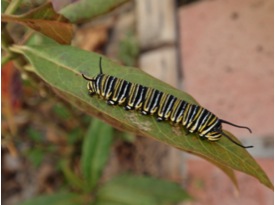
The bold, gaudy colors of certain insects have arrested the eye of many a naturalist. Alfred Russel Wallace and Henry Bates, who collected butterflies in the Amazon, proposed an ingenious evolutionary explanation for the flashy appearances of many insects. They argued that conspicuous colors on insects are actually warning signals to would-be predators, such as birds, which advertise underlying chemical defenses. The stronger the signal, the clearer would be the message: “Don’t mess with me, I’m poisonous.” Thorough experimental confirmation of this idea, called aposematism, did not come until the second half of the 20th century.

Cat1

Figure 1. Aposematic caterpillar of the monarch butterfly on its milkweed host plant. Photo by Michael S. Singer.

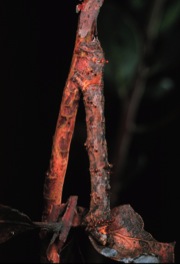
The great Victorian naturalists likewise surmised that camouflage was another important defense of insects against bird predation. Observations of caterpillars, katydids, and walking sticks in their natural environments revealed a wondrous precision in the match between the insect’s appearance and the vegetation upon which it lived. Darwin’s and Wallace’s theory of natural selection was the best scientific explanation: only the best camouflaged individuals of each species would escape detection by predators.


Figure 2. Camouflaged inchworm caterpillar on its host plant, manzanita, in southern Arizona. Photo by Michael S. Singer.

Figure 2. Camouflaged inchworm caterpillar on its host plant, manzanita, in southern Arizona. Photo by Michael S. Singer.


Over the last 50 years, many additional, important observations and experiments have reinforced these evolutionary theories of prey defense. But the vast majority of experimental studies used captive avian predators or artificial prey (such as dead or artificial insects) exposed to wild birds, leaving some question about the effectiveness of aposematism and camouflage in natural predator-prey interactions, which are notoriously difficult to observe directly in the wild. In the mean time, new techniques and technologies have emerged that allow researchers new modes of studying prey defenses in the wild.

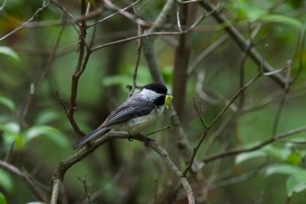
Figure 3. Black-capped chickadee with a captured caterpillar in one of the forest sites used to study bird predation of caterpillars in Connecticut. Photo by Christian Skorik.

Figure 3. Black-capped chickadee with a captured caterpillar in one of the forest sites used to study bird predation of caterpillars in Connecticut. Photo by Christian Skorik.


Enter the new study by Lichter-Marck and colleagues, “The struggle for safety: effectiveness of caterpillar defenses against bird predation.” This study used a bird-exclusion field experiment set in the forests of Connecticut, USA to test evolutionary theories of prey defense in the context of a natural ecological community. Over four years, the research team surrounded hundreds of experimental tree branches with garden-variety bird-proof netting, matching each experimental branch with a control branch lacking netting. The netting was applied at the beginning of each growing season, and allowed caterpillars to come and go while preventing access to insectivorous birds. Three weeks later, the researchers returned to each branch and collected the caterpillars living on them. By experiment’s end, the caterpillar species with the largest proportional increase in numbers in experimental branches (protected from bird predation) relative to control branches (open to bird predation) were inferred to suffer the most bird predation. By measuring the defensive traits of each caterpillar species and correlating them with the inferred magnitude of bird predation, the researchers could determine which traits were most effective as defenses against bird predation.


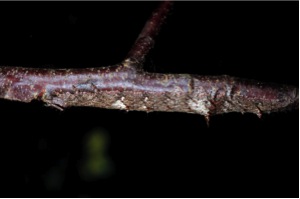
Figure 4. Red maple branch covered with a bird-exclusion net, one of the experimental branches used in this study. Photo by Christian Skorik.

Figure 4. Red maple branch covered with a bird-exclusion net, one of the experimental branches used in this study. Photo by Christian Skorik.


This unique methodological approach supported the main prediction of aposematism theory: among the 38 species of caterpillars that were numerous enough to analyze, those that possessed warning signals, such as bright coloration, received the most protection from birds. But the study revealed another, critical aspect of the warning strategy of defense: stereotypical resting location. The caterpillar species most protected from birds combined warning signals with highly stereotypical resting locations on the plant. That is, their appearance and their location together provided the warning signal to birds. This finding highlights the relatively neglected behavioral aspect of warning strategy of defense.


Figure 5. A warningly-signaled caterpillar species (Nola triquetrana) on its host plant, witch hazel, at one of the forest sites used in this study. Photo by Michael S. Singer.

Figure 5. A warningly-signaled caterpillar species (Nola triquetrana) on its host plant, witch hazel, at one of the forest sites used in this study. Photo by Michael S. Singer.


Yet the majority of the 38 caterpillar species did not possess warning signals, instead employing camouflage as their primary defensive strategy. Because visual camouflage can result from several different tricks in appearance (disruptive patterns, countershading, etc.), the magnitude of camouflage can be difficult to measure. The researchers turned to an increasingly used method, the human proxy predator assay. In this assay, human participants were shown digital images of the caterpillar species resting on their host plants, and a computer program was designed to record how quickly each participant located each caterpillar with an accurate click of the mouse. The longer it took, on average, to find a caterpillar species, the greater the magnitude of camouflage was inferred.


Figure 6. A camouflaged caterpillar species (Catocala ultronia) on its host plant, black cherry, at one of the forest sites used in this study. Photo by Michael S. Singer.

Figure 6. A camouflaged caterpillar species (Catocala ultronia) on its host plant, black cherry, at one of the forest sites used in this study. Photo by Michael S. Singer.


In support of evolutionary theory of prey defense, the study found that the caterpillar species with the greatest inferred magnitudes of camouflage received the most protection from birds. Once again, this part of the study revealed a behavioral twist. A caterpillar species’ frequency of behavioral responsiveness to attack, measured independently, worked against the effectiveness of camouflage. This finding suggests that effective camouflage requires not only an appearance that matches the prey’s background, but also behavioral maintenance of the cryptic posture in the face of physical disturbance.

The authors, through Michael S. Singer

How will the new EU team line up on GMOs, TTIP and energy? Updated for 2026


The new EU President says he will be looking for a more democratic approach to GMO authorisations and transatlantic trade.

He is also making radical and ambitious proposals for an Energy Union that will be “the world’s number one in renewable energies”. But are his Commissioners – ‘Team Juncker’ – fit for purpose?

Back in July the new President of the European Commission, Jean-Claude Juncker, set out his political agenda for the incoming Commission.

In it he signalled a new and welcome approach to the Commission’s attitude to GMOs, the proposed Transatlantic Investment Partnership (TTIP), energy and climate change.

But it’s not clear how much the corporate gang have to worry about. There is considerable doubt that the incumbents of the key posts in agriculture, environment, health and food safety, energy and climate change will be able – or even want, to follow Juncker’s lead.

An unpopular move – with the GMO lobby

This week he finalised the portfolios of the new Commissioner team and reiterated his message which was not well received by some corporate interests – in particular the biotech lobby.

“We believe this will not be positive”, said André Goig, chairman of EuropaBio (European Association of Bioindustries) and a regional director of Syngenta.

In his speech Juncker said he intended “to review the legislation applicable to the authorisation of GMOs” and indicated he would be seeking a more democratic approach.

“To me, it is simply not right that under the current rules, the Commission (EC) is legally forced to authorise new organisms for import and processing even though a clear majority of Member States is against.”

This was a reference to the notorious vote where a majority of EU states opposed to the authorisation of a GMO maize variety were over ruled by a minority in favour of approval due to the ‘weighting’ of votes cast by some larger – and pro-GMO – member states led by the UK.

Juncker also made the highly significant point that “The Commission should be in a position to give the majority view of democratically elected governments at least the same weight as scientific advice, notably when it comes to the safety of the food we eat and the environment in which we live.”

More good news – TTIP, Food safety

He followed this up with a seemingly uncompromising and welcome assurance on the current EU/US negotiations on the Transatlantic Trade and Investment Partnership (TTIP).

“I will also be very clear that I will not sacrifice Europe’s safety, health, social and data protection standards or our cultural diversity on the altar of free trade.”

The good news of the appointments is that the Health and Food Safety portfolio – which includes the European Food Safety Authority (EFSA) – has gone to the Lithuanian Health Minister, Vytenis Andriukaitis.

He has a reputation for supporting state regulation over industry and is said to have a “mistrust of the private sector and the market in general.”

This is exactly what is needed to offset the recent EC tendency to seek reduced regulation and to tackle the much criticised, pro-GMO EFSA which has consistently been too close to industry.

Bad news for agriculture and environment?

Other positions may be problematic.

The Environment portfolio – a crucial one for the GMO cropping issue – has gone to Karmenu Vella – who doesn’t appear to have ever said anything about GMOs. But his pro-business and anti-regulation stance whilst Malta’s Minister of Tourism doesn’t bode well.

Ireland’s Phil Hogan has been given the Agriculture portfolio which also includes the issue of GMO crops as well as agriculture’s role in TTIP.

Hogan does not have a particularly illustrious reputation in government – better known for his gaffes than his achievements. He has no record on agriculture and it is hard to find if he has any views on genetic engineering but he is said to have ‘liberal’ views on trade and is likely to be close to the UK position on farming issues.

Energy and Climate Change – a merger or a mess up?

For the first time within the EC, Junkers has created a new tier of Vice Presidents who will act as his “filters”, “right arms” or possibly filtering right arms, in an attempt to both “streamline” and “integrate” policies.

Slovenia’s ex-Prime Minister Alenka Bratušek will lead the EU’s energy policy as Vice President for Energy Union with the objective of bringing about “a resilient Energy Union, with a forward-looking climate change policy.”

She is tasked with steering the work of the Commissioners for Climate Action and Energy; Transport and Space; Internal Market, Industry, Entrepreneurship and SMEs; Environment, Maritime Affairs and Fisheries, Regional Policy, Agriculture and Rural Development; and Research, Science and Innovation.

At the same time the portfolios of Climate Action and Energy have been merged and given to the former Spanish environment minister Miguel Arias Cañete.

As well as reporting to Bratušek, he has to report to the Vice President for Jobs, Growth, Investment and Competitiveness: An arrangement which reflects the schizophrenia or – to put it more kindly – the balancing act, of trying to limit climate relevant emissions whilst pursuing market competitiveness and economic growth.

Sustainability ‘relegated to the margins’

Some environmental groups are concerned about the wobble and direction of Cañete’s balance; pointing to his ties to the oil industry in Spain and to his role as environment minister in removing subsidies for renewable energy.

He is a controversial appointment and there is also a more than a touch of controversy about Bratušek. She has been severely criticised in Slovenia for “nominating herself” as candidate for the EC – which many regard as a corrupt act – as well as for her “high” salary and “selling out” to business interests.

But the main concern is that these new structures will bring confusion rather than clarity and inertia rather integration.

Everyone wants a connected energy and climate policy and some environmentalists like Wendel Trio, director of Climate Action Network Europe feel it is too soon to tell if that apparent lack of clarity about the new arrangements and appointments will pose a problem.

Others believe that in the restructuring of portfolios, environment and climate action have been marginalised, according to Jeremy Wates, Secretary General of the European Environmental Bureau (EEB):

“Instead of putting sustainability central to his new team, Juncker has decided to relegate it to the margins by scrapping the dedicated posts of a climate and an environment commissioner and appointing a deregulation first Vice-President to put a competitiveness filter on all initiatives.”

Coming up – crucial Parliamentary hearings

All Vice Presidents and Commissioners will play a part in the TTIP negotiations and we have to hope that President Juncker’s statement means what it says and that ‘Team Juncker’ gets behind it.

There are clearly significant differences in the underlying views of Commissioners and as the TTIP negotiations progress tensions will emerge.

At which point the position taken by, firstly Germany, and secondly by the European Parliament (EP), will become pivotal.

It is hard to gauge at this stage how far the composition of the newly elected EP will alter the stance taken by the outgoing one.

All members of ‘Team Juncker’ have to appear before, and be approved by, the EP in the next few weeks. Those hearings will be very instructive.


Lawrence Woodward is founder and director of GM Education, where this article was originally published.

Sources:


384079

Earthquake risk makes California’s Diablo Canyon a Fukushima in waiting Updated for 2026


As aftershocks of the 6.0 Napa earthquake that occurred Sunday in California continued, the Associated Press revealed a secret government report pointing to major earthquake vulnerabilities at the Diablo Canyon nuclear plants which are a little more than 200 miles away and sitting amid a webwork of earthquake faults.

It’s apparent to any visitor to the stretch of California where the two Diablo Canyon plants are sited that it is geologically hot. A major tourist feature of the area: hot spas.

“Welcome to the Avila Hot Springs”, declares the website of one, noting how “historic Avila Hot Springs” was “discovered in 1907 by at the time unlucky oil drillers and established” as a “popular visitor-serving natural artesian mineral hot springs.”

Nevertheless, Pacific Gas & Electric had no problem in 1965 picking the area along the California coast, north of Avila Beach, as a location for two nuclear plants.

Geology rocks!

It was known that the San Andreas Fault was inland 45 miles away. But in 1971, with construction already under way, oil company geologists discovered another earthquake fault – the Hosgri Fault, just three miles out in the Pacific from the plant site and linked to the San Andreas Fault.

In 2008 yet another fault was discovered, the Shoreline Fault – just 650 yards from the Diablo Canyon plants.

The Shoreline Fault, and concerns about the vulnerability of nuclear plants to earthquakes in the wake of the 2011 Fukushima Daiichi disaster, are integral to a 42-page report written by Dr. Michael Peck.

For five years Peck was the lead inspector on-site for the US Nuclear Regulatory Commission at Diablo Canyon. He’s still with the NRC, a trainer at its Technical Training Center in Chattanooga, Tennessee.

Peck’s report was obtained by the Associated Press, which has done excellent journalism in recent years investigating the dangers of nuclear power, and they issued their story on Monday. In the report

Peck writes: “The new seismic information resulted in a condition outside of the bounds of the existing Diablo Canyon design basis and safety analysis. Continued reactor operation outside the bounds of the NRC approved safety analyses challenges the presumption of nuclear safety.”

“The Shoreline [Fault] Scenario results in SSC [acronym in the nuclear field for Structures, Systems and Components] seismic stress beyond the plant SSE [Safe Shutdown Earthquake] qualification basis. Exposure to higher levels of stress results in an increase[d] likelihood of a malfunction of SSCs. The change also increases the likelihood of a malfunction of SSCs important to safety…”

A ‘reasonable assurance of safety’?

Peck notes that the “prevailing” NRC staff view is that “potential ground motions from the Shoreline fault are at or below those levels for which the plant was previously evaluated and demonstrated to have a ‘reasonable assurance of safety’.”

He disagrees, noting that the NRC staff “also failed to address the Los Osos and San Luis Bay faults”, faults that the Shoreline Fault are seen as potentially interacting with, and that “new seismic information” concludes that “these faults were also capable of producing ground motions.”

In addition, “The prevailing staff view that ‘operability’ may be demonstrated independent of existing facility design basis and safety analyses requirements establishes a new industry precedent. Power reactor licensees may apply this precedent to other nonconforming and unanalyzed conditions.”

“What’s striking about Peck’s analysis”, says AP, “is that it comes from within the NRC itself, and gives a rare look at a dispute within the agency. At issue are whether the plant’s mechanical guts could survive a big jolt, and what yardsticks should be used to measure the ability of the equipment to withstand the potentially strong vibrations that could result.”

It continues: “Environmentalists have long depicted Diablo Canyon – the state’s last nuclear plant after the 2013 closure of the San Onofre reactors in Southern California – as a nuclear catastrophe in waiting.

“In many ways, the history of the plant, located halfway between Los Angeles and San Francisco … and within 50 miles of 500,000 people, has been a costly fight against nature, involving questions and repairs connected to its design and structural strength.”

Nuclear secrecy

Calling the Peck report “explosive”, the environmental group Friends of the Earth this week described it as having been “kept secret for a year.”

According to Damon Moglen, senior strategy advisor at Friends of the Earth, “Inspector Peck is the canary in the coal mine, warning us of a possible catastrophe at Diablo Canyon before it’s too late. We agree with him that Diablo Canyon is vulnerable to earthquakes and must be shut down immediately.”

“Given the overwhelming risk of earthquakes, federal and state authorities would never allow nuclear reactors on this site now. Are PG&E and the NRC putting the industry’s profits before the health and safety of millions of Californians.”

“Rather than the NRC keeping this a secret, there must be a thorough investigation with public hearings to determine whether these reactors can operate safely.”

Can Diablo Canyon survive an earthquake?

Michael Mariotte, president of the Nuclear Information & Resource Service, commented Monday that in “plain English” what Peck’s report acknowledges is:

“The NRC does not know whether Diablo Canyon could survive an earthquake, within the realm of the possible, at any of the faults around Diablo Canyon. And the reactors should shut down until the NRC does know one way or the other.

“Of course, if the reactors cannot survive a postulated earthquake, the obvious conclusion is that they must close permanently. The question is whether the NRC will ever act on Peck’s recommendation or whether the agency will continue to sit on it until after the next earthquake.”

Mariotte adds: “The irony is that this should have been the big news a year ago; Peck wrote his recommendation – in the form of a formal Differing Professional Opionion – in July 2013. And the NRC still hasn’t taken action or even responded to it.”

In his report Peck also states that the NRC is supposed to be committed to a “standard of safety” and “safety means avoiding undue risk or providing reasonable assurance of adequate protection for the public.”

PG&E’s response? Apply to extend the licenses

Meanwhile, PG&E has not only been insisting that its Diablo Canyon plants are safe, despite the earthquake threat, but has filed with the NRC to extend the 40 year licenses given for their operations another 20 years – to 2044 for Diablo Canyon 1 and to 2045 for Diablo Canyon 2.

An analysis done in 1982 by Sandia National Laboratories for the NRC, titled ‘Calculations for Reactor Accident Consequences 2‘, evaluated the impacts of a meltdown with “breach of containment” at every nuclear plant in the US – what happened at the Fukushima Daiichi nuclear plants as a result of an earthquake.

For the Diablo Canyon nuclear plants, it projected 10,000 “peak early fatalities” for each of the plants and $155 billion in property damages for Diablo Canyon 1 and $158 billion for Diablo Canyon 2 – in 1980 dollars.


Karl Grossman is professor of journalism at the State University of New York/College at Old Westbury, and the author of ‘Cover Up: What You Are Not Supposed to Know About Nuclear Power’ and host of the nationally-aired TV program ‘EnviroCloseup‘.


383231

Earthquake risk makes California’s Diablo Canyon a Fukushima in waiting Updated for 2026


As aftershocks of the 6.0 Napa earthquake that occurred Sunday in California continued, the Associated Press revealed a secret government report pointing to major earthquake vulnerabilities at the Diablo Canyon nuclear plants which are a little more than 200 miles away and sitting amid a webwork of earthquake faults.

It’s apparent to any visitor to the stretch of California where the two Diablo Canyon plants are sited that it is geologically hot. A major tourist feature of the area: hot spas.

“Welcome to the Avila Hot Springs”, declares the website of one, noting how “historic Avila Hot Springs” was “discovered in 1907 by at the time unlucky oil drillers and established” as a “popular visitor-serving natural artesian mineral hot springs.”

Nevertheless, Pacific Gas & Electric had no problem in 1965 picking the area along the California coast, north of Avila Beach, as a location for two nuclear plants.

Geology rocks!

It was known that the San Andreas Fault was inland 45 miles away. But in 1971, with construction already under way, oil company geologists discovered another earthquake fault – the Hosgri Fault, just three miles out in the Pacific from the plant site and linked to the San Andreas Fault.

In 2008 yet another fault was discovered, the Shoreline Fault – just 650 yards from the Diablo Canyon plants.

The Shoreline Fault, and concerns about the vulnerability of nuclear plants to earthquakes in the wake of the 2011 Fukushima Daiichi disaster, are integral to a 42-page report written by Dr. Michael Peck.

For five years Peck was the lead inspector on-site for the US Nuclear Regulatory Commission at Diablo Canyon. He’s still with the NRC, a trainer at its Technical Training Center in Chattanooga, Tennessee.

Peck’s report was obtained by the Associated Press, which has done excellent journalism in recent years investigating the dangers of nuclear power, and they issued their story on Monday. In the report

Peck writes: “The new seismic information resulted in a condition outside of the bounds of the existing Diablo Canyon design basis and safety analysis. Continued reactor operation outside the bounds of the NRC approved safety analyses challenges the presumption of nuclear safety.”

“The Shoreline [Fault] Scenario results in SSC [acronym in the nuclear field for Structures, Systems and Components] seismic stress beyond the plant SSE [Safe Shutdown Earthquake] qualification basis. Exposure to higher levels of stress results in an increase[d] likelihood of a malfunction of SSCs. The change also increases the likelihood of a malfunction of SSCs important to safety…”

A ‘reasonable assurance of safety’?

Peck notes that the “prevailing” NRC staff view is that “potential ground motions from the Shoreline fault are at or below those levels for which the plant was previously evaluated and demonstrated to have a ‘reasonable assurance of safety’.”

He disagrees, noting that the NRC staff “also failed to address the Los Osos and San Luis Bay faults”, faults that the Shoreline Fault are seen as potentially interacting with, and that “new seismic information” concludes that “these faults were also capable of producing ground motions.”

In addition, “The prevailing staff view that ‘operability’ may be demonstrated independent of existing facility design basis and safety analyses requirements establishes a new industry precedent. Power reactor licensees may apply this precedent to other nonconforming and unanalyzed conditions.”

“What’s striking about Peck’s analysis”, says AP, “is that it comes from within the NRC itself, and gives a rare look at a dispute within the agency. At issue are whether the plant’s mechanical guts could survive a big jolt, and what yardsticks should be used to measure the ability of the equipment to withstand the potentially strong vibrations that could result.”

It continues: “Environmentalists have long depicted Diablo Canyon – the state’s last nuclear plant after the 2013 closure of the San Onofre reactors in Southern California – as a nuclear catastrophe in waiting.

“In many ways, the history of the plant, located halfway between Los Angeles and San Francisco … and within 50 miles of 500,000 people, has been a costly fight against nature, involving questions and repairs connected to its design and structural strength.”

Nuclear secrecy

Calling the Peck report “explosive”, the environmental group Friends of the Earth this week described it as having been “kept secret for a year.”

According to Damon Moglen, senior strategy advisor at Friends of the Earth, “Inspector Peck is the canary in the coal mine, warning us of a possible catastrophe at Diablo Canyon before it’s too late. We agree with him that Diablo Canyon is vulnerable to earthquakes and must be shut down immediately.”

“Given the overwhelming risk of earthquakes, federal and state authorities would never allow nuclear reactors on this site now. Are PG&E and the NRC putting the industry’s profits before the health and safety of millions of Californians.”

“Rather than the NRC keeping this a secret, there must be a thorough investigation with public hearings to determine whether these reactors can operate safely.”

Can Diablo Canyon survive an earthquake?

Michael Mariotte, president of the Nuclear Information & Resource Service, commented Monday that in “plain English” what Peck’s report acknowledges is:

“The NRC does not know whether Diablo Canyon could survive an earthquake, within the realm of the possible, at any of the faults around Diablo Canyon. And the reactors should shut down until the NRC does know one way or the other.

“Of course, if the reactors cannot survive a postulated earthquake, the obvious conclusion is that they must close permanently. The question is whether the NRC will ever act on Peck’s recommendation or whether the agency will continue to sit on it until after the next earthquake.”

Mariotte adds: “The irony is that this should have been the big news a year ago; Peck wrote his recommendation – in the form of a formal Differing Professional Opionion – in July 2013. And the NRC still hasn’t taken action or even responded to it.”

In his report Peck also states that the NRC is supposed to be committed to a “standard of safety” and “safety means avoiding undue risk or providing reasonable assurance of adequate protection for the public.”

PG&E’s response? Apply to extend the licenses

Meanwhile, PG&E has not only been insisting that its Diablo Canyon plants are safe, despite the earthquake threat, but has filed with the NRC to extend the 40 year licenses given for their operations another 20 years – to 2044 for Diablo Canyon 1 and to 2045 for Diablo Canyon 2.

An analysis done in 1982 by Sandia National Laboratories for the NRC, titled ‘Calculations for Reactor Accident Consequences 2‘, evaluated the impacts of a meltdown with “breach of containment” at every nuclear plant in the US – what happened at the Fukushima Daiichi nuclear plants as a result of an earthquake.

For the Diablo Canyon nuclear plants, it projected 10,000 “peak early fatalities” for each of the plants and $155 billion in property damages for Diablo Canyon 1 and $158 billion for Diablo Canyon 2 – in 1980 dollars.


Karl Grossman is professor of journalism at the State University of New York/College at Old Westbury, and the author of ‘Cover Up: What You Are Not Supposed to Know About Nuclear Power’ and host of the nationally-aired TV program ‘EnviroCloseup‘.


383231

Earthquake risk makes California’s Diablo Canyon a Fukushima in waiting Updated for 2026


As aftershocks of the 6.0 Napa earthquake that occurred Sunday in California continued, the Associated Press revealed a secret government report pointing to major earthquake vulnerabilities at the Diablo Canyon nuclear plants which are a little more than 200 miles away and sitting amid a webwork of earthquake faults.

It’s apparent to any visitor to the stretch of California where the two Diablo Canyon plants are sited that it is geologically hot. A major tourist feature of the area: hot spas.

“Welcome to the Avila Hot Springs”, declares the website of one, noting how “historic Avila Hot Springs” was “discovered in 1907 by at the time unlucky oil drillers and established” as a “popular visitor-serving natural artesian mineral hot springs.”

Nevertheless, Pacific Gas & Electric had no problem in 1965 picking the area along the California coast, north of Avila Beach, as a location for two nuclear plants.

Geology rocks!

It was known that the San Andreas Fault was inland 45 miles away. But in 1971, with construction already under way, oil company geologists discovered another earthquake fault – the Hosgri Fault, just three miles out in the Pacific from the plant site and linked to the San Andreas Fault.

In 2008 yet another fault was discovered, the Shoreline Fault – just 650 yards from the Diablo Canyon plants.

The Shoreline Fault, and concerns about the vulnerability of nuclear plants to earthquakes in the wake of the 2011 Fukushima Daiichi disaster, are integral to a 42-page report written by Dr. Michael Peck.

For five years Peck was the lead inspector on-site for the US Nuclear Regulatory Commission at Diablo Canyon. He’s still with the NRC, a trainer at its Technical Training Center in Chattanooga, Tennessee.

Peck’s report was obtained by the Associated Press, which has done excellent journalism in recent years investigating the dangers of nuclear power, and they issued their story on Monday. In the report

Peck writes: “The new seismic information resulted in a condition outside of the bounds of the existing Diablo Canyon design basis and safety analysis. Continued reactor operation outside the bounds of the NRC approved safety analyses challenges the presumption of nuclear safety.”

“The Shoreline [Fault] Scenario results in SSC [acronym in the nuclear field for Structures, Systems and Components] seismic stress beyond the plant SSE [Safe Shutdown Earthquake] qualification basis. Exposure to higher levels of stress results in an increase[d] likelihood of a malfunction of SSCs. The change also increases the likelihood of a malfunction of SSCs important to safety…”

A ‘reasonable assurance of safety’?

Peck notes that the “prevailing” NRC staff view is that “potential ground motions from the Shoreline fault are at or below those levels for which the plant was previously evaluated and demonstrated to have a ‘reasonable assurance of safety’.”

He disagrees, noting that the NRC staff “also failed to address the Los Osos and San Luis Bay faults”, faults that the Shoreline Fault are seen as potentially interacting with, and that “new seismic information” concludes that “these faults were also capable of producing ground motions.”

In addition, “The prevailing staff view that ‘operability’ may be demonstrated independent of existing facility design basis and safety analyses requirements establishes a new industry precedent. Power reactor licensees may apply this precedent to other nonconforming and unanalyzed conditions.”

“What’s striking about Peck’s analysis”, says AP, “is that it comes from within the NRC itself, and gives a rare look at a dispute within the agency. At issue are whether the plant’s mechanical guts could survive a big jolt, and what yardsticks should be used to measure the ability of the equipment to withstand the potentially strong vibrations that could result.”

It continues: “Environmentalists have long depicted Diablo Canyon – the state’s last nuclear plant after the 2013 closure of the San Onofre reactors in Southern California – as a nuclear catastrophe in waiting.

“In many ways, the history of the plant, located halfway between Los Angeles and San Francisco … and within 50 miles of 500,000 people, has been a costly fight against nature, involving questions and repairs connected to its design and structural strength.”

Nuclear secrecy

Calling the Peck report “explosive”, the environmental group Friends of the Earth this week described it as having been “kept secret for a year.”

According to Damon Moglen, senior strategy advisor at Friends of the Earth, “Inspector Peck is the canary in the coal mine, warning us of a possible catastrophe at Diablo Canyon before it’s too late. We agree with him that Diablo Canyon is vulnerable to earthquakes and must be shut down immediately.”

“Given the overwhelming risk of earthquakes, federal and state authorities would never allow nuclear reactors on this site now. Are PG&E and the NRC putting the industry’s profits before the health and safety of millions of Californians.”

“Rather than the NRC keeping this a secret, there must be a thorough investigation with public hearings to determine whether these reactors can operate safely.”

Can Diablo Canyon survive an earthquake?

Michael Mariotte, president of the Nuclear Information & Resource Service, commented Monday that in “plain English” what Peck’s report acknowledges is:

“The NRC does not know whether Diablo Canyon could survive an earthquake, within the realm of the possible, at any of the faults around Diablo Canyon. And the reactors should shut down until the NRC does know one way or the other.

“Of course, if the reactors cannot survive a postulated earthquake, the obvious conclusion is that they must close permanently. The question is whether the NRC will ever act on Peck’s recommendation or whether the agency will continue to sit on it until after the next earthquake.”

Mariotte adds: “The irony is that this should have been the big news a year ago; Peck wrote his recommendation – in the form of a formal Differing Professional Opionion – in July 2013. And the NRC still hasn’t taken action or even responded to it.”

In his report Peck also states that the NRC is supposed to be committed to a “standard of safety” and “safety means avoiding undue risk or providing reasonable assurance of adequate protection for the public.”

PG&E’s response? Apply to extend the licenses

Meanwhile, PG&E has not only been insisting that its Diablo Canyon plants are safe, despite the earthquake threat, but has filed with the NRC to extend the 40 year licenses given for their operations another 20 years – to 2044 for Diablo Canyon 1 and to 2045 for Diablo Canyon 2.

An analysis done in 1982 by Sandia National Laboratories for the NRC, titled ‘Calculations for Reactor Accident Consequences 2‘, evaluated the impacts of a meltdown with “breach of containment” at every nuclear plant in the US – what happened at the Fukushima Daiichi nuclear plants as a result of an earthquake.

For the Diablo Canyon nuclear plants, it projected 10,000 “peak early fatalities” for each of the plants and $155 billion in property damages for Diablo Canyon 1 and $158 billion for Diablo Canyon 2 – in 1980 dollars.


Karl Grossman is professor of journalism at the State University of New York/College at Old Westbury, and the author of ‘Cover Up: What You Are Not Supposed to Know About Nuclear Power’ and host of the nationally-aired TV program ‘EnviroCloseup‘.


383231

Earthquake risk makes California’s Diablo Canyon a Fukushima in waiting Updated for 2026


As aftershocks of the 6.0 Napa earthquake that occurred Sunday in California continued, the Associated Press revealed a secret government report pointing to major earthquake vulnerabilities at the Diablo Canyon nuclear plants which are a little more than 200 miles away and sitting amid a webwork of earthquake faults.

It’s apparent to any visitor to the stretch of California where the two Diablo Canyon plants are sited that it is geologically hot. A major tourist feature of the area: hot spas.

“Welcome to the Avila Hot Springs”, declares the website of one, noting how “historic Avila Hot Springs” was “discovered in 1907 by at the time unlucky oil drillers and established” as a “popular visitor-serving natural artesian mineral hot springs.”

Nevertheless, Pacific Gas & Electric had no problem in 1965 picking the area along the California coast, north of Avila Beach, as a location for two nuclear plants.

Geology rocks!

It was known that the San Andreas Fault was inland 45 miles away. But in 1971, with construction already under way, oil company geologists discovered another earthquake fault – the Hosgri Fault, just three miles out in the Pacific from the plant site and linked to the San Andreas Fault.

In 2008 yet another fault was discovered, the Shoreline Fault – just 650 yards from the Diablo Canyon plants.

The Shoreline Fault, and concerns about the vulnerability of nuclear plants to earthquakes in the wake of the 2011 Fukushima Daiichi disaster, are integral to a 42-page report written by Dr. Michael Peck.

For five years Peck was the lead inspector on-site for the US Nuclear Regulatory Commission at Diablo Canyon. He’s still with the NRC, a trainer at its Technical Training Center in Chattanooga, Tennessee.

Peck’s report was obtained by the Associated Press, which has done excellent journalism in recent years investigating the dangers of nuclear power, and they issued their story on Monday. In the report

Peck writes: “The new seismic information resulted in a condition outside of the bounds of the existing Diablo Canyon design basis and safety analysis. Continued reactor operation outside the bounds of the NRC approved safety analyses challenges the presumption of nuclear safety.”

“The Shoreline [Fault] Scenario results in SSC [acronym in the nuclear field for Structures, Systems and Components] seismic stress beyond the plant SSE [Safe Shutdown Earthquake] qualification basis. Exposure to higher levels of stress results in an increase[d] likelihood of a malfunction of SSCs. The change also increases the likelihood of a malfunction of SSCs important to safety…”

A ‘reasonable assurance of safety’?

Peck notes that the “prevailing” NRC staff view is that “potential ground motions from the Shoreline fault are at or below those levels for which the plant was previously evaluated and demonstrated to have a ‘reasonable assurance of safety’.”

He disagrees, noting that the NRC staff “also failed to address the Los Osos and San Luis Bay faults”, faults that the Shoreline Fault are seen as potentially interacting with, and that “new seismic information” concludes that “these faults were also capable of producing ground motions.”

In addition, “The prevailing staff view that ‘operability’ may be demonstrated independent of existing facility design basis and safety analyses requirements establishes a new industry precedent. Power reactor licensees may apply this precedent to other nonconforming and unanalyzed conditions.”

“What’s striking about Peck’s analysis”, says AP, “is that it comes from within the NRC itself, and gives a rare look at a dispute within the agency. At issue are whether the plant’s mechanical guts could survive a big jolt, and what yardsticks should be used to measure the ability of the equipment to withstand the potentially strong vibrations that could result.”

It continues: “Environmentalists have long depicted Diablo Canyon – the state’s last nuclear plant after the 2013 closure of the San Onofre reactors in Southern California – as a nuclear catastrophe in waiting.

“In many ways, the history of the plant, located halfway between Los Angeles and San Francisco … and within 50 miles of 500,000 people, has been a costly fight against nature, involving questions and repairs connected to its design and structural strength.”

Nuclear secrecy

Calling the Peck report “explosive”, the environmental group Friends of the Earth this week described it as having been “kept secret for a year.”

According to Damon Moglen, senior strategy advisor at Friends of the Earth, “Inspector Peck is the canary in the coal mine, warning us of a possible catastrophe at Diablo Canyon before it’s too late. We agree with him that Diablo Canyon is vulnerable to earthquakes and must be shut down immediately.”

“Given the overwhelming risk of earthquakes, federal and state authorities would never allow nuclear reactors on this site now. Are PG&E and the NRC putting the industry’s profits before the health and safety of millions of Californians.”

“Rather than the NRC keeping this a secret, there must be a thorough investigation with public hearings to determine whether these reactors can operate safely.”

Can Diablo Canyon survive an earthquake?

Michael Mariotte, president of the Nuclear Information & Resource Service, commented Monday that in “plain English” what Peck’s report acknowledges is:

“The NRC does not know whether Diablo Canyon could survive an earthquake, within the realm of the possible, at any of the faults around Diablo Canyon. And the reactors should shut down until the NRC does know one way or the other.

“Of course, if the reactors cannot survive a postulated earthquake, the obvious conclusion is that they must close permanently. The question is whether the NRC will ever act on Peck’s recommendation or whether the agency will continue to sit on it until after the next earthquake.”

Mariotte adds: “The irony is that this should have been the big news a year ago; Peck wrote his recommendation – in the form of a formal Differing Professional Opionion – in July 2013. And the NRC still hasn’t taken action or even responded to it.”

In his report Peck also states that the NRC is supposed to be committed to a “standard of safety” and “safety means avoiding undue risk or providing reasonable assurance of adequate protection for the public.”

PG&E’s response? Apply to extend the licenses

Meanwhile, PG&E has not only been insisting that its Diablo Canyon plants are safe, despite the earthquake threat, but has filed with the NRC to extend the 40 year licenses given for their operations another 20 years – to 2044 for Diablo Canyon 1 and to 2045 for Diablo Canyon 2.

An analysis done in 1982 by Sandia National Laboratories for the NRC, titled ‘Calculations for Reactor Accident Consequences 2‘, evaluated the impacts of a meltdown with “breach of containment” at every nuclear plant in the US – what happened at the Fukushima Daiichi nuclear plants as a result of an earthquake.

For the Diablo Canyon nuclear plants, it projected 10,000 “peak early fatalities” for each of the plants and $155 billion in property damages for Diablo Canyon 1 and $158 billion for Diablo Canyon 2 – in 1980 dollars.


Karl Grossman is professor of journalism at the State University of New York/College at Old Westbury, and the author of ‘Cover Up: What You Are Not Supposed to Know About Nuclear Power’ and host of the nationally-aired TV program ‘EnviroCloseup‘.


383231

Earthquake risk makes California’s Diablo Canyon a Fukushima in waiting Updated for 2026


As aftershocks of the 6.0 Napa earthquake that occurred Sunday in California continued, the Associated Press revealed a secret government report pointing to major earthquake vulnerabilities at the Diablo Canyon nuclear plants which are a little more than 200 miles away and sitting amid a webwork of earthquake faults.

It’s apparent to any visitor to the stretch of California where the two Diablo Canyon plants are sited that it is geologically hot. A major tourist feature of the area: hot spas.

“Welcome to the Avila Hot Springs”, declares the website of one, noting how “historic Avila Hot Springs” was “discovered in 1907 by at the time unlucky oil drillers and established” as a “popular visitor-serving natural artesian mineral hot springs.”

Nevertheless, Pacific Gas & Electric had no problem in 1965 picking the area along the California coast, north of Avila Beach, as a location for two nuclear plants.

Geology rocks!

It was known that the San Andreas Fault was inland 45 miles away. But in 1971, with construction already under way, oil company geologists discovered another earthquake fault – the Hosgri Fault, just three miles out in the Pacific from the plant site and linked to the San Andreas Fault.

In 2008 yet another fault was discovered, the Shoreline Fault – just 650 yards from the Diablo Canyon plants.

The Shoreline Fault, and concerns about the vulnerability of nuclear plants to earthquakes in the wake of the 2011 Fukushima Daiichi disaster, are integral to a 42-page report written by Dr. Michael Peck.

For five years Peck was the lead inspector on-site for the US Nuclear Regulatory Commission at Diablo Canyon. He’s still with the NRC, a trainer at its Technical Training Center in Chattanooga, Tennessee.

Peck’s report was obtained by the Associated Press, which has done excellent journalism in recent years investigating the dangers of nuclear power, and they issued their story on Monday. In the report

Peck writes: “The new seismic information resulted in a condition outside of the bounds of the existing Diablo Canyon design basis and safety analysis. Continued reactor operation outside the bounds of the NRC approved safety analyses challenges the presumption of nuclear safety.”

“The Shoreline [Fault] Scenario results in SSC [acronym in the nuclear field for Structures, Systems and Components] seismic stress beyond the plant SSE [Safe Shutdown Earthquake] qualification basis. Exposure to higher levels of stress results in an increase[d] likelihood of a malfunction of SSCs. The change also increases the likelihood of a malfunction of SSCs important to safety…”

A ‘reasonable assurance of safety’?

Peck notes that the “prevailing” NRC staff view is that “potential ground motions from the Shoreline fault are at or below those levels for which the plant was previously evaluated and demonstrated to have a ‘reasonable assurance of safety’.”

He disagrees, noting that the NRC staff “also failed to address the Los Osos and San Luis Bay faults”, faults that the Shoreline Fault are seen as potentially interacting with, and that “new seismic information” concludes that “these faults were also capable of producing ground motions.”

In addition, “The prevailing staff view that ‘operability’ may be demonstrated independent of existing facility design basis and safety analyses requirements establishes a new industry precedent. Power reactor licensees may apply this precedent to other nonconforming and unanalyzed conditions.”

“What’s striking about Peck’s analysis”, says AP, “is that it comes from within the NRC itself, and gives a rare look at a dispute within the agency. At issue are whether the plant’s mechanical guts could survive a big jolt, and what yardsticks should be used to measure the ability of the equipment to withstand the potentially strong vibrations that could result.”

It continues: “Environmentalists have long depicted Diablo Canyon – the state’s last nuclear plant after the 2013 closure of the San Onofre reactors in Southern California – as a nuclear catastrophe in waiting.

“In many ways, the history of the plant, located halfway between Los Angeles and San Francisco … and within 50 miles of 500,000 people, has been a costly fight against nature, involving questions and repairs connected to its design and structural strength.”

Nuclear secrecy

Calling the Peck report “explosive”, the environmental group Friends of the Earth this week described it as having been “kept secret for a year.”

According to Damon Moglen, senior strategy advisor at Friends of the Earth, “Inspector Peck is the canary in the coal mine, warning us of a possible catastrophe at Diablo Canyon before it’s too late. We agree with him that Diablo Canyon is vulnerable to earthquakes and must be shut down immediately.”

“Given the overwhelming risk of earthquakes, federal and state authorities would never allow nuclear reactors on this site now. Are PG&E and the NRC putting the industry’s profits before the health and safety of millions of Californians.”

“Rather than the NRC keeping this a secret, there must be a thorough investigation with public hearings to determine whether these reactors can operate safely.”

Can Diablo Canyon survive an earthquake?

Michael Mariotte, president of the Nuclear Information & Resource Service, commented Monday that in “plain English” what Peck’s report acknowledges is:

“The NRC does not know whether Diablo Canyon could survive an earthquake, within the realm of the possible, at any of the faults around Diablo Canyon. And the reactors should shut down until the NRC does know one way or the other.

“Of course, if the reactors cannot survive a postulated earthquake, the obvious conclusion is that they must close permanently. The question is whether the NRC will ever act on Peck’s recommendation or whether the agency will continue to sit on it until after the next earthquake.”

Mariotte adds: “The irony is that this should have been the big news a year ago; Peck wrote his recommendation – in the form of a formal Differing Professional Opionion – in July 2013. And the NRC still hasn’t taken action or even responded to it.”

In his report Peck also states that the NRC is supposed to be committed to a “standard of safety” and “safety means avoiding undue risk or providing reasonable assurance of adequate protection for the public.”

PG&E’s response? Apply to extend the licenses

Meanwhile, PG&E has not only been insisting that its Diablo Canyon plants are safe, despite the earthquake threat, but has filed with the NRC to extend the 40 year licenses given for their operations another 20 years – to 2044 for Diablo Canyon 1 and to 2045 for Diablo Canyon 2.

An analysis done in 1982 by Sandia National Laboratories for the NRC, titled ‘Calculations for Reactor Accident Consequences 2‘, evaluated the impacts of a meltdown with “breach of containment” at every nuclear plant in the US – what happened at the Fukushima Daiichi nuclear plants as a result of an earthquake.

For the Diablo Canyon nuclear plants, it projected 10,000 “peak early fatalities” for each of the plants and $155 billion in property damages for Diablo Canyon 1 and $158 billion for Diablo Canyon 2 – in 1980 dollars.


Karl Grossman is professor of journalism at the State University of New York/College at Old Westbury, and the author of ‘Cover Up: What You Are Not Supposed to Know About Nuclear Power’ and host of the nationally-aired TV program ‘EnviroCloseup‘.


383231

Earthquake risk makes California’s Diablo Canyon a Fukushima in waiting Updated for 2026


As aftershocks of the 6.0 Napa earthquake that occurred Sunday in California continued, the Associated Press revealed a secret government report pointing to major earthquake vulnerabilities at the Diablo Canyon nuclear plants which are a little more than 200 miles away and sitting amid a webwork of earthquake faults.

It’s apparent to any visitor to the stretch of California where the two Diablo Canyon plants are sited that it is geologically hot. A major tourist feature of the area: hot spas.

“Welcome to the Avila Hot Springs”, declares the website of one, noting how “historic Avila Hot Springs” was “discovered in 1907 by at the time unlucky oil drillers and established” as a “popular visitor-serving natural artesian mineral hot springs.”

Nevertheless, Pacific Gas & Electric had no problem in 1965 picking the area along the California coast, north of Avila Beach, as a location for two nuclear plants.

Geology rocks!

It was known that the San Andreas Fault was inland 45 miles away. But in 1971, with construction already under way, oil company geologists discovered another earthquake fault – the Hosgri Fault, just three miles out in the Pacific from the plant site and linked to the San Andreas Fault.

In 2008 yet another fault was discovered, the Shoreline Fault – just 650 yards from the Diablo Canyon plants.

The Shoreline Fault, and concerns about the vulnerability of nuclear plants to earthquakes in the wake of the 2011 Fukushima Daiichi disaster, are integral to a 42-page report written by Dr. Michael Peck.

For five years Peck was the lead inspector on-site for the US Nuclear Regulatory Commission at Diablo Canyon. He’s still with the NRC, a trainer at its Technical Training Center in Chattanooga, Tennessee.

Peck’s report was obtained by the Associated Press, which has done excellent journalism in recent years investigating the dangers of nuclear power, and they issued their story on Monday. In the report

Peck writes: “The new seismic information resulted in a condition outside of the bounds of the existing Diablo Canyon design basis and safety analysis. Continued reactor operation outside the bounds of the NRC approved safety analyses challenges the presumption of nuclear safety.”

“The Shoreline [Fault] Scenario results in SSC [acronym in the nuclear field for Structures, Systems and Components] seismic stress beyond the plant SSE [Safe Shutdown Earthquake] qualification basis. Exposure to higher levels of stress results in an increase[d] likelihood of a malfunction of SSCs. The change also increases the likelihood of a malfunction of SSCs important to safety…”

A ‘reasonable assurance of safety’?

Peck notes that the “prevailing” NRC staff view is that “potential ground motions from the Shoreline fault are at or below those levels for which the plant was previously evaluated and demonstrated to have a ‘reasonable assurance of safety’.”

He disagrees, noting that the NRC staff “also failed to address the Los Osos and San Luis Bay faults”, faults that the Shoreline Fault are seen as potentially interacting with, and that “new seismic information” concludes that “these faults were also capable of producing ground motions.”

In addition, “The prevailing staff view that ‘operability’ may be demonstrated independent of existing facility design basis and safety analyses requirements establishes a new industry precedent. Power reactor licensees may apply this precedent to other nonconforming and unanalyzed conditions.”

“What’s striking about Peck’s analysis”, says AP, “is that it comes from within the NRC itself, and gives a rare look at a dispute within the agency. At issue are whether the plant’s mechanical guts could survive a big jolt, and what yardsticks should be used to measure the ability of the equipment to withstand the potentially strong vibrations that could result.”

It continues: “Environmentalists have long depicted Diablo Canyon – the state’s last nuclear plant after the 2013 closure of the San Onofre reactors in Southern California – as a nuclear catastrophe in waiting.

“In many ways, the history of the plant, located halfway between Los Angeles and San Francisco … and within 50 miles of 500,000 people, has been a costly fight against nature, involving questions and repairs connected to its design and structural strength.”

Nuclear secrecy

Calling the Peck report “explosive”, the environmental group Friends of the Earth this week described it as having been “kept secret for a year.”

According to Damon Moglen, senior strategy advisor at Friends of the Earth, “Inspector Peck is the canary in the coal mine, warning us of a possible catastrophe at Diablo Canyon before it’s too late. We agree with him that Diablo Canyon is vulnerable to earthquakes and must be shut down immediately.”

“Given the overwhelming risk of earthquakes, federal and state authorities would never allow nuclear reactors on this site now. Are PG&E and the NRC putting the industry’s profits before the health and safety of millions of Californians.”

“Rather than the NRC keeping this a secret, there must be a thorough investigation with public hearings to determine whether these reactors can operate safely.”

Can Diablo Canyon survive an earthquake?

Michael Mariotte, president of the Nuclear Information & Resource Service, commented Monday that in “plain English” what Peck’s report acknowledges is:

“The NRC does not know whether Diablo Canyon could survive an earthquake, within the realm of the possible, at any of the faults around Diablo Canyon. And the reactors should shut down until the NRC does know one way or the other.

“Of course, if the reactors cannot survive a postulated earthquake, the obvious conclusion is that they must close permanently. The question is whether the NRC will ever act on Peck’s recommendation or whether the agency will continue to sit on it until after the next earthquake.”

Mariotte adds: “The irony is that this should have been the big news a year ago; Peck wrote his recommendation – in the form of a formal Differing Professional Opionion – in July 2013. And the NRC still hasn’t taken action or even responded to it.”

In his report Peck also states that the NRC is supposed to be committed to a “standard of safety” and “safety means avoiding undue risk or providing reasonable assurance of adequate protection for the public.”

PG&E’s response? Apply to extend the licenses

Meanwhile, PG&E has not only been insisting that its Diablo Canyon plants are safe, despite the earthquake threat, but has filed with the NRC to extend the 40 year licenses given for their operations another 20 years – to 2044 for Diablo Canyon 1 and to 2045 for Diablo Canyon 2.

An analysis done in 1982 by Sandia National Laboratories for the NRC, titled ‘Calculations for Reactor Accident Consequences 2‘, evaluated the impacts of a meltdown with “breach of containment” at every nuclear plant in the US – what happened at the Fukushima Daiichi nuclear plants as a result of an earthquake.

For the Diablo Canyon nuclear plants, it projected 10,000 “peak early fatalities” for each of the plants and $155 billion in property damages for Diablo Canyon 1 and $158 billion for Diablo Canyon 2 – in 1980 dollars.


Karl Grossman is professor of journalism at the State University of New York/College at Old Westbury, and the author of ‘Cover Up: What You Are Not Supposed to Know About Nuclear Power’ and host of the nationally-aired TV program ‘EnviroCloseup‘.


383231