Tag Archives: birds

Travelling around to catch more parasites? Updated for 2026

Do migratory birds catch more parasites? This is explored in the Oikos Early View paper “Flying with diverse passengers: greater richness of parasitic nematodes in migratory birds” by Janet Koprivnikar and tommy L.F. Leung. Below is their short summary of the study:

Many different animals undergo annual migrations and some of them cover enormous distances with their journey. This undertaking can be extremely strenuous and physiologically demanding. Aside from the demands of the journey itself, most animals don’t travel alone – they carry with them an entire community of different parasites throughout their body. Migratory birds undergo annual migratory flights across the globe and birds are well known to be a haven for
pathogens. Most birds are infected with dozens of different species of parasite, many of them worms of all shapes and sizes. While most studies looking at bird parasites in relation to their ecology or migratory habits have focused on blood-dwelling types such as avian malaria, few have studied their worms despite the relative abundance of these parasites in their hosts. Of those different types of worms, the most harmful are the nematodes (roundworms). Some nematodes can cause serious diseases in birds so we decided to compare the diversity of parasitic roundworms in migratory birds versus that of non-migratory species.

In particular, we focused our attention on three orders of birds; water birds (Anseriformes), perching birds (Passeriformes), and birds of prey (Accipitriformes). We found that for any of those given orders, the migratory species tended to have a wider range of roundworms than non-migratory species. Furthermore, we also found that bird species which have proportionally larger spleens also happen to have a greater variety of roundworms infecting them.

So why do migratory species have more diverse nematode communities than their non-migratory relatives? We don’t know that at this point. It is possible that migratory birds pick up many different species of parasites during their journey whereas non-migratory species which stick to a single location their entire life are exposed to a more limited range of parasites. Or perhaps because migration is such a stressful exercise, migratory birds can become stressed during such journeys and become more vulnerable to a wider variety of parasites. Or it might be both!
Due to the diseases that parasitic roundworms can cause in birds, it is important to also keep them in mind when considering the effects that global perturbations such as climate change can have on the ecology of migratory species. As migratory birds change their arrival and departure timing, and are also forced to alter their migratory routes and stopover sites, they might become more stressed and susceptible to parasitism. Furthermore, altered migratory routes and stopover sites can also mean that migratory birds might be introducing their rich suite of worms to new areas and potential hosts.
How small rodents in the Arctic affect birds in New Zealand Updated for 2026

The complicated predator-prey interactions are one of the most fascinating fields in ecology. They have been studied for decades, and the more we learn, the more surprising and unpredicted stories that we find. For me, finding that small rodents (lemmings) in the high Arctic may affect the populations of waders on the coast of Australia, New Zealand or South Africa was a real amazement.

Lemming populations have been known to show 3-5 years cycle, driven by either top-down or bottom-up control. In the Early View paper “Loss of periodicity in breeding success of waders links to changes in lemming cycles in Arctic ecosystems”, we have studied the interactions between the breeding success of high-Arctic nesting migratory shorebirds and lemming abundance, as they were suggested to be linked via the ‘alternative prey hypothesis’: In years of low lemming abundance, their predators, mainly Arctic fox, would switch to alternative prey, including chicks and eggs of shorebirds. In light of the large amount of evidence that lemming cycles have now changed and even disappeared in some parts of the Arctic, we found that the breeding success of these migrants used to follow the cycles of lemmings, but these cycles have too started to disappear, suggesting a cascading effect of changes in lemming cycles.

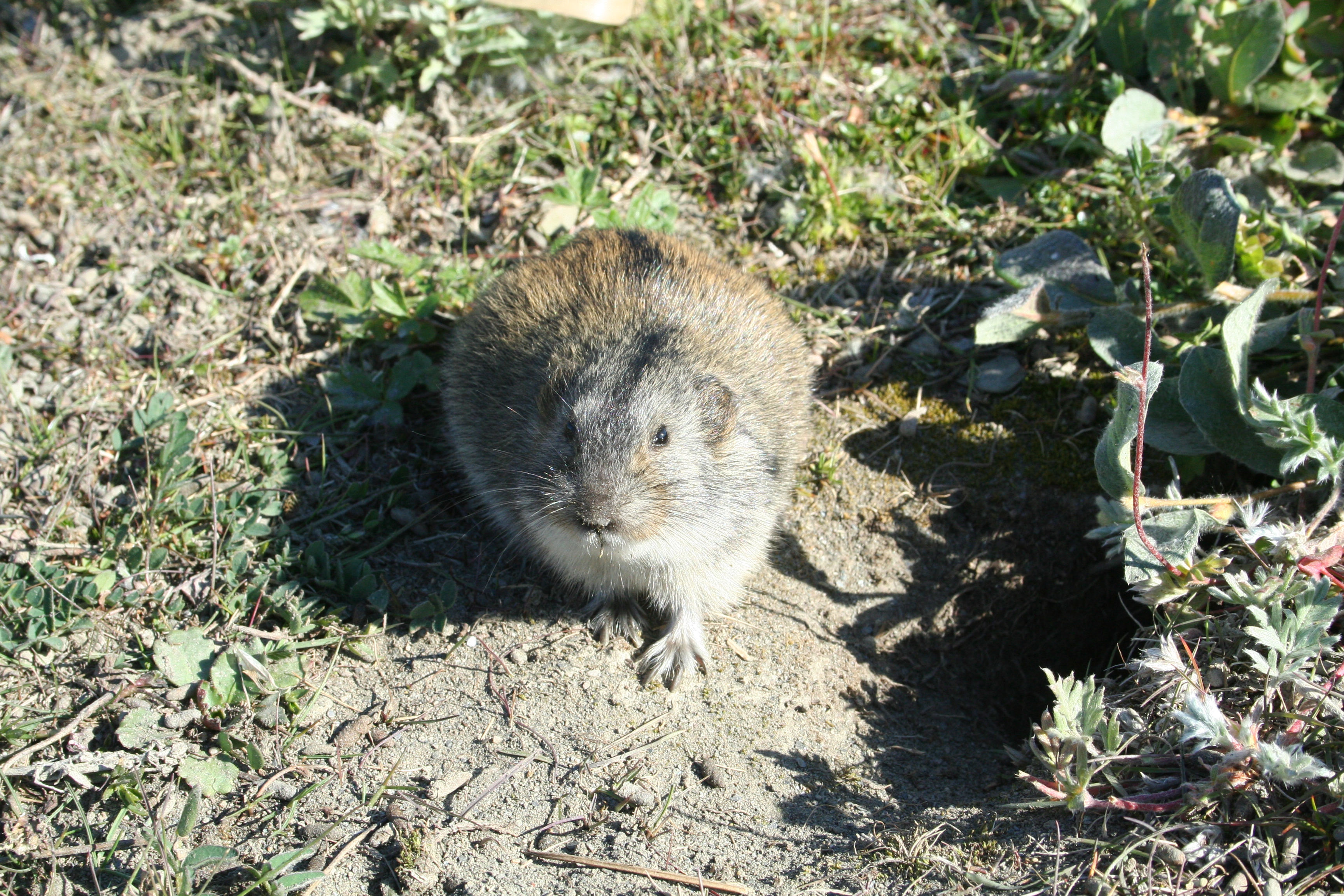
Siberian lemming © Pavel Tomkovich

Siberian lemming © Pavel Tomkovich

The reason for these changes in lemming cycles is still not entirely known. One possible explanation is that climate change caused alteration of the snow structure which is a crucial hiding and feeding place for lemmings during winter. It might also be the natural tendency of populations in nature to go in and out of cycle. As shorebirds are known to consume considerable amount of benthic invertebrates, these changes in lemming cycle in the high Arctic potentially not only affect shorebird populations in the other side of the worlds, but also have a far-reaching cross-systems consequences on the ecosystem on the southern hemisphere.


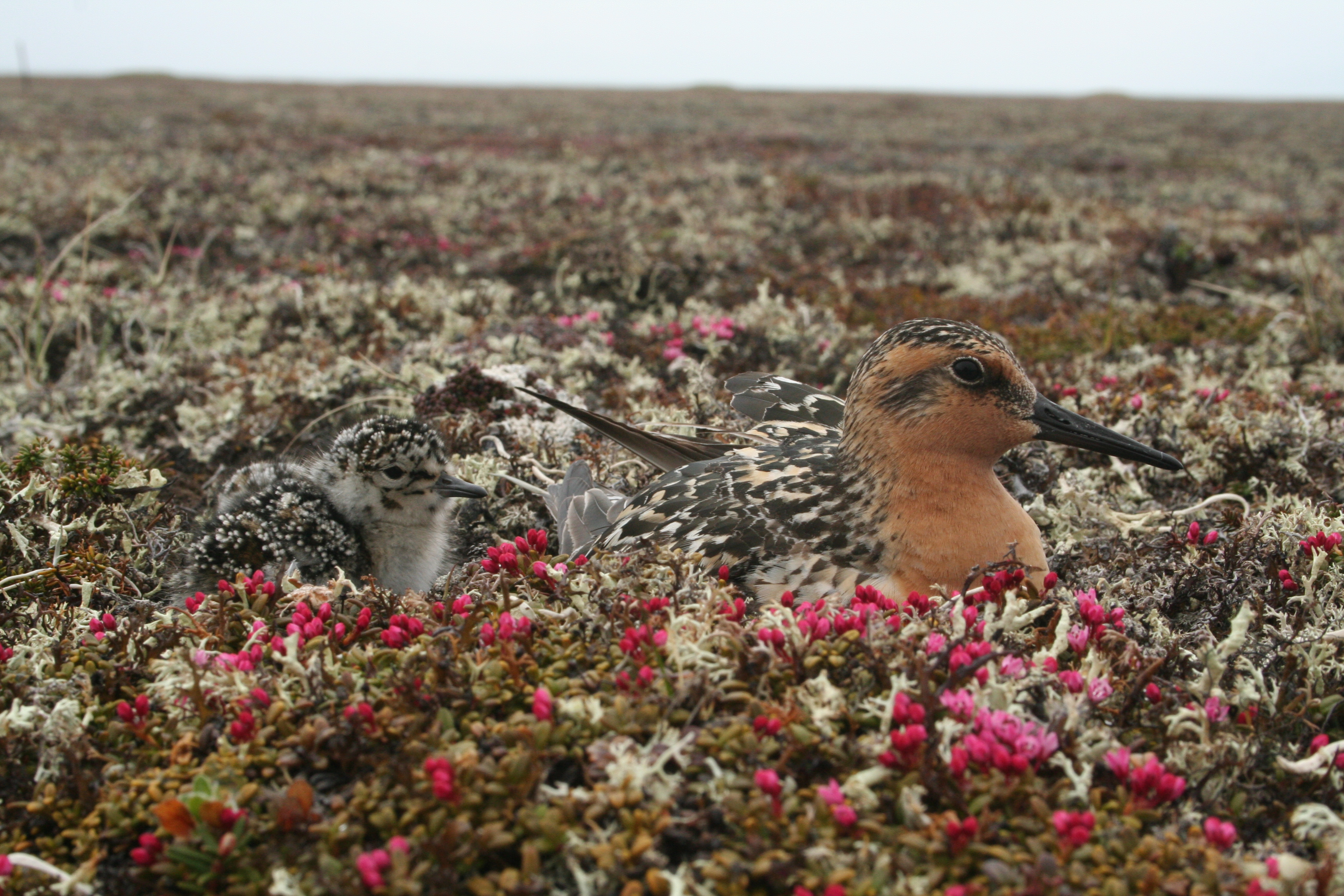
Perfectly camouflaged shorebird chick with its ‘not so camouflaged’ parent, on the beautiful high Arctic breeding grounds © Pavel Tomkovich

Perfectly camouflaged shorebird chick with its ‘not so camouflaged’ parent, on the beautiful high Arctic breeding grounds © Pavel Tomkovich


African habitat loss driving migrating birds’ decline Updated for 2026


The latest in the annual series of State of the UK’s Birds report, published today, shows alarming declines among 29 migrant species which nest in the UK in summer and spend the winter around the Mediterranean, or in Africa south of the Sahara Desert.

The most dramatic declines are among species which winter in the humid zone of Africa – stretching across the continent from southern Senegal to Nigeria and beyond.

Of this group of species, which includes whinchat, nightingale, tree pipit and spotted flycatcher, 73% have declined since the late 1980s, 45% by more than half.

One of the most dramatic declines is that of the turtle dove with a decline of 88% since 1995. Heavy declines have also been recorded over the same period for wood warbler, down 66%; pied flycatcher, 53%; spotted flycatcher, 49%; cuckoo, 49%; nightingale, 43%; and yellow wagtail, 43%.

Species wintering furthest south in the Congo Basin (represented here by cuckoos, swifts and swallows) also show a substantial decline since the early 1980s.

But where are the problems occurring?

According to Martin Harper, RSPB’s Conservation Director, it’s hard to pinpoint where the problems lie for the species’ decline:

“Their nomadic lifestyle, requiring sites and resources spread over vast distances across the globe makes identifying and understanding the causes of decline extremely complex. The problems may be in the UK or in West Africa, or indeed on migration in between the two.”

However the birds’ decline may be linked to deforestation in West Africa’s rainforests, and the expansion of both rain-fed and irrigated agriculture, says the report:

“The loss and degradation of wetlands is widely reported as a result of damming of rivers, extraction of water for irrigation, as well as the conversion of floodplains to rice fields, and floodplain woodlands to agricultural land. Wooded savannah habitats have similarly been impacted by clearance for agriculture, wood fuel and grazing.

“Human-induced habitat changes such as these have all been compounded by climate change altering seasonal weather patterns. These habitats are essential for many birds, as they allow the birds to refuel in the autumn, and fatten up before spring migration. The loss and degradation of these habitats is an erosion of vital stepping stones on the birds’ migratory journey.”

Hunting and trapping

Another problem is hunting and trapping, which “has been reported as impacting migratory birds on passage and on the non-breeding grounds during both spring and autumn migrations. Losses can be enormous. For example, 2–4 million turtle doves are shot across a number of southern European countries each year.”

Birds can be taken in large numbers in certain areas, such as quails in Egypt and swallows in west and central Africa. However, “Assessing the population-level impact of hunting is difficult, as the relevant data do not exist.”

But Alan Law, Director of Biodiversity Delivery at Natural England adds that we also need to look closer to home.

“For some species, there is growing evidence of pressure on breeding success here in England. Our focus therefore is to ensure that well-managed habitats are available in this country so that migratory species can breed here successfully.

For example, the drastic (88%) decline of turtle doves is also due to diminished breeding success in the UK. Recent research has revealed that around 96% of the UK’s turtle doves are carrying parasites which can cause the disease trichomonosis, which caused mortality in a number of adults and nestlings during the 2012 breeding season.

Smaller declines, even increases for short-distance migrants

Other birds wintering in the arid zone just below the Sahara desert have fluctuated considerably since 1970, but show a much smaller decline of less than 20% overall, with 67% of species maintaining stable populations. This group includes sand martin, whitethroat and sedge warbler.

And the species that winter north of the Sahara (the partial / European migrants) are doing well, with 56% experiencing an increase in numbers since the mid 1980s. This group includes blackcaps, meadow pipits, chiffchaffs and stonechats.

Still, “concern about migratory bird species is growing and future editions of the State of the UK’s Birds report will contain a regular update to the migratory bird indicator.”

To understand the changing status of the UK’s migratory birds, researchers need to understand more about what’s driving these declines. Evidence is currently being gathered from a variety of sources including tracking studies and on-the-ground surveys.

“The length of many bird migrations – often thousands of miles – makes it very difficult to pinpoint where and what is causing populations to fall”, said Colette Hall of the Wildfowl & Wetlands Trust.

“So the more information we can get all along the migration routes – on land use changes, new infrastructure etc – the better we can target protection measures. It’s important that we help build up the capacity of local bird organisations and volunteers across the world to provide vital information through their own long-term monitoring.”


The report: The State of the UK’s Birds is published by a partnership of eight organisations: RSPB; British Trust for Ornithology; Wildfowl & Wetlands Trust; Natural Resources Wales; Natural England; Northern Ireland Environment Agency; Scottish Natural Heritage; and the Joint Nature Conservation Committee.


385518

African habitat loss driving migrating birds’ decline Updated for 2026


The latest in the annual series of State of the UK’s Birds report, published today, shows alarming declines among 29 migrant species which nest in the UK in summer and spend the winter around the Mediterranean, or in Africa south of the Sahara Desert.

The most dramatic declines are among species which winter in the humid zone of Africa – stretching across the continent from southern Senegal to Nigeria and beyond.

Of this group of species, which includes whinchat, nightingale, tree pipit and spotted flycatcher, 73% have declined since the late 1980s, 45% by more than half.

One of the most dramatic declines is that of the turtle dove with a decline of 88% since 1995. Heavy declines have also been recorded over the same period for wood warbler, down 66%; pied flycatcher, 53%; spotted flycatcher, 49%; cuckoo, 49%; nightingale, 43%; and yellow wagtail, 43%.

Species wintering furthest south in the Congo Basin (represented here by cuckoos, swifts and swallows) also show a substantial decline since the early 1980s.

But where are the problems occurring?

According to Martin Harper, RSPB’s Conservation Director, it’s hard to pinpoint where the problems lie for the species’ decline:

“Their nomadic lifestyle, requiring sites and resources spread over vast distances across the globe makes identifying and understanding the causes of decline extremely complex. The problems may be in the UK or in West Africa, or indeed on migration in between the two.”

However the birds’ decline may be linked to deforestation in West Africa’s rainforests, and the expansion of both rain-fed and irrigated agriculture, says the report:

“The loss and degradation of wetlands is widely reported as a result of damming of rivers, extraction of water for irrigation, as well as the conversion of floodplains to rice fields, and floodplain woodlands to agricultural land. Wooded savannah habitats have similarly been impacted by clearance for agriculture, wood fuel and grazing.

“Human-induced habitat changes such as these have all been compounded by climate change altering seasonal weather patterns. These habitats are essential for many birds, as they allow the birds to refuel in the autumn, and fatten up before spring migration. The loss and degradation of these habitats is an erosion of vital stepping stones on the birds’ migratory journey.”

Hunting and trapping

Another problem is hunting and trapping, which “has been reported as impacting migratory birds on passage and on the non-breeding grounds during both spring and autumn migrations. Losses can be enormous. For example, 2–4 million turtle doves are shot across a number of southern European countries each year.”

Birds can be taken in large numbers in certain areas, such as quails in Egypt and swallows in west and central Africa. However, “Assessing the population-level impact of hunting is difficult, as the relevant data do not exist.”

But Alan Law, Director of Biodiversity Delivery at Natural England adds that we also need to look closer to home.

“For some species, there is growing evidence of pressure on breeding success here in England. Our focus therefore is to ensure that well-managed habitats are available in this country so that migratory species can breed here successfully.

For example, the drastic (88%) decline of turtle doves is also due to diminished breeding success in the UK. Recent research has revealed that around 96% of the UK’s turtle doves are carrying parasites which can cause the disease trichomonosis, which caused mortality in a number of adults and nestlings during the 2012 breeding season.

Smaller declines, even increases for short-distance migrants

Other birds wintering in the arid zone just below the Sahara desert have fluctuated considerably since 1970, but show a much smaller decline of less than 20% overall, with 67% of species maintaining stable populations. This group includes sand martin, whitethroat and sedge warbler.

And the species that winter north of the Sahara (the partial / European migrants) are doing well, with 56% experiencing an increase in numbers since the mid 1980s. This group includes blackcaps, meadow pipits, chiffchaffs and stonechats.

Still, “concern about migratory bird species is growing and future editions of the State of the UK’s Birds report will contain a regular update to the migratory bird indicator.”

To understand the changing status of the UK’s migratory birds, researchers need to understand more about what’s driving these declines. Evidence is currently being gathered from a variety of sources including tracking studies and on-the-ground surveys.

“The length of many bird migrations – often thousands of miles – makes it very difficult to pinpoint where and what is causing populations to fall”, said Colette Hall of the Wildfowl & Wetlands Trust.

“So the more information we can get all along the migration routes – on land use changes, new infrastructure etc – the better we can target protection measures. It’s important that we help build up the capacity of local bird organisations and volunteers across the world to provide vital information through their own long-term monitoring.”


The report: The State of the UK’s Birds is published by a partnership of eight organisations: RSPB; British Trust for Ornithology; Wildfowl & Wetlands Trust; Natural Resources Wales; Natural England; Northern Ireland Environment Agency; Scottish Natural Heritage; and the Joint Nature Conservation Committee.


385518

African habitat loss driving migrating birds’ decline Updated for 2026


The latest in the annual series of State of the UK’s Birds report, published today, shows alarming declines among 29 migrant species which nest in the UK in summer and spend the winter around the Mediterranean, or in Africa south of the Sahara Desert.

The most dramatic declines are among species which winter in the humid zone of Africa – stretching across the continent from southern Senegal to Nigeria and beyond.

Of this group of species, which includes whinchat, nightingale, tree pipit and spotted flycatcher, 73% have declined since the late 1980s, 45% by more than half.

One of the most dramatic declines is that of the turtle dove with a decline of 88% since 1995. Heavy declines have also been recorded over the same period for wood warbler, down 66%; pied flycatcher, 53%; spotted flycatcher, 49%; cuckoo, 49%; nightingale, 43%; and yellow wagtail, 43%.

Species wintering furthest south in the Congo Basin (represented here by cuckoos, swifts and swallows) also show a substantial decline since the early 1980s.

But where are the problems occurring?

According to Martin Harper, RSPB’s Conservation Director, it’s hard to pinpoint where the problems lie for the species’ decline:

“Their nomadic lifestyle, requiring sites and resources spread over vast distances across the globe makes identifying and understanding the causes of decline extremely complex. The problems may be in the UK or in West Africa, or indeed on migration in between the two.”

However the birds’ decline may be linked to deforestation in West Africa’s rainforests, and the expansion of both rain-fed and irrigated agriculture, says the report:

“The loss and degradation of wetlands is widely reported as a result of damming of rivers, extraction of water for irrigation, as well as the conversion of floodplains to rice fields, and floodplain woodlands to agricultural land. Wooded savannah habitats have similarly been impacted by clearance for agriculture, wood fuel and grazing.

“Human-induced habitat changes such as these have all been compounded by climate change altering seasonal weather patterns. These habitats are essential for many birds, as they allow the birds to refuel in the autumn, and fatten up before spring migration. The loss and degradation of these habitats is an erosion of vital stepping stones on the birds’ migratory journey.”

Hunting and trapping

Another problem is hunting and trapping, which “has been reported as impacting migratory birds on passage and on the non-breeding grounds during both spring and autumn migrations. Losses can be enormous. For example, 2–4 million turtle doves are shot across a number of southern European countries each year.”

Birds can be taken in large numbers in certain areas, such as quails in Egypt and swallows in west and central Africa. However, “Assessing the population-level impact of hunting is difficult, as the relevant data do not exist.”

But Alan Law, Director of Biodiversity Delivery at Natural England adds that we also need to look closer to home.

“For some species, there is growing evidence of pressure on breeding success here in England. Our focus therefore is to ensure that well-managed habitats are available in this country so that migratory species can breed here successfully.

For example, the drastic (88%) decline of turtle doves is also due to diminished breeding success in the UK. Recent research has revealed that around 96% of the UK’s turtle doves are carrying parasites which can cause the disease trichomonosis, which caused mortality in a number of adults and nestlings during the 2012 breeding season.

Smaller declines, even increases for short-distance migrants

Other birds wintering in the arid zone just below the Sahara desert have fluctuated considerably since 1970, but show a much smaller decline of less than 20% overall, with 67% of species maintaining stable populations. This group includes sand martin, whitethroat and sedge warbler.

And the species that winter north of the Sahara (the partial / European migrants) are doing well, with 56% experiencing an increase in numbers since the mid 1980s. This group includes blackcaps, meadow pipits, chiffchaffs and stonechats.

Still, “concern about migratory bird species is growing and future editions of the State of the UK’s Birds report will contain a regular update to the migratory bird indicator.”

To understand the changing status of the UK’s migratory birds, researchers need to understand more about what’s driving these declines. Evidence is currently being gathered from a variety of sources including tracking studies and on-the-ground surveys.

“The length of many bird migrations – often thousands of miles – makes it very difficult to pinpoint where and what is causing populations to fall”, said Colette Hall of the Wildfowl & Wetlands Trust.

“So the more information we can get all along the migration routes – on land use changes, new infrastructure etc – the better we can target protection measures. It’s important that we help build up the capacity of local bird organisations and volunteers across the world to provide vital information through their own long-term monitoring.”


The report: The State of the UK’s Birds is published by a partnership of eight organisations: RSPB; British Trust for Ornithology; Wildfowl & Wetlands Trust; Natural Resources Wales; Natural England; Northern Ireland Environment Agency; Scottish Natural Heritage; and the Joint Nature Conservation Committee.


385518

African habitat loss driving migrating birds’ decline Updated for 2026


The latest in the annual series of State of the UK’s Birds report, published today, shows alarming declines among 29 migrant species which nest in the UK in summer and spend the winter around the Mediterranean, or in Africa south of the Sahara Desert.

The most dramatic declines are among species which winter in the humid zone of Africa – stretching across the continent from southern Senegal to Nigeria and beyond.

Of this group of species, which includes whinchat, nightingale, tree pipit and spotted flycatcher, 73% have declined since the late 1980s, 45% by more than half.

One of the most dramatic declines is that of the turtle dove with a decline of 88% since 1995. Heavy declines have also been recorded over the same period for wood warbler, down 66%; pied flycatcher, 53%; spotted flycatcher, 49%; cuckoo, 49%; nightingale, 43%; and yellow wagtail, 43%.

Species wintering furthest south in the Congo Basin (represented here by cuckoos, swifts and swallows) also show a substantial decline since the early 1980s.

But where are the problems occurring?

According to Martin Harper, RSPB’s Conservation Director, it’s hard to pinpoint where the problems lie for the species’ decline:

“Their nomadic lifestyle, requiring sites and resources spread over vast distances across the globe makes identifying and understanding the causes of decline extremely complex. The problems may be in the UK or in West Africa, or indeed on migration in between the two.”

However the birds’ decline may be linked to deforestation in West Africa’s rainforests, and the expansion of both rain-fed and irrigated agriculture, says the report:

“The loss and degradation of wetlands is widely reported as a result of damming of rivers, extraction of water for irrigation, as well as the conversion of floodplains to rice fields, and floodplain woodlands to agricultural land. Wooded savannah habitats have similarly been impacted by clearance for agriculture, wood fuel and grazing.

“Human-induced habitat changes such as these have all been compounded by climate change altering seasonal weather patterns. These habitats are essential for many birds, as they allow the birds to refuel in the autumn, and fatten up before spring migration. The loss and degradation of these habitats is an erosion of vital stepping stones on the birds’ migratory journey.”

Hunting and trapping

Another problem is hunting and trapping, which “has been reported as impacting migratory birds on passage and on the non-breeding grounds during both spring and autumn migrations. Losses can be enormous. For example, 2–4 million turtle doves are shot across a number of southern European countries each year.”

Birds can be taken in large numbers in certain areas, such as quails in Egypt and swallows in west and central Africa. However, “Assessing the population-level impact of hunting is difficult, as the relevant data do not exist.”

But Alan Law, Director of Biodiversity Delivery at Natural England adds that we also need to look closer to home.

“For some species, there is growing evidence of pressure on breeding success here in England. Our focus therefore is to ensure that well-managed habitats are available in this country so that migratory species can breed here successfully.

For example, the drastic (88%) decline of turtle doves is also due to diminished breeding success in the UK. Recent research has revealed that around 96% of the UK’s turtle doves are carrying parasites which can cause the disease trichomonosis, which caused mortality in a number of adults and nestlings during the 2012 breeding season.

Smaller declines, even increases for short-distance migrants

Other birds wintering in the arid zone just below the Sahara desert have fluctuated considerably since 1970, but show a much smaller decline of less than 20% overall, with 67% of species maintaining stable populations. This group includes sand martin, whitethroat and sedge warbler.

And the species that winter north of the Sahara (the partial / European migrants) are doing well, with 56% experiencing an increase in numbers since the mid 1980s. This group includes blackcaps, meadow pipits, chiffchaffs and stonechats.

Still, “concern about migratory bird species is growing and future editions of the State of the UK’s Birds report will contain a regular update to the migratory bird indicator.”

To understand the changing status of the UK’s migratory birds, researchers need to understand more about what’s driving these declines. Evidence is currently being gathered from a variety of sources including tracking studies and on-the-ground surveys.

“The length of many bird migrations – often thousands of miles – makes it very difficult to pinpoint where and what is causing populations to fall”, said Colette Hall of the Wildfowl & Wetlands Trust.

“So the more information we can get all along the migration routes – on land use changes, new infrastructure etc – the better we can target protection measures. It’s important that we help build up the capacity of local bird organisations and volunteers across the world to provide vital information through their own long-term monitoring.”


The report: The State of the UK’s Birds is published by a partnership of eight organisations: RSPB; British Trust for Ornithology; Wildfowl & Wetlands Trust; Natural Resources Wales; Natural England; Northern Ireland Environment Agency; Scottish Natural Heritage; and the Joint Nature Conservation Committee.


385518

African habitat loss driving migrating birds’ decline Updated for 2026


The latest in the annual series of State of the UK’s Birds report, published today, shows alarming declines among 29 migrant species which nest in the UK in summer and spend the winter around the Mediterranean, or in Africa south of the Sahara Desert.

The most dramatic declines are among species which winter in the humid zone of Africa – stretching across the continent from southern Senegal to Nigeria and beyond.

Of this group of species, which includes whinchat, nightingale, tree pipit and spotted flycatcher, 73% have declined since the late 1980s, 45% by more than half.

One of the most dramatic declines is that of the turtle dove with a decline of 88% since 1995. Heavy declines have also been recorded over the same period for wood warbler, down 66%; pied flycatcher, 53%; spotted flycatcher, 49%; cuckoo, 49%; nightingale, 43%; and yellow wagtail, 43%.

Species wintering furthest south in the Congo Basin (represented here by cuckoos, swifts and swallows) also show a substantial decline since the early 1980s.

But where are the problems occurring?

According to Martin Harper, RSPB’s Conservation Director, it’s hard to pinpoint where the problems lie for the species’ decline:

“Their nomadic lifestyle, requiring sites and resources spread over vast distances across the globe makes identifying and understanding the causes of decline extremely complex. The problems may be in the UK or in West Africa, or indeed on migration in between the two.”

However the birds’ decline may be linked to deforestation in West Africa’s rainforests, and the expansion of both rain-fed and irrigated agriculture, says the report:

“The loss and degradation of wetlands is widely reported as a result of damming of rivers, extraction of water for irrigation, as well as the conversion of floodplains to rice fields, and floodplain woodlands to agricultural land. Wooded savannah habitats have similarly been impacted by clearance for agriculture, wood fuel and grazing.

“Human-induced habitat changes such as these have all been compounded by climate change altering seasonal weather patterns. These habitats are essential for many birds, as they allow the birds to refuel in the autumn, and fatten up before spring migration. The loss and degradation of these habitats is an erosion of vital stepping stones on the birds’ migratory journey.”

Hunting and trapping

Another problem is hunting and trapping, which “has been reported as impacting migratory birds on passage and on the non-breeding grounds during both spring and autumn migrations. Losses can be enormous. For example, 2–4 million turtle doves are shot across a number of southern European countries each year.”

Birds can be taken in large numbers in certain areas, such as quails in Egypt and swallows in west and central Africa. However, “Assessing the population-level impact of hunting is difficult, as the relevant data do not exist.”

But Alan Law, Director of Biodiversity Delivery at Natural England adds that we also need to look closer to home.

“For some species, there is growing evidence of pressure on breeding success here in England. Our focus therefore is to ensure that well-managed habitats are available in this country so that migratory species can breed here successfully.

For example, the drastic (88%) decline of turtle doves is also due to diminished breeding success in the UK. Recent research has revealed that around 96% of the UK’s turtle doves are carrying parasites which can cause the disease trichomonosis, which caused mortality in a number of adults and nestlings during the 2012 breeding season.

Smaller declines, even increases for short-distance migrants

Other birds wintering in the arid zone just below the Sahara desert have fluctuated considerably since 1970, but show a much smaller decline of less than 20% overall, with 67% of species maintaining stable populations. This group includes sand martin, whitethroat and sedge warbler.

And the species that winter north of the Sahara (the partial / European migrants) are doing well, with 56% experiencing an increase in numbers since the mid 1980s. This group includes blackcaps, meadow pipits, chiffchaffs and stonechats.

Still, “concern about migratory bird species is growing and future editions of the State of the UK’s Birds report will contain a regular update to the migratory bird indicator.”

To understand the changing status of the UK’s migratory birds, researchers need to understand more about what’s driving these declines. Evidence is currently being gathered from a variety of sources including tracking studies and on-the-ground surveys.

“The length of many bird migrations – often thousands of miles – makes it very difficult to pinpoint where and what is causing populations to fall”, said Colette Hall of the Wildfowl & Wetlands Trust.

“So the more information we can get all along the migration routes – on land use changes, new infrastructure etc – the better we can target protection measures. It’s important that we help build up the capacity of local bird organisations and volunteers across the world to provide vital information through their own long-term monitoring.”


The report: The State of the UK’s Birds is published by a partnership of eight organisations: RSPB; British Trust for Ornithology; Wildfowl & Wetlands Trust; Natural Resources Wales; Natural England; Northern Ireland Environment Agency; Scottish Natural Heritage; and the Joint Nature Conservation Committee.


385518

The struggle for safety: caterpillar against birds Updated for 2026

Aptly described by the naturalist Arthur-Miles Moss, the life of a caterpillar is a virtual struggle for safety from formidable predators, ruthless parasites, and fatal pathogens. To cope, caterpillars possess an array of anti-predator adaptations, or defenses, which aid them in the struggle. An individual caterpillar might employ camouflage, chemical defenses, hairs, spines, and aggressive behaviors to escape or repel its enemies. Despite the fact that these defenses constitute some of the classic examples of adaption, we still know very little about their effectiveness against predators in a natural community context.


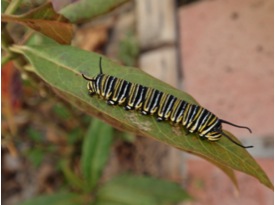
The bold, gaudy colors of certain insects have arrested the eye of many a naturalist. Alfred Russel Wallace and Henry Bates, who collected butterflies in the Amazon, proposed an ingenious evolutionary explanation for the flashy appearances of many insects. They argued that conspicuous colors on insects are actually warning signals to would-be predators, such as birds, which advertise underlying chemical defenses. The stronger the signal, the clearer would be the message: “Don’t mess with me, I’m poisonous.” Thorough experimental confirmation of this idea, called aposematism, did not come until the second half of the 20th century.

Cat1

Figure 1. Aposematic caterpillar of the monarch butterfly on its milkweed host plant. Photo by Michael S. Singer.

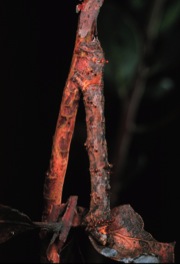
The great Victorian naturalists likewise surmised that camouflage was another important defense of insects against bird predation. Observations of caterpillars, katydids, and walking sticks in their natural environments revealed a wondrous precision in the match between the insect’s appearance and the vegetation upon which it lived. Darwin’s and Wallace’s theory of natural selection was the best scientific explanation: only the best camouflaged individuals of each species would escape detection by predators.


Figure 2. Camouflaged inchworm caterpillar on its host plant, manzanita, in southern Arizona. Photo by Michael S. Singer.

Figure 2. Camouflaged inchworm caterpillar on its host plant, manzanita, in southern Arizona. Photo by Michael S. Singer.


Over the last 50 years, many additional, important observations and experiments have reinforced these evolutionary theories of prey defense. But the vast majority of experimental studies used captive avian predators or artificial prey (such as dead or artificial insects) exposed to wild birds, leaving some question about the effectiveness of aposematism and camouflage in natural predator-prey interactions, which are notoriously difficult to observe directly in the wild. In the mean time, new techniques and technologies have emerged that allow researchers new modes of studying prey defenses in the wild.

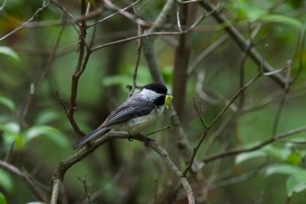
Figure 3. Black-capped chickadee with a captured caterpillar in one of the forest sites used to study bird predation of caterpillars in Connecticut. Photo by Christian Skorik.

Figure 3. Black-capped chickadee with a captured caterpillar in one of the forest sites used to study bird predation of caterpillars in Connecticut. Photo by Christian Skorik.


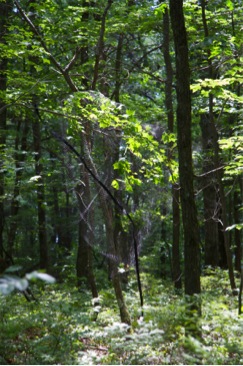
Enter the new study by Lichter-Marck and colleagues, “The struggle for safety: effectiveness of caterpillar defenses against bird predation.” This study used a bird-exclusion field experiment set in the forests of Connecticut, USA to test evolutionary theories of prey defense in the context of a natural ecological community. Over four years, the research team surrounded hundreds of experimental tree branches with garden-variety bird-proof netting, matching each experimental branch with a control branch lacking netting. The netting was applied at the beginning of each growing season, and allowed caterpillars to come and go while preventing access to insectivorous birds. Three weeks later, the researchers returned to each branch and collected the caterpillars living on them. By experiment’s end, the caterpillar species with the largest proportional increase in numbers in experimental branches (protected from bird predation) relative to control branches (open to bird predation) were inferred to suffer the most bird predation. By measuring the defensive traits of each caterpillar species and correlating them with the inferred magnitude of bird predation, the researchers could determine which traits were most effective as defenses against bird predation.


Figure 4. Red maple branch covered with a bird-exclusion net, one of the experimental branches used in this study. Photo by Christian Skorik.

Figure 4. Red maple branch covered with a bird-exclusion net, one of the experimental branches used in this study. Photo by Christian Skorik.


This unique methodological approach supported the main prediction of aposematism theory: among the 38 species of caterpillars that were numerous enough to analyze, those that possessed warning signals, such as bright coloration, received the most protection from birds. But the study revealed another, critical aspect of the warning strategy of defense: stereotypical resting location. The caterpillar species most protected from birds combined warning signals with highly stereotypical resting locations on the plant. That is, their appearance and their location together provided the warning signal to birds. This finding highlights the relatively neglected behavioral aspect of warning strategy of defense.


Figure 5. A warningly-signaled caterpillar species (Nola triquetrana) on its host plant, witch hazel, at one of the forest sites used in this study. Photo by Michael S. Singer.

Figure 5. A warningly-signaled caterpillar species (Nola triquetrana) on its host plant, witch hazel, at one of the forest sites used in this study. Photo by Michael S. Singer.


Yet the majority of the 38 caterpillar species did not possess warning signals, instead employing camouflage as their primary defensive strategy. Because visual camouflage can result from several different tricks in appearance (disruptive patterns, countershading, etc.), the magnitude of camouflage can be difficult to measure. The researchers turned to an increasingly used method, the human proxy predator assay. In this assay, human participants were shown digital images of the caterpillar species resting on their host plants, and a computer program was designed to record how quickly each participant located each caterpillar with an accurate click of the mouse. The longer it took, on average, to find a caterpillar species, the greater the magnitude of camouflage was inferred.


Figure 6. A camouflaged caterpillar species (Catocala ultronia) on its host plant, black cherry, at one of the forest sites used in this study. Photo by Michael S. Singer.

Figure 6. A camouflaged caterpillar species (Catocala ultronia) on its host plant, black cherry, at one of the forest sites used in this study. Photo by Michael S. Singer.


In support of evolutionary theory of prey defense, the study found that the caterpillar species with the greatest inferred magnitudes of camouflage received the most protection from birds. Once again, this part of the study revealed a behavioral twist. A caterpillar species’ frequency of behavioral responsiveness to attack, measured independently, worked against the effectiveness of camouflage. This finding suggests that effective camouflage requires not only an appearance that matches the prey’s background, but also behavioral maintenance of the cryptic posture in the face of physical disturbance.

The authors, through Michael S. Singer