Tag Archives: transition

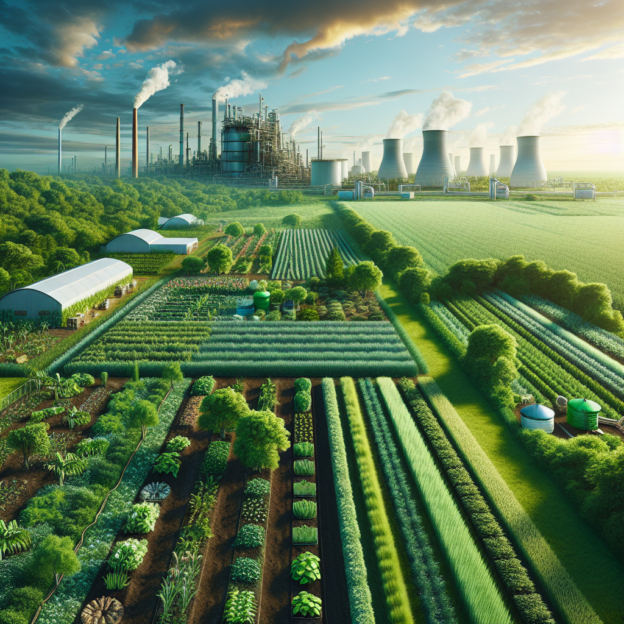
AI Generated: Bioregions are driving the transition to organic from the bottom up

Bioregions: The Grassroots Movement Driving Organic Transition

Introduction

Bioregions are emerging as pivotal players in the global shift towards organic agriculture, fostering a bottom-up transition that empowers local communities and ecosystems. By focusing on regional characteristics, bioregions facilitate tailored approaches to organic farming, enhancing sustainability and biodiversity.

AI Generated: Bioregions are driving the transition to organic from the bottom up
AI Generated: Bioregions are driving the transition to organic from the bottom up — Fonte: Wikimedia Commons

Context

Taking a closer look at Bio Eco Actual Andalusia, the southernmost autonomous community in Peninsular Spain, we can understand how bioregions can catalyze this transition. Known for its rich cultural heritage and diverse landscapes, Andalusia is the most populous and second-largest autonomous community in Spain, comprising eight provinces: Almería, Cádiz, Córdoba, Granada, Huelva, Jaén, Málaga, and Seville. With Seville as its capital and Granada housing the High Court of Justice, the region is a microcosm of agricultural diversity and innovation.

Geographical Significance

Andalusia’s varied geography, from coastal areas to mountainous regions, creates unique microclimates that influence agricultural practices. These geographical distinctions allow for the cultivation of a wide range of organic products, from olives and citrus fruits to vegetables and herbs. This diversity not only supports local diets but also enhances the region’s resilience to climate change.

Analysis

The transition to organic agriculture in Andalusia is being driven by local initiatives and community engagement. Farmers are increasingly recognizing the benefits of organic practices, such as improved soil health, greater biodiversity, and reduced reliance on chemical inputs. This grassroots movement is often supported by local governments and NGOs, which provide training, resources, and certification assistance.

Community Empowerment

In Andalusia, farmers’ cooperatives play a crucial role in fostering the organic transition. These cooperatives not only facilitate the sharing of knowledge and resources but also help to market organic products effectively. By working together, farmers can achieve economies of scale and enhance their bargaining power in the marketplace, ensuring that organic products are both accessible and affordable.

Environmental and Economic Benefits

The shift towards organic farming in bioregions like Andalusia also delivers significant environmental benefits. Organic practices contribute to soil fertility, reduce water consumption, and promote biodiversity, which is crucial for maintaining healthy ecosystems. Economically, the organic sector is growing rapidly, driven by increasing consumer demand for healthier and sustainably produced food. This trend not only supports local economies but also creates job opportunities in farming, distribution, and retail.

Practical Applications

Implementing organic practices at the bioregional level involves a series of practical steps. Farmers are encouraged to adopt crop rotation, intercropping, and organic pest management techniques, which can be adapted to local conditions. Educational programs and workshops can equip farmers with the necessary skills and knowledge to transition effectively.

Public Policy and Support

Supportive public policies are essential for facilitating this transition. Governments in Andalusia have begun to recognize the importance of organic agriculture and are implementing measures to promote it. This includes financial incentives for organic farmers, investments in research and development, and the establishment of certification bodies to ensure quality standards.

Community Involvement

Community involvement is another critical aspect of the organic transition in bioregions. Local markets and fairs provide platforms for farmers to sell their products directly to consumers, fostering a farm-to-table movement that strengthens local food systems. Additionally, community-supported agriculture (CSA) programs allow consumers to invest in local farms, creating a direct connection between producers and consumers.

Future Developments

The future of organic agriculture in bioregions like Andalusia looks promising, with several trends emerging. Technological advancements, such as precision agriculture and sustainable farming practices, will likely play a significant role in enhancing productivity and sustainability. Furthermore, as global awareness of environmental issues grows, the demand for organic products is expected to increase, providing further impetus for local farmers to transition.

Collaboration Across Regions

Collaboration between bioregions can also drive innovation and knowledge sharing. By connecting different regions with similar goals, best practices can be disseminated more widely. This network of bioregions could create a robust support system for organic farmers, ultimately accelerating the transition to organic agriculture.

Conclusions

Bioregions are playing a crucial role in driving the transition to organic agriculture from the bottom up. In Andalusia, the combination of community empowerment, environmental benefits, and supportive policies creates a fertile ground for organic farming to thrive. As more regions embrace this approach, the potential for a widespread organic movement grows, fostering healthier ecosystems and communities worldwide.

Frequently Asked Questions (FAQ)

What challenges does Bioregions are driving the transition to organic from the bottom up present?

In practical terms, it mainly concerns Bioregions constitute driving the transition to organic from the bottom up  Bio Eco Actual Andalusia functions. Understanding this aspect is the first step to mastering Bioregions are driving the transition to organic from the bottom up.

Why is Bioregions are driving the transition to organic from the bottom up gaining popularity?

The greatest impact is observed when we consider that in Peninsular Spain, located in the south of the Iberian Peninsula, in southwestern Europe. In. This explains much of the current interest.

What exactly does Bioregions are driving the transition to organic from the bottom up mean?

A key element to consider is that as the most populous and the second-largest autonomous community in the country. It serves as. Many experts agree on this point when analyzing Bioregions are driving the transition to organic from the bottom up.

What is the real impact of Bioregions are driving the transition to organic from the bottom up today?

To study it properly, it is essential to start from real data and observe how trends are evolving in the reference market of Bioregions are driving the transition to organic from the bottom up.

{
“@context”: “https://schema.org”,
“@type”: “FAQPage”,
“mainEntity”: [
{
“@type”: “Question”,
“name”: “What challenges does Bioregions are driving the transition to organic from the bottom up present?”,
“acceptedAnswer”: {
“@type”: “Answer”,
“text”: “In practical terms, it mainly concerns Bioregions constitute driving the transition to organic from the bottom up  Bio Eco Actual Andalusia functions. Understanding this aspect is the first step to mastering Bioregions are driving the transition to organic from the bottom up.”
}
},
{
“@type”: “Question”,
“name”: “Why is Bioregions are driving the transition to organic from the bottom up gaining popularity?”,
“acceptedAnswer”: {
“@type”: “Answer”,
“text”: “The greatest impact is observed when we consider that in Peninsular Spain, located in the south of the Iberian Peninsula, in southwestern Europe. In. This explains much of the current interest.”
}
},
{
“@type”: “Question”,
“name”: “What exactly does Bioregions are driving the transition to organic from the bottom up mean?”,
“acceptedAnswer”: {
“@type”: “Answer”,
“text”: “A key element to consider is that as the most populous and the second-largest autonomous community in the country. It serves as. Many experts agree on this point when analyzing Bioregions are driving the transition to organic from the bottom up.”
}
},
{
“@type”: “Question”,
“name”: “What is the real impact of Bioregions are driving the transition to organic from the bottom up today?”,
“acceptedAnswer”: {
“@type”: “Answer”,
“text”: “To study it properly, it is essential to start from real data and observe how trends are evolving in the reference market of Bioregions are driving the transition to organic from the bottom up.”
}
}
]
}

{
“@context”: “https://schema.org”,
“@type”: “Article”,
“headline”: “Bioregions: The Grassroots Movement Driving Organic Transition”,
“about”: {
“@type”: “Thing”,
“name”: “Bioregions are driving the transition to organic from the bottom up”
},
“articleSection”: “eco bio”,
“author”: {
“@type”: “Person”,
“name”: “angelo@percorso.net”
},
“publisher”: {
“@type”: “Organization”,
“name”: “Eco Bio III Millennio”,
“url”: “https://www.ecobio3millennio.com”
},
“datePublished”: “2026-05-03T07:35:30+00:00”,
“dateModified”: “2026-05-03T07:35:30+00:00”
}

Germany’s green power surges ahead – at a price that’s finally falling Updated for 2026


Germany is well on its way towards having a predominantly green electricity supply.

The transition from nuclear and fossil-fuel electricity to using renewables is happening faster than anyone had anticipated. This is a success, but there is a downside: it is hugely expensive.

The energy transition is an explicit policy goal in Germany, having been made a priority project by the German chancellor, Angela Merkel.

It has four strands: reducing CO2 emissions, improving energy efficiency, promoting renewable energy and the gradual phase-out of nuclear power.

Nuclear phase-out is actually an old story that started in 2000 when the Schroeder administration first announced a 20-year timetable.

It was a bit of a ‘yes-no’ rollercoaster until the Fukushima incident, after which the decision in favour was final. This is widely supported by the German public, meaning that nuclear power is politically not an option at the moment.

Installed renewable capacity now equals demand

Yet without a doubt, the most significant development within the energy transition project has been the growth of Germany’s renewable energy sources (RES). Chart 1 (right) shows how it has developed in the past few years and where the government expects it to be by 2050.

The horizontal black line depicts the approximate maximum demand at any time, which is about 85GW (this will not change much in the future).

This shows that installed renewable capacity is now already more or less equal to maximum demand. On a very sunny and windy day, renewables are now capable of meeting the demands of the entire country.

But as we all know, the weather is notoriously unreliable and variable. So a secure system needs more renewable capacity and also more reserve capacity from conventional power plants (mainly fuelled by natural gas) to make sure it can always meet demand.

As Chart 1 (above right) indicates, installed renewable capacity in 2050 is expected to be 180GW, which is roughly twice maximum demand. By that time, the target is that 80% of electricity supply will be from renewables (basically this is how much renewable power you need to meet this level of supply on a regular basis).

Great benefits – but also high costs

In common with other countries moving in the same direction, the government has various motives for this big shift. Renewables are carbon-free and rely on no fossil fuels, so they are an essential component of meeting European emissions targets.

The government hopes for positive spin-off effects on exports, innovation and new jobs. And once the investment cost of the transition has been incurred, we would hope that electricity supply is actually quite cheap. After all, sun and wind are free. Germany sees the energy transition as an investment in the future: we pay for the next generation.

The move to renewables has been a success. It has happened at high speed since the late 1990s. The debate is no longer whether it will succeed, but rather what do we do with ‘too much’ renewable power. But behind this positive story, the dark side is the huge expense.

Early in 2013, the then minister of environment Peter Altmaier mentioned the staggering amount of €1 trillion as the potential cost of the overall transition.

This relied on a quick-and-dirty back-of-the-envelope calculation, which raises many questions and was never confirmed, but it does give a feel for the order of magnitude. The end-users – and thus the voters in Germany – are starting to feel the pain.

Since the installation costs mean that renewables currently cost more per unit of power than conventional power, they are subsidised by a surcharge on the electricity price. In other words, electricity end-users directly pay for it.

As you can see from Chart 2 (above right), the surcharge for small end-users has soared since 2009 to cope with the rapid growth of installed capacity (the step-change that year reflected a sudden big rise in solar power, which is particularly expensive).

The total subsidy is currently about €20bn / year, which amounts to €218 / year per household on top of the normal electricity bill. Whether this is still affordable is a key question in the country right now.

Corporate punishment

The energy transition has meanwhile changed the face of the electricity market, with severe consequences for traditional firms like E.ON and RWE. They are suffering badly at the moment and are having to rethink their business models completely.

In short, they face three challenges. The nuclear phase-out means they have to make very significant write-downs on their nuclear plants, at a loss to the shareholders. They are still fighting the government for compensation payments.

Second, renewable power is suppressing electricity wholesale prices – essentially because they are cheaper to run per unit of power, which under the rules for calculating the wholesale price tends to bring them down across the board.

This means that the revenues for conventional power plants are low and no longer cover the investment costs.

Third, conventional power from gas and coal is being pushed out of the market. This means that a lot of conventional power plants are largely standing idle and not making any money.

Since the future business model for such plants is looking bleak, the power companies are sitting on investments which are not going to be profitable. Of course, RWE and E.ON are adjusting their long-term strategies.

Consumer surcharge for 2015 reduced

While this has been going on, the rising costs for residential end-users have become a political problem.

In 2014 the government responded with a reform package, which slows down the energy transition in an attempt to control the costs. Basically the annual growth of new renewables has been capped to a pre-determined level.

This seems to be working. The surcharge for 2015 has been calculated at 6.17 €c / kWh, which is a small decline compared to 2014. Politically, this may well have been a wise policy, as public support for the energy transition was dwindling. It means that green energy development will happen more slowly.

So far the government appears to be standing by the same targets, perhaps because the explosion in development over the past few years had put it on an even faster track.

Whatever happens from here, one thing remains key: without public support, the energy transition will not work.


Gert Brunekreeft is Adjunct Professor for Energy Economics at Jacobs University Bremen. He does not work for, consult to, own shares in or receive funding from any company or organisation that would benefit from this article, and has no relevant affiliations.

This article was originally published on The Conversation. Read the original article.

The Conversation


385722

Germany’s green power surges ahead – at a price that’s finally falling Updated for 2026


Germany is well on its way towards having a predominantly green electricity supply.

The transition from nuclear and fossil-fuel electricity to using renewables is happening faster than anyone had anticipated. This is a success, but there is a downside: it is hugely expensive.

The energy transition is an explicit policy goal in Germany, having been made a priority project by the German chancellor, Angela Merkel.

It has four strands: reducing CO2 emissions, improving energy efficiency, promoting renewable energy and the gradual phase-out of nuclear power.

Nuclear phase-out is actually an old story that started in 2000 when the Schroeder administration first announced a 20-year timetable.

It was a bit of a ‘yes-no’ rollercoaster until the Fukushima incident, after which the decision in favour was final. This is widely supported by the German public, meaning that nuclear power is politically not an option at the moment.

Installed renewable capacity now equals demand

Yet without a doubt, the most significant development within the energy transition project has been the growth of Germany’s renewable energy sources (RES). Chart 1 (right) shows how it has developed in the past few years and where the government expects it to be by 2050.

The horizontal black line depicts the approximate maximum demand at any time, which is about 85GW (this will not change much in the future).

This shows that installed renewable capacity is now already more or less equal to maximum demand. On a very sunny and windy day, renewables are now capable of meeting the demands of the entire country.

But as we all know, the weather is notoriously unreliable and variable. So a secure system needs more renewable capacity and also more reserve capacity from conventional power plants (mainly fuelled by natural gas) to make sure it can always meet demand.

As Chart 1 (above right) indicates, installed renewable capacity in 2050 is expected to be 180GW, which is roughly twice maximum demand. By that time, the target is that 80% of electricity supply will be from renewables (basically this is how much renewable power you need to meet this level of supply on a regular basis).

Great benefits – but also high costs

In common with other countries moving in the same direction, the government has various motives for this big shift. Renewables are carbon-free and rely on no fossil fuels, so they are an essential component of meeting European emissions targets.

The government hopes for positive spin-off effects on exports, innovation and new jobs. And once the investment cost of the transition has been incurred, we would hope that electricity supply is actually quite cheap. After all, sun and wind are free. Germany sees the energy transition as an investment in the future: we pay for the next generation.

The move to renewables has been a success. It has happened at high speed since the late 1990s. The debate is no longer whether it will succeed, but rather what do we do with ‘too much’ renewable power. But behind this positive story, the dark side is the huge expense.

Early in 2013, the then minister of environment Peter Altmaier mentioned the staggering amount of €1 trillion as the potential cost of the overall transition.

This relied on a quick-and-dirty back-of-the-envelope calculation, which raises many questions and was never confirmed, but it does give a feel for the order of magnitude. The end-users – and thus the voters in Germany – are starting to feel the pain.

Since the installation costs mean that renewables currently cost more per unit of power than conventional power, they are subsidised by a surcharge on the electricity price. In other words, electricity end-users directly pay for it.

As you can see from Chart 2 (above right), the surcharge for small end-users has soared since 2009 to cope with the rapid growth of installed capacity (the step-change that year reflected a sudden big rise in solar power, which is particularly expensive).

The total subsidy is currently about €20bn / year, which amounts to €218 / year per household on top of the normal electricity bill. Whether this is still affordable is a key question in the country right now.

Corporate punishment

The energy transition has meanwhile changed the face of the electricity market, with severe consequences for traditional firms like E.ON and RWE. They are suffering badly at the moment and are having to rethink their business models completely.

In short, they face three challenges. The nuclear phase-out means they have to make very significant write-downs on their nuclear plants, at a loss to the shareholders. They are still fighting the government for compensation payments.

Second, renewable power is suppressing electricity wholesale prices – essentially because they are cheaper to run per unit of power, which under the rules for calculating the wholesale price tends to bring them down across the board.

This means that the revenues for conventional power plants are low and no longer cover the investment costs.

Third, conventional power from gas and coal is being pushed out of the market. This means that a lot of conventional power plants are largely standing idle and not making any money.

Since the future business model for such plants is looking bleak, the power companies are sitting on investments which are not going to be profitable. Of course, RWE and E.ON are adjusting their long-term strategies.

Consumer surcharge for 2015 reduced

While this has been going on, the rising costs for residential end-users have become a political problem.

In 2014 the government responded with a reform package, which slows down the energy transition in an attempt to control the costs. Basically the annual growth of new renewables has been capped to a pre-determined level.

This seems to be working. The surcharge for 2015 has been calculated at 6.17 €c / kWh, which is a small decline compared to 2014. Politically, this may well have been a wise policy, as public support for the energy transition was dwindling. It means that green energy development will happen more slowly.

So far the government appears to be standing by the same targets, perhaps because the explosion in development over the past few years had put it on an even faster track.

Whatever happens from here, one thing remains key: without public support, the energy transition will not work.


Gert Brunekreeft is Adjunct Professor for Energy Economics at Jacobs University Bremen. He does not work for, consult to, own shares in or receive funding from any company or organisation that would benefit from this article, and has no relevant affiliations.

This article was originally published on The Conversation. Read the original article.

The Conversation


385722

Germany’s green power surges ahead – at a price that’s finally falling Updated for 2026


Germany is well on its way towards having a predominantly green electricity supply.

The transition from nuclear and fossil-fuel electricity to using renewables is happening faster than anyone had anticipated. This is a success, but there is a downside: it is hugely expensive.

The energy transition is an explicit policy goal in Germany, having been made a priority project by the German chancellor, Angela Merkel.

It has four strands: reducing CO2 emissions, improving energy efficiency, promoting renewable energy and the gradual phase-out of nuclear power.

Nuclear phase-out is actually an old story that started in 2000 when the Schroeder administration first announced a 20-year timetable.

It was a bit of a ‘yes-no’ rollercoaster until the Fukushima incident, after which the decision in favour was final. This is widely supported by the German public, meaning that nuclear power is politically not an option at the moment.

Installed renewable capacity now equals demand

Yet without a doubt, the most significant development within the energy transition project has been the growth of Germany’s renewable energy sources (RES). Chart 1 (right) shows how it has developed in the past few years and where the government expects it to be by 2050.

The horizontal black line depicts the approximate maximum demand at any time, which is about 85GW (this will not change much in the future).

This shows that installed renewable capacity is now already more or less equal to maximum demand. On a very sunny and windy day, renewables are now capable of meeting the demands of the entire country.

But as we all know, the weather is notoriously unreliable and variable. So a secure system needs more renewable capacity and also more reserve capacity from conventional power plants (mainly fuelled by natural gas) to make sure it can always meet demand.

As Chart 1 (above right) indicates, installed renewable capacity in 2050 is expected to be 180GW, which is roughly twice maximum demand. By that time, the target is that 80% of electricity supply will be from renewables (basically this is how much renewable power you need to meet this level of supply on a regular basis).

Great benefits – but also high costs

In common with other countries moving in the same direction, the government has various motives for this big shift. Renewables are carbon-free and rely on no fossil fuels, so they are an essential component of meeting European emissions targets.

The government hopes for positive spin-off effects on exports, innovation and new jobs. And once the investment cost of the transition has been incurred, we would hope that electricity supply is actually quite cheap. After all, sun and wind are free. Germany sees the energy transition as an investment in the future: we pay for the next generation.

The move to renewables has been a success. It has happened at high speed since the late 1990s. The debate is no longer whether it will succeed, but rather what do we do with ‘too much’ renewable power. But behind this positive story, the dark side is the huge expense.

Early in 2013, the then minister of environment Peter Altmaier mentioned the staggering amount of €1 trillion as the potential cost of the overall transition.

This relied on a quick-and-dirty back-of-the-envelope calculation, which raises many questions and was never confirmed, but it does give a feel for the order of magnitude. The end-users – and thus the voters in Germany – are starting to feel the pain.

Since the installation costs mean that renewables currently cost more per unit of power than conventional power, they are subsidised by a surcharge on the electricity price. In other words, electricity end-users directly pay for it.

As you can see from Chart 2 (above right), the surcharge for small end-users has soared since 2009 to cope with the rapid growth of installed capacity (the step-change that year reflected a sudden big rise in solar power, which is particularly expensive).

The total subsidy is currently about €20bn / year, which amounts to €218 / year per household on top of the normal electricity bill. Whether this is still affordable is a key question in the country right now.

Corporate punishment

The energy transition has meanwhile changed the face of the electricity market, with severe consequences for traditional firms like E.ON and RWE. They are suffering badly at the moment and are having to rethink their business models completely.

In short, they face three challenges. The nuclear phase-out means they have to make very significant write-downs on their nuclear plants, at a loss to the shareholders. They are still fighting the government for compensation payments.

Second, renewable power is suppressing electricity wholesale prices – essentially because they are cheaper to run per unit of power, which under the rules for calculating the wholesale price tends to bring them down across the board.

This means that the revenues for conventional power plants are low and no longer cover the investment costs.

Third, conventional power from gas and coal is being pushed out of the market. This means that a lot of conventional power plants are largely standing idle and not making any money.

Since the future business model for such plants is looking bleak, the power companies are sitting on investments which are not going to be profitable. Of course, RWE and E.ON are adjusting their long-term strategies.

Consumer surcharge for 2015 reduced

While this has been going on, the rising costs for residential end-users have become a political problem.

In 2014 the government responded with a reform package, which slows down the energy transition in an attempt to control the costs. Basically the annual growth of new renewables has been capped to a pre-determined level.

This seems to be working. The surcharge for 2015 has been calculated at 6.17 €c / kWh, which is a small decline compared to 2014. Politically, this may well have been a wise policy, as public support for the energy transition was dwindling. It means that green energy development will happen more slowly.

So far the government appears to be standing by the same targets, perhaps because the explosion in development over the past few years had put it on an even faster track.

Whatever happens from here, one thing remains key: without public support, the energy transition will not work.


Gert Brunekreeft is Adjunct Professor for Energy Economics at Jacobs University Bremen. He does not work for, consult to, own shares in or receive funding from any company or organisation that would benefit from this article, and has no relevant affiliations.

This article was originally published on The Conversation. Read the original article.

The Conversation


385722

Germany’s green power surges ahead – at a price that’s finally falling Updated for 2026


Germany is well on its way towards having a predominantly green electricity supply.

The transition from nuclear and fossil-fuel electricity to using renewables is happening faster than anyone had anticipated. This is a success, but there is a downside: it is hugely expensive.

The energy transition is an explicit policy goal in Germany, having been made a priority project by the German chancellor, Angela Merkel.

It has four strands: reducing CO2 emissions, improving energy efficiency, promoting renewable energy and the gradual phase-out of nuclear power.

Nuclear phase-out is actually an old story that started in 2000 when the Schroeder administration first announced a 20-year timetable.

It was a bit of a ‘yes-no’ rollercoaster until the Fukushima incident, after which the decision in favour was final. This is widely supported by the German public, meaning that nuclear power is politically not an option at the moment.

Installed renewable capacity now equals demand

Yet without a doubt, the most significant development within the energy transition project has been the growth of Germany’s renewable energy sources (RES). Chart 1 (right) shows how it has developed in the past few years and where the government expects it to be by 2050.

The horizontal black line depicts the approximate maximum demand at any time, which is about 85GW (this will not change much in the future).

This shows that installed renewable capacity is now already more or less equal to maximum demand. On a very sunny and windy day, renewables are now capable of meeting the demands of the entire country.

But as we all know, the weather is notoriously unreliable and variable. So a secure system needs more renewable capacity and also more reserve capacity from conventional power plants (mainly fuelled by natural gas) to make sure it can always meet demand.

As Chart 1 (above right) indicates, installed renewable capacity in 2050 is expected to be 180GW, which is roughly twice maximum demand. By that time, the target is that 80% of electricity supply will be from renewables (basically this is how much renewable power you need to meet this level of supply on a regular basis).

Great benefits – but also high costs

In common with other countries moving in the same direction, the government has various motives for this big shift. Renewables are carbon-free and rely on no fossil fuels, so they are an essential component of meeting European emissions targets.

The government hopes for positive spin-off effects on exports, innovation and new jobs. And once the investment cost of the transition has been incurred, we would hope that electricity supply is actually quite cheap. After all, sun and wind are free. Germany sees the energy transition as an investment in the future: we pay for the next generation.

The move to renewables has been a success. It has happened at high speed since the late 1990s. The debate is no longer whether it will succeed, but rather what do we do with ‘too much’ renewable power. But behind this positive story, the dark side is the huge expense.

Early in 2013, the then minister of environment Peter Altmaier mentioned the staggering amount of €1 trillion as the potential cost of the overall transition.

This relied on a quick-and-dirty back-of-the-envelope calculation, which raises many questions and was never confirmed, but it does give a feel for the order of magnitude. The end-users – and thus the voters in Germany – are starting to feel the pain.

Since the installation costs mean that renewables currently cost more per unit of power than conventional power, they are subsidised by a surcharge on the electricity price. In other words, electricity end-users directly pay for it.

As you can see from Chart 2 (above right), the surcharge for small end-users has soared since 2009 to cope with the rapid growth of installed capacity (the step-change that year reflected a sudden big rise in solar power, which is particularly expensive).

The total subsidy is currently about €20bn / year, which amounts to €218 / year per household on top of the normal electricity bill. Whether this is still affordable is a key question in the country right now.

Corporate punishment

The energy transition has meanwhile changed the face of the electricity market, with severe consequences for traditional firms like E.ON and RWE. They are suffering badly at the moment and are having to rethink their business models completely.

In short, they face three challenges. The nuclear phase-out means they have to make very significant write-downs on their nuclear plants, at a loss to the shareholders. They are still fighting the government for compensation payments.

Second, renewable power is suppressing electricity wholesale prices – essentially because they are cheaper to run per unit of power, which under the rules for calculating the wholesale price tends to bring them down across the board.

This means that the revenues for conventional power plants are low and no longer cover the investment costs.

Third, conventional power from gas and coal is being pushed out of the market. This means that a lot of conventional power plants are largely standing idle and not making any money.

Since the future business model for such plants is looking bleak, the power companies are sitting on investments which are not going to be profitable. Of course, RWE and E.ON are adjusting their long-term strategies.

Consumer surcharge for 2015 reduced

While this has been going on, the rising costs for residential end-users have become a political problem.

In 2014 the government responded with a reform package, which slows down the energy transition in an attempt to control the costs. Basically the annual growth of new renewables has been capped to a pre-determined level.

This seems to be working. The surcharge for 2015 has been calculated at 6.17 €c / kWh, which is a small decline compared to 2014. Politically, this may well have been a wise policy, as public support for the energy transition was dwindling. It means that green energy development will happen more slowly.

So far the government appears to be standing by the same targets, perhaps because the explosion in development over the past few years had put it on an even faster track.

Whatever happens from here, one thing remains key: without public support, the energy transition will not work.


Gert Brunekreeft is Adjunct Professor for Energy Economics at Jacobs University Bremen. He does not work for, consult to, own shares in or receive funding from any company or organisation that would benefit from this article, and has no relevant affiliations.

This article was originally published on The Conversation. Read the original article.

The Conversation


385722

Germany’s green power surges ahead – at a price that’s finally falling Updated for 2026


Germany is well on its way towards having a predominantly green electricity supply.

The transition from nuclear and fossil-fuel electricity to using renewables is happening faster than anyone had anticipated. This is a success, but there is a downside: it is hugely expensive.

The energy transition is an explicit policy goal in Germany, having been made a priority project by the German chancellor, Angela Merkel.

It has four strands: reducing CO2 emissions, improving energy efficiency, promoting renewable energy and the gradual phase-out of nuclear power.

Nuclear phase-out is actually an old story that started in 2000 when the Schroeder administration first announced a 20-year timetable.

It was a bit of a ‘yes-no’ rollercoaster until the Fukushima incident, after which the decision in favour was final. This is widely supported by the German public, meaning that nuclear power is politically not an option at the moment.

Installed renewable capacity now equals demand

Yet without a doubt, the most significant development within the energy transition project has been the growth of Germany’s renewable energy sources (RES). Chart 1 (right) shows how it has developed in the past few years and where the government expects it to be by 2050.

The horizontal black line depicts the approximate maximum demand at any time, which is about 85GW (this will not change much in the future).

This shows that installed renewable capacity is now already more or less equal to maximum demand. On a very sunny and windy day, renewables are now capable of meeting the demands of the entire country.

But as we all know, the weather is notoriously unreliable and variable. So a secure system needs more renewable capacity and also more reserve capacity from conventional power plants (mainly fuelled by natural gas) to make sure it can always meet demand.

As Chart 1 (above right) indicates, installed renewable capacity in 2050 is expected to be 180GW, which is roughly twice maximum demand. By that time, the target is that 80% of electricity supply will be from renewables (basically this is how much renewable power you need to meet this level of supply on a regular basis).

Great benefits – but also high costs

In common with other countries moving in the same direction, the government has various motives for this big shift. Renewables are carbon-free and rely on no fossil fuels, so they are an essential component of meeting European emissions targets.

The government hopes for positive spin-off effects on exports, innovation and new jobs. And once the investment cost of the transition has been incurred, we would hope that electricity supply is actually quite cheap. After all, sun and wind are free. Germany sees the energy transition as an investment in the future: we pay for the next generation.

The move to renewables has been a success. It has happened at high speed since the late 1990s. The debate is no longer whether it will succeed, but rather what do we do with ‘too much’ renewable power. But behind this positive story, the dark side is the huge expense.

Early in 2013, the then minister of environment Peter Altmaier mentioned the staggering amount of €1 trillion as the potential cost of the overall transition.

This relied on a quick-and-dirty back-of-the-envelope calculation, which raises many questions and was never confirmed, but it does give a feel for the order of magnitude. The end-users – and thus the voters in Germany – are starting to feel the pain.

Since the installation costs mean that renewables currently cost more per unit of power than conventional power, they are subsidised by a surcharge on the electricity price. In other words, electricity end-users directly pay for it.

As you can see from Chart 2 (above right), the surcharge for small end-users has soared since 2009 to cope with the rapid growth of installed capacity (the step-change that year reflected a sudden big rise in solar power, which is particularly expensive).

The total subsidy is currently about €20bn / year, which amounts to €218 / year per household on top of the normal electricity bill. Whether this is still affordable is a key question in the country right now.

Corporate punishment

The energy transition has meanwhile changed the face of the electricity market, with severe consequences for traditional firms like E.ON and RWE. They are suffering badly at the moment and are having to rethink their business models completely.

In short, they face three challenges. The nuclear phase-out means they have to make very significant write-downs on their nuclear plants, at a loss to the shareholders. They are still fighting the government for compensation payments.

Second, renewable power is suppressing electricity wholesale prices – essentially because they are cheaper to run per unit of power, which under the rules for calculating the wholesale price tends to bring them down across the board.

This means that the revenues for conventional power plants are low and no longer cover the investment costs.

Third, conventional power from gas and coal is being pushed out of the market. This means that a lot of conventional power plants are largely standing idle and not making any money.

Since the future business model for such plants is looking bleak, the power companies are sitting on investments which are not going to be profitable. Of course, RWE and E.ON are adjusting their long-term strategies.

Consumer surcharge for 2015 reduced

While this has been going on, the rising costs for residential end-users have become a political problem.

In 2014 the government responded with a reform package, which slows down the energy transition in an attempt to control the costs. Basically the annual growth of new renewables has been capped to a pre-determined level.

This seems to be working. The surcharge for 2015 has been calculated at 6.17 €c / kWh, which is a small decline compared to 2014. Politically, this may well have been a wise policy, as public support for the energy transition was dwindling. It means that green energy development will happen more slowly.

So far the government appears to be standing by the same targets, perhaps because the explosion in development over the past few years had put it on an even faster track.

Whatever happens from here, one thing remains key: without public support, the energy transition will not work.


Gert Brunekreeft is Adjunct Professor for Energy Economics at Jacobs University Bremen. He does not work for, consult to, own shares in or receive funding from any company or organisation that would benefit from this article, and has no relevant affiliations.

This article was originally published on The Conversation. Read the original article.

The Conversation


385722

Germany’s green power surges ahead – at a price that’s finally falling Updated for 2026


Germany is well on its way towards having a predominantly green electricity supply.

The transition from nuclear and fossil-fuel electricity to using renewables is happening faster than anyone had anticipated. This is a success, but there is a downside: it is hugely expensive.

The energy transition is an explicit policy goal in Germany, having been made a priority project by the German chancellor, Angela Merkel.

It has four strands: reducing CO2 emissions, improving energy efficiency, promoting renewable energy and the gradual phase-out of nuclear power.

Nuclear phase-out is actually an old story that started in 2000 when the Schroeder administration first announced a 20-year timetable.

It was a bit of a ‘yes-no’ rollercoaster until the Fukushima incident, after which the decision in favour was final. This is widely supported by the German public, meaning that nuclear power is politically not an option at the moment.

Installed renewable capacity now equals demand

Yet without a doubt, the most significant development within the energy transition project has been the growth of Germany’s renewable energy sources (RES). Chart 1 (right) shows how it has developed in the past few years and where the government expects it to be by 2050.

The horizontal black line depicts the approximate maximum demand at any time, which is about 85GW (this will not change much in the future).

This shows that installed renewable capacity is now already more or less equal to maximum demand. On a very sunny and windy day, renewables are now capable of meeting the demands of the entire country.

But as we all know, the weather is notoriously unreliable and variable. So a secure system needs more renewable capacity and also more reserve capacity from conventional power plants (mainly fuelled by natural gas) to make sure it can always meet demand.

As Chart 1 (above right) indicates, installed renewable capacity in 2050 is expected to be 180GW, which is roughly twice maximum demand. By that time, the target is that 80% of electricity supply will be from renewables (basically this is how much renewable power you need to meet this level of supply on a regular basis).

Great benefits – but also high costs

In common with other countries moving in the same direction, the government has various motives for this big shift. Renewables are carbon-free and rely on no fossil fuels, so they are an essential component of meeting European emissions targets.

The government hopes for positive spin-off effects on exports, innovation and new jobs. And once the investment cost of the transition has been incurred, we would hope that electricity supply is actually quite cheap. After all, sun and wind are free. Germany sees the energy transition as an investment in the future: we pay for the next generation.

The move to renewables has been a success. It has happened at high speed since the late 1990s. The debate is no longer whether it will succeed, but rather what do we do with ‘too much’ renewable power. But behind this positive story, the dark side is the huge expense.

Early in 2013, the then minister of environment Peter Altmaier mentioned the staggering amount of €1 trillion as the potential cost of the overall transition.

This relied on a quick-and-dirty back-of-the-envelope calculation, which raises many questions and was never confirmed, but it does give a feel for the order of magnitude. The end-users – and thus the voters in Germany – are starting to feel the pain.

Since the installation costs mean that renewables currently cost more per unit of power than conventional power, they are subsidised by a surcharge on the electricity price. In other words, electricity end-users directly pay for it.

As you can see from Chart 2 (above right), the surcharge for small end-users has soared since 2009 to cope with the rapid growth of installed capacity (the step-change that year reflected a sudden big rise in solar power, which is particularly expensive).

The total subsidy is currently about €20bn / year, which amounts to €218 / year per household on top of the normal electricity bill. Whether this is still affordable is a key question in the country right now.

Corporate punishment

The energy transition has meanwhile changed the face of the electricity market, with severe consequences for traditional firms like E.ON and RWE. They are suffering badly at the moment and are having to rethink their business models completely.

In short, they face three challenges. The nuclear phase-out means they have to make very significant write-downs on their nuclear plants, at a loss to the shareholders. They are still fighting the government for compensation payments.

Second, renewable power is suppressing electricity wholesale prices – essentially because they are cheaper to run per unit of power, which under the rules for calculating the wholesale price tends to bring them down across the board.

This means that the revenues for conventional power plants are low and no longer cover the investment costs.

Third, conventional power from gas and coal is being pushed out of the market. This means that a lot of conventional power plants are largely standing idle and not making any money.

Since the future business model for such plants is looking bleak, the power companies are sitting on investments which are not going to be profitable. Of course, RWE and E.ON are adjusting their long-term strategies.

Consumer surcharge for 2015 reduced

While this has been going on, the rising costs for residential end-users have become a political problem.

In 2014 the government responded with a reform package, which slows down the energy transition in an attempt to control the costs. Basically the annual growth of new renewables has been capped to a pre-determined level.

This seems to be working. The surcharge for 2015 has been calculated at 6.17 €c / kWh, which is a small decline compared to 2014. Politically, this may well have been a wise policy, as public support for the energy transition was dwindling. It means that green energy development will happen more slowly.

So far the government appears to be standing by the same targets, perhaps because the explosion in development over the past few years had put it on an even faster track.

Whatever happens from here, one thing remains key: without public support, the energy transition will not work.


Gert Brunekreeft is Adjunct Professor for Energy Economics at Jacobs University Bremen. He does not work for, consult to, own shares in or receive funding from any company or organisation that would benefit from this article, and has no relevant affiliations.

This article was originally published on The Conversation. Read the original article.

The Conversation


385722