Tag Archives: arctic

Save the Arctic sea ice while we still can! Updated for 2026


Fossil fuel companies, and their supporters in government, seem blissfully unaware of the dangers ahead, threatening everybody on this planet.

The sea ice is declining far more rapidly than anyone expected. It is declining towards disappearance in summer months, yet the colossal negative impact of a low albedo Arctic has hardly been discussed. This is tragic because the whole situation could have been avoided with good leadership at negligible economic cost.

And as reported this week on The Ecologist, new scientific research indicates that the apparent ‘pause’ in global warming has, in fact, been no such thing. Instead the surplus heat – two Hiroshima bombs-worth a second – has simply been ‘buried’ deep in the Pacific Ocean.

That’s because of two important climate cycles, the Pacific Decadal Oscillation and the Atlantic Multidecadal Oscillation, whose operation has masked the warming. But soon they will tip the other way and the ‘Big Heat’ is set to begin – a five to ten year burst of rapid warming that will be most severe in the Arctic.

Commercial advantages for some …

If you read the mainstream media, only the positive impact of a melting Arctic is mentioned: an Arctic ripe for exploitation.

Through not grasping the huge negative impact of a low albedo Arctic, the fossil fuel companies still appear entirely happy for the sea ice to disappear as quickly as possible – the sooner the better. Therefore they naturally resist any action to save the sea ice. In particular they don’t want geoengineering deployed to cool the Arctic, because it might succeed in saving it!

Certain fossil fuel companies have already invested heavily in exploiting the vast store of oil and gas in the Arctic. These companies, and the governments who support them, are preparing for a bonanza when the sea ice disappears in summer: it will be so much easier and safer to extract the fossil fuel when the sea ice and freezing conditions have gone during summer months.

Furthermore, the disappearance of the sea ice will open up the Northwest Passage and the Northern Sea Route (formerly known as the Northeast Passage) to trade through summer months. So China and nations bordering the Atlantic (including the UK) are expecting to benefit enormously. Russia is investing heavily in ports and infrastructure to support the anticipated heavy traffic.

Various environment groups and the UK Environment Audit Committee have argued against drilling in the Arctic because they are concerned about oil spills and gas blow-outs which could ruin the local environment. They also seek to protect the wild life and Arctic ecosystem. But their arguing will be futile once the sea ice has gone in summer. It will be too late to protect the environment.

Environmentists have less concern about the opening up of the trade routes, because this will reduce CO2 emissions from transport of goods which at present have much longer journeys.

The Arctic bombshell is waiting to go off

While there is all this talk of exploiting the Arctic, little or nothing is said about the adverse effects of having an Arctic free of sea ice during summer months.

Nothing has been said by the IPCC. Nothing has been said in the mainstream media. Nothing has been said by the scientific community at large. This is a terrible omission. It is quite scandalous.

While most experts agree that there will come a time when the Arctic Ocean will be free of ice during summer months, there is no such agreement on the time-scale. Models suggest that it will take decades.

But observations of an exponential trend of sea ice decline suggest that this time could be within a decade. Scientific reports of especially rapid temperature rise in Alaska have also been emerged. For example Barrow, Alaska has experienced a 7C temperature rise over 34 years, attributed to the decline in sea ice.

So what are the effects? During summer months, a vast area of reflective ice will have been replaced by open water, absorbing 90% of sunshine and warming the Arctic air above. It is clear that the Arctic will be warming much faster than at present – likely at over 2°C per decade.

As heat dissipates around the planet, there will be a huge contribution to global warming in the long term. Estimates put this at equivalent of 3.3 W/m2 (Flanner, 2011) or about twice the current warming from CO2.

But what are the immediate consequences of this super-rapid warming in the Arctic? At present we have an acceleration of three particular processes, affected by Arctic warming to date:

  • Firstly, we have a dramatic rise in Northern Hemisphere weather extremes, as the jet stream behaviour is disrupted.
  • Secondly we have an exponential increase in meltwater from the Greenland Ice Sheet, flowing through moulins on the surface of the ice into the sea and raising the sea level.
  • And thirdly we have a dramatic increase in methane emissions from the Arctic Ocean seabed.

As the temperature in the Arctic continues to increase, these processes will continue almost indefinitely. We can expect worsening Northern Hemisphere climate causing widespread crop failures; faster sea level rise causing progressive flooding of low-lying regions; and growing methane emissions leading to even more catastrophic global warming.

These are three immediate results of the switching on of heat as the Arctic Ocean enters the low sea-ice state. The combination will be devastating for all mankind – with mass starvation and mass migration liable to trigger a world war.

This is the terrifying bombshell. The bonanza will be short-lived, as the effects of a seasonally ice free Arctic Ocean begin to bite.

For a few billion dollars a year, we can save the Arctic

Something must be done to prevent the ocean entering this low-ice state. Therefore the Arctic must be cooled enough to save the sea ice.

The first moment at the end of summer that the sea ice finally disappears from the ocean is called the ‘blue ocean event’. It is significant because it could mark the entry of the ocean into a permanent low-ice state for subsequent years – the point of no return. The point of no return could be a soon as next September.

By any ordinary standards, we have left it too late to cool the Arctic. But any reduction in the risk of passing the point of no return is worthwhile, when all our futures are at stake.

Fortunately researchers are increasingly confident that a stratospheric aerosol haze, produced from sulphur dioxide, SO2, could provide significant cooling of the Arctic for modest expenditure of the order of a few billion dollars per year.

This type of cooling could be replaced by cloud brightening using ultra-fine seawater droplets when the technology is ready for large-scale deployment within a year or two.

There should be no significant negative economic impact from this action, except that the resources in the Arctic become frozen assets. But they should be frozen assets in any case if global warming is to be kept below 2 degrees C, according to a recent paper.

There should be positive political impact, because governments will be working together in a common cause to protect their own citizens and all the citizens of the world. The fossil fuel industry has to be persuaded that preserving the Arctic sea ice is essential for the future of themselves and their stakeholders.

Objections from the anti-geoengineering lobby have to be overcome, because we have no other realistic option to reduce the colossal risk of passing a point of no return this September.


John Nissen is Chair of the Arctic Methane Emergency Group.


390984

Rapid Arctic warming is spreading south Updated for 2026


Climate scientists are confident that the Arctic is warming more than twice as fast as any other part of the planet, but now comes evidence from researchers in Finland that the rising temperatures are being felt further south than the polar regions.

Most governments have agreed that the global temperature should not be allowed to rise more than 2°C above its pre-industrial level in order to prevent the onset of dangerous climate change. Finland’s experience shows how fast this threshold may be reached.

The marked rise is reported in a study by researchers from the University of Eastern Finland and the Finnish Meteorological Institute, published in the journal Stochastic Environmental Research and Risk Assessment. They say their study “exhibits a statistically significant trend, which is consistent with human-induced global warming.”

Winter months are warming fastest

Records show that, over the past 166 years, the average temperature in Finland has risen by more than two degrees Celsius.

The average increase observed was 0.14°C per decade, which is nearly twice the global average. Since the 1960s, the temperature has risen faster than ever before, with the rise varying between 0.2 and 0.4°C per decade.

One of the study’s co-authors, Professor Ari Laaksonen, said: “The biggest temperature rise has coincided with November, December and January. Temperatures have also risen faster than the annual average in March, April and May. In the summer months, however, the temperature rise has not been as significant.”

One consequence of the rising temperature is that Finnish lakes now freeze over later in the year than they used to, while the ice cover melts earlier each spring. Some of Finland’s trees are also beginning to blossom earlier than before.

No slowdown in temperature rise

The study found that the temperature has risen in two phases – the first lasting from the start of the observation period in 1847 to the late 1930s, and the second from the late 1960s until now. During the intervening 30 years or so, the temperature remained nearly steady.

Dr Santtu Mikkonen, the lead author, said: “The stop in the temperature rise can be explained by several factors, including long-term changes in solar activity and the post-World War II growth of human-derived aerosols in the atmosphere. When looking at recent years’ observations, it seems that the temperature rise is not slowing down.”

“Our study shows that the warming is taking place all over Finland. In addition to the results shown in the paper we made some tests with data only from southern Finland  and from individual stations in different parts of the country, and the trend was similar in all these analyses. The area of higher warming is reaching further south than it has been recorded before.”

The temperature time series was created by averaging the data produced by all Finnish weather stations across the country. Because the Finnish weather network did not cover the entire country in the early years, data obtained from weather stations in neighbouring countries was also used.

Finland, lying between the Atlantic and the Eurasian continent, is subject to very variable weather. The researchers say they used a method that made it possible for them to take into consideration the seasonal changes typical of Nordic conditions, as well as significant annual variation.


Alex Kirby writes for Climate News Network.


388400

How small rodents in the Arctic affect birds in New Zealand Updated for 2026

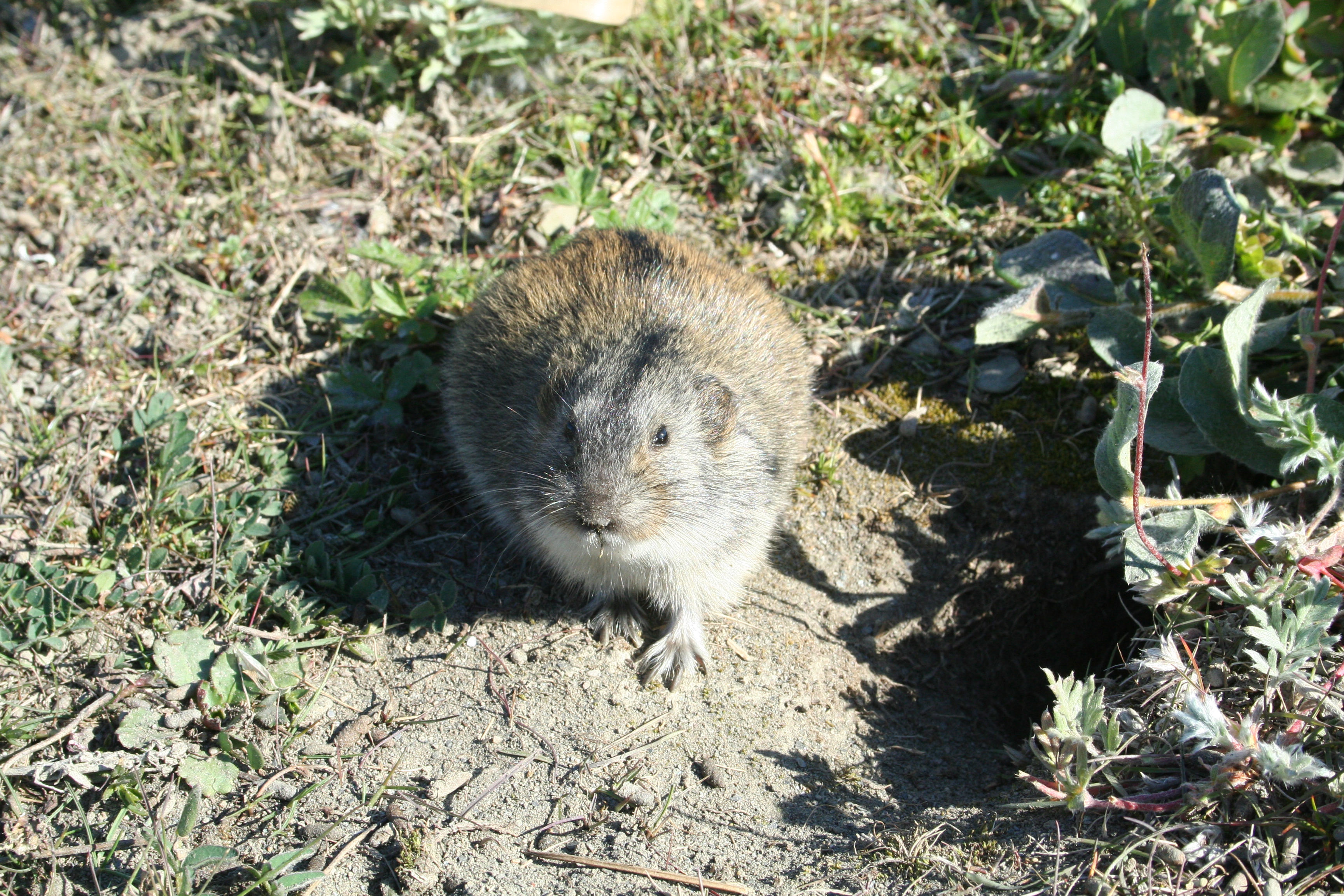
The complicated predator-prey interactions are one of the most fascinating fields in ecology. They have been studied for decades, and the more we learn, the more surprising and unpredicted stories that we find. For me, finding that small rodents (lemmings) in the high Arctic may affect the populations of waders on the coast of Australia, New Zealand or South Africa was a real amazement.

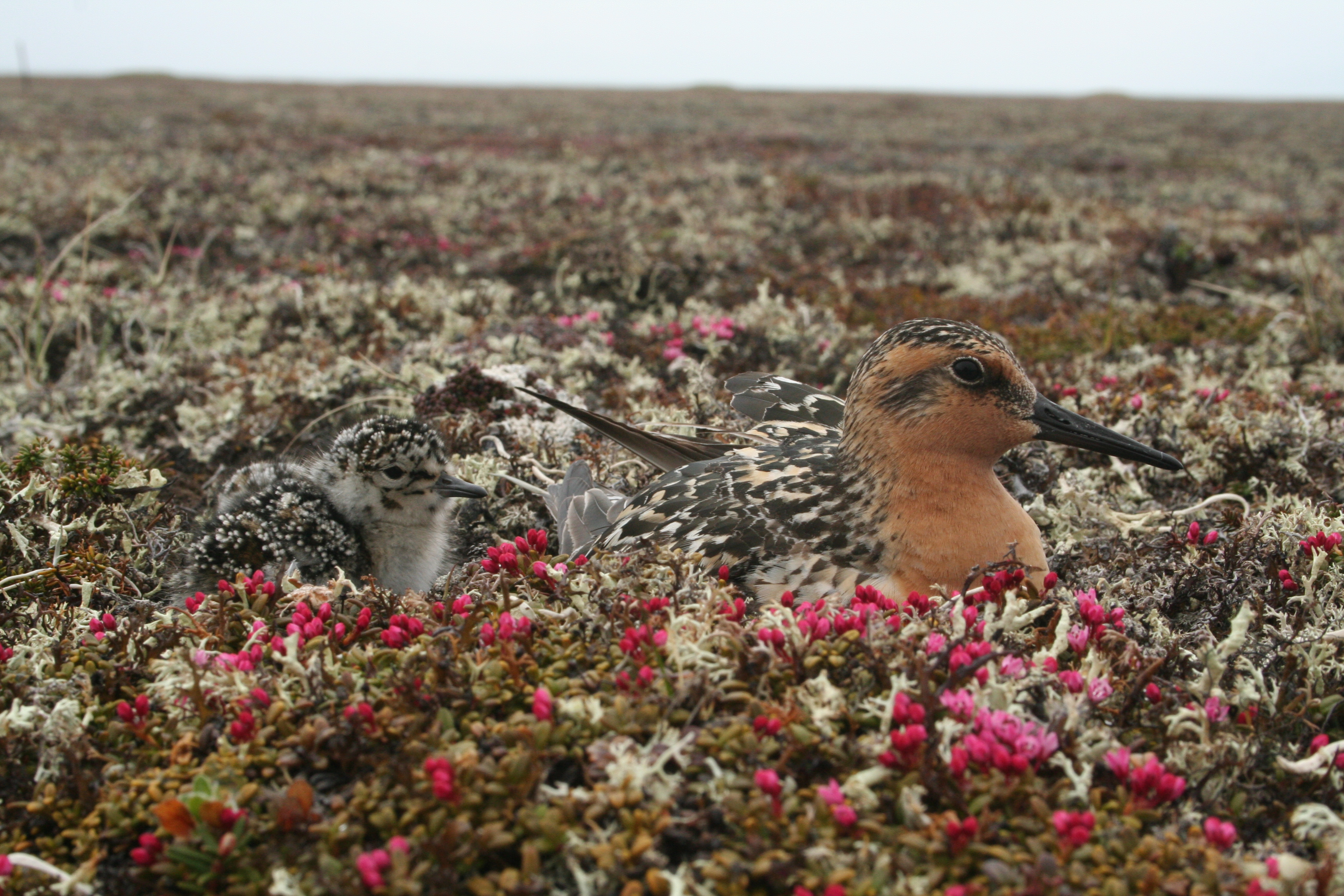
Lemming populations have been known to show 3-5 years cycle, driven by either top-down or bottom-up control. In the Early View paper “Loss of periodicity in breeding success of waders links to changes in lemming cycles in Arctic ecosystems”, we have studied the interactions between the breeding success of high-Arctic nesting migratory shorebirds and lemming abundance, as they were suggested to be linked via the ‘alternative prey hypothesis’: In years of low lemming abundance, their predators, mainly Arctic fox, would switch to alternative prey, including chicks and eggs of shorebirds. In light of the large amount of evidence that lemming cycles have now changed and even disappeared in some parts of the Arctic, we found that the breeding success of these migrants used to follow the cycles of lemmings, but these cycles have too started to disappear, suggesting a cascading effect of changes in lemming cycles.

Siberian lemming © Pavel Tomkovich

Siberian lemming © Pavel Tomkovich

The reason for these changes in lemming cycles is still not entirely known. One possible explanation is that climate change caused alteration of the snow structure which is a crucial hiding and feeding place for lemmings during winter. It might also be the natural tendency of populations in nature to go in and out of cycle. As shorebirds are known to consume considerable amount of benthic invertebrates, these changes in lemming cycle in the high Arctic potentially not only affect shorebird populations in the other side of the worlds, but also have a far-reaching cross-systems consequences on the ecosystem on the southern hemisphere.


Perfectly camouflaged shorebird chick with its ‘not so camouflaged’ parent, on the beautiful high Arctic breeding grounds © Pavel Tomkovich

Perfectly camouflaged shorebird chick with its ‘not so camouflaged’ parent, on the beautiful high Arctic breeding grounds © Pavel Tomkovich


Greenpeace victory – LEGO ends Shell promotion link Updated for 2026


Following a Greenpeace campaign attracting over a million supporters, LEGO published a statement this morning promising that its promotion deal with Shell will lapse:

“We continuously consider many different ways of how to deliver on our promise of bringing creative play to more children. We want to clarify that as things currently stand we will not renew the co-promotion contract with Shell when the present contract ends.”

This decision comes a month after Shell submitted plans to the US administration showing it’s once again gearing up to drill in the melting Arctic next year, and as it argues with US authorities to lower environmental standards in the Arctic.

During Greenpeace’s three month campaign, more than one million people signed a petition calling on LEGO to stop promoting Shell’s brand because of its plans to drill for oil in the pristine Arctic.

Ian Duff, Arctic campaigner at Greenpeace, said: “This is a major blow to Shell. It desperately needs partners like LEGO to help give it respectability and repair the major brand damage it suffered after its last Arctic misadventure. Lego’s withdrawal from a 50 year relationship with Shell clearly shows that strategy will not work.”

“The tide is turning for these fossil fuel dinosaurs that see the melting Arctic as ripe for exploitation rather than protection. The message should be clear; your outdated, climate wrecking practices are no longer socially acceptable, and you need to keep away from the Arctic or face being ostracised by society.”

LEGO committed to renewable energy

In stark contrast to Shell, LEGO’s policies include a commitment to produce more renewable energy than they use, phase out oil in their products and, in cooperation with its partners, leave a better world for future generations.

In its statement, LEGO argued the dispute was between Greenpeace and Shell. “The Greenpeace campaign uses the LEGO brand to target Shell. As we have stated before, we firmly believe Greenpeace ought to have a direct conversation with Shell.

“The LEGO brand, and everyone who enjoys creative play, should never have become part of Greenpeace’s dispute with Shell.”

However, Greenpeace insists that while LEGO is doing the right thing under public pressure, it should choose its partners more carefully when it comes to the threats facing our children from climate change.

Due to contractual obligations, LEGO’s current co-promotion with Shell will be honoured.

The fossil fuel industry is losing friends, fast

LEGO is the latest in a line of leading global companies to walk away from a relationship with the fossil fuel industry.

In late 2012 Waitrose announced it has put its partnership with Shell on ice and in the last month Microsoft, Google and Facebook all made commitments to end their support for ALEC, a controversial lobby group that campaigns against climate change legislation.

Only weeks ago, the Rockefeller Foundation announced it will begin pulling its investments in the fossil fuel industry.

Shell has also come under pressure for its sponsorship links to UK arts organisations including the Southbank Centre.

“LEGO’s decision couldn’t have come soon enough”, said Duff. “The iconic and beautiful Arctic, and its incredible wildlife, like polar bears and narwhals, is under threat like never before. Arctic sea ice is melting at an unprecedented rate, but instead of seeing the huge risks, oil companies like Shell are circling like vultures.

“Only weeks ago Shell gave us the clearest indication yet that it’s planning to go back to the Arctic as soon as next summer.”

Shell’s Arctic ambitions plagued with difficulties

Shell’s past attempts to drill in the Arctic have been plagued with multiple operational failings culminating in the running aground of its drilling rig, the Kulluk.

The extreme Arctic conditions, including giant floating ice-bergs and stormy seas, make offshore drilling extremely risky. And scientists say that in the Arctic, an oil spill would be impossible to clean up meaning devastation for the Arctic’s unique wildlife [6].

But on 28 August 2014 Shell submitted new plans to the US administration for offshore exploratory drilling in the Alaskan Arctic, meaning it’s on course to resurrect its Arctic drilling plans as early as summer 2015.

In the past two years, a massive global movement has emerged calling for a sanctuary around the North Pole, to protect the Arctic and its unique wildlife from the onslaught of oil drilling and industrial fishing.

More than six million people have joined the movement, and more than 1,000 influential people have signed an Arctic Declaration, including Archbishop Desmond Tutu, Emma Thompson and Sir Paul McCartney.

On 19 September UN Secretary General Ban Ki-moon, met with Arctic campaigners to receive a global petition and said he would consider convening an international summit to discuss the issue of Arctic protection.


385235

Global support for a sanctuary to protect the Arctic Updated for 2026


A study, commissioned by Greenpeace, found three in four (74%) people worldwide support the creation of a protected sanctuary in the international waters surrounding the North Pole.

In the UK, this rises to nearly four in five (78%). The single country giving the strongest backing was Argentina, with 80%.

Currently only 1.5% of the Arctic Ocean is protected – less than any of the world’s oceans.

In the past two months, more than 900 influential people have signed Greenpeace’s Arctic Declaration, calling for a sanctuary around the High Arctic, including Archbishop Desmond Tutu, Emma Thompson, Sir Richard Branson, Sir Paul McCartney and many UK political figures.

In the coming weeks, delegations lead by Greenpeace will present these demands along with the list of signatories to the embassies of Arctic States all over the world.

Governments are letting us down!

Greenpeace International Executive Director, Kumi Naidoo, said: “Unfortunately our governments are massively failing in their responsibility to protect our environment and our climate for our children’s future.

“But today, our leaders have received a strong signal that the public appetite for action on the Arctic is overwhelming and must no longer be ignored. Our leaders now have both the mandate and the opportunity to act for the health of the climate and the Arctic. The world is watching and demanding action.” 

To coincide with the release of this new study, climbers and mountaineers are climbing iconic mountain peaks and buildings all over the world throughout the day, to demand that governments respond to the global outcry to make the creation of a protected Arctic Sanctuary a top priority.

Highs and lows

All 30 countries polled show that the vast majority of people either support or strongly support the creation of an Arctic Sanctuary.

The strongest support for protection came from Argentina, Italy, India and South Africa, but also Arctic states like the USA and Canada went above the global average with approximately 80% in favour.

The lowest support for Arctic conservation came from Japan and Russia, where 51% and 45% of people throught the Arctic should be opened up to oil companies and other heavy industries – yet both countries still supported an Arctic Sanctuary by a decisive margin.

But despite supporting an Arctic Sanctuary by a good margin, Japanese opinion was almost equally split on whether “Oil drilling, oil transport, and industrial-scale fishing should be banned in the international waters of the Arctic Ocean around the North Pole.”

The biggest surprise came in the high level of trust expressed in oil companies’ ability to clean up spills. A astonishing 51% worldwide agreed with the proposition that “I trust that the oil companies have the necessary capacity and technology to clean up a major oil spill in the Arctic.”


383738