Tag Archives: global

Patriarchy is killing our planet – women alone can save her Updated for 2026


Last Sunday was International Women’s Day, but despite the celebration and recognition of women throughout the day across the world’s media, little attention was paid to how the systemic marginalization of women is integral to what I call the ‘crisis of civilization.’

Efforts by the UN and other agencies to highlight the centrality of women to the fight against climate change are laudable, but they simply don’t go far enough in addressing the extent to which male-dominated global institutions and structures are directly responsible for the disempowerment of women.

One crisis, or many?

The global crises we face today are legion, but their disparate nature is illusory.

When we look deeper, these seemingly different crises of climate change, energy volatility, food scarcity, economic breakdown, and violent conflict, are not in fact separate issues. Rather, they are inherently interconnected symptoms of a deeper global malaise.

Fundamentally, all these crises stem from the problem that our global system is, increasingly, in breach of the natural limits of our environment.

The world’s rich, industrialized class are over-accumulating and over-consuming planetary resources and raw materials; in the process burning massive quantities of evermore expensive and dirty fossil fuels; dumping unprecedented amounts of waste and carbon into the environment in a way that is destabilizing eco-systems; and ironically, thereby escalating the costs of living and undermining our capacity to continue such vast levels of over-consumption.

This is widening global inequalities, generating more poverty and deprivation, while straining the capacity of states to continue delivering public services. This in turn aggravates civil unrest, and in some cases, fuels the outbreak of civil and international war.

Our conventional view of these crises as separate is in itself a symptom of an epistemological crisis, rooted in our fragmented view of life and nature.

Because energy, the economy and the environment are not separate. They are merely conceptual abstractions we’ve created to understand issues that are completely and utterly intertwined.

Our fragmentary and reductionist worldview plays a large role in this. Not only are our sciences so specialized that we lack holistic big picture frameworks for joining the dots between physics, biology, society, the biophysical environment, the economy, culture and so many other issues; this inability to see the whole for the parts means we are not just hampered in our understanding of the world, we are hampered in our ability to respond to the crises now accelerating.

With respect to the ‘crisis of civilization’, this fragmented reductionism means that we see ourselves not as embedded in the natural world, but as overlords of nature. So under the doctrine of neo-classical, now neoliberal economics, we have deified the empirically-refuted illusory accolade of ‘endless material growth’, despite its being, literally, physically impossible.

We have subordinated the entirety of the natural world, including virtually all living and non-living entities on the planet, to the unquestionable dictates of the ‘market.’ This has led to the commodification of everything, and the projection of a self-perpetuating culture of mass consumerism reinforcing our addiction to endless growth, as well as our blindness to the suicidal trajectory it is generating.

This divorce between human beings and the natural order is reflected in the internal dynamics of the global system: the growing disparity between rich and poor; the widening hostility between Muslim and non-Muslim; the deepening divisions between white and non-white; and of course, the persistent power inequalities between men and women.

In all these cases, we see that our relentless plunder of our own planetary life-support systems, correlates with our unnerving tendency to divide, exclude and ‘Otherize’, often in ways that are so insidious we find it difficult, even painful, to acknowledge these processes. But to this day, one of the most ever-present yet still unacknowledged processes is patriarchy.

Climate change is gendered

Natural disasters resulting from climate change are on the rise. The number of disasters between 2000 and 2009 had tripled compared to between 1980 and 1989, most of which was due to climate events. Yet most victims of such disasters are invariably women.

On average, natural disasters consistently kill more women than men, in some cases with 90% female fatalities. According to UN figures women face a risk of death from natural disasters that is 14 times higher than for men.

Women also suffer disproportionately more from the aftermath of such disasters, increasing the threat of sexual assault, preventing girls attending school, and so on. There can be many reasons for the greater vulnerability: less economic opportunities, less access to technologies like mobile phones (meaning less likelihood of receiving timely warnings), less freedom of movement due to cultural issues, and so on.

Thus, one of the main reasons that climate change disproportionately affects women is because women are already marginalized. This means that the impacts of climate change in terms of extreme weather, water scarcity, and crop failures, hits women the most.

Poverty is gendered

One of the clearest manifestations of the systemic disempowerment of women is poverty. Nearly one billion people live below the poverty line, defined by the World Bank as an income of $1.25 a day.

By this standard, the annual income of the world’s richest 50 people is around the same as the total income of the bottom one billion. Of the poorest one billion, according to the UN Development Program (1995), 70% are women.

Due to limited data sets and paucity of ongoing research, it’s not entirely clear how far that percentage stacks up more recently. But it is indisputable that women are largely far worse off economically than men in the less developed world.

The truth is that poverty levels are much higher than conventionally estimated. In his 2013 report to the secretary general of the OECD, for instance, University of Gottingen economist Stephen Klasen found that the dollar a day standard was “reaching the limits of its usefulness and relevance.

This is partly because of the increasing number of poor people in middle-income countries – where per capita consumption and national poverty lines are substantially above USD 1.25 per day.”

In a recent oped, World Bank chief economist Kaushik Basu conceded that “many criticize as shockingly low” the Bank’s definition of poverty. Yet the Bank has done nothing to amend its dubious definition. This omission allows the Bank to trumpet claims that millions of people, moving above the $1.25 standard, can now be defined as having escaped poverty, even though in reality they remain impoverished.

Basu also condemns the persistence of poverty as a “collective failure”. These appear to be strong words, but they obscure the fact that by blaming ‘everyone’, he in the end blames no one. In reality, this ‘failure’ can be attributed very specifically to the staunchly neoliberal policies of the Bank itself.

Neoliberal policies have involved slashing state spending on health, education and other public services; opening up countries to rapid privatization and foreign investment; and consequently, accelerating government and public debt. Invariably, the impact has been to retard real growth, according to a UN report, and “reduce progress for almost all the social indicators that are available to measure health and educational outcomes.”

Valentine Moghadam, gender equality chief in UNESCO’s human rights division, argues that “the poverty-inducing nature of neoliberal restructuring has been especially severe on women.” It is “incontestable” that women face a “disadvantaged position” in which “women among the poor suffer doubly from the denial of their human rights – first on account of gender inequality, second on account of poverty.”

Indeed, despite working harder than men – making up 70% of the world’s working hours – women only earn 10% of the world’s income, and approximately half of what men earn.

Women’s economic disadvantage often means they are socially more vulnerable, and therefore more easily subject to exploitative working conditions, and other gender-based forms of violence. All this means that as climate change exacerbates the conditions conducive to poverty, women are most on the receiving end.

Food and water is gendered

Far from being mere passive victims, though, women remain utterly pivotal to the possibilities of positive social change in such circumstances, due to their critical role in natural resource management.

As primary collectors of fuel and water for their families, and primary carers in terms of using energy to prepare food, rear their children and care for the ill, women are at the forefront of sustaining the health, prosperity and well-being of communities.

Numerous studies show that climate change will lead to increased droughts, erosion of coastal systems, ocean acidification, destruction of biodiversity, sea level rise, and shifting seasons in coming decades. As a consequence, global warming will intensify water stress and undermine food systems for billions of people, mostly in less developed countries.

This means that women, who play such a key role in food and water provision, are being affected the most by the food and water crises that are worsening due to climate change.

Overall, women earn between 30 and 80% of what men earn annually. Of the world’s 743 million illiterate adults, two thirds are women. Women comprise about half of the agricultural labor force in less developed countries, but only own about 10 to 20% of the land. It’s also usually women who travel long distances everday, frequently alone, to fetch water. In doing so, they are also more vulnerable to health problems and being attacked.

All in all, climate change is making women poorer, eroding their economic opportunities, debilitating their access to food and water, and making them more vulnerable to exploitation. This inevitably erodes the integrity, cohesion and sustainability of families and communities.

Violence is gendered

One of the other major impacts of climate change, of course, is its capacity to accelerate instability and conflict as governments, hell-bent on business-as-usual, face growing resources stresses that they are unable to cope with.

Many studies prove a definite correlation between the acceleration of recent climate change, and the frequency of violent conflict.

But the biggest victims of conflict are women and children, whether in terms of the systematic use of sexual violence as a tactic of war, or by being targeted in indiscriminate attacks on civilians. Violence against women tends to spike during conflicts and civil unrest. “It is now more dangerous to be a woman than to be a soldier in conflict”, said Major General Patrick Carnmaert, a former UN Peacekeeping Operation commander.

Yet climate change does not exacerbate conflict by itself. In 2010, a study of conflict in Africa by the Proceedings of the National Academy of Sciences (PNAS) pointed out that the way climate change impacts society depends on local politics, economy, and culture.

The primary reason that African countries are so deeply vulnerable to civil unrest and violent conflict, the PNAS study shows, is the extent to which their social fabrics have been unravelling under the impact of neoliberal capitalist reforms imposed by the IMF and World Bank, among other factors.

Far from leading to ‘development’, efforts to integrate Africa into the circuits of predatory global finance have largely devastated their societies, ramping up infant mortality rates, widening inequalities, and entrenching regional states with unsustainable debt.

Neoliberal restructuring has created a new economy of war in the less developed world, dislocating communities, and fueling ethnic and tribal antagonisms. The resulting social breakdown permits a resurgence of extremisms as people latch on to custom, identities and myth in the search for certainty.

That in turn, once again, tends to hit the most vulnerable first, especially women and children, in the form of culturally-sanctioned crimes such as honor killings, female genital mutilation, forced marriages, and so on.

Secret World Bank documents leaked some years ago show that financial institutions are fully aware of this largely destabilizing impact of neoliberal restructuring. A Bank country assistance strategy for Ecuador from 2000, for instance, correctly predicted that proposed reforms would spark “social unrest”.

This was part of a wider pattern. As Joseph Stiglitz, former chief economist of the World Bank, put it, the neoliberal package of privatization and liberalization led all too frequently to what he called “the IMF riot”.

Unchecked global capitalism is thus deepening the very impoverishment and social dislocation that fuels the conflict and disorder from which women suffer the most.

Rape is good for business

Into this mix, the role of the global small arms trade is pivotal. Sarah Masters, women’s network coordinator of the International Action Network on Small Arms, points out that without the massive proliferation of light weapons and small arms, the abuse and rape of women “on such a large scale in much of the world’s conflicts” would simply not be possible.

Small arms enable not just rape and other forms of sexual abuse, but also abductions, forced slavery, and forced prostitution.

But the arms trade offers rich pickings for the Western-dominated military-industrial complex. The world’s top small arms exporters include the United States, Italy, Germany, Austria, Switzerland, Russia, France, Belgium, Spain, among others. The value of the small arms trade totals around $8.5 billion annually.

This is a mere fraction of the arms trade more generally, where the top companies generate about $395 billion a year. Major interventions in Iraq and Afghanistan significantly boosted such defense contractor profits.

Overall, US firms account for nearly 60% of all sales by the top 100 companies, with Lockheed Martin and Boeing in first and second place, followed in third place by Britain’s BAE Systems.

But while defense firms rake in cash, the impact on the ground has been devastating: this is the vicious cycle of neoliberal capitalism. World Bank and IMF reforms dislocate societies and accelerate conflict while opening up countries to foreign investors, while arms companies swoop in to make a killing selling weapons to all sides in the maelstrom. Meanwhile, rape and abuse of women becomes endemic.

From countries subjected to Western intervention and occupation like Iraq, Afghanistan, and Palestine, to less developed regions like Africa, violence against women has become entrenched and endemic throughout all spheres of life.

Under the US-backed regime in Iraq, for instance, women bear the brunt of increasing gender-based violence, inadequate infrastructure, political exclusion, and poverty. But against all odds, it is Iraqi women who are at the forefront of rights activism through civil society organisations and social movements.

What makes this worse is that violence against women is also endemic outside of conflict. The World Health Organization (WHO) found in 2013 that 35% of women worldwide have experienced physical or sexual violence from either someone they know, or a stranger. One in three women worldwide who have been in a relationship have been subjected to physical or sexual violence from their own partner.

Lest one assume this is predominantly a backward ‘third world’ phenomenon, a recent EU-wide study showed that one in three women over the age of 15 across Europe had suffered some form of physical or sexual abuse. The figures are similar for the United States, with one in three women having experienced domestic violence, and one in five having been raped.

Power is gendered

Given this overwhelming asymmetrical violence perpetrated by men against women, it is no surprise that women worldwide are also overrepresented in several key mental health issues. Depression, for instance, is twice as common among women than men.

Generally, more women appear to suffer from other common disorders such as anxiety and ‘somatic complaints’ – physical symptoms with no medical explanation. Men, on the other hand, are three times more likely to have antisocial personality disorder.

Epidemiological studies from across the English-speaking West show that this pattern is more exacerbated in the leading ‘selfish capitalist’ states. Not only are rates of mental illness at record levels in these countries compared to elsewhere, but women, once again, are suffering in greater numbers.

Women in these countries are 75% more likely to experience depression, and 60% more likely to experience an anxiety disorder than men; while men experience substance abuse disorders two and a half times more frequently than women.

According to clinical psychologist Prof. Daniel Freeman of Oxford University, “There is a pattern within – women tend to suffer more from what we call ‘internal’ problems like depression or sleep problems. They take out problems on themselves, as it were, where men have externalising problems, where they take things out on their environment, such as alcohol and anger problems.”

It is often women who stand in the firing line of such distinctively male mental health problems.

This gender differentiation in mental health is clearly reflective of the fundamental power disparity between men and women, aggravated along ethnic and class lines. Whichever facet of the crisis of civilization we inspect, women are overwhelmingly on the receiving end of the worst impacts.

This suggests that patriarchy itself is a function of a deep-seated and self-reinforcing psychological malaise that, like a cancer, has infected the totality of industrial civilization.

Calls for greater gender equality to address this are all well and good. But for the most part, the initiatives they lead to, while perhaps well-intentioned, often fail to acknowledge the systemic roots of this inequality in global – not just local -political, economic and cultural structures of patriarchy.

Women are systematically marginalized from key positions of power and decision-making processes across every spectrum of society, in every part of the world, rich or poor. They are discriminated against, institutionally and directly, in politics, in employment, in the arts, in media and in culture.

This is not merely to the detriment of women: the economic marginalization of women costs the global economy trillions of dollars a year, a massive blow to the integrity of all those structures.

Yet the vast majority of the world’s resources are owned and controlled by a tiny minority of the world’s population, in the form of an interlocking ‘revolving door’ nexus of corporate, banking, government, defense, industrial, media and other sectors.

It is that nexus, this top 90 group of transnational corporate monoliths – including among them the world’s most powerful oil, gas and coal companies – that bears responsibility for two-thirds of the human-induced greenhouse gas emissions.

And who runs those corporations? For the last decade, the number of women on US corporate boards has remained static at around 17%. Even where countries are doing better, it is not by much. Sweden and Finland, for instance, are at around 27%.

Overall, decades of diversification have pretty much got us nowhere with corporate boards being 88% white and 85% male. Looking closer at the top Fortune 500 companies, only 4% of CEOs are women, and all of those are white.

As these giant companies attempt to maximize their profits at any human or environmental cost, they are exploiting intensifying resource stress to accelerate investments in lucrative land grabs for farming, mineral commodities, and fraudulent carbon-offset schemes.

In less developed regions like Africa, as Oxfam reports, this is “having an immediate impact on women’s land-use options, on their livelihoods, on food availability and the cost of living, and, ultimately, on women’s access to land for food production. These are only the economic impacts. Women’s knowledge, socio-cultural relationship with the land, and stewardship of nature are also under threat.”

Confronting planetary misogyny

The systemic marginalization and repression of women is not an accidental feature of our civilizational crisis. It is an integral and fundamental pillar of the pervasive injustice of the global system. The global epidemic of violence toward women is inherently bound up with our male-dominated system of violence toward the natural world as a whole.

The rapist, the abuser, is no different from an insatiable tyrant, a slave to his sadistic appetites, unconcerned by the pain inflicted in the process of satiating them.

Just as violence against women is about power, self-gratification through dominance and control, extreme egoism and narcissism, and ultimately a lack of empathy bordering on psychopathology, so ultimately is our systemic violence against nature.

Throughout the course of our exploitative plundering of planetary resources in the pursuit of endless material growth, the global system continues its asymmetric war on women, just as it annihilates species, destroys eco-systems, and exhausts resources for the profit and power of a tiny minority.

The gender divide is not just a mirror image of humanity’s external dislocation from nature: it is both a symptom and driver of that dislocation.

But it is not working. Contemporary global capitalism might be making some people richer, but it is making more people poorer and unhappier, in a context of accelerating uncertainty and conflict. And by the end of this century at least, we face the prospect, according to the consensus of our best scientific minds, of a largely uninhabitable planet if we continue business-as-usual.

The global system is failing, and the mass murder, abuse and murder of women by men is central to that failure: misogyny is an integral function of planetary destruction.

If we want to save the planet, patriarchy must die. That means recognizing and taking responsibility for the fact that patriarchy is integral to the structures of power we take for granted, across East and West.

There’s no no time to waste. If misogyny wins, the planet dies.


Dr. Nafeez Ahmed is an investigative journalist, bestselling author, and international security scholar. He is a regular contributor to The Ecologist where he writes about the geopolitics of interconnected environmental, energy and economic crises. He has also written for the Guardian, The Independent, Sydney Morning Herald, The Age, The Scotsman, Foreign Policy, Prospect, New Statesman, Vice, Le Monde diplomatique, among many others. His new novel of the near future is ZERO POINT.

Follow him on Twitter @nafeezahmed and Facebook.

Website: www.nafeezahmed.com


391219

Join Global Divestment Day and make fossil fuels history! Updated for 2026


Today marks the beginning of Global Divestment Day – a worldwide event marking the growing demands for individuals and institutions – churches, foundations, pension funds and others – to take their investments out of dirty energy.

The campaign has gained astonishing momentum and is seriously rattling the fossil fuel industry, and those invested in it. How do I know that? Because the industry is fighting back – however ineptly.

This week the Independent Petroleum Association of America (IPAA) published a new report in which they claimed that over the past 50 years, portfolios that included fossil fuels investments would have yielded more than those which would have removed fossil fuels from their investments.

After seeing fossil fuel share prices battered by the combination of low oil and gas prices, and the increasingly successful divestment campaign, it’s a desperate attempt to restore investor confidence – and one that’s doomed to failure.

Authored by Daniel R Fischel, a retired Chicago Law School professor, the report compares the 50-year performance of investment portfolios with and without fossil energy stocks. He concludes that the costs of divestment are “clearly substantial” and threaten to have “real financial impacts on the returns generated by endowment funds.” In the case of US universities alone, he writes, it could cost them $3.2 billion a year.

In fact, Professor Fischel was clearly cherry-picking information to reach a predetermined conclusion – as dictated by his fossil fuel industry funders.

As history tells us, the future is unlike the past

Moreover smart investors are not basing their investment decisions on performance over the last half century – any more than 1950s investors in railway locomotion were betting on the steam engine, just because it had made handsome profits for the last 200 years.

They are interested in what will happen in the future, because that’s what will determine their gains or losses. And right now they are taking increasing note, and acting upon, the innumerable indications that we are approaching the end of the fossil fuel era.

I must also emphasize our main message since the very start of the divestment campaign (it looks like the fossil fuel industry missed it): it’s not just about profits! It’s about climate change and making investment choices that will not destroy our planet for generations present and future.

Regardless of the so-called ‘facts’, this report exposes the fossil fuel industry’s colors. Its underlying message is that the industry does not want to change, despite the ever increasing weight of solid scientific evidence telling us that we must change. For them it’s about continuing with business as usual.

They want to continue to extract ever increasing volumes of fossil fuels, as they have over the last 50 years, no matter how it is going to affect humanity. And so they continue to block every attempt to introduce policies and regulations that will force them to alter the course of the next 50 years.

Their desire is simple: to continue amass profits and wealth, even as the fundamental processes that run our planet are disrupted by rising temperatures, and the poorest and most vulnerable people are hit by climate chaos.

So the IPAA report – and the recently released fossil fuel promo below – are a wake-up call for those who choose engagement with the fossil fuel industry. It is fighting change as hard as it can, making divestment the only viable option to bring about the urgent changes we need to avert climate chaos.

Divestment is ‘in’

Over the last few months, hardly a week could go by without new announcements of divestment commitments. Most recently, the Norwegian Sovereign Wealth, the largest single fund in the world, announced it was divesting from a total of 22 companies, potentially totaling billions of dollars in assets.

Similar announcements came from Bristol council in the United Kingdom and the city of Christchurch in New Zealand. All these announcements came in less than two weeks, testimony to the exponential growth of the divestment movement, and another blow to the reputation of the fossil fuel industry.

This is why communities across the globe are coming together this weekend for Global Divestment Day – a global party with 380 events taking place in 58 countries across 6 continents. From South Africa to USA, Bangladesh to Berlin, people are showing their commitment to taking on the fossil fuel industry.

This day marks an escalation and an expansion for the divestment movement, thousands of people from all over the world joining a growing movement.

The notion that we are approaching the end of the fossil fuel era is becoming more and more mainstream. Even banks are acknowledging the fact that if the world takes its climate change commitments seriously, then the dynamics of oil will be altered beyond recognition.

Coal, oil and gas will become constrained by the level of demand allowed under CO2 emission limits and this will have implications for the behavior of countries, companies and consumers alike. Perhaps last year’s falling prices were the first rumblings of this profound change.

Meanwhile renewable energy sources, solar in particular, are becoming ever cheaper, and have even reached the long sought-after ‘grid parity’ in sunny parts of the world. Even The Economist, which no one suspects of being left leaning, is telling us that the “fall in oil prices provides a once in a generation opportunity to fix bad energy policies.”

But the fossil fuel industry isn’t giving up. This very morning the World Coal Association has chosen to launch its call for more investment in so-called ‘clean coal’, insisting: “Greater investment is needed in cleaner coal technologies to meet global energy demand, alleviate energy poverty and minimise CO2 emissions.” Which sounds like putting a fire out by adding more fuel.

A call to action!

In the Pope’s recent visit to the Philippines, local Catholic institutions provided His Holiness with a letter that said:

“Investing in fossil fuel companies and in eco-destructive projects is synonymous in supporting the destruction of our future. Divestment provides the means to change this status quo – to shift towards a system that will prioritize the welfare of the people and of nature over the relentless pursuit of profit.”

For those who live in the Philippines and feel the horrendous impact of climate change, divestment is not about profits and losses from investments – its about their ability to survive.

Divestment and action on climate change is our era’s moral call. It’s about our existence on the face of this planet and therefore we invite everyone to join this growing movement during Global Divestment Day to defend our future.

Join thousands of people across the planet for Global Divestment Day. Together, lets tell our institutions to dump their investments in dirty energies!


More information on Global Divertment Day and events near you.

Yossi Cadan is Global Divestment Senior Campaigner with 350.org in Toronto, Canada.


390241

Herbivory response to global warming Updated for 2026

Experimental warming is an effective approach to determine the effect of increasing temperature on ecological processes, with few confounding factors (e.g., other variables that covary spatially and temporally with temperature). Therefore, a number of field experiments have been initiated worldwide to study the effects of simulated global warming. A wide range of techniques (e.g., greenhouses, open-top chambers, and electric infrared heaters) have been developed to experimentally warm a variety of small plants, including those of the tundra, grasslands, and sapling trees. Within forests, most insect species diversity and plant-insect interactions are concentrated in the canopy of mature trees, rather than in the understory, because of higher plant productivity. However, few studies have examined the responses of mature trees to experimental warming in natural forests.

Bild1

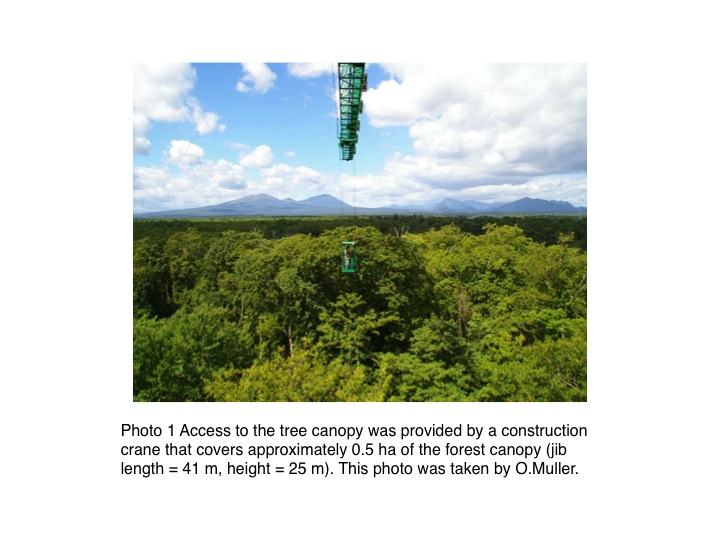
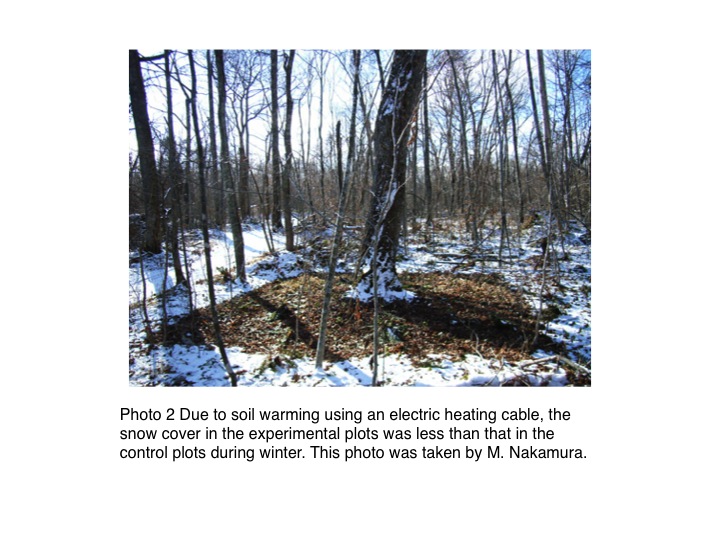
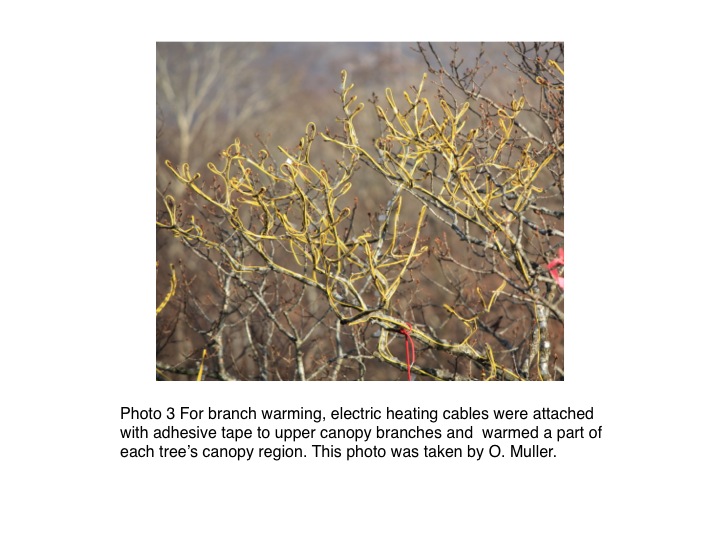
In the paper “Different initial responses of the canopy herbivory rate in mature oak trees to experimental soil and branch warming in a soil-freezing area”, we report the initial 3-year (2007–2009) results of an experimental warming of mature Quercus crispula (18–20 m in height), a late-successional tree species. Five mature Q. crispula trees whose canopy was accessible by a gondola hanging from a construction crane were selected (Photo1). To better understand the mechanism by which global warming affects plant-insect interactions in the canopy of mature oak trees, field experiments must warm aboveground and belowground regions separately. Thus, we experimentally increased the temperature of the surrounding soil and canopy branches of mature oak trees by approximately 5°C using electric heating cables (Photo 2 and 3).

Bild2

Our warming experiment clearly demonstrates that plant-insect interactions in the canopy responded differently to soil and branch warming of mature oak trees. Soil warming in a mature cool-temperate forest with a freeze-thaw cycle decreased the nutritional quality of leaves and the rate of herbivory in the canopy, whereas branch warming had no effect on canopy leaf traits or the herbivory rate. The magnitude of the indirect (plant-mediated) effects of belowground temperature elevation on canopy herbivory was gradually enhanced during the initial 3 years of the study. These results suggest that belowground temperature elevation due to global warming in a soil freezing area is an important driving force of plant-insect interactions in the canopy. For a better understanding of the mechanism by which global warming affects plant-insect interactions in mature cool-temperate forests, this warming experiment should be continued using mature oak trees because indirect effects of temperature are likely more pronounced in the long- than in the short-term.

Bild3

Masahiro Nakamura and co-workers

Warmer world threatens wheat shortages Updated for 2026


Climate change threatens dramatic price fluctuations in the price of wheat and potential civil unrest because yields of one of the world’s most important staple foods are badly affected by temperature rise.

An international consortium of scientists have been testing wheat crops in laboratory and field trials in many areas of the world in changing climate conditions and discovered that yields drop on average by 6% for every one degree Celsius rise in temperature.

This represents 42 million tonnes of wheat lost – about a quarter of the current global wheat trade – for every degree. This would create serious shortages and cause price hikes of the kind that have previously caused food riots in developing countries after only one bad harvest.

Global production of wheat was 701 million tonnes in 2012, but most of this is consumed locally. Global trade is much smaller, at 147 tonnes in 2013.

Price hikes and food insecurity

If the predicted reduction of 42 million tonnes per 1˚C of temperature increase occurred, market shortages would cause price rises. Many developing countries, and the hungry poor within them, would not be able to afford wheat or bread.

Since temperatures – on current projections by the Intergovernmental Panel on Climate Change – are expected to rise up to 5˚C this century in many wheat-growing regions, this could be catastrophic for global food supply.

Dr. Reimund Rötter, professor of production ecology and agrosystems modelling at the Natural Resources Institute Finland, said that wheat yield declines were larger than previously thought.

He said: “Increased yield variability is critical economically as it could weaken regional and global stability in wheat grain supply and food security, amplifying market and price fluctuations, as experienced during recent years.”

One of the crucial problems is that there will be variability in supply from year to year, so the researchers systematically tested 30 different wheat crop models against field experiments in which growing season mean temperatures ranged from 15°C to 26°C.

Heat tolerant wheat strains are needed

The temperature impact on yield decline varied widely across field test conditions. In addition, year-to-year variability increased at some locations because of greater yield reductions in warmer years and lesser reductions in cooler years.

The scientists say that the way to adapt is to cultivate more heat-tolerant varieties, and so keep the harvest stable.

The results of the study – by scientists from the Finland, Germany, France, Denmark, Netherlands, Spain, United Kingdom, Colombia, Mexico, India, China, Australia, Canada and the United States – are published in Nature Climate Change.

Professor Martin Parry, who is leading the 20:20 Wheat Institute Strategic Programme at Rothamsted Research to increase wheat yields, commented:

“This is an excellent example of collaborative research, which will help ensure that we have the knowledge needed to develop the crops for the future environments.”


Paul Brown writes for Climate News Network.


389180

The exotic pet trade is a global evil that must be stopped Updated for 2026


For three decades I have worked as a scientist traversing swamps, deserts and forests tracking wildlife hunters as they scour to catch diverse animals for their sacks and boxes. From this moment on, the meter of destruction is already running.

Next, the hunters’ swag is readied for a new and commonly shortened life in captivity as part of the growing international market for unusual pets.

Unfortunately, despite shuffling tons of trade permits – many of which can be obtained illegally – few, if any, civil servants, CITES (the Convention on International Trade in Endangered Species of Wild Fauna and Flora) managers or other so-called ‘competent authorities’ ever physically enter the hard end of the wildlife trade to witness, let alone control, the destruction.

CITES aims to ” … ensure that international trade in endangered species of plants and animals is sustainable.” Not only are CITES’ aims and achievements somewhat fanciful, but in my experience CITES is often a mere tool for wildlife traders.

Investigate the sources of trade and you will find no controllers, no scientific observers, just exploiters. Anyway, 25% of trade is thought illegal – hardly well under control. Safe ‘sustainable’ trade is mostly a myth.

Lengthy scientific articles now regularly chronicle the harm inherent to trading wild animals as pets. Just one review this year published in the prestigious journal Conservation Biology concluded:

“International trade in exotic pets is an important and increasing driver of biodiversity loss and often compromises the standards required for good animal welfare; one-fifth of recent wildlife trade reports were driven by demand for pets or animals for use in entertainment; unsustainable harvest of wild animals for the pet trade has already led to population decline and collapse for many species; animal welfare is compromised to some extent at all stages of the exotic pet trade; legality of trade does not guarantee its sustainability; many of the species traded as pets are threatened.”

Trade thrives, controls fail.

Poor welfare worsens conservation and ecological threats

Little, if anything, that happens in the exotic pet industry is irrelevant to ecology. For instance, poor (more accurately disastrous) animal welfare affects species conservation and thence ecology because high mortality rates prompt raised compensatory collection and repeat purchases – expensive vivariums need occupants!

According to WWF and an article in The Ecologist, mortality for wild-caught marine fish is approximately 80% pre-sale. Mortality rates on pet fish ‘farms’ are unclear, but the end result is shocking anyway.

The UK alone imports around 40 million pet fish annually (marine and freshwater) and almost all die prematurely within a year. Reptile trading is another example where destructive collection, breeding and storage lead to an industry-standard presale mortality of 70% within just six.

Die-off between pet retailer and the home is 81% in a year. The aquarium and reptile industry manifests nearly the same lethality as a slaughterhouse.

Survivors are often troublesome to their keepers and released into the local habitat where they may become invasive. At least 51 types of released reptile and amphibian live wild around London alone. Controlling European invasives costs over €12.5 billion annually and the bill is rising fast.

Every imported or released exotic animal is arguably a Trojan horse harbouring a potential suite of novel pathogens that could impact on human health or agricultural livestock.

At least 70 pet-linked human diseases exist as well as a growing raft of threats to industry such as avian influenza to poultry and the degenerative illness ‘heartwater’ – which could rapidly wipe out cattle farming.

Indigenous wildlife is not immune to introduced disease, as demonstrated by the chytridiomycosis pandemic linked to released pets, which is rampaging through wild amphibian populations.

The irony!

Make no mistake, the international pet trade involves stealing other ecosystems’ wildlife, stuffing it into containers, and shipping it around the world to face a likely stress-laden and foreshortened unnatural life in a small cage in someone’s lounge.

One cannot help but wonder how the British or any other nation’s public would react to viewing one of their favourite indigenous species – be it barn owl, bank vole, or red squirrel – ripped from our own countryside, bundled into bags, crammed into carriers and sent worldwide where they will unlikely arrive ship-shape.

Fortunately, witnessing such destruction in Britain is improbable, because our own wildlife is very well protected. In the UK, and elsewhere, one must commonly obtain a local authority licence to fish at a river, and caught fish are typically promptly returned to their natural habitat.

The Wildlife and Countryside Act 1981 determines that no British birds can be legally caught and sold or kept as pets, and both UK and European law leaves very little room for any wild animal to be treated as a pet commodity.

Not only does the UK government protect its indigenous wildlife, but it is also opposed even to the concept of capturing and selling it as ‘would-be exotic pets’ to other countries – it states: “We are not aware that unprotected native wild animals are routinely being captured from the wild and sold abroad as pets and would discourage any such activity.”

One cannot, however, ignore the tragic irony that whilst the UK takes such good care of its own house and even opposes the mere principle of siphoning off its wildlife, it continues to be one of the major consumers of other nations’ biodiversity and consequently erodes ecosystems worldwide.

Conclusions

Trading in exotic pets is an unethical and archaic concept surviving extinction not by merit but by fortuitous commercial biases inherent to the policies of government departments.

Governments do not entertain guidance on trade policy from drug dealers or people traffickers, yet they accommodate the vested and harmful interests of pet dealers and wildlife traffickers.

In particular, it is the obfuscation, obstruction and incompetence of trade-mollycoddling civil servants that stifles both the solid evidential arguments of the scientific community as well as the sincere efforts of the seemingly increasing number of ‘eco-aware’ parliamentarians.

The exotic pet industry is a pernicious force incompatible with good ecological, animal welfare and public health practices. It hides in plain sight rooted behind the sanitized façade of pet stores and the front doors of private homes, quietly facilitated by trade-permissive legislation.

Long overdue is the need to haul this industry’s modern-day dark-age habits to face the cleansing light of scientific scrutiny, neo-political good will, and common sense morals.

Evidential and ethical arguments overwhelmingly justify a complete ban on trading exotic animals as pets. Already available, however, are so-named ‘positive lists’ – which turn the historical ‘free trade’ concept around and stipulate ‘no trade until proven safe’.

This approach offers a pro-active and not reactive opportunity to favour wildlife over the deepening pockets of pet peddlers. But so long as the exotic pet trade continues, its maleficence will persist to the detriment of animals, humans and the world in which we live.


Clifford Warwick PGDipMedSci CBiol CSci EurProBiol FOCAE FSB is a Consultant Biologist & Medical Scientist.

For more information please contact the Animal Protection Agency.

Sources with links

[1] http://onlinelibrary.wiley.com/doi/10.1111/cosbi.12240/abstract

Bush, ER., Baker, S.E. and Macdonald, D.W. (2013) Global Trade in Exotic Pets 2006-2012. Conservation Biology, Volume 28, No. 3, 663-676 (Nijman & Shepherd 2009; Lyons & Natusch 2011).

[2] http://news.mongabay.com/2013/1022-millar-aquarium-trade-deaths.html

98% of marine fish headed for the aquarium trade die within a year in the Philippines.

[3] http://www.theecologist.org/News/news_analysis/2523460/the_dark_side_of_hawaiis_aquarium_trade.html

The dark side of Hawaii’s aquarium trade.

[4] http://www.tandfonline.com/doi/abs/10.1080/10888705.2014.918511#.VFu43CjCGQI

Ashley, S., Brown, S., Ledford, J., Martin, J., Nash, A E., Terry, A., Tristan, T. & Warwick, C. (2014) Morbidity and mortality of invertebrates, amphibians, reptiles and mammals at a major exotic companion animal wholesaler. Journal of Applied Animal Welfare Science, 17:1-14. DOI:10.1080/10888705.2014.918511.

[5] http://www.cieh.org/jehr/default.aspx?id=41594

Warwick, C., Arena, P.C., Steedman, C. and Jessop, M. (2012) A review of captive exotic animal-linked zoonoses. Journal of Environmental Health Research, 12:9-24

[6] https://www.savethefrogs.com/threats/frog-legs/images/Schloegel-2009-US-Markets.pdf

Magnitude of the US trade in amphibians and presence of Batrachochytrium dendrobatidis and ranavirus infection in imported North American bullfrogs (Rana catesbeiana) Schloegel, L.M., Picco, A.M., Marm Kilpatrick, A., Davies, A.J., Hyatt, A.D, Daszak, P. Biological Conservation 142 (2009) 1420-1426.

Sources without links

Langton, T. E. S., Atkins, W., & Herbert, C. (2011). On the distribution, ecology and management of non-native reptiles and amphibians in the London area. Part 1. Distribution and predator/prey impacts. The London Naturalist, 90, 83-156.

Shine, C., Kettunen, M., Genovesi, P., Essl, F., Gollasch, S., Rabitsch, W., ten Brink, P. (2010). Assessment to support continued development of the EU strategy to combat invasive alien species. Final Report for the European Commission. Brussels, Belgium: Institute for European Environmental Policy.

Toland, E, Warwick, C., & Arena, P.C. (2012) The exotic pet trade: pet hate. The Biologist 59(3);14-18.


386587

Tide turning against global coal industry Updated for 2026


There are increasing signs of the demise of the world’s dirtiest fossil fuel, from a global oversupply to plummeting prices to China starting to clean up its polluted air.

Last week, the Carbon Tracker Initiative published an analysis – Carbon Supply Cost Curves: Evaluating Financial Risk to Coal Capital Expenditures – identifying major financial risks for investors in coal producers around the world.

The demand for thermal coal in China, the world’s largest emitter of toxic greenhouse gases, could peak as early as 2016, says the report.

The analysis also highlights $112 billion of future coal mine expansion and development that is excess to requirements under lower demand forecasts.

“In particular it shows that high cost new mines are not economic at today’s prices and are unlikely to generate returns for investors in the future”, said an accompanying media release.

“Companies most exposed to low coal demand are those developing new projects, focused on the export market … With new measures to cap coal use and restrict imports of low quality coal in China, it appears the tide is turning against the coal exporters.”

A gloomy outlook for prices, asset values

The analysis added that China’s desire to reduce imports will impact prices and asset values for export mines in the US, Australia, Indonesia and South Africa.

“King Coal is becoming King Canute, as the industry struggles to turn back the tide of reducing demand, falling prices and lower earnings”, said Anthony Hobley, CEO of Carbon Tracker Initiative.

A recent article in Mining Weekly also says the coal industry is indeed facing tough times.

The article noted Coal Association of Canada president Ann Marie Hann agreed that about half of the global coal output at current pricing was being produced at a loss.

“Until a global rebalance between demand and supply takes place and the global economy rebounds, the coal industry will unfortunately probably see some more bad news over the coming months”, Hann said.

The story added that the prices for thermal coal, which is used to generate electricity, had fallen in recent years from about $190 per tonne in mid-2008 to $75 per tonne this year.

Metallurgical coal (used to make steel) had dropped from a high of more than $300 per tonne in late 2011 to less than $120 per tonne.

Under attack from all sides

To perhaps make matters worse for the coal industry, it is being publicly attacked by the oil and gas sectors, which are trying to position themselves as cleaner fossil fuels.

According to the Responding to Climate Change website, a number of the world’s leading oil and gas companies voiced their concerns about climate change at last week’s UN Climate Summit, arguing they can offer a future coal cannot.

“One of our most important contributions is producing natural gas and replacing coal in electricity production”, Helge Lund, Statoil’s chief executive, was quoted as saying.

Kevin Washbrook, a director for Voters Taking Action on Climate Change, a Vancouver organization that has fought against a proposed new coal export facility at Fraser Surrey Docks, agrees the thermal coal sector is in decline.

“I think coal is in everyone’s sights these days because coal is climate change”, Washbrook told DeSmogBlog. “Coal has to be on the chopping block for sure.”

Washbrook added that the UN, the International Energy Agency, big banks and insurance companies are acknowledging that the vast majority of coal must stay in the ground if humankind is to avoid catastrophic, runaway climate change.

“We need to see this current downturn [in the thermal coal sector] for what it really is – our last good opportunity to leave coal behind and start the transition to emission-free energy sources.”


Chris Rose is a journalist for DeSmogBlog and other news outlets, and a communications consultant. Born in Vancouver, his interests include politics, history, demographics, the economy, the environment and energy-related issues.

This article was originally published on DeSmogBlog.


384881

Corporate-smart greenwash: the Global Alliance on Climate-Smart Agriculture Updated for 2026


We, the undersigned civil society organisations, hereby manifest our rejection of the proposed Global Alliance for Climate-Smart Agriculture launched at the UN Secretary-General’s Climate Change Leaders’ Summit.

This proposed alliance is a deceptive and deeply contradictory initiative.

Food producers and providers – farmers, fisherfolk, and pastoralists – together with our food systems, are on the front lines of climate change.

We know that urgent action must be taken to cool the planet, to help farming systems – and particularly small-scale farmers – adapt to a changing climate, and to revive and reclaim the agroecological systems on which future sustainable food production depends.

The Global Alliance for Climate-Smart Agriculture, however, will not deliver the solutions that we so urgently need. Instead, ‘climate-smart’ agriculture provides a dangerous platform for corporations to implement the very activities we oppose.

Our concerns have been ignored

By endorsing the activities of the planet’s worst climate offenders in agribusiness and industrial agriculture, the Alliance will undermine the very objectives that it claims to aim for.

Some organizations have constructively engaged in good faith for several months with the Alliance to express serious concerns through a number of different routes – including a sign-on letter signed by over 80 organisations, participation in the Friends of the Alliance conference calls, and attending a meeting of the Alliance in the Hague in July 2014.

But the concerns have been ignored. Instead, the Alliance is clearly being structured to serve big business interests, not to address the climate crisis.

We reject ‘climate-smart’ agriculture and the Global Alliance for a number of reasons already articulated in previous efforts to interface with the promoters, including:

1. No environmental or social criteria

The final framework of the Alliance does not contain any criteria or definitions for what can – or cannot – be considered ‘climate-smart agriculture’.

Industrial approaches that increase greenhouse gas emissions and farmers’ vulnerability by driving deforestation, using genetically modified (GM) seeds, increasing synthetic fertiliser use or intensifying industrial livestock production, are all apparently welcome to use the ‘climate-smart’ label to promote their practices as solutions to climate change.

2. Carbon trading

The originators of ‘climate-smart’ agriculture – the FAO and the World Bank – have a vision that ‘climate-smart’ projects will be funded in part by carbon offset schemes.

Many of our groups question the environmental and social integrity of carbon offsetting. Carbon sequestration in soils is not permanent and is easily reversible, and should be especially excluded from schemes to offset emissions.

Carbon offset schemes in agriculture will create one more driver of land dispossession of smallholder farmers, particularly in the Global South, and unfairly place the burden of mitigation on those who are most vulnerable to, but have least contributed to, the climate crisis.

3. A new space for promoting agribusiness and industrial agriculture

Companies with activities resulting in dire social impacts on farmers and communities, such as those driving land grabbing or promoting GM seeds, already claim that they are ‘climate-smart’.

Yara (the world’s largest fertilizer manufacturer), Syngenta (GM seeds), McDonald’s and Walmart are all at the ‘climate-smart’ table. Climate-smart agriculture will serve as a new promotional space for the planet’s worst social and environmental offenders in agriculture.

The proposed Global Alliance on Climate-Smart Agriculture seems to be yet another strategy by powerful players to prop up industrial agriculture, which undermines the basic human right to food. It is nothing new, nothing innovative, and not what we need.

A covert promotion of industrial agriculture

We do urgently need climate action! Unfortunately, the Alliance seriously misses the mark. Real climate solutions are already out there in farmers’ fields – based on agroecological practices and the relocalisation of food systems to effectively fight hunger.

Instead of creating one more body for business-as-usual, governments, funding agencies, and international organizations should be taking bold action: committing to shift resources away from climate-damaging practices of chemical-intensive industrial agriculture and meat production and towards investment in and commitment to agroecology, food sovereignty, and support to small-scale food producers.

The International Assessment of Agricultural Knowledge, Science and Technology for Development concluded in 2008 that business-as-usual in agriculture is not an option. Instead, a thorough and radical overhaul of present international and agricultural policies is essential to meet the challenges of the future.

We reject the Global Alliance as one more step by a small percentage of the UN’s total membership to promote industrial agriculture against all the evidence of its destructive impacts on people, biodiversity, seed, water, soils, and climate.

It is merely one more attempt to block the real change needed to fix our broken food systems and our broken climate – change which instead must be based on food sovereignty and agroecological approaches for agriculture and food production and the effective reduction of greenhouse gases.


Source: Climate Smart Ag Concerns. This article is a minimally edited version of the original letter. Signatories are listed below:

International Organisations & Farmers’ Movements

ActionAid International
Centro de Estudios Internacionales y de Agricultura Internacional (CERAI)
CIDSE
Coalition pour la Protection du Patrimoine Genetique African (COPAGEN)
Corporate Europe Observatory
Earth in Brackets
Foro Rural Mundial (FRM)
Friends of the Earth International
IBON International
Inades-Formation
International Federation of Organic Agriculture Movements (IFOAM)
International-Lawyers.Org (INTLawyers)
GRET
LDC Watch
Mesa de Coordinación Latinoamericana de Comercio Justo
Send a Cow
South Asia Alliance for Poverty Eradication (SAAPE)
South Asia Peasants Coalition
Third World Network

National Organisations & Farmers’ Movements

Abalimi Bezekhaya (Farmers of Hope), South Africa
ACRA-CCS Foundation, Italy
Action Contre la Faim, France
Africa Europe Faith & Justice Network (AEFJN), Brussels
Agrosolidaria Federacion el Tambo Cauca, Colombia
Alliance International sur les OMD (AIOMD), Niger
All Nepal Peasants Federation (ANPFa), Nepal
Antenne Nationale du Niger (AAIOMD-Niger)
Asemblea Nacional Ambiental (ANA), República Dominicana
Asociacion de Prosumidores Agroecologicos “Agrosolidaria Seccional Viani” Colombia
Asociacion Nacional de Produtores Ecologistas del Peru (ANPE)
Asociacion Viva Amazonica de San Martin, Peru
Association Malienne pour la Sécurité et la Souverainté Alimentaires (AMASSA)
Bangladesh NGOs Network for Radio and Communication (BNNRC)
Beyond Copenhagen, India
Biofuelwatch, UK
Biowatch South Africa
Bolivian Platform on Climate Change, Bolivia
Campaign for Climate Justice Nepal (CCJN)
Carbon Market Watch, Belgium
CCFD-Terre Solidaire, France
Centre for community economics and development consultants society (CECOEDECON), India
Cecosesola, Barquisimeto, Venezuela
Centre d’Actions et de Réalisations Internationales (CARI), France
Centre for Learning on Sustainable Agriculture (ILEIA), the Netherlands
Community Development Association (CDA), Bangladesh
Community Empowerment for Progress Organization (CEPO), South Sudan
CONCEPT ONG, Sénégal
EcoFrut, Colombia
EcoNexus, UK
Equity and Justice Working Group Bangladesh (EquityBD).
Family Farmers’ Association, UK
Farm & Garden Trust, South Africa
Farms Not Factories, UK
Féderation des Eglises Evangéliques des Frères (FEEF), the Central African Republic
Federacion Nacional de Cooperativas Agropecuarias y Agroindustriales de Nicaragua (FENACOOP)
Find Your Feet, UK
Food First Information and Action Network (FIAN) Nepal
Forum des Femmes Africaines pour l’Education (FAWECOM), Comoros
Friends of Siberian Forests, Russia
Friends of the Earth – England, Wales & Northern Ireland
Friends of the Earth – Latvia
Fundación Caminos de Indentidad (FUCAI) Colombia
Fundación Lonxanet para la Pesca Sostenible, Spain
Fundación Solidaridad, Bolivia
Harvest of Hope, South Africa
Gramya Resource Centre for Women, India
Groupe d’Action de Paix et de Formation pour la Transformation (GAPAFOT), Central African Republic
Human Rights (HR) Alliance, Nepal
Human Rights Organisation of Bhutan (HUROB)
INHURED International, Nepal
Institute for Agriculture and Trade Policy (IATP), USA
Instituto de Cultura Popular, Argentina
Jagaran Nepal
Jubilee South Asia/Pacific Movement on Debt and Development (JSAPMDD), Philippines
Karnataka State Red Gram Growers Association, India
Labour, Health and Human Rights Development Centre, Nigeria
L’Association des Jeunes Filles Pour la Promotion de l’Espace Francophone (Membre du CNOSCG), Republic of Guinea
MADGE Australia
MASIPAG, Philippines
National Civic Forum, Sudan
National Federation of Youth Organisations in Bangladesh
National Network on Right to Food, Nepal (RtFN)
Organización Casa de Semillas Criollas Atenas, Costa Rica
Pakistan Fisher Folk Forum (PFF), Pakistan
Partners for the Land & Agricultural Needs of Traditional Peoples (PLANT), USA
People’s Alliance of Central-East India (PACE-India)
PHE Ethiopia Consortium
Plateforme Haïtienne de Plaidoyer pour un Développement Alternatif (PAPDA), Haïti
Plateforme pour le Commerce Equitable, France
Public Advocacy Initiatives for Rights and Values in India (PAIRVI)
Red Ecologista Autónoma de la Cuenca de México
Red Nicaraguense de Comercio Comunitario (RENICC)
Red Peruana de Comercio Justo y Consumo Ético, Perú
Rural Reconstruction Nepal (RRN)
SADF ONG, Democratic Republic of Congo
Sanayee Development Organisation, Afghanistan
Secours Catholique (Caritas), France
SOCDA (Somali Organization for Community Development Activities)
Sudan Peace and Education Development Program (SPEDP), South Sudan
Texas Drought Project, USA
Unión Nacional de Agricultores y Ganaderos de Nicaragua (UNAG)
Unión LatinoAmerica de Technicos Rurales y Agrarios, Argentina
UK Food Group, UK
Vicaria del Sur, Diócesis de Florencia, Colombia
Voluntary Action for the fight against climate change and the adverse effects of Sulfur Diesel, (AVOCHACLISD), Burundi
World Development Movement, UK
Youth Network for MDGs, Madagascar


375955

UN: only small farmers and agroecology can feed the world Updated for 2026


Modern industrial agricultural methods can no longer feed the world, due to the impacts of overlapping environmental and ecological crises linked to land, water and resource availability.

The stark warning comes from the new United Nations Special Rapporteur on the Right to Food, Prof Hilal Elver, In her first public speech since being appointed in June

“Food policies which do not address the root causes of world hunger would be bound to fail”, she told a packed audience in Amsterdam.

One billion people globally are hungry, she declared, before calling on governments to support a transition to “agricultural democracy” which would empower rural small farmers.

Agriculture needs a new direction: agroecology

“The 2009 global food crisis signalled the need for a turning point in the global food system”, she said at the event hosted by the Transnational Institute (TNI), a leading international think tank.

“Modern agriculture, which began in the 1950s, is more resource intensive, very fossil fuel dependent, using fertilisers, and based on massive production. This policy has to change.

“We are already facing a range of challenges. Resource scarcity, increased population, decreasing land availability and accessibility, emerging water scarcity, and soil degradation require us to re-think how best to use our resources for future generations.”

The UN official said that new scientific research increasingly shows how ‘agroecology’ offers far more environmentally sustainable methods that can still meet the rapidly growing demand for food:

“Agroecology is a traditional way of using farming methods that are less resource oriented, and which work in harmony with society. New research in agroecology allows us to explore more effectively how we can use traditional knowledge to protect people and their environment at the same time.”

Small farmers are the key to feeding the world

“There is a geographical and distributional imbalance in who is consuming and producing. Global agricultural policy needs to adjust. In the crowded and hot world of tomorrow, the challenge of how to protect the vulnerable is heightened”, Hilal Elver continued.

“That entails recognising women’s role in food production – from farmer, to housewife, to working mother, women are the world’s major food providers. It also means recognising small farmers, who are also the most vulnerable, and the most hungry.

“Across Europe, the US and the developing world, small farms face shrinking numbers. So if we deal with small farmers we solve hunger and we also deal with food production.”

And Elver speaks not just with the authority of her UN role, but as a respected academic. She is research professor and co-director at the Project on Global Climate Change, Human Security, and Democracy in the Orfalea Center for Global and International Studies, University of California, Santa Barbara.

She is also an experienced lawyer and diplomat. A former founding legal advisor at the Turkish Ministry of Environment, she was previously appointed to the United Nations Environment Program (UNEP) Chair in Environmental Diplomacy at the Mediterranean Academy of Diplomatic Studies, University of Malta.

Industrial agriculture grabs 80% of subsidies and 90% of research funds

Hinting at the future direction of her research and policy recommendations, she criticised the vast subsidies going to large monocultural agribusiness companies. Currently, in the European Union about 80% of subsidies and 90% of research funding go to support conventional industrial agriculture.

“Empirical and scientific evidence shows that small farmers feed the world. According to the UN Food & Agricultural Organisation (FAO), 70% of food we consume globally comes from small farmers”, said Prof Elver.

“This is critical for future agricultural policies. Currently, most subsidies go to large agribusiness. This must change. Governments must support small farmers. As rural people are migrating increasingly to cities, this is generating huge problems.

“If these trends continue, by 2050, 75% of the entire human population will live in urban areas. We must reverse these trends by providing new possibilities and incentives to small farmers, especially for young people in rural areas.”

If implemented, Elver’s suggestions would represent a major shift in current government food policies.

But Marcel Beukeboom, a Dutch civil servant specialising in food and nutrition at the Ministry of Trade & Development who spoke after Elver, dissented from Elver’s emphasis on small farms:

“While I agree that we must do more to empower small farmers, the fact is that the big monocultural farms are simply not going to disappear. We have to therefore find ways to make the practices of industrial agribusiness more effective, and this means working in partnership with the private sector, small and large.”

A UN initiative on agroecology?

The new UN food rapporteur’s debut speech coincided with a landmark two-day International Symposium on Agroecology for Food and Nutrition Security in Rome, hosted by the FAO. Over 50 experts participated in the symposium, including scientists, the private sector, government officials, and civil society leaders.

A high-level roundtable at the close of the symposium included the agricultural ministers of France, Algeria, Costa Rica, Japan, Brazil and the European Union agricultural commissioner.

FAO Director-General José Graziano da Silva said: “Agroecology continues to grow, both in science and in policies. It is an approach that will help to address the challenge of ending hunger and malnutrition in all its forms, in the context of the climate change adaptation needed.”

A letter to the FAO signed by nearly 70 international food scientists congratulated the UN agency for convening the agroecology symposium and called for a “UN system-wide initiative on agroecology as the central strategy for addressing climate change and building resilience in the face of water crises.”

The scientists described agroecology as “a well-grounded science, a set of time-tested agronomic practices and, when embedded in sound socio-political institutions, the most promising pathway for achieving sustainable food production.”

More than just a science – a social movement!

A signatory to the letter, Mindi Schneider, assistant professor of Agrarian, Food and Environmental Studies at the Institute of Social Studies (ISS) in The Hague, said:

“Agroecology is more than just a science, it’s also a social movement for justice that recognises and respects the right of communities of farmers to decide what they grow and how they grow it.”

Several other food experts at the Transnational Institute offered criticisms of prevailing industrial practices. Dr David Fig, who serves on the board of Biowatch South Africa, an NGO concerned with food sovereignty and sustainable agriculture, said:

“We are being far too kind to industrialised agriculture. The private sector has endorsed it, but it has failed to feed the world, it has contributed to major environmental contamination and misuse of natural resources. It’s time we switched more attention, public funds and policy measures to agroecology, to replace the old model as soon as possible.”

Prof Sergio Sauer, formerly Brazil’s National Rapporteur for Human Rights in Land, Territory and Food, added: “Agroecology is related to the way you relate to land, to nature to each other – it is more than just organic production, it is a sustainable livelihood.

“In Brazil we have the National Association of Agroecology which brings together 7,000 people from all over the country pooling together their concrete empirical experiences of agroecological practices. They try to base all their knowledge on practice, not just on concepts.

“Generally, nobody talks about agroecology, because it’s too political. The simple fact that the FAO is calling a major international gathering to discuss agroecology is therefore a very significant milestone.”


Dr. Nafeez Ahmed is an investigative journalist, bestselling author, and international security scholar. He is a regular contributor to The Ecologist and The Guardian where he writes about the geopolitics of interconnected environmental, energy and economic crises. He has also written for The Independent, Sydney Morning Herald, The Age, The Scotsman, Foreign Policy, Prospect, New Statesman, Le Monde diplomatique, among many others. His new novel of the near future is ZERO POINT.

Follow him on Twitter @nafeezahmed and Facebook.

Website: www.nafeezahmed.com



384405

The Carbon Underground: reversing global warming Updated for 2026


Since Dr. James Hansen, a leading climatologist, warned in 2008 that we need to reduce the amount of CO2 in the Earth’s atmosphere to 350 parts-per-million (ppm) in order to preserve life on Earth, little has been done to get us there.

It’s getting late. If we’re going to preserve a livable Earth, we the global grassroots, must do more than mitigate global warming.

We must reverse it. How?

Hint number one: not by politely asking out-of-control corporations and politicians to please stop destroying the planet.

Hint number two: not by pinning our hopes for survival and climate stability on hi-tech, unproven and dangerous, “solutions” such as genetic engineering, geoengineering, or carbon capture and sequestration for coal plants.

Hint number three: not by naively believing that soon (or soon enough) ordinary consumers all over the planet will spontaneously abandon their cars, air travel, air conditioning, central heating, and fossil fuel-based diets and lifestyles just in time to prevent atmospheric concentrations of greenhouse gases from moving past the tipping point of 450 ppm or more of CO2 to the catastrophic point of no return.

We can reverse climate change by sequestering several hundred billion tons of excess CO2 using the ‘tools’ we already have at hand: regenerative, organic farming, ranching and land use.

And we can make this world-changing transition by mobilizing a vast green corps of farmers, ranchers, gardeners, consumers, climate activists and conservationists to begin the monumental task of moving the Carbon Behemoth safely back underground.

Moving the carbon underground

As thousands of farmers, ranchers, and researchers worldwide are demonstrating, by reducing greenhouse gas (GHG) emissions of CO2, methane, nitrous oxide and black soot, and qualitatively ramping up plant photosynthesis (i.e. the capacity of plants, trees, and grasses to move CO2 from the atmosphere through their roots into the soil) on billions of acres of farm land, range land, and forest, we can sequester enough CO2 to restabilize the climate.

We’re talking about mobilizing the global grassroots, not as passive observers, but as active participants, producers and conscious consumers, implementing and promoting on a mass scale, tried and true, low-tech, beneficial practices that naturally sequester enormous amounts of atmospheric carbon in the soil.

These traditional, regenerative practices include no till organic farming, planned rotational grazing (carbon ranching), composting of organic wastes, the use of cover crops, planting trees, and preserving and restoring forests, wetlands, riparian zones, grasslands, peat bogs, and biodiversity.

As Courtney White, author of the recent book Grass, Soil, Hope puts it:

” … if land that is bare, degraded, tilled, or monocropped can be restored to a healthy condition, with properly functioning carbon, water, mineral, and nutrient cycles, and covered year-round with a diversity of green plants with deep roots, then the added amount of atmospheric CO2 that can be stored in the soil is potentially high.

“Globally… soils contain about three times the amount of carbon that’s stored in vegetation and twice the amount stored in the atmosphere. Since two-thirds of the earth’s land mass is grassland, additional CO2 storage in the soil via better management practices, even on a small scale, could have a huge impact.”

The answer lies in the soil

The noted food writer, Michael Pollan, in his introduction to White’s book, explains the basic concepts of plant photosynthesis and the benefits of regenerative agriculture:

“Consider what happens when the sun shines on a grass plant rooted in the earth. Using that light as a catalyst, the plant takes atmospheric CO2, splits off and releases the oxygen, and synthesizes liquid carbon-sugars, basically. Some of these sugars go to feed and build the aerial portions of the plant we can see, but a large percentage of this liquid carbon – somewhere between 20 and 40 percent – travels underground, leaking out of the roots and into the soil.

“The roots are feeding these sugars to the soil microbes-the bacteria and fungi that inhabit the rhizosphere-in exchange for which those microbes provide various services to the plant: defense, trace minerals, access to nutrients the roots can’t reach on their own. That liquid carbon has now entered the microbial ecosystem, becoming the bodies of bacteria and fungi that will in turn be eaten by other microbes in the soil food web.

“Now, what had been atmospheric carbon (a problem) has become soil carbon, a solution-and not just to a single problem, but to a great many problems.

“Besides taking large amounts of carbon out of the air – tons of it per acre when grasslands are properly managed, according to White – that process at the same time adds to the land’s fertility and its capacity to hold water. Which means more and better food for us …

“This process of returning atmospheric carbon to the soil works even better when ruminants are added to the mix. Every time a calf or lamb shears a blade of grass, that plant, seeking to rebalance its ‘root-shoot ratio’,” sheds some of its roots.

“These are then eaten by the worms, nematodes, and microbes-digested by the soil, in effect, and so added to its bank of carbon. This is how soil is created: from the bottom up.”

Wake up before it’s too late

You may be unfamiliar with the enormous impact of industrial food and farming and non-sustainable forest practices on global warming. So here’s a few facts:

  • Chemical and energy-intensive, GMO, industrial food and farming practices generate 35% of global greenhouse gas pollution.
  • Deforestation, often agriculture-driven, generates another 20%.

But there is an alternative: natural carbon sequestration through regenerative land use. To find out more, please take a look at the comprehensive 2013 scientific study called ‘Wake Up Before It’s Too Late‘, published by the United Nations Commission on Trade and Development (UNCTAD).

And if you need a strong dose of good news, to counteract the typical gloom and doom message around the climate crisis, please read the 2014 Rodale Institute study on regenerative organic practices. See also the website The Carbon Underground.

Given that hundreds of billions of tons of carbon originally sequestered in agricultural soils are now blanketing the atmosphere and cooking the planet, our life-or-death task is to move this massive ‘legacy load’ of CO2 (now 50 ppm of CO2, likely to be 100 ppm in 20 years, past the danger zone) back underground, as soon as possible.

This Great Sequestration will buy us the time we need to reduce fossil fuel use by 80-90% or more and reverse global warming.

Taking down factory farms and industrial agriculture

Of course moving several hundred gigatons of CO2 back underground and reversing global warming will not be easy. Getting back to 350 ppm of CO2 in the atmosphere will require nothing less than a global food and farming revolution.

That will mean shutting down factory farms, boycotting genetically engineered foods, including factory-farmed meat and animal products, and putting billions of intensively confined farm animals back on the land, grazing, where they belong.

Restabilizing the climate means putting an end to gigantic GMO soybean and palm oil plantations and industrial timber operations. It means preserving tropical forests, and planting and nurturing hundreds of billions of native trees in deforested urban and rural areas.

Reversing global warming means putting an end to the energy-intensive, chemical-intensive, genetically engineered industrial food and farming system that is not only destroying public health, torturing animals, polluting the water, overgrazing pastures and rangelands, driving family farmers off the land, and destroying biodiversity, as well as pumping billions of tons of CO2, methane, nitrous oxide, and black soot into the air.

Reversing climate change also means stopping industrial agriculture from continuing to dump billions of pounds of chemical fertilizers and pesticides on the already heavily tilled, compacted, and eroded land-practices that destroy the Earth’s natural ability to sequester vast amounts of carbon.

These unsustainable farming, ranching, and land use practices, according to a leading world expert, Dr. Rattan Lal, have already caused the release of 25-70% (hundreds of billions of tons) of all the carbon originally sequestered in agricultural soils.

We need ‘regenerative agriculture’

As a consequence of this decarbonization and destruction of the Earth’s topsoils, almost a quarter of all arable land on the planet is fallow. But as Dr. David Johnson of New Mexico State University has recently shown in a scientific study for Sandia Labs, by implementing regenerative organic practices,

“The rates of biomass production we are currently observing in this system have the capability to capture enough CO2 (50 tons of CO2 / acre) to offset all anthropogenic CO2 emissions on less than 11 percent of world cropland. Over twice this amount of land is fallow at any time worldwide.” (From The Soil Will Save Us, by Kristin Ohlsen, p. 233.)

As the well respected author Kristin Ohlson commented to Dr. Johnson in a telephone conversation about this staggering assertion: “Aren’t you afraid to say this? Aren’t you afraid that saying that will let the oil and gas companies off the hook? As well as people burning down forests and all the rest of us with big carbon footprints? Aren’t you afraid?”

Ohlson continued: “I thought I could feel a wary shrug over the phone.”

Dr. Johnson then replied: “I don’t see anything on the horizon that touches the effectiveness of this approach We’re not going to reduce our carbon dioxide emissions anytime soon, because we depend too much on oil and gas, and the rest of the world wants our lifestyle. The whole idea is to get something that works right now, the world over, to make a significant impact on reducing atmospheric carbon dioxide.” (Ibid, pp. 233-34.)

If industrial agriculture and GMOs are marginalized through mandatory labeling, marketplace pressure and public policy change, if fossil fuel consumption in all sectors is steadily reduced, and regenerative organic practices are put into action globally, with a focus on the 22% of the planet’s soils which are degraded and currently fallow, we will be able to sequester 100% of current, annual (35 gigatons) carbon dioxide emissions.

Small farmers can cool the Planet

The world’s two and a half billion small and indigenous farmers and rural villagers currently manage to produce 70% of the world’s food on 25% of the world’s land.

These so-called ‘subsistence farmers’, who have always struggled to survive, now find that climate change, the steady expansion of GMOs and industrial agriculture, and so-called ‘Free Trade’ agreements, are making their farming and survival much more difficult.

But these same small farmers, ranchers, pastoralists and forest dwellers, because they have, in most cases, retained traditional knowledge and practices, including seed saving and animal grazing, are open to adopting even more powerful regenerative organic practices.

And of course these regenerative, climate-friendly, low-tech land-management techniques will also increase yields, reduce rural poverty, conserve water, improve soil health, and prevent erosion. Study after study has shown that small agro-ecological farms significantly out-produce industrial farms-while sequestering carbon.

The solution to climate change, desertification and world hunger is literally in the hands of the world’s two-and-a-half billion family farmers – but only if those farmers are supported by conscious consumers and activists, driving public policy, marketplace, and land-use reform on a global scale.

This won’t happen unless we focus on economic justice and land-use reform. Investments and public funds, local to international, must be shifted from greenhouse gas-polluting factory farms and chemical-drenched genetically engineered crops to regenerative organic farming techniques that benefit small-scale and sustainable farmers, as well as consumers.

Land grabs and ‘free trade’ agreements orchestrated by industrialized nations and multinational corporations must be stopped.

The point of no return

The US and global climate movement desperately needs a more sophisticated (and international) strategy beyond just pressuring politicians, corporations, banksters, and the White House into shutting down coal plants, fracking and the tar sands pipeline.

What we need is a holistic Zero Emissions / Maximum Sequestration strategy that can galvanize a grassroots army of hundreds of millions of small farmers and conscious consumers, not only in the US, but globally.

Although millions of misinformed and / or befuddled Americans remain in denial, a critical mass of the body politic is beginning to understand that global warming and climate chaos pose a serious threat to human survival.

What they are lacking, however, is a coherent and empowering understanding of what is actually causing global warming, as well as a practical roadmap of how we-individually, collectively and globally-move away from the dangerous precipice where we find ourselves.

The only remaining significant disagreement among informed climate researchers centers on how long we can survive the still-rising 400 ppm of CO2 in the atmosphere – or 485 ppm if we include other GHGs such as methane, nitrous oxide, CFCs and black soot.

The current consensus seems to be that we have 15-25 years before we reach a ‘point of no return’ whereby climate change morphs into irreversible climate catastrophe.

Faulty solutions. Flawed strategy

The US-based climate action movement, led by 350.org, has done an excellent job of protesting against the coal, oil and gas industries.

This high-profile movement has also popularized the notion that fossil fuel consumption must be drastically slashed (by 80-90%) and replaced by renewable forms of energy, and that individuals and institutions must divest from the fossil fuel industry, making sure that 75% of fossil fuels reserves are left in the ground.

But strategic components of 350.org’s roadmap for change are seriously flawed.

First of all, 350.org’s reliance on over-simplified official statistics (the Intergovernmental Panel on Climate Change – IGCC) on what is causing excess GHG emissions in the atmosphere (i.e. utilities, industry, transportation, and housing) fails to take into account the leading cause of greenhouse gas emissions.

And that leading cause is our industrial food and farming system (production, transportation, processing, waste, and land use), including its impact on deforestation and its degradation of the soil’s ability to naturally sequester CO2.

Our climate dysfunctionality is in large part a function of how we farm and eat. Yet the most prominent voices in the climate movement continue to downplay, or ignore entirely, this fact.

It’s not just cutting emissions – it’s removing the CO2!

Even the most optimistic climate activists admit that atmospheric concentrations of CO2 will likely reach 450 ppm in the next several decades before leveling off. Unfortunately the climate movement up until now has offered no real strategy for how we can get from 450 ppm or more to the safe level of 350 ppm.

Even if the US, China, India, Brazil, Indonesia, the EU, and other nations stop all emissions sometime in the next 20 years, we will still have dangerous levels (450 ppm or more of CO2 and other greenhouse gases) in the atmosphere. These are levels that will gradually melt the polar icecaps, burn up the Amazon, spawn disastrous storms, floods, and droughts, and destroy agricultural productivity.

So this is not just a basic error in analysis and a failure of imagination. It’s a ‘doom-and-gloom’ formula that leaves us with little or no hope.

We, the members of the regenerative organics movement, invite you to educate yourself about the good news of regenerative organics and natural carbon sequestration. Please join and help us unite the climate movement, the organic movement, the animal rights, family farmer, and conservation movements into a mighty force for transformation and regeneration.

Join us and noted author Vandana Shiva under the banner of “Cook Organic, not the Planet” at the People’s Climate March in New York City today, 21st September, or at one of the many local actions on that day, and at forthcoming US and international gatherings.

The hour is late. But we still have time to turn things around by stopping the Carbon Criminals and Earth Destroyers and moving as quickly as possible toward a regenerative farming, ranching, and land use system capable of reversing global warming.


Ronnie Cummins is international director of the Organic Consumers Association and its Mexico affiliate, Via Organica.

This essay was originally published by the Organic Consumers Association.


384307

The BBC, Friends of the Earth and nuclear power Updated for 2026


Last Wednesday (10th September), as a World Nuclear Association (WNA) conference commenced in London, the BBC Today programme announced that the campaign group Friends of the Earth (FOE) had made a “huge and controversial shift” away from their “in principle” opposition to nuclear power.

It was news to the group’s campaigns director, Craig Bennett, who had earlier been interviewed for the programme as he relates in his blog.

On Friday the Guardian carried a blog by the BBC’s widely respected environment analyst Roger Harrabin reiterating the view that FOE had made a “huge and controversial shift”, also claiming that the group is now “less strongly anti-nuclear” and “is locked in an internal battle”.

The analysis was way from accurate according to FOE – but the top-line message remembered by busy listeners and readers means damage will have been done – and at a critical time in terms of the impending EC nuclear state-aid and Hinkley C investment decisions, which have global implications.

What Friends of the Earth are really saying

FOE is saying, after refreshing their policy in 2013, that the high cost and long build-times of new nuclear reactors are currently more dominant concerns to them compared to nuclear accidents.

That concern reflects the vital fact that the £10s or even £100s of billions the Government is preparing to sink into nuclear power is money that will not go into the real answers – renewables and energy conservation. Worse, they will cause energy market distortions that will further undermine renewables.

So FOE’s shift is one of relative concern from one of the several core stand-alone reasons against nuclear power (ie radioactive waste management, cost, proliferation, terrorism, major accidents, routine discharges and more recently climate distraction) to another.

That’s fair enough given that the scale of emission reductions required to avoid dangerous global warming is increasing by the year and delays in cutting emissions due to poor energy investment is becoming a bigger and bigger issue.

It’s also important to realise that as a solution to climate change, nuclear power is currently a ‘bit player’ producing just 2.6% of global energy: 2,600 TWh/y out of a global final energy demand around 100,000 TWh/y.

Nor does it offer significant opportunities for growth. The WNA optimistically estimates a nuclear capacity of 400GW – 640 GW by 2035. Taking a figure of 540 GW, that would generate around 4,000 TWh/y in 2035 of a projected global energy demand of 140,000 TWh/y –  just 2.9%.

Nuclear would be hard pushed to ever supply beyond 5% of future energy demand unless fast reactors – the great hope of George Monbiot, Mark Lynas, Baroness Worthington and some others – were ever proven at utility scale.

And that’s highly improbable, given the wasted billions invested in the technology, and decades of failure to deliver an economically viable solution. So nuclear power is hardly a crucial or key technology, as ministers keep arguing.

The other issues remain – and they are of critical importance

The increasing concern in the core issue of climate distraction does not mean that any other issues have materially reduced, the crumbling storage ponds etc at Sellafield are still a clear and present danger, probably more so year on year.

That’s not a softening of stance, as Harrabin’s whole article implies, rather its the opposite. Nuclear power is becoming an even more dangerous issue.

Indeed, considering the dawn of extreme asymmetric warfare (9/11), the rise of extremist groups (eg ISIS), dodgy foreign policy (2003 Iraq war, arms sales to Israel) and concerns about Iran’s nuclear power motives, I would suggest that two other core issues, terrorism and proliferation, are also increasing in danger.

Oddly and alarmingly such major security issues have not featured in most environmental, political or public debate. Yet, the UK is on the brink of being in the forefront of rescuing a dangerous, dodgy and discredited nuclear industry from an investment abyss and placing it centre-stage of a low-carbon energy global policy.

Hitachi is even considering moving its HQ from a contaminated Japan to a lucrative London. The Government is essentially promoting the spread of nuclear technology, materials and expertise around the world, where a few kilos of plutonium or U233 (from thorium reactors) can make a bomb that can change that world.

Future generations will not thank us for missing a fast-evaporating opportunity to bottle as much of the nuclear weapons genie as possible – by switching to safe, abundant and increasingly affordable renewables.

Neither is the decaying waste a diminishing issue. A site for a geological repository has still not been identified, nor a convincing containment technology. Waste from new reactors would be significantly hotter, radioactively and thermally, and may be left in on-site Interim Stores indefinitely by default.

A refreshed look at nuclear power is not a pleasant sight: it shows the dangers are increasing.

Closing existing reactors – when was that an FOE campaign?

Harrabin goes on to say, and make something out of, a change in FOE’s stance on closing existing nuclear reactors. I’m not sure what era Stephen Tindale was a FOE activist (apparently campaigning for existing stations to be closed down) but I never made any such calls in all the years I worked for FOE.

I was FOE Cymru’s specialist energy campaigner in Wales from about the mid 1990’s and then the main anti-nuclear campaigner (England, Wales and Northern Ireland) between about 2005-2010. We had a pragmatic attitude and focussed our limited energy and funding on more winnable campaigns.

So any shift regarding ‘closure calls’ would have been at least two decades ago and could not be portrayed as a recent shift or part of a refreshed ‘less strongly anti-nuclear’ stance.

And if FOE had made any significant ‘shift’ or change in policy on nuclear power (or any other campaign area) the proposed change would have had to be submitted as a written motion to the annual conference, won the Local Groups’ vote and received the agreement of the Board.

It would have presumably then been announced as a change in the organisation’s public material and press releases. It would not have been hidden to be ‘found’ by journalists digging around in consultants reports or reading way too much into comments and nuances in a live interview.

The experienced Harrabin says that the ‘shift in policy was signalled in a little-reported policy paper last year’. The link provided goes to a report written by the Tyndall Centre commissioned by FOE (with disclaimers) and is not FOE policy.

Surely such an experienced journalist would be aware that a externally-written commissioned report is different to a internally-produced policy paper

Is the BBC unbiased on nuclear power?

The article is replete with other outrageous twists. There is something alarming when any journalist writes an article like this. It is more alarming that the BBC environment analyst is doing this.

Perhaps it is not surprising given that two BBC Trust figureheads of this world-respected media organisation are paid advisers to EdF: acting chair Diane Coyle and ex Chair Lord Patten; moreover Coyle is married to the BBC’s technology correspondent.

Is it possible that the BBC Trust’s links to EdF have effects down the ranks of the organisation and permeate the minds of journalists without a word being spoken – a silent, almost subconscious influence?

The Trust can say all it likes about having “no control over editorial content” – but it does not need control. Trust members also adjudicate editorial complaints so one could question the time and effort in complaining about Harrabin’s article.

Regardless of any possible influence on any journalists it is remakable that BBC Trust members can receive money from such corporate interests – and even advise them on how to use the UK media to clinch one of the biggest multi-billion pound deals in British history.

Why won’t the BBC report on the real nuclear stories?

The Hinkley C deal, and others, would have long-term planning and subsidy implications, radioactive waste management issues extending into geological time, potentially irreversible proliferation, foreign policy, energy security and terrorism risk consequences, and yes, still the potential for major accidents.

There are numerous outstanding Assessment Findings regarding the Hinkley C design which, if not resolved before construction were to commence, could be set in concrete in what are globally unproven new reactor designs.

On the morning of the WNA’s conference in London the BBC should have reported relevant real issues such as AREVA’s credit-negative rating (reported on Reuters) or the month’s long safety shut-downs at EdF’s Heysham and Hartlepool nuclear reactors which could lead to capacity-crunches and Grid distortions this winter.

Drumming up stories which imply that one of the main anti-nuclear campaign organisations has made some big policy shift on the quiet is far below what the BBC and Britain was or should be about.

The BBC should refresh its policy on corporate links and the Government should re-evaluate the costs of a new-build nuclear programme. These include significant, perhaps incalcuable, national and global security risks for many future generations in the UK and globally.

The costs also include the extraordinary and counterproductive dis-investment already under way in harnessing safe, largely indigenous renewable energy resources potentially using British low-carbon and carbon-negative climate solutions: both the cheapest form of low carbon electricity, onshore wind, and that with the fastest declining cost, solar PV, are in the firing line for cuts.

In the meantime, FOE should be given the media space to set the record straight given the likely damage caused by Harrabin’s fault-ridden analysis.


Neil Crumpton is a writer, researcher and consultant on energy issues, and represents People-Against-Wylfa-B on the DECC-NGO nuclear Forum and the ONR stakeholder Forum. He was FOE’s energy specialist campaigner, 1994-2010.


384135