Tag Archives: affect

How do ants affect spider populations in coffee plants? Updated for 2026

Biotic interactions play a central role in determining species distribution and abundance. Indeed, some organisms can have particularly strong effects on the distribution of other species because they act as keystone species or ecosystem engineers whose effects cascade to other trophic levels – beavers are one well-known example of this. In coffee agroecosystems in Southern Mexico we studied how a keystone species, the dominant arboreal ant A. sericeasur, influences the distribution and abundance of Pocobletus sp. nova, tiny spiders that spin their webs in coffee plants (Fig. 1 and Fig. 2). The results are now published Early View in Oikos in the paper “A positive association between ants and spiders and potential mechanisms driving the pattern”
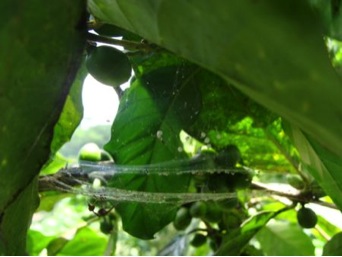
 

Figure 1. Pocobletus sp. nova on a coffee bush. Notice the hammock web; the white little balls are Pocobletus ovisacs
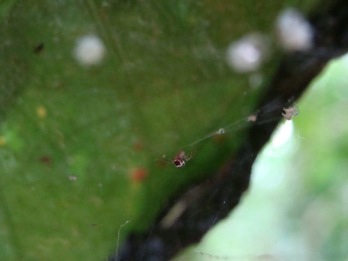
Figure 1. Pocobletus sp. nova on a coffee bush. Notice the hammock web; the white little balls are Pocobletus ovisacs


Figure 2. Close up of a female of Pocobletus sp. and its spiderlings. Ovisacs in the background.

Figure 2. Close up of a female of Pocobletus sp. and its spiderlings. Ovisacs in the background.


The first thing that we noticed when sampling spiders in coffee plants was that Pocobletus spiders tended to be very abundant in the presence of A. sericeasur. So we asked ourselves, why are these tiny spiders associated with these ants? To what extent do the dominant A. sericeasur ants influence the spatial distribution of Pocobletus?


In the summer of 2010, we set up four plots around shade trees that had A. sericeasur nests in Finca Irlanda, a coffee farm in Chiapas, Mexico (Fig. 3). In each plot we assigned a unique number to each coffee plant, recorded which coffee plants were patrolled by A. sericeasur or other ants, and sampled spiders. We also sampled the webs of Pocobletus in coffee plants that were and were not patrolled by A. sericeasur.

 

Figure 3. At finca Irlanda, before sampling spiders.

Figure 3. At finca Irlanda, before sampling spiders.


We were very excited by our results. We discovered that the spatial distribution of Pocobletus spiders is indeed strongly associated with A. sericeasur. In addition, we found that the webs of Pocobletus spiders have more prey items in the presence of A. sericeasur than in its absence.
Linda4

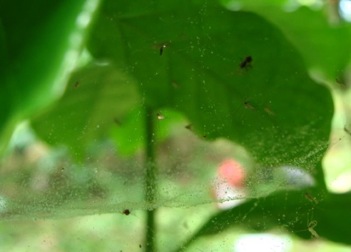
Figure 4. Pocobletus sp. and its predators. Notice the small Pocobletus in the lower section of the web and the slightly bigger Argyrodinae spider in the upper part.


We were also very surprised to discover that Pocobletus spiders have a wide variety of predators, and that these predators are other spiders! (Fig. 4). But we were even more surprised when we found out that the abundance of these predators decreases in the presence of A. sericeasur. So, contrary to what you might expect, a coffee plant full of bustling A. sericeasur ants can be a great place for a tiny spider to be, with plenty of food and fewer enemies. If you want to know more about this research, read our paper to find out the whole fascinating story!

Linda marin and co-authors
How small rodents in the Arctic affect birds in New Zealand Updated for 2026

The complicated predator-prey interactions are one of the most fascinating fields in ecology. They have been studied for decades, and the more we learn, the more surprising and unpredicted stories that we find. For me, finding that small rodents (lemmings) in the high Arctic may affect the populations of waders on the coast of Australia, New Zealand or South Africa was a real amazement.

Lemming populations have been known to show 3-5 years cycle, driven by either top-down or bottom-up control. In the Early View paper “Loss of periodicity in breeding success of waders links to changes in lemming cycles in Arctic ecosystems”, we have studied the interactions between the breeding success of high-Arctic nesting migratory shorebirds and lemming abundance, as they were suggested to be linked via the ‘alternative prey hypothesis’: In years of low lemming abundance, their predators, mainly Arctic fox, would switch to alternative prey, including chicks and eggs of shorebirds. In light of the large amount of evidence that lemming cycles have now changed and even disappeared in some parts of the Arctic, we found that the breeding success of these migrants used to follow the cycles of lemmings, but these cycles have too started to disappear, suggesting a cascading effect of changes in lemming cycles.

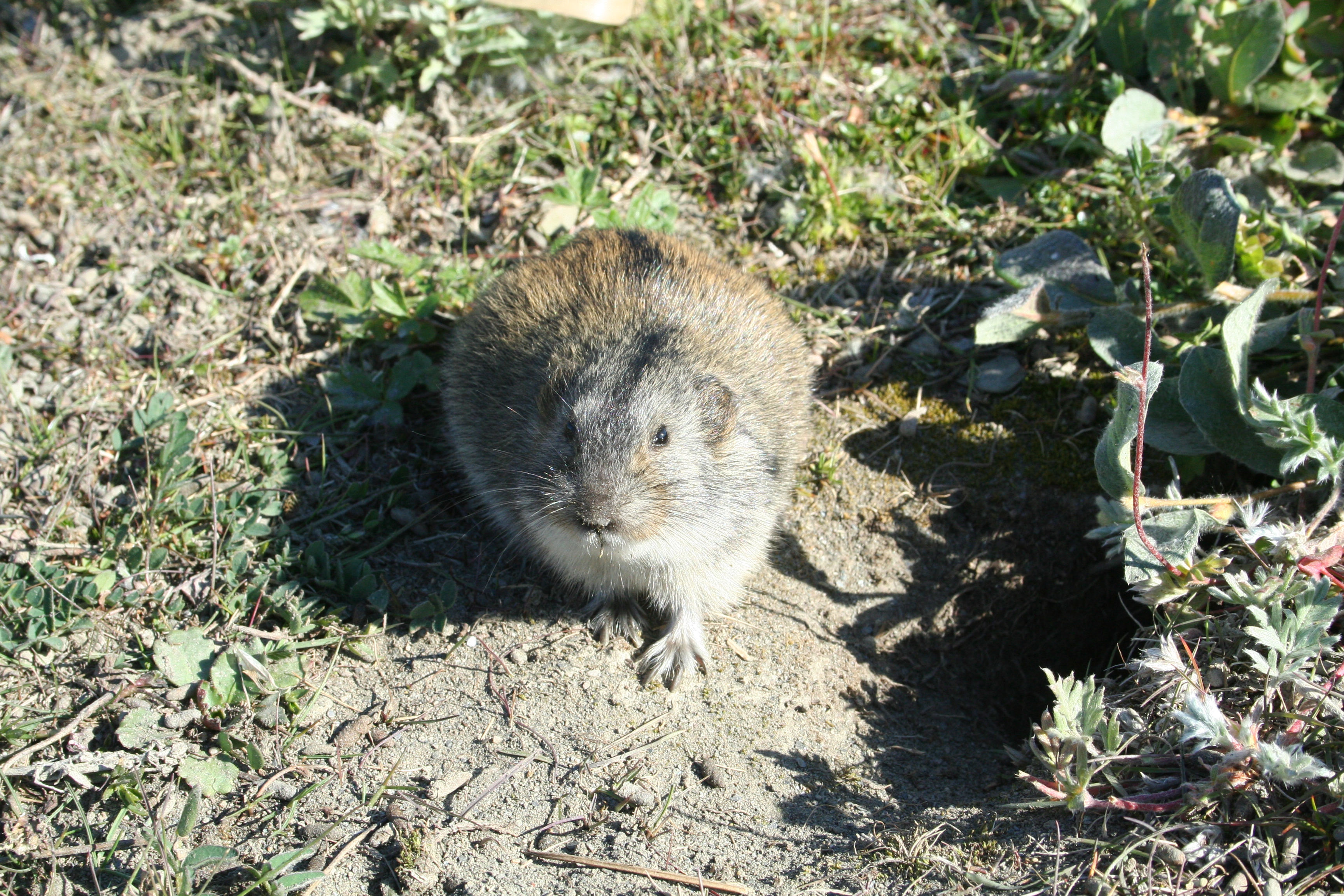
Siberian lemming © Pavel Tomkovich

Siberian lemming © Pavel Tomkovich

The reason for these changes in lemming cycles is still not entirely known. One possible explanation is that climate change caused alteration of the snow structure which is a crucial hiding and feeding place for lemmings during winter. It might also be the natural tendency of populations in nature to go in and out of cycle. As shorebirds are known to consume considerable amount of benthic invertebrates, these changes in lemming cycle in the high Arctic potentially not only affect shorebird populations in the other side of the worlds, but also have a far-reaching cross-systems consequences on the ecosystem on the southern hemisphere.


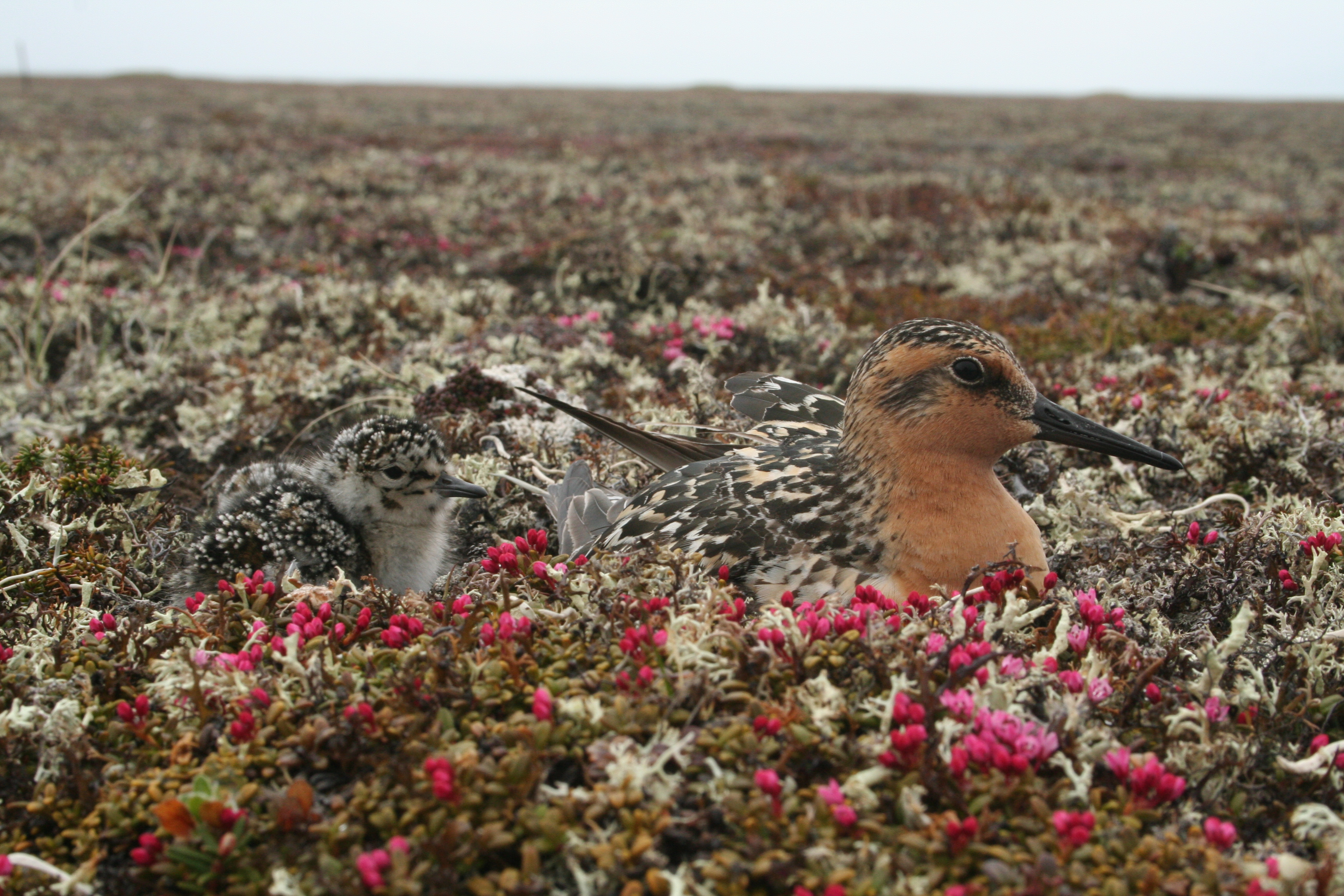
Perfectly camouflaged shorebird chick with its ‘not so camouflaged’ parent, on the beautiful high Arctic breeding grounds © Pavel Tomkovich

Perfectly camouflaged shorebird chick with its ‘not so camouflaged’ parent, on the beautiful high Arctic breeding grounds © Pavel Tomkovich


How do different herbivores affect plant communities? Updated for 2026

Walk through a grassland at the peak of summer and you will quickly become aware of how many grasshoppers inhabit the area. But what effect do these grasshoppers and other insect herbivores have on the plant community you are walking through? How does the effect of invertebrate herbivores compare to that of less visible, but also ever present small mammal herbivores? And do these effects depend on the availability of resources? In our study, “Invertebrate, not small vertebrate, herbivory interacts with nutrient availability to impact tallgrass prairie community composition and forb biomass”, now on Early View in Oikos, we aimed to address these questions through an experimental study within a tallgrass prairie ecosystem in eastern Kansas. We factorially manipulated the presence of both invertebrate and small vertebrate herbivores and the availability of soil nutrients and observed changes in plant community composition and productivity over five years.

We found that removing invertebrate herbivores had a profound effect on plant community composition after a few years of treatment. Forb species increased in abundance in the absence of invertebrate herbivores, while grass species decreased. This effect was particularly strong under conditions of elevated nutrient availability. Surprisingly, small vertebrate herbivore removals had no detectable effect on grassland plant community composition or aboveground biomass.

Kim

A caterpillar chows down on a whorled milkweed (Asclepias verticillata), a plant species that greatly increases in abundance when invertebrate herbivores are removed from tallgrass prairie


Perhaps most interestingly, dispersion in community composition among plots where both invertebrate herbivores were removed and nutrient availability was elevated increased compared to the control plots. That is, different forb species came to dominate the replicate treatment plots, likely dependent on initial community composition. Overall, our research points to the important, and often overlooked, role that invertebrate herbivores play in structuring grassland communities. Future research aimed at continued investigation of the effects of invertebrate herbivory on plant communities would be worthwhile.