Tag Archives: climate

Southwest USA faces long term ‘megadroughts’ this century Updated for 2026


The Central Plains and Southwest region of the US face “unprecedented” droughts later this century, according to new research.

While Midwest states have experienced ever more flooding over the last 50 years, the regions already suffering from extremes of aridity are being warned to expect megadroughts worse than any conditions in the last 1,000 years.

Climate scientist Benjamin Cook, of NASA’s Goddard Institute for Space Studies, New York, and colleagues report in a new journal, Science Advances, that they looked at historical evidence, climate projections and ways of calculating soil moisture.

They found that the drought conditions of the future American west will be more severe than the hottest, most arid extended droughts of the 12th and 13th centuries – an unusually warm period climatologists call the Medieval Climatic Anomaly – which brought an end to the once-flourishing Ancient Pueblo culture of the American Southwest, forcing the people to migrate to other areas.

They report: “We have demonstrated that the mean state of drought in the late 21st century over the Central Plains and Southwest will likely exceed even the most severe megadrought periods of the Medieval era in both high and moderate future emissions scenarios, representing an unprecedented fundamental climate shift with respect to the last millennium.

“Notably, the drying in our assessment is robust across models and moisture balance metrics. Our analysis thus contrasts sharply with the recent emphasis on uncertainty about drought projections for these regions, including the most recent Intergovernmental Panel on Climate Change assessment report.”

A remarkably drier future far outside the contemporary experience

The growth rings of trees provided the evidence for reconstructions of what climatologists call the warm Medieval period, and the researchers matched the picture from the past with 17 different computer model predictions of the climate later in the 21st century.

The conclusions were ominous: nearly all the models predicted that the Plains and the Southwest would become drier than at any time in the last 1,000 years.

Even though winter rain and snowfall could increase in parts of California – currently in the grip of calamitous drought – in the decades to come, overall there will be lower cold season precipitation and, because of higher temperatures, ever more evaporation and ever more water demand for the surviving vegetation.

The authors conclude: “Ultimately, the consistency of our results suggests an exceptionally high risk of a multidecadal megadrought occurring over the Central Plains and Southwest regions during the late 21st century, a level of aridity exceeding even the persistent megadroughts that characterised the Medieval era.

“Our results point to a remarkably drier future that falls far outside the contemporary experience of natural and human systems in Western North America, conditions that may present a substantial challenge to adaptation.

“Human populations in this region, and their associated water resources demands, have been increasing rapidly in recent decades, and these trends are expected to continue for years to come.

“Future droughts will occur in a significantly warmer world with higher temperatures than recent historical events, conditions that are likely to be a major added stress on both natural ecosystems and agriculture.”

Co-author Toby Ault, head of the Emergent Climate Risk Lab at Cornell University, warned of future megadroughts only last year. He says: “I was honestly surprised at just how dry the future is likely to be.”

And to the north, more frequent severe floods

But to the north, in the American Midwest, conditions have begun to change in a different way. Iman Mallakour and Gabriele Villarini, of the Department of Civil and Environmental Engineering at the University of Iowa, collected evidence from 774 stream gauges in 14 states from 1962 to 2011.

The region was hit by economically-disastrous, billion-dollar floods in 1993, 2008, 2011, 2013 and 2014. The researchers wanted to see whether flooding was really on the increase, or whether perception of greater flooding was what they called “an artefact of our relatively short collective memory.”

They report in Nature Climate Change that a third of them had recorded a greater number of flood events, and only one in 10 recorded a decrease. The pattern of increase extended from North Dakota south to Iowa and Missouri, and east to Illinois, Indiana and Ohio.

“While observational records from the central United States present limited evidence of significant changes in the magnitude of floodpeaks, strong evidence points to an increasing frequency of flooding”, the paper explains. “These changes in flood hydrology result from changes in both seasonal rainfall and temperature across this region.”

The result is a confirmation of the perceived increase, says Dr Villarini: “It’s not that big floods are getting bigger, but that we have been experiencing a larger number of big floods.”


The papers:

Tim Radford writes for Climate News Network.

Oliver Tickell edits The Ecologist.


390300

Southwest USA faces long term ‘megadroughts’ this century Updated for 2026


The Central Plains and Southwest region of the US face “unprecedented” droughts later this century, according to new research.

While Midwest states have experienced ever more flooding over the last 50 years, the regions already suffering from extremes of aridity are being warned to expect megadroughts worse than any conditions in the last 1,000 years.

Climate scientist Benjamin Cook, of NASA’s Goddard Institute for Space Studies, New York, and colleagues report in a new journal, Science Advances, that they looked at historical evidence, climate projections and ways of calculating soil moisture.

They found that the drought conditions of the future American west will be more severe than the hottest, most arid extended droughts of the 12th and 13th centuries – an unusually warm period climatologists call the Medieval Climatic Anomaly – which brought an end to the once-flourishing Ancient Pueblo culture of the American Southwest, forcing the people to migrate to other areas.

They report: “We have demonstrated that the mean state of drought in the late 21st century over the Central Plains and Southwest will likely exceed even the most severe megadrought periods of the Medieval era in both high and moderate future emissions scenarios, representing an unprecedented fundamental climate shift with respect to the last millennium.

“Notably, the drying in our assessment is robust across models and moisture balance metrics. Our analysis thus contrasts sharply with the recent emphasis on uncertainty about drought projections for these regions, including the most recent Intergovernmental Panel on Climate Change assessment report.”

A remarkably drier future far outside the contemporary experience

The growth rings of trees provided the evidence for reconstructions of what climatologists call the warm Medieval period, and the researchers matched the picture from the past with 17 different computer model predictions of the climate later in the 21st century.

The conclusions were ominous: nearly all the models predicted that the Plains and the Southwest would become drier than at any time in the last 1,000 years.

Even though winter rain and snowfall could increase in parts of California – currently in the grip of calamitous drought – in the decades to come, overall there will be lower cold season precipitation and, because of higher temperatures, ever more evaporation and ever more water demand for the surviving vegetation.

The authors conclude: “Ultimately, the consistency of our results suggests an exceptionally high risk of a multidecadal megadrought occurring over the Central Plains and Southwest regions during the late 21st century, a level of aridity exceeding even the persistent megadroughts that characterised the Medieval era.

“Our results point to a remarkably drier future that falls far outside the contemporary experience of natural and human systems in Western North America, conditions that may present a substantial challenge to adaptation.

“Human populations in this region, and their associated water resources demands, have been increasing rapidly in recent decades, and these trends are expected to continue for years to come.

“Future droughts will occur in a significantly warmer world with higher temperatures than recent historical events, conditions that are likely to be a major added stress on both natural ecosystems and agriculture.”

Co-author Toby Ault, head of the Emergent Climate Risk Lab at Cornell University, warned of future megadroughts only last year. He says: “I was honestly surprised at just how dry the future is likely to be.”

And to the north, more frequent severe floods

But to the north, in the American Midwest, conditions have begun to change in a different way. Iman Mallakour and Gabriele Villarini, of the Department of Civil and Environmental Engineering at the University of Iowa, collected evidence from 774 stream gauges in 14 states from 1962 to 2011.

The region was hit by economically-disastrous, billion-dollar floods in 1993, 2008, 2011, 2013 and 2014. The researchers wanted to see whether flooding was really on the increase, or whether perception of greater flooding was what they called “an artefact of our relatively short collective memory.”

They report in Nature Climate Change that a third of them had recorded a greater number of flood events, and only one in 10 recorded a decrease. The pattern of increase extended from North Dakota south to Iowa and Missouri, and east to Illinois, Indiana and Ohio.

“While observational records from the central United States present limited evidence of significant changes in the magnitude of floodpeaks, strong evidence points to an increasing frequency of flooding”, the paper explains. “These changes in flood hydrology result from changes in both seasonal rainfall and temperature across this region.”

The result is a confirmation of the perceived increase, says Dr Villarini: “It’s not that big floods are getting bigger, but that we have been experiencing a larger number of big floods.”


The papers:

Tim Radford writes for Climate News Network.

Oliver Tickell edits The Ecologist.


390300

Southwest USA faces long term ‘megadroughts’ this century Updated for 2026


The Central Plains and Southwest region of the US face “unprecedented” droughts later this century, according to new research.

While Midwest states have experienced ever more flooding over the last 50 years, the regions already suffering from extremes of aridity are being warned to expect megadroughts worse than any conditions in the last 1,000 years.

Climate scientist Benjamin Cook, of NASA’s Goddard Institute for Space Studies, New York, and colleagues report in a new journal, Science Advances, that they looked at historical evidence, climate projections and ways of calculating soil moisture.

They found that the drought conditions of the future American west will be more severe than the hottest, most arid extended droughts of the 12th and 13th centuries – an unusually warm period climatologists call the Medieval Climatic Anomaly – which brought an end to the once-flourishing Ancient Pueblo culture of the American Southwest, forcing the people to migrate to other areas.

They report: “We have demonstrated that the mean state of drought in the late 21st century over the Central Plains and Southwest will likely exceed even the most severe megadrought periods of the Medieval era in both high and moderate future emissions scenarios, representing an unprecedented fundamental climate shift with respect to the last millennium.

“Notably, the drying in our assessment is robust across models and moisture balance metrics. Our analysis thus contrasts sharply with the recent emphasis on uncertainty about drought projections for these regions, including the most recent Intergovernmental Panel on Climate Change assessment report.”

A remarkably drier future far outside the contemporary experience

The growth rings of trees provided the evidence for reconstructions of what climatologists call the warm Medieval period, and the researchers matched the picture from the past with 17 different computer model predictions of the climate later in the 21st century.

The conclusions were ominous: nearly all the models predicted that the Plains and the Southwest would become drier than at any time in the last 1,000 years.

Even though winter rain and snowfall could increase in parts of California – currently in the grip of calamitous drought – in the decades to come, overall there will be lower cold season precipitation and, because of higher temperatures, ever more evaporation and ever more water demand for the surviving vegetation.

The authors conclude: “Ultimately, the consistency of our results suggests an exceptionally high risk of a multidecadal megadrought occurring over the Central Plains and Southwest regions during the late 21st century, a level of aridity exceeding even the persistent megadroughts that characterised the Medieval era.

“Our results point to a remarkably drier future that falls far outside the contemporary experience of natural and human systems in Western North America, conditions that may present a substantial challenge to adaptation.

“Human populations in this region, and their associated water resources demands, have been increasing rapidly in recent decades, and these trends are expected to continue for years to come.

“Future droughts will occur in a significantly warmer world with higher temperatures than recent historical events, conditions that are likely to be a major added stress on both natural ecosystems and agriculture.”

Co-author Toby Ault, head of the Emergent Climate Risk Lab at Cornell University, warned of future megadroughts only last year. He says: “I was honestly surprised at just how dry the future is likely to be.”

And to the north, more frequent severe floods

But to the north, in the American Midwest, conditions have begun to change in a different way. Iman Mallakour and Gabriele Villarini, of the Department of Civil and Environmental Engineering at the University of Iowa, collected evidence from 774 stream gauges in 14 states from 1962 to 2011.

The region was hit by economically-disastrous, billion-dollar floods in 1993, 2008, 2011, 2013 and 2014. The researchers wanted to see whether flooding was really on the increase, or whether perception of greater flooding was what they called “an artefact of our relatively short collective memory.”

They report in Nature Climate Change that a third of them had recorded a greater number of flood events, and only one in 10 recorded a decrease. The pattern of increase extended from North Dakota south to Iowa and Missouri, and east to Illinois, Indiana and Ohio.

“While observational records from the central United States present limited evidence of significant changes in the magnitude of floodpeaks, strong evidence points to an increasing frequency of flooding”, the paper explains. “These changes in flood hydrology result from changes in both seasonal rainfall and temperature across this region.”

The result is a confirmation of the perceived increase, says Dr Villarini: “It’s not that big floods are getting bigger, but that we have been experiencing a larger number of big floods.”


The papers:

Tim Radford writes for Climate News Network.

Oliver Tickell edits The Ecologist.


390300

Geoengineering – the case is not made Updated for 2026


The publication of a hefty two-volume report on geoengineering by the US National Research Council represents a marked shift in the global debate over how to respond to global warming.

To date, the debate has been about mitigation, with the need for some adaption because of the failure to reduce emissions adequately. The new report, backed by the prestige of the National Academy of Sciences of which the NRC is the working arm, now argues that we should develop a “portfolio of activities” including mitigation, adaptation and climate engineering.

In other words, rather than presenting climate engineering, and especially solar radiation management (rebranded albedo modification), as an extreme response to be avoided if at all possible, the report normalises climate engineering as one approach among others.

To be sure, the committee writing the report points to the serious risks likely in albedo modification, but it recommends the US set in train what would be a major research program into various forms of geoengineering – including field experiments in a technique to cool the planet by spraying sulphate aerosols into the upper atmosphere.

And it endorses the deployment of various carbon dioxide removal methods as relatively benign ways to counter human emissions, arguing that the decision on mitigation versus carbon dioxide removal is largely a question of cost. This approach is riddled with political dangers.

The hole at the heart of the argument

By mainstreaming geoengineering as a response to global warming the committee has left behind the argument put by Dutch Nobel laureate Paul Crutzen, in his famous 2006 article that opened the floodgates for geoengineering research, that desperate times will require desperate measures.

With no talk of ‘climate emergencies’ in the report, we look in vain for any clear rationale for the possible deployment of albedo modification.

The ‘buying time’ argument – according to which we can temporarily increase the Earth’s albedo (surface reflectivity) while the world decides to put CO2 controls in place – has fallen out of favour because any warming suppressed by a solar shield will just come back to bite us once the shield is removed.

So there is a contradiction buried in the report: it recommends the initiation of a federal research program into albedo modification but does not give a plausible analysis of the circumstances in which the solar shield might be deployed.

The recommendation that “Albedo modification at scales sufficient to alter climate should not be deployed at this time (my emphasis) is hardly reassuring.

Scientists call for … more science

In the absence of a rationale, the report reverts to the standard scientists’ trope: we need more information. Deploying a fleet of planes to coat the Earth with a layer of sulfate particles “should only be contemplated” when we have enough data to know what effect it would have, and for this we need a lot of research.

But who should do it? Who should oversee it? Who should own the results? Who would deploy the technologies? How can we ensure research is not misused? These questions, which ought to come before a decision is made to proceed with research, are either not considered or are shunted off to some vague ‘governance’ space.

Research does not take place in a social vacuum. When scientists propose to investigate technologies that would allow someone to take control of the Earth’s climate, and the research is proposed only because powerful interests have prevented a much better solution, then the research is intensely and inevitably political.

So we should not let the genie out of the bottle unless we are pretty sure we can put it back. And that means no research before governance. The committee stresses its desire for public engagement but then undoes it by seeming to endorse a proposal for an “allowed zone” in which scientists alone would decide which experiments could take place.

In this zone, experiments “should not be subject to any formal … vetting and approval”, so the report’s fine words about civil society engagement begin to ring hollow.

Science meets the real world

An essential mistake of the report is the unwillingness to recognise (even though it has been pointed out repeatedly) that field experiments that do not change the physical environment can radically change the social and political environment.

To maintain the physical-social separation the report must play down or dismiss the problem of ‘moral hazard’, that is, the likelihood that a substantial research program, let alone any deployment, would almost certainly reduce the political incentives to rein in carbon emissions.

The committee’s answer is, as always: we need more information to make good decisions. Of course, this does not answer the concern at all but merely asserts that more information will always trump the flaws of politicians – as if the information deficit model has proven itself so effective in the past.

The committee has a touching faith in the power of reason and holds it up as a kind of crucifix, declaring that “it considers it to be irrational and irresponsible to implement sustained albedo modification without also pursuing emissions mitigation, carbon removal, or both.”

And yet this report has been written precisely because we live in an irrational and irresponsible world. And one has to ask how rational and responsible it is to include solar radiation management in a ‘portfolio of responses’ to global warming, as this report does.

Wildly, utterly, howlingly barking mad!

The mandatory declaration that albedo modification “does not constitute a licence for unbounded CO2 emissions” becomes a kind of incantation to ward off the irrationalities of the actual world.

One strategy for creating a rational world where climate engineering would never be misused is canvassed in the report. Social anxieties over deployment of climate engineering could be mitigated by “further research”. Negative perceptions of programs to modify the Earth’s albedo should be “extensively studied” so that they can be countered.

Sadly, the social world does not behave like the Earth system. It cannot be reduced to theorems and principles to be uncovered by further research.

If we knew how to fix society through scientific study we would not be in such a mess that we are now considering an idea that Ray Pierrehumbert, climate science professor and a rogue member of the committee, describes as “wildly, utterly, howlingly barking mad”.


Clive Hamilton is Professor of Public Ethics, Centre For Applied Philosophy & Public Ethics (CAPPE) at Charles Sturt University.

This article was originally published on The Conversation. Read the original article.

http://theconversation.com/geoengineering-might-work-in-a-rational-world-sadly-we-dont-live-in-one-37550

The Conversation


390261

How does climate variables and diversity loss “filter” natural communities? Updated for 2026

As the oceans gradually become warmer and more acidified, an increasing number of studies test the effects of climate change on marine organisms. As most climate change experiments have studied effects of single climate variables on single species, more and more researchers ask themselves how this lack of realism affects our ability to accurately assess and predict effects of climate change (Wernberg et al. 2012). Interestingly, theory and a growing body of studies suggests that different climate variables can strongly interact (Kroeker et al. 2013), that climate effects can change with presence/absence of strong consumers (Alsterberg et al. 2013), and that effects on communities are more informative than those on single species, as they allow experimenters to assess what traits that makes organisms sensitive or resistant (Berg et al. 2010). In our new paper “Community-level effects of rapid experimental warming and consumer loss outweigh effects of rapid ocean acidification we found that warming and simulated consumer loss in seagrass mesocosms both increased macrofauna diversity, largely by favoring epifaunal organisms with fast population growth and poor defenses against predators.

Eklöf1

These results corroborate theory, and exemplify how trait- and life-history based approaches can be used to in more detail understand – and potentially predict – effects of climate change. Meanwhile, simulated ocean acidification (pH 7.75 vs. 8.10) had no detectable short-term effects on any of the investigated variables, including organisms with calcium-carbonate shell. While this lack of effect may be partly explained by the short duration of our experiment and/or the relatively crude endpoints, seagrass-associated macrofauna routinely experience diurnal pH variability that exceed predicted changes in mean pH over the coming century (Saderne et al. 2013). Consequently, by living in a variable pH these organisms could be relatively resilient to ocean acidification (see e.g. Frieder et al. 2014). In summary, it seems that at least in the short term, rapid warming and changes in consumer populations are likely to have considerably stronger effects than ocean acidification on macrofauna communities in shallow vegetated ecosystems.

eklc3b6f2


References cited above:

Alsterberg, C., Eklöf, J. S., Gamfeldt, L., Havenhand, J. and Sundbäck, K. 2013. Consumers mediate the effects of experimental ocean acidification and warming on primary producers. – PNAS 110: 8603-8608.

Berg, M. P., Kiers, E. T., Driessen, G., van der Heijden, M., Kooi, B. W., Kuenen, F., Liefting, M., Verhoef, H. A. and Ellers, J. 2010. Adapt or disperse: understanding species persistence in a changing world. – Global Change Biol 16: 587-598.

Frieder, C. A., Gonzalez, J. P., Bockmon, E. E., Navarro, M. O. and Levin, L. A. 2014. Can variable pH and low oxygen moderate ocean acidification outcomes for mussel larvae? – 20: 754-764.

Kroeker, K. J., Kordas, R. L., Crim, R., Hendriks, I. E., Ramajo, L., Singh, G. S., Duarte, C. M. and Gattuso, J.-P. 2013. Impacts of ocean acidification on marine organisms: quantifying sensitivities and interaction with warming. – Glob. Change Biol. 19: 1884-1896.

Saderne, V., Fietzek, P. and Herman, P. M. J. 2013. Extreme Variations of pCO2 and pH in a Macrophyte Meadow of the Baltic Sea in Summer: Evidence of the Effect of Photosynthesis and Local Upwelling. – PloS ONE 8: e62689.

Wernberg, T., Smale, D. A. and Thomsen, M. S. 2012. A decade of climate change experiments on marine organisms: procedures, patterns and problems. – Glob. Change Biol. 18: 1491-1498.


Phenotypic effects of climate change Updated for 2026

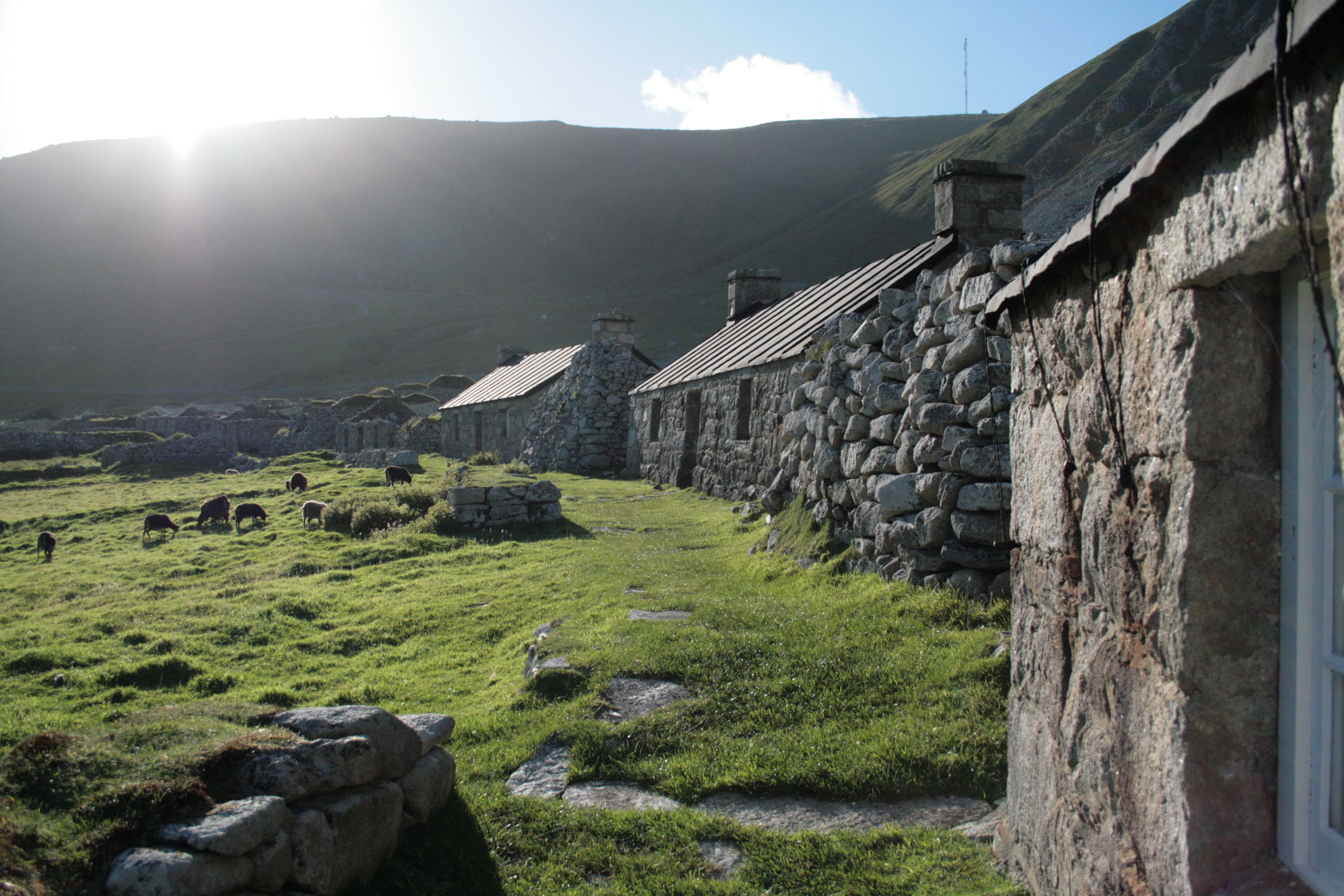
Understanding how changes in the climate affect biological communities is essential in predicting the future size and composition of populations. However, accurate predictions pose a difficult challenge for researchers. For the majority of animal species it is not feasible or ethical to conduct experiments into how these populations will respond to a changing climate. To enable us to gain an insight into potential futures of a population under climatic change, we use a computational model. Specifically, we use an integral projection model to investigate how changes in the North Atlantic Oscillation will influence the body weight and population size of a population of Soay sheep. The North Atlantic Oscillation is a large scale weather pattern of temperature differences across the Atlantic Ocean, which alters the local weather patterns in the North Atlantic region. We used published predictions of the future values of the North Atlantic Oscillation for the 21st Century. By doing this we are able to project the response of the study population to climate change based on our current best projections of the future climate.

Soay

Our model results, presented in the Early View paper “Analysis of phenotypic change in relation to climatic drivers in a population of Soay sheep”,  suggest that a continued positive trend in the North Atlantic Oscillation (positive pressure difference between Iceland and the Azores), as predicted by the majority of models, will be accompanied by a decrease in the population size of the Soay sheep and an increase in mean body weight. These changes are likely caused by a loss of smaller individuals from the population due to higher mortality in the adverse winters (mild but wet and windy) associated with the positive North Atlantic Oscillation.

Using an integral projection model as we have in this study gives us a glimpse into the potential future of populations where experimentation is difficult, and can improve our understanding of how populations will respond to changing climatic conditions. Using published climate predictions within our model also allows such studies to be placed in the realm of current climate research and (importantly) our projections can be updated as new climate predictions are released.

WMO: 2014 was hottest year on record Updated for 2026


As many were predicting towards the end of the year, 2014 has proved to be the hottest year on record, according to datasets released by the World Meteorological Organization (WMO).

But the record was broken by a slim margin: after consolidating leading international datasets, WMO noted that the difference in temperature between the warmest years is only a few hundredths of a degree.

The next hottest years were 2010 and 2005, and these were only 0.02C and 0.03C cooler – less than the margin of uncertainty.

“The overall warming trend is more important than the ranking of an individual year”, said WMO Secretary-General Michel Jarraud. “Analysis of the datasets indicates that 2014 was nominally the warmest on record, although there is very little difference between the three hottest years.”

More significant, he says, is the longer term picture that has developed post-2000: “Fourteen of the fifteen hottest years have all been this century. We expect global warming to continue, given that rising levels of greenhouse gases in the atmosphere and the increasing heat content of the oceans are committing us to a warmer future.”

WMO released the global temperature analysis in advance of climate change negotiations to be held in Geneva from 8 to 13 February. These talks will help to pave the way for an agreement on action to be adopted by the Parties to the UN Framework Convention on Climate Change next December in Paris.

The oceans are the main climate drivers

Around 93% of the excess energy trapped in the atmosphere by greenhouse gases from fossil fuels and other human activities ends up in the oceans. Therefore, the heat content of the oceans is key to understanding the climate system. Global sea-surface temperatures reached record levels in 2014.

“It is notable that the high 2014 temperatures occurred in the absence of a fully developed El Niño”, says WMO, noting that El Niño is a meteorological condition that occurs when warmer than average sea-surface temperatures in the eastern tropical Pacific combine, in a self-reinforcing loop, with atmospheric pressure systems.

This has an overall warming impact on the climate: blocking the upwelling of cold, nutrient-rich deep ocean waters along the South American Pacific coast; bringing heavy rains to normally arid coastal regions; and bringing drought conditions to much of southeast Asia. High temperatures in 1998 – the hottest year before the 21st century – occurred during a strong El-Niño year.

“In 2014, record-breaking heat combined with torrential rainfall and floods in many countries and drought in some others – consistent with the expectation of a changing climate”, said Mr Jarraud.

“Strong weather and climate services are now more necessary than ever before to increase resilience to disasters and help countries and communities adapt to a fast changing and, in many places, less hospitable climate.”

A synthesis of multiple datasets

Average global air temperatures over land and sea surface in 2014 were 0.57 °C above the long-term average of 14.00°C (57.2 °F) for the 1961-1990 reference period.

By comparison, temperatures were 0.55 °C (1.00°F) above average in 2010 and 0.54°C (0.98°F) above average in 2005,  according to WMO calculations. The estimated margin of uncertainty was 0.10°C (0.18°F).

Global average temperatures are also estimated using reanalysis systems, which use the most advanced weather forecasting systems to combine many sources of data to provide a complementary analysis approaches.

WMO in particular uses data from the reanalysis produced by the European Centre for Medium-Range Weather Forecasts, which also ranks 2014 as among the four warmest.

The WMO analysis is based, amongst others,  on three complementary datasets maintained by the Hadley Centre of the UK’s Met Office and the Climatic Research Unit, University of East Anglia, United Kingdom (combined); the US National Oceanic and Atmospheric Administration (NOAA) National Climatic Data Centre; and the Goddard Institute of Space Studies (GISS) operated by the National Aeronautics and Space Administration (NASA).

The final report on the Status of the Climate in 2014, with full details of regional trends and extreme events, will be available in March 2015.


389777

Fracking, the oil price crash, and the ‘greenest government ever’ Updated for 2026


This month, a powerful article in Nature highlighted yet again that most of the world’s oil, coal and gas needs to stay in the ground, if we want to prevent dangerous climate change.

This is the ‘unburnable carbon’ analysis that President Obama and Bank of England Governor Mark Carney have both made mainstream in recent months.

Related, over the last 6 months the world oil price has crashed, catching almost all economists and analysts by surprise. As well as profound economic effects, this crash affects ‘unburnable carbon’ in two broad and opposite ways.

It’s leading to cancellations of potential fossil fuel projects, as they become less or non-profitable. Great for stopping colossally dirty projects like Arctic oil and Canadian tar sands. And in the opposite direction, it makes oil cheaper, meaning people use it more. Bad for climate, though good for people’s pockets.

How should Governments react to this? A Government who genuinely thought climate change was a global priority would not sit passively by and let these conflicting effects of the oil price crash on climate sweep over us. It would act. Government surveys show the British public want more action on climate change.

Instead, we’re going all out for oil and fracking

Despite this, the sole response to the oil price crash from the UK Government is do the opposite! It announced detailed plans for tax cuts for oil companies to drill another 11-21 billion barrels of oil from the ground – way more than even the three billion barrels in the Government’s Wood Review on offshore oil and gas. Climate change impacts got one sentence of dismissal.

Then last week, it drove through a clause in the Infrastructure Bill – with almost no debate – requiring the UK to “maximise economic recovery” of North Sea oil.

These are crystal-clear examples of how Governments do not yet grasp that climate change requires a comprehensive plan. We can’t just do a little bit on renewable energy and energy efficiency, and think that this means we don’t need to do anything about fossil fuels.

And yet, for every announcement of a new wind-farm, or homes insulated, or rail investment, there is a corresponding – and often larger – Government announcement which makes climate change worse.

For example: £15 billion for new roads; whopping cuts in taxes on profits for North Sea oil drillers; consultations on which new airport to open; tax breaks for new fracking industries. High-carbon infrastructure has recently over-taken low-carbon infrastructure in the Government’s ‘infrastructure pipeline’.

After decades of subsidy, high-carbon industry shouldn’t need any more help. Colossally rich oil corporations know the global oil price yo-yos – they should have saved for this moment in the years when oil prices were over $100 a barrel and their profits were sky-high. But like the banks, they want their bail-out, and they know they will get it.

It’s shameful – that we have leaders who say climate change is desperately urgent, who call for more ambition, and yet who are still so deep in the pockets of fossil fuel companies they will not act and treat climate change as the emergency it is.

They are up-front about it too – the Government’s North Sea oil tax cut consultation is clear on three things – it’s derived in discussion with the oil barons; it’s being fast-tracked at their request; and the consultation primarily wants to hear from them.

Leaked letter shows the real agenda

They’re also not so up-front about it – you can see just how deeply the fracking industry is embedded in Government in this leaked-letter from George Osborne here.

The letter was from George Osborne, sent last September, to colleagues in the Cabinet’s Economic Affairs Committee, setting out how he wanted them to prioritise implementing the recommendations of a Cabinet Office report on how to get the shale gas industry going.

Of real interest here are the agreed plans between Government and fracking company Cuadrilla if their planning permission for fracking is turned down – which is exactly what Lancashire’s planners have recommended councillors to do.

According to the letter It is agreed that “if permission turned down … Cuadrilla to respond to concerns and appeal asap.” When that has happened, the Government will “Prepare PINS to respond promptly to appeal or SoS recovery if appropriate.”

In layperson’s terms, that means the Government will make sure the Planning Inspectorate fast-tracks the appeal or that Communities Secretary Eric Pickles intervenes. This stands in stark contrast to the line taken by the Prime Minister’s official spokesman that such decisions should be up to local authorities.

And how were these ‘asks’ made? Has Cuadrilla been meeting Ministers and officials, or has it been a few quiet words in the right ears? For let’s not forget that Cuadrilla’s chairman Lord Browne works in the Cabinet Office as a Non-Executive Director.

Moving to ‘full exploration’

The letter is also very revealing about longer-term plans for “moving to full exploration”. The Government clearly knows it’s losing the argument at the local level. Two recommendations stand out here:

  • “A cross-Government and industry group should be established … to assess the value and viability of focusing on a small number of sites in less contentious locations.”
  • “Public sector land (particularly MoD owned) should be mapped to potential sites and explored for possible concept testing.”

And the Government seems to accept that the bribes – sorry, benefits – it is offering top local communities to accept fracking aren’t working. The solution: it looks like offer them more. They plan to: “examine the nature of benefits to be offered to local communities where shale developments take place.”

They know they’re not winning the wider battle for hearts and minds either, so the Government is going to carry on doing the industry’s PR job and “build on existing network of neutral academic experts available to provide credible evidence-based views of matters of public concern”, and “develop a national communications plan on shale exploration.”

This isn’t the first evidence of collusion. Lord Browne has already intervened with the then chair of the Environment Agency, Lord Smith, to try to exempt Cuadrilla from compliance with drilling waste regulations.

On another occasion, after a separate personal intervention by Lord Browne, Lord Smith “offered to halve the consultation time for a waste permit”, and “agreed to intervene with a county council over Cuadrilla’s planning permission and to identify further risks to Cuadrilla’s plans.”

Here’s how the government should be acting!

Instead of colluding with the fossil fuel industry to increase production, a Government genuinely committed to action on climate change would treat the oil price crash as an opportunity to protect the climate, help consumers and protect jobs. It would say:

  • We need a ‘just transition’ plan to get jobs and growth and industry out of North Sea Oil, and into North Sea Renewables like off-shore wind. There will be no economic devastation as when the coal mines closed. But we need to move away from oil, not prop it up. We will do all we can to help people and businesses build new, clean industries in the North Sea.
  • We will put in place a plan to keep demand for oil low, to help keep prices low, and ensure undrilled oil stays in the ground. We’ll put in place a proper strategy to make public transport, walking and cycling decent alternatives to motoring. We’ll drive far stronger standards on car and lorry energy efficiency. We’ll invest in a national electric vehicle network. We’ll act at EU and International level to persuade our fellow nations to do the same.
  • We will make sure the oil and gas price falls don’t damage the growing renewables industry. We’ll reassure investors by setting a clear 2030 power decarbonisation target, with policies to ensure we meet it.
  • We will reverse our fossil-fuel strategy to “maximise recovery” and focus instead on ‘minimising demand’ – in every part of the economy.
  • We will treat climate change as an emergency, and make tackling it a priority across all departments of Government.

People want more action from Government on climate change. Not less. Not a botched half-plan, and half-truths about their commitment to action.

The inadequate, partial, feeble responses on climate change are yet another expression of why so many people feel alienated from Westminster governments – they do not act on their promises, or sufficiently in the public interest.

It’s election time soon. Which parties will put people’s interests ahead of propping up fossil fuel companies, and put in place a proper plan to tackle climate change?

In short, who will step up and show they are a party worth voting for?


More information on the impact of the oil price crash on climate change: Friends of the Earth briefing.

Simon Bullock is Senior Campaigner, Policy and Research Co-ordinator for Friends of the Earth UK.

Tony Bosworth is Energy Campaigner at Friends of the Earth UK.

This article is a synthesis of two articles published on the Friends of the Earth Policy & Politics blog:


389768

Fracking, the oil price crash, and the ‘greenest government ever’ Updated for 2026


This month, a powerful article in Nature highlighted yet again that most of the world’s oil, coal and gas needs to stay in the ground, if we want to prevent dangerous climate change.

This is the ‘unburnable carbon’ analysis that President Obama and Bank of England Governor Mark Carney have both made mainstream in recent months.

Related, over the last 6 months the world oil price has crashed, catching almost all economists and analysts by surprise. As well as profound economic effects, this crash affects ‘unburnable carbon’ in two broad and opposite ways.

It’s leading to cancellations of potential fossil fuel projects, as they become less or non-profitable. Great for stopping colossally dirty projects like Arctic oil and Canadian tar sands. And in the opposite direction, it makes oil cheaper, meaning people use it more. Bad for climate, though good for people’s pockets.

How should Governments react to this? A Government who genuinely thought climate change was a global priority would not sit passively by and let these conflicting effects of the oil price crash on climate sweep over us. It would act. Government surveys show the British public want more action on climate change.

Instead, we’re going all out for oil and fracking

Despite this, the sole response to the oil price crash from the UK Government is do the opposite! It announced detailed plans for tax cuts for oil companies to drill another 11-21 billion barrels of oil from the ground – way more than even the three billion barrels in the Government’s Wood Review on offshore oil and gas. Climate change impacts got one sentence of dismissal.

Then last week, it drove through a clause in the Infrastructure Bill – with almost no debate – requiring the UK to “maximise economic recovery” of North Sea oil.

These are crystal-clear examples of how Governments do not yet grasp that climate change requires a comprehensive plan. We can’t just do a little bit on renewable energy and energy efficiency, and think that this means we don’t need to do anything about fossil fuels.

And yet, for every announcement of a new wind-farm, or homes insulated, or rail investment, there is a corresponding – and often larger – Government announcement which makes climate change worse.

For example: £15 billion for new roads; whopping cuts in taxes on profits for North Sea oil drillers; consultations on which new airport to open; tax breaks for new fracking industries. High-carbon infrastructure has recently over-taken low-carbon infrastructure in the Government’s ‘infrastructure pipeline’.

After decades of subsidy, high-carbon industry shouldn’t need any more help. Colossally rich oil corporations know the global oil price yo-yos – they should have saved for this moment in the years when oil prices were over $100 a barrel and their profits were sky-high. But like the banks, they want their bail-out, and they know they will get it.

It’s shameful – that we have leaders who say climate change is desperately urgent, who call for more ambition, and yet who are still so deep in the pockets of fossil fuel companies they will not act and treat climate change as the emergency it is.

They are up-front about it too – the Government’s North Sea oil tax cut consultation is clear on three things – it’s derived in discussion with the oil barons; it’s being fast-tracked at their request; and the consultation primarily wants to hear from them.

Leaked letter shows the real agenda

They’re also not so up-front about it – you can see just how deeply the fracking industry is embedded in Government in this leaked-letter from George Osborne here.

The letter was from George Osborne, sent last September, to colleagues in the Cabinet’s Economic Affairs Committee, setting out how he wanted them to prioritise implementing the recommendations of a Cabinet Office report on how to get the shale gas industry going.

Of real interest here are the agreed plans between Government and fracking company Cuadrilla if their planning permission for fracking is turned down – which is exactly what Lancashire’s planners have recommended councillors to do.

According to the letter It is agreed that “if permission turned down … Cuadrilla to respond to concerns and appeal asap.” When that has happened, the Government will “Prepare PINS to respond promptly to appeal or SoS recovery if appropriate.”

In layperson’s terms, that means the Government will make sure the Planning Inspectorate fast-tracks the appeal or that Communities Secretary Eric Pickles intervenes. This stands in stark contrast to the line taken by the Prime Minister’s official spokesman that such decisions should be up to local authorities.

And how were these ‘asks’ made? Has Cuadrilla been meeting Ministers and officials, or has it been a few quiet words in the right ears? For let’s not forget that Cuadrilla’s chairman Lord Browne works in the Cabinet Office as a Non-Executive Director.

Moving to ‘full exploration’

The letter is also very revealing about longer-term plans for “moving to full exploration”. The Government clearly knows it’s losing the argument at the local level. Two recommendations stand out here:

  • “A cross-Government and industry group should be established … to assess the value and viability of focusing on a small number of sites in less contentious locations.”
  • “Public sector land (particularly MoD owned) should be mapped to potential sites and explored for possible concept testing.”

And the Government seems to accept that the bribes – sorry, benefits – it is offering top local communities to accept fracking aren’t working. The solution: it looks like offer them more. They plan to: “examine the nature of benefits to be offered to local communities where shale developments take place.”

They know they’re not winning the wider battle for hearts and minds either, so the Government is going to carry on doing the industry’s PR job and “build on existing network of neutral academic experts available to provide credible evidence-based views of matters of public concern”, and “develop a national communications plan on shale exploration.”

This isn’t the first evidence of collusion. Lord Browne has already intervened with the then chair of the Environment Agency, Lord Smith, to try to exempt Cuadrilla from compliance with drilling waste regulations.

On another occasion, after a separate personal intervention by Lord Browne, Lord Smith “offered to halve the consultation time for a waste permit”, and “agreed to intervene with a county council over Cuadrilla’s planning permission and to identify further risks to Cuadrilla’s plans.”

Here’s how the government should be acting!

Instead of colluding with the fossil fuel industry to increase production, a Government genuinely committed to action on climate change would treat the oil price crash as an opportunity to protect the climate, help consumers and protect jobs. It would say:

  • We need a ‘just transition’ plan to get jobs and growth and industry out of North Sea Oil, and into North Sea Renewables like off-shore wind. There will be no economic devastation as when the coal mines closed. But we need to move away from oil, not prop it up. We will do all we can to help people and businesses build new, clean industries in the North Sea.
  • We will put in place a plan to keep demand for oil low, to help keep prices low, and ensure undrilled oil stays in the ground. We’ll put in place a proper strategy to make public transport, walking and cycling decent alternatives to motoring. We’ll drive far stronger standards on car and lorry energy efficiency. We’ll invest in a national electric vehicle network. We’ll act at EU and International level to persuade our fellow nations to do the same.
  • We will make sure the oil and gas price falls don’t damage the growing renewables industry. We’ll reassure investors by setting a clear 2030 power decarbonisation target, with policies to ensure we meet it.
  • We will reverse our fossil-fuel strategy to “maximise recovery” and focus instead on ‘minimising demand’ – in every part of the economy.
  • We will treat climate change as an emergency, and make tackling it a priority across all departments of Government.

People want more action from Government on climate change. Not less. Not a botched half-plan, and half-truths about their commitment to action.

The inadequate, partial, feeble responses on climate change are yet another expression of why so many people feel alienated from Westminster governments – they do not act on their promises, or sufficiently in the public interest.

It’s election time soon. Which parties will put people’s interests ahead of propping up fossil fuel companies, and put in place a proper plan to tackle climate change?

In short, who will step up and show they are a party worth voting for?


More information on the impact of the oil price crash on climate change: Friends of the Earth briefing.

Simon Bullock is Senior Campaigner, Policy and Research Co-ordinator for Friends of the Earth UK.

Tony Bosworth is Energy Campaigner at Friends of the Earth UK.

This article is a synthesis of two articles published on the Friends of the Earth Policy & Politics blog:


389768

Fracking, the oil price crash, and the ‘greenest government ever’ Updated for 2026


This month, a powerful article in Nature highlighted yet again that most of the world’s oil, coal and gas needs to stay in the ground, if we want to prevent dangerous climate change.

This is the ‘unburnable carbon’ analysis that President Obama and Bank of England Governor Mark Carney have both made mainstream in recent months.

Related, over the last 6 months the world oil price has crashed, catching almost all economists and analysts by surprise. As well as profound economic effects, this crash affects ‘unburnable carbon’ in two broad and opposite ways.

It’s leading to cancellations of potential fossil fuel projects, as they become less or non-profitable. Great for stopping colossally dirty projects like Arctic oil and Canadian tar sands. And in the opposite direction, it makes oil cheaper, meaning people use it more. Bad for climate, though good for people’s pockets.

How should Governments react to this? A Government who genuinely thought climate change was a global priority would not sit passively by and let these conflicting effects of the oil price crash on climate sweep over us. It would act. Government surveys show the British public want more action on climate change.

Instead, we’re going all out for oil and fracking

Despite this, the sole response to the oil price crash from the UK Government is do the opposite! It announced detailed plans for tax cuts for oil companies to drill another 11-21 billion barrels of oil from the ground – way more than even the three billion barrels in the Government’s Wood Review on offshore oil and gas. Climate change impacts got one sentence of dismissal.

Then last week, it drove through a clause in the Infrastructure Bill – with almost no debate – requiring the UK to “maximise economic recovery” of North Sea oil.

These are crystal-clear examples of how Governments do not yet grasp that climate change requires a comprehensive plan. We can’t just do a little bit on renewable energy and energy efficiency, and think that this means we don’t need to do anything about fossil fuels.

And yet, for every announcement of a new wind-farm, or homes insulated, or rail investment, there is a corresponding – and often larger – Government announcement which makes climate change worse.

For example: £15 billion for new roads; whopping cuts in taxes on profits for North Sea oil drillers; consultations on which new airport to open; tax breaks for new fracking industries. High-carbon infrastructure has recently over-taken low-carbon infrastructure in the Government’s ‘infrastructure pipeline’.

After decades of subsidy, high-carbon industry shouldn’t need any more help. Colossally rich oil corporations know the global oil price yo-yos – they should have saved for this moment in the years when oil prices were over $100 a barrel and their profits were sky-high. But like the banks, they want their bail-out, and they know they will get it.

It’s shameful – that we have leaders who say climate change is desperately urgent, who call for more ambition, and yet who are still so deep in the pockets of fossil fuel companies they will not act and treat climate change as the emergency it is.

They are up-front about it too – the Government’s North Sea oil tax cut consultation is clear on three things – it’s derived in discussion with the oil barons; it’s being fast-tracked at their request; and the consultation primarily wants to hear from them.

Leaked letter shows the real agenda

They’re also not so up-front about it – you can see just how deeply the fracking industry is embedded in Government in this leaked-letter from George Osborne here.

The letter was from George Osborne, sent last September, to colleagues in the Cabinet’s Economic Affairs Committee, setting out how he wanted them to prioritise implementing the recommendations of a Cabinet Office report on how to get the shale gas industry going.

Of real interest here are the agreed plans between Government and fracking company Cuadrilla if their planning permission for fracking is turned down – which is exactly what Lancashire’s planners have recommended councillors to do.

According to the letter It is agreed that “if permission turned down … Cuadrilla to respond to concerns and appeal asap.” When that has happened, the Government will “Prepare PINS to respond promptly to appeal or SoS recovery if appropriate.”

In layperson’s terms, that means the Government will make sure the Planning Inspectorate fast-tracks the appeal or that Communities Secretary Eric Pickles intervenes. This stands in stark contrast to the line taken by the Prime Minister’s official spokesman that such decisions should be up to local authorities.

And how were these ‘asks’ made? Has Cuadrilla been meeting Ministers and officials, or has it been a few quiet words in the right ears? For let’s not forget that Cuadrilla’s chairman Lord Browne works in the Cabinet Office as a Non-Executive Director.

Moving to ‘full exploration’

The letter is also very revealing about longer-term plans for “moving to full exploration”. The Government clearly knows it’s losing the argument at the local level. Two recommendations stand out here:

  • “A cross-Government and industry group should be established … to assess the value and viability of focusing on a small number of sites in less contentious locations.”
  • “Public sector land (particularly MoD owned) should be mapped to potential sites and explored for possible concept testing.”

And the Government seems to accept that the bribes – sorry, benefits – it is offering top local communities to accept fracking aren’t working. The solution: it looks like offer them more. They plan to: “examine the nature of benefits to be offered to local communities where shale developments take place.”

They know they’re not winning the wider battle for hearts and minds either, so the Government is going to carry on doing the industry’s PR job and “build on existing network of neutral academic experts available to provide credible evidence-based views of matters of public concern”, and “develop a national communications plan on shale exploration.”

This isn’t the first evidence of collusion. Lord Browne has already intervened with the then chair of the Environment Agency, Lord Smith, to try to exempt Cuadrilla from compliance with drilling waste regulations.

On another occasion, after a separate personal intervention by Lord Browne, Lord Smith “offered to halve the consultation time for a waste permit”, and “agreed to intervene with a county council over Cuadrilla’s planning permission and to identify further risks to Cuadrilla’s plans.”

Here’s how the government should be acting!

Instead of colluding with the fossil fuel industry to increase production, a Government genuinely committed to action on climate change would treat the oil price crash as an opportunity to protect the climate, help consumers and protect jobs. It would say:

  • We need a ‘just transition’ plan to get jobs and growth and industry out of North Sea Oil, and into North Sea Renewables like off-shore wind. There will be no economic devastation as when the coal mines closed. But we need to move away from oil, not prop it up. We will do all we can to help people and businesses build new, clean industries in the North Sea.
  • We will put in place a plan to keep demand for oil low, to help keep prices low, and ensure undrilled oil stays in the ground. We’ll put in place a proper strategy to make public transport, walking and cycling decent alternatives to motoring. We’ll drive far stronger standards on car and lorry energy efficiency. We’ll invest in a national electric vehicle network. We’ll act at EU and International level to persuade our fellow nations to do the same.
  • We will make sure the oil and gas price falls don’t damage the growing renewables industry. We’ll reassure investors by setting a clear 2030 power decarbonisation target, with policies to ensure we meet it.
  • We will reverse our fossil-fuel strategy to “maximise recovery” and focus instead on ‘minimising demand’ – in every part of the economy.
  • We will treat climate change as an emergency, and make tackling it a priority across all departments of Government.

People want more action from Government on climate change. Not less. Not a botched half-plan, and half-truths about their commitment to action.

The inadequate, partial, feeble responses on climate change are yet another expression of why so many people feel alienated from Westminster governments – they do not act on their promises, or sufficiently in the public interest.

It’s election time soon. Which parties will put people’s interests ahead of propping up fossil fuel companies, and put in place a proper plan to tackle climate change?

In short, who will step up and show they are a party worth voting for?


More information on the impact of the oil price crash on climate change: Friends of the Earth briefing.

Simon Bullock is Senior Campaigner, Policy and Research Co-ordinator for Friends of the Earth UK.

Tony Bosworth is Energy Campaigner at Friends of the Earth UK.

This article is a synthesis of two articles published on the Friends of the Earth Policy & Politics blog:


389768