Tag Archives: diversity

FLUMP – Slow origins of functional diversity, maladaptation, the value of protected areas and more! Updated for 2026

Opabinia_BW2

By Nobu Tamura (Own work) via Wikimedia Commons

It’s Friday and that means that it’s time for our Friday link dump, where we highlight some recent papers (and other stuff) that we found interesting but didn’t have the time to write an entire post about. If you think there’s something we missed, or have something to say, please share in the comments section!

According to a recent analysis of the paleo record of marine fauna in Nature Communications, functional diversity increased much more slowly than was previously hypothesized. Cambrian fauna attempted relatively few new ways of making a living, but functional diversity continued to increase through the Ordovician and following subsequent mass extinctions. (Photo credit Nobu Tamura, via Wikimedia Commons).

Species-area relationships are affected by ecological characteristics of species in Ecology.

What role does maladaptation play in evolutionary ecology? Farkas et al. use island biogeography to develop a framework for including predictions about maladaption in ecological time.

Emily Grason

An exciting and pioneering  study, led by Andrew Balmford, shows that protected areas (PAs) may be one of the best investments in the World! The study was published last week in PLOS Biology and measures the magnitude of visits to PAs around the Globe.  At total, PAs receive over 8 billion visits/yr and collect approximately US $600 billion/y in direct in-country expenditure and US $250 billion/y in consumer surplus. An older estimative says that we spend less than U$10 billion/y in safeguarding PAs, so if this number still valid, for each dollar spent in maintaining them, we profit ~ U$60. Imagine that this profit is much higher if we take the value of ecosystem services into the equation.

In a recent contribution Marc Manceau and colleagues show that phylogenies support out-of-equilibrium models of biodiversity.

Vinicius Bastazini

March 6, 2015
FLUMP – Slow origins of functional diversity, maladaptation, and more! Updated for 2026

Opabinia_BW2

By Nobu Tamura (Own work) via Wikimedia Commons

It’s Friday and that means that it’s time for our Friday link dump, where we highlight some recent papers (and other stuff) that we found interesting but didn’t have the time to write an entire post about. If you think there’s something we missed, or have something to say, please share in the comments section!

According to a recent analysis of the paleo record of marine fauna in Nature Communications, functional diversity increased much more slowly than was previously hypothesized. Cambrian fauna attempted relatively few new ways of making a living, but functional diversity continued to increase through the Ordovician and following subsequent mass extinctions. (Photo credit Nobu Tamura, via Wikimedia Commons).

Species-area relationships are affected by ecological characteristics of species in Ecology.

What role does maladaptation play in evolutionary ecology? Farkas et al. use island biogeography to develop a framework for including predictions about maladaption in ecological time.

Emily Grason

March 6, 2015

How does multiple climate variables and consumer diversity loss together “filter” natural communities? Updated for 2026

eklc3b6f2

As the oceans gradually become warmer and more acidified, an increasing number of studies test the effects of climate change on marine organisms. As most climate change experiments have studied effects of single climate variables on single species, more and more researchers ask themselves how this lack of realism affects our ability to accurately assess and predict effects of climate change (Wernberg et al. 2012). Interestingly, theory and a growing body of studies suggests that different climate variables can strongly interact (Kroeker et al. 2013), that climate effects can change with presence/absence of strong consumers (Alsterberg et al. 2013), and that effects on communities are more informative than those on single species, as they allow experimenters to assess what traits that makes organisms sensitive or resistant (Berg et al. 2010). In our new paper “Community-level effects of rapid experimental warming and consumer loss outweigh effects of rapid ocean acidification” we found that warming and simulated consumer loss in seagrass mesocosms both increased macrofauna diversity, largely by favoring epifaunal organisms with fast population growth and poor defenses against predators.

Eklöf1

These results corroborate theory, and exemplify how trait- and life-history based approaches can be used to in more detail understand – and potentially predict – effects of climate change. Meanwhile, simulated ocean acidification (pH 7.75 vs. 8.10) had no detectable short-term effects on any of the investigated variables, including organisms with calcium-carbonate shell. While this lack of effect may be partly explained by the short duration of our experiment and/or the relatively crude endpoints, seagrass-associated macrofauna routinely experience diurnal pH variability that exceed predicted changes in mean pH over the coming century (Saderne et al. 2013). Consequently, by living in a variable pH these organisms could be relatively resilient to ocean acidification (see e.g. Frieder et al. 2014). In summary, it seems that at least in the short term, rapid warming and changes in consumer populations are likely to have considerably stronger effects than ocean acidification on macrofauna communities in shallow vegetated ecosystems.

References cited above:

Alsterberg, C., Eklöf, J. S., Gamfeldt, L., Havenhand, J. and Sundbäck, K. 2013. Consumers mediate the effects of experimental ocean acidification and warming on primary producers. – PNAS 110: 8603-8608.

Berg, M. P., Kiers, E. T., Driessen, G., van der Heijden, M., Kooi, B. W., Kuenen, F., Liefting, M., Verhoef, H. A. and Ellers, J. 2010. Adapt or disperse: understanding species persistence in a changing world. – Global Change Biol 16: 587-598.

Frieder, C. A., Gonzalez, J. P., Bockmon, E. E., Navarro, M. O. and Levin, L. A. 2014. Can variable pH and low oxygen moderate ocean acidification outcomes for mussel larvae? – 20: 754-764.

Kroeker, K. J., Kordas, R. L., Crim, R., Hendriks, I. E., Ramajo, L., Singh, G. S., Duarte, C. M. and Gattuso, J.-P. 2013. Impacts of ocean acidification on marine organisms: quantifying sensitivities and interaction with warming. – Glob. Change Biol. 19: 1884-1896.

Saderne, V., Fietzek, P. and Herman, P. M. J. 2013. Extreme Variations of pCO2 and pH in a Macrophyte Meadow of the Baltic Sea in Summer: Evidence of the Effect of Photosynthesis and Local Upwelling. – PloS ONE 8: e62689.

Wernberg, T., Smale, D. A. and Thomsen, M. S. 2012. A decade of climate change experiments on marine organisms: procedures, patterns and problems. – Glob. Change Biol. 18: 1491-1498.


How does climate variables and diversity loss “filter” natural communities? Updated for 2026

As the oceans gradually become warmer and more acidified, an increasing number of studies test the effects of climate change on marine organisms. As most climate change experiments have studied effects of single climate variables on single species, more and more researchers ask themselves how this lack of realism affects our ability to accurately assess and predict effects of climate change (Wernberg et al. 2012). Interestingly, theory and a growing body of studies suggests that different climate variables can strongly interact (Kroeker et al. 2013), that climate effects can change with presence/absence of strong consumers (Alsterberg et al. 2013), and that effects on communities are more informative than those on single species, as they allow experimenters to assess what traits that makes organisms sensitive or resistant (Berg et al. 2010). In our new paper “Community-level effects of rapid experimental warming and consumer loss outweigh effects of rapid ocean acidification we found that warming and simulated consumer loss in seagrass mesocosms both increased macrofauna diversity, largely by favoring epifaunal organisms with fast population growth and poor defenses against predators.

Eklöf1

These results corroborate theory, and exemplify how trait- and life-history based approaches can be used to in more detail understand – and potentially predict – effects of climate change. Meanwhile, simulated ocean acidification (pH 7.75 vs. 8.10) had no detectable short-term effects on any of the investigated variables, including organisms with calcium-carbonate shell. While this lack of effect may be partly explained by the short duration of our experiment and/or the relatively crude endpoints, seagrass-associated macrofauna routinely experience diurnal pH variability that exceed predicted changes in mean pH over the coming century (Saderne et al. 2013). Consequently, by living in a variable pH these organisms could be relatively resilient to ocean acidification (see e.g. Frieder et al. 2014). In summary, it seems that at least in the short term, rapid warming and changes in consumer populations are likely to have considerably stronger effects than ocean acidification on macrofauna communities in shallow vegetated ecosystems.

eklc3b6f2


References cited above:

Alsterberg, C., Eklöf, J. S., Gamfeldt, L., Havenhand, J. and Sundbäck, K. 2013. Consumers mediate the effects of experimental ocean acidification and warming on primary producers. – PNAS 110: 8603-8608.

Berg, M. P., Kiers, E. T., Driessen, G., van der Heijden, M., Kooi, B. W., Kuenen, F., Liefting, M., Verhoef, H. A. and Ellers, J. 2010. Adapt or disperse: understanding species persistence in a changing world. – Global Change Biol 16: 587-598.

Frieder, C. A., Gonzalez, J. P., Bockmon, E. E., Navarro, M. O. and Levin, L. A. 2014. Can variable pH and low oxygen moderate ocean acidification outcomes for mussel larvae? – 20: 754-764.

Kroeker, K. J., Kordas, R. L., Crim, R., Hendriks, I. E., Ramajo, L., Singh, G. S., Duarte, C. M. and Gattuso, J.-P. 2013. Impacts of ocean acidification on marine organisms: quantifying sensitivities and interaction with warming. – Glob. Change Biol. 19: 1884-1896.

Saderne, V., Fietzek, P. and Herman, P. M. J. 2013. Extreme Variations of pCO2 and pH in a Macrophyte Meadow of the Baltic Sea in Summer: Evidence of the Effect of Photosynthesis and Local Upwelling. – PloS ONE 8: e62689.

Wernberg, T., Smale, D. A. and Thomsen, M. S. 2012. A decade of climate change experiments on marine organisms: procedures, patterns and problems. – Glob. Change Biol. 18: 1491-1498.


Amphibian responses to diversity of native and non-native litter Updated for 2026


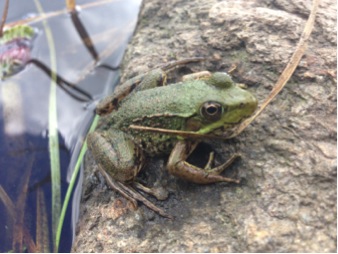
Fig. 1. Recently metamorphosed green frog (Lithobates clamitans) at the edge of a pond (photo by Laura Martin)

Fig. 1. Recently metamorphosed green frog (Lithobates clamitans) at the edge of a pond (photo by Laura Martin)


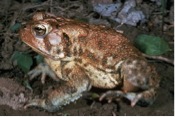
Fig. 2 American toad (Anaxyrus (Bufo) americanus) adult (photo by Carrie Brown-Lima) American

Fig. 2 American toad (Anaxyrus (Bufo) americanus) adult (photo by Carrie Brown-Lima) American


Amphibians develop in watery places that are full of plants. And yet we know little about how these plants affect larval amphibians. As disease, climate change, and land-use change continue to threaten amphibian populations worldwide, it is more important than ever to understand what makes for good amphibian habitat.


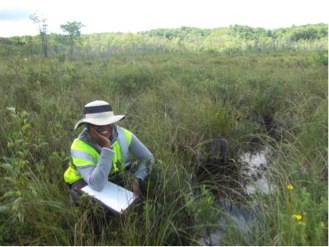
Fig. 3 Shauna-kay Rainford at Bear Swamp, NY, one of the litter collection locations(photo by Laura Martin)

Fig. 3 Shauna-kay Rainford at Bear Swamp, NY, one of the litter collection locations(photo by Laura Martin)


In the study “Effects of plant litter diversity, species, origin and traits on larval toad performance,” Cornell undergraduate Shauna-kay Rainford (now a graduate student at Penn State University), graduate student Laura Martin, and Professor Bernd Blossey investigated how plant litter communities influence the growth and survival of Anaxyrus americanus (American toad) larvae. They reared tadpoles in singles species and litter mixtures using 15 native and 9 nonnative plant species common to central New York, USA, recording survival, time to metamorphosis, and growth rate.


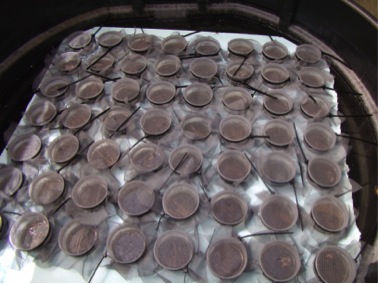
Fig. 4 Microcosms in which individual larval amphibians were reared in leaf litter treatments. (photo by Shauna-kay Rainford)

Fig. 4 Microcosms in which individual larval amphibians were reared in leaf litter treatments. (photo by Shauna-kay Rainford)


Survival in single species treatments ranged from 0% (in Rhamnus cathartica litter) to 96% (Pinus strobus). Tadpoles also failed to metamorphose in Acer rubrum, Cornus racemosa, Rosa multiflora, and Tsuga canadensis. Percent metamorphosis was highest in nonnative Lonicera spp. (76.7%), native Phragmites australis americanus (73.3%), nonnative P. australis (60.0%), and nonnative Alnus glutinosa (60.0%). Interestingly, whether the plant was native or nonnative did not affect amphibian performance.

In multi-species treatments, number of plant species had no effect on larval survival or metamorphosis. However, larvae reared in mixtures of 3 species were larger than those reared in single species treatments of the same species. But increasing litter diversity to 6 or 12 species did not further improve larval survival or performance. This result is consistent with analyses that reveal that most ecological processes saturate at relatively low levels of diversity.

Currently, understanding of the relationships of biodiversity and ecosystem function is drawn largely from studies of plant communities in temperate grassland ecosystems. But the vast majority of plant material is not consumed green; it enters detrital food webs like the one studied in this experiment. This study is an important first step towards understanding the mechanisms that underlie plant-amphibian interactions. It further highlights the importance of plant traits, but not origin, when considering amphibian habitat restoration and conservation.

How plant genetic diversity affects herbivory Updated for 2026

Human activities drastically reduce biodiversity at various taxonomic levels. While much of the current effort in research and biological conservation focuses on species diversity, the importance of intraspecific genetic diversity is sometimes overlooked. At the same time, genetic diversity within and among populations is the fundamental unit of biodiversity because it provides raw material for the adaptation, evolution and survival of species and individuals.

Plantation forests are usually composed of selected stock bred for desirable silvicultural properties (e.g., rapid growth rate and high timber quality) and as a result often have a narrower genetic basis than the wild populations of the same species. Even when natural regeneration is used, a limited number of seed trees may result in less diversity in the regenerated stand compared to the original one. Commercial applications of vegetative propagation of forest trees (clonal forestry) may lead to the further reduction in genetic diversity up to only a few or even a single genotype per plantation. For instance, micropropagation is commonly used to clonally multiply superior birch genotypes in Finland, both for commercial production and for breeding purposes, but it has been proven successful for only a limited number of birch genotypes. Limited number of commercially available birch clones may thus narrow the genetic diversity of planted birch stands.

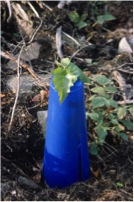
Figure 1. Micropropagated birch planted inside plastic vole protector in 2000.

Figure 1. Micropropagated birch planted inside plastic vole protector in 2000.

Limited genetic variation in plant stands can make them more vulnerable to pest invasion and outbreaks; if all the plants in a stand are genetically identical and susceptible to the same pest species, pest populations will spread rapidly from one plant to another. In agriculture, mixed planting of susceptible and resistant genotypes has been successfully used as a control tactic for plant pathogens in annual crops. However, the potential of using genotypes mixtures in plantation forestry for reducing pest damage has been little explored so far, although there are indications that mixtures may sometimes be of great value for controlling pests and diseases of trees as well, at least in short rotation energy forestry.

In this study, “Additive and non-additive effects of birch genotypic diversity on arthropod herbivory in a long-term field experiment”, now published Early View in Oikos,  we have experimentally tested whether genetic diversity of silver birch affects leaf damage by various arthropod pests. Silver birch (Betula pendula Roth) has broad distribution in the Northern Hemisphere and is one of the most important deciduous tree species in Finland, both ecologically and economically. In 2000, we established an experiment in Satakunta, SW Finland, by planting 8 different clones of silver birch which were obtained by micropropagation of vegetative buds of mature trees of southern Finnish origin. The eight clones selected for the experiment are known to differ in their growth and leaf characteristics as well as in resistance to herbivores and pathogens. The clones were planted in monoclonal plots and in different combinations of 2, 4 and 8 clones per plot. Damage by different types of arthropods was monitored on these experiments several times over nine years.

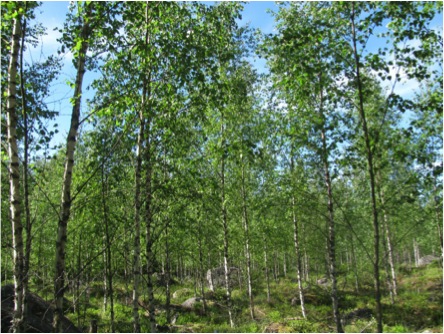
Figure 2. View of experimental area in 2014

Figure 2. View of experimental area in 2014


Results show that genotypic variation and diversity strongly influenced birch herbivory, but that patterns varied among arthropod guilds and over time (within and across years). In particular, leaf-chewing damage and leaf galls were significantly less abundant in genotypically diverse stands than in stands with only a single genotype. However, leaf-rolling damage was actually higher in diverse stands, illustrating how arthropod guilds may differ in their responses to genotypic diversity.


More detailed analyses at the genotype level revealed further interesting patterns. Genotypes varied considerably in their susceptibilities to most herbivore guilds examined, demonstrating that genetic variation existed among the 8 genotypes selected. Interestingly, the susceptibilities were not constant over time or among the guilds. This indicates that resistance to these guilds of herbivores is largely uncoupled genetically and that there is not a single genotype that is resistant to all types of herbivory. Furthermore, we observed shifts in the resistance rankings of genotypes between seasons and across years. Thus, while one genotype may be the most resistant to early-season leaf herbivory one year, it may not be the most resistant to leaf herbivory in the late season or the following year.

To try to understand the mechanisms underpinning the diversity effects observed, we used null modelling to test whether herbivory in diverse plots differed from expected levels generated from data in monoclonal plots. We found that diversity effects depended significantly on genotype, revealing that non-additive mechanisms operate in this system. In particular, more resistant genotypes often experienced greater than expected levels of herbivory (associational susceptibility) while more susceptible genotypes often had less than expected herbivory (associational resistance). These patterns indicate that associational resistance and susceptibility can occur simultaneously in genotypically diverse plots, presumably due to the reorganization of arthropods among genotypes. While these diversity effects do not scale up to influence plot-level rates of herbivory, they may strongly influence the fitness of plant genotypes within diverse plant stands, potentially playing a strong role in the evolutionary ecology of forest trees.

This study illustrates the value of long-term experiments for testing how genetic diversity influences the arthropod communities of woody plants. Diversity effects were complex and varied among the arthropod guilds, among the genotypes, and across time. Only by sampling multiple times over many years and including data for different kinds of herbivores did we detect these patterns. Future work looking at how plant phenotypes relate to these patterns and observing the behaviour of various arthropods can provide further insight into the mechanisms driving genotypic diversity effects.

FLUMP – Carbon storage, urban ant diversity Updated for 2026

Ant_SEM

Don’t mess with this guy, he’s got New York street smarts. By US Government [Public domain], via Wikimedia Commons

It’s Friday and that means that it’s time for our Friday link dump, where we highlight some recent papers (and other stuff) that we found interesting but didn’t have the time to write an entire post about. If you think there’s something we missed, or have something to say, please share in the comments section!

Marah Hardt has a nice post on Scientific American on the dangers of removing large female fish from marine populations, an issue associated with overfishing and one of the causes of declining stocks.

A new study in PNAS maps the carbon storage of Peru’s forests on a hectare scale, providing high-resolution data for policy makers tasked with managing the nation’s forests.  – Nate Johnson


Just coming out in FrEE this week is a paper looking at how to improve trait-based modeling approaches to maintenance of diversity in phytoplankton communities.

If E.O. Wilson had been born in NYC, we might have figured this out decades ago. A new paper in Insect Conservation and Diversity shows that New York City has mega-international diversity of ants as well as people (well the paper talk about ants, I think the latter is self-evident). Moreover, ant diversity in Manhattan varies with environmental stress similarly to that in less-modified habitats. I just assumed life was uniformly terrible for ants everywhere in cities. Maybe they it would improve models further to include density of children armed with magnifying glasses as a predictor? – Emily Grason

November 14, 2014

FLUMP – Plant populations, insect diversity, Extended Synthesis of Evolution and evolutionary ecology of specialization Updated for 2026

616px-Insect_collage

It’s Friday and that means that it’s time for our Friday link dump, where we highlight some recent papers (and other stuff) that we found interesting but didn’t have the time to write an entire post about. If you think there’s something we missed, or have something to say, please share in the comments section!

Some cool articles from the latest issue of Ecology:

– Benno Simmons

An article published in Proceedings of the Royal Society B uses historical data on different insect families to examine the contribution of different adaptations to their taxonomic richness.  The team, led by David Nicholson from the University of York in the U.K., found that metamorphosis, and to a lesser extent the presence of wings, had the greatest effect on the diversification of insects. – Nate Johnson

Following Nate’s indication, take a look at the Proceedings of the Royal Society B special issue: “Evolutionary ecology of specialization: insights from phylogenetic analysis”.

Last week, Nature published an interesting comment paper on the Extend Synthesis of Evolution (we have a post on this subject here), “Does evolutionary theory need a rethink?” The paper is authored by both, scientists pro and against the new extend synthesis.

– Vinicius Bastazini. 

October 10, 2014

Changing perspectives Updated for 2026

The most exciting aspect of this study “Increase of fast nutrient cycling in grassland microcosms through insect herbivory depends on plant functional composition and species diversity” (Nietschke et al)- for me – was to take our experiences and results from the field site – the Jena Experiment that was designed for elucidating mechanisms of diversity effects – and to incorporate them into a microcosm experiment under well controlled conditions.

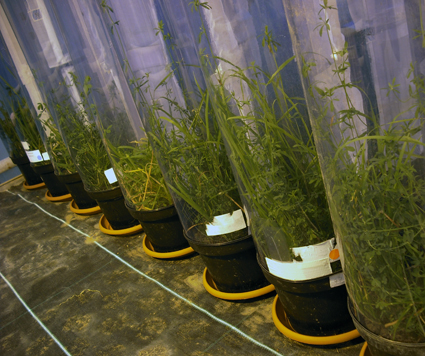
Here, we aimed at tracking the way of nutrients from the intact plant, over an insect herbivore and its feeding characteristics, into the soil, and over to another trophic level – And to judge the role of plant diversity and functional composition along that way.

  • Some aspects of the course showed very clearly (e.g. the release of nutrients with feeding and the relevance of the plant functional groups),
  • some were surprising (e.g. both throughfall pH and P increased with herbivory intensity and faeces accumulation – diversity having a similar effects, although independently of herbivore intensity),
  • and yet others were challenging (e.g. clear soil microbial responses only occurred at high levels of herbivory).

Finally, stepping back a little and taking our field site results into account, formed a broader picture and gave some new perspectives.

Besides the change of perspective the study brought about and the various methods we applied, it was very inspiring and rewarding to work together in a team of people that have realized quite different niches within Biodiversity Ecosystem Functioning-space.

Norma1 Norma2 Norma3 Norma4 Norma5