Tag Archives: loss

How does climate variables and diversity loss “filter” natural communities? Updated for 2026

As the oceans gradually become warmer and more acidified, an increasing number of studies test the effects of climate change on marine organisms. As most climate change experiments have studied effects of single climate variables on single species, more and more researchers ask themselves how this lack of realism affects our ability to accurately assess and predict effects of climate change (Wernberg et al. 2012). Interestingly, theory and a growing body of studies suggests that different climate variables can strongly interact (Kroeker et al. 2013), that climate effects can change with presence/absence of strong consumers (Alsterberg et al. 2013), and that effects on communities are more informative than those on single species, as they allow experimenters to assess what traits that makes organisms sensitive or resistant (Berg et al. 2010). In our new paper “Community-level effects of rapid experimental warming and consumer loss outweigh effects of rapid ocean acidification we found that warming and simulated consumer loss in seagrass mesocosms both increased macrofauna diversity, largely by favoring epifaunal organisms with fast population growth and poor defenses against predators.

Eklöf1

These results corroborate theory, and exemplify how trait- and life-history based approaches can be used to in more detail understand – and potentially predict – effects of climate change. Meanwhile, simulated ocean acidification (pH 7.75 vs. 8.10) had no detectable short-term effects on any of the investigated variables, including organisms with calcium-carbonate shell. While this lack of effect may be partly explained by the short duration of our experiment and/or the relatively crude endpoints, seagrass-associated macrofauna routinely experience diurnal pH variability that exceed predicted changes in mean pH over the coming century (Saderne et al. 2013). Consequently, by living in a variable pH these organisms could be relatively resilient to ocean acidification (see e.g. Frieder et al. 2014). In summary, it seems that at least in the short term, rapid warming and changes in consumer populations are likely to have considerably stronger effects than ocean acidification on macrofauna communities in shallow vegetated ecosystems.

eklc3b6f2


References cited above:

Alsterberg, C., Eklöf, J. S., Gamfeldt, L., Havenhand, J. and Sundbäck, K. 2013. Consumers mediate the effects of experimental ocean acidification and warming on primary producers. – PNAS 110: 8603-8608.

Berg, M. P., Kiers, E. T., Driessen, G., van der Heijden, M., Kooi, B. W., Kuenen, F., Liefting, M., Verhoef, H. A. and Ellers, J. 2010. Adapt or disperse: understanding species persistence in a changing world. – Global Change Biol 16: 587-598.

Frieder, C. A., Gonzalez, J. P., Bockmon, E. E., Navarro, M. O. and Levin, L. A. 2014. Can variable pH and low oxygen moderate ocean acidification outcomes for mussel larvae? – 20: 754-764.

Kroeker, K. J., Kordas, R. L., Crim, R., Hendriks, I. E., Ramajo, L., Singh, G. S., Duarte, C. M. and Gattuso, J.-P. 2013. Impacts of ocean acidification on marine organisms: quantifying sensitivities and interaction with warming. – Glob. Change Biol. 19: 1884-1896.

Saderne, V., Fietzek, P. and Herman, P. M. J. 2013. Extreme Variations of pCO2 and pH in a Macrophyte Meadow of the Baltic Sea in Summer: Evidence of the Effect of Photosynthesis and Local Upwelling. – PloS ONE 8: e62689.

Wernberg, T., Smale, D. A. and Thomsen, M. S. 2012. A decade of climate change experiments on marine organisms: procedures, patterns and problems. – Glob. Change Biol. 18: 1491-1498.

 

Pesticide effect on biodiversity and ecosystem functioning Updated for 2026

Pesticid2Global biodiversity is constantly declining, and up-to-date research has shown that biodiversity loss affects the functioning of ecosystems and the services they provide to humans. Biodiversity-ecosystem functioning relations have yet mainly been analyzed in communities where species were randomly removed. In nature however, species are not lost at random, but according to their sensitivity to environmental stress.

In our study “Stressor-induced biodiversity gradients: revisiting biodiversity–ecosystem functioning relationships”, now published Early View in Oikos, we investigated whether biodiversity loss and biodiversity-ecosystem functioning relations in randomly composed diatom communities can be compared to those found in communities exposed to atrazine, one of the most-used pesticides worldwide.

Bild1

Atrazine exposure resulted in smaller biodiversity loss, but steeper decrease in ecosystem functioning than in randomly assembled diatom communities. This was related to selective atrazine effects on the best performing species, which contributed most to ecosystem functioning but was also most sensitive to atrazine.

Pesticid1

Our results imply that biodiversity loss and diversity-functioning relationships found along gradients of environmental stress do not compare to those inferred from the common approach of random community assembly. Species-specific sensitivity and performance need to be considered for a more accurate prediction of biodiversity and ecosystem functioning under stress.

The authors through Christophe Mensens

African habitat loss driving migrating birds’ decline Updated for 2026


The latest in the annual series of State of the UK’s Birds report, published today, shows alarming declines among 29 migrant species which nest in the UK in summer and spend the winter around the Mediterranean, or in Africa south of the Sahara Desert.

The most dramatic declines are among species which winter in the humid zone of Africa – stretching across the continent from southern Senegal to Nigeria and beyond.

Of this group of species, which includes whinchat, nightingale, tree pipit and spotted flycatcher, 73% have declined since the late 1980s, 45% by more than half.

One of the most dramatic declines is that of the turtle dove with a decline of 88% since 1995. Heavy declines have also been recorded over the same period for wood warbler, down 66%; pied flycatcher, 53%; spotted flycatcher, 49%; cuckoo, 49%; nightingale, 43%; and yellow wagtail, 43%.

Species wintering furthest south in the Congo Basin (represented here by cuckoos, swifts and swallows) also show a substantial decline since the early 1980s.

But where are the problems occurring?

According to Martin Harper, RSPB’s Conservation Director, it’s hard to pinpoint where the problems lie for the species’ decline:

“Their nomadic lifestyle, requiring sites and resources spread over vast distances across the globe makes identifying and understanding the causes of decline extremely complex. The problems may be in the UK or in West Africa, or indeed on migration in between the two.”

However the birds’ decline may be linked to deforestation in West Africa’s rainforests, and the expansion of both rain-fed and irrigated agriculture, says the report:

“The loss and degradation of wetlands is widely reported as a result of damming of rivers, extraction of water for irrigation, as well as the conversion of floodplains to rice fields, and floodplain woodlands to agricultural land. Wooded savannah habitats have similarly been impacted by clearance for agriculture, wood fuel and grazing.

“Human-induced habitat changes such as these have all been compounded by climate change altering seasonal weather patterns. These habitats are essential for many birds, as they allow the birds to refuel in the autumn, and fatten up before spring migration. The loss and degradation of these habitats is an erosion of vital stepping stones on the birds’ migratory journey.”

Hunting and trapping

Another problem is hunting and trapping, which “has been reported as impacting migratory birds on passage and on the non-breeding grounds during both spring and autumn migrations. Losses can be enormous. For example, 2–4 million turtle doves are shot across a number of southern European countries each year.”

Birds can be taken in large numbers in certain areas, such as quails in Egypt and swallows in west and central Africa. However, “Assessing the population-level impact of hunting is difficult, as the relevant data do not exist.”

But Alan Law, Director of Biodiversity Delivery at Natural England adds that we also need to look closer to home.

“For some species, there is growing evidence of pressure on breeding success here in England. Our focus therefore is to ensure that well-managed habitats are available in this country so that migratory species can breed here successfully.

For example, the drastic (88%) decline of turtle doves is also due to diminished breeding success in the UK. Recent research has revealed that around 96% of the UK’s turtle doves are carrying parasites which can cause the disease trichomonosis, which caused mortality in a number of adults and nestlings during the 2012 breeding season.

Smaller declines, even increases for short-distance migrants

Other birds wintering in the arid zone just below the Sahara desert have fluctuated considerably since 1970, but show a much smaller decline of less than 20% overall, with 67% of species maintaining stable populations. This group includes sand martin, whitethroat and sedge warbler.

And the species that winter north of the Sahara (the partial / European migrants) are doing well, with 56% experiencing an increase in numbers since the mid 1980s. This group includes blackcaps, meadow pipits, chiffchaffs and stonechats.

Still, “concern about migratory bird species is growing and future editions of the State of the UK’s Birds report will contain a regular update to the migratory bird indicator.”

To understand the changing status of the UK’s migratory birds, researchers need to understand more about what’s driving these declines. Evidence is currently being gathered from a variety of sources including tracking studies and on-the-ground surveys.

“The length of many bird migrations – often thousands of miles – makes it very difficult to pinpoint where and what is causing populations to fall”, said Colette Hall of the Wildfowl & Wetlands Trust.

“So the more information we can get all along the migration routes – on land use changes, new infrastructure etc – the better we can target protection measures. It’s important that we help build up the capacity of local bird organisations and volunteers across the world to provide vital information through their own long-term monitoring.”


The report: The State of the UK’s Birds is published by a partnership of eight organisations: RSPB; British Trust for Ornithology; Wildfowl & Wetlands Trust; Natural Resources Wales; Natural England; Northern Ireland Environment Agency; Scottish Natural Heritage; and the Joint Nature Conservation Committee.


385518

African habitat loss driving migrating birds’ decline Updated for 2026


The latest in the annual series of State of the UK’s Birds report, published today, shows alarming declines among 29 migrant species which nest in the UK in summer and spend the winter around the Mediterranean, or in Africa south of the Sahara Desert.

The most dramatic declines are among species which winter in the humid zone of Africa – stretching across the continent from southern Senegal to Nigeria and beyond.

Of this group of species, which includes whinchat, nightingale, tree pipit and spotted flycatcher, 73% have declined since the late 1980s, 45% by more than half.

One of the most dramatic declines is that of the turtle dove with a decline of 88% since 1995. Heavy declines have also been recorded over the same period for wood warbler, down 66%; pied flycatcher, 53%; spotted flycatcher, 49%; cuckoo, 49%; nightingale, 43%; and yellow wagtail, 43%.

Species wintering furthest south in the Congo Basin (represented here by cuckoos, swifts and swallows) also show a substantial decline since the early 1980s.

But where are the problems occurring?

According to Martin Harper, RSPB’s Conservation Director, it’s hard to pinpoint where the problems lie for the species’ decline:

“Their nomadic lifestyle, requiring sites and resources spread over vast distances across the globe makes identifying and understanding the causes of decline extremely complex. The problems may be in the UK or in West Africa, or indeed on migration in between the two.”

However the birds’ decline may be linked to deforestation in West Africa’s rainforests, and the expansion of both rain-fed and irrigated agriculture, says the report:

“The loss and degradation of wetlands is widely reported as a result of damming of rivers, extraction of water for irrigation, as well as the conversion of floodplains to rice fields, and floodplain woodlands to agricultural land. Wooded savannah habitats have similarly been impacted by clearance for agriculture, wood fuel and grazing.

“Human-induced habitat changes such as these have all been compounded by climate change altering seasonal weather patterns. These habitats are essential for many birds, as they allow the birds to refuel in the autumn, and fatten up before spring migration. The loss and degradation of these habitats is an erosion of vital stepping stones on the birds’ migratory journey.”

Hunting and trapping

Another problem is hunting and trapping, which “has been reported as impacting migratory birds on passage and on the non-breeding grounds during both spring and autumn migrations. Losses can be enormous. For example, 2–4 million turtle doves are shot across a number of southern European countries each year.”

Birds can be taken in large numbers in certain areas, such as quails in Egypt and swallows in west and central Africa. However, “Assessing the population-level impact of hunting is difficult, as the relevant data do not exist.”

But Alan Law, Director of Biodiversity Delivery at Natural England adds that we also need to look closer to home.

“For some species, there is growing evidence of pressure on breeding success here in England. Our focus therefore is to ensure that well-managed habitats are available in this country so that migratory species can breed here successfully.

For example, the drastic (88%) decline of turtle doves is also due to diminished breeding success in the UK. Recent research has revealed that around 96% of the UK’s turtle doves are carrying parasites which can cause the disease trichomonosis, which caused mortality in a number of adults and nestlings during the 2012 breeding season.

Smaller declines, even increases for short-distance migrants

Other birds wintering in the arid zone just below the Sahara desert have fluctuated considerably since 1970, but show a much smaller decline of less than 20% overall, with 67% of species maintaining stable populations. This group includes sand martin, whitethroat and sedge warbler.

And the species that winter north of the Sahara (the partial / European migrants) are doing well, with 56% experiencing an increase in numbers since the mid 1980s. This group includes blackcaps, meadow pipits, chiffchaffs and stonechats.

Still, “concern about migratory bird species is growing and future editions of the State of the UK’s Birds report will contain a regular update to the migratory bird indicator.”

To understand the changing status of the UK’s migratory birds, researchers need to understand more about what’s driving these declines. Evidence is currently being gathered from a variety of sources including tracking studies and on-the-ground surveys.

“The length of many bird migrations – often thousands of miles – makes it very difficult to pinpoint where and what is causing populations to fall”, said Colette Hall of the Wildfowl & Wetlands Trust.

“So the more information we can get all along the migration routes – on land use changes, new infrastructure etc – the better we can target protection measures. It’s important that we help build up the capacity of local bird organisations and volunteers across the world to provide vital information through their own long-term monitoring.”


The report: The State of the UK’s Birds is published by a partnership of eight organisations: RSPB; British Trust for Ornithology; Wildfowl & Wetlands Trust; Natural Resources Wales; Natural England; Northern Ireland Environment Agency; Scottish Natural Heritage; and the Joint Nature Conservation Committee.


385518

African habitat loss driving migrating birds’ decline Updated for 2026


The latest in the annual series of State of the UK’s Birds report, published today, shows alarming declines among 29 migrant species which nest in the UK in summer and spend the winter around the Mediterranean, or in Africa south of the Sahara Desert.

The most dramatic declines are among species which winter in the humid zone of Africa – stretching across the continent from southern Senegal to Nigeria and beyond.

Of this group of species, which includes whinchat, nightingale, tree pipit and spotted flycatcher, 73% have declined since the late 1980s, 45% by more than half.

One of the most dramatic declines is that of the turtle dove with a decline of 88% since 1995. Heavy declines have also been recorded over the same period for wood warbler, down 66%; pied flycatcher, 53%; spotted flycatcher, 49%; cuckoo, 49%; nightingale, 43%; and yellow wagtail, 43%.

Species wintering furthest south in the Congo Basin (represented here by cuckoos, swifts and swallows) also show a substantial decline since the early 1980s.

But where are the problems occurring?

According to Martin Harper, RSPB’s Conservation Director, it’s hard to pinpoint where the problems lie for the species’ decline:

“Their nomadic lifestyle, requiring sites and resources spread over vast distances across the globe makes identifying and understanding the causes of decline extremely complex. The problems may be in the UK or in West Africa, or indeed on migration in between the two.”

However the birds’ decline may be linked to deforestation in West Africa’s rainforests, and the expansion of both rain-fed and irrigated agriculture, says the report:

“The loss and degradation of wetlands is widely reported as a result of damming of rivers, extraction of water for irrigation, as well as the conversion of floodplains to rice fields, and floodplain woodlands to agricultural land. Wooded savannah habitats have similarly been impacted by clearance for agriculture, wood fuel and grazing.

“Human-induced habitat changes such as these have all been compounded by climate change altering seasonal weather patterns. These habitats are essential for many birds, as they allow the birds to refuel in the autumn, and fatten up before spring migration. The loss and degradation of these habitats is an erosion of vital stepping stones on the birds’ migratory journey.”

Hunting and trapping

Another problem is hunting and trapping, which “has been reported as impacting migratory birds on passage and on the non-breeding grounds during both spring and autumn migrations. Losses can be enormous. For example, 2–4 million turtle doves are shot across a number of southern European countries each year.”

Birds can be taken in large numbers in certain areas, such as quails in Egypt and swallows in west and central Africa. However, “Assessing the population-level impact of hunting is difficult, as the relevant data do not exist.”

But Alan Law, Director of Biodiversity Delivery at Natural England adds that we also need to look closer to home.

“For some species, there is growing evidence of pressure on breeding success here in England. Our focus therefore is to ensure that well-managed habitats are available in this country so that migratory species can breed here successfully.

For example, the drastic (88%) decline of turtle doves is also due to diminished breeding success in the UK. Recent research has revealed that around 96% of the UK’s turtle doves are carrying parasites which can cause the disease trichomonosis, which caused mortality in a number of adults and nestlings during the 2012 breeding season.

Smaller declines, even increases for short-distance migrants

Other birds wintering in the arid zone just below the Sahara desert have fluctuated considerably since 1970, but show a much smaller decline of less than 20% overall, with 67% of species maintaining stable populations. This group includes sand martin, whitethroat and sedge warbler.

And the species that winter north of the Sahara (the partial / European migrants) are doing well, with 56% experiencing an increase in numbers since the mid 1980s. This group includes blackcaps, meadow pipits, chiffchaffs and stonechats.

Still, “concern about migratory bird species is growing and future editions of the State of the UK’s Birds report will contain a regular update to the migratory bird indicator.”

To understand the changing status of the UK’s migratory birds, researchers need to understand more about what’s driving these declines. Evidence is currently being gathered from a variety of sources including tracking studies and on-the-ground surveys.

“The length of many bird migrations – often thousands of miles – makes it very difficult to pinpoint where and what is causing populations to fall”, said Colette Hall of the Wildfowl & Wetlands Trust.

“So the more information we can get all along the migration routes – on land use changes, new infrastructure etc – the better we can target protection measures. It’s important that we help build up the capacity of local bird organisations and volunteers across the world to provide vital information through their own long-term monitoring.”


The report: The State of the UK’s Birds is published by a partnership of eight organisations: RSPB; British Trust for Ornithology; Wildfowl & Wetlands Trust; Natural Resources Wales; Natural England; Northern Ireland Environment Agency; Scottish Natural Heritage; and the Joint Nature Conservation Committee.


385518

African habitat loss driving migrating birds’ decline Updated for 2026


The latest in the annual series of State of the UK’s Birds report, published today, shows alarming declines among 29 migrant species which nest in the UK in summer and spend the winter around the Mediterranean, or in Africa south of the Sahara Desert.

The most dramatic declines are among species which winter in the humid zone of Africa – stretching across the continent from southern Senegal to Nigeria and beyond.

Of this group of species, which includes whinchat, nightingale, tree pipit and spotted flycatcher, 73% have declined since the late 1980s, 45% by more than half.

One of the most dramatic declines is that of the turtle dove with a decline of 88% since 1995. Heavy declines have also been recorded over the same period for wood warbler, down 66%; pied flycatcher, 53%; spotted flycatcher, 49%; cuckoo, 49%; nightingale, 43%; and yellow wagtail, 43%.

Species wintering furthest south in the Congo Basin (represented here by cuckoos, swifts and swallows) also show a substantial decline since the early 1980s.

But where are the problems occurring?

According to Martin Harper, RSPB’s Conservation Director, it’s hard to pinpoint where the problems lie for the species’ decline:

“Their nomadic lifestyle, requiring sites and resources spread over vast distances across the globe makes identifying and understanding the causes of decline extremely complex. The problems may be in the UK or in West Africa, or indeed on migration in between the two.”

However the birds’ decline may be linked to deforestation in West Africa’s rainforests, and the expansion of both rain-fed and irrigated agriculture, says the report:

“The loss and degradation of wetlands is widely reported as a result of damming of rivers, extraction of water for irrigation, as well as the conversion of floodplains to rice fields, and floodplain woodlands to agricultural land. Wooded savannah habitats have similarly been impacted by clearance for agriculture, wood fuel and grazing.

“Human-induced habitat changes such as these have all been compounded by climate change altering seasonal weather patterns. These habitats are essential for many birds, as they allow the birds to refuel in the autumn, and fatten up before spring migration. The loss and degradation of these habitats is an erosion of vital stepping stones on the birds’ migratory journey.”

Hunting and trapping

Another problem is hunting and trapping, which “has been reported as impacting migratory birds on passage and on the non-breeding grounds during both spring and autumn migrations. Losses can be enormous. For example, 2–4 million turtle doves are shot across a number of southern European countries each year.”

Birds can be taken in large numbers in certain areas, such as quails in Egypt and swallows in west and central Africa. However, “Assessing the population-level impact of hunting is difficult, as the relevant data do not exist.”

But Alan Law, Director of Biodiversity Delivery at Natural England adds that we also need to look closer to home.

“For some species, there is growing evidence of pressure on breeding success here in England. Our focus therefore is to ensure that well-managed habitats are available in this country so that migratory species can breed here successfully.

For example, the drastic (88%) decline of turtle doves is also due to diminished breeding success in the UK. Recent research has revealed that around 96% of the UK’s turtle doves are carrying parasites which can cause the disease trichomonosis, which caused mortality in a number of adults and nestlings during the 2012 breeding season.

Smaller declines, even increases for short-distance migrants

Other birds wintering in the arid zone just below the Sahara desert have fluctuated considerably since 1970, but show a much smaller decline of less than 20% overall, with 67% of species maintaining stable populations. This group includes sand martin, whitethroat and sedge warbler.

And the species that winter north of the Sahara (the partial / European migrants) are doing well, with 56% experiencing an increase in numbers since the mid 1980s. This group includes blackcaps, meadow pipits, chiffchaffs and stonechats.

Still, “concern about migratory bird species is growing and future editions of the State of the UK’s Birds report will contain a regular update to the migratory bird indicator.”

To understand the changing status of the UK’s migratory birds, researchers need to understand more about what’s driving these declines. Evidence is currently being gathered from a variety of sources including tracking studies and on-the-ground surveys.

“The length of many bird migrations – often thousands of miles – makes it very difficult to pinpoint where and what is causing populations to fall”, said Colette Hall of the Wildfowl & Wetlands Trust.

“So the more information we can get all along the migration routes – on land use changes, new infrastructure etc – the better we can target protection measures. It’s important that we help build up the capacity of local bird organisations and volunteers across the world to provide vital information through their own long-term monitoring.”


The report: The State of the UK’s Birds is published by a partnership of eight organisations: RSPB; British Trust for Ornithology; Wildfowl & Wetlands Trust; Natural Resources Wales; Natural England; Northern Ireland Environment Agency; Scottish Natural Heritage; and the Joint Nature Conservation Committee.


385518

African habitat loss driving migrating birds’ decline Updated for 2026


The latest in the annual series of State of the UK’s Birds report, published today, shows alarming declines among 29 migrant species which nest in the UK in summer and spend the winter around the Mediterranean, or in Africa south of the Sahara Desert.

The most dramatic declines are among species which winter in the humid zone of Africa – stretching across the continent from southern Senegal to Nigeria and beyond.

Of this group of species, which includes whinchat, nightingale, tree pipit and spotted flycatcher, 73% have declined since the late 1980s, 45% by more than half.

One of the most dramatic declines is that of the turtle dove with a decline of 88% since 1995. Heavy declines have also been recorded over the same period for wood warbler, down 66%; pied flycatcher, 53%; spotted flycatcher, 49%; cuckoo, 49%; nightingale, 43%; and yellow wagtail, 43%.

Species wintering furthest south in the Congo Basin (represented here by cuckoos, swifts and swallows) also show a substantial decline since the early 1980s.

But where are the problems occurring?

According to Martin Harper, RSPB’s Conservation Director, it’s hard to pinpoint where the problems lie for the species’ decline:

“Their nomadic lifestyle, requiring sites and resources spread over vast distances across the globe makes identifying and understanding the causes of decline extremely complex. The problems may be in the UK or in West Africa, or indeed on migration in between the two.”

However the birds’ decline may be linked to deforestation in West Africa’s rainforests, and the expansion of both rain-fed and irrigated agriculture, says the report:

“The loss and degradation of wetlands is widely reported as a result of damming of rivers, extraction of water for irrigation, as well as the conversion of floodplains to rice fields, and floodplain woodlands to agricultural land. Wooded savannah habitats have similarly been impacted by clearance for agriculture, wood fuel and grazing.

“Human-induced habitat changes such as these have all been compounded by climate change altering seasonal weather patterns. These habitats are essential for many birds, as they allow the birds to refuel in the autumn, and fatten up before spring migration. The loss and degradation of these habitats is an erosion of vital stepping stones on the birds’ migratory journey.”

Hunting and trapping

Another problem is hunting and trapping, which “has been reported as impacting migratory birds on passage and on the non-breeding grounds during both spring and autumn migrations. Losses can be enormous. For example, 2–4 million turtle doves are shot across a number of southern European countries each year.”

Birds can be taken in large numbers in certain areas, such as quails in Egypt and swallows in west and central Africa. However, “Assessing the population-level impact of hunting is difficult, as the relevant data do not exist.”

But Alan Law, Director of Biodiversity Delivery at Natural England adds that we also need to look closer to home.

“For some species, there is growing evidence of pressure on breeding success here in England. Our focus therefore is to ensure that well-managed habitats are available in this country so that migratory species can breed here successfully.

For example, the drastic (88%) decline of turtle doves is also due to diminished breeding success in the UK. Recent research has revealed that around 96% of the UK’s turtle doves are carrying parasites which can cause the disease trichomonosis, which caused mortality in a number of adults and nestlings during the 2012 breeding season.

Smaller declines, even increases for short-distance migrants

Other birds wintering in the arid zone just below the Sahara desert have fluctuated considerably since 1970, but show a much smaller decline of less than 20% overall, with 67% of species maintaining stable populations. This group includes sand martin, whitethroat and sedge warbler.

And the species that winter north of the Sahara (the partial / European migrants) are doing well, with 56% experiencing an increase in numbers since the mid 1980s. This group includes blackcaps, meadow pipits, chiffchaffs and stonechats.

Still, “concern about migratory bird species is growing and future editions of the State of the UK’s Birds report will contain a regular update to the migratory bird indicator.”

To understand the changing status of the UK’s migratory birds, researchers need to understand more about what’s driving these declines. Evidence is currently being gathered from a variety of sources including tracking studies and on-the-ground surveys.

“The length of many bird migrations – often thousands of miles – makes it very difficult to pinpoint where and what is causing populations to fall”, said Colette Hall of the Wildfowl & Wetlands Trust.

“So the more information we can get all along the migration routes – on land use changes, new infrastructure etc – the better we can target protection measures. It’s important that we help build up the capacity of local bird organisations and volunteers across the world to provide vital information through their own long-term monitoring.”


The report: The State of the UK’s Birds is published by a partnership of eight organisations: RSPB; British Trust for Ornithology; Wildfowl & Wetlands Trust; Natural Resources Wales; Natural England; Northern Ireland Environment Agency; Scottish Natural Heritage; and the Joint Nature Conservation Committee.


385518

Human consumption driving wildlife loss Updated for 2026


Human pressure has halved the numbers of many of the Earth’s wild creatures in just four decades, the Worldwide Fund for Nature says.

While the main recorded threat to biodiversity comes from habitat loss and degradation, it found, climate change is a growing concern. Both are driven by unsustainable human consumption.

WWF’s Living Planet Report 2014 says that vertebrate wildlife populations have declined by an average of just over half, with freshwater species suffering a 76% decline, almost double the average loss of land and ocean species.

In a foreword the director-general of WWF International, Marco Lambertini, writes: “This latest edition of the Living Planet Report is not for the faint-hearted.

“One key point that jumps out is that the Living Planet Index (LPI), which measures more than 10,000 representative populations of mammals, birds, reptiles, amphibians and fish, has declined by 52% since 1970.

“Put another way, in less than two human generations, population sizes of vertebrate species have dropped by half.”

The Report is based on the Index, a database maintained by the Zoological Society of London(ZSL).

Industrial-scale killing

According to WWF, the state of the world’s biodiversity “appears worse than ever.” But it is confident in the robustness of its findings:

“This is a much bigger decrease than has been reported previously, as a result of a new methodology which aims to be more representative of global biodiversity.”

The authors calculated the decline by analysing 10,000 different populations of 3,000 vertebrates. This data was then, for the first time, used to create a representative Living Planet Index, reflecting the state of all 45,000 known vertebrates. The consequences, it shows, can be drastic.

Last week conservationists said that elephant poaching was now happening on an unprecedented and “industrialised” scale in Mozambique, after 22 of the animals were killed for their tusks in the first two weeks of September. Numbers of some marine turtles are estimated to have dropped by 80%.

Professor Ken Norris, director of science at the ZSL, said: “The scale of biodiversity loss, and damage to the very ecosystems that are essential to our existence is alarming. This damage is not inevitable but a consequence of the way we choose to live.”

There is wide disagreement about the number of species on Earth. In 2007, when the total was estimated by many scientists at around 1.5 m (it is now thought to be 8.7 m) the number of vertebrate species was put at about 60,000 in the IUCN Red List.

WWF says too that humans are using more resources than the Earth can continue to provide, felling trees more quickly than they can regrow, for example, catching fish faster than they can reproduce, emptying rivers and aquifers – and emitting too much carbon for natural systems to absorb.

Boundaries crossed

The Report devotes a section to the idea of the Ecological Footprint, the sum of the ecological services that people demand which compete for space. For more than 40 years, it says, humanity’s demand on nature has exceeded what the planet can replenish, principally through climate change.

“Carbon from burning fossil fuels has been the dominant component of humanity’s Ecological Footprint for more than half a century, and remains on an upward trend. In 1961, carbon was 36% of our total Footprint; by 2010, it comprised 53%.”

WWF urges respect for “planetary boundaries” beyond which humanity will “enter a danger zone where abrupt negative changes are likely to occur.”

It says “three planetary boundaries appear to have already been transgressed: biodiversity loss, and changes to the climate and nitrogen cycle, with already visible impacts on the well-being of human health and our demands on food, water and energy.”

The Report argues for the diversion of investment away from the causes of environmental problems and towards solutions, and for “ecologically informed” choices about how we manage resources.

Next year world leaders are due to conclude two critical global agreements: the post-2015 development framework, which will include Sustainable Development Goals intended to be met by all countries by 2030; and a UN treaty leading to effective action to cut greenhouse gas emissions.


The report: Living Planet Report 2014.

Alex Kirby writes for Climate News Network.

Also on The Ecologist


384780

What are the processes responsible for the effects of habitat loss? Updated for 2026

When habitat is lost so are species. One way of investigating the processes underlying this pattern is to pay attention to the identity (not only the number) of species. What happens to between-site differences in species composition when habitat loss transforms formerly continuous habitat into habitat fragments?

Who consults widely applied theoretical frameworks (e.g. theory of island biogeography) to answer this question will come to the conclusion that between-site differences in species composition – i.e. beta-diversity – should increase following habitat loss due to a strong influence of chance on the extinction process. Species are assumed to be ecologically equivalent (all have the same chance of getting extinct) and ecological drift (stochastic changes is species abundance) to increase in importance when populations are small. Further, chance makes it unlikely that populations surviving in different habitat remnants belong to the same species, and homogenization is hindered by isolation.

Beta1

Who, on the other hand, consults empirical work will find that for various groups of plants and animals it is common to observe that, of the diverse set of species in continuous habitats, it is frequently the same small set of species that persists after habitat loss. Apparently, only certain resistant species are able to survive in fragments, thereby making the species composition in fragments deterministically more (and not less) similar, indicating – in contrast to theoretical models – low influence of chance on species extinction.

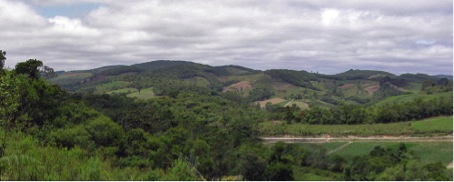
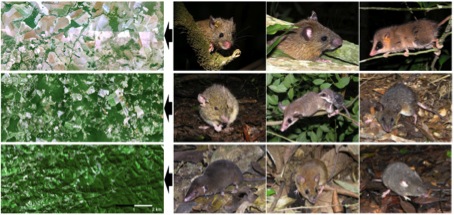
In our study “Ecological filtering or random extinction? Beta-diversity patterns and the importance of niche-based and neutral processes following habitat loss we investigated how the importance of different processes changes with habitat loss relying on a large database of small mammals in the Brazilian Atlantic Forest. We used a null model approach to quantify beta-diversity and make inferences about the relative importance of niche-based (deterministic) and neutral (stochastic) processes on community assembly at landscapes with varying degree of habitat loss.

Beta2

Our results did not support a positive relationship between beta-diversity and habitat loss, as predicted by commonly-used theoretical frameworks. Rather, when considering exclusively species composition (disregarding their abundance), beta-diversity was independent from habitat loss, with small mammal communities being more similar than expected by chance in deforested as well as continuously-forested landscapes. However, when species abundance was taken into consideration, we observed a drastic decrease in beta-diversity with habitat loss (i.e. biotic homogenization), thereby indicating an increase (rather than a decrease) in the importance of deterministic processes at landscapes with high degrees of habitat loss. Finally, we observed a drastic change in species composition in a highly deforested landscape, with communities being not just a rarefied sample but rather disproportionately dissimilar to the communities in continuously-forested landscapes.

Beta3

These results indicate that habitat loss can be seen as a strong ecological filter and species extinction is clearly more influenced by deterministic than by stochastic processes. Against this background, the incorporation of relevant species traits into theoretical models seems to be a useful step forward for the practical relevance of these models. Moreover, pro-active measures seem to be essential to prevent tropical landscapes to go beyond critical levels of habitat loss.

The authors through Thomas Püttker