Tag Archives: information

OTRS 5 aggiornamento multiplo.png

Aggiornamento: analysis and insights

Key Takeaways

  • Central theme: The analysis of Aggiornamento focuses on these fundamental aspects:

    Aggiornamento is an Italian word meaning “bringing up to date”, “updating”. It was made famous by Pope John XXIII, and was one of the key words at the Second…

  • Context: It fits within the dynamics related to Aggiornamento.
  • Article objective: To provide a clear and detailed overview based on the latest information.

Updated: 19/04/2026

OTRS 5 aggiornamento multiplo.png
OTRS 5 aggiornamento multiplo.png — Fonte: Wikimedia Commons

The topic Aggiornamento is closely related to the Aggiornamento sector. Current information allows us to draw a precise picture of the situation and understand what the most relevant elements to consider are.

Here are the main data and details emerging from the analysis of the sources:

Aggiornamento is an Italian word meaning "bringing up to date", "updating". It was made famous by Pope John XXIII, and was one of the key words at the Second Vatican Council, used by both bishops and the media.. This informational basis is essential to understand the nuances of the problem and evaluate the possible practical implications.

Dettagli su: Aggiornamento

Aggiornamento is an Italian word meaning "bringing up to date", "updating". It was made famous by Pope John XXIII, and was one of the key words at the Second Vatican Council, used by both bishops and the media.

Fonte: Wikipedia

In-depth analysis of Aggiornamento

Delving into the issue of Aggiornamento, we note how the dynamics at play are complex. Understanding these mechanisms requires analyzing not only the basic concepts but also their direct applications.

In particular, further details indicate that: Vatican Council, used by both bishops and the media.. This element adds another layer of reading to our analysis.

Perspectives for 2026

The evolution of Aggiornamento during 2026 will depend on several key factors. The information gathered so far suggests a precise direction, but it will be necessary to continue monitoring the situation to promptly catch any significant changes.

Frequently Asked Questions

What is the essential information about Aggiornamento?

The essential information concerns the data and details analyzed in this article, which outline the context and practical implications of the topic.

How is Aggiornamento related to Aggiornamento?

Aggiornamento represents one of the specific and relevant aspects within the Aggiornamento sector, influencing its dynamics and developments.

Where can I find updates on this theme?

It is advisable to consult authoritative sources, specialized discussion forums, and dedicated information portals to stay updated.

{
“@context”: “https://schema.org”,
“@type”: “FAQPage”,
“mainEntity”: [
{
“@type”: “Question”,
“name”: “What is the essential information about Aggiornamento?”,
“acceptedAnswer”: {
“@type”: “Answer”,
“text”: “The essential information concerns the data and details analyzed in this article, which outline the context and practical implications of the topic.”
}
},
{
“@type”: “Question”,
“name”: “How is Aggiornamento related to Aggiornamento?”,
“acceptedAnswer”: {
“@type”: “Answer”,
“text”: “Aggiornamento represents one of the specific and relevant aspects within the Aggiornamento sector, influencing its dynamics and developments.”
}
},
{
“@type”: “Question”,
“name”: “Where can I find updates on this theme?”,
“acceptedAnswer”: {
“@type”: “Answer”,
“text”: “It is advisable to consult authoritative sources, specialized discussion forums, and dedicated information portals to stay updated.”
}
}
]
}

Final Thoughts

We have examined Aggiornamento in detail, based on data and the current context. Understanding these elements is fundamental to having a clear and complete view. We will continue to provide relevant updates on this and other related topics.

{
“@context”: “https://schema.org”,
“@type”: “Article”,
“headline”: “Aggiornamento: analysis and insights”,
“about”: {
“@type”: “Thing”,
“name”: “Aggiornamento”
},
“articleSection”: “Aggiornamento”,
“author”: {
“@type”: “Person”,
“name”: “angelo@percorso.net”
},
“publisher”: {
“@type”: “Organization”,
“name”: “Eco Bio III Millennio”,
“url”: “https://www.ecobio3millennio.com”
},
“datePublished”: “2026-04-19T16:22:24+00:00”,
“dateModified”: “2026-04-19T16:22:24+00:00”
}

Grib skov.jpg

Ecologic: details and useful information

Key Takeaways

  • Central theme: The analysis of Ecologic focuses on these fundamental aspects: Ecology is the natural science of the relationships among living organisms and their environment. Ecology considers organisms at the individual, population, community, ecosystem, and biosphere levels. Ecology overlaps with…
  • Context: It fits within the dynamics related to Ecologic.
  • Article objective: To provide a clear and detailed overview based on the latest information.

Updated: 19/04/2026

Grib skov.jpg
Grib skov.jpg — Fonte: Wikimedia Commons

The topic Ecologic is closely related to the Ecologic sector. Current information allows us to draw a precise picture of the situation and understand what the most relevant elements to consider are.

Here are the main data and details emerging from the analysis of the sources: Ecology is the natural science of the relationships among living organisms and their environment. Ecology considers organisms at the individual, population, community, ecosystem, and biosphere levels. Ecology overlaps with the closely related sciences of biogeography, evolutionary biology, genetics, ethology, and natural history.. This informational basis is essential to understand the nuances of the problem and evaluate the possible practical implications.

Dettagli su: Ecology

Ecology is the natural science of the relationships among living organisms and their environment. Ecology considers organisms at the individual, population, community, ecosystem, and biosphere levels. Ecology overlaps with the closely related sciences of biogeography, evolutionary biology, genetics, ethology, and natural history.

Fonte: Wikipedia

In-depth analysis of Ecologic

Delving into the issue of Ecologic, we note how the dynamics at play are complex. Understanding these mechanisms requires analyzing not only the basic concepts but also their direct applications.

In particular, further details indicate that: the closely related sciences of biogeography, evolutionary biology, genetics, ethology, and natural history.. This element adds another layer of reading to our analysis.

Perspectives for 2026

The evolution of Ecologic during 2026 will depend on several key factors. The information gathered so far suggests a precise direction, but it will be necessary to continue monitoring the situation to promptly catch any significant changes.

Frequently Asked Questions

What is the essential information about Ecologic?

The essential information concerns the data and details analyzed in this article, which outline the context and practical implications of the topic.

How is Ecologic related to Ecologic?

Ecologic represents one of the specific and relevant aspects within the Ecologic sector, influencing its dynamics and developments.

Where can I find updates on this theme?

It is advisable to consult authoritative sources, specialized discussion forums, and dedicated information portals to stay updated.

Final Thoughts

We have examined Ecologic in detail, based on data and the current context. Understanding these elements is fundamental to having a clear and complete view. We will continue to provide relevant updates on this and other related topics.

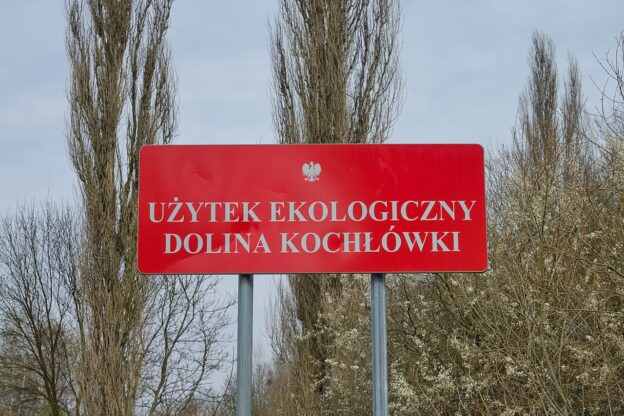
Dolina Kochłówki tabliczka 2026.jpg

Why is everyone talking about Ecologic April 2026?

Key Takeaways

  • Main focus: Interest in Ecologic April 2026 is mainly about: This topic is generating a lot of interest. People are looking for detailed information on how to address it, what…
  • Why it is relevant: It is a highly topical subject that offers practical insights and concrete solutions.
  • What you will learn: We will analyze the details, trends, and the most useful information to fully understand the issue.

Updated: 19/04/2026

Dolina Kochłówki tabliczka 2026.jpg
Dolina Kochłówki tabliczka 2026.jpg — Fonte: Wikimedia Commons

When talking about Ecologic April 2026, we refer to a subject that is capturing a lot of attention and curiosity. It is not just a topic of discussion, but an issue with direct and practical impacts.

Here are the main details emerging from the latest information: This topic is generating a lot of interest. People are looking for detailed information on how to address it, what the practical implications are, and what tools or strategies to adopt to manage it best.. Fully understanding these dynamics is the first step to getting a clear picture and making informed decisions.

Detailed analysis of Ecologic April 2026

To truly understand Ecologic April 2026, we must go beyond superficial definitions. This topic involves various facets that directly influence those seeking information about it. Analysis of current data shows that the search for clarity is a priority.

People seek information on this theme to find answers to specific problems or to discover new opportunities. The best approach is to analyze the facts objectively, evaluating pros, cons, and practical applications. Only in this way is it possible to transform information into useful knowledge.

What to consider and pay attention to

When seeking information about Ecologic April 2026, it is easy to come across partial or decontextualized information. One of the most important aspects is to always verify the reliability of sources and understand the specific context in which the data is presented.

It is advisable to compare different perspectives and not stop at the first answer found. Delving into the details and asking specific questions allows you to avoid misunderstandings and get a much more complete and realistic view of the situation.

Developments and perspectives for 2026

Looking ahead, Ecologic April 2026 will continue to evolve. Current trends indicate that there will be an increasing demand for precise information and applicable solutions. Staying updated on these developments is essential for anyone interested in the topic.

Frequently Asked Questions

What are the main aspects of Ecologic April 2026?

The main aspects concern its practical applications, the basic information to understand it, and the details emerging from the most recent discussions and research.

Where can I find more details on Ecologic April 2026?

You can find in-depth information on encyclopedic sources, specialized information portals, and discussion forums where users share direct experiences.

Why is it important to learn about Ecologic April 2026?

Because it allows you to make more informed decisions, avoid common mistakes, and stay updated on a topic that generates great interest and debate.

Final Thoughts

In conclusion, Ecologic April 2026 is a broad topic full of interesting insights. We have analyzed the key points and the most relevant information to offer you a clear overview. Continue to explore and learn more to stay updated.

EU Trade Secrets Directive – a threat to health, environment, human rights Updated for 2026


A new draft EU directive currently looked at by the European Parliament wants to protect companies’ ‘trade secrets’.

But it uses definitions so large and exceptions so weak that it could seriously endanger the work of journalists, whistle-blowers, unionists and researchers as well as severely limiting corporate accountability and the transparency of corporate data used for regulation.

We publish a joint statement, below, together with many other groups that calls for the directive to be radically amended.

And end to transparency on health, food, environment

We strongly oppose the hasty push by the European Commission and Council for a new European Union (EU) Directive on Trade Secrets because it contains:

  • An unreasonably broad definition of ‘trade secrets’ that enables almost anything within a company to be deemed as such;
  • Overly-broad protection for companies, which could sue anyone who “unlawfully acquires, uses or discloses” their so-called “trade secrets”; and
  • Inadequate safeguards that will not ensure that EU consumers,  journalists, whistleblowers, researchers and workers have reliable access to important data that is in the public interest.

Contrary to the Commission’s goals, this unbalanced piece of legislation would result in legal uncertainty.

Unless radically amended by the Council and European Parliament, the proposed directive could endanger freedom of expression and information, corporate accountability, information sharing – possibly even innovation – in the EU.

Specifically, we share great concern that under the draft directive companies in the health, environment and food safety fields could refuse compliance with transparency policies even when the public interest is at stake.

Health

Pharmaceutical companies argue that all aspects of clinical development should be considered a trade secret.

Access to biomedical research data by regulatory authorities, researchers, doctors and patients – particularly data on drug efficacy and adverse drug reactions – is critical, however, for protecting patient safety and conducting further research and independent analyses.

This information also prevents scarce public resources from being spent on therapies that are no better than existing treatments, do not work, or do more harm than good. Moreover, disclosure of pharmaceutical research is needed to avoid unethical repetition of clinical trials on people.

The proposed directive should not obstruct recent EU developments to increase sharing and transparency of this data.

Environment

Trade secret protection can be used to refuse the release of information on hazardous products within the chemical industry.

Trade secret protection may, for example, be invoked by companies to hide information on chemicals in plastics, clothing, cleaning products and other items that can cause severe damage to the environment and human health.

They could also use the directive to refuse disclosing information on the dumping of chemicals, including fracking fluids, or releasing toxins into the air.

Food safety

Under EU law, all food products, genetically modified organisms and pesticides are regulated by the European Food Safety Authority (EFSA).

Toxicological studies that the EFSA relies on to assess the risks associated with these products are, however, performed by manufacturers themselves.

However one of the EFSA’s most interesting objectives is to make its scientific opinions ‘reproducible’ by others, a key validation criteria in scientific methodology. Scientific scrutiny of the EFSA’s assessments is only possible with complete access to these studies.

Companies argue, though, that this information contains confidential business information and strongly oppose its disclosure. The EFSA has recently launched a Transparency Initiative to improve its credibility, and is considering providing independent scientists with access to this data.

Unfortunately, this objective has been strongly criticised by the manufacturing industries (chemical, pesticide, seed, biotech, and additives), which argue that this toxicological data contain “confidential business information” that “should be protected from all disclosures and misuse at all times”.

These industries openly threatened the EFSA with legal action should the Authority decide to publish this data. The EFSA would probably have a solid legal defense for such action because ensuring food safety serves as a strong justification. But this situation may change if the current directive on trade secrets covers such essential data.

It is essential that the risk assessment work of public bodies is properly monitored by the scientific community. All data that these public bodies use must therefore be exempt from the scope of the directive.

The right to freedom of expression and information could be seriously harmed

Under the proposed directive, whistleblowers can use undisclosed information to reveal misconduct or wrongdoing, but only if “the alleged acquisition, use or disclosure of the trade secret was necessary for such revelation and that the respondent acted in the public interest.”

Unfortunately, though, determining whether disclosure was necessary can often only be evaluated afterwards. In addition, it remains unclear whether many types of information (e.g., plans to terminate numerous employees) qualify as ‘misconduct’ or ‘wrongdoing’.

This creates legal uncertainty for journalists, particularly those who specialise in economic investigations and whistleblowers.

The mobility of EU workers could be undermined

The proposed directive poses a danger of lock-in effects for workers. It could create situations where an employee will avoid jobs in the same field as his / her former employer, rather than risking not being able to use his / her own skills and competences, and being liable for damages.

This inhibits one’s career development, as well as professional and geographical mobility in the labour market.

In addition, despite the Commission’s desire for a ‘magic bullet’ that will keep Europe in the innovation game, closed-door trade secret protection may make it more difficult for the EU to engage in promising open and collaborative forms of research.

In fact, there is a risk that the measures and remedies provided in this directive will undermine legitimate competition – even facilitate anti-competitive behaviour.

Supporters – a litany of corporate power

Unsurprisingly, the text is strongly supported by multinational companies. In fact, industry coalitions in the EU and the US are lobbying, through a unified Trade Secrets Coalition, for the adoption of trade secret protection.

In the EU, a so-called Trade Secrets & Innovation Coalition is pushing for this directive. This coalition is even registered in the EU Transparency register under this name. This coalition includes Alstom, DuPont de Nemours, General Electric, Intel, Michelin, Air Liquide, Nestlé and Safran, who work together with the pharmaceutical and the chemical industries.

In the US, two new bills are pending before Congress: the Trade Secrets Protection Act of 2014 (H.R. 5233) – and Senate Bill: Defend Trade Secrets Act of 2014 (S. 2267).

If passed, these texts would allow trade secret protection to be included in the Trans-Atlantic Trade and Investment Partnership (TTIP) – something that will be incredibly difficult to repeal in the future through democratic processes.

The US has made no secret of its explicit wish for strong language on trade secret protection in this agreement. Given that TTIP is expected to set a new global standard, its potential inclusion of trade secret protection is particularly worrisome.

We urge the Council and the European Parliament to radically amend the directive. This includes limiting the definition of what constitutes a trade secret and strengthening safeguards and exceptions to ensure that data in the public interest cannot be protected as trade secrets.

The right to freely use and disseminate information should be the rule, and trade secret protection the exception.


This statement was originally published by Corporate Observatory Europe. Please check the original joint statement for signatories, contact details, etc. In this version, footnotes have been incorporated into the main text, and additional subheads have been inserted.


388375