Tag Archives: interactions

Now or never: adaptive phenology and biotic interactions Updated for 2026

Timing is everything. For an interaction to take place, organisms not only have to be at the same place, they need to be there at the same time. The timing of flowering has likely been an important trait ever since the first flowers appeared on Earth ~200 million years ago; and when the climate changes, phenological changes belong to the most striking ecological responses. The timing of biological events is an important and exciting phenomenon in life-history evolution.

infryst snödroppe-2707

There is currently widespread concern that climate-driven changes in the timing of seasonal events may disrupt important ecological interactions such as pollination or cause temporal mismatches between critical periods in animal life-cycles and food availability. Phenological change has received substantial attention and has also been treated in thematic issues in other journals. This thematic issue of Oikos, however, has a more specific focus on the interplay between phenology and ecological interactions and on understanding phenological change from the perspective of life-history evolution. The articles, contributed by ecologists with expertise in phenology and/or theoretical ecology represent a wide range of scientific approaches. The volume contains theoretical investigations emphasizing the role of phenology in meta-community networks (Revilla et al.), in evolutionary games (Day and Kokko, Schmidt et al.) and in density-dependent population dynamics (Reed et al.). It also contains field studies of timing of reproduction in species adapting o climate change (Bennet et al., Van Dyck et al.) and experiments showing how timing of germination influences interspecific competition among plants (Cleland et al.). Among the contributions are furthermore reviews and conceptual papers on phenological change in the context of plant-pollinator interactions (Forrest), mutualisms in general (Rafferty et al. ) and plant life histories (Ehrlén) along with a synthesis of theory emerging in this field (Johansson et al.).

Phenological data continues to accumulate in ongoing, large-scale monitoring programs and we have increasingly refined methods to monitor changes. However, so far our knowledge has to a large extent been descriptive and any explanations for observed phenology patterns have been proximate and focused on abiotic influences. This special issue deals with how ecological interactions influences phenological patterns and vice versa. Some of the contributions have also provided ultimate explanations to phenological processes and patterns. That way, this issue offers a novel take on an old research topic and it provides a snap shot of the latest developments in this exciting research area.

Jacob Johansson, Jan-Åke Nilsson and Niclas Jonzén, editors of Oikos issue “Phenological change and ecological interactions”

Everything is connected – in nature too Updated for 2026

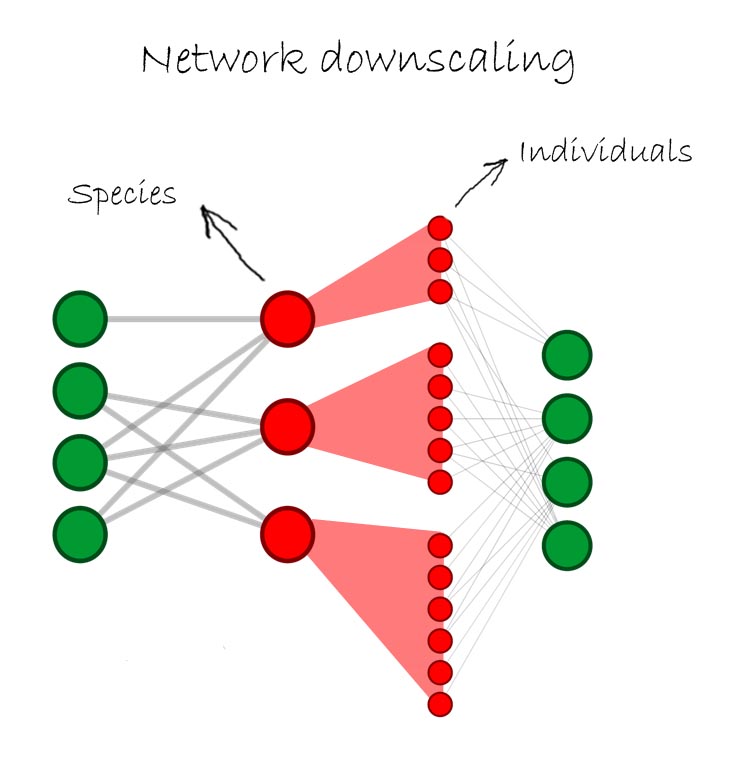
You might, sometimes, have heard the phrase ‘everything is connected’. Maybe you are thinking about computers and mobile phones, but in fact this statement is particularly true in nature. For instance, we know that species are not isolated entities, instead they are part of communities in which multiple different species are interacting with each other. Some of these interspecific interactions are cooperative and positive for all interacting partners, and are called mutualistic interactions. Virtually all species on Earth are involved in one or more mutualistic interactions. Specifically, the interactions between plants and their pollinators may be some of the most studied ones, as nearly 85% of plants rely on animals for pollination service. In the last 20 years the study of pollination interactions using network analysis has been a hot topic in ecology. Networks have proven to be a useful tool to unravel patterns in plant-pollinator interactions at the whole community level. Usually, almost all plant-pollinator networks are constructed at the species-level (species-based networks), i.e. nodes in the network are plant and animal species and links represent the interactions occurring between them (e.g. flower visits). However, species are composed of populations of individuals and those individuals are the true actors establishing interactions in nature. Even more interesting is the fact that conspecific individuals are phenotypically and behaviourally diverse with respect to, e.g. size, sex, age, and social status, which also might imply that their foraging decisions become different. Most ecological networks studied to date have not considered this intraspecific variation in interactions, despite the importance of individual variation within natural populations addressed in the theory of evolution by natural selection. For that reason, moving from species-based networks to individual-based networks, to disentangle a process, which can be defined as network downscaling, is probably one of the major challenges right now in ecological network research.
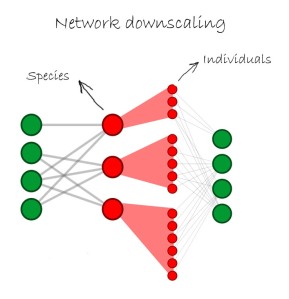
 

Network downscaling. In traditional species-based networks each node represents a species (red nodes are pollinators and green ones are plants), but if we decompose a species into its constituting individuals we can obtain an individual-based network. In the figure, downscaling is only represented for the pollinator subset.

Network downscaling. In traditional species-based networks each node represents a species (red nodes are pollinators and green ones are plants), but if we decompose a species into its constituting individuals we can obtain an individual-based network. In the figure, downscaling is only represented for the pollinator subset.


In an attempt to fill this gap of knowledge, we got the idea of downscaling an entire pollination network to the individual level for the pollinator subset and explore network patterns at both interacting scales: species and individuals. This was possible with the study of pollen loads of insect individuals. Insect flower visitors in two mountain shrub communities from Mallorca (Balearic Islands) were captured, and later in the laboratory, pollen carried by each one was identified and quantified under the microscope. It was a highly time consuming and difficult task, but it paid well off as it provided a record of the flowering species visited by each individual pollinator over time. Data revealed that generalized species in the plant-pollinator network are composed of specialized and idiosyncratic individuals. The high heterogeneity in individual foraging behaviour and the high individual specialization of pollinators are obviously hidden in traditional species-based networks, and thus determine differences in several topological properties between species-based and individual-based networks. Particularly, the modular structure – a broadly described pattern in pollination networks which consists of densely connected groups or cliques of nodes with sparse connections to other groups– is not consistent across networks at the two scales. We found that modularity increases when downscaling networks to the individual level, and we confirmed this result using different modularity detection algorithms. In contrast to the view of modules as a set of taxonomically related species or species with convergent morphological traits in species-based networks, modules in individual-based networks are groups of functionally different pollinators distantly related but with overlapping pollen niches. Thus, interestingly, conspecific individuals are distributed in different modules. Modules showed to have a strong phenological component, and attributes related to the phenophase of plants and individuals even determined the topological roles of nodes in the network. Only when downscaling to the individual level it was possible to detect a dynamical interaction switching within-species and a module turnover throughout the flowering season, thus modules of individuals assembled and disassembled over time.
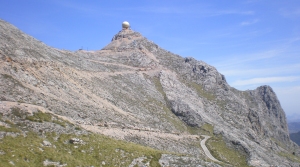
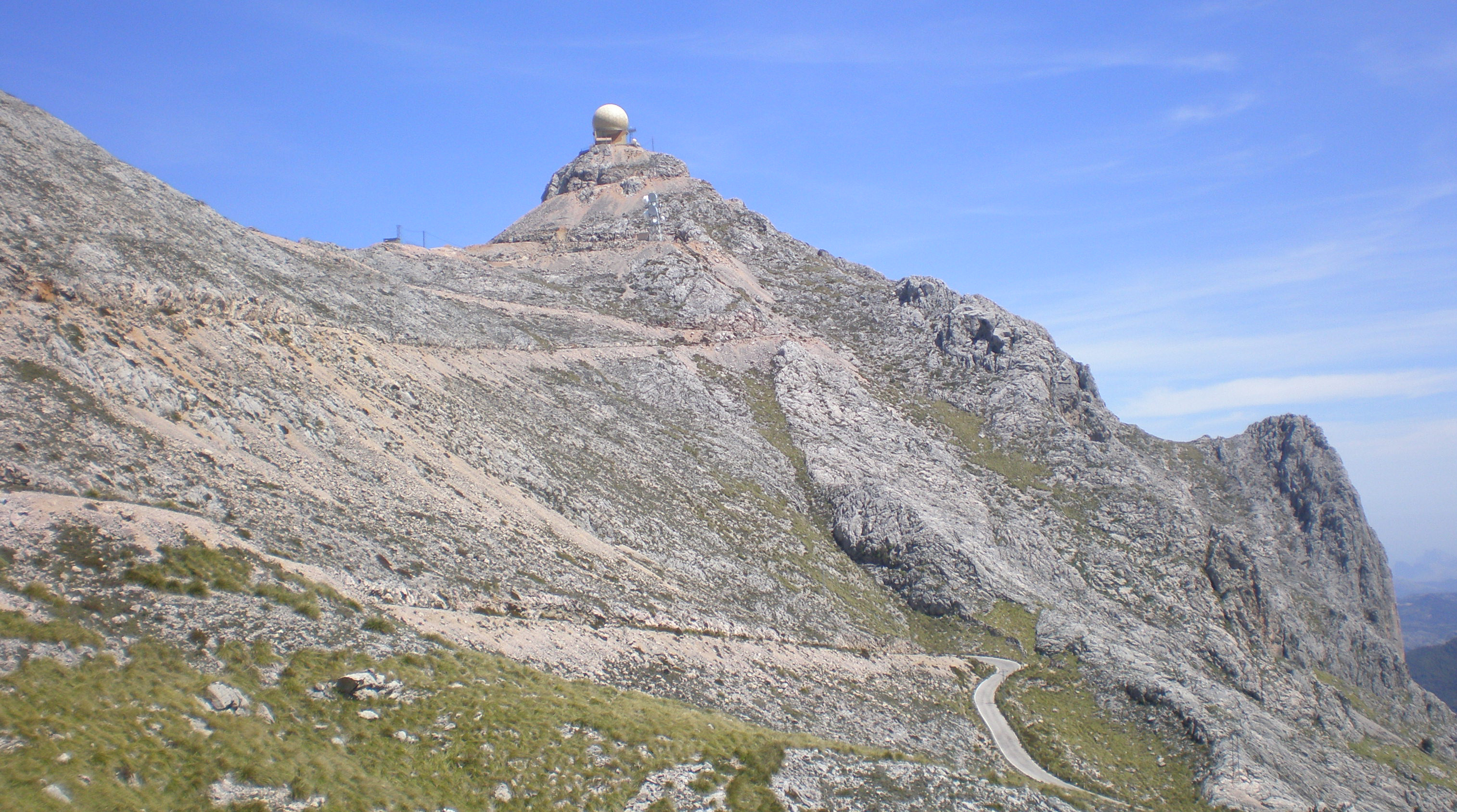
Study site. The study was conducted on two locations in Puig Major (1445 m), the highest mountain in Mallorca (Balearic Islands).
Study site. The study was conducted on two locations in Puig Major (1445 m), the highest mountain in Mallorca (Balearic Islands).

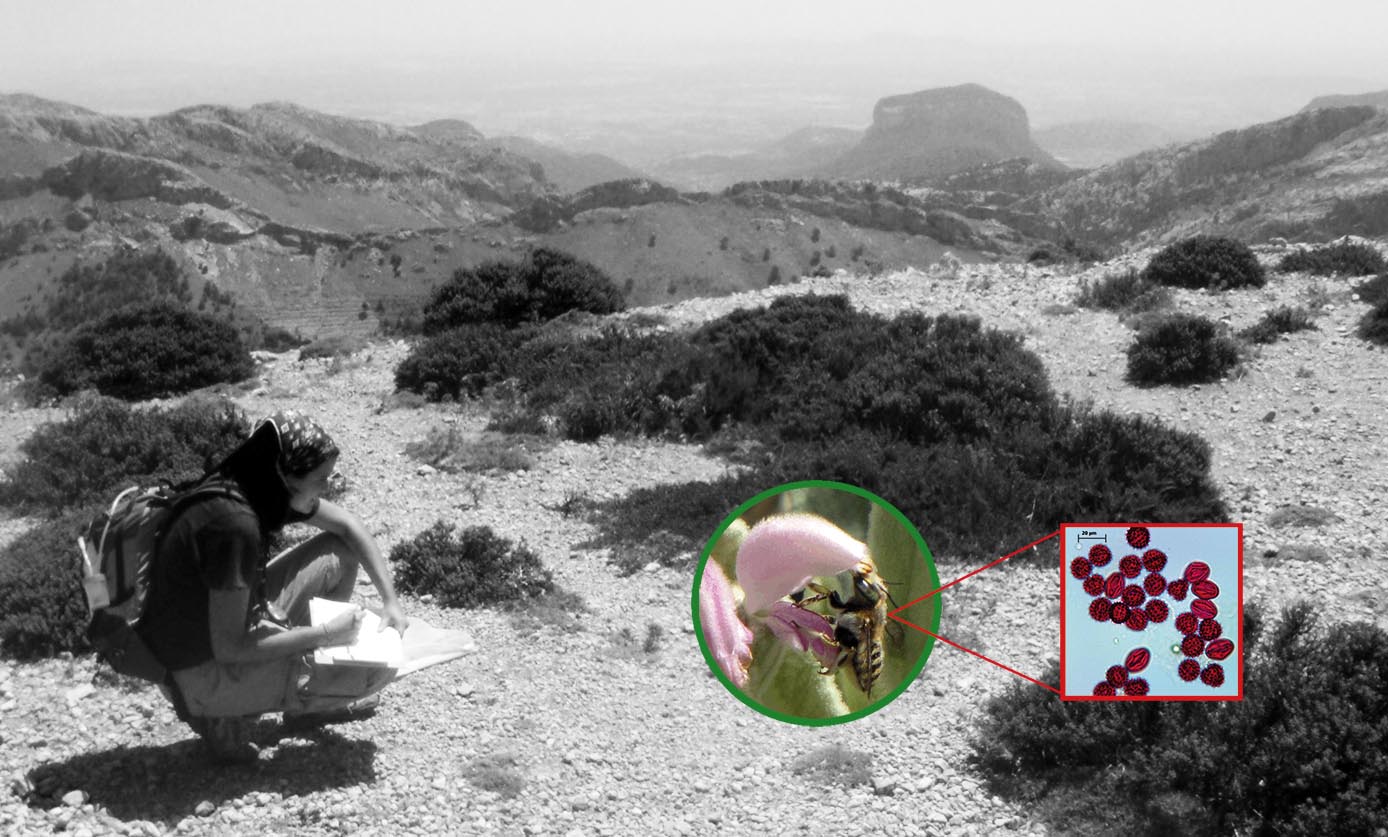
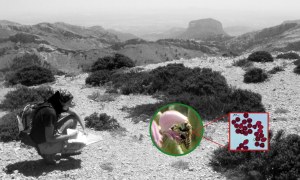
Methods. Pollinator observations were conducted in the field. Insects visiting flowers were captured and, later, their pollen loads were analyzed in the lab.

Methods. Pollinator observations were conducted in the field. Insects visiting flowers were captured and, later, their pollen loads were analyzed in the lab.


In conclusion, findings reported in our study, “Increasing modularity when downscaling networks from species to individuals”  (Tur et al.) highlight that network patterns differed across the individuals and the species scales, because much within-species variation exists. This implies that it is not always possible to deduce structure at one hierarchical level from information about structure at an adjacent level. Combining the study of networks at both scales offers the possibility of uncovering important properties and processes, which might influence network stability, dynamics and the outcomes of interactions.
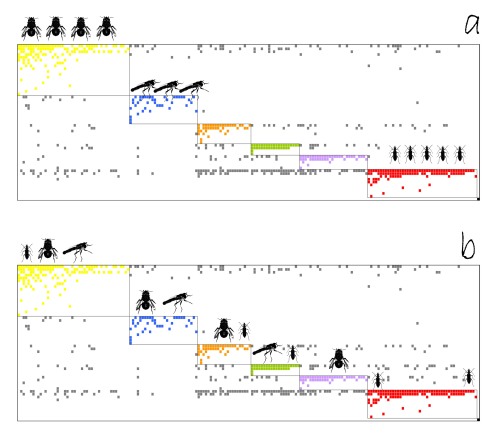
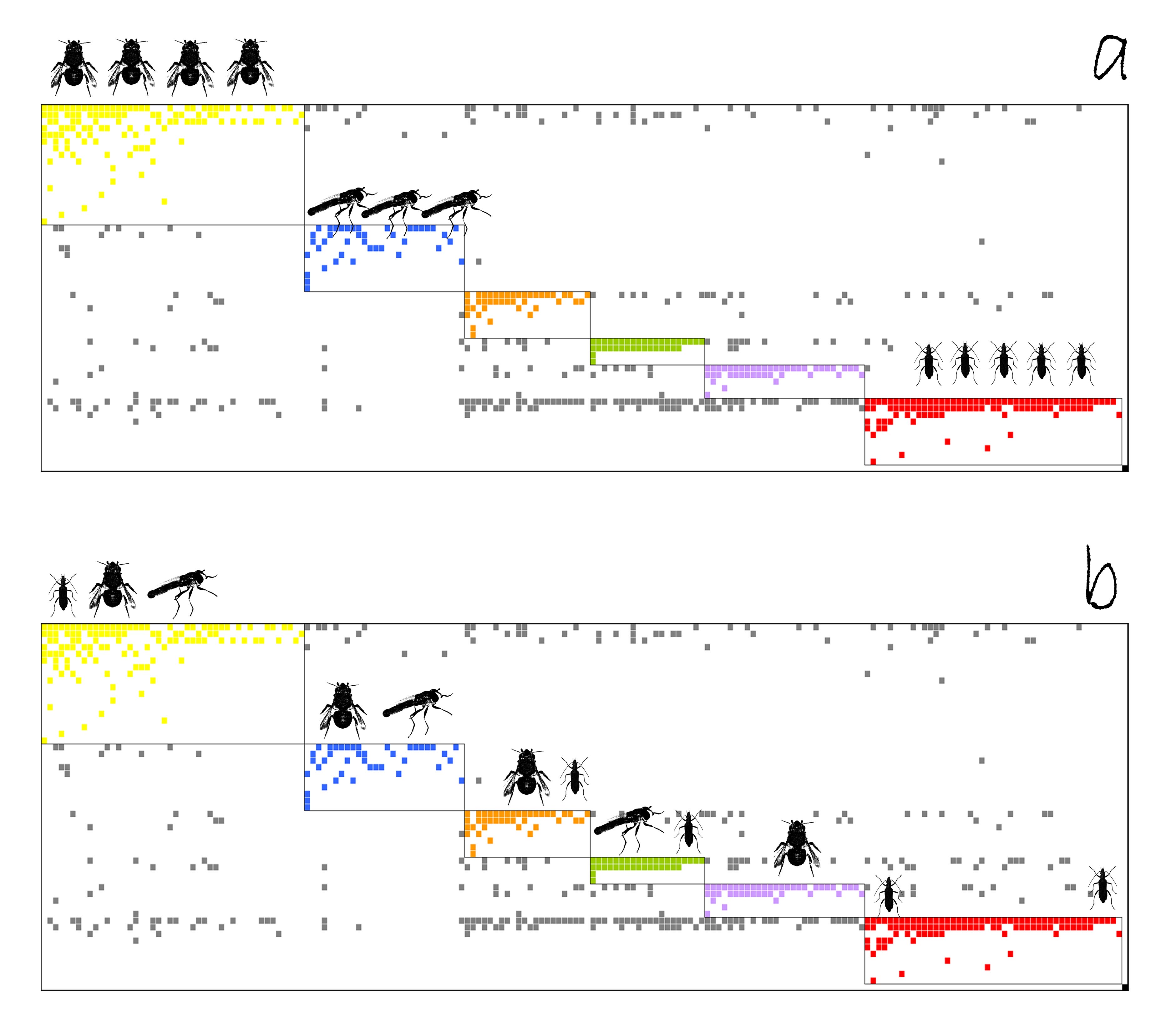
Distribution of conspecifics into modules. One of the objectives in our study was to investigate whether individual-based networks were modular and if this was true, to analize how conspecific individuals were distributed among modules. There are two possibilities: (a) all conspecific individuals belong to the same module, or alternatively, (b) conspecific individuals belong to different modules. In most species we found ‘b’.

Distribution of conspecifics into modules. One of the objectives in our study was to investigate whether individual-based networks were modular and if this was true, to analize how conspecific individuals were distributed among modules. There are two possibilities: (a) all conspecific individuals belong to the same module, or alternatively, (b) conspecific individuals belong to different modules. In most species we found ‘b’.


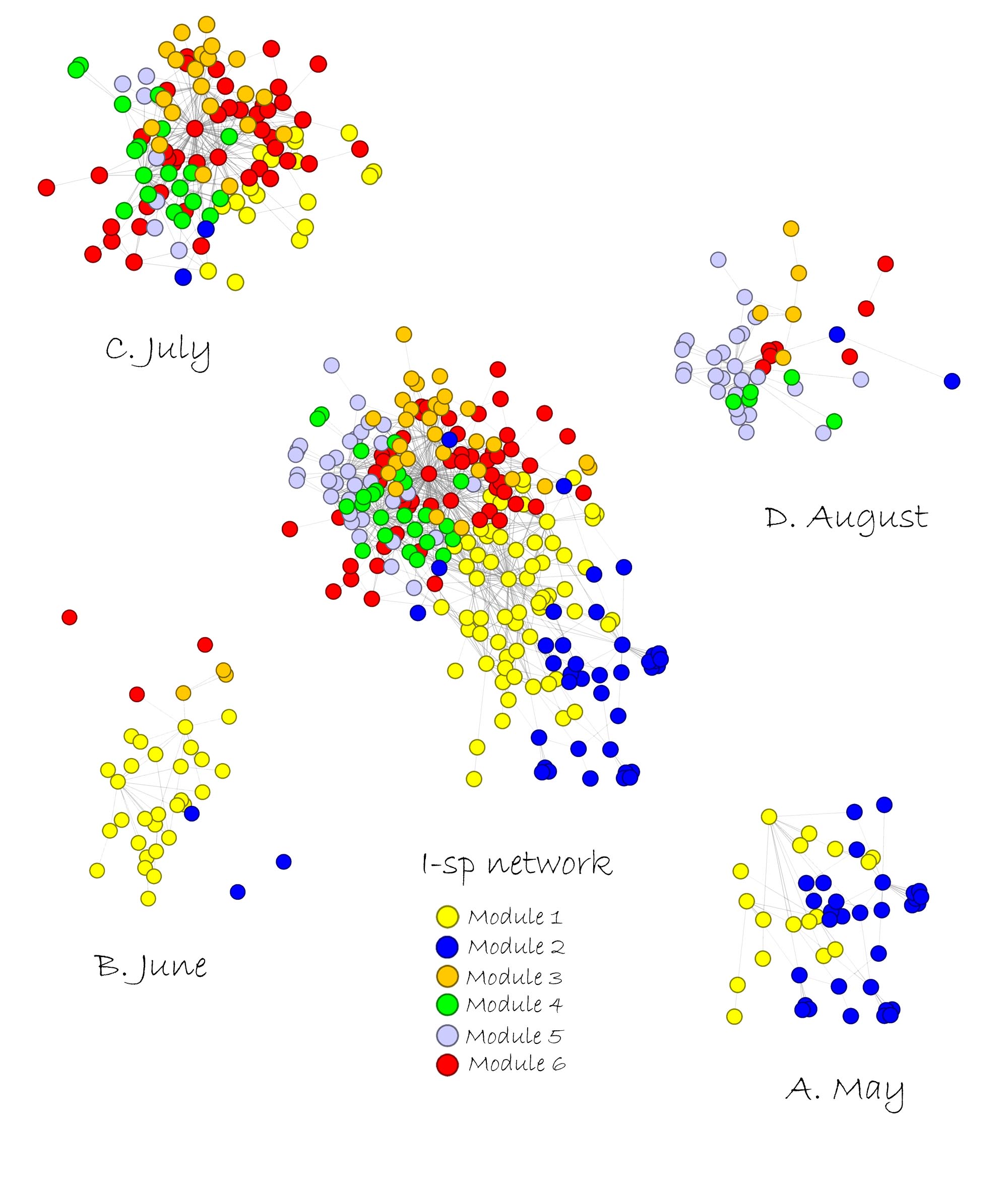
Module turnover. When downscaling from species to individuals, a module turnover associated to seasonality was identified, so that at a given moment of the season there is predominance of a particular module of individuals. The complete individual-species network and the different slices of each month are shown in the figure.

Module turnover. When downscaling from species to individuals, a module turnover associated to seasonality was identified, so that at a given moment of the season there is predominance of a particular module of individuals. The complete individual-species network and the different slices of each month are shown in the figure.

By Christina Tur


What exactly can network models predict? Updated for 2026

Ecological networks quantify the diversity of direct and indirect interactions taking place in nature. However, due to their complexity, ecologists rely heavily on the use of metrics to summarize aspects of network structure thought to be of biological importance. Many of these structural features are non-random and strongly conserved across diverse habitats and species assemblages, begging the question: what factors determine network structure? The most successful hypotheses to explain these patterns are the neutrality and biological constraints hypotheses, which posit that species interactions can be explained by trait mismatches, and relative abundances respectively. In the Early View paper “Species traits and relative abundances predict metrics of plant-pollinator network structure, but not pairwise interactions” in Oikos, we Colin Olito and Jeremy W. Fox, evaluate the relative ability of trait-based and neutral models of species interactions to explain the structure of a temporally resolved alpine plant-pollinator visitation network.


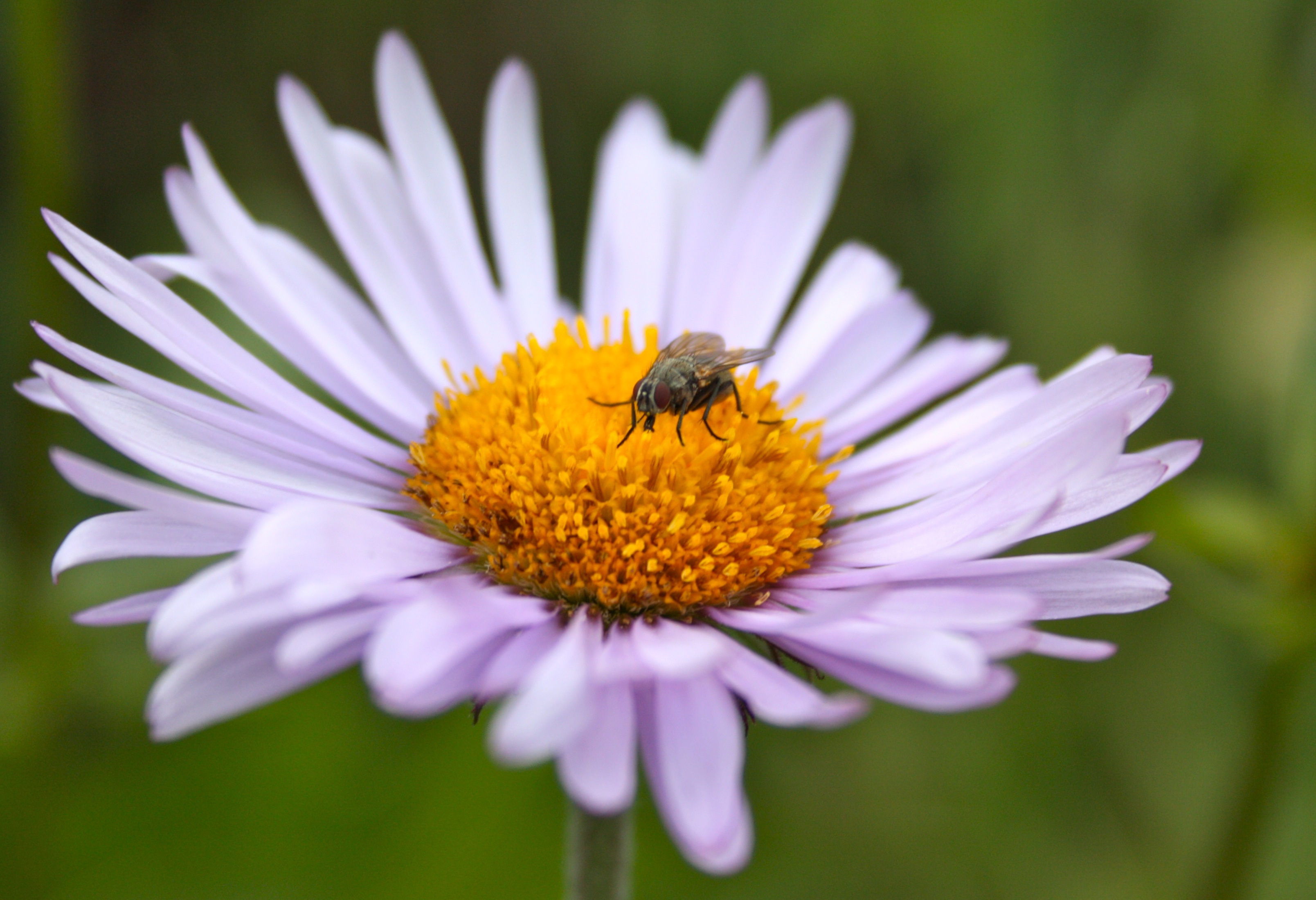
An unidentified muscid visiting Erigeron peregrinus. Although their charm often goes unappreciated, flies are by far the most diverse and abundant pollinators in the alpine. Interestingly, many of their behaviours that facilitate pollination differ markedly from more intensively studied foraging pollinators, such as bumblebees. Understanding their crucial role in alpine and high-latitude plant-pollinator communities will require a greater understanding of both their reproductive and foraging biology. Photo credit: Martin Fees.

An unidentified muscid visiting Erigeron peregrinus. Although their charm often goes unappreciated, flies are by far the most diverse and abundant pollinators in the alpine. Interestingly, many of their behaviours that facilitate pollination differ markedly from more intensively studied foraging pollinators, such as bumblebees. Understanding their crucial role in alpine and high-latitude plant-pollinator communities will require a greater understanding of both their reproductive and foraging biology. Photo credit: Martin Fees.

As our title suggests, species traits and relative abundances successfully predicted every metric of network structure tested, but failed to predict observed interactions. That is, a variety of models can predict network metrics well, but for the wrong reasons. We explore the implications of this contrast, and highlight potential problems with the use and interpretation of network metrics. We also found that species phenologies (the timing of flowering or pollinator activity) always out-performed neutral models at predicting pairwise interactions, and discuss limitations of neutral models of network structure, particularly when species interactions are under-sampled. We suggest that future progress in explaining the structure and dynamics of ecological networks will require new approaches that emphasize accurate prediction of species interactions rather than network metrics, and better reflect the biology underlying species interactions.

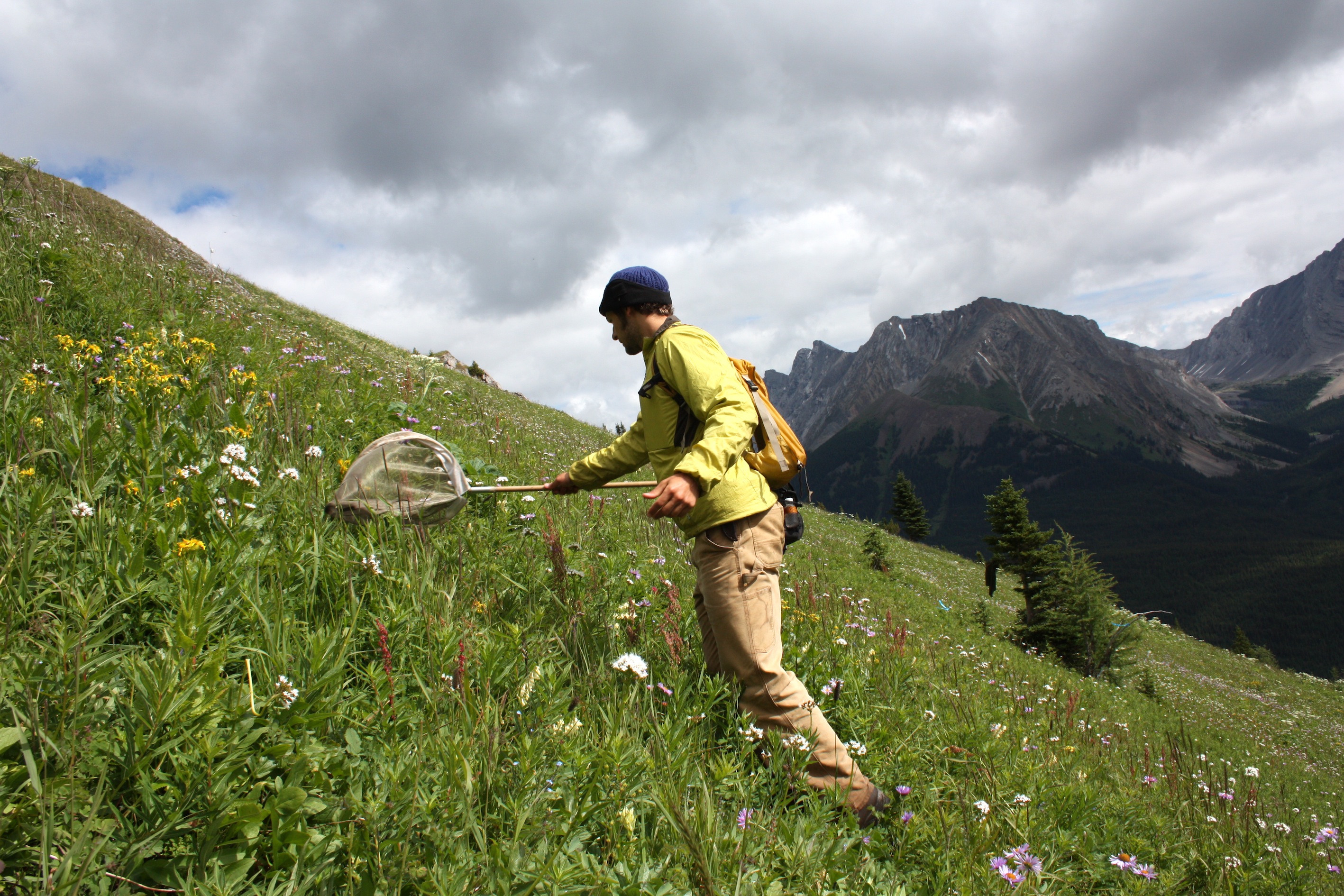
Sampling plant-pollinator interactions in a low-alpine meadow in Kananaskis Country, Alberta, Canada. Photo credit: Martin Fees.

Sampling plant-pollinator interactions in a low-alpine meadow in Kananaskis Country, Alberta, Canada. Photo credit: Martin Fees.

Pollinator decline effects on plants Updated for 2026

How pollinator decline affect plant-plant interactions for pollinator is studied in the Early View article ‘Experimental reduction of pollinator visitation modifies plant-plant interactions for pollination’ by Amparo Lázaro and co-workers.

Several studies have indicated a widespread pollinator decline, caused mainly by land-use changes, degradation of natural habitats, fragmentation and habitat loss. Since the majority of plant species are dependent on animal pollination for reproduction, pollinator decline may influence plant reproduction and the persistence of plant populations. However, a pollinator decline may also affect the way plants interact for pollination because these interactions depend on the abundance of plants and pollinators in the community.

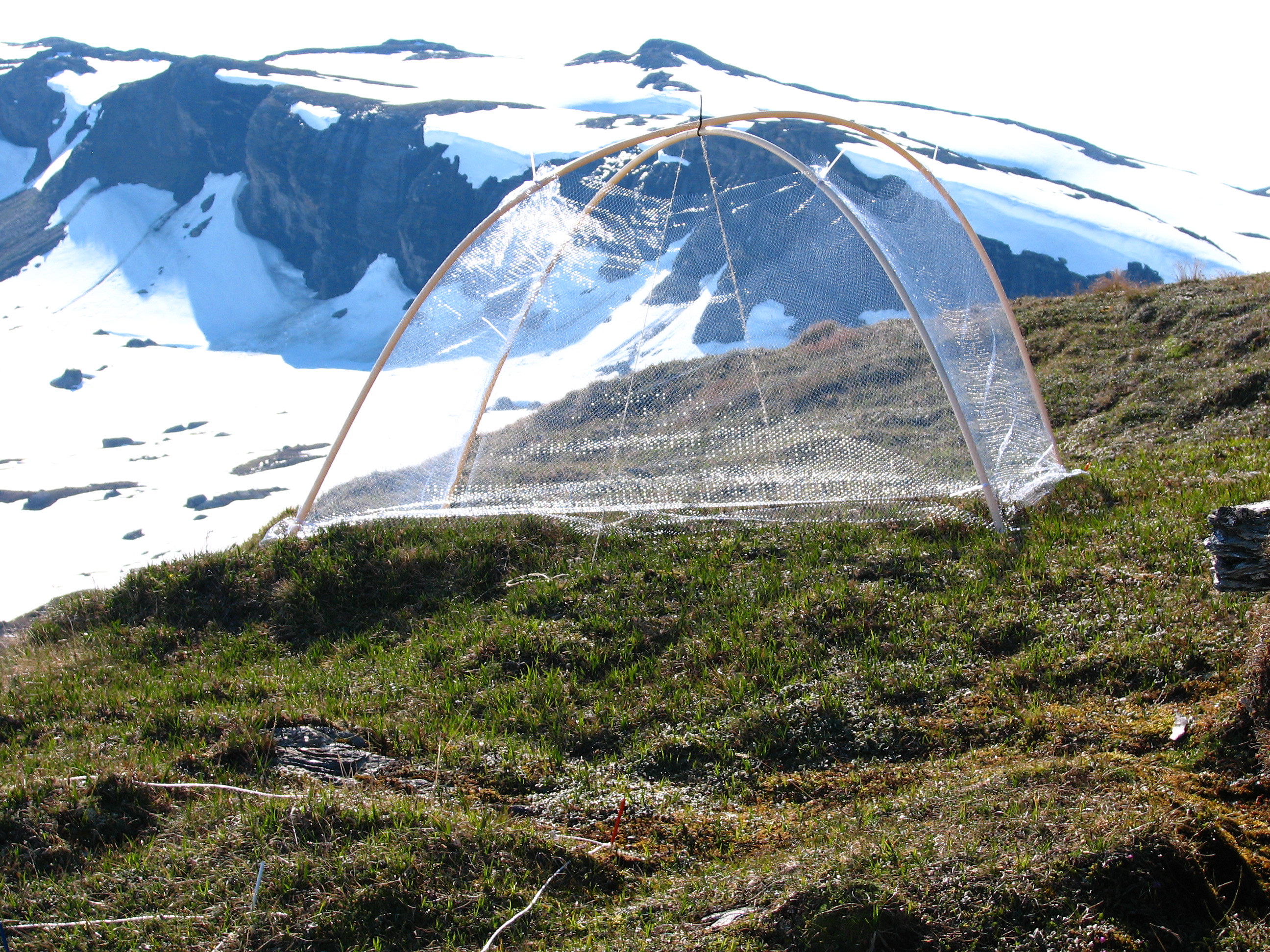
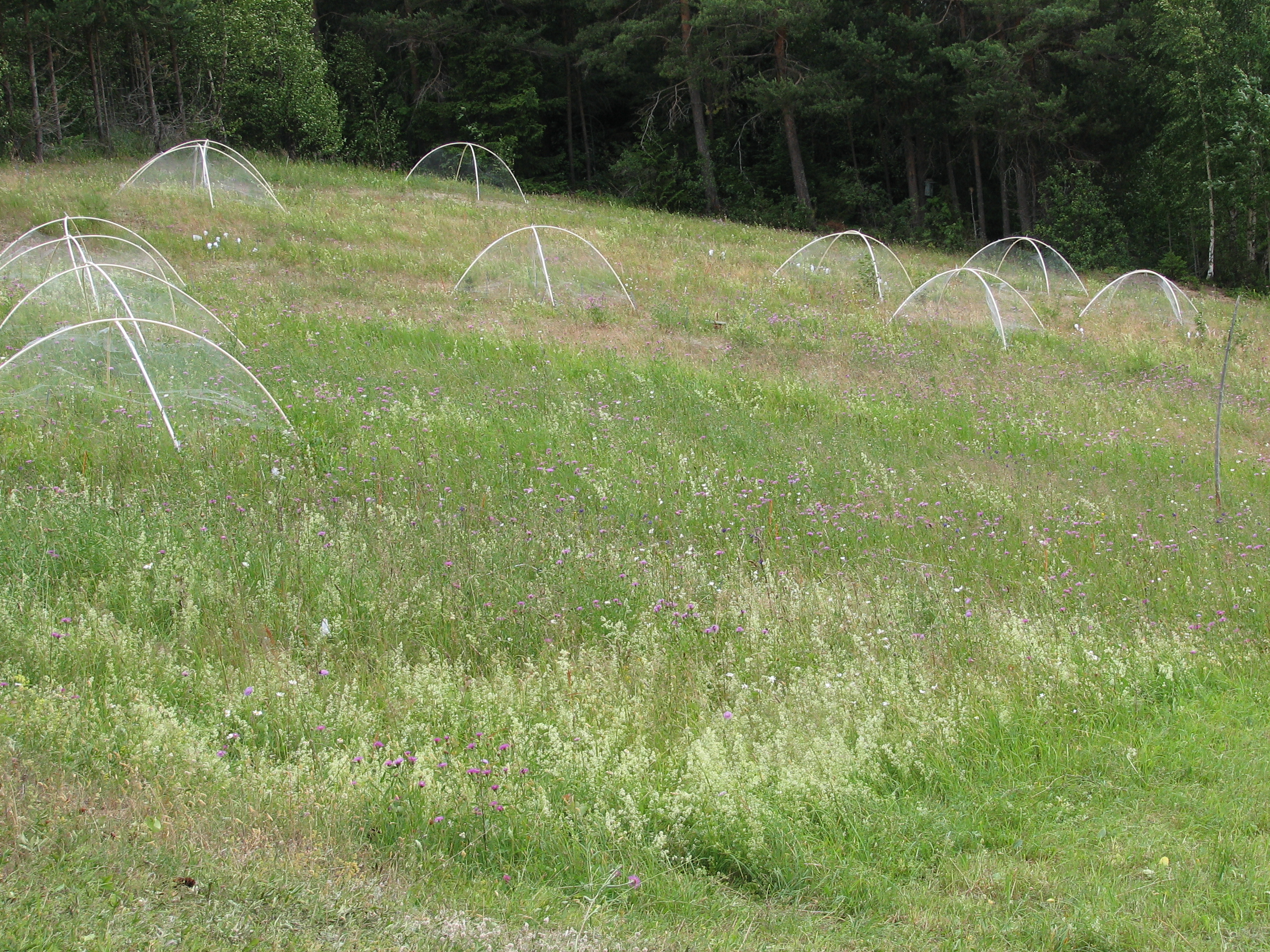
To simulate a pollinator decline we set up a novel experiment to reduce pollinator visitation in two communities (one lowland and one alpine) in Southern Norway (see also Lundgren et al. 2013). In the experiment we compared control plots with plots where pollinator visitation had been reduced by means of dome-shaped cages constructed by bending two PVC-tubes diagonally and covering them with fishnet. The fishnet was totally transparent, so flowers were fully visible from outside the net. In order to allow flower visitors inside cages to exit easily, we left an opening between the mesh and the ground, and another opening in the top of the dome. This experiment effectively reduced pollinator visitation without modifying the composition or behaviour of pollinators, or other important biotic and abiotic variables.

alpine1

Alpine

lowland5

Lowland

Lázaro et al. (2014) shows that the reduction in pollinators modified plant-plant interactions for pollination in all the six species studied; although for two of them these interactions did not affect seed set. Pollen limitation and seed set data showed that the reduction of pollinator visits most frequently resulted in novel and/or stronger interactions between plants in the experimental plots that did not occur in the controls. Although the responses were species-specific, there was a tendency for increasing facilitative interactions with conspecific neighbours in experimental plots where pollinator availability was reduced. Heterospecifics only influenced pollination and fecundity in species in the alpine community and in the experimental plots, where they competed with the focal species for pollination. The patterns observed for visitation rates differed from those for fecundity, with more significant interactions between plants in the controls in both communities. This study warns against the exclusive use of visitation data to interpret plant-plant interactions for pollination, and helps to understand how plant aggregations may buffer or intensify the effects of a pollinator loss on plant fitness.

div { margin-top: 1em; } #google_ads_div_wpcom_below_post_adsafe_ad_container { display: block !important; }
]]>