Tag Archives: science

The proof we needed

Dryas octopetala

Originally posted on ‘On top of the world’

Good news for those ecologists studying species distributions: it turns out that the climatic niche of mountain plants is fairly conserved in space (Wasof et al. 2015).

Dryas octopetala

Mountain avens, Dryas octopetala

These results come from a study on the distribution of alpine species in the European Alps and the northern Scandes, two mountain regions with very different characteristics but a significant overlap in species composition.

Orchid

Orchid in the northern Scandes (Dactilorhiza majalis?)

The researchers compared the climatic niche of a large set of plant species that occurred in both mountain regions, and found that only a small percentage of these species experienced a regional effect on their niche. Especially species with disjunct populations (populations that are truly separated in space) showed high niche overlap, and the same was true for arctic-alpine species.

Betula nana

Dwarf birch, Betula nana

Although niches are in general surprisingly well conserved between the two regions, species occupy a wider range in the Alps than in the northern Scandes. More on the latter unexpected pattern in this informative post from Jonathan Lenoir, one of the authors.

Rubus chamaemorus

Cloudberry, Rubus chamaemorus

Why do we care? Because the large and growing field of species distribution modelling has as one of its main assumptions that climatic niches are conservative. If they are not, any extrapolation of a limited geographic dataset to the total global distribution of a species would be invalid.

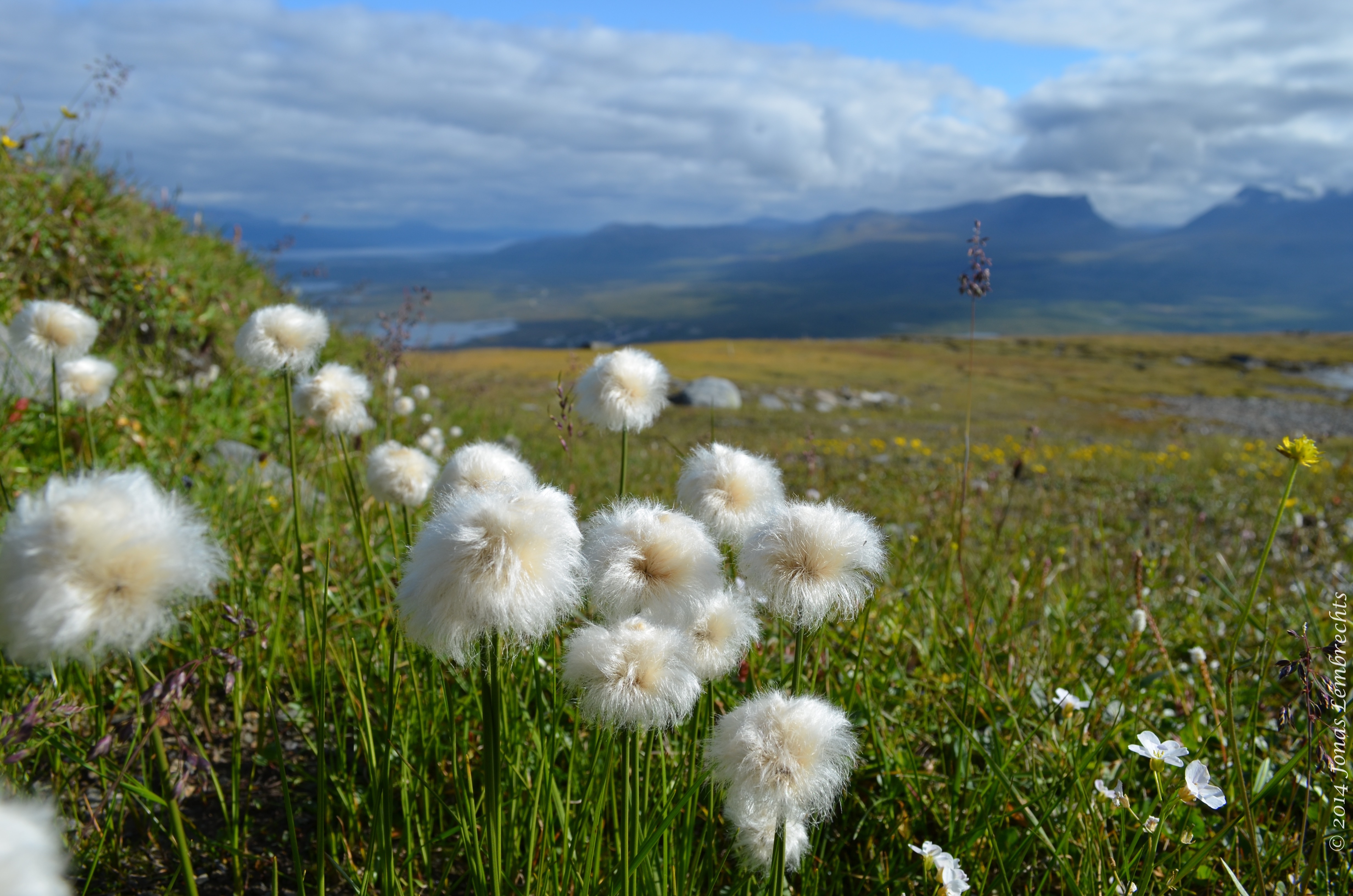
Eriophorum vaginatum

Hair’s tale cottongrass, Eriophorum vaginatum

Reference

Wasof et al. (2015) Disjunct populations of European vascular plant species keep the same climatic niches, Global Ecology and Biogeography, 24: 1401-1412.

Pyrola minor

Snowline wintergreen, Pyrola minor

November 17, 2015

Survivable IPCC projections are based on science fiction – the reality is much worse Updated for 2026


The IPPC (Intergovernmental Panel on Climate Change) published in their latest report, AR5, a set of ‘Representative Concentration Pathways’ (RCP’s).

These RCP’s (see graph, right) consist of four scenarios that project global temperature rises based on different quantities of greenhouse gas concentrations.

The scenarios are assumed to all be linked directly to emissions scenarios. The more carbon we emit then the hotter it gets. Currently humanity is on the worst case scenario of RCP 8.5 which takes us to 2°C warming by mid century and 4°C warming by the end of the century.

As Professor Schellnhuber, from Potsdam Institute for Climate Research (PIK) said, the difference between two and four degrees is human civilisation.”

In 2009 the International Union of Forest Research Organisations delivered a report to the UN that stated that the natural carbon sink of trees could be lost at a 2.5°C temperature increase.

The ranges for RCP 4.5 and RCP 6 both take us over 2.5°C and any idea that we can survive when the tree sink flips from being a carbon sink to a carbon source is delusional.

Where does this leave us?

Of the four shown RCP’s only one keeps us within the range that climate scientists regard as survivable. This is RCP 2.6 that has a projected temperature range of 0.9°C and 2.3°C.

Considering we are currently at 0.85°C above the preindustrial level of greenhouse gas concentrations, we are already entering the range and as Professor Martin Rees says: “I honestly would bet, sad though it is, that the annual CO2 emissions are going to rise year by year for at least the next 20 years and that will build up accumulative levels close to 500 parts per million.”

The recent US / China agreement supports Rees’s contentions. But even if Rees is wrong and we do manage to curtail our carbon emissions, a closer look at RCP 2.6 shows something much more disturbing.

In his image (see graph, right), IPCC SMP Expert Reviewer David Tattershall has inserted vertical red lines to mark the decades between years 2000 and 2100. Within this 21st Century range he has also highlighted a steep decline in atmospheric concentrations of greenhouse gases (shown by the steep declining thick red line).

It is interesting that concerted action for emissions reductions is timed to occur just beyond the date for the implementation of a supposed legally binding international agreement.

Stopping emissions does not reduce atmospheric carbon. The emissions to date are colossal and the warming effect is delayed by around 40 years. Therefore, even if we halt emissions, we know there is much more warming to come. That will also set off other positive feedbacks along the way that will amplify the warming further, stretching over centuries.

So how does the IPCC achieve these vast reductions in greenhouse gases?

If we look at the vertical red lines, at around 2025 the steep decline in atmospheric greenhouse gases begins. Accumulated emissions not only are reduced to zero in 2070 but actually go negative.

This chart shows that carbon is removed from the atmosphere in quantities of hundreds of billions of tonnes, for as far ahead as 2300 to sustain a temperature beneath 2°C.

What makes this idea of projected large-scale Carbon Dioxide Removal (CDR) even more perverse is the talk by policymakers of a “carbon budget”. This refers to the amount of fossil fuel that can be burned before we are at risk of reaching a 2°C rise in global mean temperature.

It is quite clear that we have no carbon budget whatsoever. The account, far from being in surplus, is horrendously overdrawn. To claim we have a few decades of safely burning coal, oil and gas is an utter nonsense.

Sequestering billions of tonnes of carbon for centuries

If all of the above has not raised any alarm bells then perhaps it is time to consider the proposed methods for sucking the billions of tonnes of carbon out of the atmosphere.

In February 2015 the National Research Council in the United States launched their two reports on “climate interventions”. Dr Nutt concluded with this statement on CDR:

“Carbon Dioxide Removal strategies offer the potential to decrease carbon dioxide concentrations in the atmosphere but they are limited right now by their slow response, by their inability to scale up and their high cost.”

Dr Nutt’s conclusion points to very important factor that we can elaborate on with a rare case of certainty. There is no proposed CDR technology that can be scaled up to suck billions of tonnes out of the Earth’s atmosphere. It simply does not exist in the real world.

This is reiterated by Dr Hugh Hunt in the Department of Engineering, at the University of Cambridge, who points out:

“10 billion tonnes a year of carbon sequestration? We don’t do anything on this planet on that scale. We don’t manufacture food on that scale, we don’t mine iron ore on that scale. We don’t even produce coal, oil or gas on that scale. Iron ore is below a billion tonnes a year! How are we going to create a technology, from scratch, a highly complicated technology, to the tune of 10 billion tonnes a year in the next 10 years?”

Science fiction

It is not just that there are currently no ideas being researched to such a degree where they are likely to be able to bring down atmospheric carbon to a safe level of around 300 parts per million. It is also that the level of funding available to the scientists doing the research is woefully inadequate.

These RCP’s are used by policymakers to decide what actions are required to sustain a safe climate for our own and future generations. The information they are using, presented by the IPCC, is nothing more than science fiction.

It makes for sober thinking when glossy images of President Obama and the Chinese Premier, Wen Jiabao, are presented to the world shaking hands on global emissions reductions by 2030 that we know will commit us to catastrophe.


Nick Breeze is a film maker and writer on climate change and other environmental topics. He has been interviewing a range of experts relating to the field of climate change and science for over five years. These include interviews with Dr James Hansen, Professor Martin Rees, Professor James Lovelock, Dr Rowan Williams, Dr Natalia Shakhova, Dr Michael Mann, Dr Hugh Hunt, among others.

Additional articles can also be read on his blog Envisionation.


390807

Uphill (and downhill!) Updated for 2026

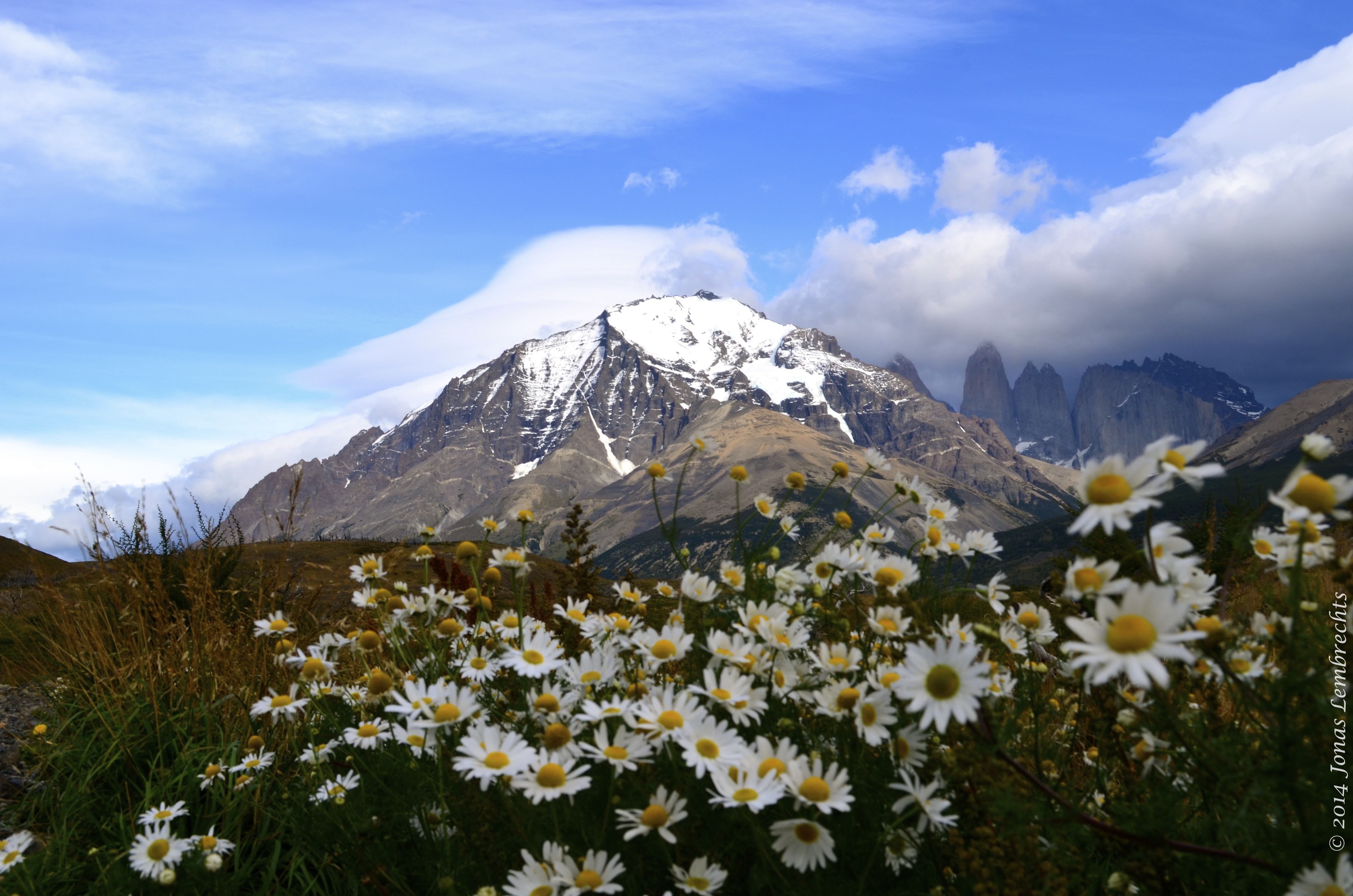
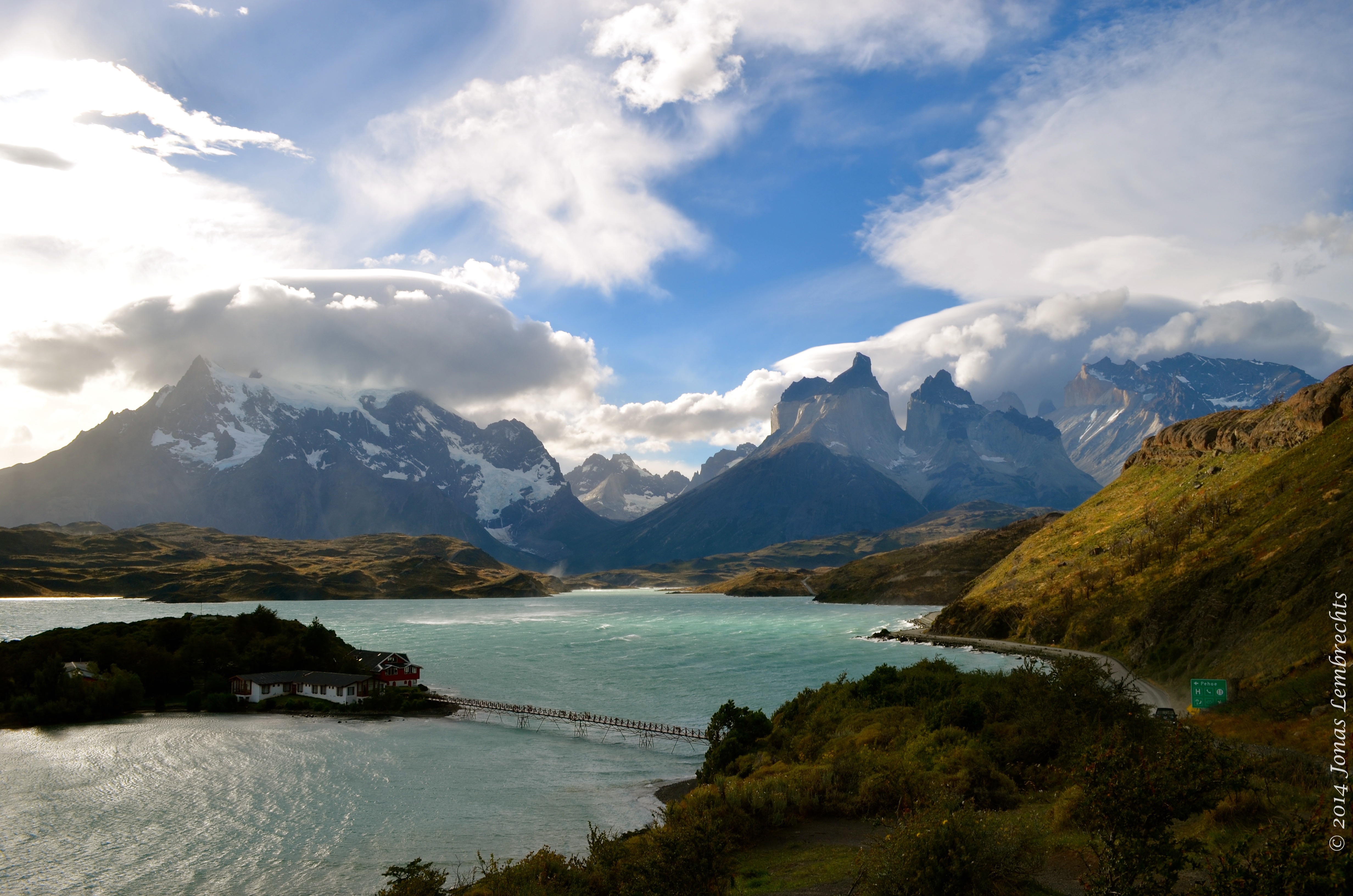
Torres del Paine

Our climate is changing, that much is clear. The main effect of this changing climate is that what once was balancing now starts shifting. As if our little world became a plate full of beer pulls, losing its balance on the shaking hands of an inexperienced innkeeper. One of the most obvious effects of climate change on plant and animal life is visualised in the shifting geographical ranges of many  species.

Scientists have been hunting for these range shifts for years, resulting in a growing pile of scientific papers on the matter. Case after case, the hypothesis is clear: the climate is warming, so species will follow the track of these increasing temperatures: uphill and to higher latitudes, towards the arctic and alpine world. Indeed, more and more longterm experiments and observations bring exactly those patterns to light. These results are accompanied by the worrying message that the original inhabitants species of the invaded cold environments themselves don’t have anywhere to go.

Invasive plants like this chamomile in the Chilean Andes hike surprisingly fast uphill.

As the proof of this invasion of heat-loving species adds up and the risk for the alpine and arctic vegetation becomes more apparent, it is easy to forget that some species might act opposite of our expectations. An important amount of species indeed seems to hurry uphill, but an as important (albeit smaller) group in the meantime moves downwards, against all odds.

On a steep slope, going downhill might just be a lot easier than going up.

For years, this lasts group has been pushed aside as a mere statistical side effect, nothing more than noise on the data, the inevitable variance around a positive average. Concluding as such however ignores the importance of this group of species. Climate change includes more effects than only this warming trend. Not only temperatures change, but the climatic water balance undergoes drastic alterations as well. In several dry areas, precipitation patterns might even be more influential than the warming effect. In that case, those changing precipitation levels can unexpectedly push species downhill, in a hunt for similar climatic conditions.

In the mountains, water often plays an as important role as temperature.

There are alternative explanations for these patterns as well. A lot of species are for example not limited by the climate at the warm side of their distribution. They only taste defeat due to competition with faster growing species. As a result of the changing climate, however, those competitive dominances start shifting, which creates new opportunities at these lower range edges.

Many mountain plants have a large dispersal potential, as they can rely on the omnipresent winds.

Bottom-line is that most effects in ecology might and will be in different directions at once. As a scientist, it is important to keep this in mind and give the unexpected minority the attention it deserves. I stumbled on this story when I was looking at the expected distribution shifts of invasive species in the mountains. The lesson is clear: better not forget to look downhill once!

DSC_0382

I hope to bring you more on that matter as soon as some more stories make it through the review process. Until then, all the cool action is going on here!

Two relevant reads:

Crimmins, S. M., Dobrowski, S. Z., Greenberg, J. A., Abatzoglou, J. T. & Mynsberge, A. R. (2011) Changes in Climatic Water Balance Drive Downhill Shifts in Plant Species’ Optimum Elevations. Science, 331, 324-327. (here)

Lenoir, J., Gegout, J.-C., Guisan, A., Vittoz, P., Wohlgemuth, T., Zimmermann, N. E., Dullinger, S., Pauli, H., Willner, W. & Svenning, J.-C. (2010) Going against the flow: potential mechanisms for unexpected downslope range shifts in a warming climate. Ecography, 33, 295-303. (here)

January 22, 2015

I’ll talk politics with climate change deniers – but not science Updated for 2026


There are many complex reasons why people decide not to accept the science of climate change. The doubters range from the conspiracy theorist to the sceptical scientist, or from the paid lobbyist to the raving lunatic.

Climate scientists, myself included, and other academics have strived to understand this reluctance. We wonder why so many people are unable to accept a seemingly straight-forward pollution problem.

And we struggle to see why climate change debates have inspired such vitriol.

These questions are important. In a world increasingly dominated by science and technology, it is essential to understand why people accept certain types of science but not others.

In short, it seems when it comes to climate change, it is not about the science but all about the politics.

Risky business

Back in the late 1980s and early 1990s differing views on climate science were put down to how people viewed nature: was it benign or malevolent? In 1995 leading risk expert John Adams suggested there were four myths of nature, which he represented as a ball on different shaped landscapes.

  1. Nature is benign and forgiving of any insults that humankind might inflict upon it and it does not need to be managed.
  2. Nature ephemeral. Nature is fragile, precarious, and unforgiving and environmental management must protect nature from humans.
  3. Nature perverse/tolerant. Within limits, nature can be relied upon to behave predictably and regulation is required to prevent major excesses.
  4. Nature capricious. Nature is unpredictable and there is no point to management.

Different personality types can be matched on to these different views, producing very different opinions about the environment. Climate change deniers would map on to number one, Greenpeace number two, while most scientists would be number three. These views are influenced by an individual’s own belief system, personal agenda (either financial or political), or whatever is expedient to believe at the time.

However, this work on risk perception was ignored by mainstream science because science up to now operates on what is called the knowledge deficit model. This suggests that people do not accept the science because there is not enough evidence; therefore more needs to be gathered.

Scientists operate in exactly this way, and they assume wrongly the rest of the world is equally rational and logical. It explains why over the past 35 years a huge amount of work gone into investigating climate change.

However – despite many thousands of pages of IPCC reports – the weight of evidence argument does not seem to work with everyone.

No understanding of science?

At first failure of the knowledge deficit model was blamed on the fact that people simply did not understand science, perhaps due to a lack of education.

This was exacerbated as scientists from the late 1990s onwards started to be drawn into discussions about whether people believed or did not believe in climate change.

The use of the word ‘belief’ is important here, as it was a direct jump from the American-led argument between the science of evolution and the belief in creation.

But we know that science is not a belief system. You cannot decide that you believe in penicillin or the principles of flight while at the same time disbelieve humans evolved from apes or that greenhouse gases can cause climate change.

This is because science is an expert trust-based system that is underpinned by rational methodology that moves forward by using detailed observation and experimentation to constantly test ideas and theories.

It does not provide us with convenient yes/no answers to complex scientific questions, however much the media portrayal of scientific evidence would like the general public to ‘believe’ this to be true.

It’s all about the politics

However, many who deny climate change is an issue are extremely intelligent, eloquent and rational. They would not see the debate as one about belief and they would see themselves above the influence of the media.

So if the lack of acceptance of the science of climate change is neither due to a lack of knowledge, nor due to a misunderstanding of science, what is causing it?

Recent work has refocused on understanding people’s perceptions and how they are shared, and as climate denial authority George Marshall suggests these ideas can take on a life of their own, leaving the individual behind.

Colleagues at Yale University developed this further by using the views of nature shown above to define different groups of people and their views on climate change. They found that political views are the main predictor of the acceptance of climate change as a real phenomenon.

This is because climate change challenges the Anglo-American neoliberal view that is held so dear by mainstream economists and politicians. Climate change is a massive pollution issue that shows the markets have failed and it requires governments to act collectively to regulate industry and business.

In stark contrast neoliberalism is about free markets, minimal state intervention, strong property rights and individualism. It also purports to provide a market-based solution via ‘trickle down’ enabling everyone to become wealthier.

But calculations suggest to bring the incomes of the very poorest people in the world up to just $1.25 per day would require at least a 15 times increase in global GDP. This means huge increases in consumption, resource use and of course, carbon emissions.

It’s easier to deny climate change, than to deny our own ideologies

So in many cases the discussion of the science of climate change has nothing to do with the science and is all about the political views of the objectors. Many perceive climate change as a challenge to the very theories that have dominated global economics for the last 35 years, and the lifestyles that it has provided in developed, Anglophone countries.

Hence, is it any wonder that many people prefer climate change denial to having to face the prospect of building a new political (and socio-economic) system, which allows collective action and greater equality?

I am well aware of the abuse I will receive because of this article. But it is essential for people, including scientists, to recognise that it is the politics and not the science that drives many people to deny climate change.

This does mean, however, that no amount of discussing the ‘weight of scientific evidence’ for climate change will ever change the views of those who are politically or ideologically motivated.

Hence I am very sorry – but I will not be responding to comments posted concerning the science of climate change but I am happy to engage in discussion on the motivations of denial.


Mark Maslin is Professor of Climatology at University College London.

This article was originally published on The Conversation. Read the original article.

The Conversation


388305

I’ll talk politics with climate change deniers – but not science Updated for 2026


There are many complex reasons why people decide not to accept the science of climate change. The doubters range from the conspiracy theorist to the sceptical scientist, or from the paid lobbyist to the raving lunatic.

Climate scientists, myself included, and other academics have strived to understand this reluctance. We wonder why so many people are unable to accept a seemingly straight-forward pollution problem.

And we struggle to see why climate change debates have inspired such vitriol.

These questions are important. In a world increasingly dominated by science and technology, it is essential to understand why people accept certain types of science but not others.

In short, it seems when it comes to climate change, it is not about the science but all about the politics.

Risky business

Back in the late 1980s and early 1990s differing views on climate science were put down to how people viewed nature: was it benign or malevolent? In 1995 leading risk expert John Adams suggested there were four myths of nature, which he represented as a ball on different shaped landscapes.

  1. Nature is benign and forgiving of any insults that humankind might inflict upon it and it does not need to be managed.
  2. Nature ephemeral. Nature is fragile, precarious, and unforgiving and environmental management must protect nature from humans.
  3. Nature perverse/tolerant. Within limits, nature can be relied upon to behave predictably and regulation is required to prevent major excesses.
  4. Nature capricious. Nature is unpredictable and there is no point to management.

Different personality types can be matched on to these different views, producing very different opinions about the environment. Climate change deniers would map on to number one, Greenpeace number two, while most scientists would be number three. These views are influenced by an individual’s own belief system, personal agenda (either financial or political), or whatever is expedient to believe at the time.

However, this work on risk perception was ignored by mainstream science because science up to now operates on what is called the knowledge deficit model. This suggests that people do not accept the science because there is not enough evidence; therefore more needs to be gathered.

Scientists operate in exactly this way, and they assume wrongly the rest of the world is equally rational and logical. It explains why over the past 35 years a huge amount of work gone into investigating climate change.

However – despite many thousands of pages of IPCC reports – the weight of evidence argument does not seem to work with everyone.

No understanding of science?

At first failure of the knowledge deficit model was blamed on the fact that people simply did not understand science, perhaps due to a lack of education.

This was exacerbated as scientists from the late 1990s onwards started to be drawn into discussions about whether people believed or did not believe in climate change.

The use of the word ‘belief’ is important here, as it was a direct jump from the American-led argument between the science of evolution and the belief in creation.

But we know that science is not a belief system. You cannot decide that you believe in penicillin or the principles of flight while at the same time disbelieve humans evolved from apes or that greenhouse gases can cause climate change.

This is because science is an expert trust-based system that is underpinned by rational methodology that moves forward by using detailed observation and experimentation to constantly test ideas and theories.

It does not provide us with convenient yes/no answers to complex scientific questions, however much the media portrayal of scientific evidence would like the general public to ‘believe’ this to be true.

It’s all about the politics

However, many who deny climate change is an issue are extremely intelligent, eloquent and rational. They would not see the debate as one about belief and they would see themselves above the influence of the media.

So if the lack of acceptance of the science of climate change is neither due to a lack of knowledge, nor due to a misunderstanding of science, what is causing it?

Recent work has refocused on understanding people’s perceptions and how they are shared, and as climate denial authority George Marshall suggests these ideas can take on a life of their own, leaving the individual behind.

Colleagues at Yale University developed this further by using the views of nature shown above to define different groups of people and their views on climate change. They found that political views are the main predictor of the acceptance of climate change as a real phenomenon.

This is because climate change challenges the Anglo-American neoliberal view that is held so dear by mainstream economists and politicians. Climate change is a massive pollution issue that shows the markets have failed and it requires governments to act collectively to regulate industry and business.

In stark contrast neoliberalism is about free markets, minimal state intervention, strong property rights and individualism. It also purports to provide a market-based solution via ‘trickle down’ enabling everyone to become wealthier.

But calculations suggest to bring the incomes of the very poorest people in the world up to just $1.25 per day would require at least a 15 times increase in global GDP. This means huge increases in consumption, resource use and of course, carbon emissions.

It’s easier to deny climate change, than to deny our own ideologies

So in many cases the discussion of the science of climate change has nothing to do with the science and is all about the political views of the objectors. Many perceive climate change as a challenge to the very theories that have dominated global economics for the last 35 years, and the lifestyles that it has provided in developed, Anglophone countries.

Hence, is it any wonder that many people prefer climate change denial to having to face the prospect of building a new political (and socio-economic) system, which allows collective action and greater equality?

I am well aware of the abuse I will receive because of this article. But it is essential for people, including scientists, to recognise that it is the politics and not the science that drives many people to deny climate change.

This does mean, however, that no amount of discussing the ‘weight of scientific evidence’ for climate change will ever change the views of those who are politically or ideologically motivated.

Hence I am very sorry – but I will not be responding to comments posted concerning the science of climate change but I am happy to engage in discussion on the motivations of denial.


Mark Maslin is Professor of Climatology at University College London.

This article was originally published on The Conversation. Read the original article.

The Conversation


388305

Low Updated for 2026

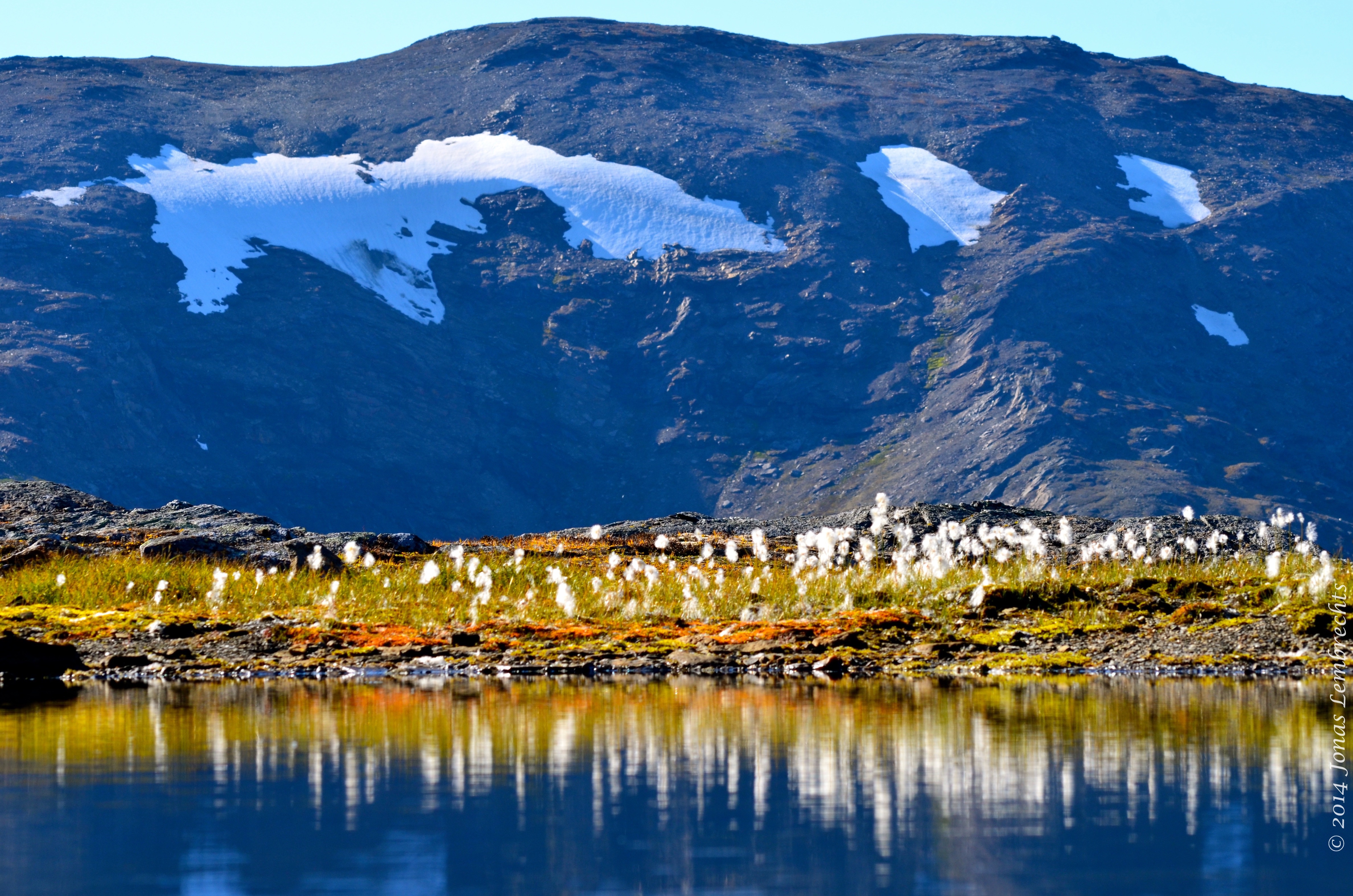
Cotton grass on the shore of a lake

In a previous post, I wrote about the power of photography for ecologists. Now, it is time to provide some real tips for photographing ecologists. How to take home some pictures that will impress others, without – importantly – losing any working time?

Cotton grass on the shore of a lake

Most ecologists will take a camera into the field anyway. It is used to take pictures of their research site or subject, or record some important details for later. As you already have your camera in your hand, it will not cost you too much effort to take just one more picture.

Autumn seeds in Lapland

In that case, it might be a smart idea to get a little bit lower, up to the level of your study object, to check the world from its point of view.

Mountain mushroom

The combination of integrating your study object in the landscape and letting it stand out of the background results in more interesting images. It makes it possible for an observer to feel a connection with the subject and it makes the picture tell a much more interesting story.

Hiking in the Swedish mountains

Even if your study object is a dull bird or a boring plant, getting on its level will bring out the best in it and give it a soul.

House sparrow

If possible, try to include the horizon in the picture. It will ask a lot more of your knees, but the rewards are big. As the (obviously real) Lappish proverb goes: ‘A beautiful horizon can even make a dead lemming look poetic’.

Dead lemming on a rock

I did not invest too much time in getting a nice overview of my study species, the invasive plants in my plots. An awfully difficult subject for an artist, I have to admit, but by quickly spending two minutes as a photographer before you dive into the science, might have been rewarding even in this case.

Experimental plot

Take home message: low! Take your pictures from a low angle and give their stories a boost!

Achillea millefolium

 Want more from Jonas Lembrechts?

October 3, 2014

The photographing ecologist Updated for 2026

Plant in its natural environment

Photography is classified as art, ecology is science. Two distinct worlds that only very rarely show some overlap. I am however convinced that a combination of both disciplines could be very fruitful. Being a photographing ecologist, or ecological photographer not only gives artistic satisfaction, but it can also be a serious addition to your science.

Although taking pictures on a busy fieldwork day might feel like a waste of precious time, it can be really valuable to assign some minutes in the field to photography and make sure you are familiar with at least the basic skills of the art.

Overview of the plot

Inevitably, there will be a moment where you have to present your work: posters, powerpoint presentations, or just to a supervisor in the lab. The saying that one image is better than a 1000 words might be getting old, but it still holds true, a thing every scientist probably realizes when working on his slides.


Pictures for future reference

It might be common sense to spend at least five minutes of your working time in the field to photograph field sites, measuring methods and environmental characteristics, for your own reference or other peoples imagination. But it would even be better if you added another five minutes to the first five to zoom in on some details.

Plot on 1000 meters height, Abisko

Change the viewpoint and try to catch your field site in its environment. The lower scientific value is replaced by an aesthetic one. Or get some of your study species into focus…Plant in its natural environment

It is pretty obvious that a beautiful picture makes every story more attractive. If you want to convince the non-scientific world of the importance of your research, a catching picture will increase your impact factor a thousandfold (and I promise you, journalists are great at choosing the most irrelevant ones if you leave that task to them).

Hiking to the fieldwork

Even for the scientific public, however, a catchy picture will improve the results and the scope. No matter how interesting your story, nice illustrations will keep a larger audience awake during your presentation, and attract more people to your posters. Just give them those few seconds relief from the interesting but tiring statistical theories!

Plot for scale in the mountains

To finish, never forget the power of stories. Science is more than only the results and the 2 or 3 papers that come out of it. The process, arguably the largest part of the work, and the impressive, exotic, adventurous stories resulting from them can help enhancing the public’s understanding and appreciation of your research every day of the year. A photographic diary of your field trip might raise a lot more interest than all your scientific papers combined.

Angry lemming in the plot


Biology is a foreign discipline to a large part of the population. They do not have a clue about how our scientific statements come into existence. They will be surprised about the complexity of the scientific process, and the variation, excitement and attractiveness of ecological fieldwork. Scientific information will follow on the way. Enjoying the scenery at Torneträsk Lake, Abisko

This should make the importance of the use of photography as a powerful tool in science obvious. Let us thus all pack a camera as indispensable fieldwork gear in the future and revive our artistic alter ego’s. In some future posts, I will cover a set of useful skills to make those few artistic minutes as efficient as possible, so with only 3 or 4 clicks, you can get the best results out of your camera.

Jonas Lembrechts balances between being an ecological photographer and a photographing ecologist on his way to a PhD in mountain ecology. Follow his adventures here!

September 22, 2014