Tag Archives: Animals

Frugivores and seed dispersal Updated for 2026

Everyone who likes to spend some time in nature, or who has trees at home, knows that several animals love to feed on fruits. Figs, tomatoes, peppers, guavas, mangos, bananas, and many other delicacies are harvested by frugivores that range from tiny bats to huge elephants.

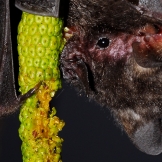
Those animals render the plants a service known as seed dispersal: in other words, they carry their seeds away and so increase the chances of their offspring surviving attacks by natural enemies, establishing, and colonizing new sites. This myriad of interactions forms a tangled web of frugivores and fruits, which is vital to maintain and regenerate forests and other natural ecosystems. Some frugivores seem to be more important than others to keep those webs functioning. In our study “Keystone species in seed dispersal networks are mainly determined by dietary specialization”, focused on bats and birds, the main groups of seed dispersers in the Neotropics, we found out that, even though animals with other kinds of primary diets participate in seed dispersal networks, specialized frugivores are the keystones of those systems and hold them together. This finding may help plan for the conservation and restoration of seed dispersal in degraded areas, and also provide insights on how to accelerate the regeneration of tropical rainforests and savannas.

Marco A.R. Mello and co-authors

barro colorado island - bat-fruit network (marco mello) 2 barro colorado island - bat-fruit network (marco mello)

The exotic pet trade is a global evil that must be stopped Updated for 2026


For three decades I have worked as a scientist traversing swamps, deserts and forests tracking wildlife hunters as they scour to catch diverse animals for their sacks and boxes. From this moment on, the meter of destruction is already running.

Next, the hunters’ swag is readied for a new and commonly shortened life in captivity as part of the growing international market for unusual pets.

Unfortunately, despite shuffling tons of trade permits – many of which can be obtained illegally – few, if any, civil servants, CITES (the Convention on International Trade in Endangered Species of Wild Fauna and Flora) managers or other so-called ‘competent authorities’ ever physically enter the hard end of the wildlife trade to witness, let alone control, the destruction.

CITES aims to ” … ensure that international trade in endangered species of plants and animals is sustainable.” Not only are CITES’ aims and achievements somewhat fanciful, but in my experience CITES is often a mere tool for wildlife traders.

Investigate the sources of trade and you will find no controllers, no scientific observers, just exploiters. Anyway, 25% of trade is thought illegal – hardly well under control. Safe ‘sustainable’ trade is mostly a myth.

Lengthy scientific articles now regularly chronicle the harm inherent to trading wild animals as pets. Just one review this year published in the prestigious journal Conservation Biology concluded:

“International trade in exotic pets is an important and increasing driver of biodiversity loss and often compromises the standards required for good animal welfare; one-fifth of recent wildlife trade reports were driven by demand for pets or animals for use in entertainment; unsustainable harvest of wild animals for the pet trade has already led to population decline and collapse for many species; animal welfare is compromised to some extent at all stages of the exotic pet trade; legality of trade does not guarantee its sustainability; many of the species traded as pets are threatened.”

Trade thrives, controls fail.

Poor welfare worsens conservation and ecological threats

Little, if anything, that happens in the exotic pet industry is irrelevant to ecology. For instance, poor (more accurately disastrous) animal welfare affects species conservation and thence ecology because high mortality rates prompt raised compensatory collection and repeat purchases – expensive vivariums need occupants!

According to WWF and an article in The Ecologist, mortality for wild-caught marine fish is approximately 80% pre-sale. Mortality rates on pet fish ‘farms’ are unclear, but the end result is shocking anyway.

The UK alone imports around 40 million pet fish annually (marine and freshwater) and almost all die prematurely within a year. Reptile trading is another example where destructive collection, breeding and storage lead to an industry-standard presale mortality of 70% within just six.

Die-off between pet retailer and the home is 81% in a year. The aquarium and reptile industry manifests nearly the same lethality as a slaughterhouse.

Survivors are often troublesome to their keepers and released into the local habitat where they may become invasive. At least 51 types of released reptile and amphibian live wild around London alone. Controlling European invasives costs over €12.5 billion annually and the bill is rising fast.

Every imported or released exotic animal is arguably a Trojan horse harbouring a potential suite of novel pathogens that could impact on human health or agricultural livestock.

At least 70 pet-linked human diseases exist as well as a growing raft of threats to industry such as avian influenza to poultry and the degenerative illness ‘heartwater’ – which could rapidly wipe out cattle farming.

Indigenous wildlife is not immune to introduced disease, as demonstrated by the chytridiomycosis pandemic linked to released pets, which is rampaging through wild amphibian populations.

The irony!

Make no mistake, the international pet trade involves stealing other ecosystems’ wildlife, stuffing it into containers, and shipping it around the world to face a likely stress-laden and foreshortened unnatural life in a small cage in someone’s lounge.

One cannot help but wonder how the British or any other nation’s public would react to viewing one of their favourite indigenous species – be it barn owl, bank vole, or red squirrel – ripped from our own countryside, bundled into bags, crammed into carriers and sent worldwide where they will unlikely arrive ship-shape.

Fortunately, witnessing such destruction in Britain is improbable, because our own wildlife is very well protected. In the UK, and elsewhere, one must commonly obtain a local authority licence to fish at a river, and caught fish are typically promptly returned to their natural habitat.

The Wildlife and Countryside Act 1981 determines that no British birds can be legally caught and sold or kept as pets, and both UK and European law leaves very little room for any wild animal to be treated as a pet commodity.

Not only does the UK government protect its indigenous wildlife, but it is also opposed even to the concept of capturing and selling it as ‘would-be exotic pets’ to other countries – it states: “We are not aware that unprotected native wild animals are routinely being captured from the wild and sold abroad as pets and would discourage any such activity.”

One cannot, however, ignore the tragic irony that whilst the UK takes such good care of its own house and even opposes the mere principle of siphoning off its wildlife, it continues to be one of the major consumers of other nations’ biodiversity and consequently erodes ecosystems worldwide.

Conclusions

Trading in exotic pets is an unethical and archaic concept surviving extinction not by merit but by fortuitous commercial biases inherent to the policies of government departments.

Governments do not entertain guidance on trade policy from drug dealers or people traffickers, yet they accommodate the vested and harmful interests of pet dealers and wildlife traffickers.

In particular, it is the obfuscation, obstruction and incompetence of trade-mollycoddling civil servants that stifles both the solid evidential arguments of the scientific community as well as the sincere efforts of the seemingly increasing number of ‘eco-aware’ parliamentarians.

The exotic pet industry is a pernicious force incompatible with good ecological, animal welfare and public health practices. It hides in plain sight rooted behind the sanitized façade of pet stores and the front doors of private homes, quietly facilitated by trade-permissive legislation.

Long overdue is the need to haul this industry’s modern-day dark-age habits to face the cleansing light of scientific scrutiny, neo-political good will, and common sense morals.

Evidential and ethical arguments overwhelmingly justify a complete ban on trading exotic animals as pets. Already available, however, are so-named ‘positive lists’ – which turn the historical ‘free trade’ concept around and stipulate ‘no trade until proven safe’.

This approach offers a pro-active and not reactive opportunity to favour wildlife over the deepening pockets of pet peddlers. But so long as the exotic pet trade continues, its maleficence will persist to the detriment of animals, humans and the world in which we live.


Clifford Warwick PGDipMedSci CBiol CSci EurProBiol FOCAE FSB is a Consultant Biologist & Medical Scientist.

For more information please contact the Animal Protection Agency.

Sources with links

[1] http://onlinelibrary.wiley.com/doi/10.1111/cosbi.12240/abstract

Bush, ER., Baker, S.E. and Macdonald, D.W. (2013) Global Trade in Exotic Pets 2006-2012. Conservation Biology, Volume 28, No. 3, 663-676 (Nijman & Shepherd 2009; Lyons & Natusch 2011).

[2] http://news.mongabay.com/2013/1022-millar-aquarium-trade-deaths.html

98% of marine fish headed for the aquarium trade die within a year in the Philippines.

[3] http://www.theecologist.org/News/news_analysis/2523460/the_dark_side_of_hawaiis_aquarium_trade.html

The dark side of Hawaii’s aquarium trade.

[4] http://www.tandfonline.com/doi/abs/10.1080/10888705.2014.918511#.VFu43CjCGQI

Ashley, S., Brown, S., Ledford, J., Martin, J., Nash, A E., Terry, A., Tristan, T. & Warwick, C. (2014) Morbidity and mortality of invertebrates, amphibians, reptiles and mammals at a major exotic companion animal wholesaler. Journal of Applied Animal Welfare Science, 17:1-14. DOI:10.1080/10888705.2014.918511.

[5] http://www.cieh.org/jehr/default.aspx?id=41594

Warwick, C., Arena, P.C., Steedman, C. and Jessop, M. (2012) A review of captive exotic animal-linked zoonoses. Journal of Environmental Health Research, 12:9-24

[6] https://www.savethefrogs.com/threats/frog-legs/images/Schloegel-2009-US-Markets.pdf

Magnitude of the US trade in amphibians and presence of Batrachochytrium dendrobatidis and ranavirus infection in imported North American bullfrogs (Rana catesbeiana) Schloegel, L.M., Picco, A.M., Marm Kilpatrick, A., Davies, A.J., Hyatt, A.D, Daszak, P. Biological Conservation 142 (2009) 1420-1426.

Sources without links

Langton, T. E. S., Atkins, W., & Herbert, C. (2011). On the distribution, ecology and management of non-native reptiles and amphibians in the London area. Part 1. Distribution and predator/prey impacts. The London Naturalist, 90, 83-156.

Shine, C., Kettunen, M., Genovesi, P., Essl, F., Gollasch, S., Rabitsch, W., ten Brink, P. (2010). Assessment to support continued development of the EU strategy to combat invasive alien species. Final Report for the European Commission. Brussels, Belgium: Institute for European Environmental Policy.

Toland, E, Warwick, C., & Arena, P.C. (2012) The exotic pet trade: pet hate. The Biologist 59(3);14-18.



386587

Low Updated for 2026

Cotton grass on the shore of a lake

In a previous post, I wrote about the power of photography for ecologists. Now, it is time to provide some real tips for photographing ecologists. How to take home some pictures that will impress others, without – importantly – losing any working time?

Cotton grass on the shore of a lake

Most ecologists will take a camera into the field anyway. It is used to take pictures of their research site or subject, or record some important details for later. As you already have your camera in your hand, it will not cost you too much effort to take just one more picture.

Autumn seeds in Lapland

In that case, it might be a smart idea to get a little bit lower, up to the level of your study object, to check the world from its point of view.

Mountain mushroom

The combination of integrating your study object in the landscape and letting it stand out of the background results in more interesting images. It makes it possible for an observer to feel a connection with the subject and it makes the picture tell a much more interesting story.

Hiking in the Swedish mountains

Even if your study object is a dull bird or a boring plant, getting on its level will bring out the best in it and give it a soul.

House sparrow

If possible, try to include the horizon in the picture. It will ask a lot more of your knees, but the rewards are big. As the (obviously real) Lappish proverb goes: ‘A beautiful horizon can even make a dead lemming look poetic’.

Dead lemming on a rock

I did not invest too much time in getting a nice overview of my study species, the invasive plants in my plots. An awfully difficult subject for an artist, I have to admit, but by quickly spending two minutes as a photographer before you dive into the science, might have been rewarding even in this case.

Experimental plot

Take home message: low! Take your pictures from a low angle and give their stories a boost!

Achillea millefolium

 Want more from Jonas Lembrechts?

October 3, 2014

Save the free beavers of England! Updated for 2026


After an absence of more than two centuries, wild beavers have returned to Britain. For me that is an exciting thing to say.

At first they reappeared in Scotland – through escapees in Perthshire and an official reintroduction programme in Argyll. Now they are in England too, living and breeding on the River Otter in Devon.

Like most people I was thrilled when I heard the news. An iconic species was returning, enhancing biodiversity and enriching our environment. And it was happening with minimal fuss. or trouble.

Sadly, not everyone has seen it that way. The response from the government and some special interest groups has been depressingly familiar.

The animals they say, are a threat. They will harm fish stocks, they could carry disease. And, just to make it final, they have been gone too long. The landscape has changed too much. We cannot live together.

Across Europe, people and beavers mix

None of this is true. In virtually every country in Europe people and beavers manage to live side by side. These are not animals which require true wilderness but a species which live happily in modern agricultural landscapes.

They bring many benefits – enhancing fish stocks, increasing biodiversity and helping with flood prevention. There is a reason there have been 157 beaver reintroductions across the continent.

Despite this DEFRA, egged on by a few lobbyists, announced in early summer that it was planning to capture the beavers and “rehome” them. That could mean only one thing, a life in captivity and no more beavers in the wild. The uproar that followed was predictable. Columns were written, petitions were signed and local action groups came together.

In the weeks since, everything has gone quiet. Yet behind the scenes it seems preparations are still continuing to catch the animals.

There are rumours that traps have been ordered and moved into the area. Locals fear that the capturing could begin as soon as October.

Removing the population from the wild may be illegal

Friends of the Earth does not work much with beavers, and we do not run nature reserves in the UK, but we do know about the law, and in this case it seems to be very much on the beaver’s side.

The European Habitat Directive, a piece of law the UK agreed to, sets out clear rules for the protection of native species. The beaver is listed in Annex IV, and for these species Article 12 prohibits

  • all forms of deliberate capture or killing of specimens of these species in the wild;
  • deliberate disturbance of these species, particularly during the period of breeding, rearing, hibernation and migration;
  • deliberate destruction or taking of eggs from the wild;
    deterioration or destruction of breeding sites or resting places.its capture or killing in the wild.

It also obliges the government to establish a system of strict protection for all Annex IV animals.

The fact that the animals are not listed in the UK’s domestic regulations, due to the fact that they have been absent for some time, does not matter provided that the beavers are within their natural range.

And they are.

European beavers (Castor fiber) were once common throughout the continent and were found in almost every region, including Great Britain, where they were widespread, occurring right across the island.

Archaeological remains have been discovered from Cornwall to the North of Scotland. There are towns named after them. They are a recognised component our river systems. Natural England, the body that will no doubt be tasked with overseeing their removal, recognises this.

Netherlands, France, Belgium – so why not England?

Just as importantly, the modern British landscape is a perfect example of the kind of modern habitats they thrive in. In its 2009 feasibility study on reintroducing beavers to England, Natural England stated that it was ‘evident that many if not most of England’s rivers would provide suitable habitat to support beavers’.

The physical characteristics of the River Otter match the criteria they laid out. That there are beavers living and breeding there proves it.

The fact too that the beavers have just recently arrived is likely to be irrelevant. The concept of natural range outlined in the Directive is not static, and the guidance makes it clear that where the animals spread to a new area, that area must be considered part of its natural range.

Even if the beavers on the River Otter are escapees, this is no reason to consider them as being beyond their natural range. Indeed, the return of the beavers to England is just the latest stage in a process that has seen them rebound all over their territories.

From a population of just over a thousand a hundred years ago, they are now found in over 30 countries, including some of the UK’s nearest neighbours in the Netherlands, France and Belgium. Beavers have been seen swimming in the sea off Kent, and of course there are already populations in Scotland.

Little threat of disease

The Habitats Convention’s Article 16 does provide a let out that could, in specified circumstances, allow trapping. ‘Derogations’ from Article 12 may be permitted, for example:

  • in the interest of protecting wild fauna and flora and conserving natural habitats;
  • to prevent serious damage, in particular to crops, livestock, forests, fisheries and water and other types of property;
  • in the interests of public health and public safety, or for other imperative reasons of overriding public interest;
  • for the purpose of research and education, of repopulating and re-introducing these species and for the breedings operations necessary for these purposes.

Perhaps that’s what Lord de Mauley had in mind when he wrote a letter to the Angling Trust, raising the spectre that the animal might be carrying disease as a reason to catch them.

But this is a red herring. The disease in question, Echinococcus multilocularis, cannot be transmitted simply from beaver to beaver. In any case it can be easily tested for.

If the beavers living on the river were found to be free from disease, as they almost certainly are, it would be unjustifiable, disproportionate and potentially unlawful not to re-release them back onto the Otter, precisely because they are protected by the Directive.

As for the other circumstances provided in Article 16, DEFRA would be hard to argue that trapping the beavers was a matter of public health and safety, overriding public interest, or preventing serious damage.

None of the let outs appear to apply in this case where the beavers are causing no problems to anyone, and can only enhance the quality of wildlife habitat.

Community support

When the Scottish government tried to get rid of the wild beavers the community rallied round, eventually creating enough fuss for the issue to be dropped.

In Devon too everyone from farmers to shopkeepers to local councillors has spoken out in favour of the continued presence of the beavers.

It is still not too late. It is not clear how much the government really wants to catch these animals. By raising our concerns, we hope that DEFRA will realise that its actions will not just be unpopular, but potentially illegal.

We are not saying that our countryside should become a free-for all, but rather that we should take this opportunity to stop and think and work out the best way forward.

In the future beavers may need to be controlled, and the Habitats Directive allows this where genuinely necessary. We fully accept that and there are people who know how to do this.

At a time when so many species are under threat, and where the loss of biodiversity has become so constant that it almost loses its meaning, the ability to see a native species re-establish itself is a privilege, and one we should not give up lightly.


Alasdair Cameron is a wildlife campaigner with Friends of the Earth.

Action


370112