Tag Archives: plants

Move over big power – the micropower revolution is here! Updated for 2026


There is no shortage of shouting and dire warnings about the state of the climate and our need to phase out fossil fuels. But there is a more silent revolution happening too – in micropower.

Small-scale electricity generation is slowly replacing big fossil-fuel driven power plants, which are currently the world’s single largest contributor to greenhouse gas emissions.

These micro-electricity producers are relatively small scale, inexpensive, and most importantly, produce little to no carbon emissions. Last year micropower contributed to around a quarter of the world’s electricity, up from 10% in 2000.

What is micropower?

Rooftop solar may be the first thing that springs to mind, but micropower is much more than just solar panels on roofs. The definition of micropower can sometimes be confusing. Amory Lovins and his coauthors discuss this in The Economist‘s 2002 book of the year Small Is Profitable and define micropower as all renewables except big hydro.

This definition of micropower thus includes wind farms, even though these can be quite large, because of the scalable (you can plant more or less wind turbines), rapidly deployable, and distributed nature of the individual units.

It does not, however, include hydropower plants larger than 50 megawatts or nuclear power plants, even though these are low- or no-carbon.

Most recently, the Rocky Mountain Institute has included industry sales data of cogeneration power plants in its analysis of micropower trends.

Cogeneration on the rise

In essence, cogeneration uses energy twice – once to produce electricity, and a second time as heat. It is often referred to as combined heat and power. By producing heat for buildings and houses, cogeneration is much more efficient than even thermal plants, which only generate electricity.

Cogeneration has risen dramatically in the past 15 years, but is often overlooked in estimates of energy production. It comes in a variety of forms and can even use waste gases from agriculture and industrial production.

An even more efficient process is sometimes called trigeneration, producing both heating and cooling. Have you ever seen those mysterious plumes of steam rising from manhole covers in New York, in films like Martin Scorcese’s Taxi Driver? Much of that steam comes from New York’s steam system, which is used to heat and cool buildings in Manhattan.

Trigeneration can convert as much as 93% of fuel into useful energy.

Although many cogeneration plants still rely on natural gas for power, they produces roughly 40% less greenhouse gas than a coal plant. While many environmentalists advocate an immediate switch to renewables, others argue that natural gas is providing a lower-carbon ‘bridge’ while the use of renewables can be scaled up.

Grids are going micro too

It’s not just power plants that are going micro. Micro-grids are being built all over the world, both to increase energy efficiency and to provide adaptable and resilient power in the case of major storms or natural disasters like Hurricane Sandy. This is particularly important as extreme weather events are likely to increase due to global warming.

These micro-grids, which typically incorporate renewables and cogeneration, are designed to be able to operate independently of the main power grid. If disaster strikes, they can produce islands of power to critical facilities such as police, fire services and hospitals.

While more than 260 such projects are planned or operating in the United States, Connecticut has become the first state to role out a statewide pilot. Micro-grids aren’t just helpful during natural disasters – they avoid long-distance transmission, so can reduce line energy losses which can reach as high as 20%.

Cities, and the way they are powered, will undoubtedly play a huge role in the transition to a sustainable and resilient energy future. New York has reduced its greenhouse gas emissions by 19% since 2005. This is partly from an increased use of cogeneration and natural gas, and upgraded city operations using cleaner vehicles.

In fact, while ‘going green’ often conjures up images of Arcadian off-grid living, New Yorkers have the smallest carbon footprint in America. They generate less than 30% of the average national emissions. Compact cities are more energy efficient for a host of reasons, and as many have pointed out, the way to a green future isn’t urban sprawl.

The central power plants that dominated the 20th century energy landscape are seeing their market share in energy generation fall rapidly. New power plants are becoming smaller, scale-able and more efficient, as renewables and cogeneration continue to increase their production share.

The past and future of micropower

In many ways the rapid growth of micropower is a back to the future scenario.

In 1882, Thomas Edison’s famous Pearl Street plant began generating heat and electricity for lower Manhattan. Natural Geographic has a wonderful explorable infographic about the way “power pulses, information flies, and steam flows” below the streets of New York.

Thomas Edison envisioned similar systems to provide local power and heat into the future. Power grids and centralised power plants changed all that, and the 20th century seemed to prove Edison wrong.

But clearly things have changed since then, as micro-power’s market share pushes upwards. Technological innovation, changes in energy production and extraction, and public concern over climate change and natural disasters have helped power the revolution.

We certainly aren’t in the clear yet, and the world desperately needs a global climate agreement. The future may still be cloudy, despite the groundbreaking deal between the US and China.

But the micropower revolution bodes well for a resilient, secure, and low-carbon energy future. Perhaps every cloud does have a silver lining.


Morgan Saletta is a Doctoral Candidate in History and Philosophy of Science at the University of Melbourne. A trained anthropologist and historian of science, his research interests include the Neolithic transition in Europe, transnational environmental history (particularly in the Pacific and Indian Ocean worlds), as well as the many interactions between science, technology and society. He does not work for, consult to, own shares in or receive funding from any company or organisation that would benefit from this article, and has no relevant affiliations.

This article was originally published on The Conversation. Read the original article.

The Conversation


383794

Sexual size dimorphism in island plants Updated for 2026

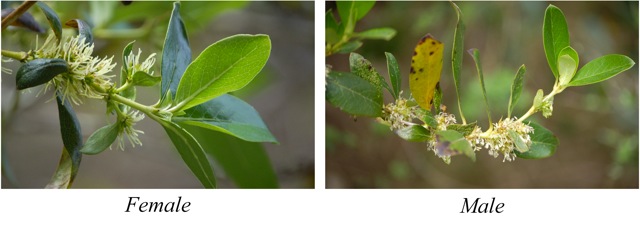
Variation in size between sexes is something that we associate mainly with animals. But what about plants? Do female plants have larger elves than males? Find out in the Early View paper in Oikos “Sexual size dimorphism in island plants: the niche variation hypothesis and insular size changes” by Patrick H. Kavanagh and Kevin C. Burns. below is their summary of the study:

Sexual size dimorphism (SSD) is common throughout the animal kingdom. Size differences between the sexes are often extreme and in many cases one sex may be twice the size of the other. While most plants are hermaphroditic, approximately 7% of flowering plants are dioecious (separate male and female individuals). SSD is also common in dioecious plants, yet has received far less attention than SSD in animals. The niche variation hypothesis predicts the degree of SSD to increase for insular populations as a response to increased intraspecific competition.   Many animal taxa conform to this prediction, however SSD of island plant populations had not been investigated.

Crobusta1

We investigated differences in SSD between related island and mainland plants by using herbarium material. Specifically, we quantified the sizes of leaves and stems for plants from the New Zealand mainland and surrounding offshore islands. Our results suggest that the degree of SSD is not predictable for island plants, contrary to predictions of the niche variation hypothesis. Furthermore, SSD was consistently female biased on the mainland, however the direction of SSD was not predictable on islands. Our results suggest that both sexes are under selection for increased size on islands. This may contribute to SSD being unpredictable due to the sexes responding to selection at different rates. However, further work is needed to gain a better understanding of SSD in island plant populations.


Caught in the middle: Plants get consumed more frequently at intermediately degraded sites Updated for 2026

Predicting herbivore intensity in disturbed habitats is not as easy as it might seem… Results were a bit surprising in “Land-use legacies and present fire regimes interact to mediate herbivory by altering the neighboring plant community” by Philip G. Hahn and John L. Orrock. Below is the author’s summary of the study:

The southeastern United States was once teaming with biodiversity in the sprawling, open pine savannas that stretched from Virginia to Texas. Post-settlement, these biodiversity hotspots were quickly reduced to less than 3% of their original extent, largely through conversion to agriculture and fire suppression. More recently, many agricultural fields have been abandoned and replanted with pine trees. Although these degraded woodlands harbor low levels of biodiversity, they offer tremendous potential to restore lost species. Particularly, ecologists know very little about interactions among plants and insects in these degraded ecosystems. Hypothetically, insect herbivores, such as grasshoppers, could be suppressing plant diversity in these post-agricultural woodlands by preferentially consuming more palatable remnant wildflowers that attempt to reestablish.

Hahn1

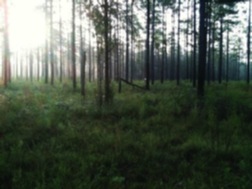
The sun rises over a rare remnant longleaf pine savanna, fueling a motley array of biological interactions.

We tested this idea by transplanting native plants into herbivore exclosures within longleaf pine stands on historic agricultural sites. In order to compare disturbed and undisturbed longleaf pine savannas, we also located several stands of remnant longleaf pine savanna. Because some of these stands experienced woody encroachment due to fire suppression, we crossed fire frequency with historical land use as a component of our experimental design. This created a gradient of degradation with either low or high fire frequency stands within post-agricultural or remnant woodlands.

After measuring herbivore density and herbivory rates on our experimental plants for a field season, we found that sites with low levels of plant cover supported small populations of herbivorous grasshoppers, which resulted in low herbivory rates on our experimental plants. These sites were usually degraded by historic agriculture and were extremely fire suppressed.

Hahn2

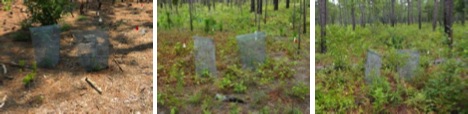
Sites representing the range of neighboring plant cover at our experimental sites. Insect exclosures or control cages (with holes) were placed over a set of experimental plants.


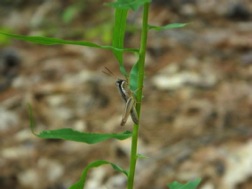
There were more grasshoppers at sites with extremely high levels of plant cover. Herbivory rates were expected to be higher at these sites because there were so many grasshoppers. As it turns out, herbivory rates were actually low because there were many more neighboring plants for grasshoppers to consume. In other words, high abundance of neighboring plants swamped out the negative effect of herbivory on the focal plants. These sites with low herbivory rates tended to be frequently burned remnant sites, meaning that remnant sites can support high populations of both plants and grasshoppers, while minimizing the negative effects that herbivores have on plants.

We found the greatest herbivory rates at intermediate levels of plant cover, where grasshoppers were also in intermediate abundance. These sites tended to historically be used for agricultural or were fire suppressed remnants. In other words, moderately degraded sites had the highest rates of herbivory.


Sites representing the range of neighboring plant cover at our experimental sites. Insect exclosures or control cages (with holes) were placed over a set of experimental plants.

Data being generated

By demonstrating that past and present human activities play a key role in present-day plant-herbivore interactions, our work has several important implications for basic and applied ecology. The findings provide a starting point to predict when and where herbivore density or neighboring plants will be important drivers of herbivory. The results also have implications for the recovery of biodiversity in post-agricultural lands and other systems affected by human disturbance by generating predictions about which habitat types will be more susceptible to herbivores.

Low Updated for 2026

Cotton grass on the shore of a lake

In a previous post, I wrote about the power of photography for ecologists. Now, it is time to provide some real tips for photographing ecologists. How to take home some pictures that will impress others, without – importantly – losing any working time?

Cotton grass on the shore of a lake

Most ecologists will take a camera into the field anyway. It is used to take pictures of their research site or subject, or record some important details for later. As you already have your camera in your hand, it will not cost you too much effort to take just one more picture.

Autumn seeds in Lapland

In that case, it might be a smart idea to get a little bit lower, up to the level of your study object, to check the world from its point of view.

Mountain mushroom

The combination of integrating your study object in the landscape and letting it stand out of the background results in more interesting images. It makes it possible for an observer to feel a connection with the subject and it makes the picture tell a much more interesting story.

Hiking in the Swedish mountains

Even if your study object is a dull bird or a boring plant, getting on its level will bring out the best in it and give it a soul.

House sparrow

If possible, try to include the horizon in the picture. It will ask a lot more of your knees, but the rewards are big. As the (obviously real) Lappish proverb goes: ‘A beautiful horizon can even make a dead lemming look poetic’.

Dead lemming on a rock

I did not invest too much time in getting a nice overview of my study species, the invasive plants in my plots. An awfully difficult subject for an artist, I have to admit, but by quickly spending two minutes as a photographer before you dive into the science, might have been rewarding even in this case.

Experimental plot

Take home message: low! Take your pictures from a low angle and give their stories a boost!

Achillea millefolium

 Want more from Jonas Lembrechts?

October 3, 2014

Radioactive spikes from nuclear plants – a likely cause of childhood leukemia Updated for 2026


On 23rd August, The Ecologist published very clear evidence of increased cancers among children living near nuclear power stations around the world, including the UK.

The story sparked much interest on social media sites, and perhaps more importantly, the article’s scientific basis (published in the academic peer-reviewed scientific journal the Journal of Environmental Radioactivity) was downloaded over 500 times by scientists.

Given this level of interest and the fact that the UK government is still pressing ahead with its bizarre plans for more nuclear stations, we return to this matter – and examine in more detail an important aspect which has hitherto received little attention: massive spikes in emissions from nuclear reactors.

Refueling releases a huge radioactive emissions plume

Operating nuclear power plants (NPPs) contain large volumes of radioactive gases at high pressures and temperatures. When their reactors are depressurised and opened to refuel every 12-18 months, these gases escape creating a spiked emission and a large radioactive plume downwind of the station lasting for 12 hours or so.

However the emissions and plumes are invisible, and no advance warning is ever given of these spikes. The public is effectively kept in the dark about them, despite their possible health dangers.

For years, I had tried to obtain data on these spikes, but ever since the start of the nuclear era back in 1956, governments and nuclear power operators have been extremely loath to divulge this data.

Only annual emissions are made public and these effectively disguise the spikes. No data is ever given on daily or hourly emissions.

Is this important? Yes: these spikes could help answer a question which has puzzled the public and radiation protection agencies for decades – the reason for the large increases in childhood leukemias near NPPs all over the world.

Governments have insisted that these increased leukemias could not be caused by radioactive emissions from NPPs as their estimated radiation doses were ~1,000 times too low. But these don’t take the time patterns of radioactive emissions into account, and so are riddled with uncertainties.

500 times more radiation released than during normal operation

This situation lasted until September 2011, when the International Physicians for the Prevention of Nuclear War (IPPNW) in Germany released a press notice. For the very first time anywhere in the world, data on half-hourly releases of radioactive noble gases from an NPP were made public.

This is shown in the chart (above right) below for 7 days in September 2011. These data were from Gundremmingen NPP -in Bavaria, Southern Germany.

The chart showed that the normal emission concentration (of noble gases) during the rest of the year was about 3 kBq/m³ (see squiggly line along the bottom on September 19 and 20) , but during refuelling on September 22 and 23 this sharply increased to ~700 kBq/m³ with a peak of 1,470 kBq/m³: in other words, a spike.

Primarily, the spike includes radioactive noble gases and hydrogen-3 (tritium) and smaller amounts of carbon-14 and iodine-131.

This data shows that NPPs emit much larger amounts of radioactive noble gases during refuelling than during normal operation.

From the new data, Nuremberg physicist and statistician, Dr Alfred Körblein, has estimated that, at its maximum value, the concentration of noble gas emissions during refueling was 500 times greater than during normal reactor operation. He also has estimated that about two thirds of the NPP’s annual emissions occur during refuelling.

20-100 times dose increases to local population

In May 2011 in Germany, Green MPs entered the Bavarian State Parliament (Landtag) for the first time where they formed the Government in coalition with the German Socialist Party (SPD).

After several requests, the new Bavarian Government insisted that the state nuclear regulator release non-averaged data on emissions. The highly reluctant nuclear regulator was compelled to respond.

In other words, the Green MPs obtained the data because they had the political power to force its release: there is a lesson here for British environmentalists.

So could these spikes help explain leukemia increases near nuclear plants? Yes they can. People living near nuclear power stations and downwind from them will be exposed to high doses of radiation during these emissions spikes – estimated to be 20-100 times higher than from the tiny releases during the rest of the year.

In 2011, the UK National Dose Assessment Working Group published guidance on ‘Short Term Releases to the Atmosphere‘. This stated that “…doses from the assessment of a single realistic short-term release are a factor of about 20 greater than doses from the continuous release assessment.”

An older German study (Hinrichsen, 2001) indicated that these doses could be 100 times greater. (Hinrichsen K (2001) Critical appraisal of the meteorological basis used in General Administrative Regulations (re dispersion coefficients for airborne releases of NPPs) See Annex D page 9: Radiation Biological Opinion (in German).

A dramatic increase in individual doses

Some scientists think that the time pattern is unimportant and only the population dose is relevant, but this turns out not to be the case. The reason is partly related to the duration of the release, as short releases produce very narrow plumes (plume widths vary non-linearly as a fractional power of the duration).

The result that individual doses increase dramatically per Bq emitted. Another reason is that spikes result in high concentrations of organically bound tritium and carbon-14 in environmental materials and humans which have long retentions and thus higher doses.

The precise amount will depend on many factors, including source term, proximity to the reactor, wind speed, wind direction, and the diets and habits of local people.

Even before the new data, official sources didn’t have a good handle on these doses to local people. Official estimates of radiation doses from NPPs already contain many uncertainties, that is, they could be many times larger than admitted.

This was shown in the 2004 CERRIE Report, a UK Government Committee which showed that dose estimates from environmental releases depended on many computer models and the assumptions they contained. The new information on radioactive spikes adds to these uncertainties.

Therefore higher doses from emission spikes could go a long way to explaining the increased incidences of child leukemias near NPPs shown by the KiKK findings.

‘Especially at risk are unborn children’

IPPNW Germany warned of the probable health impacts of such large emission spikes. Dr Reinhold Thiel, a member of the German IPPNW Board said:

“Especially at risk are unborn children. When reactors are open and releasing gases, pregnant women can incorporate much higher concentrations of radionuclides than at other times, mainly via respiration. Radioactive isotopes inhaled by the mother can reach the unborn child via blood with the result that the embryo/ fetus is contaminated by radioactive isotopes.

“This contamination could affect blood-forming cells in the bone marrow resulting later in leukemia. This provides a plausible explanation for the findings of the KiKK study published in 2008 that under-fives living near NPPs are considerably more at risk of cancer, particularly leukemia, than children living further away.”

In the light of the German data, it is recommended half-hourly emissions data from all UK reactors should be disclosed and that the issue of childhood cancer increases near NPPs be re-examined by the Government.

Nuclear operators should inform local people when they intend to open up their reactors, and they should only do so at night-time (when most people are indoors) and when the winds are blowing out to sea.


Dr Ian Fairlie is an independent consultant on radioactivity in the environment. He has a degree in radiation biology from Bart’s Hospital in London and his doctoral studies at Imperial College in London and Princeton University in the US concerned the radiological hazards of nuclear fuel reprocessing.

Ian was formerly a DEFRA civil servant on radiation risks from nuclear power stations. From 2000 to 2004, he was head of the Secretariat to the UK Government’s CERRIE Committee on internal radiation risks. Since retiring from Government service, he has acted as consultant to the European Parliament, local and regional governments, environmental NGOs, and private individuals.

See also Ian Fairlie’s blog.


384678

Pollinator decline effects on plants Updated for 2026

How pollinator decline affect plant-plant interactions for pollinator is studied in the Early View article ‘Experimental reduction of pollinator visitation modifies plant-plant interactions for pollination’ by Amparo Lázaro and co-workers.

Several studies have indicated a widespread pollinator decline, caused mainly by land-use changes, degradation of natural habitats, fragmentation and habitat loss. Since the majority of plant species are dependent on animal pollination for reproduction, pollinator decline may influence plant reproduction and the persistence of plant populations. However, a pollinator decline may also affect the way plants interact for pollination because these interactions depend on the abundance of plants and pollinators in the community.

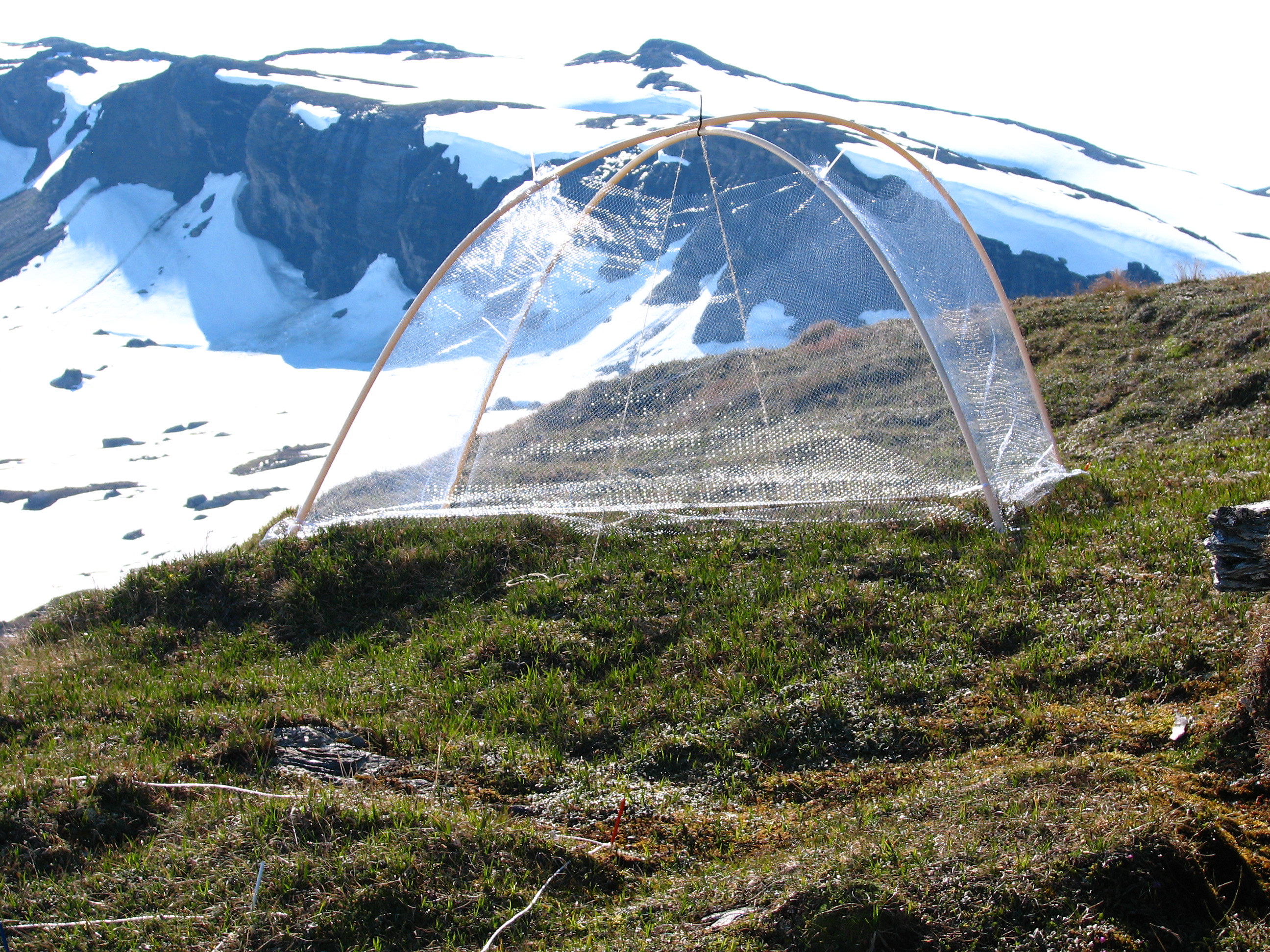
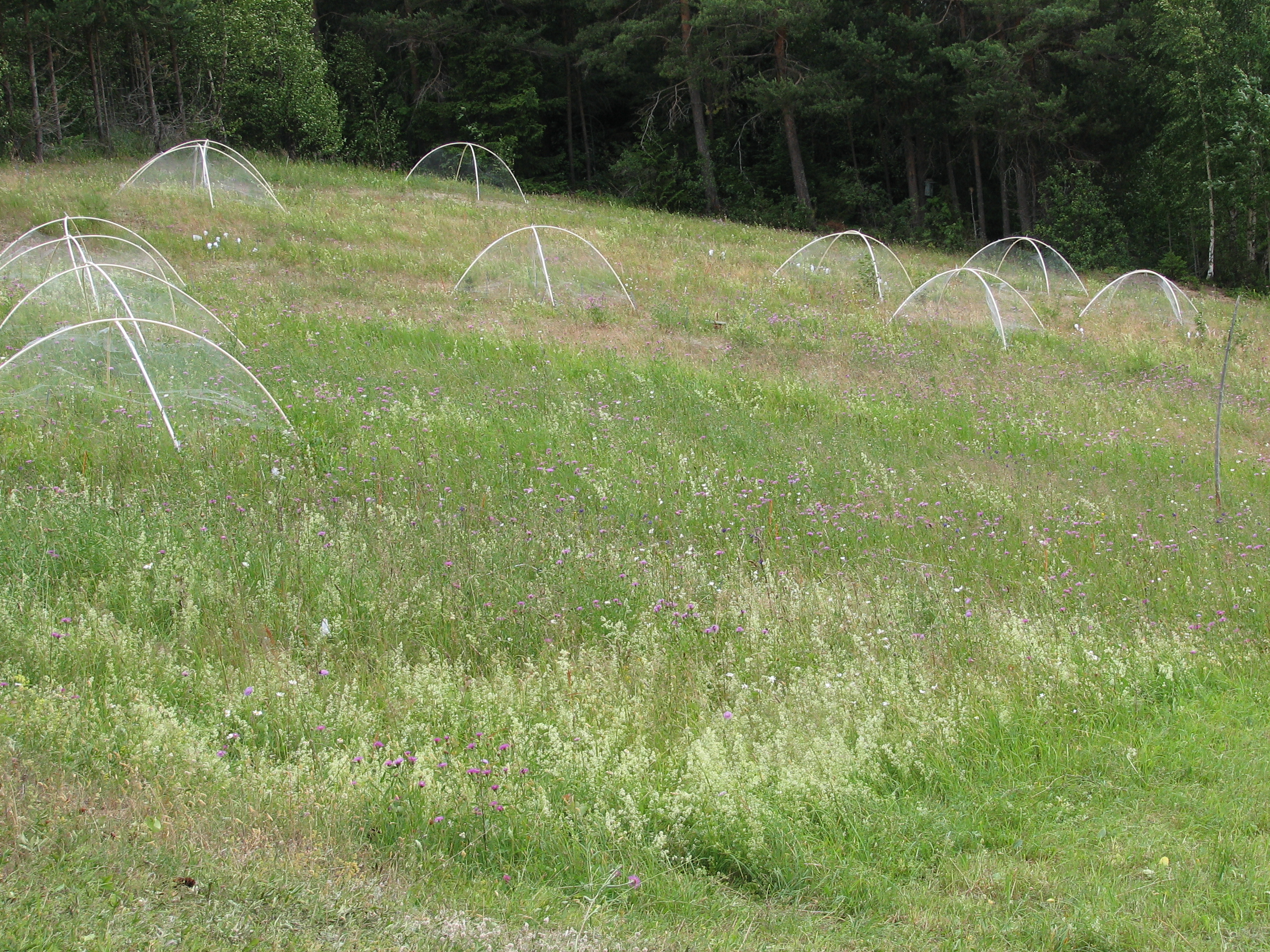
To simulate a pollinator decline we set up a novel experiment to reduce pollinator visitation in two communities (one lowland and one alpine) in Southern Norway (see also Lundgren et al. 2013). In the experiment we compared control plots with plots where pollinator visitation had been reduced by means of dome-shaped cages constructed by bending two PVC-tubes diagonally and covering them with fishnet. The fishnet was totally transparent, so flowers were fully visible from outside the net. In order to allow flower visitors inside cages to exit easily, we left an opening between the mesh and the ground, and another opening in the top of the dome. This experiment effectively reduced pollinator visitation without modifying the composition or behaviour of pollinators, or other important biotic and abiotic variables.

alpine1

Alpine

lowland5

Lowland

Lázaro et al. (2014) shows that the reduction in pollinators modified plant-plant interactions for pollination in all the six species studied; although for two of them these interactions did not affect seed set. Pollen limitation and seed set data showed that the reduction of pollinator visits most frequently resulted in novel and/or stronger interactions between plants in the experimental plots that did not occur in the controls. Although the responses were species-specific, there was a tendency for increasing facilitative interactions with conspecific neighbours in experimental plots where pollinator availability was reduced. Heterospecifics only influenced pollination and fecundity in species in the alpine community and in the experimental plots, where they competed with the focal species for pollination. The patterns observed for visitation rates differed from those for fecundity, with more significant interactions between plants in the controls in both communities. This study warns against the exclusive use of visitation data to interpret plant-plant interactions for pollination, and helps to understand how plant aggregations may buffer or intensify the effects of a pollinator loss on plant fitness.

div { margin-top: 1em; } #google_ads_div_wpcom_below_post_adsafe_ad_container { display: block !important; }
]]>

How much do asexual plants actually change? Updated for 2026

A sexual reproduction system should confer higher mutation rates and hence evolutionary rate than asexual ones. Is it really so? Find out in the Early View paper “Asexual plants change just as often and just as fast as do sexual plants when introduced to a new range” by Rhiannon L. Dalrymple and colleagues. Below is their summary of the study:

Many of the world’s most invasive plant species can reproduce asexually. However, asexuality might be a double edged sword for introduced species. Shortly after introduction, asexual species might have the upper hand because they do not need a partner for promptly increasing in numbers and establishing populations in the new range. Classic theory tells us that sexual reproduction should fuel the processes of adaption through the creation of variation on which natural selection can act. While asexuality may be of advantage in the early phases of introduction, it may lead to an evolutionary dead end.

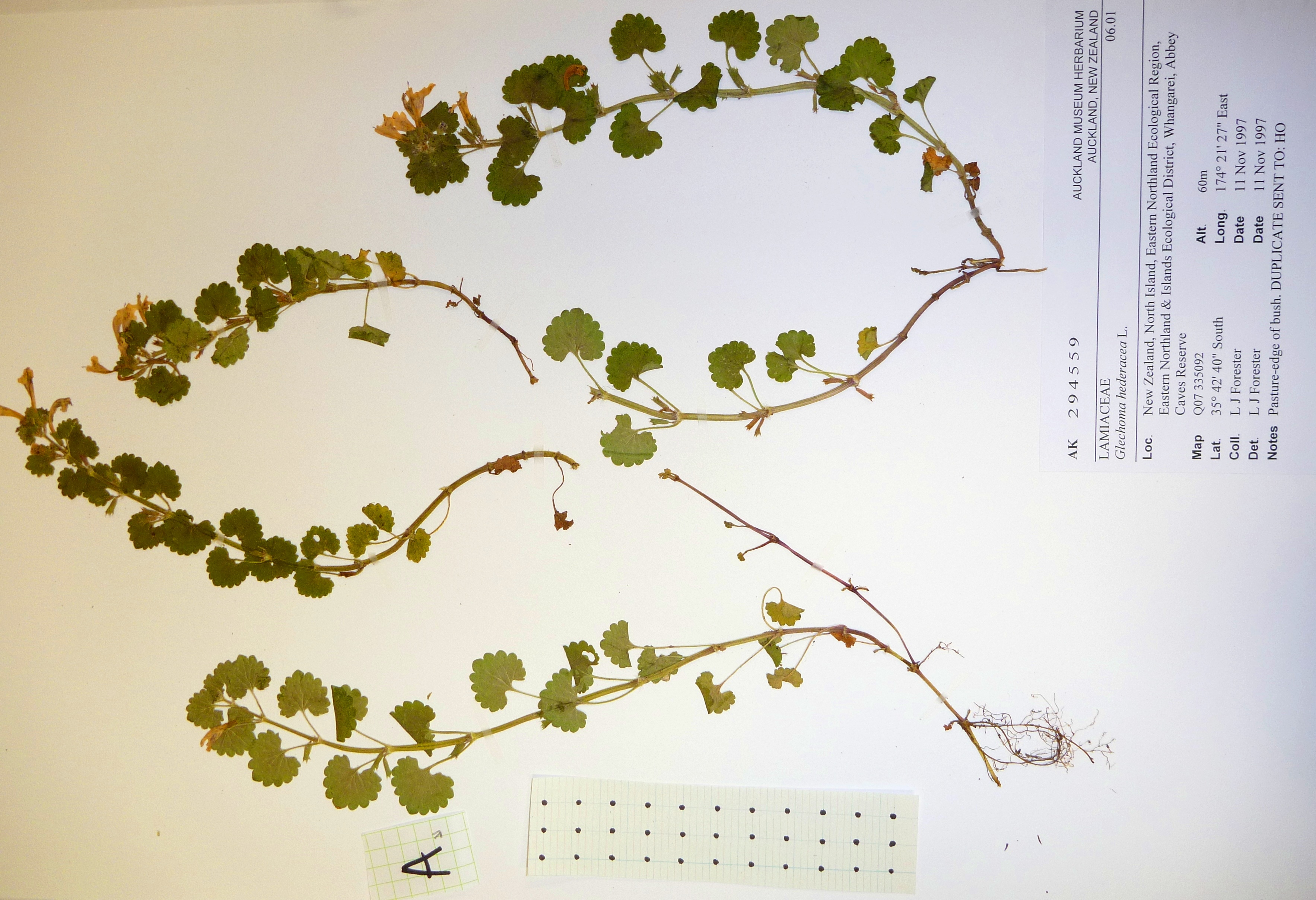
We measured the rate of changes in multiple asexual species distributed through Australia’s east coast and New Zealand. We have provided evidence that multiple asexual species have undergone rapid morphological changes in response to the novel environments in their introduced range. We then compared the proportion of asexual species that demonstrated a significant change in at least one trait, and the rates at which these changes progressed, to comparable data on sexual species. This was the first test of the difference in potential for rapid change afforded by sexuality, cross species and in the natural world. Our results were astounding: we found no significant difference in the rate or frequency of rapid changes between asexual and sexual species. That is, sex and genetic recombination do not increase the rate or potential for change in this context. Introduction to a novel environment, a population may experience strong selective forces. The new environmental conditions force rapid and significant changes in the phenotype of both asexual and sexual species. It appears that in the process of introduction – it may be adapt or fail, regardless of breeding system.

Asexual1 Asexual2