Tag Archives: growth

Keystone plankton ‘go slow’ as ocean acidity rises Updated for 2026


As the planet’s oceans become more acidic, the diatoms – a major group of alga – in the Southern Ocean could grow more slowly.

Nobody expected this. And since tiny, single-celled algae are a primary food source for an entire ocean ecosystem, the discovery seems ominous.

Bioscientist Clara Hoppe and colleagues from the Alfred Wegener Institute at the Helmholtz Centre for Polar and Marine Research in Bremerhaven, Germany, report in the journal New Phytologist that they tested the growth of the Antarctic diatom Chaetoceros debilis under laboratory conditions.

They used two levels of pH – which is an indicator of acidity – and they exposed their tiny volunteers to constant light and to changing light, providing both standard laboratory conditions and lighting levels that approximated to the real world.

Under variable light in high-CO2 world, plant growth slows

In the unblinking glare of light, the diatoms responded well. Their growth levels were consistent with an assumption that more dissolved carbon dioxide – which makes the waters more acidic – would in effect fertilise plant growth.

Under conditions of changing light, however, it was a different story. The algae grew more slowly, which suggests that the oceans could become less efficient at removing carbon from the atmosphere, and perhaps less valuable as a primary food source for the creatures that teem in the Antarctic waters.

“Diatoms fulfil an important role in the Earth’s climate system”, Dr Hoppe says. “They can absorb large quantities of carbon dioxide, which they bind before ultimately transporting part of it to the depths of the ocean. Once there, the greenhouse gas remains naturally sequestered for centuries.”

Previous research into the steady acidification of the oceans has tended to concentrate on the consequences for coral reefs, fisheries, and tourism, but not on the impact on plant life in the seas.

Since carbon dioxide acts as a fertiliser, higher levels dissolved in the water might stimulate more growth. But growth depends not just on more carbon dioxide, but also on reliable sunlight. In the stormy southern seas, this is not steadily supplied.

Dr Hoppe says: “Several times a day, winds and currents transport diatoms in the Southern Ocean from the uppermost water layer to the layers below, and then back to the surface – which means that, in the course of a day, the diatoms experience alternating phases with more and with less light.”

Her co-author, marine biogeochemist Björn Rost, from the Alfred Wegener Institute, says: “Our findings show for the first time that our old assumptions most likely fall short of the mark. We now know that when the light intensity constantly changes, the effect of ocean acidification reverses.

“All of a sudden, lower pH values don’t increase growth, like studies using constant light show. Instead, they have the opposite effect.”

The implication is that, at certain intensities, the photosynthesis chain breaks down. The point at which light becomes too much light is more quickly reached in waters that are more acidic.

Like all such research, the finding has limitations. It applies to one species of single-celled creature in the waters of one ocean, and the tests were in a laboratory on a small scale, and not in a turbulent ocean rich in life. The Alfred Wegener team will continue their studies.

Fisheries at risk

But in the real world, coastal communities in 15 US states could be at long-term economic risk, as ocean acidification starts to take its toll on the commercial oyster fisheries.

Julia Ekstrom, then of the Natural Resources Defense Council and now director of the Climate Adaptation Programme at the University of California, Davis, and George Waldbusser, assistant professor of ocean ecology and biogeochemistry at Oregon State University report with colleagues, in Nature Climate Change, on an unholy mix in the oceans.

They say that a combination of rising greenhouse gas levels, more acid waters, polluted rivers, and upwelling currents put at risk mollusc fisheries from the Pacific Northwest, New England, the Mid-Atlantic states and the Gulf of Mexico – affecting the shellfish industry that is worth at least $1bn to the US.

Oyster larvae are sensitive to changes in ocean water, and more likely to die as pH levels shift towards the acidic. But acidification is not the only source of stress, as nitrogen-rich nutrients and chemical pollutants cascade from the land into the rivers, and wash through estuaries and fish hatcheries on the coast.

Things can be done. Scientists have been looking at ways in which the industry might be able to adapt to change. But how well the oyster stock can adapt in the long term remains problematic.

“Ocean acidification has already cost the oyster industry in the Pacific Northwest nearly $110 million and has jeopardised about 3,200 jobs”, Dr Ekstrom says.

And Dr Waldbusser adds: “Without curbing carbon emissions, we will eventually run out of tools to address the short term, and we will be stuck with a much longer-term problem.”


Tim Radford writes for Climate News Network.


390832

Keystone plankton ‘go slow’ as ocean acidity rises Updated for 2026


As the planet’s oceans become more acidic, the diatoms – a major group of alga – in the Southern Ocean could grow more slowly.

Nobody expected this. And since tiny, single-celled algae are a primary food source for an entire ocean ecosystem, the discovery seems ominous.

Bioscientist Clara Hoppe and colleagues from the Alfred Wegener Institute at the Helmholtz Centre for Polar and Marine Research in Bremerhaven, Germany, report in the journal New Phytologist that they tested the growth of the Antarctic diatom Chaetoceros debilis under laboratory conditions.

They used two levels of pH – which is an indicator of acidity – and they exposed their tiny volunteers to constant light and to changing light, providing both standard laboratory conditions and lighting levels that approximated to the real world.

Under variable light in high-CO2 world, plant growth slows

In the unblinking glare of light, the diatoms responded well. Their growth levels were consistent with an assumption that more dissolved carbon dioxide – which makes the waters more acidic – would in effect fertilise plant growth.

Under conditions of changing light, however, it was a different story. The algae grew more slowly, which suggests that the oceans could become less efficient at removing carbon from the atmosphere, and perhaps less valuable as a primary food source for the creatures that teem in the Antarctic waters.

“Diatoms fulfil an important role in the Earth’s climate system”, Dr Hoppe says. “They can absorb large quantities of carbon dioxide, which they bind before ultimately transporting part of it to the depths of the ocean. Once there, the greenhouse gas remains naturally sequestered for centuries.”

Previous research into the steady acidification of the oceans has tended to concentrate on the consequences for coral reefs, fisheries, and tourism, but not on the impact on plant life in the seas.

Since carbon dioxide acts as a fertiliser, higher levels dissolved in the water might stimulate more growth. But growth depends not just on more carbon dioxide, but also on reliable sunlight. In the stormy southern seas, this is not steadily supplied.

Dr Hoppe says: “Several times a day, winds and currents transport diatoms in the Southern Ocean from the uppermost water layer to the layers below, and then back to the surface – which means that, in the course of a day, the diatoms experience alternating phases with more and with less light.”

Her co-author, marine biogeochemist Björn Rost, from the Alfred Wegener Institute, says: “Our findings show for the first time that our old assumptions most likely fall short of the mark. We now know that when the light intensity constantly changes, the effect of ocean acidification reverses.

“All of a sudden, lower pH values don’t increase growth, like studies using constant light show. Instead, they have the opposite effect.”

The implication is that, at certain intensities, the photosynthesis chain breaks down. The point at which light becomes too much light is more quickly reached in waters that are more acidic.

Like all such research, the finding has limitations. It applies to one species of single-celled creature in the waters of one ocean, and the tests were in a laboratory on a small scale, and not in a turbulent ocean rich in life. The Alfred Wegener team will continue their studies.

Fisheries at risk

But in the real world, coastal communities in 15 US states could be at long-term economic risk, as ocean acidification starts to take its toll on the commercial oyster fisheries.

Julia Ekstrom, then of the Natural Resources Defense Council and now director of the Climate Adaptation Programme at the University of California, Davis, and George Waldbusser, assistant professor of ocean ecology and biogeochemistry at Oregon State University report with colleagues, in Nature Climate Change, on an unholy mix in the oceans.

They say that a combination of rising greenhouse gas levels, more acid waters, polluted rivers, and upwelling currents put at risk mollusc fisheries from the Pacific Northwest, New England, the Mid-Atlantic states and the Gulf of Mexico – affecting the shellfish industry that is worth at least $1bn to the US.

Oyster larvae are sensitive to changes in ocean water, and more likely to die as pH levels shift towards the acidic. But acidification is not the only source of stress, as nitrogen-rich nutrients and chemical pollutants cascade from the land into the rivers, and wash through estuaries and fish hatcheries on the coast.

Things can be done. Scientists have been looking at ways in which the industry might be able to adapt to change. But how well the oyster stock can adapt in the long term remains problematic.

“Ocean acidification has already cost the oyster industry in the Pacific Northwest nearly $110 million and has jeopardised about 3,200 jobs”, Dr Ekstrom says.

And Dr Waldbusser adds: “Without curbing carbon emissions, we will eventually run out of tools to address the short term, and we will be stuck with a much longer-term problem.”


Tim Radford writes for Climate News Network.


390832

Keystone plankton ‘go slow’ as ocean acidity rises Updated for 2026


As the planet’s oceans become more acidic, the diatoms – a major group of alga – in the Southern Ocean could grow more slowly.

Nobody expected this. And since tiny, single-celled algae are a primary food source for an entire ocean ecosystem, the discovery seems ominous.

Bioscientist Clara Hoppe and colleagues from the Alfred Wegener Institute at the Helmholtz Centre for Polar and Marine Research in Bremerhaven, Germany, report in the journal New Phytologist that they tested the growth of the Antarctic diatom Chaetoceros debilis under laboratory conditions.

They used two levels of pH – which is an indicator of acidity – and they exposed their tiny volunteers to constant light and to changing light, providing both standard laboratory conditions and lighting levels that approximated to the real world.

Under variable light in high-CO2 world, plant growth slows

In the unblinking glare of light, the diatoms responded well. Their growth levels were consistent with an assumption that more dissolved carbon dioxide – which makes the waters more acidic – would in effect fertilise plant growth.

Under conditions of changing light, however, it was a different story. The algae grew more slowly, which suggests that the oceans could become less efficient at removing carbon from the atmosphere, and perhaps less valuable as a primary food source for the creatures that teem in the Antarctic waters.

“Diatoms fulfil an important role in the Earth’s climate system”, Dr Hoppe says. “They can absorb large quantities of carbon dioxide, which they bind before ultimately transporting part of it to the depths of the ocean. Once there, the greenhouse gas remains naturally sequestered for centuries.”

Previous research into the steady acidification of the oceans has tended to concentrate on the consequences for coral reefs, fisheries, and tourism, but not on the impact on plant life in the seas.

Since carbon dioxide acts as a fertiliser, higher levels dissolved in the water might stimulate more growth. But growth depends not just on more carbon dioxide, but also on reliable sunlight. In the stormy southern seas, this is not steadily supplied.

Dr Hoppe says: “Several times a day, winds and currents transport diatoms in the Southern Ocean from the uppermost water layer to the layers below, and then back to the surface – which means that, in the course of a day, the diatoms experience alternating phases with more and with less light.”

Her co-author, marine biogeochemist Björn Rost, from the Alfred Wegener Institute, says: “Our findings show for the first time that our old assumptions most likely fall short of the mark. We now know that when the light intensity constantly changes, the effect of ocean acidification reverses.

“All of a sudden, lower pH values don’t increase growth, like studies using constant light show. Instead, they have the opposite effect.”

The implication is that, at certain intensities, the photosynthesis chain breaks down. The point at which light becomes too much light is more quickly reached in waters that are more acidic.

Like all such research, the finding has limitations. It applies to one species of single-celled creature in the waters of one ocean, and the tests were in a laboratory on a small scale, and not in a turbulent ocean rich in life. The Alfred Wegener team will continue their studies.

Fisheries at risk

But in the real world, coastal communities in 15 US states could be at long-term economic risk, as ocean acidification starts to take its toll on the commercial oyster fisheries.

Julia Ekstrom, then of the Natural Resources Defense Council and now director of the Climate Adaptation Programme at the University of California, Davis, and George Waldbusser, assistant professor of ocean ecology and biogeochemistry at Oregon State University report with colleagues, in Nature Climate Change, on an unholy mix in the oceans.

They say that a combination of rising greenhouse gas levels, more acid waters, polluted rivers, and upwelling currents put at risk mollusc fisheries from the Pacific Northwest, New England, the Mid-Atlantic states and the Gulf of Mexico – affecting the shellfish industry that is worth at least $1bn to the US.

Oyster larvae are sensitive to changes in ocean water, and more likely to die as pH levels shift towards the acidic. But acidification is not the only source of stress, as nitrogen-rich nutrients and chemical pollutants cascade from the land into the rivers, and wash through estuaries and fish hatcheries on the coast.

Things can be done. Scientists have been looking at ways in which the industry might be able to adapt to change. But how well the oyster stock can adapt in the long term remains problematic.

“Ocean acidification has already cost the oyster industry in the Pacific Northwest nearly $110 million and has jeopardised about 3,200 jobs”, Dr Ekstrom says.

And Dr Waldbusser adds: “Without curbing carbon emissions, we will eventually run out of tools to address the short term, and we will be stuck with a much longer-term problem.”


Tim Radford writes for Climate News Network.


390832

Keystone plankton ‘go slow’ as ocean acidity rises Updated for 2026


As the planet’s oceans become more acidic, the diatoms – a major group of alga – in the Southern Ocean could grow more slowly.

Nobody expected this. And since tiny, single-celled algae are a primary food source for an entire ocean ecosystem, the discovery seems ominous.

Bioscientist Clara Hoppe and colleagues from the Alfred Wegener Institute at the Helmholtz Centre for Polar and Marine Research in Bremerhaven, Germany, report in the journal New Phytologist that they tested the growth of the Antarctic diatom Chaetoceros debilis under laboratory conditions.

They used two levels of pH – which is an indicator of acidity – and they exposed their tiny volunteers to constant light and to changing light, providing both standard laboratory conditions and lighting levels that approximated to the real world.

Under variable light in high-CO2 world, plant growth slows

In the unblinking glare of light, the diatoms responded well. Their growth levels were consistent with an assumption that more dissolved carbon dioxide – which makes the waters more acidic – would in effect fertilise plant growth.

Under conditions of changing light, however, it was a different story. The algae grew more slowly, which suggests that the oceans could become less efficient at removing carbon from the atmosphere, and perhaps less valuable as a primary food source for the creatures that teem in the Antarctic waters.

“Diatoms fulfil an important role in the Earth’s climate system”, Dr Hoppe says. “They can absorb large quantities of carbon dioxide, which they bind before ultimately transporting part of it to the depths of the ocean. Once there, the greenhouse gas remains naturally sequestered for centuries.”

Previous research into the steady acidification of the oceans has tended to concentrate on the consequences for coral reefs, fisheries, and tourism, but not on the impact on plant life in the seas.

Since carbon dioxide acts as a fertiliser, higher levels dissolved in the water might stimulate more growth. But growth depends not just on more carbon dioxide, but also on reliable sunlight. In the stormy southern seas, this is not steadily supplied.

Dr Hoppe says: “Several times a day, winds and currents transport diatoms in the Southern Ocean from the uppermost water layer to the layers below, and then back to the surface – which means that, in the course of a day, the diatoms experience alternating phases with more and with less light.”

Her co-author, marine biogeochemist Björn Rost, from the Alfred Wegener Institute, says: “Our findings show for the first time that our old assumptions most likely fall short of the mark. We now know that when the light intensity constantly changes, the effect of ocean acidification reverses.

“All of a sudden, lower pH values don’t increase growth, like studies using constant light show. Instead, they have the opposite effect.”

The implication is that, at certain intensities, the photosynthesis chain breaks down. The point at which light becomes too much light is more quickly reached in waters that are more acidic.

Like all such research, the finding has limitations. It applies to one species of single-celled creature in the waters of one ocean, and the tests were in a laboratory on a small scale, and not in a turbulent ocean rich in life. The Alfred Wegener team will continue their studies.

Fisheries at risk

But in the real world, coastal communities in 15 US states could be at long-term economic risk, as ocean acidification starts to take its toll on the commercial oyster fisheries.

Julia Ekstrom, then of the Natural Resources Defense Council and now director of the Climate Adaptation Programme at the University of California, Davis, and George Waldbusser, assistant professor of ocean ecology and biogeochemistry at Oregon State University report with colleagues, in Nature Climate Change, on an unholy mix in the oceans.

They say that a combination of rising greenhouse gas levels, more acid waters, polluted rivers, and upwelling currents put at risk mollusc fisheries from the Pacific Northwest, New England, the Mid-Atlantic states and the Gulf of Mexico – affecting the shellfish industry that is worth at least $1bn to the US.

Oyster larvae are sensitive to changes in ocean water, and more likely to die as pH levels shift towards the acidic. But acidification is not the only source of stress, as nitrogen-rich nutrients and chemical pollutants cascade from the land into the rivers, and wash through estuaries and fish hatcheries on the coast.

Things can be done. Scientists have been looking at ways in which the industry might be able to adapt to change. But how well the oyster stock can adapt in the long term remains problematic.

“Ocean acidification has already cost the oyster industry in the Pacific Northwest nearly $110 million and has jeopardised about 3,200 jobs”, Dr Ekstrom says.

And Dr Waldbusser adds: “Without curbing carbon emissions, we will eventually run out of tools to address the short term, and we will be stuck with a much longer-term problem.”


Tim Radford writes for Climate News Network.


390832

Boost health, well-being and prosperity – not economic growth! Updated for 2026


Increases in gross domestic product (GDP) beyond a threshold of basic needs do not lead to further increases in well-being – this is widely supported by research. We also know that indefinite economic growth is impossible in a finite world.

Yet conventional economic growth driven by escalating material consumption remains a primary goal of government policy around the world.

If we want to see well-being and health improve, policies that promote a greener economy should be pursued. Redefining what we think of as prosperity, encouraging the consumption of green goods and services – and moving away from an emphasis on material consumption – could save governments money, as well as lead to better lives for its citizens.

GDP growth has brought with it substantial improvements on a number of fronts – from medical services to crime detection, better transport and housing and, increasingly, the adoption of renewable sources of energy.

This has helped average life expectancy to rise significantly and under-five mortality rates to fall. But well-being and life satisfaction seem to peak at low GDP, and do not increase as GDP grows.

As the graph shows (right), there is a sharp consumption cliff at low GDP, but after a threshold the affluent uplands bring no further increases in life satisfaction.

The growing costs of affluence

We wanted to understand why this is the case and work out how we can improve society’s health and well-being alongside GDP growth. Our findings were recently published in the International Journal of Environmental Health Research.

They show that material consumption brings with it unintended and costly side-effects. This means that growth that’s focused on improving health and well-being must be pursued, instead of just growth for its own sake.

The irony of increased GDP and living longer is that new health problems and associated costs have accompanied this. We have calculated the costs to health care systems and the economy that arise from modern lifestyles in the UK. (see table, right)

The direct cost of mental ill-health, dementias, obesity, physical inactivity, diabetes, loneliness and cardio-vascular disease (including strokes) is £60 billion each year. The full cost to the whole economy is approximately £180 billion annually (18.6% of GDP). The revenue expenditure of the 248 NHS Trusts in 2011-12 was £102 billion.

Clearly there are huge health savings to be made by reducing the prevalence of these conditions. Prevention is key, instead of waiting to treat conditions and diseases when they occur. This is something Britain’s chief medical officer has emphasised. She estimates that there is a 6-10% annual rate of return on investments made in early life interventions.

The policy dilemma – what’s right, or what’s expedient?

In affluent countries, some efforts have been made to shift individual behaviour toward greater well-being. But generally these have been limited in number, for example legislating for unleaded petrol and smoking bans. Or they only affect small subsets of the population – such as recommendations for regular physical activity and daily consumption of fruit and vegetables.

Policymakers face a dilemma: reducing material consumption to save the planet undermines an economy founded on continuing consumption. Yet continuing material consumption at current rates to sustain the economy is clearly costly and is destroying the planet.

Our research shows, however, that a substantial financial dividend could be released by a greener and healthier economy. Instead of encouraging material growth and consumption, we should consume in a way that is environmentally sustainable. This will not only benefit the planet, but our health and well-being too.

The UN Environment Programme defines a green economy as “resulting in human well-being and social equity, while significantly reducing environmental risks and ecological scarcities.” There are clear health and financial benefits to promoting this.

Encouraging environmentally sustainable consumption instead of all material consumption is an important aspect of creating a green economy. This centres on activities that produces greater well-being such as healthy food, regular engagement with nature, regular physical activity, the use of the power of thought and contemplation, enhancing social bonds and increasing attachment to possessions and places.

We know that social and physical environments can promote good health, and there is growing evidence showing that behaviour at the individual level can make significant contributions to well-being.

For example, regular physical activity such as walking pushes back the onset of dementia and volunteers live longer than non-volunteers. Loneliness has been calculated to be as bad for our health as smoking 15 cigarettes a day, while eating one more fruit or vegetable a day improves health.

It is now clear that health and social inequalities prevent many people from leading healthy lives. We now need to prioritise improving well-being for all members of society by encouraging healthy lifestyles, active travel, creating liveable environments for people to enjoy and increasing social capital for all. A greener economy is a better economy. It might help save the planet too.


Jules Pretty is Professor of Environment and Society and Deputy Vice-Chancellor at the University of Essex.

This article was originally published on The Conversation. Read the original article.

The Conversation


390499

Soil, elevation and plant growth Updated for 2026

Elevational gradients have become important tools for assessing the effects of temperature changes on vegetation properties, because these gradients enable temperature effects to be considered over larger spatial and temporal scales than is possible through conventional experiments. During the summer of 2012, we collected soils along an elevational gradient on Mount Suorooaivi near Abisko, Sweden for two growth chamber experiments to determine the effects of temperature, soil origin (proxy for soil legacy) and vegetation type on the growth responses of two grass species. The results are published in the Oikos paper “Plant growth response to direct and indirect temperature effects varies by vegetation type and elevation in a subarctic tundra”. 

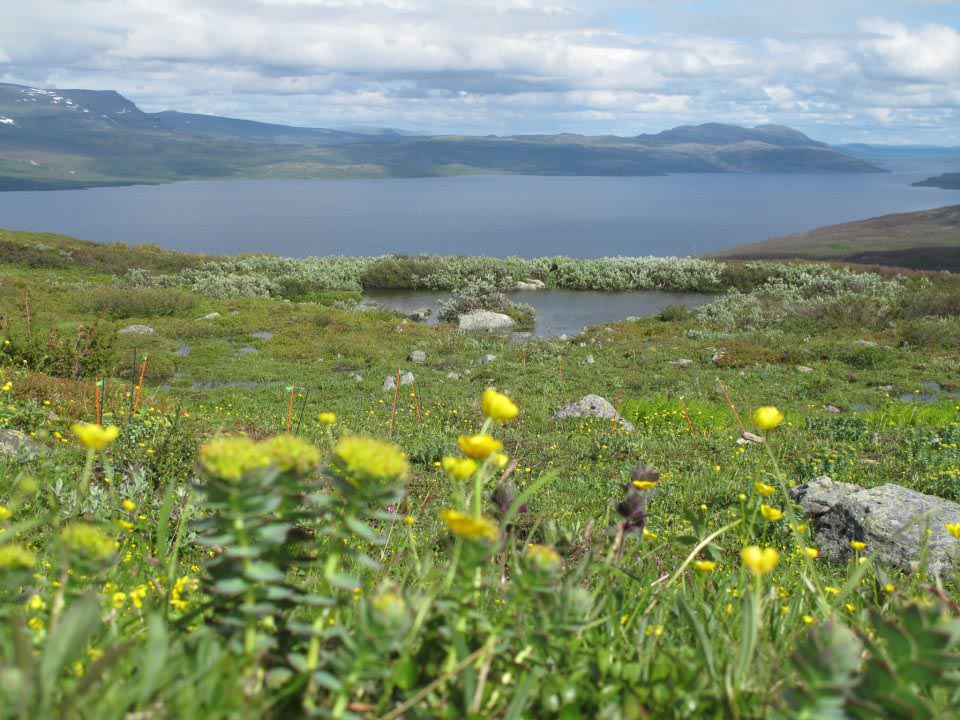
Abisko 1

Soils were collected at each of three elevations from each of two vegetation types, specifically heath, dominated by dwarf shrubs, and meadow, dominated by graminoids and herbs. Plants responded to both the direct effect of temperature and its indirect effect via soil legacies, and that direct and indirect effects were largely decoupled. Vegetation type was a major driver of plant response; responses to soils from increasing elevation were stronger and seedlings showed a more linear decline in biomass when grown in meadow as opposed to heath soils.

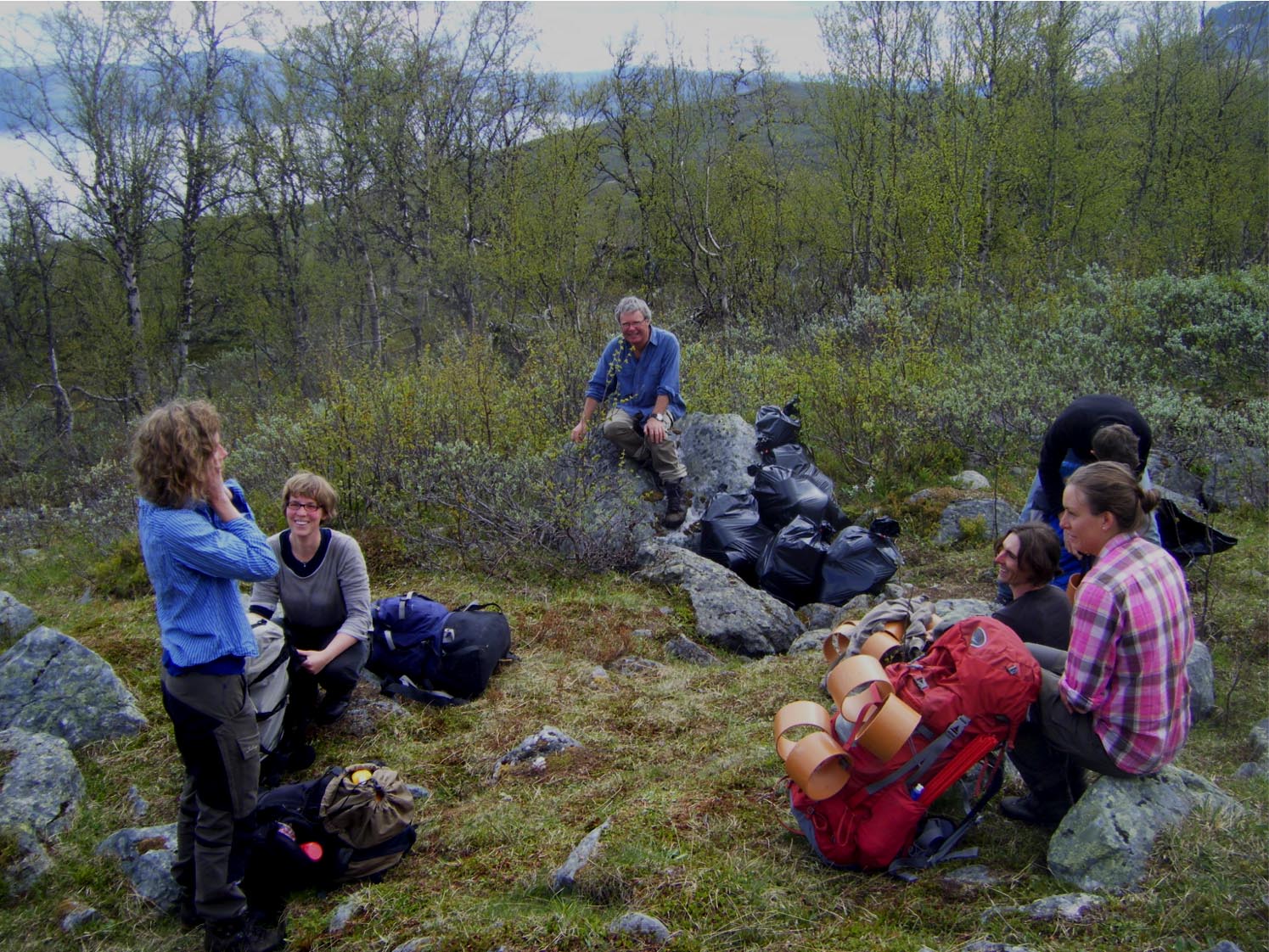
Abisko 2

The effect of soil biota on plant growth was independent of elevation, with a positive influence across all elevations regardless of soil origin for meadow soils but not for heath soils. Collectively, the responses of plant growth to soil legacy effects of temperature across the elevational gradient were driven primarily by soil abiotic, and not biotic, factors. These findings demonstrate vegetation type is a strong determinant of how temperature variation across elevational gradients impacts on plant growth, and highlight the need for investigating both direct and indirect effects of temperature on plant responses to future climate change.

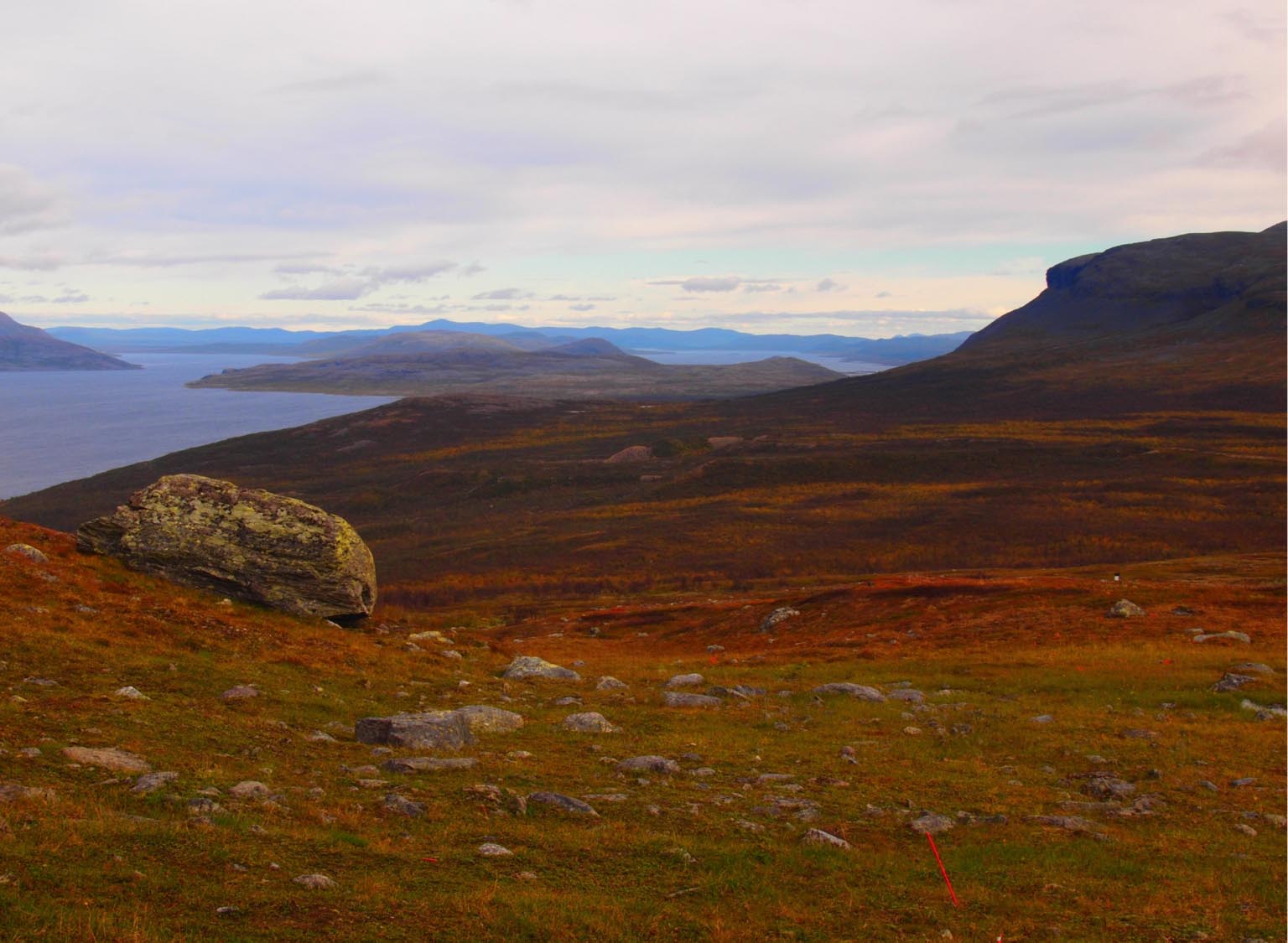
Abisko 3


Jonathan de Long and co-workers

Oil prices and the devil’s ransom Updated for 2026


There has been a fascinating debate developing in the environmental movement – particularly in The Ecologist – over the meaning and effect of the oil price collapse.

Most recently, environmental consultant Paul Mobbs declared that “environmentalists should be cheering on OPEC!” for increasing production and lowering prices, thereby driving the ‘unconventional’ production (like tar sands mining) out of the threshold of economic viability. Unfortunately, the debate seldom zooms out at some of the broader conditions that caused the collapse.

Mobbs’s enthusiastic support of oil production in Saudi Arabia manifests a powerful rebuttal to Steve Melia’s dispatch on the troubled thesis of peak oil.

Whereas Melia claims we must continue to resist fossil fuels for the sake of the environment through civil disobedience not unlike the vital anti-roads movement of the 1980s, Mobbs seems to believe that “keeping the oil in the ground” will be counterproductive to the short-term goals of environmentalists.

Symptoms of a wider economic malaise?

To shore up his hypothesis, Mobbs argues against Melia’s claim that low prices are a challenge to the peak oil hypothesis of gradually increasing prices. The ecological metabolism of peak oil is responsible for the oil price crash, since the increased production of oil stems from high-cost and low-yield production, such as tar sands, which is being undercut by Saudi oil, causing oil prices to decline.

But, Mobbs ventures, this is not a sign of the supply and demand of oil. Instead, it is a complex phenomenon that involves the stagnation of the whole economy. Mobbs cites the declining prices of other commodities as evidence.

Mobbs does not provide a clarification by referencing recent economic events, which hinders his argument. After the housing market crash of 2007, investors from more prosperous financial centers of the world shifted capital to land speculation and resource extraction in the Global South.

This ‘spacial fix‘, to use geographer David Harvey’s term, remains part of an economic program called ‘credit easing’, through which junk loans are backed by land grabs. The so-called ‘fracking revolution’ in the Bakken Shale plays an important role in the US’s own attempts to emerge from the recession.

Busting the global resource grab

According to the US Energy Information Administration’s (EIA) Adam Sieminsky, “just six tight gas plays taken together account for nearly 90 percent of domestic oil production growth and virtually all domestic natural gas production growth in the last 2 years.”

Bakken is 67% of oil growth, and Marcellus is 75% of gas growth. Bakken is relatively low-cost, high yield, while Marcellus has proven far more problematic for investors in the area (due in large part to the sheer amount of speculation happening).

But therein lies the rub: a financialization bubble bursts, leaving resource extraction to mop up the mess, but the glut of oil production is facing diminishing markets abroad. Between 2008-2015, production will have expanded by 3 million b/d, while US demand will have fallen by 1.5 million b/d.

With Saudi Arabia refusing to maintain the high prices by decreasing its own production, choosing instead to “ride out the oil price slump” as the NY Times put it, the relative growth of production against demand has caused low prices.

As oil prices decline, the prices of other commodities decline, because oil factors into every level of the supply chain, from the manufacture of the machines to work a mine or a tractor to the running of the machines themselves to the manufacture of the commodity to the transport of the commodity to market, and virtually all transports in between.

Due to the oil prices, food prices, for instance, are predicted to drop 10-15%, according to Arab News. Furthermore, along with the sharp rise of oil production since 2008, the extraction of tin, copper, and virtually any other commodity has risen as well.

Gluts have appeared across the board, while demand has declined-a phenomenon that has caused tremendous problems in supply chains for countries like China and Brazil.

In the North Atlantic, on the one hand, the banks have refused to invest in small businesses and homeowners, and on the other hand, working people have less confidence in the economy and their political representatives. Hence the Fed and the ECB have been unable to switch back from extractionist positions of ‘credit easement’ to their earlier financial policies.

Geopolitical games – or coincidence?

There are at least three spins that one could put on the oil price collapse and its implications. The one preferred by industrial actors around the world expounds the low price as a natural fix, which will decrease production, increase consumption, and eventually drive the price back to a higher equilibrium.

The challenge here would be, as Mobbs indicates, maintaining high-cost, unconventional projects at a price equilibrium, but that is a matter of eventuality, since the conventional crude is running out.

The second spin is that collapse of oil prices marks a natural boom-bust cycle of extractivist oligarchs who push supply beyond demand, only to have markets contract into a perfect situation for further speculation.

The final spin, of course, is more closely related to the attempts made by the BRICS countries to shift away from petrodollars and dollar hegemony while cutting oil and gas networks throughout Asia without regard for the interests of NATO.

This final proposal marks a gap in Mobbs’s thesis: namely that it is OPEC that is responsible for the price decline. Instead, it is largely Saudi Arabia, with Venezuela taking a brutal hit to the balance books, and scrambling to prop up prices.

As The Telegraph noted, lower prices is bringing about a possible new era, which is ushered in not by OPEC, itself, but by an inter-OPEC crisis marking the crucial geopolitical rift that the oil price collapse plays into.

For its part, The Economist‘s blog, Buttonwood’s notebook, has put up a cheeky graph identifying the Red Army signal showing how every price collapse in oil has come directly after a Russian foreign intervention: most recently, the intervention in Crimea, the 2008 invasion of Georgia, and the 1979 invasion of Afghanistan before it, which prompted Saudi Arabia to increase oil production and saturate the market.

This is the “cunning of history”, and the US’s connections to the House of Saud stands as reason enough for The Economist‘s bloggers to gloat. What is left between the lines is what Vijay Prashad calls “dispossession by manipulation.”

Opposing interests clash on Middle East battlefields

All the above proposals may, in fact, have some degree of truth, but the crucial focus should not necessarily be Russia or Venezuela or even Iran, but the battlefields on which their interests collide.

The oil price collapse is hindering Iraq’s ability to fight the menace of IS that remains ensconced in its third largest city, Mosul, while retaining the social services necessary to maintain a tenuous order.

Supporting the Kurds seems to have been the US’s most successful attempt thus far in confronting IS in Northern Syria and Iraq, but the presence of Kurdish HPG guerillas in Iraqi Kurdistan, who are also connected to the Kurdish YPG/YPJ self-defense forces fighting IS in Northern Syria, rankles the Turkish government to no end.

Turkey does not want to see its southern territories turned into an autonomous Kurdistan tied to the Kurdish Regional Government in Iraq. In fact, the Turkish state seems more willing to help IS than the Kurds. If the Kurds are unable to fight down IS, oil prices will rise once again, which seems to be in the interests of oil producers.

An old Kurdish proverb states, “A head that is to be cut off cannot be ransomed” – and it applies here: IS serves a purpose, if not a devious one. Although the EIA posits that oil spot prices will continue to decline until 2018, prices may settle to a bottom later this year, only to increase once again because of regional discord.

And having sent Russia, Iran, and Venezuela a cruel message, along with Iraq and the Kurds, the North Atlantic oil companies may return to their traditional profits and risky, unconventional projects against the will of environmentalists like Mobbs who see the current price collapse as a prospect for greener pastures.


Alexander Reid Ross is a contributing moderator of the Earth First! Newswire and works for Bark. He is the editor of ‘Grabbing Back: Essays Against the Global Land Grab’ (AK Press 2014) and a contributor to Life During Wartime (AK Press 2013).


389095

Oil prices and the devil’s ransom Updated for 2026


There has been a fascinating debate developing in the environmental movement – particularly in The Ecologist – over the meaning and effect of the oil price collapse.

Most recently, environmental consultant Paul Mobbs declared that “environmentalists should be cheering on OPEC!” for increasing production and lowering prices, thereby driving the ‘unconventional’ production (like tar sands mining) out of the threshold of economic viability. Unfortunately, the debate seldom zooms out at some of the broader conditions that caused the collapse.

Mobbs’s enthusiastic support of oil production in Saudi Arabia manifests a powerful rebuttal to Steve Melia’s dispatch on the troubled thesis of peak oil.

Whereas Melia claims we must continue to resist fossil fuels for the sake of the environment through civil disobedience not unlike the vital anti-roads movement of the 1980s, Mobbs seems to believe that “keeping the oil in the ground” will be counterproductive to the short-term goals of environmentalists.

Symptoms of a wider economic malaise?

To shore up his hypothesis, Mobbs argues against Melia’s claim that low prices are a challenge to the peak oil hypothesis of gradually increasing prices. The ecological metabolism of peak oil is responsible for the oil price crash, since the increased production of oil stems from high-cost and low-yield production, such as tar sands, which is being undercut by Saudi oil, causing oil prices to decline.

But, Mobbs ventures, this is not a sign of the supply and demand of oil. Instead, it is a complex phenomenon that involves the stagnation of the whole economy. Mobbs cites the declining prices of other commodities as evidence.

Mobbs does not provide a clarification by referencing recent economic events, which hinders his argument. After the housing market crash of 2007, investors from more prosperous financial centers of the world shifted capital to land speculation and resource extraction in the Global South.

This ‘spacial fix‘, to use geographer David Harvey’s term, remains part of an economic program called ‘credit easing’, through which junk loans are backed by land grabs. The so-called ‘fracking revolution’ in the Bakken Shale plays an important role in the US’s own attempts to emerge from the recession.

Busting the global resource grab

According to the US Energy Information Administration’s (EIA) Adam Sieminsky, “just six tight gas plays taken together account for nearly 90 percent of domestic oil production growth and virtually all domestic natural gas production growth in the last 2 years.”

Bakken is 67% of oil growth, and Marcellus is 75% of gas growth. Bakken is relatively low-cost, high yield, while Marcellus has proven far more problematic for investors in the area (due in large part to the sheer amount of speculation happening).

But therein lies the rub: a financialization bubble bursts, leaving resource extraction to mop up the mess, but the glut of oil production is facing diminishing markets abroad. Between 2008-2015, production will have expanded by 3 million b/d, while US demand will have fallen by 1.5 million b/d.

With Saudi Arabia refusing to maintain the high prices by decreasing its own production, choosing instead to “ride out the oil price slump” as the NY Times put it, the relative growth of production against demand has caused low prices.

As oil prices decline, the prices of other commodities decline, because oil factors into every level of the supply chain, from the manufacture of the machines to work a mine or a tractor to the running of the machines themselves to the manufacture of the commodity to the transport of the commodity to market, and virtually all transports in between.

Due to the oil prices, food prices, for instance, are predicted to drop 10-15%, according to Arab News. Furthermore, along with the sharp rise of oil production since 2008, the extraction of tin, copper, and virtually any other commodity has risen as well.

Gluts have appeared across the board, while demand has declined-a phenomenon that has caused tremendous problems in supply chains for countries like China and Brazil.

In the North Atlantic, on the one hand, the banks have refused to invest in small businesses and homeowners, and on the other hand, working people have less confidence in the economy and their political representatives. Hence the Fed and the ECB have been unable to switch back from extractionist positions of ‘credit easement’ to their earlier financial policies.

Geopolitical games – or coincidence?

There are at least three spins that one could put on the oil price collapse and its implications. The one preferred by industrial actors around the world expounds the low price as a natural fix, which will decrease production, increase consumption, and eventually drive the price back to a higher equilibrium.

The challenge here would be, as Mobbs indicates, maintaining high-cost, unconventional projects at a price equilibrium, but that is a matter of eventuality, since the conventional crude is running out.

The second spin is that collapse of oil prices marks a natural boom-bust cycle of extractivist oligarchs who push supply beyond demand, only to have markets contract into a perfect situation for further speculation.

The final spin, of course, is more closely related to the attempts made by the BRICS countries to shift away from petrodollars and dollar hegemony while cutting oil and gas networks throughout Asia without regard for the interests of NATO.

This final proposal marks a gap in Mobbs’s thesis: namely that it is OPEC that is responsible for the price decline. Instead, it is largely Saudi Arabia, with Venezuela taking a brutal hit to the balance books, and scrambling to prop up prices.

As The Telegraph noted, lower prices is bringing about a possible new era, which is ushered in not by OPEC, itself, but by an inter-OPEC crisis marking the crucial geopolitical rift that the oil price collapse plays into.

For its part, The Economist‘s blog, Buttonwood’s notebook, has put up a cheeky graph identifying the Red Army signal showing how every price collapse in oil has come directly after a Russian foreign intervention: most recently, the intervention in Crimea, the 2008 invasion of Georgia, and the 1979 invasion of Afghanistan before it, which prompted Saudi Arabia to increase oil production and saturate the market.

This is the “cunning of history”, and the US’s connections to the House of Saud stands as reason enough for The Economist‘s bloggers to gloat. What is left between the lines is what Vijay Prashad calls “dispossession by manipulation.”

Opposing interests clash on Middle East battlefields

All the above proposals may, in fact, have some degree of truth, but the crucial focus should not necessarily be Russia or Venezuela or even Iran, but the battlefields on which their interests collide.

The oil price collapse is hindering Iraq’s ability to fight the menace of IS that remains ensconced in its third largest city, Mosul, while retaining the social services necessary to maintain a tenuous order.

Supporting the Kurds seems to have been the US’s most successful attempt thus far in confronting IS in Northern Syria and Iraq, but the presence of Kurdish HPG guerillas in Iraqi Kurdistan, who are also connected to the Kurdish YPG/YPJ self-defense forces fighting IS in Northern Syria, rankles the Turkish government to no end.

Turkey does not want to see its southern territories turned into an autonomous Kurdistan tied to the Kurdish Regional Government in Iraq. In fact, the Turkish state seems more willing to help IS than the Kurds. If the Kurds are unable to fight down IS, oil prices will rise once again, which seems to be in the interests of oil producers.

An old Kurdish proverb states, “A head that is to be cut off cannot be ransomed” – and it applies here: IS serves a purpose, if not a devious one. Although the EIA posits that oil spot prices will continue to decline until 2018, prices may settle to a bottom later this year, only to increase once again because of regional discord.

And having sent Russia, Iran, and Venezuela a cruel message, along with Iraq and the Kurds, the North Atlantic oil companies may return to their traditional profits and risky, unconventional projects against the will of environmentalists like Mobbs who see the current price collapse as a prospect for greener pastures.


Alexander Reid Ross is a contributing moderator of the Earth First! Newswire and works for Bark. He is the editor of ‘Grabbing Back: Essays Against the Global Land Grab’ (AK Press 2014) and a contributor to Life During Wartime (AK Press 2013).


389095