Tag Archives: being

Boost health, well-being and prosperity – not economic growth! Updated for 2026


Increases in gross domestic product (GDP) beyond a threshold of basic needs do not lead to further increases in well-being – this is widely supported by research. We also know that indefinite economic growth is impossible in a finite world.

Yet conventional economic growth driven by escalating material consumption remains a primary goal of government policy around the world.

If we want to see well-being and health improve, policies that promote a greener economy should be pursued. Redefining what we think of as prosperity, encouraging the consumption of green goods and services – and moving away from an emphasis on material consumption – could save governments money, as well as lead to better lives for its citizens.

GDP growth has brought with it substantial improvements on a number of fronts – from medical services to crime detection, better transport and housing and, increasingly, the adoption of renewable sources of energy.

This has helped average life expectancy to rise significantly and under-five mortality rates to fall. But well-being and life satisfaction seem to peak at low GDP, and do not increase as GDP grows.

As the graph shows (right), there is a sharp consumption cliff at low GDP, but after a threshold the affluent uplands bring no further increases in life satisfaction.

The growing costs of affluence

We wanted to understand why this is the case and work out how we can improve society’s health and well-being alongside GDP growth. Our findings were recently published in the International Journal of Environmental Health Research.

They show that material consumption brings with it unintended and costly side-effects. This means that growth that’s focused on improving health and well-being must be pursued, instead of just growth for its own sake.

The irony of increased GDP and living longer is that new health problems and associated costs have accompanied this. We have calculated the costs to health care systems and the economy that arise from modern lifestyles in the UK. (see table, right)

The direct cost of mental ill-health, dementias, obesity, physical inactivity, diabetes, loneliness and cardio-vascular disease (including strokes) is £60 billion each year. The full cost to the whole economy is approximately £180 billion annually (18.6% of GDP). The revenue expenditure of the 248 NHS Trusts in 2011-12 was £102 billion.

Clearly there are huge health savings to be made by reducing the prevalence of these conditions. Prevention is key, instead of waiting to treat conditions and diseases when they occur. This is something Britain’s chief medical officer has emphasised. She estimates that there is a 6-10% annual rate of return on investments made in early life interventions.

The policy dilemma – what’s right, or what’s expedient?

In affluent countries, some efforts have been made to shift individual behaviour toward greater well-being. But generally these have been limited in number, for example legislating for unleaded petrol and smoking bans. Or they only affect small subsets of the population – such as recommendations for regular physical activity and daily consumption of fruit and vegetables.

Policymakers face a dilemma: reducing material consumption to save the planet undermines an economy founded on continuing consumption. Yet continuing material consumption at current rates to sustain the economy is clearly costly and is destroying the planet.

Our research shows, however, that a substantial financial dividend could be released by a greener and healthier economy. Instead of encouraging material growth and consumption, we should consume in a way that is environmentally sustainable. This will not only benefit the planet, but our health and well-being too.

The UN Environment Programme defines a green economy as “resulting in human well-being and social equity, while significantly reducing environmental risks and ecological scarcities.” There are clear health and financial benefits to promoting this.

Encouraging environmentally sustainable consumption instead of all material consumption is an important aspect of creating a green economy. This centres on activities that produces greater well-being such as healthy food, regular engagement with nature, regular physical activity, the use of the power of thought and contemplation, enhancing social bonds and increasing attachment to possessions and places.

We know that social and physical environments can promote good health, and there is growing evidence showing that behaviour at the individual level can make significant contributions to well-being.

For example, regular physical activity such as walking pushes back the onset of dementia and volunteers live longer than non-volunteers. Loneliness has been calculated to be as bad for our health as smoking 15 cigarettes a day, while eating one more fruit or vegetable a day improves health.

It is now clear that health and social inequalities prevent many people from leading healthy lives. We now need to prioritise improving well-being for all members of society by encouraging healthy lifestyles, active travel, creating liveable environments for people to enjoy and increasing social capital for all. A greener economy is a better economy. It might help save the planet too.


Jules Pretty is Professor of Environment and Society and Deputy Vice-Chancellor at the University of Essex.

This article was originally published on The Conversation. Read the original article.

The Conversation


390499

Privatized energy has failed us – so why is UK ‘aid’ exporting it? Updated for 2026


This week’s revelation that the Big Six energy companies are overcharging their most loyal and vulnerable customers by up to £234 a year is just the latest evidence of the failure energy privatisation has been in the UK.

Since 2010, our fuel bills have risen a staggering eight times faster than wages. Combined with falling incomes, the result is that a staggering seven million people in the UK are living in fuel poverty, and each winter an older person dies needlessly of cold every seven minutes.

Until recently, the claim that the big energy companies were simply passing on higher prices that they themselves were paying seemed to wash. But the pathetic price reductions they have offered in response to significant falls in wholesale gas and electricity prices have stretched this argument rather thin.

Neither cheap nor green

Then there’s the notion that we can either have cheap energy or go green – but with a pitiful 16% of our electricity being generated from renewable sources and the government desperately having to dangle juicy (and expensive) carrots in front of the energy companies to retain the necessary capacity of any sort, it seems the current system can’t deliver either.

Since pioneering privatisation in sectors such as energy and water during the Thatcher era, the UK has stayed firmly wedded to this particular course, with mainstream politicians of all stripes flailing and failing to come up with any plausible policy responses to the current energy crisis.

Their most radical suggestions so far are

  • trying to create more competition – apparently we should be switching suppliers every couple of months, never mind the fact that the bureaucracy involved would actually increase costs; and
  • a short-lived freeze on prices – itself an admission that privatisation has failed to lower prices.

That this is the best our political class can come up with only demonstrates the narrowness of their understanding, and the poverty of their imagination.

UK aid exporting a failed model – to the countries that can least afford it!

Even more scandalously, the UK is actually supporting further energy privatisation overseas. One of the main ways it does so is via the aid budget, which is currently funding energy privatisation projects in places like India and Sierra Leone.

The most extreme example is Nigeria, where around £100m of UK aid is being used to support a privatisation process the Department for International Development (DfID) itself describes as far more ambitious than anything ever attempted in Africa”, and “seen by many as being so ambitious as to be unrealistic.

The controversial DFID-funded programme, the Nigerian Infrastructure Advisory Facility, is even being implemented by Adam Smith International – the consultancy arm of the neoliberal ‘free market’ think tank the Adam Smith Institute.

With half of Nigerians lacking access to electricity despite the country’s enormous fossil fuel wealth, it was clear that change was needed. But so far privatisation only seems to have made things worse. It has led to major price rises in order to attract outside investors – but by last year the central bank had had to step in and bail out the newly privatised companies after investment flows dried up.

Rather than increasing the amount of electricity available, there has actually been a reduction in power generation due to the failure of the companies to keep their power stations running.

This is perhaps unsurprising when thousands of energy sector employees have been made redundant since the privatisation process started. As a result, blackouts have increased, and the federal government is spending around £2.5m a year on its own generators to keep its offices running.

It doesn’t work! So why do we keep on doing it?

It’s incredible that this failed approach to privatisation is still being rolled out when evidence from around the world shows that time and again, it fails to improve people’s access to energy, and leads to governments taking the risks while the companies pocket the profits.

Nigeria itself has been stung by energy privatisation in the past: since the late 1990s it has allowed power plants to be owned and operated by private companies, causing big losses for the state power company, Power Holding Company of Nigeria (PHCN).

This is because PHCN had agreements to purchase the private power generators’ power, giving their electricity a higher priority than lower-cost state-owned power stations. Since then PHCN has been broken up into 17 successor companies and partially privatised.

On top of this, a deal between Enron and the Lagos government to set up a power plant and three diesel units on barges anchored off Lagos formed part of the fraud charges against Enron executives after they made a fake sale of their stake in the barges to Merrill Lynch, later making $12m from a side deal to repurchase them.

There is an alternative

The way in which the British government is wedded to this flawed privatisation model might make one think that there was no other way. But in fact this couldn’t be further from the truth.

Around the world, there’s an increasing number of examples of energy being managed democratically, and doing a far better job of meeting people’s energy needs without trashing the planet.

These include German citizens voting to buy back their energy grids in order to deliver the green transition where private companies have failed, and systems that integrate co-operatives and publicly-owned utilities in places like Costa Rica and Nebraska.

These examples demonstrate that there is no stark choice between centralized state-owned monopolies like Britain’s old Central Electricity Generating Board, and for-profit corporate oligopoly. The alternative is smaller, locally accountable energy providers that are cooperatively owned, or publicly owned through local government and municipalities.

In fact, we should be up in arms that this is not happening absolutely everywhere: with one in five people globally still lacking access to electricity and the climate crisis already claiming victims, we can’t afford not to ditch these corporate controlled energy systems – and put fairer, more sustainable and democratic alternatives in their place.


Join: Global Justice Now are holding an Energy Justice Assembly at their conference in London tomorrow – Saturday 21st February.

Find out more about the campaign for a democratic rather than corporate-controlled energy system.

Take action: Give corporate-controlled energy the boot!

Christine Haigh is an energy justice campaigner at Global Justice Now (formerly the World Development Movement). She has a degree in philosophy and physics, a master’s in food policy and has previously worked for Women’s Environmental Network and Sustain: the alliance for better food and farming. She is an activist who has worked on a range of economic justice issues, most recently housing in the UK.


390482

Privatized energy has failed us – so why is UK ‘aid’ exporting it? Updated for 2026


This week’s revelation that the Big Six energy companies are overcharging their most loyal and vulnerable customers by up to £234 a year is just the latest evidence of the failure energy privatisation has been in the UK.

Since 2010, our fuel bills have risen a staggering eight times faster than wages. Combined with falling incomes, the result is that a staggering seven million people in the UK are living in fuel poverty, and each winter an older person dies needlessly of cold every seven minutes.

Until recently, the claim that the big energy companies were simply passing on higher prices that they themselves were paying seemed to wash. But the pathetic price reductions they have offered in response to significant falls in wholesale gas and electricity prices have stretched this argument rather thin.

Neither cheap nor green

Then there’s the notion that we can either have cheap energy or go green – but with a pitiful 16% of our electricity being generated from renewable sources and the government desperately having to dangle juicy (and expensive) carrots in front of the energy companies to retain the necessary capacity of any sort, it seems the current system can’t deliver either.

Since pioneering privatisation in sectors such as energy and water during the Thatcher era, the UK has stayed firmly wedded to this particular course, with mainstream politicians of all stripes flailing and failing to come up with any plausible policy responses to the current energy crisis.

Their most radical suggestions so far are

  • trying to create more competition – apparently we should be switching suppliers every couple of months, never mind the fact that the bureaucracy involved would actually increase costs; and
  • a short-lived freeze on prices – itself an admission that privatisation has failed to lower prices.

That this is the best our political class can come up with only demonstrates the narrowness of their understanding, and the poverty of their imagination.

UK aid exporting a failed model – to the countries that can least afford it!

Even more scandalously, the UK is actually supporting further energy privatisation overseas. One of the main ways it does so is via the aid budget, which is currently funding energy privatisation projects in places like India and Sierra Leone.

The most extreme example is Nigeria, where around £100m of UK aid is being used to support a privatisation process the Department for International Development (DfID) itself describes as far more ambitious than anything ever attempted in Africa”, and “seen by many as being so ambitious as to be unrealistic.

The controversial DFID-funded programme, the Nigerian Infrastructure Advisory Facility, is even being implemented by Adam Smith International – the consultancy arm of the neoliberal ‘free market’ think tank the Adam Smith Institute.

With half of Nigerians lacking access to electricity despite the country’s enormous fossil fuel wealth, it was clear that change was needed. But so far privatisation only seems to have made things worse. It has led to major price rises in order to attract outside investors – but by last year the central bank had had to step in and bail out the newly privatised companies after investment flows dried up.

Rather than increasing the amount of electricity available, there has actually been a reduction in power generation due to the failure of the companies to keep their power stations running.

This is perhaps unsurprising when thousands of energy sector employees have been made redundant since the privatisation process started. As a result, blackouts have increased, and the federal government is spending around £2.5m a year on its own generators to keep its offices running.

It doesn’t work! So why do we keep on doing it?

It’s incredible that this failed approach to privatisation is still being rolled out when evidence from around the world shows that time and again, it fails to improve people’s access to energy, and leads to governments taking the risks while the companies pocket the profits.

Nigeria itself has been stung by energy privatisation in the past: since the late 1990s it has allowed power plants to be owned and operated by private companies, causing big losses for the state power company, Power Holding Company of Nigeria (PHCN).

This is because PHCN had agreements to purchase the private power generators’ power, giving their electricity a higher priority than lower-cost state-owned power stations. Since then PHCN has been broken up into 17 successor companies and partially privatised.

On top of this, a deal between Enron and the Lagos government to set up a power plant and three diesel units on barges anchored off Lagos formed part of the fraud charges against Enron executives after they made a fake sale of their stake in the barges to Merrill Lynch, later making $12m from a side deal to repurchase them.

There is an alternative

The way in which the British government is wedded to this flawed privatisation model might make one think that there was no other way. But in fact this couldn’t be further from the truth.

Around the world, there’s an increasing number of examples of energy being managed democratically, and doing a far better job of meeting people’s energy needs without trashing the planet.

These include German citizens voting to buy back their energy grids in order to deliver the green transition where private companies have failed, and systems that integrate co-operatives and publicly-owned utilities in places like Costa Rica and Nebraska.

These examples demonstrate that there is no stark choice between centralized state-owned monopolies like Britain’s old Central Electricity Generating Board, and for-profit corporate oligopoly. The alternative is smaller, locally accountable energy providers that are cooperatively owned, or publicly owned through local government and municipalities.

In fact, we should be up in arms that this is not happening absolutely everywhere: with one in five people globally still lacking access to electricity and the climate crisis already claiming victims, we can’t afford not to ditch these corporate controlled energy systems – and put fairer, more sustainable and democratic alternatives in their place.


Join: Global Justice Now are holding an Energy Justice Assembly at their conference in London tomorrow – Saturday 21st February.

Find out more about the campaign for a democratic rather than corporate-controlled energy system.

Take action: Give corporate-controlled energy the boot!

Christine Haigh is an energy justice campaigner at Global Justice Now (formerly the World Development Movement). She has a degree in philosophy and physics, a master’s in food policy and has previously worked for Women’s Environmental Network and Sustain: the alliance for better food and farming. She is an activist who has worked on a range of economic justice issues, most recently housing in the UK.


390482

Privatized energy has failed us – so why is UK ‘aid’ exporting it? Updated for 2026


This week’s revelation that the Big Six energy companies are overcharging their most loyal and vulnerable customers by up to £234 a year is just the latest evidence of the failure energy privatisation has been in the UK.

Since 2010, our fuel bills have risen a staggering eight times faster than wages. Combined with falling incomes, the result is that a staggering seven million people in the UK are living in fuel poverty, and each winter an older person dies needlessly of cold every seven minutes.

Until recently, the claim that the big energy companies were simply passing on higher prices that they themselves were paying seemed to wash. But the pathetic price reductions they have offered in response to significant falls in wholesale gas and electricity prices have stretched this argument rather thin.

Neither cheap nor green

Then there’s the notion that we can either have cheap energy or go green – but with a pitiful 16% of our electricity being generated from renewable sources and the government desperately having to dangle juicy (and expensive) carrots in front of the energy companies to retain the necessary capacity of any sort, it seems the current system can’t deliver either.

Since pioneering privatisation in sectors such as energy and water during the Thatcher era, the UK has stayed firmly wedded to this particular course, with mainstream politicians of all stripes flailing and failing to come up with any plausible policy responses to the current energy crisis.

Their most radical suggestions so far are

  • trying to create more competition – apparently we should be switching suppliers every couple of months, never mind the fact that the bureaucracy involved would actually increase costs; and
  • a short-lived freeze on prices – itself an admission that privatisation has failed to lower prices.

That this is the best our political class can come up with only demonstrates the narrowness of their understanding, and the poverty of their imagination.

UK aid exporting a failed model – to the countries that can least afford it!

Even more scandalously, the UK is actually supporting further energy privatisation overseas. One of the main ways it does so is via the aid budget, which is currently funding energy privatisation projects in places like India and Sierra Leone.

The most extreme example is Nigeria, where around £100m of UK aid is being used to support a privatisation process the Department for International Development (DfID) itself describes as far more ambitious than anything ever attempted in Africa”, and “seen by many as being so ambitious as to be unrealistic.

The controversial DFID-funded programme, the Nigerian Infrastructure Advisory Facility, is even being implemented by Adam Smith International – the consultancy arm of the neoliberal ‘free market’ think tank the Adam Smith Institute.

With half of Nigerians lacking access to electricity despite the country’s enormous fossil fuel wealth, it was clear that change was needed. But so far privatisation only seems to have made things worse. It has led to major price rises in order to attract outside investors – but by last year the central bank had had to step in and bail out the newly privatised companies after investment flows dried up.

Rather than increasing the amount of electricity available, there has actually been a reduction in power generation due to the failure of the companies to keep their power stations running.

This is perhaps unsurprising when thousands of energy sector employees have been made redundant since the privatisation process started. As a result, blackouts have increased, and the federal government is spending around £2.5m a year on its own generators to keep its offices running.

It doesn’t work! So why do we keep on doing it?

It’s incredible that this failed approach to privatisation is still being rolled out when evidence from around the world shows that time and again, it fails to improve people’s access to energy, and leads to governments taking the risks while the companies pocket the profits.

Nigeria itself has been stung by energy privatisation in the past: since the late 1990s it has allowed power plants to be owned and operated by private companies, causing big losses for the state power company, Power Holding Company of Nigeria (PHCN).

This is because PHCN had agreements to purchase the private power generators’ power, giving their electricity a higher priority than lower-cost state-owned power stations. Since then PHCN has been broken up into 17 successor companies and partially privatised.

On top of this, a deal between Enron and the Lagos government to set up a power plant and three diesel units on barges anchored off Lagos formed part of the fraud charges against Enron executives after they made a fake sale of their stake in the barges to Merrill Lynch, later making $12m from a side deal to repurchase them.

There is an alternative

The way in which the British government is wedded to this flawed privatisation model might make one think that there was no other way. But in fact this couldn’t be further from the truth.

Around the world, there’s an increasing number of examples of energy being managed democratically, and doing a far better job of meeting people’s energy needs without trashing the planet.

These include German citizens voting to buy back their energy grids in order to deliver the green transition where private companies have failed, and systems that integrate co-operatives and publicly-owned utilities in places like Costa Rica and Nebraska.

These examples demonstrate that there is no stark choice between centralized state-owned monopolies like Britain’s old Central Electricity Generating Board, and for-profit corporate oligopoly. The alternative is smaller, locally accountable energy providers that are cooperatively owned, or publicly owned through local government and municipalities.

In fact, we should be up in arms that this is not happening absolutely everywhere: with one in five people globally still lacking access to electricity and the climate crisis already claiming victims, we can’t afford not to ditch these corporate controlled energy systems – and put fairer, more sustainable and democratic alternatives in their place.


Join: Global Justice Now are holding an Energy Justice Assembly at their conference in London tomorrow – Saturday 21st February.

Find out more about the campaign for a democratic rather than corporate-controlled energy system.

Take action: Give corporate-controlled energy the boot!

Christine Haigh is an energy justice campaigner at Global Justice Now (formerly the World Development Movement). She has a degree in philosophy and physics, a master’s in food policy and has previously worked for Women’s Environmental Network and Sustain: the alliance for better food and farming. She is an activist who has worked on a range of economic justice issues, most recently housing in the UK.


390482

Rallying for wildlife – we need a Nature and Wellbeing Act Updated for 2026


400 people who love and care about wildlife are (with a squirrel called Bob) taking part in a rally in London today.

They will come from all parts of England and will visit the House of Commons to urge their MP to include strong commitments to nature in their 2015 election manifestos.

The event is being organised by the RSPB, The Wildlife Trusts, the League Against Cruel Sports (90 years old this year – happy birthday!), and my predecessor, Dr Mark Avery. It is also supported by Butterfly Conservation, the Mammal Society and the Ramblers.

I’m looking forward to it. I expect it’s going to be cold, but I am sure that won’t stop folk using their voice for nature. The call for action is compelling …

The declining state of Britain’s nature

Last week’s Defra biodiversity indicators report showed that nearly two-thirds of England’s finest wildlife sites are not in favourable condition. There has been a decline in the area of these sites in favourable condition from 44% in 2003 to 37.5% in April 2014.

The trend since 2010 does not look too rosy and the Government’s target of reaching 50% in favourable condition by 2020 looks a long way off.

The State of Nature report, published in 2013, showed that 60% of species (for which we have trend data) have declined in my lifetime and one in ten UK species is at risk of extinction. And if the dramatic cuts in public spending heralded by the Chancellor’s announcements last week fall in the wrong place it could be at the cost of nature. 

Unless the value of nature is fully accounted in decision-making, we fear the situation will become even worse. The prominence of housing and infrastructure development in the Chancellor’s autumn statement risks casting a long shadow over the future of many of our finest wildlife sites.

These include Lodge Hill (here) in Kent, where housing threatens to destroy the only protected site for nightingales in the UK.

Politicians must take our ecological deficit seriously

The threats are real and challenging: habitat destruction, over-exploitation, pollution (especially climate change) and the invasive non-native species. These are being driven by a growing population, consuming more and a failure of the economic system to capture the value of nature in decision-making.

Despite the growing evidence of the link between a healthy environment and our own prosperity, politicians seem increasingly preoccupied by other factors that might affect our economy.

I do not see the same energy being invested in tackling the ecological deficit as is the case with the economic deficit. We are in danger of passing on our natural environment to our children in a depleted state. This needs to change which is why people have taken to the streets outside Westminster.

We have made it simple for our politicians and have come up with three priorities. We want action to protect and restore wildlife – and here’s how.

1. Celebrate and defend the wildlife laws we have

We must fight any weakening or dilution of the laws we have, such as the EU Birds and Habitats Directives which provide the foundation for nature conservation in this country.

In September 2014, European Commission President Jean-Claude Juncker asked new Environment Commissioner Karmenu Vella to consider merging the two directives into a modern piece of legislation.

The context of this announcement was an aggressively deregulatory and pro-growth agenda and therefore it is clear that ‘merge’ is code for ‘weaken’. This would be a disaster for nature conservation ambitions in this country and across Europe.

The Directives were established on the principle that no Member State should gain competitive advantage by trashing their environment. And this principle is respected by many businesses today. For example, Cemex, a global cement company recently said in defence of the directive

“These create a level playing field, and give our stakeholders confidence that we are operating to high standards.”

Despite what some may think, they do not act as a block to development. The 2012 Defra review of the Habitat Regulations designed to implement the directives in England showed that the main problems facing developers was a failure of implementation.

And, most importantly for any politician that wants to help nature, they work: research conducted by RSPB scientist showed that the Birds Directive has successfully protected those species considered to be at most risk and in need of most urgent protection across the EU – and has made a significant difference in protecting many of Europe’s birds from further decline.

2. Fully implement the laws – and clamp down on wildlife crime!

We must demand that the law as it is is fully implemented, ending wildlife crime so that threatened species like the hen harrier are able to fly free from harm.

This year’s Birdcrime report documented 164 incidents of shooting and destruction of birds of prey. We believe that these published figures represent only a fraction of the total number of incidents, as many crimes remain undetected and unreported, particularly those that occur in remote areas.

The hen harrier population, in particular, continues to reflect this persecution. In 2013, there were no successful breeding pairs left in England despite there being enough habitat to support over 300 breeding pairs.

We need politicians to wake up to the fact that without action, this bird could be lost from the English countryside. And action must start with cracking down on illegal killing.

3. A Nature & Wellbeing Act

We need a secure legal underpinning nature’s recovery by establishing a Nature and Wellbeing Act to mainstream nature in decision making, to establish long-term targets and powers to help meet them.

Defra’s biodiversity indicators are a timely reminder that we cannot rely on good will and an ever-dwindling pot of money to restore nature. We hope our proposed legislation will drive nature’s recovery in the same way that the Climate Change Act (2008) has begun to systematically reduce greenhouse gas emissions in the UK.

We know that action cannot be achieved by governments alone. Real change will also come from changes from other parts of society especially from developers, farmers, the grouse shooting community and other land managers.

But despite the state of the nation’s finances, government can still and must play its part. And that’s why people are coming to London to see their elected representatives. Thousands of people that are unable to attend have already written to their MP to urge them to take action for wildlife.

Civil society is united in its desire for a more positive relationship between people and wildlife.

We want 2015 to be the year that we take nature seriously and we expect politicians to recognise that in their election manifestos.


Support our Act for Nature campaign, asking your MP to back the Nature & Wellbeing Act.

Martin Harper is Conservation Director of RSPB. He blogs on the RSPB website, where this article was first published.


387901

Better being early? Updated for 2026

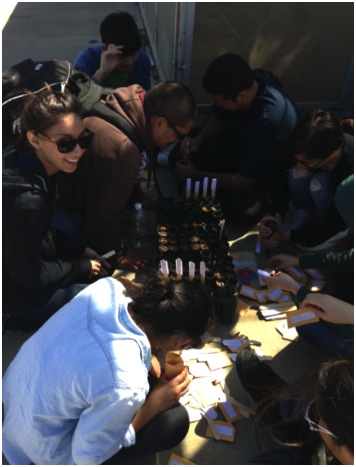
If invaders do better by early arrival and growing, will native species also benefit from being early? Not necessarily, as found in the Early View paper “Priority effects vary with species identity and origin in an experiment varying the timing of seed arrival” by Elsa E. Cleland and co-workers. Below is their summary of the study and a photo of the students helping out with field work.

Studies show that exotic species differ in phenology (i.e. are active at different times in the season) from the native species in the communities they invade. In Southern California many of our common invaders are exotic annual grasses and forbs that germinate earlier with the onset of winter rains than native herbaceous species. Hence, exotic species might benefit from emerging earlier in the season, allowing them to pre-empt space and other resources to suppress later emerging species, a kind of seasonal priority effect. We tested this hypothesis in an experiment varying the “arrival” time of pairs of species, by placing seeds of focal species into pots of field-collected soil either simultaneously or one week apart. In contrast to our expectations, native species benefited from earlier arrival more often than exotic species. An important implication of this finding is that giving native species a long “head start” likely aids in ecological restoration efforts.

Then, if being active early is so beneficial, why don’t native species have earlier phenology? Isn’t there sufficient selective pressure to favor earlier phenology in native species? Two additional aspects of our experiment support this idea. First, our results show that different species have various strength and even direction of priority effects. In diverse communities where the identity of neighbors will differ among individuals in the population, this could dampen directional selection on phenology. Second, we found that no significant disadvantage to arriving later when compared to being planted at the same time as a competitor. Thus, for native species that tend to have later emergence time than exotic competitors, there seem not to earlier emergence, as this still exposes them to similar levels of competition.

A final aspect of our experiment that is noteworthy; it was planted and harvested by 36 students enrolled in an undergraduate Ecology Lab course at the University of California, San Diego taught by the lead author (the co-authors on this manuscript were the Teaching Assistants for the course). Teaching evaluations and surveys showed that the students enjoyed contributing to original research, and the amount of preparation and oversight necessary to ensure data quality was not much greater than for any of the other lab activities where data were not destined for publication; a clear “win-win” for both the faculty and the students. Hence, our results demonstrate the synergies can arise by merging undergraduate teaching with faculty research programs.

Undergraduate students contributed to this study by aiding in both planting and harvesting. Here they are shown planting seeds for species pairs at the start of the experiment.

Undergraduate students contributed to this study by aiding in both planting and harvesting. Here they are shown planting seeds for species pairs at the start of the experiment.