Tag Archives: soil

The Soil Association’s mission is organic – and it always will be! Updated for 2026


Since the 1940s the Soil Association has campaigned for food and farming systems that support the health of our people and environment.

This work is just as relevant now as it was back then. We want to see a future where good food, organic food, is accessible to everyone and where we farm in a way that supports biodiversity, improves animal welfare and addresses climate change.

Though there is always more to do, we are making progress towards achieving this vision.

Last month, four of the Soil Association’s 17 Trustees resigned following the rejection by their fellow Trustees of a motion challenging our three-year old strategy, ‘The Road to 2020‘. Our strategy focusses as strongly as ever on organic food and farming, and also reaches out to broader audiences.

We are sorry these trustees felt unable to support our initiatives to work with non-organic as well as organic farmers, and with many other people in schools, hospitals and society more widely. We think the challenges facing our food systems today are so urgent that we need to work with all who are interested in finding solutions that are in line with our founding principles.

Transforming Britain’s food culture

Food, and how we produce it, is an entry point into people’s lives and health. It helps develop an understanding of our connection with the natural world, as well as being critically important in its own right.

We understand the pressures facing consumers today. Far from eschewing the term organic, we are working to change perceptions, by ensuring that many more people routinely eat better food, including organic, in schools and hospitals for instance.

We work with schools across the UK transforming food culture with great school meals, children growing and cooking food, and even holding their own farmers markets in partnership with local farmers and growers.

Our Catering Mark is transforming an industry previously driven by cost, not quality, and everyday hundreds of thousands of people in nurseries, schools, workplaces, hospitals and care homes people now eat fresh, healthy and locally sourced meals. At silver and gold Catering Mark award these meals now all include organic.

This work couldn’t be more important. Earlier this year, the Department of Health identified hospital food as a clinical priority for the first time and the Hospital Food Standards Panel recognised the Catering Mark as a scheme that improves food in hospitals for patients, staff and visitors.

We are working with an increasing number of hospitals to improve food served, including Nottingham University Hospital Trust whose meals have a minimum 15% spend on organic ingredients.

Our commitment to organic food and farming is as strong as ever

Organic farming has many of the answers that can help with some of the big challenges of the future such as climate change and the crisis now facing our soils. Organic farmers and growers are the true pioneers and heart of the organic movement and we remain absolutely committed to supporting them and continuing to grow the organic market.

We also know if we are to see real change in the world we need to work positively with all farmers – organic or not – sharing the research and knowledge of organic farming techniques, and learning from them too.

With World Soils Day on Friday (5th December) and the UN International Year of Soil in 2015, it’s a good moment to reflect that the health of our soil is critical to all farmers, not just organic ones.

So it was inspiring to see more non-organic farmers than ever before at our annual Soil Symposium last week, sharing ideas how to improve our soil and produce the very best food we can.

Through our Duchy Originals Future Farming programme we are supporting innovation in organic and low input agriculture, and helping farmers develop practices to improve productivity while caring for the environment and animal welfare.

Most farmers don’t have this ‘us and them’ attitude We are all trying to make a living the best we can, working together to find solutions to the issues facing agriculture in the UK. We would like to think we can find solutions which bring the farming community and wider society together – that doesn’t mean we won’t sometimes disagree, but we want to work constructively wherever possible with as many people as possible.

Farming must be fair, humane, healthy and ecologically based

We need to move beyond just telling others they are wrong; we need to share ideas and solutions to some of the big challenges facing our food system today. We want the Soil Association to become much more relevant to a lot more people – the public, farmers, businesses, schools and the public.

I want us to become better known for what we are for, rather than for what we are against. Our goal is to ensure that all farming and food is grounded in the organic principles – fair, humane, healthy and ecologically based – even if not all of it will be ‘certified’ organic.

I hope that this has made it clear that we remain completely committed to organic farming and to growing the market for organic food as the current gold standard for good food.

The Soil Association was founded to research and disseminate the links between the way we manage our soils, and the impacts on human and environmental health.

Nothing could be more important, and our remaining trustees are fully committed to our approach, as laid out clearly in ‘The Road to 2020.


Helen Browning is Chief Executive of the Soil Association.


387660

Soil Association must get back to its roots Updated for 2026


We expect fellow members of the Soil Association will wonder why we resigned. In a democratic organisation they certainly have a right to be told without delay.

Below is an edited version of our resignation letter and a shortened summary of the concerns which led to our collective action, following a vote by a majority of the Soil Association Council not to hold an emergency meeting to address the issues.

A longer account of our concerns is available, should Soil Association members or the wider community wish to read it.

We think that the organic approach to food and farming is ecologically coherent, humane, scientifically responsible and potent and we remain committed supporters of the organisation’s founding purposes.

We hope that our action stimulates thought about how the Soil Association might campaign most effectively for the adoption of organic ideas in order to build a healthy society from the ground up.

Our edited resignation letter

Dear Dennis [Dennis Overton, Chair of SA Council]

We are writing to tender our resignations as Trustees of the Soil Association with immediate effect.

Since joining Council we have tried to fulfil our obligation as trustees to help guide the organisation in achieving its aims and purposes. Our contributions have been based on a clear commitment to the organic cause and on our long-standing and varied track record in food policy, campaigning, journalism and production.

We have brought to Council not only perspective but engagement. We have reported on how others see the Association and have presented several well thought-through proposals for improvements in practice.

Despite our strenuous attempts to raise our latest concerns in a way that was discreet and proper, the majority response has been to shoot the messenger rather than face the awkward message.

Meanwhile, the questionable presence on Management Committee (with an attendant reputational risk) of a non-organic farmer and a doctor who publicly attacks an important tool of organic animal husbandry (homoeopathy) seems not to concern a Council that purports to be committed to good governance.

We fear for the good name and relevance of an organisation that we have supported for many years. We have done our best to alert fellow trustees to the dangers implicit in the way that the current strategy is being implemented.

It is clear that ours is a minority view and we can no longer collude in a bogus consensus. Accordingly we are resigning. We will continue to devote our energies to challenging corporate control of the food system.

Yours sincerely,

Joanna Blythman, Lynda Brown, Pat Thomas, Andrew Whitley.

Shortened summary of trustee concerns

Implementation of the Soil Association strategy [Road to 2020] and its effect on the Soil Association profile.

We believe that the implementation of this strategy is a major factor in the demise of organic awareness, and the general confusion around what the Soil Association is, what it stands for, and what it does. In particular we would note the following:

1. Demise of organic awareness

  • The avoidance, wherever possible, of the ‘O’ word in preference to ‘nature-friendly’ and ‘planet-friendly’ substitutes.
  • A reluctance to use the ‘O’ word in relation to the Soil Association and its activities.
  • The emphasis on ‘starting where people are’ which leads to confusing messages and uncomfortable compromises. An example here is the use of a long-standing organic slogan ‘Food you can trust’ to promote the ‘Food For Life Catering Mark’ when its standards depart in important respects from Soil Association organic standards.
  • The widespread confusion resulting from compromised positions.
  • The tendency to ‘infantilise’ the organic message in major campaigns.
  • The policy of ‘pick and mix’ organics, which undermines informed understanding of organic principles.

2. Subordination and dilution of the organic message to a healthy eating message

  • Food For Life and the Catering Mark messaging is given prominence and is becoming the preferred ‘voice’ of the Soil Association.
  • The shift in focus to position the Soil Association as a public health delivery organization rather than the UK’s main organic food and farming organisation.

3. The Soil Association’s public profile

  • A PR void at senior management level, and loss of an authoritative voice.
  • The Soil Association is no longer the ‘go-to’ place for media on food and farming matters.
  • The Soil Association lacks political clout on national farming matters.

4. A dull and uninspiring image

  • The evident lack of appeal to younger consumers, for example, as highlighted in a recent survey conducted by MMR Research Worldwide.
  • A safe, cautious, controversy-averse image, pre-occupied with being all things to all men and with an over -arching ‘soft sell’.
  • The substitution of vague promises for meaningful inspirational targets.
  • The lack of ‘fire in the belly’ campaigns and conviction in its own beliefs.
  • The policy – as seen in the Soil Association’s daily News Digest – of attaching itself to others’ coat tails to ‘walk the talk’.

5. The inward looking and parochial nature of the Soil Association

  • Too focused on its own achievements.
  • A lack of engagement with the wider organic world.
  • Inadequate  promotion of the success of the organic movement globally to help build general consumer/farming confidence.

6. Membership issues

  • Membership of the Soil Association continues to decline.
  • Members are undervalued in comparison to external ‘stakeholders’.
  • The evolution of Living Earth into a lightweight lifestyle magazine instead of an intelligent publication that inspires and informs.
  • An emerging agenda to change the Soil Association from a campaigning membership organisation into a ‘corporate’ entity.

7. Inadequate support and allegiance to organic farmers and growers

  • Licensee numbers have stagnated, yet there seems to be no pro-active strategy, in either the farming or the consumer arena, to capitalise on the upturn of organic sales and to champion overtly organic food.


Comments received

During the preparation of this document we spoke confidentially to various people from across the spectrum of farmers, growers, producers and consumers. We include some comments we received (unattributed) for background purposes:

  • “The SA is too prepared to jump on bandwagons rather than focusing on what it says it believes in.”
  • “Its content seems to be news-led rather than setting the agenda.”
  • “The SA is not explaining why organic is a good thing for people; they’ve lost their way.”
  • “The SA failed to make organic different and has been too keen to keep mainstream agriculture onside.”
  • “I haven’t a clue what organic stands for any more. The SA is not on my radar, I never hear about it. I’m no longer certified, but keep in touch with growers and all they do is moan about certification.”
  • “We need more consumer education. The SA is failing in this – people don’t know what organic is.”
  • “I hear a lot of frustration from growers and farmers. Certification is laborious and expensive for small producers – who constantly moan about it, and feel they are unfairly treated.”
  • “The SA needs to go out on a limb to defend organic philosophy and values. No one will thank it in 20 years time for being safe, for not sticking its head above the parapet, for avoiding difficult conversations or for striving to be a healthy eating charity – of which we already have many.”
  • “Organic is dying. The SA are failing in their duty to educate and explain what organic food and farming is all about – no-one knows what organic means; if this continues the organic movement will fade away.”
  • “The SA is diluting its message and spreading itself too far and wide: I couldn’t give you a definition of who the SA is now and what the SA stands for.”
  • “The SA has failed to make organic different and has been too keen to keep mainstream agriculture onside.”
  • “Campaigning organizations need to lead from the front. It’s not the easy stuff that counts, it’s the difficult decisions where you need to take a stand – that’s what people respect you for, and that’s where the SA ducks out.”
  • “The more SA embraces non-organic organizations, the more difficult it is for devoted producers, some of whom feel that it’s treachery; they feel let down and abandoned.”
  • “Large non-organic organizations don’t want the SA to campaign for organics, because it makes them look bad – the SA defer to this, which tarnishes their organic image and credentials.”
  • “Why is the campaigning for organic being left to the OTB? The current work being done by the OTB is very low level and just doesn’t work.”
  • “The SA effectively heads up the organic movement in the UK; indeed, historically, it is largely responsible for creating it. That carries a huge responsibility. It is the Mother Ship. It cannot cast it off and destroy it for its own short-term aims – and that’s what I see happening. If the organic movement dies in the UK, the SA will be responsible and history will judge it accordingly.”


387619

A voyage into soil darkness Updated for 2026

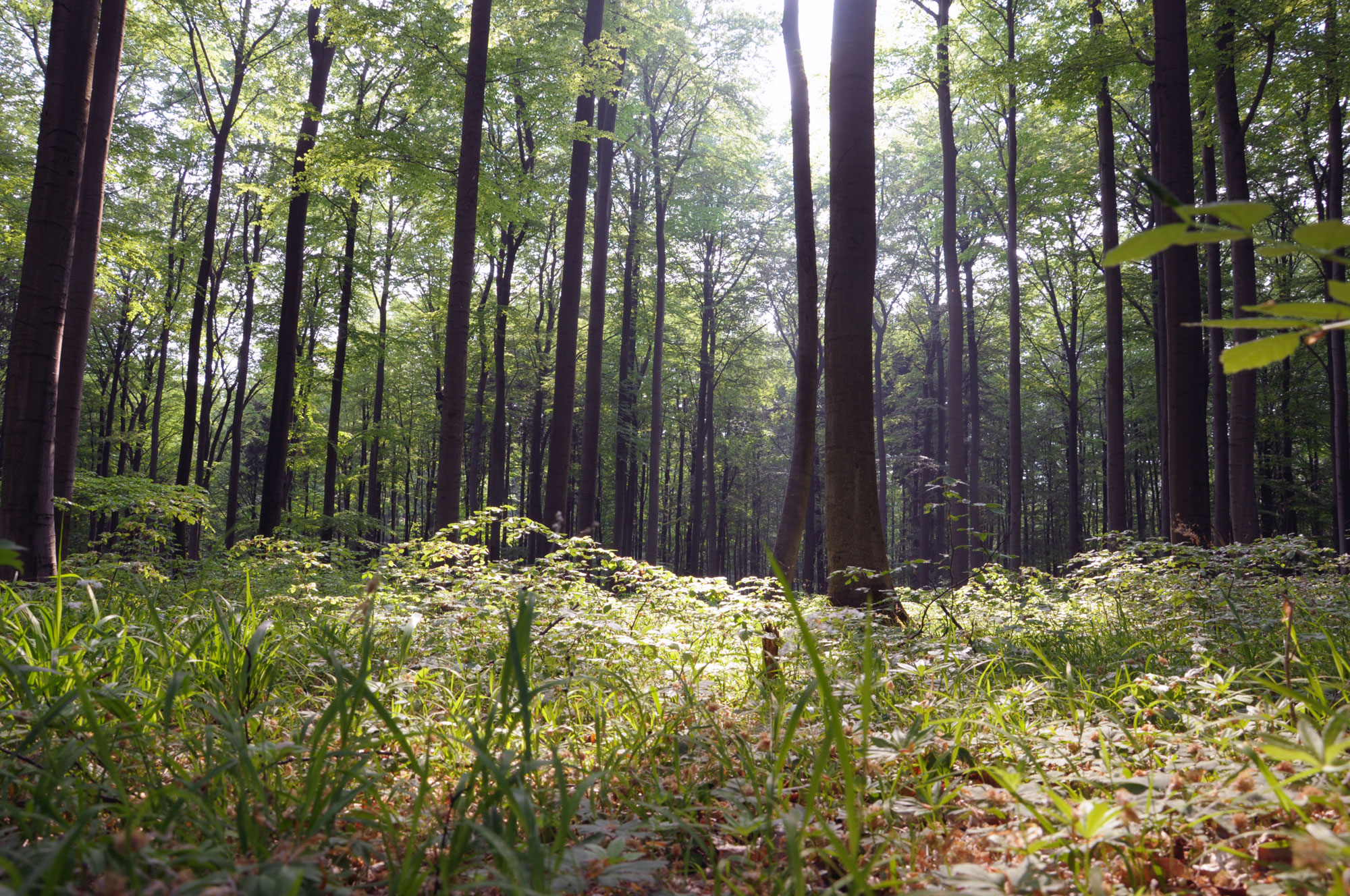
While most people know the aboveground part of forest ecosystems, very few have caught a glimpse of the belowground environment that comprises a highly diverse fauna. The number of species co-occurring on less than a square meter habitat ground (or a cubic meter of habitat volume) exceeds that of the aboveground compartment by far. In consequence, forest soil communities have been called “poor man’s rainforest”. Nevertheless, we still do not know much about the animals living in these “next-door” habitats and the structure of their communities.

beechforest

Impression of a central European beech forest. Much more is known about the aboveground animals and their interactions than about the belowground communities that carry out the critically important ecosystem functions of litter decomposition and nutrient recycling.


Why is our knowledge about forest soil communities so limited? Progress in our understanding of soil communities and processes has been hampered by the chronic lack of data for complex soil food webs of high resolution. This is caused by aggregation of populations in coarse functional groups, whose species often span multiple trophic levels from primary to secondary or tertiary predators. In addition, soil is an opaque medium leading to a limited visibility of interactions. Further, detritivores typically ingest a multitude of intermingled resources hampering identification of what the animals actually digest and live on. In the recent years, new molecular methods have emerged providing the possibility to unravel belowground interactions and the complex structure of forest soil food webs.


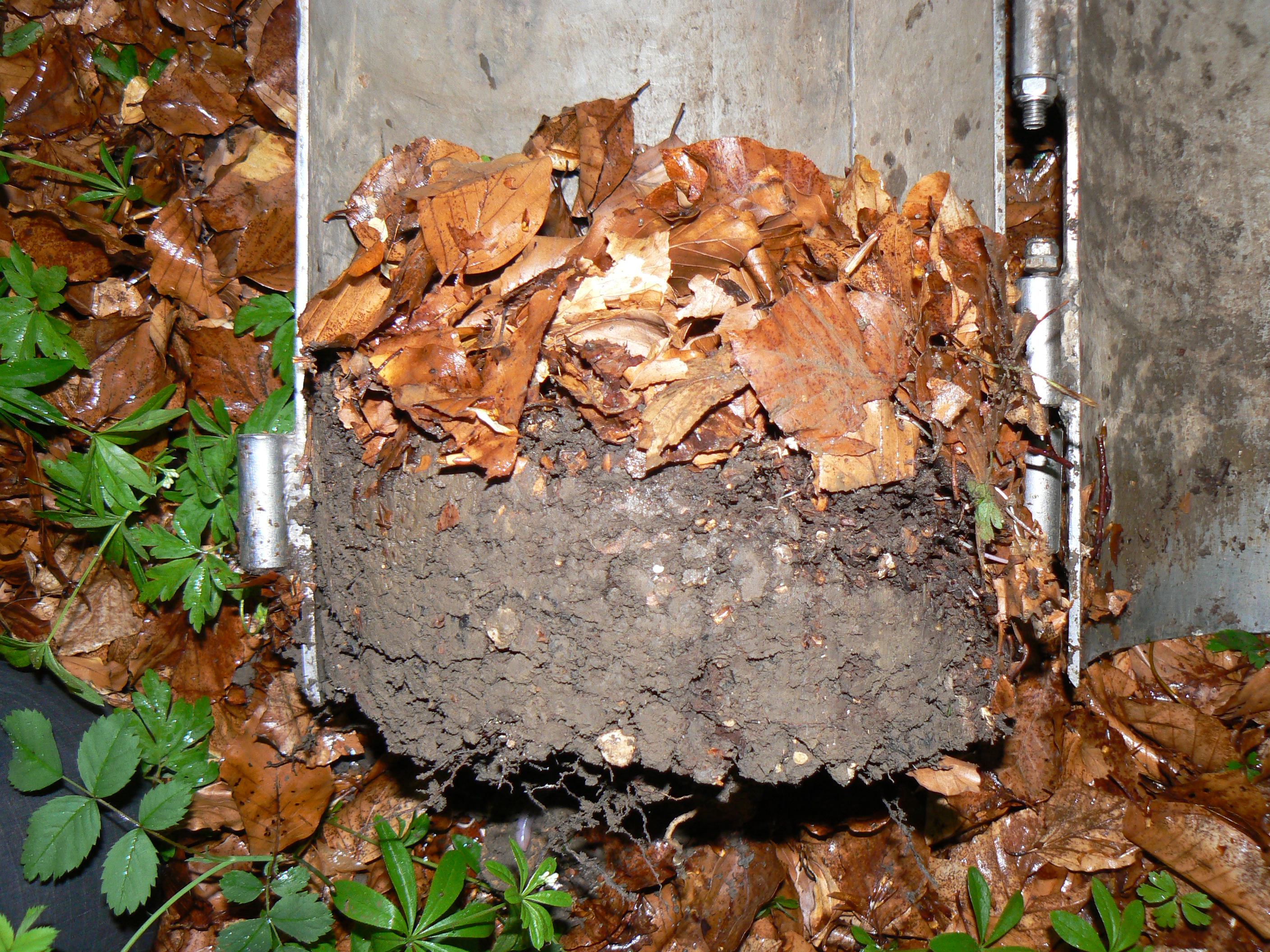
A soil core provides an impression of the complex structure of the belowground habitat. This environment comprises a highly diverse and complex animal community spanning several trophic levels.

A soil core provides an impression of the complex structure of the belowground habitat. This environment comprises a highly diverse and complex animal community spanning several trophic levels.

The special issue “Into darkness” comprises several studies of central European beech forest soil communities. The studies included in this special feature fill employ state-of-the-art methods to unravel general feeding guilds by stable isotopes (Klarner et al.) as well as specific directed feeding interactions by molecular gut content and fatty-acid analyses (Ferlian and Scheu, Günther et al., Heidemann et al.). This allowed the construction of the first highly-resolved complex soil food webs (Digel et al.) and analyses how they respond to external drivers such as the nutrient stoichiometry of the basal litter (Ott et al.) and climate change (Lang et al.). Together, they provide a unique impression of a voyage into darkness.

Ulrich Brose, Editor of the Oikos Issue “Into Darkness”


The Carbon Underground: reversing global warming Updated for 2026


Since Dr. James Hansen, a leading climatologist, warned in 2008 that we need to reduce the amount of CO2 in the Earth’s atmosphere to 350 parts-per-million (ppm) in order to preserve life on Earth, little has been done to get us there.

It’s getting late. If we’re going to preserve a livable Earth, we the global grassroots, must do more than mitigate global warming.

We must reverse it. How?

Hint number one: not by politely asking out-of-control corporations and politicians to please stop destroying the planet.

Hint number two: not by pinning our hopes for survival and climate stability on hi-tech, unproven and dangerous, “solutions” such as genetic engineering, geoengineering, or carbon capture and sequestration for coal plants.

Hint number three: not by naively believing that soon (or soon enough) ordinary consumers all over the planet will spontaneously abandon their cars, air travel, air conditioning, central heating, and fossil fuel-based diets and lifestyles just in time to prevent atmospheric concentrations of greenhouse gases from moving past the tipping point of 450 ppm or more of CO2 to the catastrophic point of no return.

We can reverse climate change by sequestering several hundred billion tons of excess CO2 using the ‘tools’ we already have at hand: regenerative, organic farming, ranching and land use.

And we can make this world-changing transition by mobilizing a vast green corps of farmers, ranchers, gardeners, consumers, climate activists and conservationists to begin the monumental task of moving the Carbon Behemoth safely back underground.

Moving the carbon underground

As thousands of farmers, ranchers, and researchers worldwide are demonstrating, by reducing greenhouse gas (GHG) emissions of CO2, methane, nitrous oxide and black soot, and qualitatively ramping up plant photosynthesis (i.e. the capacity of plants, trees, and grasses to move CO2 from the atmosphere through their roots into the soil) on billions of acres of farm land, range land, and forest, we can sequester enough CO2 to restabilize the climate.

We’re talking about mobilizing the global grassroots, not as passive observers, but as active participants, producers and conscious consumers, implementing and promoting on a mass scale, tried and true, low-tech, beneficial practices that naturally sequester enormous amounts of atmospheric carbon in the soil.

These traditional, regenerative practices include no till organic farming, planned rotational grazing (carbon ranching), composting of organic wastes, the use of cover crops, planting trees, and preserving and restoring forests, wetlands, riparian zones, grasslands, peat bogs, and biodiversity.

As Courtney White, author of the recent book Grass, Soil, Hope puts it:

” … if land that is bare, degraded, tilled, or monocropped can be restored to a healthy condition, with properly functioning carbon, water, mineral, and nutrient cycles, and covered year-round with a diversity of green plants with deep roots, then the added amount of atmospheric CO2 that can be stored in the soil is potentially high.

“Globally… soils contain about three times the amount of carbon that’s stored in vegetation and twice the amount stored in the atmosphere. Since two-thirds of the earth’s land mass is grassland, additional CO2 storage in the soil via better management practices, even on a small scale, could have a huge impact.”

The answer lies in the soil

The noted food writer, Michael Pollan, in his introduction to White’s book, explains the basic concepts of plant photosynthesis and the benefits of regenerative agriculture:

“Consider what happens when the sun shines on a grass plant rooted in the earth. Using that light as a catalyst, the plant takes atmospheric CO2, splits off and releases the oxygen, and synthesizes liquid carbon-sugars, basically. Some of these sugars go to feed and build the aerial portions of the plant we can see, but a large percentage of this liquid carbon – somewhere between 20 and 40 percent – travels underground, leaking out of the roots and into the soil.

“The roots are feeding these sugars to the soil microbes-the bacteria and fungi that inhabit the rhizosphere-in exchange for which those microbes provide various services to the plant: defense, trace minerals, access to nutrients the roots can’t reach on their own. That liquid carbon has now entered the microbial ecosystem, becoming the bodies of bacteria and fungi that will in turn be eaten by other microbes in the soil food web.

“Now, what had been atmospheric carbon (a problem) has become soil carbon, a solution-and not just to a single problem, but to a great many problems.

“Besides taking large amounts of carbon out of the air – tons of it per acre when grasslands are properly managed, according to White – that process at the same time adds to the land’s fertility and its capacity to hold water. Which means more and better food for us …

“This process of returning atmospheric carbon to the soil works even better when ruminants are added to the mix. Every time a calf or lamb shears a blade of grass, that plant, seeking to rebalance its ‘root-shoot ratio’,” sheds some of its roots.

“These are then eaten by the worms, nematodes, and microbes-digested by the soil, in effect, and so added to its bank of carbon. This is how soil is created: from the bottom up.”

Wake up before it’s too late

You may be unfamiliar with the enormous impact of industrial food and farming and non-sustainable forest practices on global warming. So here’s a few facts:

  • Chemical and energy-intensive, GMO, industrial food and farming practices generate 35% of global greenhouse gas pollution.
  • Deforestation, often agriculture-driven, generates another 20%.

But there is an alternative: natural carbon sequestration through regenerative land use. To find out more, please take a look at the comprehensive 2013 scientific study called ‘Wake Up Before It’s Too Late‘, published by the United Nations Commission on Trade and Development (UNCTAD).

And if you need a strong dose of good news, to counteract the typical gloom and doom message around the climate crisis, please read the 2014 Rodale Institute study on regenerative organic practices. See also the website The Carbon Underground.

Given that hundreds of billions of tons of carbon originally sequestered in agricultural soils are now blanketing the atmosphere and cooking the planet, our life-or-death task is to move this massive ‘legacy load’ of CO2 (now 50 ppm of CO2, likely to be 100 ppm in 20 years, past the danger zone) back underground, as soon as possible.

This Great Sequestration will buy us the time we need to reduce fossil fuel use by 80-90% or more and reverse global warming.

Taking down factory farms and industrial agriculture

Of course moving several hundred gigatons of CO2 back underground and reversing global warming will not be easy. Getting back to 350 ppm of CO2 in the atmosphere will require nothing less than a global food and farming revolution.

That will mean shutting down factory farms, boycotting genetically engineered foods, including factory-farmed meat and animal products, and putting billions of intensively confined farm animals back on the land, grazing, where they belong.

Restabilizing the climate means putting an end to gigantic GMO soybean and palm oil plantations and industrial timber operations. It means preserving tropical forests, and planting and nurturing hundreds of billions of native trees in deforested urban and rural areas.

Reversing global warming means putting an end to the energy-intensive, chemical-intensive, genetically engineered industrial food and farming system that is not only destroying public health, torturing animals, polluting the water, overgrazing pastures and rangelands, driving family farmers off the land, and destroying biodiversity, as well as pumping billions of tons of CO2, methane, nitrous oxide, and black soot into the air.

Reversing climate change also means stopping industrial agriculture from continuing to dump billions of pounds of chemical fertilizers and pesticides on the already heavily tilled, compacted, and eroded land-practices that destroy the Earth’s natural ability to sequester vast amounts of carbon.

These unsustainable farming, ranching, and land use practices, according to a leading world expert, Dr. Rattan Lal, have already caused the release of 25-70% (hundreds of billions of tons) of all the carbon originally sequestered in agricultural soils.

We need ‘regenerative agriculture’

As a consequence of this decarbonization and destruction of the Earth’s topsoils, almost a quarter of all arable land on the planet is fallow. But as Dr. David Johnson of New Mexico State University has recently shown in a scientific study for Sandia Labs, by implementing regenerative organic practices,

“The rates of biomass production we are currently observing in this system have the capability to capture enough CO2 (50 tons of CO2 / acre) to offset all anthropogenic CO2 emissions on less than 11 percent of world cropland. Over twice this amount of land is fallow at any time worldwide.” (From The Soil Will Save Us, by Kristin Ohlsen, p. 233.)

As the well respected author Kristin Ohlson commented to Dr. Johnson in a telephone conversation about this staggering assertion: “Aren’t you afraid to say this? Aren’t you afraid that saying that will let the oil and gas companies off the hook? As well as people burning down forests and all the rest of us with big carbon footprints? Aren’t you afraid?”

Ohlson continued: “I thought I could feel a wary shrug over the phone.”

Dr. Johnson then replied: “I don’t see anything on the horizon that touches the effectiveness of this approach We’re not going to reduce our carbon dioxide emissions anytime soon, because we depend too much on oil and gas, and the rest of the world wants our lifestyle. The whole idea is to get something that works right now, the world over, to make a significant impact on reducing atmospheric carbon dioxide.” (Ibid, pp. 233-34.)

If industrial agriculture and GMOs are marginalized through mandatory labeling, marketplace pressure and public policy change, if fossil fuel consumption in all sectors is steadily reduced, and regenerative organic practices are put into action globally, with a focus on the 22% of the planet’s soils which are degraded and currently fallow, we will be able to sequester 100% of current, annual (35 gigatons) carbon dioxide emissions.

Small farmers can cool the Planet

The world’s two and a half billion small and indigenous farmers and rural villagers currently manage to produce 70% of the world’s food on 25% of the world’s land.

These so-called ‘subsistence farmers’, who have always struggled to survive, now find that climate change, the steady expansion of GMOs and industrial agriculture, and so-called ‘Free Trade’ agreements, are making their farming and survival much more difficult.

But these same small farmers, ranchers, pastoralists and forest dwellers, because they have, in most cases, retained traditional knowledge and practices, including seed saving and animal grazing, are open to adopting even more powerful regenerative organic practices.

And of course these regenerative, climate-friendly, low-tech land-management techniques will also increase yields, reduce rural poverty, conserve water, improve soil health, and prevent erosion. Study after study has shown that small agro-ecological farms significantly out-produce industrial farms-while sequestering carbon.

The solution to climate change, desertification and world hunger is literally in the hands of the world’s two-and-a-half billion family farmers – but only if those farmers are supported by conscious consumers and activists, driving public policy, marketplace, and land-use reform on a global scale.

This won’t happen unless we focus on economic justice and land-use reform. Investments and public funds, local to international, must be shifted from greenhouse gas-polluting factory farms and chemical-drenched genetically engineered crops to regenerative organic farming techniques that benefit small-scale and sustainable farmers, as well as consumers.

Land grabs and ‘free trade’ agreements orchestrated by industrialized nations and multinational corporations must be stopped.

The point of no return

The US and global climate movement desperately needs a more sophisticated (and international) strategy beyond just pressuring politicians, corporations, banksters, and the White House into shutting down coal plants, fracking and the tar sands pipeline.

What we need is a holistic Zero Emissions / Maximum Sequestration strategy that can galvanize a grassroots army of hundreds of millions of small farmers and conscious consumers, not only in the US, but globally.

Although millions of misinformed and / or befuddled Americans remain in denial, a critical mass of the body politic is beginning to understand that global warming and climate chaos pose a serious threat to human survival.

What they are lacking, however, is a coherent and empowering understanding of what is actually causing global warming, as well as a practical roadmap of how we-individually, collectively and globally-move away from the dangerous precipice where we find ourselves.

The only remaining significant disagreement among informed climate researchers centers on how long we can survive the still-rising 400 ppm of CO2 in the atmosphere – or 485 ppm if we include other GHGs such as methane, nitrous oxide, CFCs and black soot.

The current consensus seems to be that we have 15-25 years before we reach a ‘point of no return’ whereby climate change morphs into irreversible climate catastrophe.

Faulty solutions. Flawed strategy

The US-based climate action movement, led by 350.org, has done an excellent job of protesting against the coal, oil and gas industries.

This high-profile movement has also popularized the notion that fossil fuel consumption must be drastically slashed (by 80-90%) and replaced by renewable forms of energy, and that individuals and institutions must divest from the fossil fuel industry, making sure that 75% of fossil fuels reserves are left in the ground.

But strategic components of 350.org’s roadmap for change are seriously flawed.

First of all, 350.org’s reliance on over-simplified official statistics (the Intergovernmental Panel on Climate Change – IGCC) on what is causing excess GHG emissions in the atmosphere (i.e. utilities, industry, transportation, and housing) fails to take into account the leading cause of greenhouse gas emissions.

And that leading cause is our industrial food and farming system (production, transportation, processing, waste, and land use), including its impact on deforestation and its degradation of the soil’s ability to naturally sequester CO2.

Our climate dysfunctionality is in large part a function of how we farm and eat. Yet the most prominent voices in the climate movement continue to downplay, or ignore entirely, this fact.

It’s not just cutting emissions – it’s removing the CO2!

Even the most optimistic climate activists admit that atmospheric concentrations of CO2 will likely reach 450 ppm in the next several decades before leveling off. Unfortunately the climate movement up until now has offered no real strategy for how we can get from 450 ppm or more to the safe level of 350 ppm.

Even if the US, China, India, Brazil, Indonesia, the EU, and other nations stop all emissions sometime in the next 20 years, we will still have dangerous levels (450 ppm or more of CO2 and other greenhouse gases) in the atmosphere. These are levels that will gradually melt the polar icecaps, burn up the Amazon, spawn disastrous storms, floods, and droughts, and destroy agricultural productivity.

So this is not just a basic error in analysis and a failure of imagination. It’s a ‘doom-and-gloom’ formula that leaves us with little or no hope.

We, the members of the regenerative organics movement, invite you to educate yourself about the good news of regenerative organics and natural carbon sequestration. Please join and help us unite the climate movement, the organic movement, the animal rights, family farmer, and conservation movements into a mighty force for transformation and regeneration.

Join us and noted author Vandana Shiva under the banner of “Cook Organic, not the Planet” at the People’s Climate March in New York City today, 21st September, or at one of the many local actions on that day, and at forthcoming US and international gatherings.

The hour is late. But we still have time to turn things around by stopping the Carbon Criminals and Earth Destroyers and moving as quickly as possible toward a regenerative farming, ranching, and land use system capable of reversing global warming.


Ronnie Cummins is international director of the Organic Consumers Association and its Mexico affiliate, Via Organica.

This essay was originally published by the Organic Consumers Association.


384307

From rich to poor – what happens in the soil? Updated for 2026

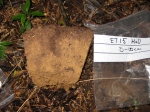
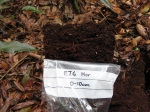
What happens with plants, microbes and animals during soli transition from mull to mor? Find out in the Early View paper “Coordination of aboveground and belowground responses to local-scale soil fertility differences between two contrasting Jamaican rain forest types” by David Wardle and colleagues. below is their summary of the study:

There is much interest in understanding how long term decline in soil fertility, in the absence of major disturbance, drives ecological processes, or ‘ecosystem retrogression’. However, there are few well–characterized systems for exploring this phenomenon in the tropics. We studied two types of montane rain forest in the Blue Mountains of Jamaica that occur in patches adjacent to each other and represent distinct stages in ecosystem development, i.e., an early stage with shallow organic matter (‘mull’ stage) and a late stage with deep organic matter (‘mor’ stage). We measured responses of soil fertility and plant, soil microbial and nematode communities to the transition from mull to mor, and assessed whether these responses were coupled. For soil abiotic properties, we found this transition led to declining soil nitrogen and phosphorus, and reduced availability of phosphorus relative to nitrogen; this led to a shorter and less diverse forest. The resulting litter from the plant community entering the soil subsystem contained less nitrogen and phosphorus, resulting in poorer quality litter entering the soil. We also found impairment of soil microbes (but not nematodes) and an increasing role of fungi relative to bacteria during the transition. These results show that retrogression phenomena involving increasing nutrient (notably phosphorus) limitation can be important drivers in tropical systems, and are likely to involve aboveground–belowground feedbacks whereby plants produce litter that is less nutritious, impairing soil microbial processes and thus reducing the release of nutrients from the soil needed for plant growth. This type of feedback between plants and the soil may serve as major though often overlooked drivers of long term environmental change.

Pictures: Characteristic ‘mull’ forest (top left) and uppermost soil layer with significant mixing of organic material and mineral soil (bottom left); and characteristic ‘mor’ forest (top right) with uppermost soil layer consisting of a thick layer of organic matter (bottom right). Over time the ‘mull’ soil transitions to ‘mor soil’, characterized by less available nutrients and reduced availability of nitrogen relative to phosphorus; this in turn has important consequences for the vegetation and quality of litter that is returned to the soil.


div { margin-top: 1em; } #google_ads_div_wpcom_below_post_adsafe_ad_container { display: block !important; }
]]>