Tag Archives: Ecologic

Global support for a sanctuary to protect the Arctic Updated for 2026


A study, commissioned by Greenpeace, found three in four (74%) people worldwide support the creation of a protected sanctuary in the international waters surrounding the North Pole.

In the UK, this rises to nearly four in five (78%). The single country giving the strongest backing was Argentina, with 80%.

Currently only 1.5% of the Arctic Ocean is protected – less than any of the world’s oceans.

In the past two months, more than 900 influential people have signed Greenpeace’s Arctic Declaration, calling for a sanctuary around the High Arctic, including Archbishop Desmond Tutu, Emma Thompson, Sir Richard Branson, Sir Paul McCartney and many UK political figures.

In the coming weeks, delegations lead by Greenpeace will present these demands along with the list of signatories to the embassies of Arctic States all over the world.

Governments are letting us down!

Greenpeace International Executive Director, Kumi Naidoo, said: “Unfortunately our governments are massively failing in their responsibility to protect our environment and our climate for our children’s future.

“But today, our leaders have received a strong signal that the public appetite for action on the Arctic is overwhelming and must no longer be ignored. Our leaders now have both the mandate and the opportunity to act for the health of the climate and the Arctic. The world is watching and demanding action.” 

To coincide with the release of this new study, climbers and mountaineers are climbing iconic mountain peaks and buildings all over the world throughout the day, to demand that governments respond to the global outcry to make the creation of a protected Arctic Sanctuary a top priority.

Highs and lows

All 30 countries polled show that the vast majority of people either support or strongly support the creation of an Arctic Sanctuary.

The strongest support for protection came from Argentina, Italy, India and South Africa, but also Arctic states like the USA and Canada went above the global average with approximately 80% in favour.

The lowest support for Arctic conservation came from Japan and Russia, where 51% and 45% of people throught the Arctic should be opened up to oil companies and other heavy industries – yet both countries still supported an Arctic Sanctuary by a decisive margin.

But despite supporting an Arctic Sanctuary by a good margin, Japanese opinion was almost equally split on whether “Oil drilling, oil transport, and industrial-scale fishing should be banned in the international waters of the Arctic Ocean around the North Pole.”

The biggest surprise came in the high level of trust expressed in oil companies’ ability to clean up spills. A astonishing 51% worldwide agreed with the proposition that “I trust that the oil companies have the necessary capacity and technology to clean up a major oil spill in the Arctic.”



383738

Frugivory and seed dispersal Updated for 2026

What is it that determines if a bird should deposit a seed from a fruit in a specific place or not? I the Early View paper “Seed dispersal in heterogeneous landscapes: linking field observations with spatially explicit models”, Jessica E Lavabre ad colleagues combines modelling with empirical studies to find out! Below is the author’s summary of the study.

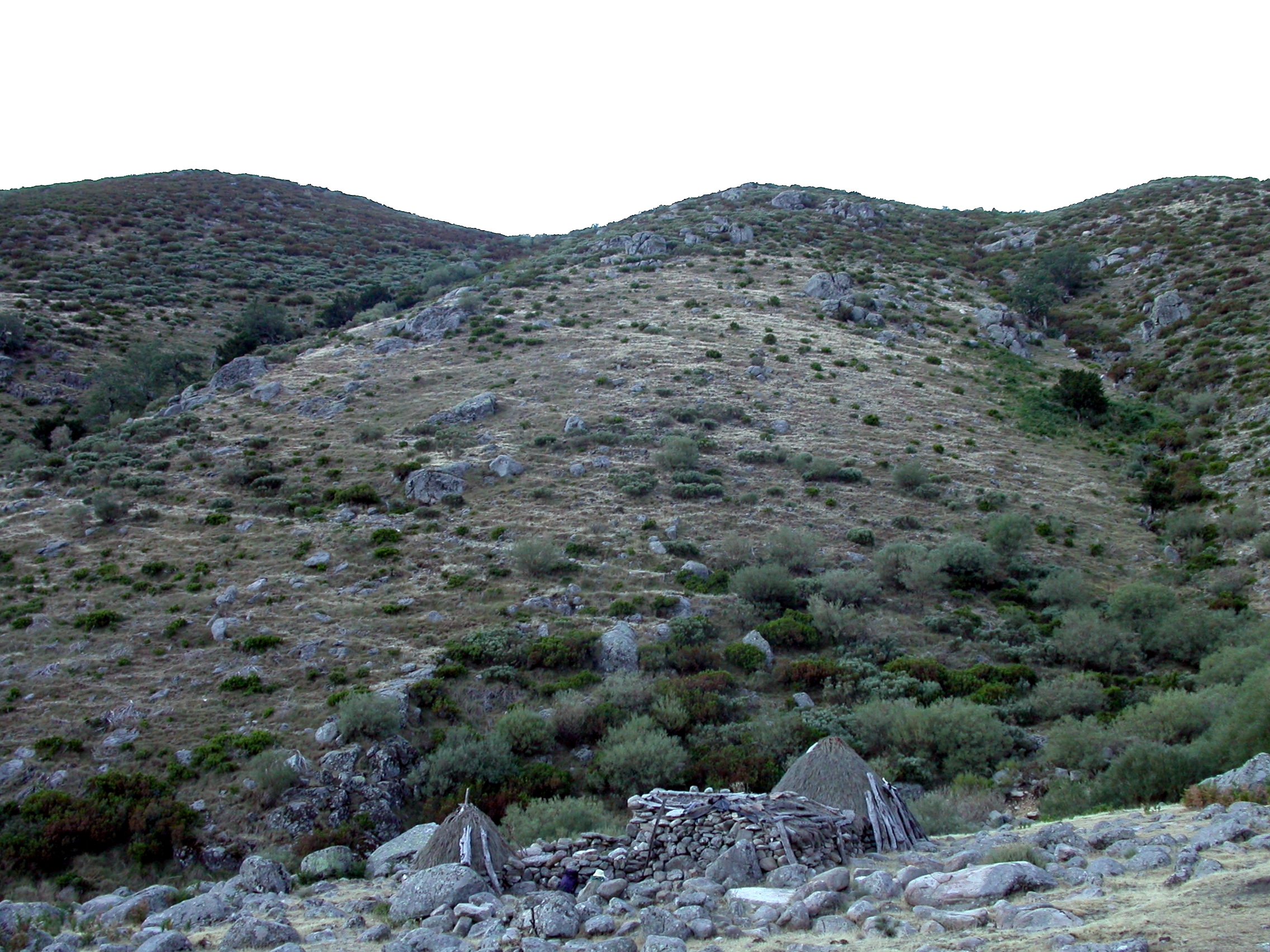
Frugivorous birds play a critical role in the population dynamics of many fleshy-fruited plants by defining the template for the establishment of new individuals. Because successful germination and subsequent seedling survival is highly dependent upon the micro-habitat where a seed arrives, it is crucial to understand which factors drive seed deposition. In our study, we aimed to take an important step forward in understanding the complex mechanisms that generate the spatial patterns of seed dispersal. Few studies have previously modelled seed dispersal in a real landscape, mostly because real vegetation structure is often highly heterogeneous. Here, we have taken advantage of a simple study system to parametrize mechanistic seed-dispersal models with empirical field data, and we built three models that test three seed-dispersal predictors: distance from the source tree, microhabitat type, and a combination of both distance from the source and microhabitat type.

To our greatest surprise, the third model, combining distance and microhabitat type, did not perform significantly better than the other two, simpler models. Additionally, our results suggested that what we had initially considered as one population could instead be two functionally distinct patches, with distinct seed dispersal dynamics. Altogether, these results reinforce the hypothesis that functionally distinct groups of frugivore species generate scale specific seed rain patterns.

LaVera LaVera2

Changing perspectives Updated for 2026

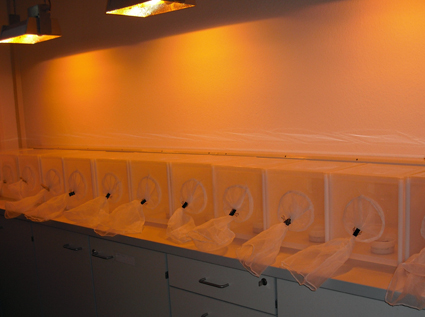
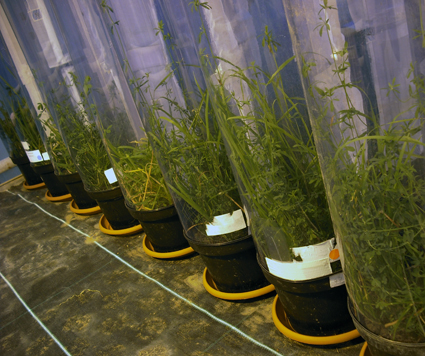
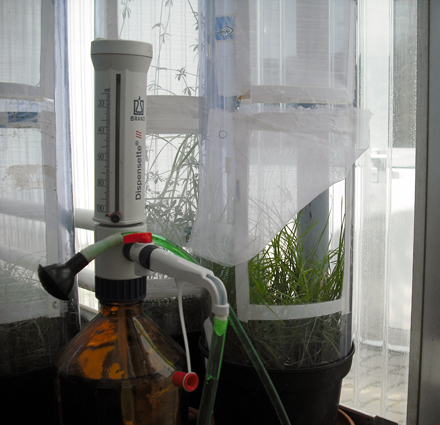
The most exciting aspect of this study “Increase of fast nutrient cycling in grassland microcosms through insect herbivory depends on plant functional composition and species diversity” (Nietschke et al)- for me – was to take our experiences and results from the field site – the Jena Experiment that was designed for elucidating mechanisms of diversity effects – and to incorporate them into a microcosm experiment under well controlled conditions.

Here, we aimed at tracking the way of nutrients from the intact plant, over an insect herbivore and its feeding characteristics, into the soil, and over to another trophic level – And to judge the role of plant diversity and functional composition along that way.

  • Some aspects of the course showed very clearly (e.g. the release of nutrients with feeding and the relevance of the plant functional groups),
  • some were surprising (e.g. both throughfall pH and P increased with herbivory intensity and faeces accumulation – diversity having a similar effects, although independently of herbivore intensity),
  • and yet others were challenging (e.g. clear soil microbial responses only occurred at high levels of herbivory).

Finally, stepping back a little and taking our field site results into account, formed a broader picture and gave some new perspectives.

Besides the change of perspective the study brought about and the various methods we applied, it was very inspiring and rewarding to work together in a team of people that have realized quite different niches within Biodiversity Ecosystem Functioning-space.

Norma1 Norma2 Norma3 Norma4 Norma5

Do invasive species alter litter nitrogen release? Updated for 2026

Can invasive species actually alter their environment so that more nutrients are available for them? Find out in the Early View paper “Non-additive effects of invasive tree litter shift seasonal N release: a potential invasion feedback” by Michael J. Schuster and Jeffrey S. Dukes. Below is their summary of the study:

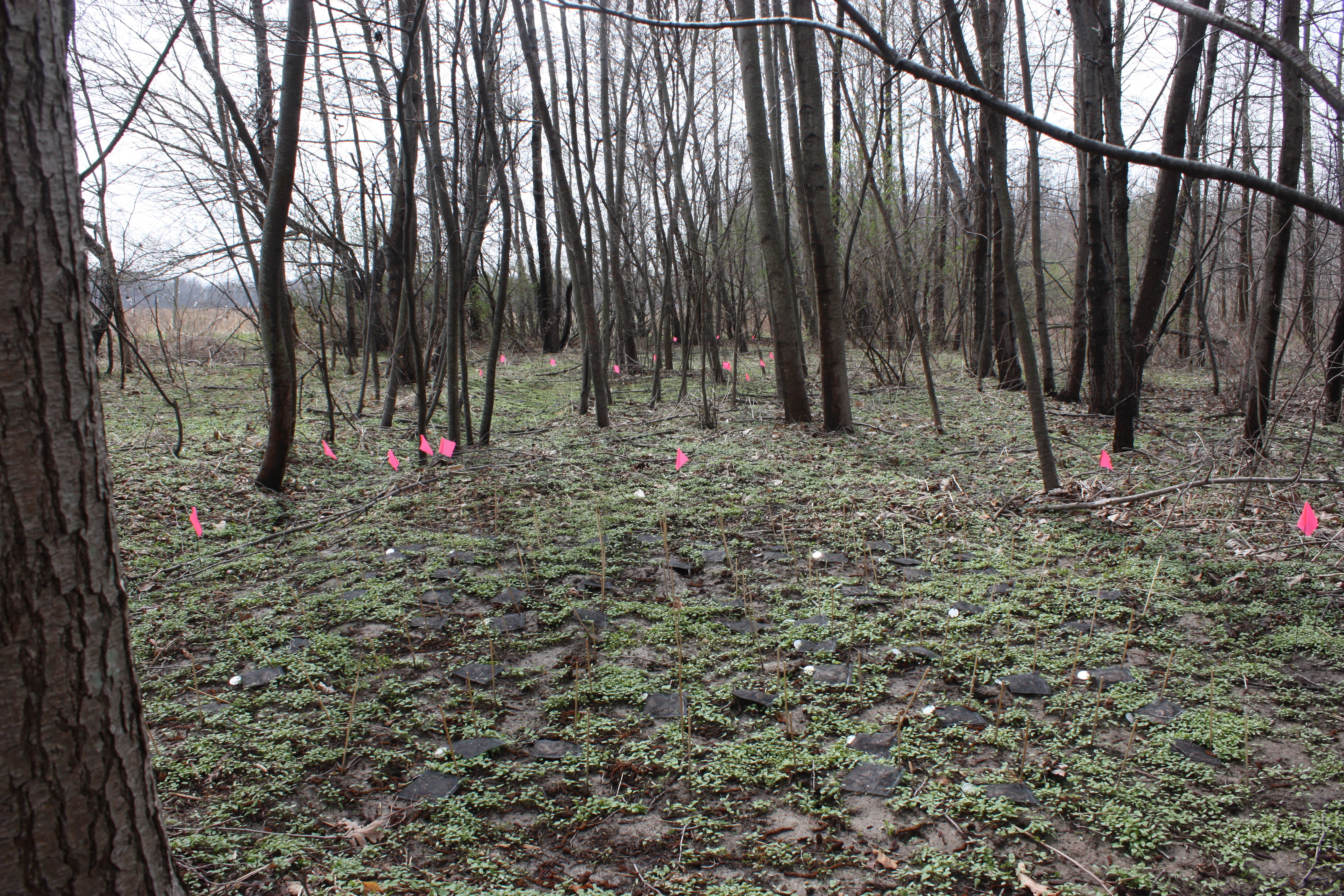
Many woody invasive species change their environment to better fit their needs for resources, particularly soil nutrients like nitrogen. One way that they can do this is by accelerating the decomposition of leaf litter—an important step in recycling leaf nitrogen into a form that can be used by plants. However, much of what we know about the decomposition of invasive species’ litters, and their impacts on soil fertility, is based on observations of litter from an individual species decomposing by itself. This is problematic because litters rarely decompose by themselves in nature. More commonly, litters of multiple species are mixed together and decompose more quickly or more slowly than we would expect based on the decomposition rates of each species separately. Thus, we designed a litter bag experiment to examine how the litter of four invasive tree species decomposed differently when mixed with that of four native species, and how this difference might change as the invader became more dominant in the litter layer.

mixed litter (1) mixed litter2

One year and 448 litter bags later, we found some surprising results. Indeed, native-invasive litter mixtures commonly decomposed at different rates than would have been predicted, but whether mixtures lost mass faster or slower than the predicted rate did not follow a strong, consistent pattern. In contrast, the release of nitrogen from these mixtures followed a very clear pattern of being slowed early on, but catching up to or exceeding the amount of nitrogen that would have been predicted at the end of the experiment. Implicitly, native-invasive mixtures were consolidating the release of their nitrogen until later on in the decomposition process, a time that corresponded to the period during which plants, especially the fast-growing invasive species, require the most nitrogen. This pattern was stronger in mixtures comprised mostly of the invasive species and for invaders that produced more nitrogen-rich litter. These findings, in concert with others’ on invasive species and nutrient cycling, led us to suggest that these invasive species might be shifting the release of nitrogen from the litter layer to a time when they are better able to use that nitrogen, and that this might be an important contributing factor to the success of some invasive species.

Mixed litter3