Tag Archives: plant

Drought – increase or decrease herbivore abundance? Updated for 2026

Grasshoppers tend to increase in abundance during drought, no decree, or increase…Find out which and when in the Earl View Oikos paper “Water stress in grasslands: dynamic responses of plants and insect herbivores” by Paul A. Lenhart and co-workers. Below is their summary of the study:

When I first saw the climate projections from NOAA in 2011 that there would be a severe La Niña-fueled drought I was worried that my fieldwork season would be a bust. In 2011, Texas, as well as much of the south central United States of America, suffered through the worst seasonal drought since modern record keeping began in 1895. The drought had severe economic and ecological impacts across the region, but I was focused on my main study organism: grasshoppers. These insects are a very important component of grassland ecosystems, and for the past two years I, together with my co-supervisors (Micky Eubanks and Spencer Behmer), had worked in the grasslands and savannah of central Texas studying a vibrant grasshopper community, consisting of over 56 species. I was working to understand the diet breadth of some of the key species, including their macronutrient regulation behavior, while also quantifying competitive dynamics between these species.

 Grasshoppers1

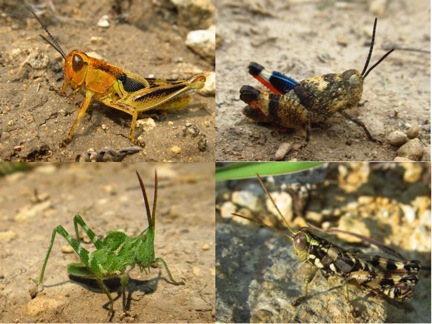
Examples of grasshopper diversity. Clockwise from the top left: Melanoplus packardii, Hadrotettix trifasciatus, Acrolophitus hirtipes, Phaulotettix eurycercus.


Prior to 2011, one of our sampling seasons (2009) was slightly drier and we found a decrease in grasshopper density and abundance. This went against many previously published observations of grasshoppers and other insect herbivores having larger populations in drier years. The proposed mechanism in the literature is that plant nutrient content actually increases with water stress. However, studies that measure the effect of water stress on plant nutrients typically use greenhouse-reared plants or crop species, and generally measure plant quality as simply a function of nitrogen content. We now know that plant dietary quality is much more complex, and in particular that herbivores actively regulate their protein and carbohydrate intake. Therefore, we decided to change course from our originally planed competition experiment. Instead, we took advantage of the coming drought to conduct a manipulative study in order to gain insights into what happens to native plants, and herbivore behavior, when the rains do not come

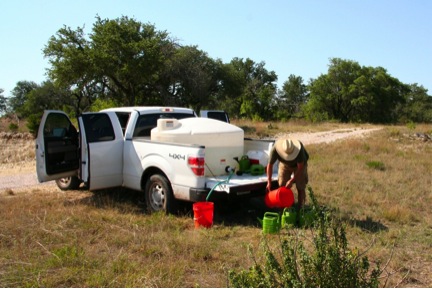
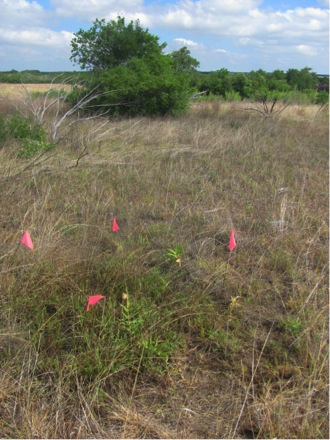
            We started our experiment early enough in the season to quantify, over time, the effect of water stress on the native grassland plant’s quality, quantity, and diversity. We marked off small open plots distributed across the grasslands of the Balcones Canyonlands National Wildlife Refuge. Half of these plants were left alone to suffer through the drought and we watered the other half [laboriously] by hand to mimic average summer rainfall. We did this through the growing season and took plant samples and visual grasshopper surveys monthly; in each plot individual grasshoppers were identified to species by sight. After completing each grasshopper survey, we measured grass and forb species richness, and took samples back to the lab to assess biomass and macronutrient content. Specifically, we quantified both digestible protein and nonstructural carbohydrate content in bulk samples of grass and forb tissues using biochemical assays.


Behind the scenes of watering plots by hand in the field.

Behind the scenes of watering plots by hand in the field.


            At the end of the summer we found that drought reduced grasshopper abundance and diversity, relative to our water supplemented plots. Using our knowledge of different grasshopper species diets, we grouped species into functional feeding groups and found that functional groups responded differently to our watering treatments. Forb specialists seemed unaffected by the drought while grass-feeders and mixed-feeders (grass+forbs) were significantly less numerous in the unwatered plots. These different grasshopper responses were due to their particular feeding biology and the fact that grass and forbs responded differently to water stress. We go into more detail in the manuscript, but in short, forbs decreased in diversity and experienced a significant shift in their macronutrient profile over time, becoming less protein biased. In contrast, grass biomass was reduced by water stress, but grass protein-carbohydrate content was similar between our two water treatments.


A freshly watered plot in a parched grassland.

A freshly watered plot in a parched grassland.


Our results are significant because we used naturally-growing, drought acclimated plants, and quantified protein-carbohydrate content – which are the two most important nutrients that affect insect herbivore feeding behavior and performance. Our research provides valuable data on how plant macronutrient content, biomass, and diversity co-vary in the field, and such data can be used to parameterize models that can help us better understand how generalist herbivores forage and perform under drought conditions, which are predicted to become more common as climate change intensifies. Although more work is required, we envision the use of remote sensing technology, measuring plant quality, biomass, and diversity, to better manage insect pests in rangeland ecosystems.


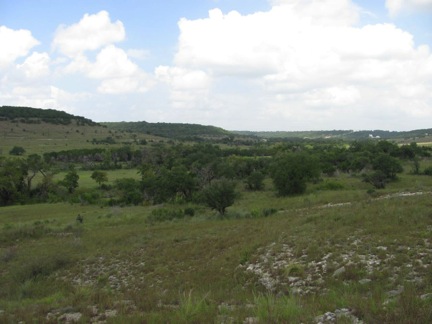
Mixed-grass oak savannah on the Balcones Canyonlands National Wildlife Refuge during a wet summer.

Mixed-grass oak savannah on the Balcones Canyonlands National Wildlife Refuge during a wet summer.

Resisting drought: conventional plant breeding outperforms GM Updated for 2026


Since its launch in 2010, the Improved Maize for African Soils Project (IMAS) has developed 21 conventionally bred varieties which have increased yield by up to 1 tonne per hectare.

The plan is to commercialise these varieties and introduce them in eight countries.

In contrast, the project’s researchers say that they are at least 10 years away from developing a comparable GM variety.

In another programme – The Drought Tolerant Maize for Africa project – 153 new, conventionally bred varieties have improved yields in 13 countries.

In field trials, these varieties increase yields by up to 30% under drought conditions.

It is estimated that by 2016 the extra yields from these conventionally bred, drought-tolerant maize varieties could help reduce the number of people living in poverty in these 13 countries by up to 9%.

Conventional breeding proving “far more successful” than GM

According to the leading science journal Nature, these successes are based on access to the large seed bank managed by the International Maize and Wheat Improvement Center (CIMMYT) in Mexico City.

Breeders from CIMMYT and the International Institute for Tropical Agriculture (IITA) in Nigeria identified maize varieties that thrive in water-scarce regions.

They cross bred these var­ieties and mated the most drought-tolerant of their offspring. The result – after several breeding cycles – is seed that is even better adapted to drought conditions.

Finally these plants were crossed with varieties that had been successfully grown in Africa.

According to Kevin Pixley, director of CIMMYT’s genetic resources programme, it is a “painstaking process”, but it is proving far more successful than genetic engineering approaches.

Drought tolerance is a complex trait that involves multiple genes and genetic engineering techniques which target one gene is taking longer and is significantly less effective.

Understanding ecology led to breakthrough

The CIMMYT researchers established that a key characteristic in the plants ability to withstand drought is the number of days between when the plant’s male organs shed pollen and when the female silks emerge.

When water is scarce, the silks emerge late. If the delay is long enough, they emerge after the plants have released their pollen and are not fertilized.

“Finding out this relationship was very important to be able to select for drought tolerance”, says Pixley.

By favouring plants with shorter intervals between pollen release and silk emergence, breeders were able to produce maize that was more resistant to drought.

GMO crops – and the food system – is not fit for purpose

CIMMYT and six other research organizations are collaborating with Monsanto on genetically engineered drought resistant maize varieties but admit they are several years away from any success.

Of course this is not the story we usually hear from the research establishment and the media.

Unusually the journal Nature has broken ranks and highlighted that far from being essential in ‘feeding the world’ – and especially the drought prone areas such as Africa – genetic engineering is less useful than conventional breeding.

The evidence that GMO crops are not fit for purpose in Africa has been apparent for some time.

Yet we are still being force fed the line that a genetic engineering techno fix is essential to combat climate change and nourish the world’s growing population.

The complex ecological relationships and part played by; e.g. soilmicro-organisms and fungi, is largely ignored. So are agro-ecological methods such as Sustainable Rice Intensification (SRI).

And so is the most crucial fact of all: the world already produces enough calories to feed 14 billion people and the problem is not production; it is waste, inequitable distribution and lack of access to land, water and supply chains for small farmers and communities.

But that is dismissed as irrelevant or skated over in the interests of maintaining a corporate dominated, commodity trade focussed agriculture and food system where the overwhelming goal is the generation of short term profit.


Lawrence Woodward is founder and director of GM Education, where this article was originally published. 

Source:Cross-bred crops get fit faster‘, Nature.


384909

Pollinator decline effects on plants Updated for 2026

How pollinator decline affect plant-plant interactions for pollinator is studied in the Early View article ‘Experimental reduction of pollinator visitation modifies plant-plant interactions for pollination’ by Amparo Lázaro and co-workers.

Several studies have indicated a widespread pollinator decline, caused mainly by land-use changes, degradation of natural habitats, fragmentation and habitat loss. Since the majority of plant species are dependent on animal pollination for reproduction, pollinator decline may influence plant reproduction and the persistence of plant populations. However, a pollinator decline may also affect the way plants interact for pollination because these interactions depend on the abundance of plants and pollinators in the community.

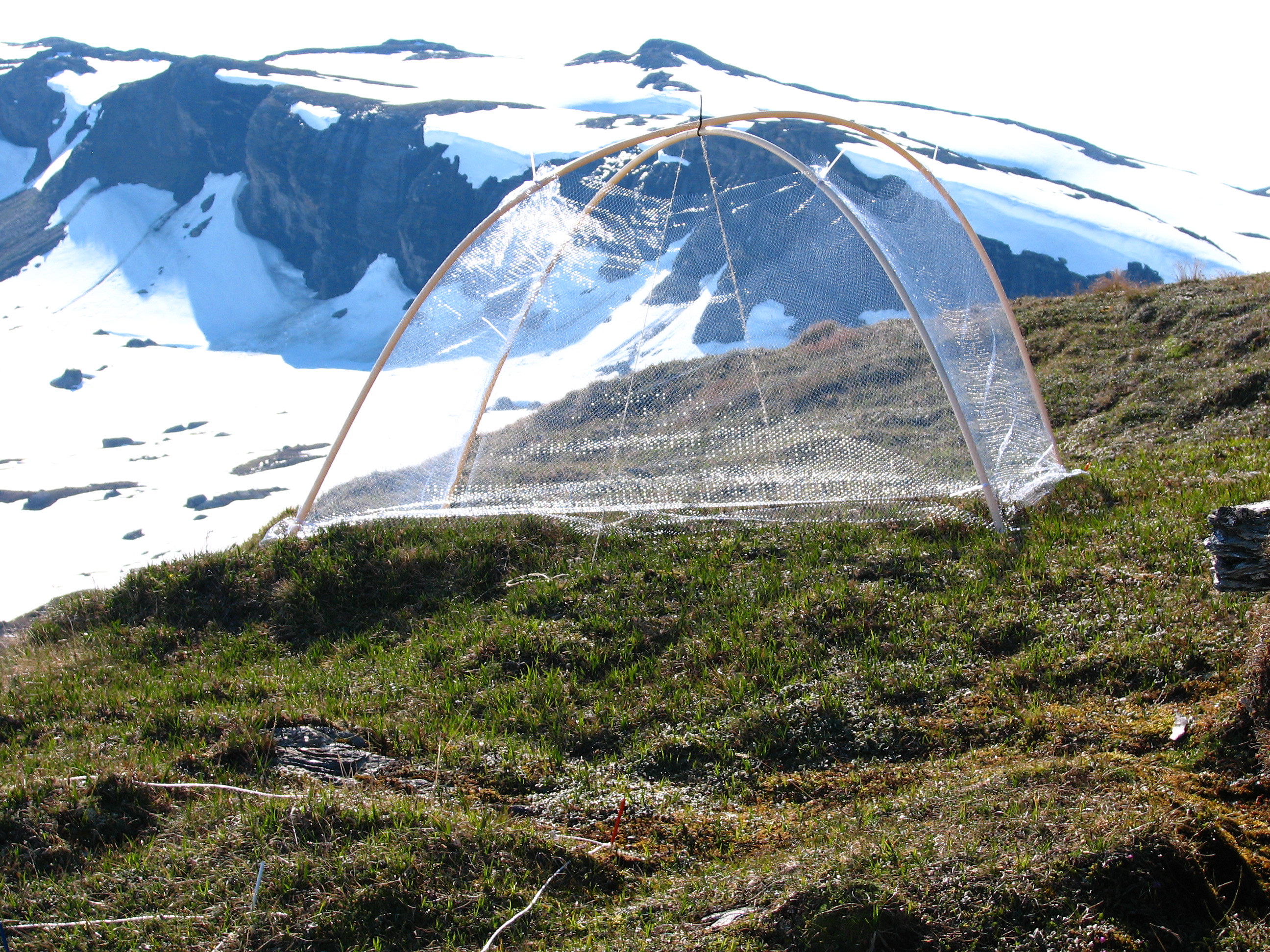
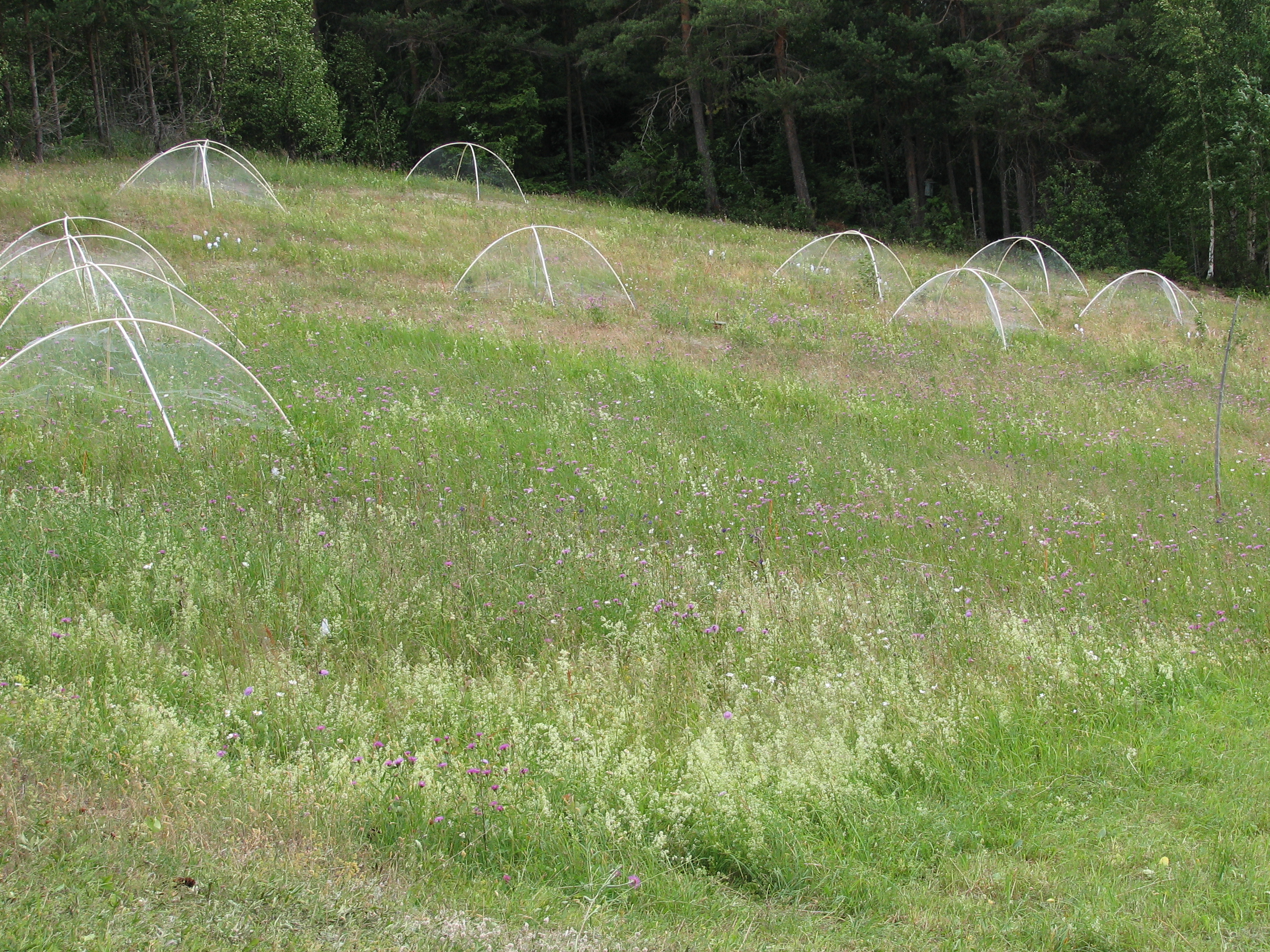
To simulate a pollinator decline we set up a novel experiment to reduce pollinator visitation in two communities (one lowland and one alpine) in Southern Norway (see also Lundgren et al. 2013). In the experiment we compared control plots with plots where pollinator visitation had been reduced by means of dome-shaped cages constructed by bending two PVC-tubes diagonally and covering them with fishnet. The fishnet was totally transparent, so flowers were fully visible from outside the net. In order to allow flower visitors inside cages to exit easily, we left an opening between the mesh and the ground, and another opening in the top of the dome. This experiment effectively reduced pollinator visitation without modifying the composition or behaviour of pollinators, or other important biotic and abiotic variables.

alpine1

Alpine

lowland5

Lowland

Lázaro et al. (2014) shows that the reduction in pollinators modified plant-plant interactions for pollination in all the six species studied; although for two of them these interactions did not affect seed set. Pollen limitation and seed set data showed that the reduction of pollinator visits most frequently resulted in novel and/or stronger interactions between plants in the experimental plots that did not occur in the controls. Although the responses were species-specific, there was a tendency for increasing facilitative interactions with conspecific neighbours in experimental plots where pollinator availability was reduced. Heterospecifics only influenced pollination and fecundity in species in the alpine community and in the experimental plots, where they competed with the focal species for pollination. The patterns observed for visitation rates differed from those for fecundity, with more significant interactions between plants in the controls in both communities. This study warns against the exclusive use of visitation data to interpret plant-plant interactions for pollination, and helps to understand how plant aggregations may buffer or intensify the effects of a pollinator loss on plant fitness.

div { margin-top: 1em; } #google_ads_div_wpcom_below_post_adsafe_ad_container { display: block !important; }
]]>

Coca-Cola forced out of $25 million factory in India Updated for 2026


The Coca-Cola company has been forced to abandon a $25 million newly built bottling plant in Mehdiganj, Varanasi, India as the result of a sustained campaign against the company’s plans.

The $25 million plant – which was a significant expansion to its existing plant in Mehdiganj – had already been fully built and the company had also conducted trial runs, but could not operate commercially as it did not have the required permits to operate.

Coca-Cola required permissions, or ‘No Objection Certificate’ (NOC), from the Central Ground Water Authority (CGWA) – the national groundwater regulatory agency, and the Uttar Pradesh Pollution Control Board (UPPCB) – the statewide pollution regulatory agency.

The Central Ground Water Authority rejected Coca-Cola’s application to operate for its new facility on July 21, 2014, and had sought time till 25th August 2014, to announce its decision before the National Green Tribunal (NGT), India’s ‘green’ court.

Coke ‘withdraws’ days before the announcement

Somehow having learnt that its application had been rejected, in order to save itself major embarrassment, Coca-Cola sent a letter to the CGWA on Friday, August 22, 2014 – two days before the rejection was to be made public on Monday, August 25, 2014 – stating that it was “withdrawing” its application.

Bizarrely, Coca-Cola blamed “inordinate delays” by the authority as the reason for its “withdrawal” just two days before the decision was to be made public.

The campaign has worked for the last two years to ensure that the regulators were made aware of the problems being created by Coca-Cola’s existing bottling facility, and the reasons why a five-fold increase in groundwater allowance that Coca-Cola had sought for its new facility would further deteriorate the conditions in the area.

The Uttar Pradesh Pollution Control Board (UPPCB) had also shut down Coca-Cola’s plant on June 6, 2014 because it found the company to be violating a number of conditions of its license, including a lack of NOC from the Central Ground Water Authority (CGWA).

Coca-Cola was able to obtain a stay order from the NGT that allowed it to temporarily re-open its existing plant on June 20, 2014

Groundwater shortages followed Coke’s arrival

The groundwater conditions in the Mehdiganj area have gone from ‘safe’ category, when Coca-Cola began operations in June 1999 to ‘critical’ in 2009.

As a result, severe restrictions have been placed by the government on groundwater use by the community and farmers.

“Coca-Cola is a shameless and unethical company that has consistently placed its pursuit of profits over the well-being of communities that live around its facilities”, said Amit Srivastava of the India Resource Center which has led the campaign to challenge the new plant.

“It is absolutely reprehensible for a globally recognized company like Coca-Cola to seek further groundwater allowances from an area that has become acutely water-stressed, and that in large part due to its own mining of groundwater.”

A ‘major setback’

The loss of the $25 million project is a major setback for Coca-Cola. The company has identified India as a major market where it seeks to derive significant future profits, particularly since Coca-Cola sales are being hit in more developed due to major health concerns.

“We are delighted that the Indian government is doing what it is supposed to do – protect the common property resource of groundwater from rampant exploitation, particularly in water-stressed areas.

“This should serve as a notice to other companies that they cannot run roughshod over Indian rules and regulations and deny community rights over groundwater”, said Srivastava.


More information: www.IndiaResource.org.

Also on The Ecologist:


383176

Changing perspectives Updated for 2026

The most exciting aspect of this study “Increase of fast nutrient cycling in grassland microcosms through insect herbivory depends on plant functional composition and species diversity” (Nietschke et al)- for me – was to take our experiences and results from the field site – the Jena Experiment that was designed for elucidating mechanisms of diversity effects – and to incorporate them into a microcosm experiment under well controlled conditions.

Here, we aimed at tracking the way of nutrients from the intact plant, over an insect herbivore and its feeding characteristics, into the soil, and over to another trophic level – And to judge the role of plant diversity and functional composition along that way.

  • Some aspects of the course showed very clearly (e.g. the release of nutrients with feeding and the relevance of the plant functional groups),
  • some were surprising (e.g. both throughfall pH and P increased with herbivory intensity and faeces accumulation – diversity having a similar effects, although independently of herbivore intensity),
  • and yet others were challenging (e.g. clear soil microbial responses only occurred at high levels of herbivory).

Finally, stepping back a little and taking our field site results into account, formed a broader picture and gave some new perspectives.

Besides the change of perspective the study brought about and the various methods we applied, it was very inspiring and rewarding to work together in a team of people that have realized quite different niches within Biodiversity Ecosystem Functioning-space.

Norma1 Norma2 Norma3 Norma4 Norma5