Tag Archives: species

Save the free beavers of England! Updated for 2026


After an absence of more than two centuries, wild beavers have returned to Britain. For me that is an exciting thing to say.

At first they reappeared in Scotland – through escapees in Perthshire and an official reintroduction programme in Argyll. Now they are in England too, living and breeding on the River Otter in Devon.

Like most people I was thrilled when I heard the news. An iconic species was returning, enhancing biodiversity and enriching our environment. And it was happening with minimal fuss. or trouble.

Sadly, not everyone has seen it that way. The response from the government and some special interest groups has been depressingly familiar.

The animals they say, are a threat. They will harm fish stocks, they could carry disease. And, just to make it final, they have been gone too long. The landscape has changed too much. We cannot live together.

Across Europe, people and beavers mix

None of this is true. In virtually every country in Europe people and beavers manage to live side by side. These are not animals which require true wilderness but a species which live happily in modern agricultural landscapes.

They bring many benefits – enhancing fish stocks, increasing biodiversity and helping with flood prevention. There is a reason there have been 157 beaver reintroductions across the continent.

Despite this DEFRA, egged on by a few lobbyists, announced in early summer that it was planning to capture the beavers and “rehome” them. That could mean only one thing, a life in captivity and no more beavers in the wild. The uproar that followed was predictable. Columns were written, petitions were signed and local action groups came together.

In the weeks since, everything has gone quiet. Yet behind the scenes it seems preparations are still continuing to catch the animals.

There are rumours that traps have been ordered and moved into the area. Locals fear that the capturing could begin as soon as October.

Removing the population from the wild may be illegal

Friends of the Earth does not work much with beavers, and we do not run nature reserves in the UK, but we do know about the law, and in this case it seems to be very much on the beaver’s side.

The European Habitat Directive, a piece of law the UK agreed to, sets out clear rules for the protection of native species. The beaver is listed in Annex IV, and for these species Article 12 prohibits

  • all forms of deliberate capture or killing of specimens of these species in the wild;
  • deliberate disturbance of these species, particularly during the period of breeding, rearing, hibernation and migration;
  • deliberate destruction or taking of eggs from the wild;
    deterioration or destruction of breeding sites or resting places.its capture or killing in the wild.

It also obliges the government to establish a system of strict protection for all Annex IV animals.

The fact that the animals are not listed in the UK’s domestic regulations, due to the fact that they have been absent for some time, does not matter provided that the beavers are within their natural range.

And they are.

European beavers (Castor fiber) were once common throughout the continent and were found in almost every region, including Great Britain, where they were widespread, occurring right across the island.

Archaeological remains have been discovered from Cornwall to the North of Scotland. There are towns named after them. They are a recognised component our river systems. Natural England, the body that will no doubt be tasked with overseeing their removal, recognises this.

Netherlands, France, Belgium – so why not England?

Just as importantly, the modern British landscape is a perfect example of the kind of modern habitats they thrive in. In its 2009 feasibility study on reintroducing beavers to England, Natural England stated that it was ‘evident that many if not most of England’s rivers would provide suitable habitat to support beavers’.

The physical characteristics of the River Otter match the criteria they laid out. That there are beavers living and breeding there proves it.

The fact too that the beavers have just recently arrived is likely to be irrelevant. The concept of natural range outlined in the Directive is not static, and the guidance makes it clear that where the animals spread to a new area, that area must be considered part of its natural range.

Even if the beavers on the River Otter are escapees, this is no reason to consider them as being beyond their natural range. Indeed, the return of the beavers to England is just the latest stage in a process that has seen them rebound all over their territories.

From a population of just over a thousand a hundred years ago, they are now found in over 30 countries, including some of the UK’s nearest neighbours in the Netherlands, France and Belgium. Beavers have been seen swimming in the sea off Kent, and of course there are already populations in Scotland.

Little threat of disease

The Habitats Convention’s Article 16 does provide a let out that could, in specified circumstances, allow trapping. ‘Derogations’ from Article 12 may be permitted, for example:

  • in the interest of protecting wild fauna and flora and conserving natural habitats;
  • to prevent serious damage, in particular to crops, livestock, forests, fisheries and water and other types of property;
  • in the interests of public health and public safety, or for other imperative reasons of overriding public interest;
  • for the purpose of research and education, of repopulating and re-introducing these species and for the breedings operations necessary for these purposes.

Perhaps that’s what Lord de Mauley had in mind when he wrote a letter to the Angling Trust, raising the spectre that the animal might be carrying disease as a reason to catch them.

But this is a red herring. The disease in question, Echinococcus multilocularis, cannot be transmitted simply from beaver to beaver. In any case it can be easily tested for.

If the beavers living on the river were found to be free from disease, as they almost certainly are, it would be unjustifiable, disproportionate and potentially unlawful not to re-release them back onto the Otter, precisely because they are protected by the Directive.

As for the other circumstances provided in Article 16, DEFRA would be hard to argue that trapping the beavers was a matter of public health and safety, overriding public interest, or preventing serious damage.

None of the let outs appear to apply in this case where the beavers are causing no problems to anyone, and can only enhance the quality of wildlife habitat.

Community support

When the Scottish government tried to get rid of the wild beavers the community rallied round, eventually creating enough fuss for the issue to be dropped.

In Devon too everyone from farmers to shopkeepers to local councillors has spoken out in favour of the continued presence of the beavers.

It is still not too late. It is not clear how much the government really wants to catch these animals. By raising our concerns, we hope that DEFRA will realise that its actions will not just be unpopular, but potentially illegal.

We are not saying that our countryside should become a free-for all, but rather that we should take this opportunity to stop and think and work out the best way forward.

In the future beavers may need to be controlled, and the Habitats Directive allows this where genuinely necessary. We fully accept that and there are people who know how to do this.

At a time when so many species are under threat, and where the loss of biodiversity has become so constant that it almost loses its meaning, the ability to see a native species re-establish itself is a privilege, and one we should not give up lightly.


Alasdair Cameron is a wildlife campaigner with Friends of the Earth.

Action


370112

What are the processes responsible for the effects of habitat loss? Updated for 2026

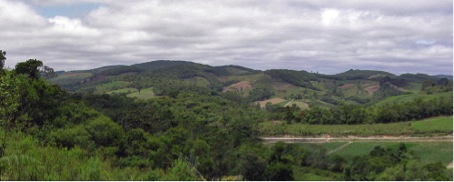
When habitat is lost so are species. One way of investigating the processes underlying this pattern is to pay attention to the identity (not only the number) of species. What happens to between-site differences in species composition when habitat loss transforms formerly continuous habitat into habitat fragments?

Who consults widely applied theoretical frameworks (e.g. theory of island biogeography) to answer this question will come to the conclusion that between-site differences in species composition – i.e. beta-diversity – should increase following habitat loss due to a strong influence of chance on the extinction process. Species are assumed to be ecologically equivalent (all have the same chance of getting extinct) and ecological drift (stochastic changes is species abundance) to increase in importance when populations are small. Further, chance makes it unlikely that populations surviving in different habitat remnants belong to the same species, and homogenization is hindered by isolation.

Beta1

Who, on the other hand, consults empirical work will find that for various groups of plants and animals it is common to observe that, of the diverse set of species in continuous habitats, it is frequently the same small set of species that persists after habitat loss. Apparently, only certain resistant species are able to survive in fragments, thereby making the species composition in fragments deterministically more (and not less) similar, indicating – in contrast to theoretical models – low influence of chance on species extinction.

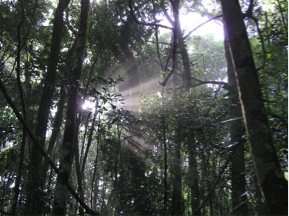
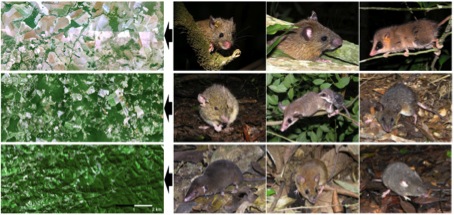
In our study “Ecological filtering or random extinction? Beta-diversity patterns and the importance of niche-based and neutral processes following habitat loss we investigated how the importance of different processes changes with habitat loss relying on a large database of small mammals in the Brazilian Atlantic Forest. We used a null model approach to quantify beta-diversity and make inferences about the relative importance of niche-based (deterministic) and neutral (stochastic) processes on community assembly at landscapes with varying degree of habitat loss.

Beta2

Our results did not support a positive relationship between beta-diversity and habitat loss, as predicted by commonly-used theoretical frameworks. Rather, when considering exclusively species composition (disregarding their abundance), beta-diversity was independent from habitat loss, with small mammal communities being more similar than expected by chance in deforested as well as continuously-forested landscapes. However, when species abundance was taken into consideration, we observed a drastic decrease in beta-diversity with habitat loss (i.e. biotic homogenization), thereby indicating an increase (rather than a decrease) in the importance of deterministic processes at landscapes with high degrees of habitat loss. Finally, we observed a drastic change in species composition in a highly deforested landscape, with communities being not just a rarefied sample but rather disproportionately dissimilar to the communities in continuously-forested landscapes.

Beta3

These results indicate that habitat loss can be seen as a strong ecological filter and species extinction is clearly more influenced by deterministic than by stochastic processes. Against this background, the incorporation of relevant species traits into theoretical models seems to be a useful step forward for the practical relevance of these models. Moreover, pro-active measures seem to be essential to prevent tropical landscapes to go beyond critical levels of habitat loss.

The authors through Thomas Püttker

Better being early? Updated for 2026

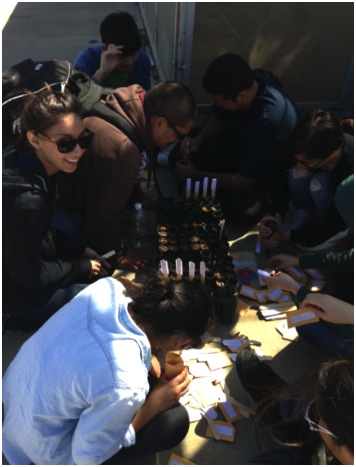
If invaders do better by early arrival and growing, will native species also benefit from being early? Not necessarily, as found in the Early View paper “Priority effects vary with species identity and origin in an experiment varying the timing of seed arrival” by Elsa E. Cleland and co-workers. Below is their summary of the study and a photo of the students helping out with field work.

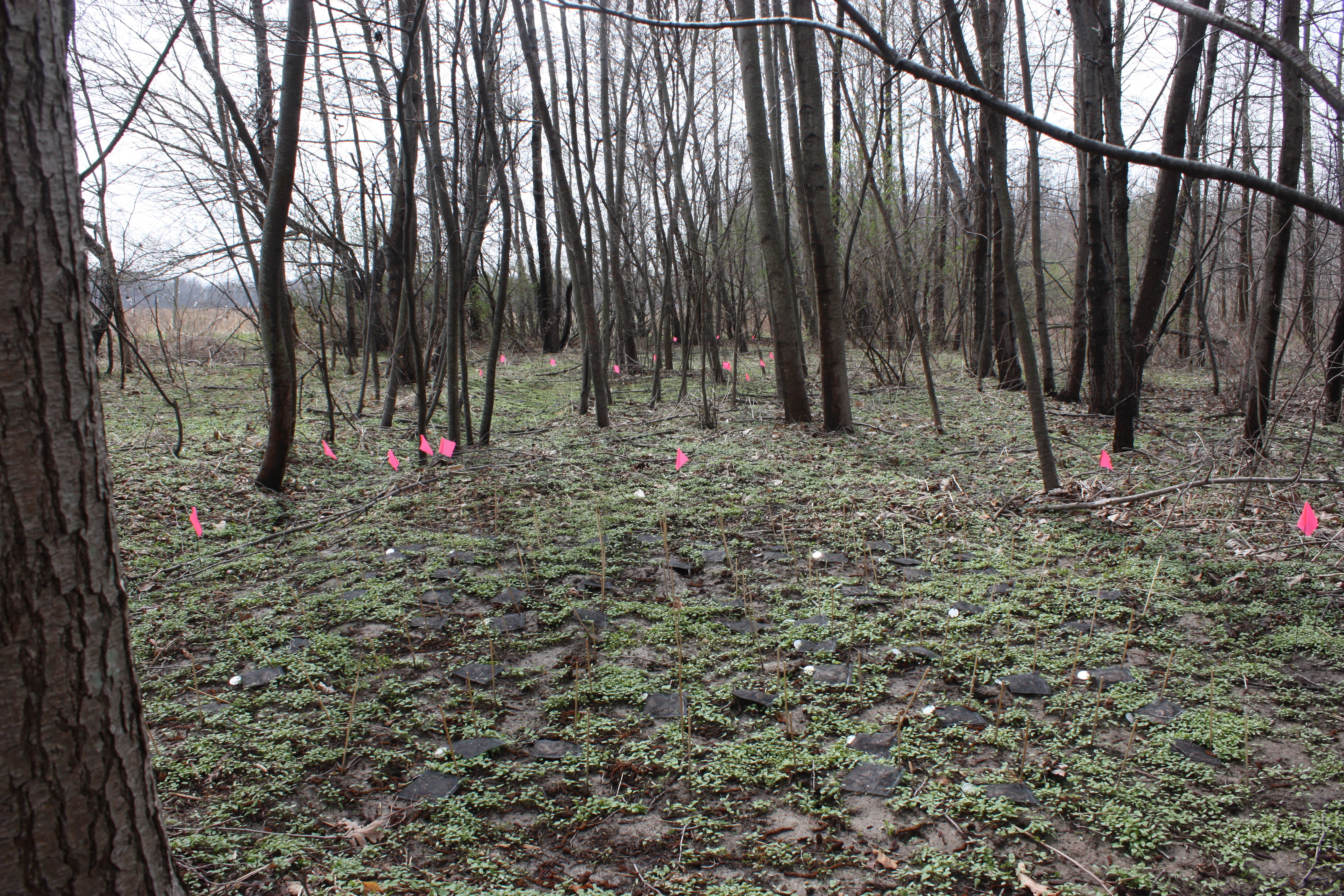
Studies show that exotic species differ in phenology (i.e. are active at different times in the season) from the native species in the communities they invade. In Southern California many of our common invaders are exotic annual grasses and forbs that germinate earlier with the onset of winter rains than native herbaceous species. Hence, exotic species might benefit from emerging earlier in the season, allowing them to pre-empt space and other resources to suppress later emerging species, a kind of seasonal priority effect. We tested this hypothesis in an experiment varying the “arrival” time of pairs of species, by placing seeds of focal species into pots of field-collected soil either simultaneously or one week apart. In contrast to our expectations, native species benefited from earlier arrival more often than exotic species. An important implication of this finding is that giving native species a long “head start” likely aids in ecological restoration efforts.

Then, if being active early is so beneficial, why don’t native species have earlier phenology? Isn’t there sufficient selective pressure to favor earlier phenology in native species? Two additional aspects of our experiment support this idea. First, our results show that different species have various strength and even direction of priority effects. In diverse communities where the identity of neighbors will differ among individuals in the population, this could dampen directional selection on phenology. Second, we found that no significant disadvantage to arriving later when compared to being planted at the same time as a competitor. Thus, for native species that tend to have later emergence time than exotic competitors, there seem not to earlier emergence, as this still exposes them to similar levels of competition.

A final aspect of our experiment that is noteworthy; it was planted and harvested by 36 students enrolled in an undergraduate Ecology Lab course at the University of California, San Diego taught by the lead author (the co-authors on this manuscript were the Teaching Assistants for the course). Teaching evaluations and surveys showed that the students enjoyed contributing to original research, and the amount of preparation and oversight necessary to ensure data quality was not much greater than for any of the other lab activities where data were not destined for publication; a clear “win-win” for both the faculty and the students. Hence, our results demonstrate the synergies can arise by merging undergraduate teaching with faculty research programs.

Undergraduate students contributed to this study by aiding in both planting and harvesting. Here they are shown planting seeds for species pairs at the start of the experiment.

Undergraduate students contributed to this study by aiding in both planting and harvesting. Here they are shown planting seeds for species pairs at the start of the experiment.


Dispersal at a crawl: spore transport by slugs increases bryopyhte diversity Updated for 2026

Slug1

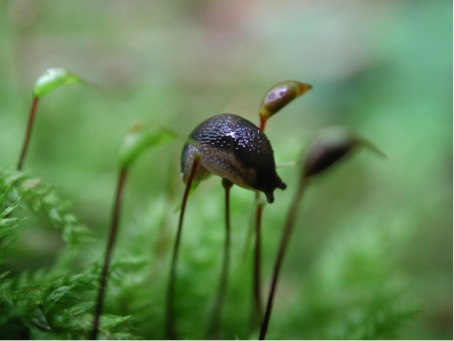
A slug feeding on capsules of the Rough-stalked Feather-moss (Brachythecium rutabulum).


Herbivores can increase diversity in plant communities by consuming biomass and reducing light competition, thereby benefitting low growing species such as mosses and liverworts (bryophytes). Slugs and snails are important herbivores of forb species and might promote bryophyte diversity if they reduce forb abundance. They also feed on bryophyte capsules, which contain the spores, and it has recently been shown that these spores, can survive the digestive tracts of slugs and snails (endozoochory: internal transport of propagules). Slugs might therefore benefit bryophytes by dispersing their spores.


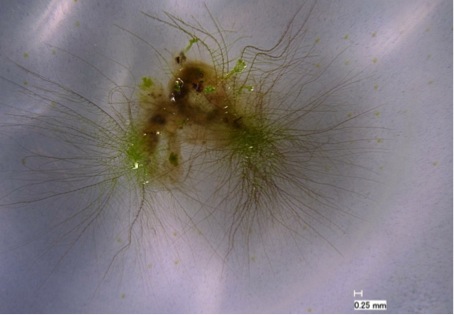
Moss protonema germinated from slug feces in a previous lab experiment (for details see Boch et al. 2013. Fern and bryophyte endozoochory by slugs. Oecologia 172: 817–822).

Moss protonema germinated from slug feces in a previous lab experiment (for details see Boch et al. 2013. Fern and bryophyte endozoochory by slugs. Oecologia 172: 817–822).


However, whether gastropod herbivory can reduce the dominance of vascular plants and thereby promote the germination and establishment of endozoochorously dispersed bryophyte spores has never been tested experimentally. Moreover, it is unclear whether these possible interacting effects can influence bryophyte species richness. In our study, “Endozoochory by slugs can increase bryophyte establishment and species richness” (Boch et al.) we tested for endozoochorous spore dispersal by slugs (Spanish slug; Arion vulgaris Moquin-Tandon; Arionidae), in combination with sowing of vascular plants, in a fully factorial common garden experiment. We built 30 slug enclosures of 100 cm × 20 cm and introduced either slugs previously fed with the sporophytes of 12 bryophyte taxa, control slugs previously fed with lettuce, or no slugs. We also sowed seeds of vascular plants into half of the enclosures.


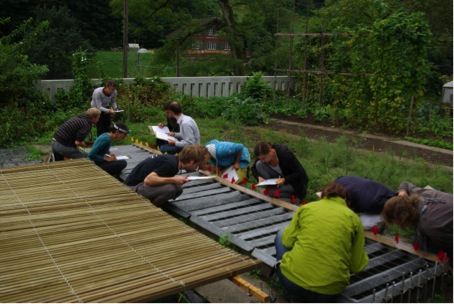
Experimental setup in the Botanical Garden of Bern with helpers estimating cover values of bryophytes, herbs, and grasses, which then have been averaged for analysis.

Experimental setup in the Botanical Garden of Bern with helpers estimating cover values of bryophytes, herbs, and grasses, which then have been averaged for analysis.


Twenty-one days later bryophyte cover was on average 2.8 times higher (3.9% versus 1.4%) in the enclosures containing slugs previously fed with bryophytes than in the other treatments. After eight months slugs had substantially increased bryophyte species richness: there were 2.6 times more bryophyte species in the enclosures which had contained the slugs fed with bryophytes than in the other treatments. Sowing vascular plants into the cages did not affect the initial recruitment of bryophytes but after eight months high vascular plant cover did reduce bryophyte diversity. Our findings suggest that slugs are important dispersal vectors for bryophytes and that they can locally increase bryophyte populations and diversity through dispersing spores. They may also act to maintain bryophyte diversity by reducing the dominance of vascular plants.

div { margin-top: 1em; } #google_ads_div_wpcom_below_post_adsafe_ad_container { display: block !important; }
]]>

How much do asexual plants actually change? Updated for 2026

A sexual reproduction system should confer higher mutation rates and hence evolutionary rate than asexual ones. Is it really so? Find out in the Early View paper “Asexual plants change just as often and just as fast as do sexual plants when introduced to a new range” by Rhiannon L. Dalrymple and colleagues. Below is their summary of the study:

Many of the world’s most invasive plant species can reproduce asexually. However, asexuality might be a double edged sword for introduced species. Shortly after introduction, asexual species might have the upper hand because they do not need a partner for promptly increasing in numbers and establishing populations in the new range. Classic theory tells us that sexual reproduction should fuel the processes of adaption through the creation of variation on which natural selection can act. While asexuality may be of advantage in the early phases of introduction, it may lead to an evolutionary dead end.

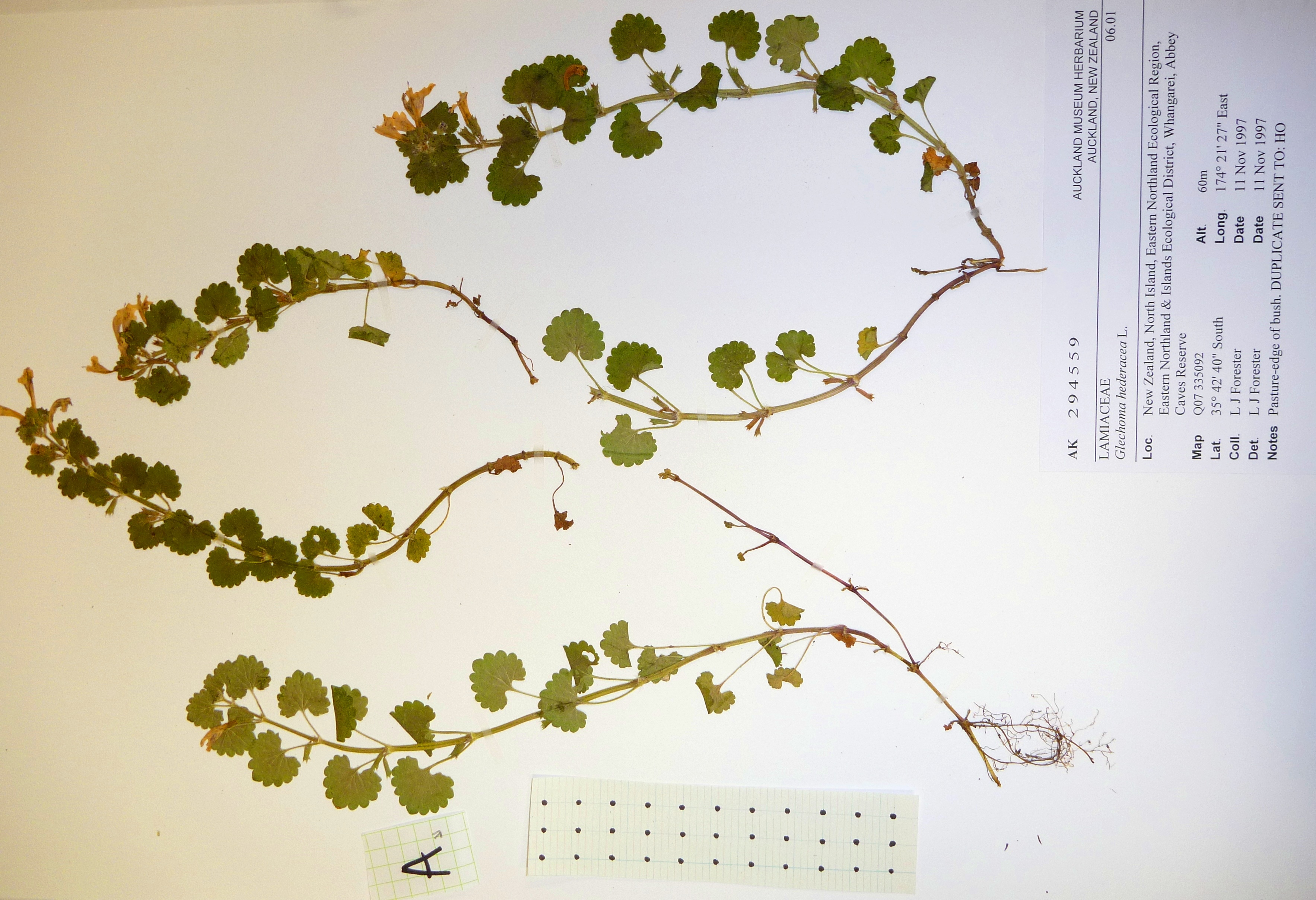
We measured the rate of changes in multiple asexual species distributed through Australia’s east coast and New Zealand. We have provided evidence that multiple asexual species have undergone rapid morphological changes in response to the novel environments in their introduced range. We then compared the proportion of asexual species that demonstrated a significant change in at least one trait, and the rates at which these changes progressed, to comparable data on sexual species. This was the first test of the difference in potential for rapid change afforded by sexuality, cross species and in the natural world. Our results were astounding: we found no significant difference in the rate or frequency of rapid changes between asexual and sexual species. That is, sex and genetic recombination do not increase the rate or potential for change in this context. Introduction to a novel environment, a population may experience strong selective forces. The new environmental conditions force rapid and significant changes in the phenotype of both asexual and sexual species. It appears that in the process of introduction – it may be adapt or fail, regardless of breeding system.

Asexual1 Asexual2

Do invasive species alter litter nitrogen release? Updated for 2026

Can invasive species actually alter their environment so that more nutrients are available for them? Find out in the Early View paper “Non-additive effects of invasive tree litter shift seasonal N release: a potential invasion feedback” by Michael J. Schuster and Jeffrey S. Dukes. Below is their summary of the study:

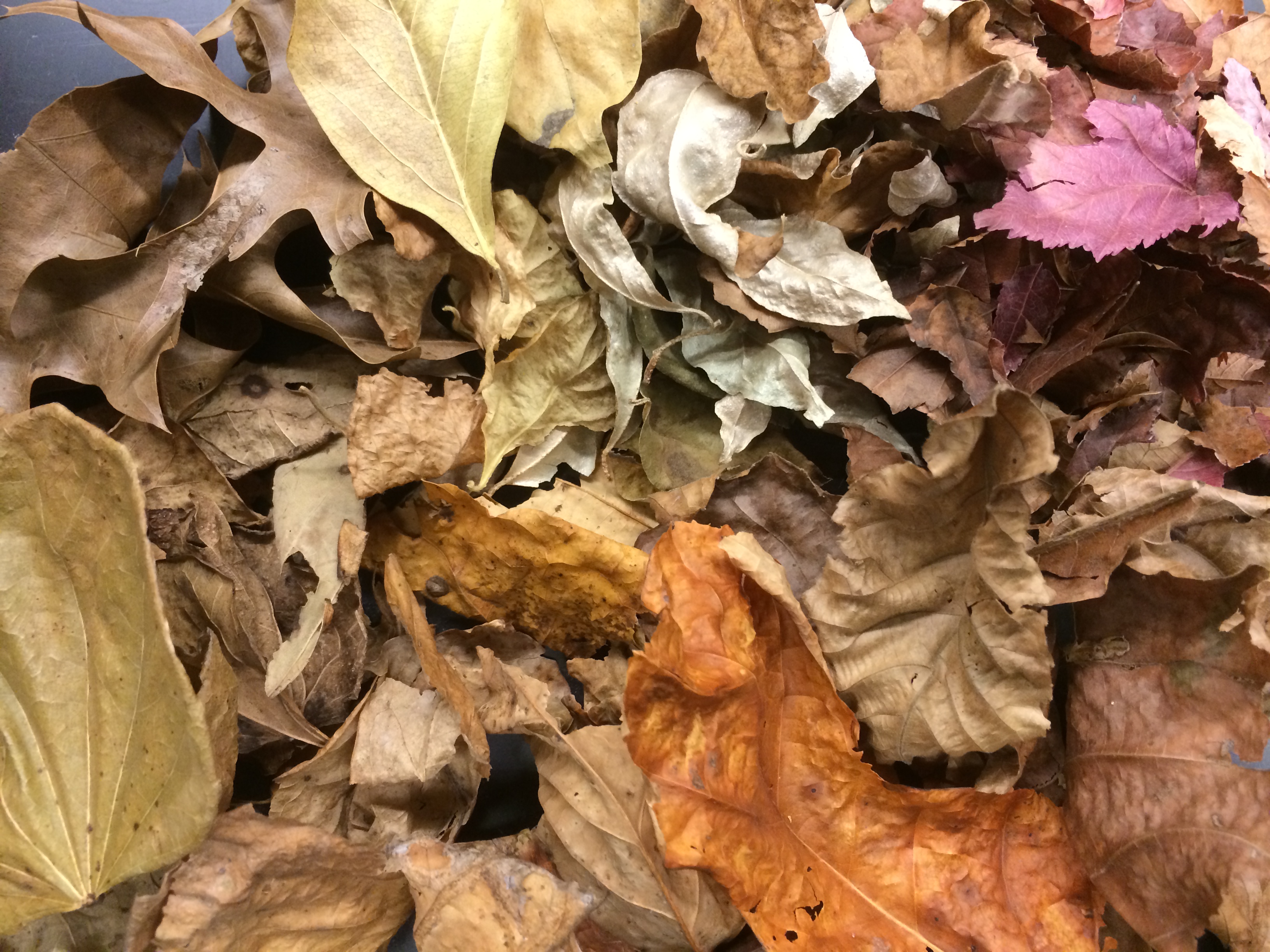
Many woody invasive species change their environment to better fit their needs for resources, particularly soil nutrients like nitrogen. One way that they can do this is by accelerating the decomposition of leaf litter—an important step in recycling leaf nitrogen into a form that can be used by plants. However, much of what we know about the decomposition of invasive species’ litters, and their impacts on soil fertility, is based on observations of litter from an individual species decomposing by itself. This is problematic because litters rarely decompose by themselves in nature. More commonly, litters of multiple species are mixed together and decompose more quickly or more slowly than we would expect based on the decomposition rates of each species separately. Thus, we designed a litter bag experiment to examine how the litter of four invasive tree species decomposed differently when mixed with that of four native species, and how this difference might change as the invader became more dominant in the litter layer.

mixed litter (1) mixed litter2

One year and 448 litter bags later, we found some surprising results. Indeed, native-invasive litter mixtures commonly decomposed at different rates than would have been predicted, but whether mixtures lost mass faster or slower than the predicted rate did not follow a strong, consistent pattern. In contrast, the release of nitrogen from these mixtures followed a very clear pattern of being slowed early on, but catching up to or exceeding the amount of nitrogen that would have been predicted at the end of the experiment. Implicitly, native-invasive mixtures were consolidating the release of their nitrogen until later on in the decomposition process, a time that corresponded to the period during which plants, especially the fast-growing invasive species, require the most nitrogen. This pattern was stronger in mixtures comprised mostly of the invasive species and for invaders that produced more nitrogen-rich litter. These findings, in concert with others’ on invasive species and nutrient cycling, led us to suggest that these invasive species might be shifting the release of nitrogen from the litter layer to a time when they are better able to use that nitrogen, and that this might be an important contributing factor to the success of some invasive species.

Mixed litter3